ACMobility's Electric Charging Vans Target Metro Manila's EV Infrastructure GapACMobility's Electric Charging Vans Target Metro Manila's EV Infrastructure GapACMobility's Electric Charging Vans Target Metro Manila's EV Infrastructure GapACMobility's Electric Charging Vans Target Metro Manila's EV Infrastructure Gap
May 21, 2026
Ten electric vans are now roaming the streets of Metro Manila, carrying up to 120 kilowatt-hours of stored energy each and dispatching on demand to EV drivers who can't find a charger. The buried lead, though, isn't the convenience: it's that the vans charging those cars are
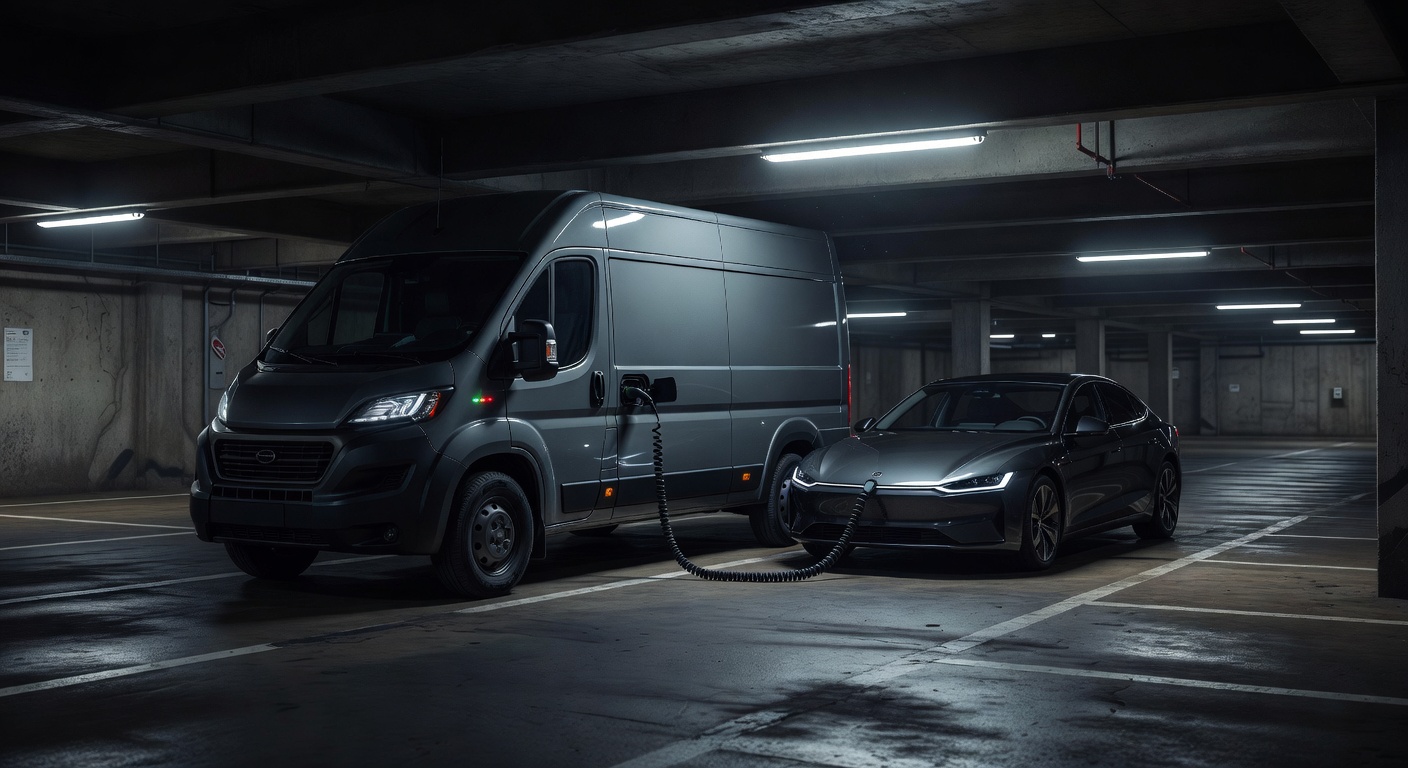
Ten electric vans are now roaming the streets of Metro Manila, carrying up to 120 kilowatt-hours of stored energy each and dispatching on demand to EV drivers who can't find a charger. The buried lead, though, isn't the convenience: it's that the vans charging those cars are themselves fully electric, a design choice that separates ACMobility's Power-on-Wheels from most mobile charging deployments globally, which rely on diesel generator trucks and quietly undermine the emissions argument for EV adoption. For Southeast Asia's densely packed megacities, where building stock predates EVs by decades and fixed charging infrastructure is years behind vehicle sales, that architectural choice may matter more than any single charging speed specification.
ACMobility, a Philippine company affiliated with the Ayala conglomerate and serving as the country's authorized distributor for BYD and Kia, launched Power-on-Wheels in March 2025, initially covering three Metro Manila districts: Makati, Bonifacio Global City, and Mandaluyong. The service is built on a platform originally developed by Singapore-based Power-Up Tech (P.UP), which also operates in Malaysia. ACMobility licensed or partnered with P.UP to bring the platform to the Philippines, positioning the deployment as among the first attempts in ASEAN to scale mobile EV charging beyond emergency or niche use into broader public-facing urban infrastructure.
What's New
Power-on-Wheels currently operates 10 mobile units across its three covered districts. The service targets a specific gap in Metro Manila's EV infrastructure: the large share of urban drivers who live in condominiums or older mixed-use buildings with no dedicated charging provisions, and who lack reliable access to public DC fast chargers during the workday.
The fleet draws on vehicles from two manufacturers. BYD T3 electric vans form part of the lineup, valued for their low profile and ability to access underground and basement parking structures where many Metro Manila residents keep their cars. The fleet also includes DFSK EC35 and DFSK EC31 vans, with some EC31 units configured with dedicated DC power-delivery systems and onboard conversion hardware for direct vehicle charging. ACMobility's dual role as BYD distributor gives the company natural familiarity with the vehicles it deploys.

How It Works
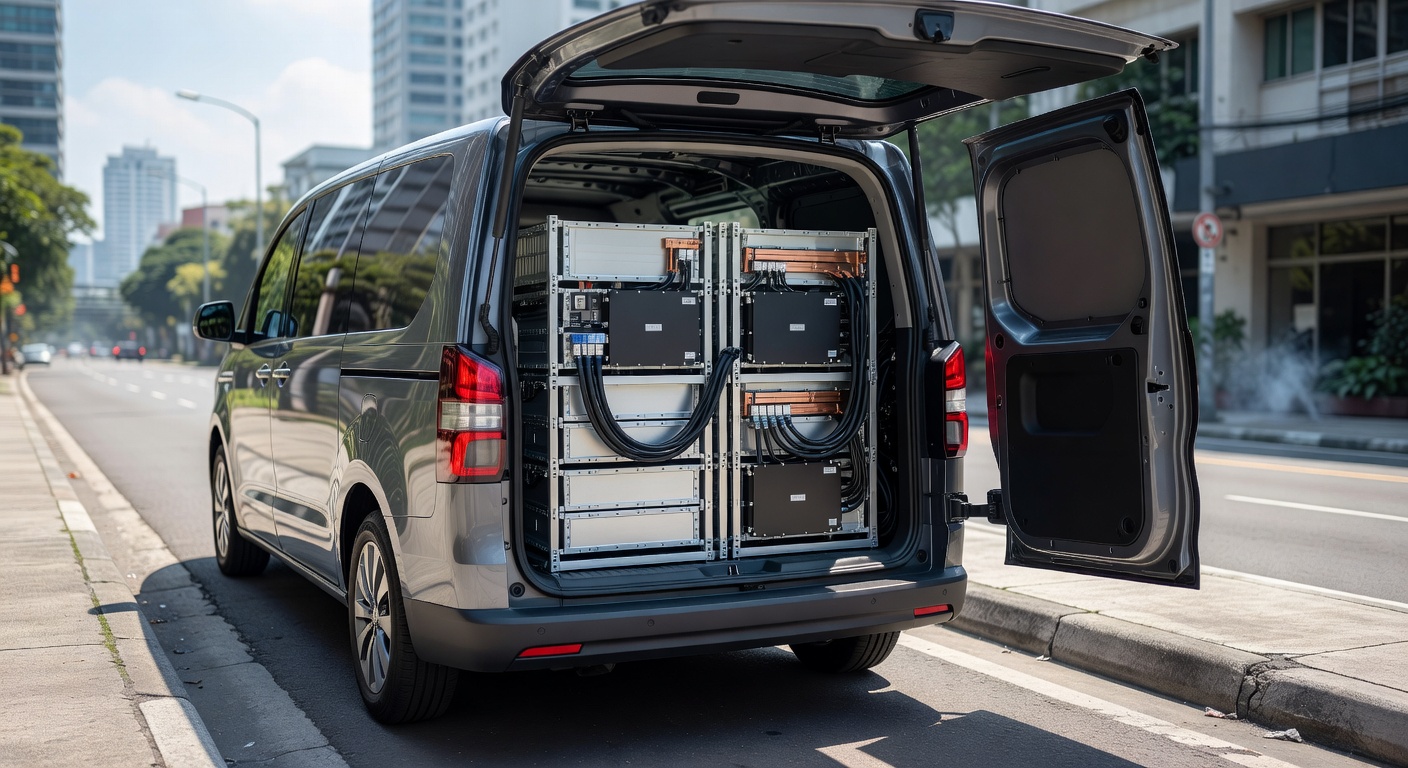
Each Power-on-Wheels unit carries onboard battery storage of up to 120 kWh per unit. For context, a typical mid-range electric sedan carries a 60 to 80 kWh battery pack, meaning a single Power-on-Wheels van carries enough stored energy to meaningfully top up one to two vehicles per dispatch cycle before needing to recharge itself.
The service model is deliberately narrow in scope. Operators target the 20% to 80% state-of-charge window - the range at which lithium-ion cells charge most efficiently and where the marginal cost of adding range is lowest. This rapid top-up approach maximizes the number of customers a single van can serve per day and reduces per-session dwell time, which matters in a city where parking and curb access are perpetually contested.
Metro Manila-specific infrastructure constraints drove several hardware choices. The city's narrow streets, basement parking structures common to condominium towers, and truck ban restrictions during peak hours make the heavy generator-on-wheels format common in Western roadside-assistance contexts impractical. The BYD T3's low clearance is a functional specification, not an aesthetic one.
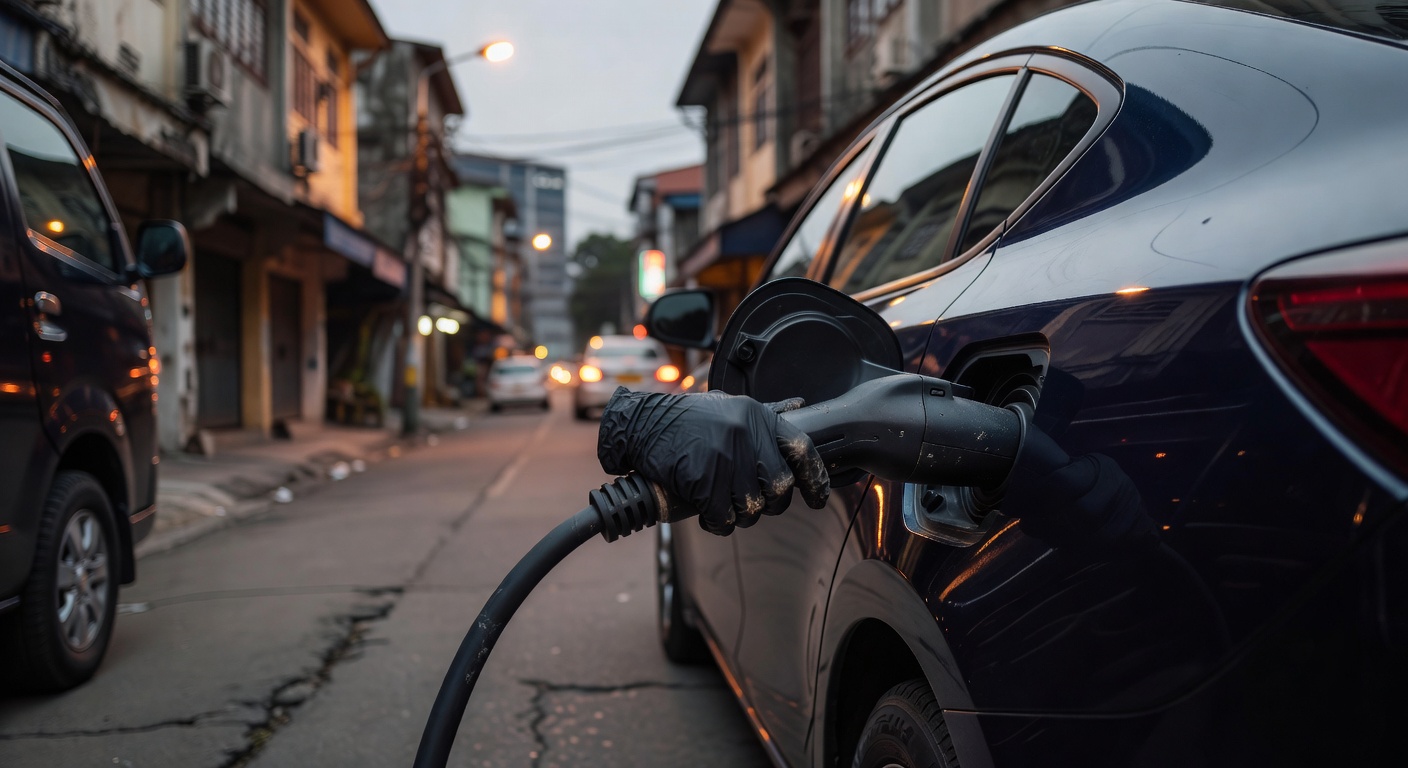
Service is coordinated through a dedicated mobile app, which handles vehicle location, dispatch requests, session monitoring, and digital payment in a single interface. Users summon a van to their location rather than driving to a fixed station, inverting the conventional charging paradigm.
The Economics
ACMobility prices Power-on-Wheels at approximately ₱35 per kilowatt-hour, which at current exchange rates translates to roughly USD $0.60 to $0.62 per kWh. The company describes this as aligned with conventional DC fast-charging rates rather than a premium over them - a deliberate positioning choice that frames the service as infrastructure replacement rather than emergency rescue at a surcharge.
The unit economics carry meaningful uncertainty. A full 20%-to-80% top-up on a 60 kWh battery pack represents roughly 36 kWh of delivered energy, generating approximately ₱1,260 (around USD $22) per session at the stated rate. How many sessions per van per day ACMobility can execute, and whether that volume covers the capital cost of the vehicles plus their own recharging costs, has not been publicly disclosed.
The pricing parity with fixed DC fast chargers is strategically significant. At parity, Power-on-Wheels becomes a plausible daily-use option for Metro Manila EV owners who would otherwise delay charging until they can access a fixed station, rather than a premium reserved for emergencies or affluent early adopters.
One fleet-size uncertainty affects any revenue modeling: ACMobility describes 10 units as currently operational, while a separate figure of 17 units has appeared in social media posts referencing planned NCR expansion. The discrepancy is unresolved and likely reflects near-term fleet growth rather than an error, but both figures should be read with that caveat in mind.
Competitive Landscape
The mobile EV charging market in Southeast Asia has two meaningfully distinct actors at present, and their relationship is cooperative rather than competitive. Power-Up Tech (P.UP) is the Singapore-based originating platform operator whose technology ACMobility licensed for Philippine deployment. P.UP preceded ACMobility operationally, running programs in Singapore and extending into Malaysia. Singapore's smaller geography made it a natural first market, but also limited the scale at which P.UP could demonstrate mobile charging as a mass-transit-adjacent service. The Philippine deployment - with its harder infrastructure constraints and larger addressable population - is the first real test of whether the P.UP platform can function as mainstream urban infrastructure.
Globally, the mobile charging category remains dominated by niche emergency and roadside-assistance applications. Most deployments in Western markets use diesel generator trucks, which produce tailpipe emissions at the point of service, undermining the emissions rationale for EV adoption. ACMobility's all-electric fleet is a genuine architectural differentiator, and it is the feature that makes the Philippine deployment worth watching as a potential model for other ASEAN markets with similar infrastructure gaps.
Edmund Araga, President of the ASEAN Federation of Electric Vehicle Associations (AFEVA), framed the category's strategic logic during an interview on the Tech Sabado podcast: "charging solutions aside from solid infrastructure can rapidly improve the transition arc." That observation applies with particular force to markets where fixed infrastructure buildout is running years behind vehicle adoption, and where the density of legacy building stock makes retroactive charger installation slow and expensive.
The Automobile Association of the Philippines (AAP) has been identified as a potential cooperation partner for Power-on-Wheels emergency dispatch scenarios, though no partnership has been confirmed at publication time.
What's Next
The immediate question for Power-on-Wheels is geographic expansion beyond the current three-district footprint. Makati, Bonifacio Global City, and Mandaluyong represent the highest-density, highest-income corridor of Metro Manila - a logical place to establish proof of concept but not representative of the broader Metro Manila EV ownership picture. ACMobility has not publicly stated a timeline for extending coverage to other Metro Manila districts.
The regulatory environment represents a meaningful open variable. The Philippines has reportedly enacted legislation aimed at accelerating EV adoption, and multiple agencies may have overlapping jurisdiction over vehicles providing for-hire energy services - a question with implications for any ASEAN market considering similar deployments. Metro Manila's combination of high EV adoption ambition, dense legacy building stock, and narrow streets is not unique to the Philippines; comparable conditions exist in Ho Chi Minh City, Jakarta, and Dhaka.
The most underreported aspect of Power-on-Wheels is the decision to build an all-electric mobile charging service where diesel generators would have been operationally simpler, cheaper to procure, and easier to scale. That choice reflects a bet on a particular infrastructure philosophy: that distributed electric energy delivery, not fixed charging hubs, is the right near-term backbone for EV adoption in cities where the buildings were built before anyone imagined a plug-in car. If that bet pays off in Metro Manila, it will be studied carefully in every ASEAN capital with a similar problem.
For an EV owner living in a Metro Manila condominium without dedicated charging, the practical calculation is concrete: at ₱35 per kWh and a 36-kWh top-up from 20% to 80%, a full rapid-charge session costs roughly ₱1,260, requires no special trip to a charging station, and happens in whatever parking the driver already occupies. If ACMobility can demonstrate that this model works at 10 units across three districts, the case for scaling to 50 units across Metro Manila - or replicating across ASEAN cities with identical infrastructure constraints - becomes substantially easier to make to the next investor or government partner.
-- Raj Malhotra, Market Analysis Director
Sources: CleanTechnica - ACMobility's Power-on-Wheels (May 2026) · U.S. Department of Energy - Vehicle-Grid Integration Assessment Report (January 2025)