Anthropic Settles Copyright Case for $1.5B After Pirating 500K BooksAnthropic Settles Copyright Case for $1.5B After Pirating 500K BooksAnthropic Settles Copyright Case for $1.5B After Pirating 500K BooksAnthropic Settles Copyright Case for $1.5B After Pirating 500K Books
July 21, 2026
A federal judge signed off on a $1.5 billion settlement between Anthropic and authors and publishers for training Claude on approximately 500,000 copyrighted books obtained from pirate websites, marking the largest copyright class action settlement in history. But the legal

A federal judge signed off on a $1.5 billion settlement between Anthropic and authors and publishers for training Claude on approximately 500,000 copyrighted books obtained from pirate websites, marking the largest copyright class action settlement in history. But the legal framework it establishes is a split ruling: training AI models on copyrighted material remains fair use under copyright law, while sourcing that material from Library Genesis and Pirate Library Mirror constitutes infringement. Enterprise AI teams now face a compliance framework that distinguishes training methodology from data acquisition practices, with $3,000-per-work liability as the benchmark when sourcing crosses into piracy.
U.S. District Judge Araceli Martinez-Olguin granted final approval on July 20, 2026, closing the settlement reached in 2025 after Judge William Alsup's preliminary ruling established the fair-use precedent. Anthropic is now required to destroy all pirated training material obtained from the illegal sources.
What's new
Anthropic, the developer of the Claude chatbot, will pay $1.5 billion to resolve claims that it infringed copyrights by training its AI models on approximately 500,000 books copied from Library Genesis and Pirate Library Mirror, two shadow libraries providing unauthorized access to copyrighted academic and commercial titles. The settlement in Bartz v. Anthropic establishes $3,000 per work as the compensation standard.
The case turned on a legal distinction that now defines acceptable AI training practices: Judge Alsup's 2025 ruling held that training models on copyrighted books qualifies as fair use under copyright law, but obtaining those books from pirate websites falls outside fair use protection and constitutes copyright infringement. Plaintiffs accused Anthropic of attempting to "steal the fire of Prometheus" and "profit from strip-mining the human expression and ingenuity behind each one of those works."
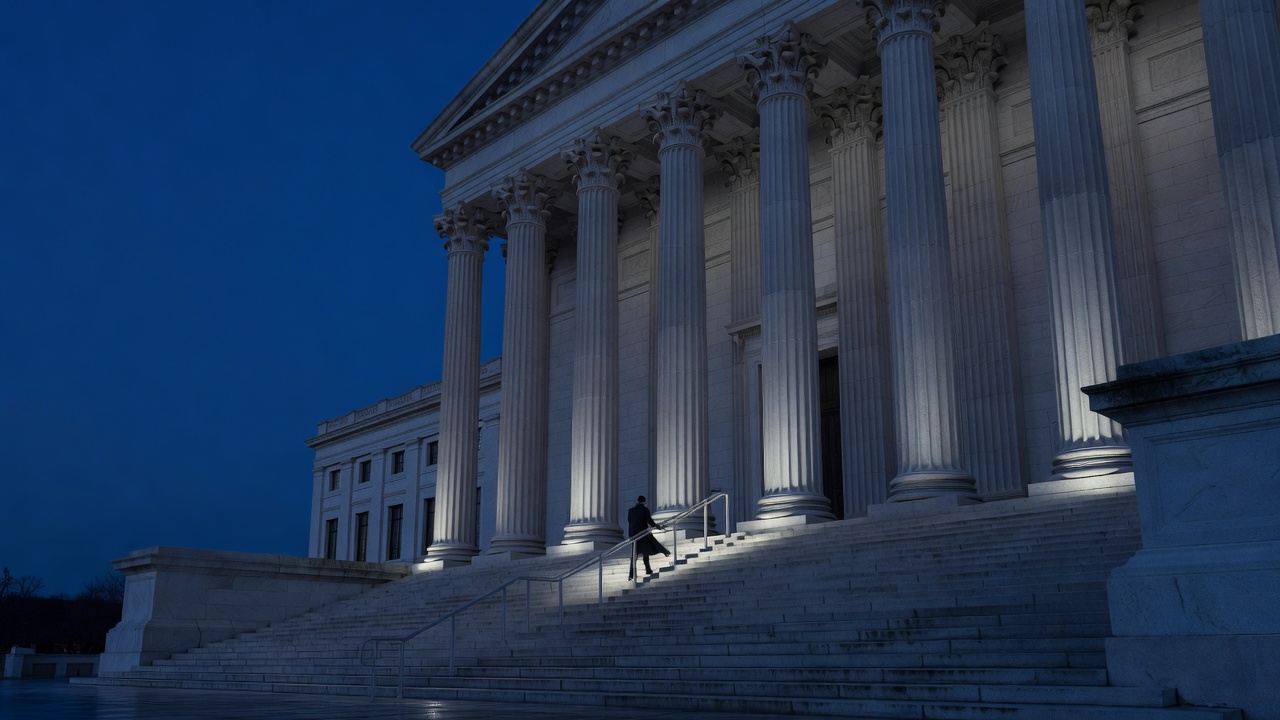
Anthropic Deputy General Counsel Aparna Sridhar stated, "We reached this settlement in 2025, after the court's landmark ruling that training AI on books is fair use under copyright law, which remains the law today." The settlement requires Anthropic to destroy all copies of the pirated material obtained from the illegal sources, though it does not prohibit the company from using licensed or legally purchased books in future training runs.
Judge Martinez-Olguin's approval order emphasized the settlement's scale relative to the legal risks facing the class: "The $1.5 billion settlement provides substantial benefits to the class in light of the novel claims asserted. Success at trial was not assured, and a loss would have left the class with no recourse."
Why it matters
The settlement establishes the first major financial benchmark for copyright violations in AI training data sourcing, creating a compliance framework that every enterprise developing or deploying generative AI must now navigate. The dual ruling (training is fair use, pirate sourcing is not) means companies can continue training on copyrighted material, but the method of acquisition determines liability exposure. For AI developers, the $3,000-per-work standard translates to $1.5 billion in damages for a training corpus of 500,000 books, a cost structure that makes pirate libraries financially untenable and licensed data sources comparatively attractive.
The Authors Guild, the oldest and largest professional organization for writers in the United States, has been at the center of copyright enforcement since its founding in 1912. The organization previously secured an $18 million settlement in 2014 against major electronics databases for reselling freelance writers' work without permission. In 2015, the U.S. Court of Appeals for the Second Circuit sided with Google in Authors Guild v. Google, citing fair use, after the Authors Guild filed a class action lawsuit in 2005 against Google's Book Search project.

The central question of whether AI training on copyrighted material is categorically legal remains unresolved across the industry. Judge Alsup's fair-use determination applies to this case but does not bind other courts hearing similar disputes against Google, Meta, OpenAI, Midjourney, and Perplexity AI. Enterprise AI teams deploying or building models must now account for data provenance as a distinct compliance risk, separate from the fair-use question. The operational requirement to destroy pirated material demonstrates that post-training remediation is enforceable, meaning audit trails for training data sourcing will become standard in AI governance frameworks.
Independent analyst commentary specifically on this announcement was not publicly available at publication time.
Competitive Landscape
Anthropic's settlement does not resolve the broader copyright questions facing its commercial peers, all of whom face similar pending lawsuits over training data sourcing. The competitive implications center on data acquisition costs and legal exposure rather than direct product differentiation:
- OpenAI (ChatGPT, GPT-4): Facing multiple copyright lawsuits from authors and publishers over training data sourcing, no settlement announced. OpenAI has emphasized partnerships with publishers including the Associated Press and Axel Springer, positioning licensed data as a competitive moat. OpenAI
- Google LLC (Gemini models): Litigation pending over similar training data claims. Google's 2015 win in Authors Guild v. Google (fair use ruling for Book Search) does not directly cover AI training use cases, leaving current exposure unresolved. Google
- Meta Platforms Inc (Llama models): Pending copyright lawsuits regarding AI training data. Meta released Llama 2 and Llama 3 as open-weight models, distributing legal risk across the ecosystem rather than concentrating it in a single commercial deployment. Meta
The $1.5 billion Anthropic settlement establishes a damages calculation framework that could apply across pending cases, making it the de facto pricing benchmark for resolving similar disputes. Companies using licensed training data gain a cost advantage if pirate-sourced competitors face per-work damages at the $3,000 standard.
What's next
The immediate operational task is distributing settlement payments to authors and publishers covered by the settlement. Anthropic must also complete the court-ordered destruction of all pirated training material obtained from Library Genesis and Pirate Library Mirror, though no public timeline for verification has been disclosed. The settlement does not restrict Anthropic from training future Claude models on copyrighted works obtained through licensing agreements or purchases.
Industry-wide legal uncertainty continues. The pending copyright cases against Google, Meta, OpenAI, Midjourney, and Perplexity AI will further shape the compliance landscape, particularly if any reach trial and produce appellate rulings that bind other courts. Judge Alsup's fair-use determination in the Anthropic case is persuasive but not precedential outside the Northern District of California, meaning parallel cases in other jurisdictions could reach different conclusions on the core training question.
Potential licensing frameworks between AI companies and publishers are emerging as a commercial alternative to litigation. OpenAI's deals with the Associated Press and Axel Springer, and Anthropic's post-settlement ability to license books, suggest the industry may bifurcate into licensed-training tiers (higher cost, lower legal risk) and open-data tiers (lower cost, higher exposure). Enterprise AI buyers will increasingly demand training-data provenance audits as part of vendor diligence, particularly for regulated industries where model lineage affects compliance certification.
For a CISO evaluating AI vendors on a $3M annual contract, the Anthropic settlement is the first time per-work copyright liability has been quantified at scale: $3,000 per book means a 500,000-work corpus carries $1.5 billion in potential damages if sourced from pirate libraries. Vendor diligence now requires asking not just whether training is fair use, but whether the vendor can demonstrate legal acquisition of every training asset. A model trained on licensed data costs more to build but carries no class-action tail risk; a model trained on scraped or pirated data may have identical technical performance but represents an unquantified liability that lands on the enterprise customer if the vendor folds or indemnification caps are breached.
The settlement closes the largest copyright class action in history, but the precedent it sets is procedural rather than substantive. Training on copyrighted books is still fair use. Pirating those books is still infringement. The $3,000-per-work standard is now the benchmark every author, publisher, and AI company will cite in the next wave of disputes.
-- Aria Lin, Enterprise Technology Analyst
Sources: Claude / Anthropic · Anthropic · Authors Guild