Apollo and Blackstone arrange $36 billion chip lease for Anthropic ClaudeApollo and Blackstone arrange $36 billion chip lease for Anthropic ClaudeApollo and Blackstone arrange $36 billion chip lease for Anthropic ClaudeApollo and Blackstone arrange $36 billion chip lease for Anthropic Claude
May 29, 2026
Apollo Global Management and Blackstone are arranging a $36 billion debt deal to purchase Google tensor processing units for Anthropic, the company behind Claude, through a special-purpose vehicle that will lease the chips to the AI developer across four U.S. data centers.
Apollo Global Management and Blackstone are arranging a $36 billion debt deal to purchase Google tensor processing units for Anthropic, the company behind Claude, through a special-purpose vehicle that will lease the chips to the AI developer across four U.S. data centers. The financing is expected to close next week, making it one of the largest private-credit transactions ever assembled around a single company's compute needs. The structural innovation is the risk-sharing: Anthropic gets the chips without the debt, Broadcom absorbs residual-value risk on $31 billion of senior debt, and Apollo and Blackstone get fee income plus exposure to the AI infrastructure layer without taking direct equity risk in an unprofitable developer.
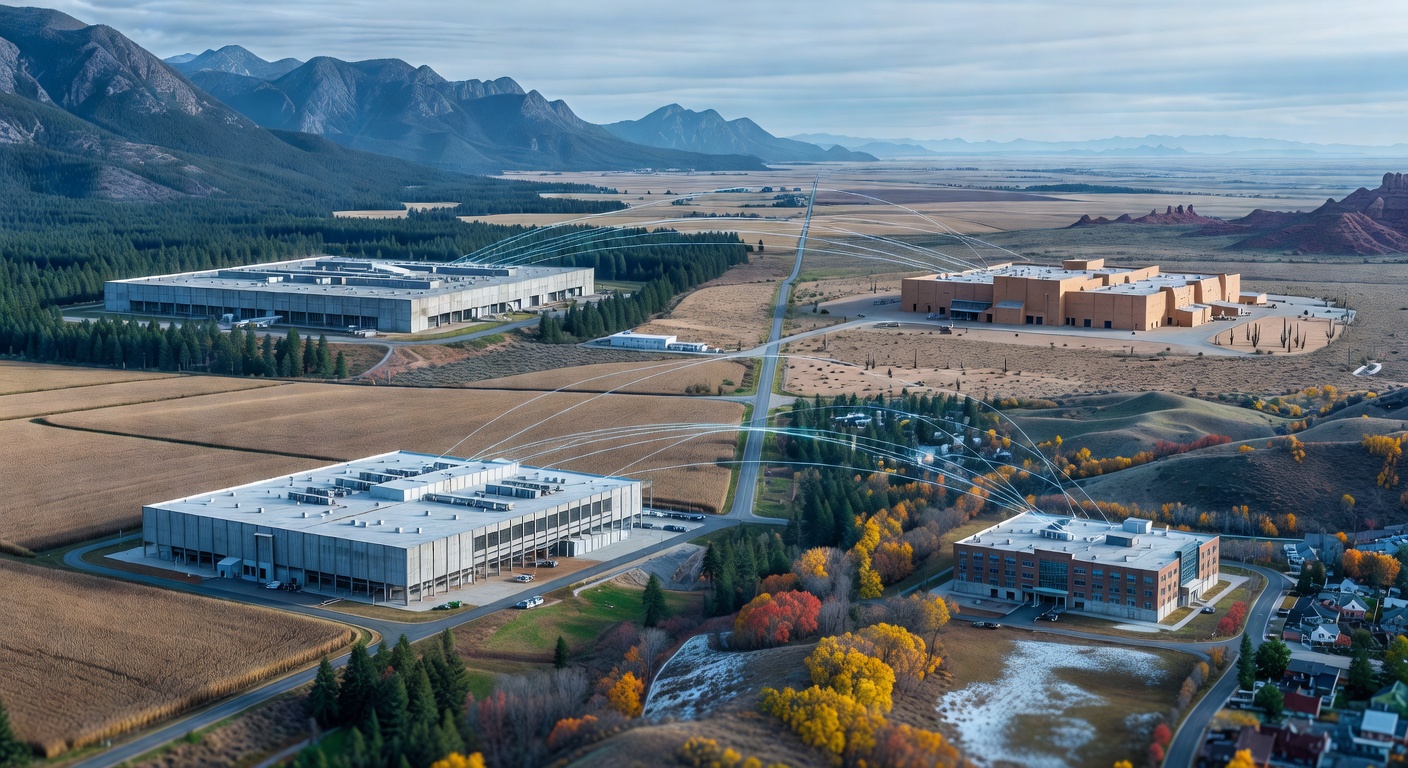
The arrangement splits risk across multiple parties in a novel way. Apollo and Blackstone are structuring the debt through a special-purpose vehicle that purchases the TPUs from Google, then leases the hardware to Anthropic. This keeps the debt off Anthropic's balance sheet while enabling the company to deploy compute infrastructure across data centers in New York, Texas, Louisiana, and Indiana. Broadcom, which helps Google build the TPUs by translating the architecture into manufacturable silicon, provides a residual-value support agreement on approximately $31 billion of the senior debt. If Anthropic stops making lease payments and the resale value of the chips fails to cover the outstanding loan, Broadcom absorbs the shortfall.
What's new
Anthropic was founded in 2021 by former OpenAI researchers and has raised multiple financing rounds at valuations exceeding $900 billion. The company competes primarily on safety research, constitutional AI principles, and enterprise-focused deployment options, but lacks the revenue scale of OpenAI, which reported $13.1 billion in revenue for 2025.
The $36 billion chip financing represents a departure from traditional balance-sheet purchases of compute infrastructure. Instead of Anthropic buying the TPUs directly, the special-purpose vehicle acquires the hardware and assumes the debt, then leases the capacity to Anthropic. This allows Anthropic to scale compute capacity without adding billions in liabilities to its own financials, a critical advantage for a company that has yet to reach profitability.
Apollo and Blackstone plan to syndicate portions of the debt to additional investors while retaining sizable stakes themselves. Blackstone already holds approximately $1 billion in Anthropic equity. The deal also builds on a separate $1.5 billion joint venture announced May 4, 2026, in which Blackstone, Hellman & Friedman, and Goldman Sachs partnered with Anthropic to create an enterprise AI services company focused on deploying Claude across the private equity firms' portfolio companies.
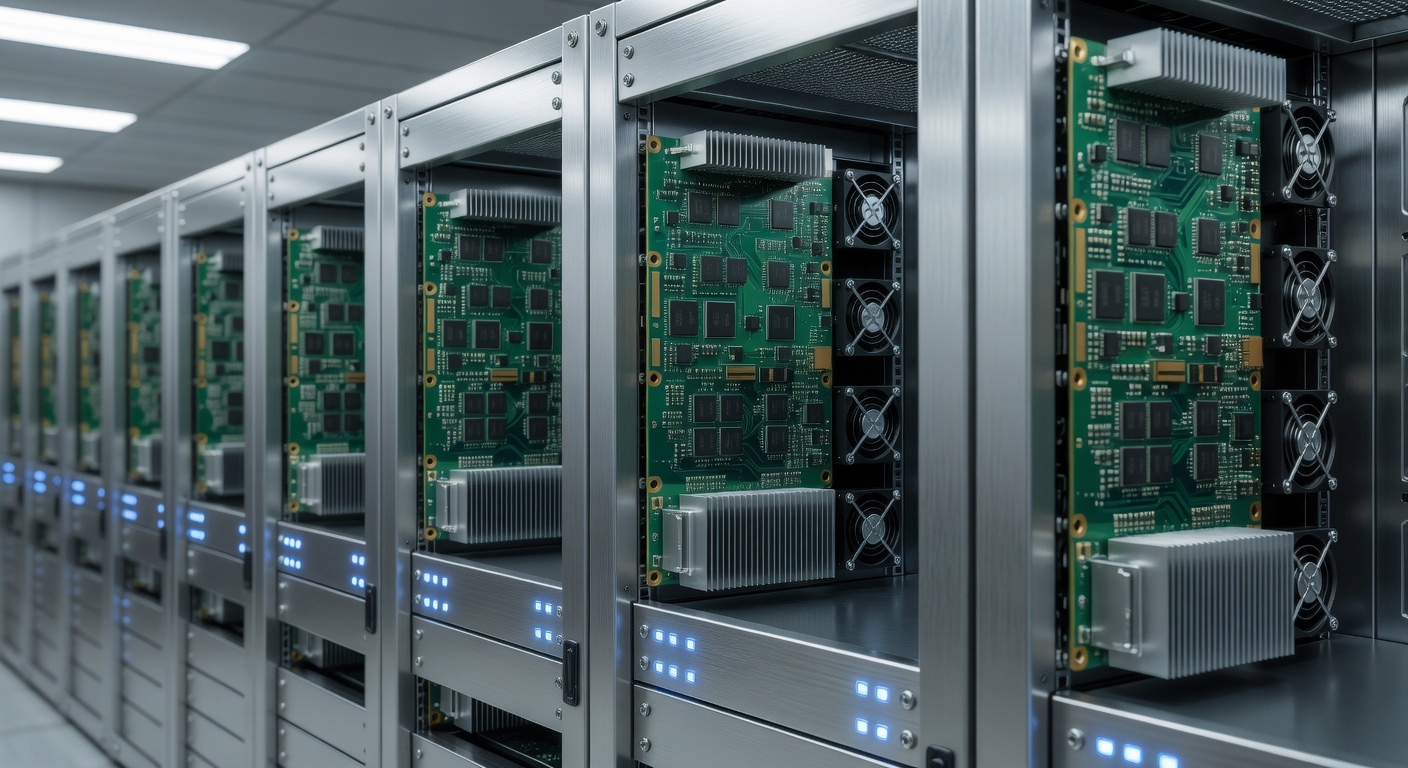
The chips being purchased are Google's custom tensor processing units, which the search giant began using internally in 2015 and made available to third parties in 2018. A 2017 research paper showed the TPU achieved 15 to 30 times higher performance and 30 to 80 times higher performance-per-watt than contemporary CPUs and GPUs. By leasing TPUs instead of relying exclusively on Nvidia hardware, Anthropic is pursuing an alternative to a Nvidia-only diet, diversifying its supply chain and potentially reducing exposure to Nvidia's pricing and availability constraints.
Why it matters
The deal reveals a new financing model for frontier AI companies facing a capital-intensity problem that traditional venture funding cannot solve alone. Building and operating large language models at enterprise scale requires tens of billions of dollars in compute infrastructure, yet most AI developers remain unprofitable. Anthropic's approach allows the company to preserve balance-sheet flexibility while still securing the capacity needed to compete with OpenAI, which has received over $13 billion in investment from Microsoft and reported $13.1 billion in revenue for 2025.
The residual-value guarantee from Broadcom is the structural innovation that makes the deal viable for lenders. In traditional asset-backed securities, income payments and collateral value derive from a specified pool of underlying assets. Broadcom's agreement to absorb any shortfall if Anthropic defaults and chip resale proceeds fall short effectively transfers credit risk from the lenders to the chipmaker, lowering the cost of capital for Anthropic while giving Broadcom a strategic stake in TPU adoption beyond Google's own infrastructure.
For enterprise decision-makers, the multi-geographic deployment footprint matters as much as the financing structure. By committing to data centers in New York, Texas, Louisiana, and Indiana, Anthropic is building regional redundancy and potentially positioning Claude to meet data residency requirements that increasingly shape procurement decisions for regulated industries. The four-location strategy contrasts with cloud providers that concentrate infrastructure in fewer, larger availability zones, and may appeal to customers seeking alternatives to the three dominant hyperscalers: Amazon Web Services at 31 percent market share, Microsoft Azure at roughly 22 percent, and Google Cloud at 11 percent.
Independent analyst commentary specifically on this announcement was not publicly available at publication time.
Competitive Landscape
Anthropic and OpenAI are both partnering with private equity firms for enterprise deployment, but the structures differ. OpenAI, founded in 2015 and restructured in 2019 with a for-profit subsidiary that became a public benefit corporation in 2025, completed a $6.6 billion secondary share sale in October 2025 at a $500 billion valuation and relies primarily on Microsoft's Azure cloud computing resources, with Microsoft having invested over $13 billion. OpenAI's enterprise distribution strategy centers on direct sales and API partnerships, while Anthropic's $1.5 billion joint venture with Blackstone, Hellman & Friedman, and Goldman Sachs creates a dedicated entity to push Claude into the portfolio companies of those private equity firms, a distribution channel that could accelerate adoption without requiring Anthropic to build a large direct sales organization.
Blackstone's dual role as equity holder and debt arranger creates unusual alignment. The firm holds approximately $1 billion in Anthropic equity, co-arranged the $36 billion chip financing, and co-invested in the $1.5 billion enterprise joint venture. This vertically integrated involvement gives Blackstone exposure to Anthropic's upside at the equity layer, fee income from arranging the debt, and strategic control over enterprise distribution. No comparable stacking of interests exists in the OpenAI-Microsoft relationship, where Microsoft provides capital and cloud infrastructure but does not play a lead role in structuring third-party debt or operating a dedicated enterprise services subsidiary.
The TPU diversification strategy addresses a structural bottleneck for AI companies dependent on Nvidia, which has faced supply constraints and pricing power as demand for its H100 and successor chips has outpaced production capacity. By committing $36 billion to lease TPUs, Anthropic is betting that diversification away from Nvidia will deliver both cost and availability advantages.
What's next
Apollo and Blackstone are bringing additional investors into the deal this week, with the financing expected to close next week. The final syndication will reveal how much of the $36 billion debt the two arrangers retain versus sell down, and the pricing will signal how the market values the Broadcom residual-value guarantee and the underlying credit risk of leasing chips to an unprofitable AI company at a $900 billion-plus valuation. If the deal prices tightly, it may establish a blueprint for other frontier AI developers seeking to scale infrastructure without balance-sheet purchases.
The separate $1.5 billion enterprise AI services joint venture will serve as a leading indicator of whether the Blackstone-Hellman & Friedman-Goldman Sachs distribution channel accelerates Claude adoption in the mid-market. Private equity portfolio companies span industries from healthcare to manufacturing to financial services, and if the joint venture can demonstrate measurable ROI from Claude deployments in those verticals, it will validate the thesis that AI models gain enterprise traction faster through trusted intermediaries than through direct vendor sales. Early results should become visible in the next two to three quarters.
Anthropic's path to profitability remains the critical unknown. The company is raising at valuations above $900 billion but does not yet turn a profit, and the $36 billion chip lease adds a recurring infrastructure cost that must be covered by revenue growth. If Claude adoption accelerates and Anthropic can demonstrate a credible trajectory toward breakeven, the financing will look prescient. If growth stalls or competition from OpenAI, Google's own Gemini models, or open-source alternatives constrains pricing power, the lease payments will become a structural burden.
For a CTO evaluating AI model vendors, this financing signals that Anthropic has secured compute runway across four U.S. data centers through a structure that spreads risk among private-credit firms, a cloud provider, and a chipmaker, reducing the probability of a capacity crunch that could force service degradation or price increases mid-contract. The Blackstone equity stake and joint venture alignment suggest Anthropic has deep-pocketed backers committed to enterprise distribution. But the company's lack of profitability and reliance on lease payments mean that vendor stability depends on sustained hypergrowth, a bet that looks safer today than it may in 24 months if the AI spending cycle cools.
The $36 billion figure is the headline, but the structural innovation is the risk-sharing: Anthropic gets the chips without the debt, Broadcom gets strategic positioning for TPUs beyond Google, and Apollo and Blackstone get fee income plus exposure to the AI infrastructure layer without taking direct equity risk in an unprofitable developer. Every party is betting that enterprise AI spending will justify the stack. If it does, this deal will be remembered as the moment private credit solved the infrastructure financing problem for frontier labs. If it does not, it will be a case study in structured finance that assumed a growth curve no one could sustain.
-- Aria Lin, Enterprise Technology Analyst
Sources: Claude / Anthropic · Anthropic Enterprise AI Services Announcement · Bloomberg · Tensor Processing Unit Overview