MIT Proves One Propellant Can Power Two Thruster Types on Tiny SatellitesMIT Proves One Propellant Can Power Two Thruster Types on Tiny SatellitesMIT Proves One Propellant Can Power Two Thruster Types on Tiny SatellitesMIT Proves One Propellant Can Power Two Thruster Types on Tiny Satellites
June 10, 2026
MIT researchers have demonstrated that a single propellant called ASCENT (Advanced Spacecraft Energetic Non-Toxic Propellant) can power both chemical and electrospray thrusters on the same small spacecraft, a result published in the peer-reviewed Journal of Propulsion and Power
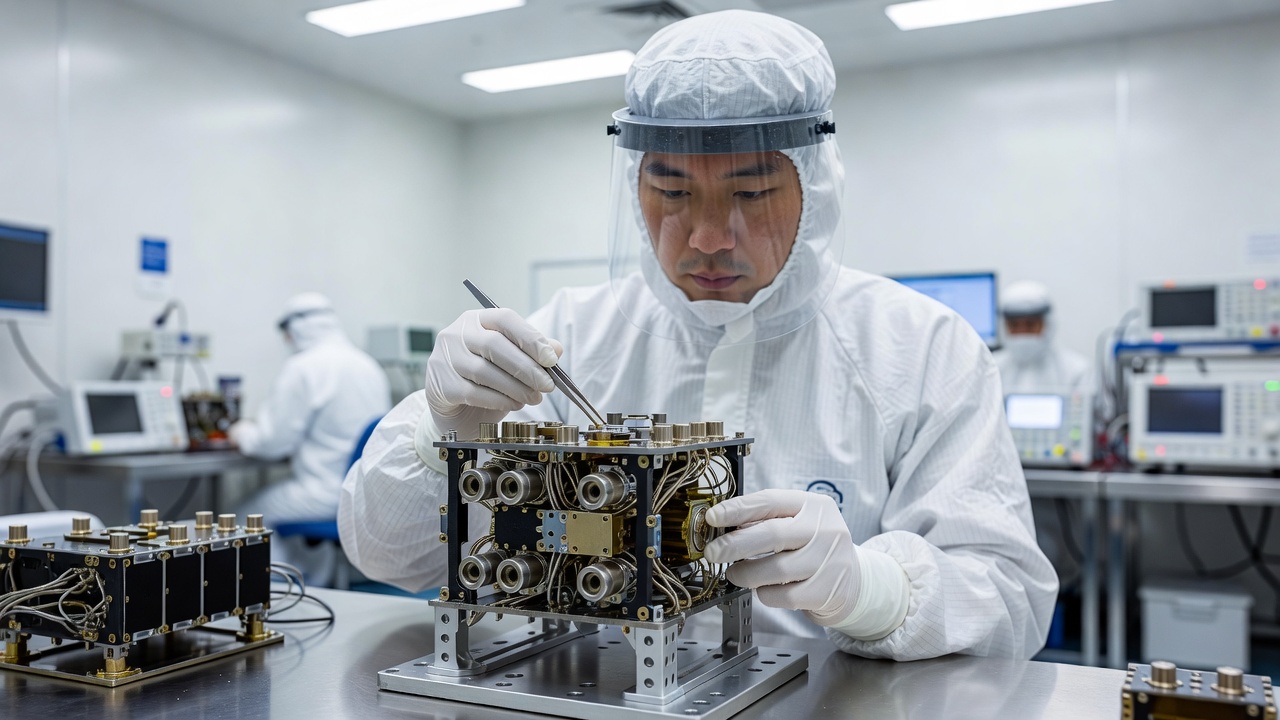
MIT researchers have demonstrated that a single propellant called ASCENT (Advanced Spacecraft Energetic Non-Toxic Propellant) can power both chemical and electrospray thrusters on the same small spacecraft, a result published in the peer-reviewed Journal of Propulsion and Power and announced by MIT on June 1, 2026. The counterintuitive piece is not the propellant chemistry itself but the plumbing problem it eliminates: small satellites that need both rapid orbital maneuvering and fine-grained station-keeping have historically required two separate fuel systems, two tanks, and two sets of feed lines, all packed into a chassis the size of a shoebox. NASA plans to validate this dual-mode configuration in orbit no earlier than November 2026, roughly 13 months behind an earlier expected launch date reported by SpaceNews.
What Happened
The study, led by Amelia Bruno, a former postdoctoral researcher at MIT's Space Propulsion Laboratory, demonstrated in ground tests that ASCENT, a monopropellant originally developed by the U.S. Air Force Research Laboratory, operates effectively in electrospray thrusters, not just the chemical thrusters it was designed for. The research was co-authored by Paulo Lozano, director of MIT's Space Propulsion Laboratory, and funded in part by NASA.
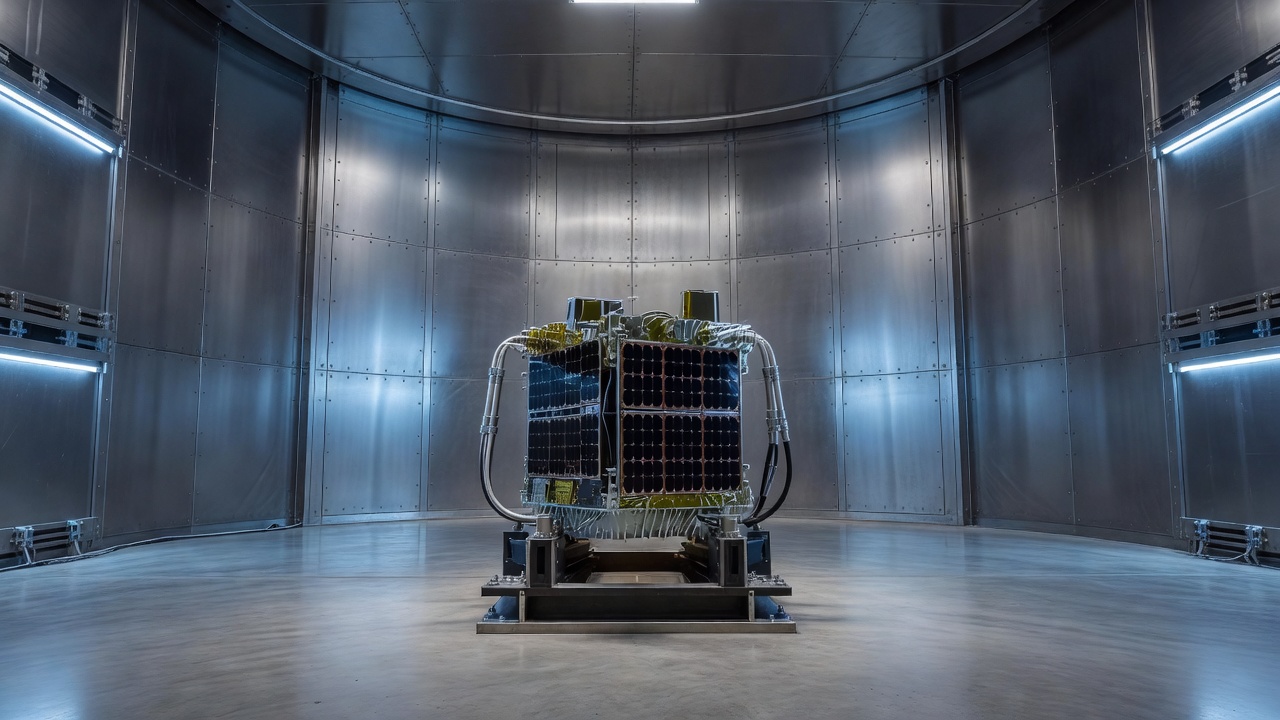
The ground-test apparatus used a model cubesat magnetically suspended inside a vacuum chamber, simulating the free-floating environment of orbit. The team varied voltage levels across the electrospray system and measured both thrust output and rotational control, confirming that ASCENT performs comparably to propellants designed specifically for electrospray use.
The next milestone is NASA's Green Propulsion Dual Mode cubesat mission, targeting low Earth orbit no earlier than November 2026. That date represents at least a 13-month slip from an October 2025 launch window previously reported by SpaceNews. Ground tests are complete; the in-orbit demonstration will be the first time this dual-mode ASCENT configuration has operated in space.
The Science Behind It
ASCENT was originally designated AF-M315E by the Air Force Research Laboratory, which developed it as a less toxic alternative to hydrazine, the incumbent high-efficiency monopropellant used for large orbital maneuvers. Hydrazine is a colorless flammable liquid that has powered spacecraft including the Dawn mission to Ceres and Vesta, but it is classified as hazardous to handle. ASCENT offers a less toxic handling profile and, according to validated mission data from the Green Propellant Infusion Mission (GPIM), delivers nearly 50 percent higher performance for a given propellant tank volume compared to conventional hydrazine systems. It is also 50 percent denser than hydrazine, with a lower freezing point that reduces the spacecraft power needed to maintain propellant temperature.
ASCENT was validated in space for chemical thruster use on the GPIM between 2019 and 2020, operating in low Earth orbit. Following that mission's success, the Air Force Research Laboratory renamed the propellant from AF-M315E to ASCENT. What the MIT study adds is a demonstration of ASCENT's compatibility with a fundamentally different operating regime: electrospray thrusters, devices that use an electric field to accelerate charged liquid propellant particles, firing them as a fine spray for small, long-duration trajectory adjustments rather than high-energy burns.
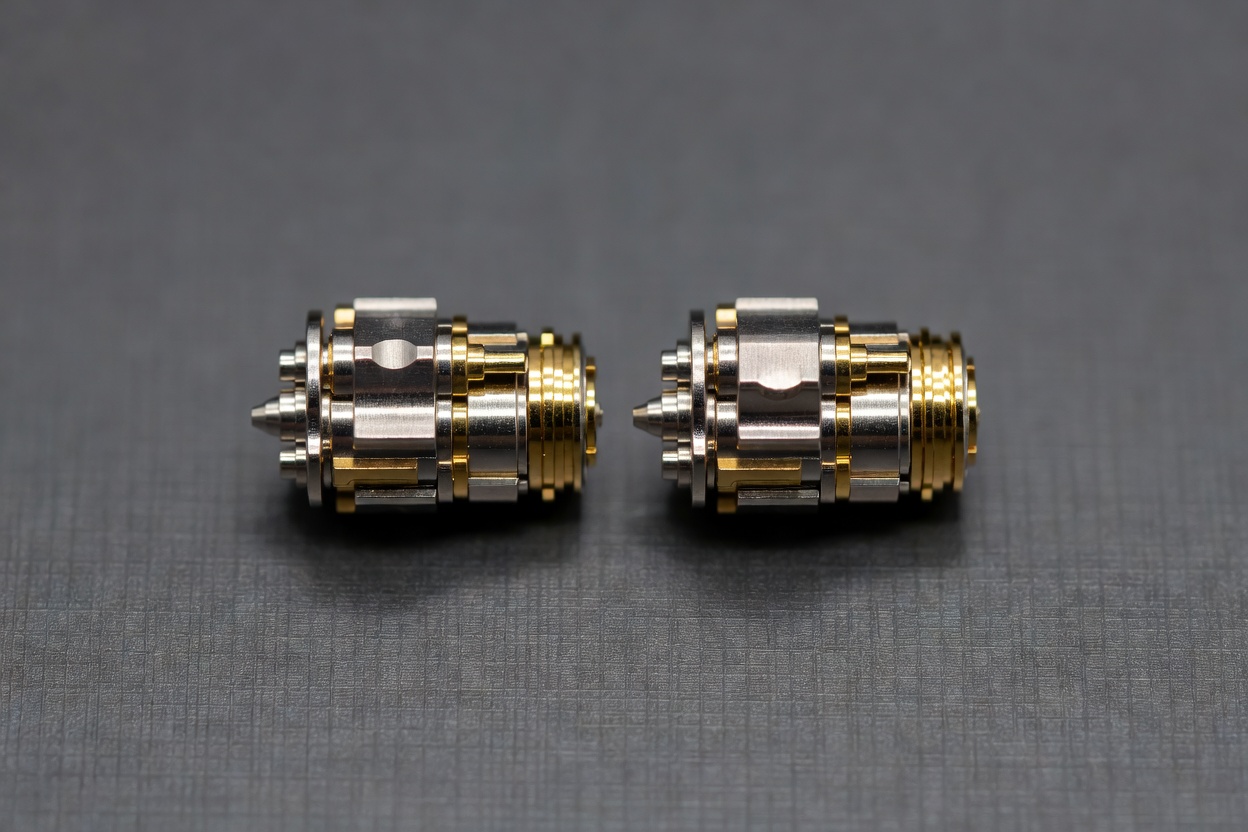
Electrospray thrusters range from thumbnail- to dime-sized, making them well-suited to cubesat platforms. The MIT team had previously operated these thrusters on purpose-built ionic liquid propellants. Confirming that ASCENT works in the same hardware opens a consolidation path that did not previously exist. Bruno stated in the MIT announcement: "Compared to our normal electrospray propellants, ASCENT can provide similar performance in terms of thrust. Now that we know our thrusters work with ASCENT, we can start thinking of all the ways we can make them even better."
Lozano, as co-author and laboratory director, framed the operational flexibility: "Say there's a storm coming, and you'd want to deploy your constellation of small satellites to observe over one location. You could choose to send them quickly, or slowly, depending on the nature of the observation. And the only way to do that is if you have two propulsion systems, which is now possible."
Why This Mission Matters
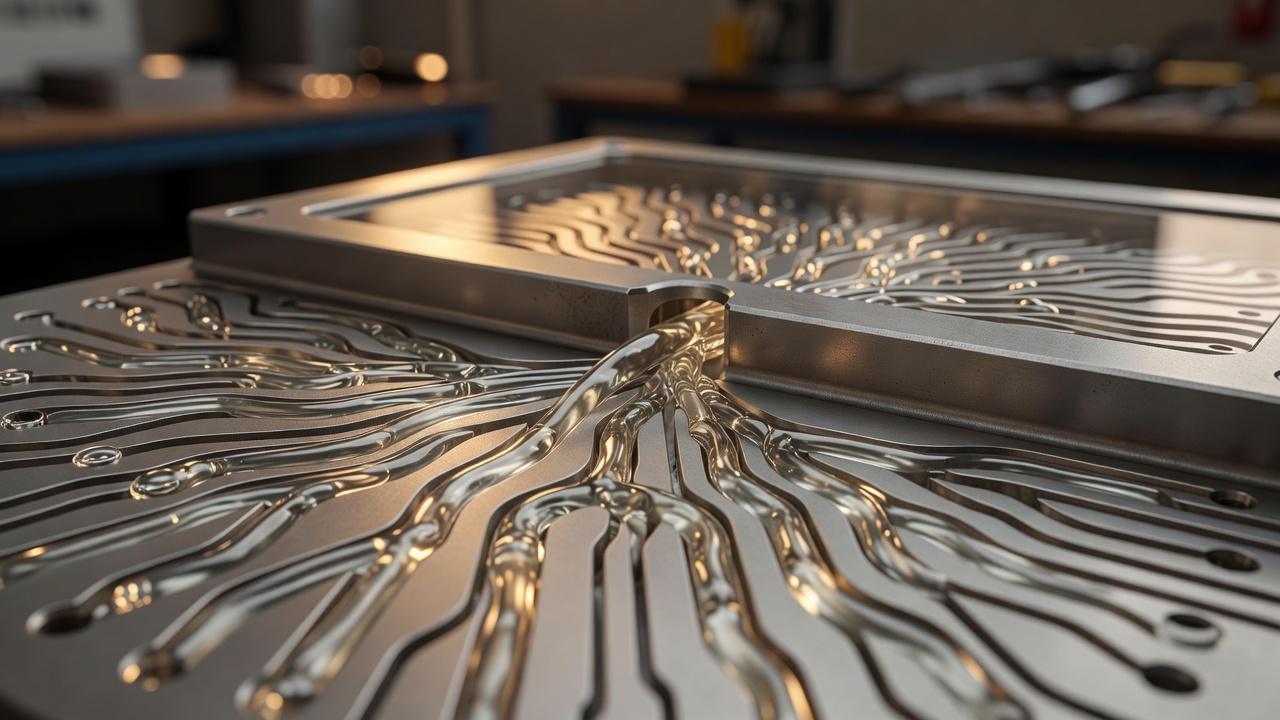
The practical argument for a single-propellant dual-mode system rests on what engineers call the mass and complexity budget. A conventional small satellite requiring both fast orbital maneuvering and precise station-keeping must carry two separate propellant systems: separate fuel tanks, separate feed lines, separate thruster sets. At cubesat scale, where the entire vehicle is defined as a 10 cm cube form factor with a mass ceiling of 2 kg per unit, every gram of plumbing duplication is a gram not available for payload instruments.
Bruno captured the mission-level implication in the MIT statement: "If you can have chemical and electrical propulsion in one small package, it's the best of both worlds. This opens the door for small satellites to do even more science, more observations, and more interesting missions, all on a smaller and cheaper platform."
The credibility baseline for the upcoming in-space test matters here. ASCENT was not an untested substance when the MIT study was conducted. The GPIM, which ran between 2019 and 2020, validated ASCENT for chemical thruster applications in the actual space environment, not just the laboratory. The MIT study's contribution is extending that validated heritage into the electrospray regime, giving the upcoming cubesat demonstration a credible prior rather than a cold start.
According to NASA, the agency is looking to expand deeper into space to support future agency objectives, with propulsion research framed as a key driver. The agency has specifically connected the dual-mode demonstrator to long-term deep-space mission planning, including crewed Mars missions under current NASA architecture work.
Competitive Landscape
The broader small-satellite propulsion field has active development programs at multiple institutions and companies, but the specific combination of a single-propellant dual-mode architecture with validated ASCENT space heritage has no direct published equivalent at cubesat scale in the open literature as of June 2026.
- Hydrazine-based systems (incumbent propellant standard) remain the baseline against which ASCENT is measured. Hydrazine's toxicity and handling complexity create regulatory and logistical cost that ASCENT is specifically designed to reduce, without sacrificing the performance density that made hydrazine the dominant choice for large orbital maneuver applications.
- Ionic liquid electrospray propellants (the MIT lab's prior approach) require their own separate supply chain and qualification process when operated alongside a chemical thruster -- the consolidation that ASCENT now enables is the direct replacement for this two-propellant baseline.
Independent analyst commentary specifically on this announcement was not publicly available at publication time.
What Comes Next
The Green Propulsion Dual Mode cubesat is scheduled for launch to low Earth orbit no earlier than November 2026. Ground tests are complete, making the upcoming mission the critical validation step that separates laboratory confirmation from operational credibility. The 13-month launch delay, from the SpaceNews-reported October 2025 expectation to the current NLT November 2026 target, has not been explained in detail in publicly available materials, but it does not appear to reflect a technical failure in the dual-mode approach itself, given that ground testing has concluded successfully.
The in-space demonstration is structured as a technology demonstrator, establishing the flight heritage that commercial small satellite operators and future NASA mission planners would require before baselined adoption. As Bruno noted, compatibility with ASCENT opens a development path: "Now that we know our thrusters work with ASCENT, we can start thinking of all the ways we can make them even better." That framing suggests the current result is a floor, not a ceiling, with further optimization of ASCENT-compatible electrospray thruster geometry and operating parameters as a near-term research direction.
The longer trajectory, as NASA has framed it, runs through LEO demonstration toward deep-space applications. The cubesat form factor has already demonstrated its commercial viability as a platform, with thousands of units launched to orbit. A dual-mode propulsion system that eliminates a full secondary propellant loop would materially lower the barrier to building agile small-satellite constellations capable of both responsive repositioning and sustained precision operations.
For small-satellite engineers and constellation operators: a dual-mode system running on one ASCENT tank means one propellant qualification, one handling protocol, one set of feed hardware, and one supply chain to manage per mission. At current cubesat mass budgets of 2 kg per unit, eliminating a secondary propellant loop could free meaningful payload mass for additional sensors or communications hardware, without requiring a larger bus or a second launch slot. The technology readiness path now runs through a single in-orbit demonstration expected before the end of 2026.
A cubesat is roughly the size of a Beanie Baby display box. The fact that such a platform is being seriously evaluated as a stepping stone toward crewed Mars mission architecture tells you something about how far the economics of small spacecraft have shifted. MIT and NASA are not chasing novelty here; they are resolving a genuine engineering constraint, one tank at a time, with a mission that should have flown more than a year ago and still has not left the ground.
-- Zara Velez, Emerging Technology Editor
Sources: Space.com, "Thruster breakthrough? New 2-in-1 propulsion system is about to get an in-space test" - MIT Space Propulsion Laboratory, Journal of Propulsion and Power (2026) - NASA Green Propellant Infusion Mission