Autonomous Heavy Machinery Is Robotics' Most Honest Benchmark Right NowAutonomous Heavy Machinery Is Robotics' Most Honest Benchmark Right NowAutonomous Heavy Machinery Is Robotics' Most Honest Benchmark Right NowAutonomous Heavy Machinery Is Robotics' Most Honest Benchmark Right Now
May 18, 2026
IEEE Spectrum's senior robotics editor Evan Ackerman, who has written more than 6,000 articles on robotics and technology since 2007, published his May 15 Video Friday with a quiet but pointed argument: the most significant robotic progress happening right now is not humanoids
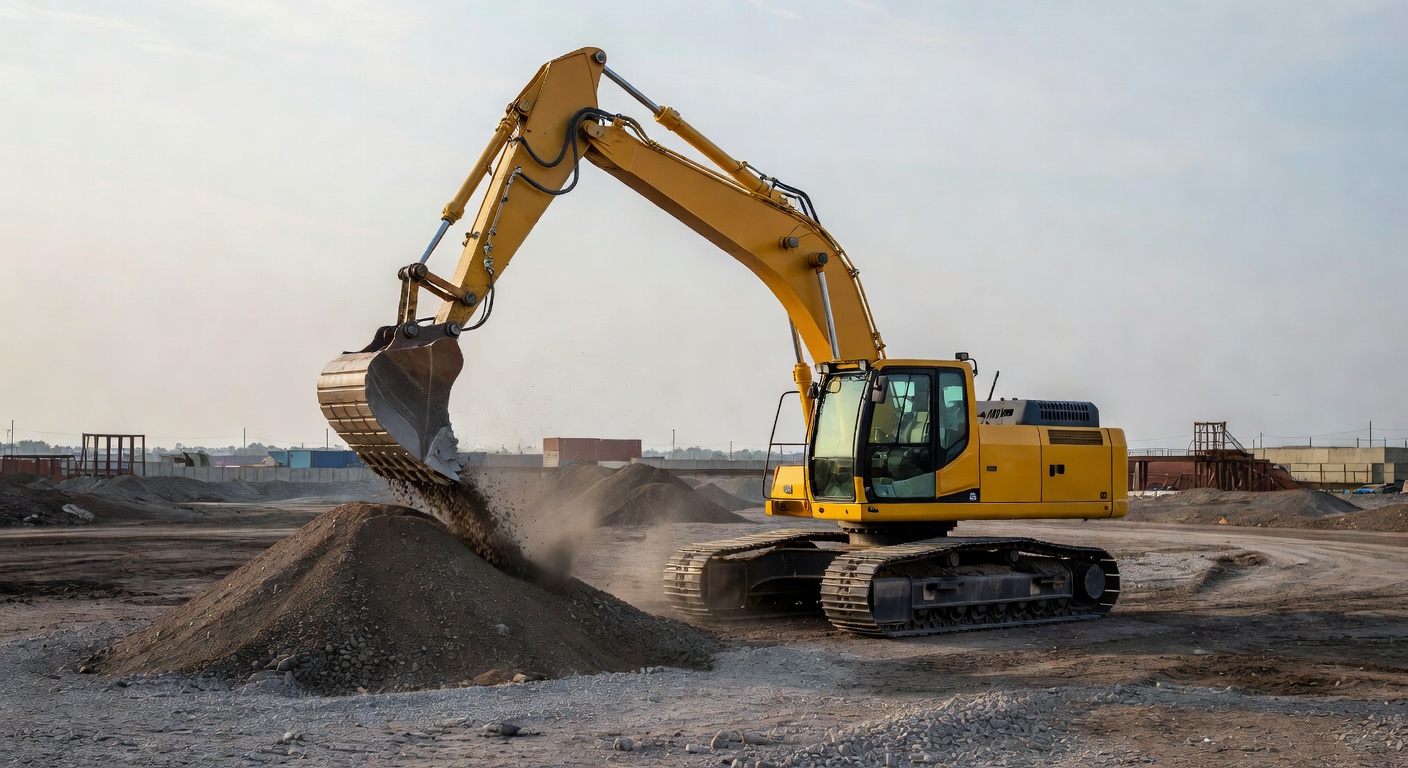
IEEE Spectrum's senior robotics editor Evan Ackerman, who has written more than 6,000 articles on robotics and technology since 2007, published his May 15 Video Friday with a quiet but pointed argument: the most significant robotic progress happening right now is not humanoids doing backflips but ETH Zurich's autonomous bulk-material-handling system — heavy hydraulic machinery moving loose or unpackaged industrial goods on a real-world 40-ton material handler without human operators. The counterintuitive reality is that the headline-grabbing Figure bedroom demo, which circulated as evidence of humanoid capability, functions more convincingly as a catalog of what robots still cannot reliably do than what they can. That distinction matters because capital allocation, workforce planning, and procurement decisions are being shaped right now by a PR narrative that Ackerman, with nearly two decades of primary-source robotics coverage behind him, says is running ahead of the engineering.
What It Does
The lead demonstration in Ackerman's May 15 roundup credits ETH Zurich with the first complete autonomous bulk-material-handling system deployed on a real-world 40-ton material handler. The research team frames the task this way in their own paper: "a critical, labor-intensive operation across various industries, traditionally performed by human operators using heavy hydraulic manipulators equipped with free-swinging, underactuated grippers." The machines, the kind that typically require certified operators seated in pressurized cabs, are moving and placing granular material without a human in the loop.
Ackerman's framing is precise: "This is one of those 'more difficult to automate than it looks' type things." Heavy machinery automation involves inertia management, terrain variability, load distribution physics, and the kind of real-world surface unpredictability that structured factory floors deliberately eliminate. It is a different category of engineering challenge than automating a controlled indoor task.
The second featured humanoid demo shows a Figure robot tidying a bedroom. Ackerman does not dismiss the demo, but he refuses to validate the implicit claim in its framing: "I don't want to minimize this bedroom tidying by Figure (although I suppose I'm going to)." His observation that the footage "really illustrates what these robots are comfortable with, and what they're not" positions the demo as diagnostic rather than triumphant. The robot's performance reveals capability contours, not capability ceilings cleared.
A third video, accompanying a research paper published in Nature, earns Ackerman's highest editorial praise: "This is one of the best robotic research videos I've ever seen." One detail embedded in that video's own credits proved notable enough for him to flag explicitly: the footage is "not AI," a disclaimer the researchers felt necessary to include given current audience skepticism about whether compelling robot footage is real or synthetically generated.
The Technical Achievement
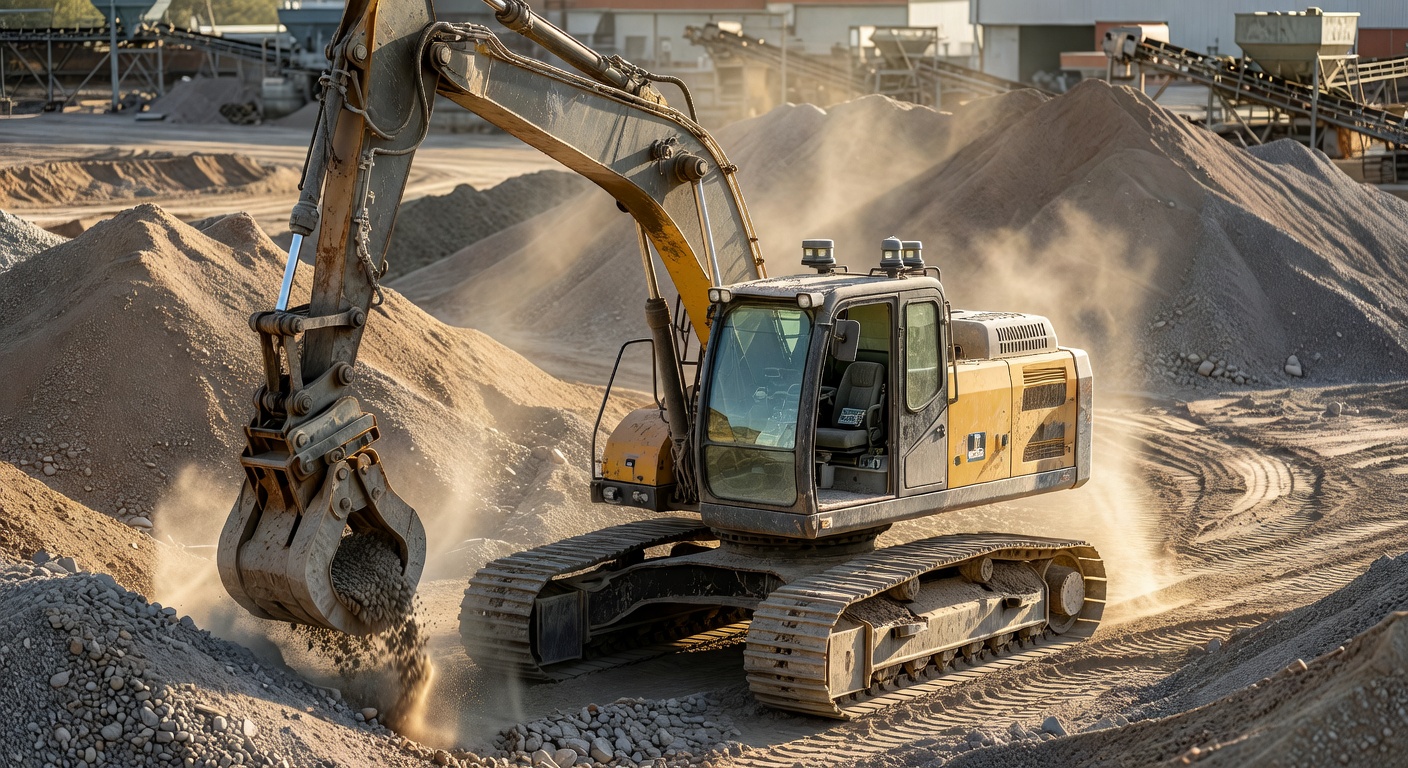
The engineering difficulty of autonomous bulk material handling comes from a specific class of physical complexity. Unlike assembly-line robotics, which operates in carefully constrained environments with known part geometries, heavy equipment working with bulk materials faces continuous variability: pile angles shift, material density is inconsistent, and ground conditions change with each machine pass. These are not edge cases. They are the operating baseline.
Ackerman's caution about performance claims applies with particular force here. He states directly: "you want to be very careful about claiming that any robot operates at 'human performance levels,' especially in a somewhat complex manipulation task, because humans are very, very good at stuff like this." Experienced equipment operators develop pattern recognition and kinesthetic feedback over years of work. Matching that capability -- not just approximating it under ideal conditions -- is the actual benchmark. No performance data, cycle times, or error rates for the featured systems appear in the source material, and Ackerman does not invent any.
The metric Ackerman does apply is temporal consistency: "Any robot doing anything consistently over a long period of time is impressive." This is a technically rigorous standard that spectacle-oriented demos structurally avoid. A robot that performs a task correctly once, on camera, under controlled conditions, tells you almost nothing about deployment readiness. A robot that performs the same task across thousands of cycles under varying conditions tells you something real.
The "not AI" credit in the research video also deserves attention. A legitimate research team felt it necessary to disclaim AI generation in their own video credits because synthetic AI-generated video has advanced to the point where audiences, including technically literate ones, cannot reliably distinguish it from real robotic performance footage. Researchers are now competing not just with each other but with fabricated plausibility.
Real-World Impact
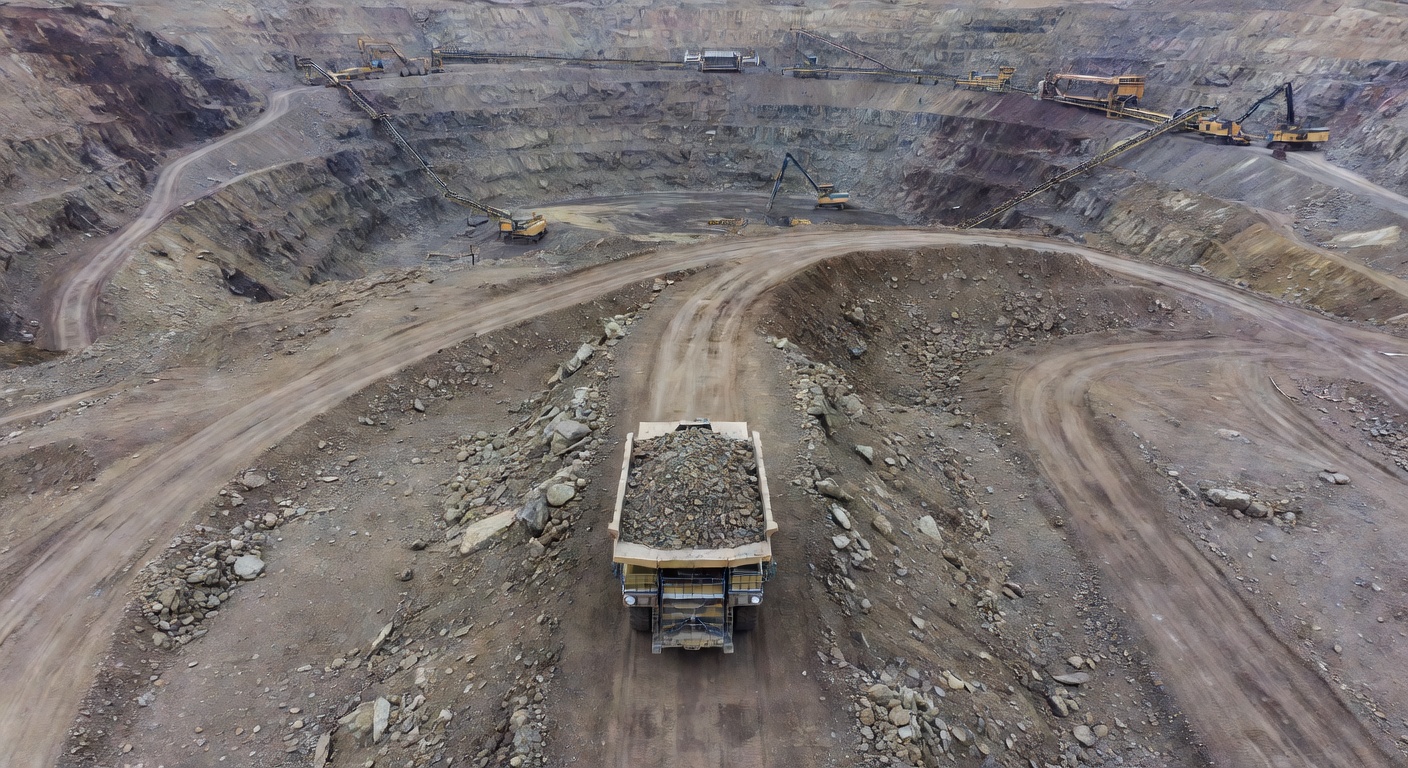
The industrial stakes of autonomous bulk material handling are substantial. Construction, mining, road maintenance, and port operations all depend on the movement of granular or bulk material using heavy hydraulic equipment. These industries face persistent labor shortages for certified equipment operators, physical injury rates among the highest of any sector, and operational cycles that run continuously across conditions humans find difficult or dangerous to work in.
Ackerman's editorial stance on useful versus spectacular robotics is not rhetorical. "Give me this over videos of robots doing backflips any day" reflects a specific critique of how the field has historically allocated media attention and, by extension, investor attention. Spectacle demos -- short, high-difficulty, visually striking tasks performed under optimal conditions -- are optimized for virality, not deployment evidence. They can create the impression of broader capability than the engineering actually supports.
The Figure bedroom demo illustrates the gap. Picking up an object from a non-uniform surface, relocating it without damaging adjacent objects, and repeating that across a room's worth of varied items involves continuous unstructured manipulation -- physically interacting with objects that were not placed, sized, or oriented for robotic handling. Current robots solve it imperfectly, inconsistently, and slowly.
Ackerman's read is that this is fine and informative, but should not be framed as a near-term domestic automation solution. The video reveals where the capability frontier actually sits, which is more valuable than a polished demo implying the frontier has already been crossed.
Competitive Landscape
The humanoid and industrial robotics landscape features a small set of players generating most of the public attention. The primary company featured in this roundup is Figure, a humanoid robotics firm whose bedroom-tidying demonstration Ackerman frames as diagnostic of capability limits rather than confirmation of deployment readiness. The gap between viral demo and consistent real-world performance remains the central open question for humanoid commercialization broadly.
Digit, referenced obliquely by Ackerman in the roundup ("The next video better be a Digit Centaur"), represents a class of humanoid design iterating toward hybrid or next-generation configurations. Whether "Digit Centaur" refers to an announced product or an anticipated variant was not confirmed in the source material.
Sony's Aibo appears in the roundup with Ackerman's observation that it "may be showing its age" relative to current research and commercial hardware, positioning consumer companion robotics as a distinct and slower-moving category from industrial and logistics-focused platforms.
Independent analyst commentary on this announcement was not publicly available at publication time.
What's Next
The next major convergence point for the robotics community is ICRA 2026, the IEEE International Conference on Robotics and Automation, running June 1 through 5 in Vienna. ICRA is the field's largest annual technical gathering, where unpublished results in manipulation, locomotion, perception, and autonomy receive their first public presentation. The bulk material handling systems featured in Ackerman's roundup represent exactly the category of work that tends to appear in ICRA proceedings ahead of commercial announcements.
Following ICRA, the Robotics: Science and Systems conference (RSS 2026) runs July 13 through 17 in Sydney. RSS is smaller and more selective, with a reputation for higher-risk theoretical work. The Summer School on Multi-Robot Systems runs July 29 through August 4 in Prague, targeting researchers working on coordination problems relevant when autonomous heavy machinery operates alongside other machines and humans.
The commercial-facing event is Actuate 2026, scheduled for August 18 and 19 in San Francisco, where companies translate research progress into deployment roadmaps for enterprise buyers. The gap between what ICRA and RSS researchers present in June and July and what companies announce at Actuate in August will be worth watching closely.
For engineers and procurement managers evaluating autonomous industrial equipment, the practical translation is this: if a vendor is claiming human-performance-level results for a manipulation or heavy-equipment task, ask for consistency data across thousands of cycles under variable conditions, not the demo reel. The single-take video is the least informative evidence available, and the field currently has a structural incentive to lead with it.
The most striking thing in Ackerman's May 15 roundup is not any individual robot. It is that a journalist with more than 6,000 articles and nearly two decades of primary-source robotics coverage felt it necessary to explicitly warn against taking company performance claims at face value, using the industry's own viral footage as his exhibit. When a credentialed insider turns the genre's best content against its own PR conventions, that is a signal about where the gap between capability and narrative has grown large enough to become a problem worth naming publicly.
-- Zara Velez, Emerging Technology Editor