U.S. Biotech Axiom Biosciences Eyes Hong Kong IPO After Newborn Brain Injury TrialU.S. Biotech Axiom Biosciences Eyes Hong Kong IPO After Newborn Brain Injury TrialU.S. Biotech Axiom Biosciences Eyes Hong Kong IPO After Newborn Brain Injury TrialU.S. Biotech Axiom Biosciences Eyes Hong Kong IPO After Newborn Brain Injury Trial
July 27, 2026
A San Diego biotech startup called Axiom Biosciences intends to become the first U.S.-headquartered biotechnology company to go public on the Hong Kong Exchange, its CEO announced this month, citing a Phase I study in which nine critically ill newborns treated with an
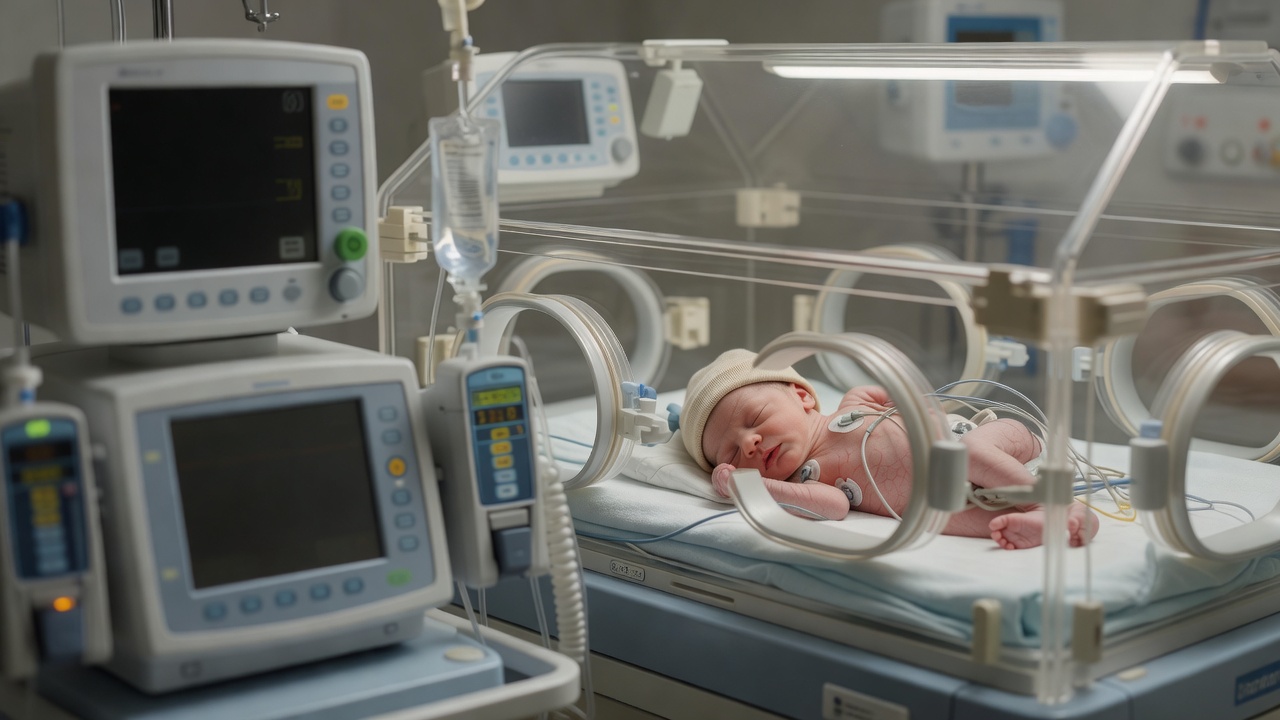
A San Diego biotech startup called Axiom Biosciences intends to become the first U.S.-headquartered biotechnology company to go public on the Hong Kong Exchange, its CEO announced this month, citing a Phase I study in which nine critically ill newborns treated with an experimental stem cell therapy achieved 0% mortality at twelve months. The counterintuitive part of that story is not the clinical result: it is that the company's decision to list in Hong Kong rather than on Nasdaq traces to a structural breakdown in how the United States funds clinical-stage biotechnology, not a judgment about where the best science is done. For patients, investors, and anyone watching the geography of biotech capital, the implications extend well beyond one small company's IPO plans.
What the Research Found
Axiom Biosciences, based in Carlsbad, California, rebranded from its former name Cytonus Therapeutics last month and has spent eight years building a pipeline centered on regenerative cell therapy for severe neurological injury. Earlier this month, the company announced positive Phase I results from a dose-escalation study enrolling nine newborns, five with severe intraventricular hemorrhage (IVH, bleeding into the fluid-filled chambers of the brain) and four with hypoxic-ischemic encephalopathy (HIE, brain injury caused by oxygen deprivation around the time of birth). Across all doses studied, no treatment-related serious adverse events were observed, and twelve-month mortality across the entire cohort was 0%.
The comparison baseline makes that figure significant. Axiom's two lead pipeline candidates, AX-007 (targeting IVH) and AX-008 (targeting HIE), have each received both Rare Pediatric Disease and Orphan Disease designations from the FDA, reflecting the seriousness and unmet need of these conditions.
Founder, CEO, and Chairman Remo Moomiaie-Qajar, MD framed the Phase I data as the foundation for the company's public market debut and its pipeline expansion plans. "We feel very confident that given our clinical trial success in Phase I, the expansion of our valuable asset into three, four indications is going to be a good basis for us to launch our IPO," he told GEN Biotech, adding that Axiom has discussions underway with the FDA to advance AX-007 and AX-008 into Phase IIb studies. The company is also evaluating adult ischemic stroke and additional neurological indications as expansion targets.
How the Science Works
Axiom's lead regenerative therapy uses mesenchymal stem cells (MSCs, multipotent stromal cells capable of differentiating into multiple tissue types and producing immunomodulatory molecules) derived from umbilical cord tissue, specifically from a gelatinous connective matrix called Wharton's Jelly. The cells are conditioned before use and co-developed with Medinno, a Seoul-based biotech partner. Administration is by direct injection into the central nervous system, a route intended to deliver the therapeutic cells directly to the site of injury.
MSCs are characterized by the International Society for Cellular Therapy as expressing surface markers CD105, CD73, and CD90 while lacking markers including CD45 and CD34, a profile that distinguishes them from blood-forming stem cells. Their relevance to brain injury lies in their immunomodulatory properties: MSCs produce prostaglandin E2, nitric oxide, indoleamine 2,3-dioxygenase, and interleukin 6 -- molecules that can modulate inflammatory cascades driving secondary injury after an initial hemorrhage or oxygen-deprivation event.
For severe IVH, most cases in premature infants occur within the first 72 hours after birth, and Grade IV hemorrhages extend into surrounding brain tissue with no established disease-modifying treatment. For HIE, oxygen-supply disruption can cause rapid and irreversible damage with current standard of care. Axiom's expansion into adult ischemic stroke would apply the same MSC platform to a much larger patient population.
What It Means for Patients
A Phase I study enrolling nine patients in a dose-escalation design primarily assessing safety and tolerability represents an extremely small sample. Phase I studies are not powered to detect efficacy, and the result does not constitute proof that the therapy causes improved survival. What it does establish is that the treatment appears safe across a range of doses and that no patient died during the observation period.
Surviving severe IVH or HIE does not guarantee neurological recovery. Phase IIb studies for AX-007 and AX-008, if approved by the FDA, would need to assess not just survival but developmental outcomes over longer follow-up periods. The company has not yet disclosed a timeline for Phase IIb initiation, and HKEX listing requirements include having an asset in Phase II studies, suggesting the timing of the IPO and the regulatory next step are closely linked.
Competitive Landscape
The broader biotechnology IPO market provides the context for Axiom's strategic calculation. Since January 2026, 14 companies have sold first public shares on U.S. markets, while five have gone public in Asian markets including the Tokyo Stock Exchange, KOSDAQ, and HKEX. The U.S. market has produced some of the year's most dramatic results:
- Parabilis Medicines (Nasdaq: PBLS): raised approximately $770 million in an upsized offering of approximately 38.5 million shares at $20 each, described as the largest U.S. biotech IPO of all time. Shares are up 56% since the offering, closing at $31.28 on Friday.
- Scribe Therapeutics (Nasdaq: SCTX), an in vivo CRISPR gene-editing therapy developer, raised $128.7 million at $15 per share on Thursday, the high end of its range, with Sanofi purchasing an additional 500,000 shares at IPO price in a concurrent private placement. Shares jumped 44% on Friday to close at $21.65.
- Veradermics (NYSE: MANE), a dermatology company, has delivered the year's best IPO performance at 545%, from a $17 IPO price on February 3 to a Friday close of $109.66.
Despite that performance, the American market lists more biotech companies than Hong Kong, reflecting the American market's depth. The Hong Kong exchange's own 2026 class has been mixed: Suzhou Ribo Life Science raised approximately HKD 1.8 billion in January and shares are subsequently down 7.5%; Hangzhou Diagens Biotechnology raised approximately $101 million in March and shares are up 172%; Insilico Medicine, an AI-driven drug developer, raised approximately $292 million in December 2025 and has seen shares rise 96% since listing.
Alex Zhavoronkov, PhD -- Chairman, Executive Director, CEO, and CBO of Insilico Medicine (3696.HK) -- has described the HKEX environment in terms that frame both the opportunity and the barrier. "Many companies want to list there," Zhavoronkov said. "But the barriers for listing are very high even for the biotech track." He identified the requirements as including an asset in Phase II studies, a clear funding history from credible investors, several years of cash runway, and demonstrated corporate stability. He also noted that "for very early biotech companies it may be much easier to list in the United States."
Independent analyst commentary specifically on this announcement was not publicly available at publication time.
The Road to Clinic
Axiom's rationale for choosing Hong Kong over a domestic U.S. listing rests on two pillars: existing Asian partnerships and a diagnosed gap in U.S. private financing for clinical-stage companies. Moomiaie-Qajar has framed the U.S. private capital market as structurally misaligned with the capital needs of companies that have crossed the clinical threshold. "As you progress with your pipelines and you cross over the threshold of being a clinical stage company, and then you have clinical success, it requires a significant amount, more capital to get your assets to move forward, and hopefully, to a BLA," he told GEN Biotech. "But the number of check writers diminishes at the same time. So, there is seemingly no shortage of capital within biopharma, but I do believe there's a financing issue and an access issue."
The company has been working in Asia with unspecified partners for "several years," according to the CEO, and describes the Hong Kong listing as reflecting a broader shift in where ambitious science finds capital. Moomiaie-Qajar cited Insilico Medicine's post-IPO share performance -- up 96% since its December 2025 listing -- as having provided some confidence in the HKEX path. Axiom has been explicit that the Hong Kong listing is not a departure from the United States. "We are a U.S.-based, U.S.-headquartered company and that is going to be something that does not change," Moomiaie-Qajar said. The company plans a secondary U.S. listing over time, indicating a dual-market strategy. On whether the U.S. is losing its position as the center of biotech, the CEO was direct: "I would not state that at all. I think the United States is very much still a leader."
What Comes Next
The immediate next step for Axiom's clinical programs is FDA agreement on Phase IIb study designs for AX-007 and AX-008, described by the company as ongoing. A successful Phase IIb design agreement would also clear a significant HKEX listing requirement, given Zhavoronkov's description of Phase II status as a prerequisite for the biotech listing track.

Axiom has not disclosed a target IPO raise size, a share price range, or a specific timeline for the HKEX listing. The company has also not confirmed whether HKEX has formally accepted a listing application or whether the announcement represents a stated intent pending that review. The identities of the Asian partners referenced by Moomiaie-Qajar have not been made public. Beyond the newborn indications, the company has flagged adult ischemic stroke as an expansion target, with Moomiaie-Qajar noting: "We have a lot now that we need to translate into clinics."
If the HKEX listing proceeds, Axiom would join a small but growing cohort of Western-headquartered biotechs establishing public identity in Asian markets. Zhavoronkov summarized the strategic logic concisely: "Competing for capital is the advanced form of competition because finance usually runs biotech. You cannot discover and develop drugs without it. Companies and ideas in biotech should become more fluid internationally."
For retail investors watching the biotech IPO market: Axiom has no disclosed valuation or raise target yet, but the HKEX comparables from 2026 range from down 7.5% (Suzhou Ribo) to up 172% (Hangzhou Diagens) to up 96% (Insilico Medicine) -- a spread wide enough to make the listing venue itself a secondary variable. The primary questions are whether the FDA agrees on a Phase IIb path for the newborn programs, whether the HKEX listing application clears the exchange's documented barriers, and whether a nine-patient Phase I result, however striking, translates into a fundable Phase IIb enrollment story. Those answers will determine whether Axiom's Hong Kong debut looks more like Insilico or Suzhou Ribo.
The sharpest irony in this story is that a company whose science was built entirely in the United States -- across eight years and two FDA-designated programs -- is going to Hong Kong to raise the capital needed to bring that science back to American patients. Axiom's CEO is careful not to frame this as a critique of U.S. science, and he is right not to: the science is fine. The financing architecture that should connect clinical success to the next round of capital is what is not keeping pace, and if a company treating newborns with catastrophic brain injury has to list on a foreign exchange to close that gap, that is a structural question worth more attention than any single IPO typically receives.
-- Zara Velez, Emerging Technology Editor
Sources: GEN Biotech: StockWatch -- Axiom CEO Explains Plans for Hong Kong IPO