A 1611 Painting Recorded Bat Behavior Science Only Documented in 2025A 1611 Painting Recorded Bat Behavior Science Only Documented in 2025A 1611 Painting Recorded Bat Behavior Science Only Documented in 2025A 1611 Painting Recorded Bat Behavior Science Only Documented in 2025
July 7, 2026
In the upper-right corner of a 1611 Flemish oil painting, a small reddish-brown creature grips a bird in its jaws during flight -- a scene that ecologist Pedro Romero-Vidal at the Donana Biological Station in Seville, Spain, has now identified as the earliest known visual record
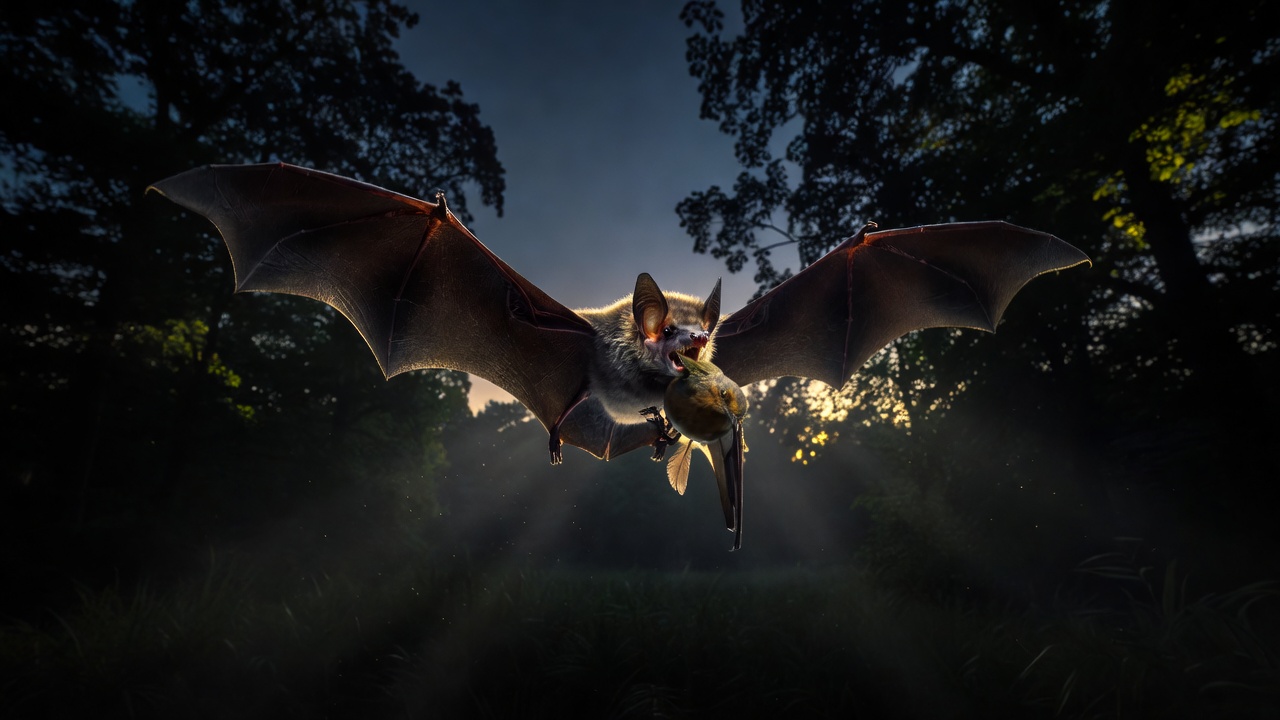
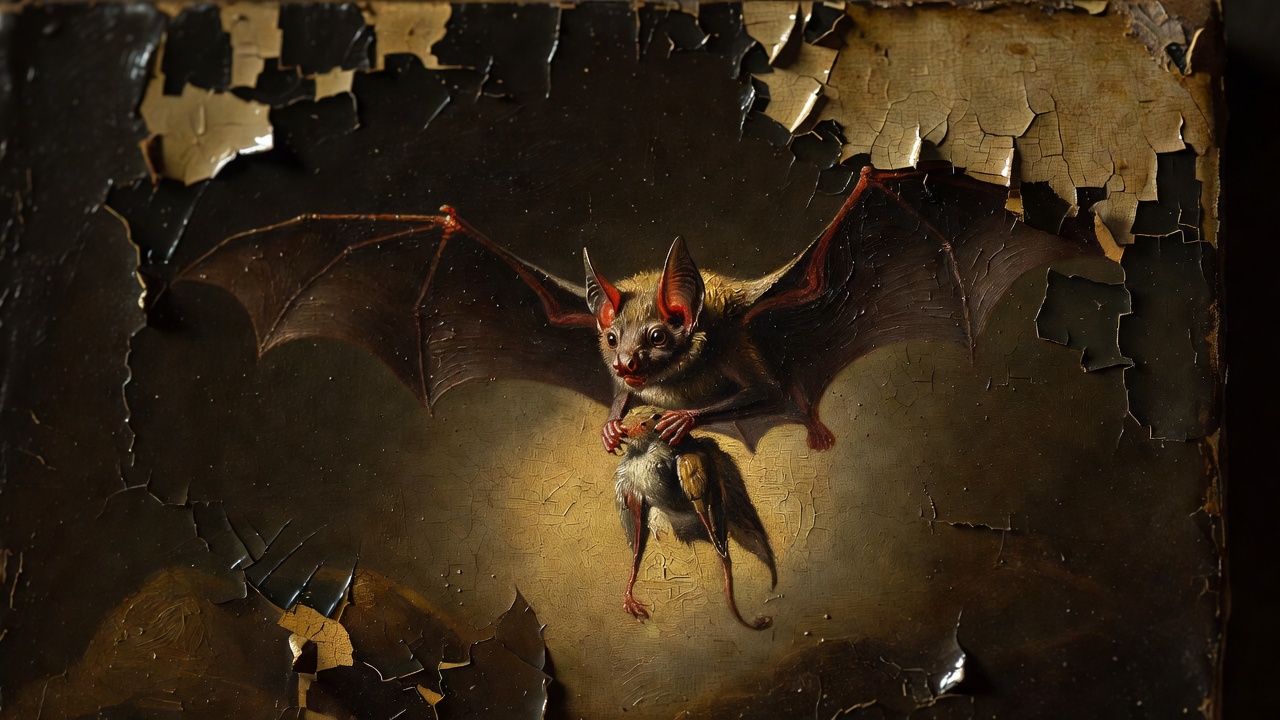
In the upper-right corner of a 1611 Flemish oil painting, a small reddish-brown creature grips a bird in its jaws during flight -- a scene that ecologist Pedro Romero-Vidal at the Donana Biological Station in Seville, Spain, has now identified as the earliest known visual record of a greater noctule bat (Nyctalus lasiopterus) actively predating a songbird. The inversion at the heart of this finding is worth dwelling on: scientists only directly documented that behavior in the wild for the first time in 2025, meaning a Renaissance painter quietly recorded it some 415 years before formal ecology caught up. The study was published June 29, 2026 in Proceedings of the National Academy of Sciences.
What the Researchers Found
Romero-Vidal was working on a project that uses historical paintings as a source of ecological data -- scanning canvases for accurately rendered animals that might carry information about species distributions, behaviors, and abundances predating systematic natural history. Then he examined Jan Brueghel the Elder's allegorical panel "Air," painted in 1611.
The painting is dense with life: more than 60 distinct airborne species crowd the canvas around Urania, the Greek Muse of astronomy, while Apollo and Diana drive sun and moon chariots through the background. Four bat-like creatures appear in the composition. One, positioned in the upper right, stands apart. It holds what appears to be a bird in its jaws mid-flight.
"I had never encountered a similar scene in any of the many paintings I had previously examined," Romero-Vidal said of the discovery.
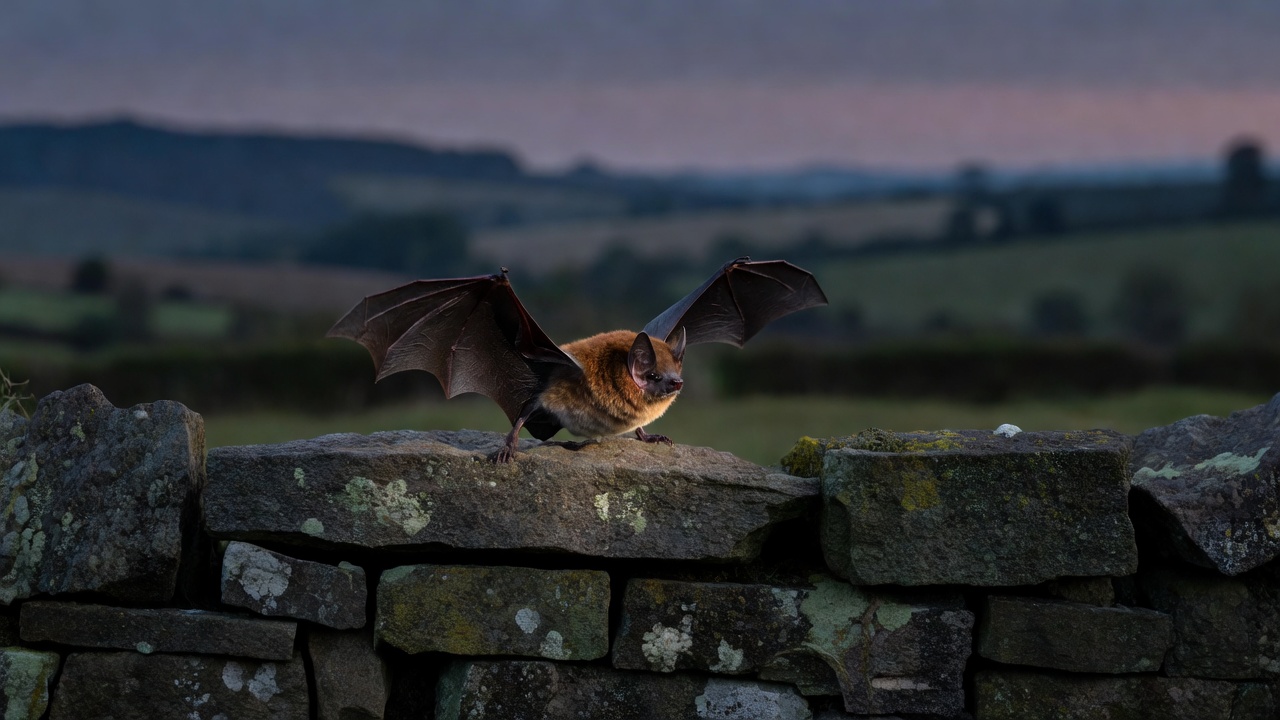
The researchers characterized the depicted creature as having reddish-brown fur, round ears, and long narrow wings -- morphological features consistent with Nyctalus lasiopterus. Relative size compared to other animals in the composition was the primary basis for distinguishing the greater noctule from the smaller common noctule (Nyctalus noctula).
The Methodology
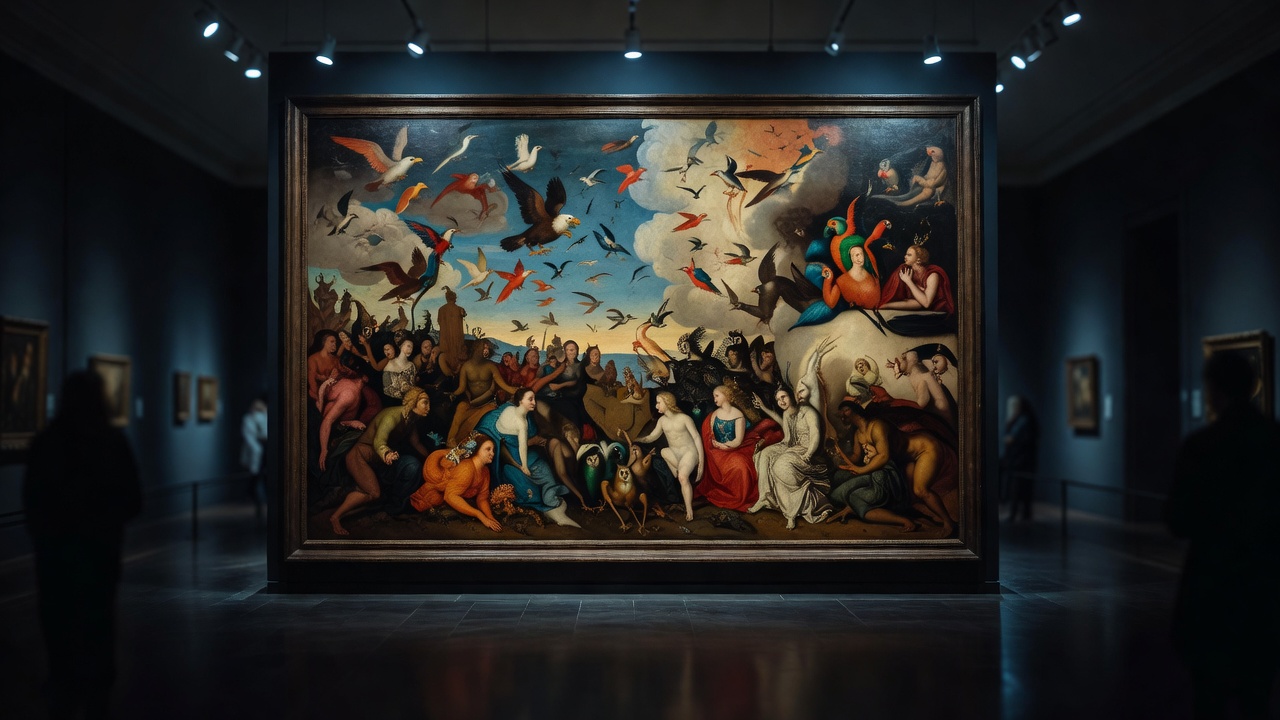
Romero-Vidal's broader research program treats historical paintings as a form of biological archive -- a pre-Linnaean field notebook frozen in pigment. Where paleontology uses bone records and environmental science uses pollen cores, this approach mines art for behavioral and distributional data on species that predate organized scientific observation.
"Air" is a particularly rich canvas for that purpose. Its 60-plus airborne species reflect the meticulous naturalism associated with Brueghel's practice. Jan Brueghel the Elder was born in Brussels and traveled to Italy, which lies within the known range of Nyctalus lasiopterus -- a plausible mechanism by which the painter could have observed the greater noctule in its actual habitat before completing the 1611 panel.
The research team isolated the upper-right bat from among the four bat-like figures and conducted a morphological comparison against known features of noctule bat species. The assessment is probabilistic rather than definitive: size relative to depicted prey and companion animals points toward the greater noctule, described in the study as the largest bat in Europe. No genetic or specimen evidence can confirm the identification. Romero-Vidal's team concluded the painting "can be a valuable source of natural history information," while acknowledging that "artists often exercised considerable artistic license" but "can still preserve valuable observations about the natural world."
Why It Matters
The significance of the Brueghel identification depends on understanding how contested and recent the scientific case for greater noctule bat predation on birds actually is. Researchers began publishing indirect evidence in the early 2000s: feathers recovered from bat excrement, identified as belonging to 31 different songbird species, constituted a growing body of dietary evidence. Bioacoustic recordings (audio captured of bats hunting in the field) added a further layer. But visual, direct documentation of a greater noctule catching a songbird in midair was only achieved in 2025 -- meaning the full evidentiary chain took more than two decades to assemble.
The 1611 painting predates even the earliest modern indirect evidence by roughly four centuries. Ilias Foskolos, a bioacoustician (a researcher who studies animal behavior through sound) at Aarhus University in Denmark, has independently recorded the predation sequence and was not involved in the PNAS study. He noted that the behavior may have been informally understood well before modern science engaged with it: "[People] probably knew that they go for birds from their droppings." If observers in Brueghel's era could infer the diet from identifiable feathers in bat excrement, it is plausible that a painter who spent time in Italy would have witnessed the behavior directly.
For the greater noctule bat itself, the ecological stakes are not trivial. The species is among the rarest and least studied bats in Europe. A visual record of predatory behavior from 1611 extends the documented timeline of the species' ecology by four centuries and opens questions about historical population distributions across its known range.
Competitive Landscape
The research sits at the intersection of historical ecology and zooarchaeology -- a methodological space that treats pollen cores, sediment records, bone assemblages, written bestiaries, and painted natural history as parallel data streams. The use of oil paintings specifically as species-behavior archives represents a newer extension of that logic, and no directly competing research group working on the same bat species and art-historical angle is identified in the published study.
Two adjacent research threads exist in bat science. Independent field bioacoustics work, represented by Foskolos at Aarhus University, has pursued audio documentation of the same predation behavior through direct field recording rather than archival analysis. His description of the captured sequence is concise: "It's an intense event, let's put it that way." The convergence between Romero-Vidal's art-historical approach and Foskolos's field work is corroborative rather than collaborative: two separate methods, from two separate institutions, arriving at the same behavioral conclusion.

Independent analyst commentary specifically on this announcement was not publicly available at publication time.
Limitations and Caveats
The species identification is inferential throughout. No genetic material, no specimen, and no definitive morphological measurement can be extracted from a painted surface. The assessment that the upper-right creature in "Air" is Nyctalus lasiopterus rather than Nyctalus noctula rests on relative size within the composition. Brueghel was painting an allegory, not a field guide, and demonstrably exercised compositional and aesthetic choices across the canvas.
The researchers acknowledge this explicitly. The identification is described as probable, not confirmed, and is not formally quantified. What the painting preserves is a visual observation consistent with the behavior, not proof that an individual bat of the identified species committed the depicted act.
Additional limits on the broader evidentiary picture are worth noting. The figure of 31 songbird species identified from bat excrement is a dietary inference, not a direct observation count: feathers in droppings confirm consumption, not the method or altitude of capture. The study does not clarify whether the 2025 direct aerial documentation was conducted by Romero-Vidal's group, by Foskolos, or by a separate team. The exact species of the songbird depicted in the painting has not been identified.
What Comes Next
The Brueghel finding establishes a proof of concept: examination of Renaissance and Baroque natural-history paintings can surface behaviorally specific observations that predate scientific documentation by centuries. Romero-Vidal's project is ongoing; the bat-with-bird scene is a standout case within a broader survey. A structured review of European collections from the 16th through 18th centuries -- the period during which painters combined allegorical subject matter with precise naturalism -- could extend the baseline for documented species behaviors across multiple taxa.
For the greater noctule bat, research priorities point toward field and acoustic work. Foskolos's recordings of the full predation sequence open questions about how often and under what conditions the behavior occurs, and which songbird species face the highest predation pressure during migration. Understanding predation frequency across the bat's range has direct implications for modeling migration-season mortality in already-stressed songbird populations.
- 31 songbird species identified in greater noctule excrement, establishing dietary breadth through indirect evidence
- First direct mid-flight documentation of bat-bird predation achieved in 2025, some two decades after indirect evidence began accumulating
- 4 bat-like creatures depicted in "Air"; 1 in the upper right identified as likely N. lasiopterus with prey
- Study published June 29, 2026 in Proceedings of the National Academy of Sciences
For researchers working in historical ecology and museum collections science: the Brueghel finding offers a direct methodological template. A single painting, examined with species-identification discipline rather than art-historical framing, yielded a behavioral data point 415 years older than the equivalent field observation. Any institution holding significant Baroque natural-history paintings now has a concrete reason to run them through the same analytical lens Romero-Vidal applied to "Air." The question is how many more such scenes exist in collections no ecologist has thought to examine as ecology rather than aesthetics.
-- Zara Velez, Emerging Technology Editor
Sources: Science News -- Bat diet discovery in Renaissance painting (June 29, 2026) · Pedro Romero-Vidal et al., Donana Biological Station / CSIC, Proceedings of the National Academy of Sciences, June 29, 2026