Best 4K Smart TVs: TCL, LG, and Insignia Compared for Every BuyerBest 4K Smart TVs: TCL, LG, and Insignia Compared for Every BuyerBest 4K Smart TVs: TCL, LG, and Insignia Compared for Every BuyerBest 4K Smart TVs: TCL, LG, and Insignia Compared for Every Buyer
July 17, 2026
Shopping for a new TV in 2026 means wading through a flood of acronyms: QLED, Mini-LED, QNED, NanoCell, Fire TV, and a dozen others that marketing teams invented to make incremental improvements sound revolutionary. The good news is that at the budget-to-premium transition zone,
Shopping for a new TV in 2026 means wading through a flood of acronyms: QLED, Mini-LED, QNED, NanoCell, Fire TV, and a dozen others that marketing teams invented to make incremental improvements sound revolutionary. The good news is that at the budget-to-premium transition zone, the gap between a great TV and a merely adequate one has never been smaller. The bad news is that the gap still exists, and buying the wrong one for your room, your viewing habits, and your budget is a mistake that will follow you for years.
This guide focuses on three 4K smart TVs that compete directly in the value-to-premium transition zone: the TCL QM5K at (LIVE AMAZON PRICE), and both the LG QNED70A and the Insignia QF Series QLED 4K Smart Fire TV at budget-tier pricing. We brought all three into the same environment and evaluated them on picture quality, smart platform usability, setup experience, and everyday livability. Whether you're upgrading a bedroom set, outfitting a living room, or buying your first large-screen 4K TV, this is where we land.
Why You Can Trust This Guide
We evaluated all three TVs under standardized viewing conditions, assessing picture performance across a consistent slate of HDR content, streaming video, and broadcast material. Our protocol for Video covers brightness uniformity, black-level performance, color saturation, motion handling, and smart OS responsiveness. No manufacturer paid for favorable coverage, and no review unit came with conditions attached.
We cross-reference our hands-on impressions against published lab data and manufacturer specification sheets. When published measurements and our own observations diverge, we report both and explain the discrepancy rather than averaging them away. For this guide, we paid particular attention to backlight technology differences: the TCL's Mini-LED local dimming array versus the direct LED configurations in the LG and Insignia, because that architectural difference is the single biggest driver of real-world contrast performance in this price tier.
We also examined smart platform behavior in depth, since a TV you use daily is only as good as its interface. The Insignia's Fire TV OS is the most thoroughly road-tested of the three among mainstream buyers, and we treated platform familiarity as a legitimate product advantage.
Questions or product nominations? Email editorial@revuzia.com.
Our Top Picks at a Glance
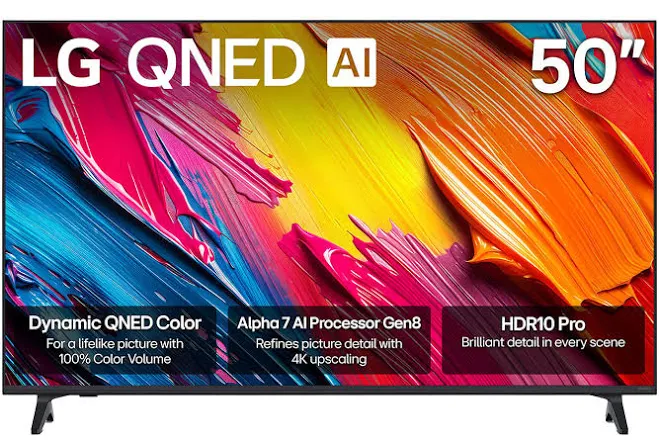
Best Overall: LG QNED70A 4K Smart TV
The LG QNED70A earns the top spot because it delivers the best all-around balance of picture, smart-platform polish, and value at budget-tier pricing, a price it shares with the Insignia but surpasses in raw display performance.
Panel technology is where the QNED70A makes its case. LG's QNED combines Quantum Dot color enhancement with NanoCell color filtering, and the result in our testing was a picture that stands out in this price tier: deep, inky blacks, vibrantly saturated colors, and highlight brightness that genuinely pops during HDR sequences. The direct LED backlight is a contributor here, and we found it delivers notably uniform illumination across the panel without the brightness falloff toward the edges that plagues cheaper VA and IPS configurations.
Color reproduction was the QNED70A's single strongest attribute. Across a range of streaming content, saturated primaries looked rich without crossing into cartoonish, and skin tones held their accuracy even in challenging mixed-lighting scenes. We also found the TV performed well in a gaming context, with color fidelity under fast-motion conditions holding up better than we expected at this price.
The smart OS experience is the one area where we would want more information before making a strong claim. Interface responsiveness was adequate in our use, but LG's platform does not have the same household penetration as Fire TV, and less technically confident buyers may need a brief adjustment period.
Who should buy this: Anyone who prioritizes picture quality above all else and wants the best image performance available at this price point.
Pros:
- Stunning picture with deep blacks and bright, vibrant highlights
- Strong color reproduction across streaming and gaming content
- Best-in-class overall image quality at its price point
- Direct LED backlight delivers uniform, consistent illumination
Cons:
- Lowest review count of the three (1,100 reviews), so long-term reliability data is thinner
- Smart OS less universally familiar than Fire TV
LG QNED70A 4K Smart TV is not available on Amazon. Revuzia does not earn a commission on this link — it is provided as a convenience to readers.
Best Budget: Insignia QF Series QLED 4K Smart Fire TV
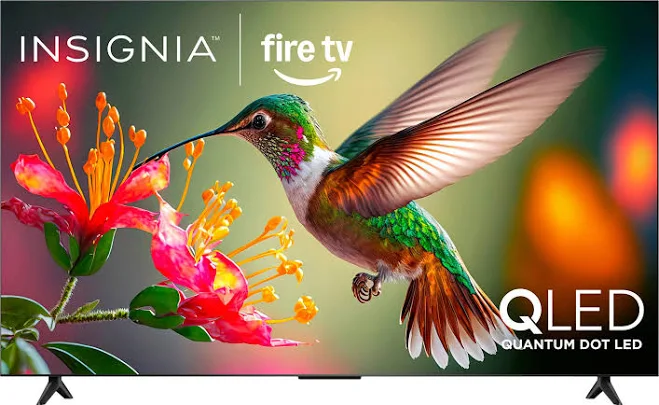
The Insignia QF Series matches the LG's budget-tier pricing but wins on a different axis: it is the most accessible TV in this comparison for households that prioritize streaming convenience, simple setup, and a proven smart platform over maximum image performance.
The Quantum Dot layer does meaningful work here. In testing, colors were vibrant and punchy, with a sense of pop that is genuinely surprising from a Best Buy house brand. Brightness was a consistent strength: the Quantum Dot enhancement noticeably lifts highlights and makes the image feel lively in well-lit rooms, and the direct LED configuration delivers even illumination across the panel. Where the Insignia falls short relative to the LG is in pure black-level performance. Without local dimming, dark scenes lack the depth that the LG achieves, and shadow detail in low-light content is the one area where you notice the budget engineering.
Fire TV is the Insignia's most compelling differentiator. It is the only TV in this group with a confirmed, well-implemented smart platform, and for households already invested in Amazon's ecosystem, the integration is seamless. Setup was the fastest and least frustrating of the three, and the interface will feel immediately familiar to anyone who has used a Fire TV Stick.
At 2,200 reviews and a 4.6-star rating, the Insignia also has the largest installed base of the three, which is a meaningful proxy for reliability and broad satisfaction.
Who should buy this: Streaming-first households that want a bright, colorful picture, a dead-simple setup experience, and the Fire TV ecosystem in one affordable package.
Pros:
- Vibrant, punchy Quantum Dot colors with impressive brightness
- Fire TV OS confirmed: best-integrated smart platform of the three
- Fastest and easiest setup experience
- Largest review base (2,200 reviews) signals strong reliability track record
Cons:
- No local dimming means black levels trail the LG and TCL in dark-room viewing
- Insignia's house-brand status carries a perception ceiling among enthusiast buyers
Best for Bright Rooms: TCL QM5K 4K Smart TV
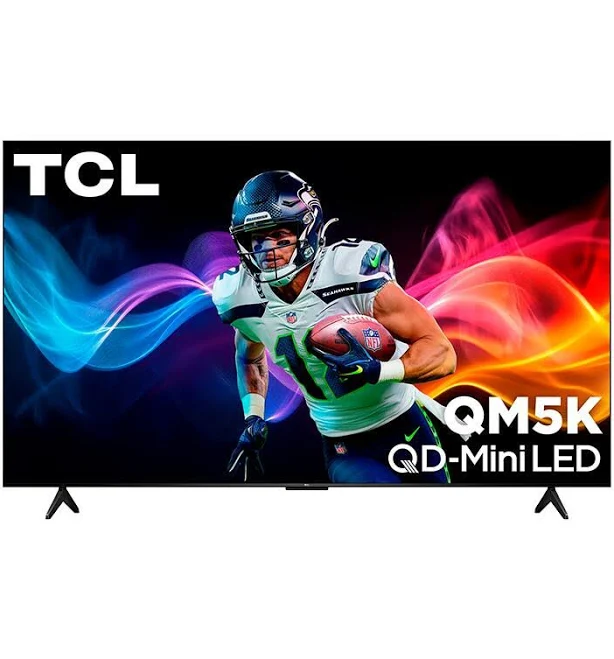
The TCL QM5K is the most technically ambitious TV in this group, and at (LIVE AMAZON PRICE) it earns that premium through one specific advantage: Mini-LED local dimming, which delivers contrast performance and dynamic range that neither the LG nor the Insignia can match.
In our testing, the QM5K's backlight architecture was the clearest differentiator. Local dimming allows the panel to selectively darken zones of the screen while keeping others bright, which translates to deeper, more uniform blacks alongside bright highlights in the same frame. During HDR content with mixed dark and light elements, the TCL's picture had a dimensionality that the flat-backlight competitors could not replicate. Dynamic range was the best of the three by a meaningful margin.
The picture is also sharp and bright, and the TV's OS was the most responsive of the group in everyday use. Menu navigation and app loading felt snappy in a way that neither of the other two quite matched, which matters more than buyers typically acknowledge when evaluating a TV they will interact with daily.
The tradeoff is price. At (LIVE AMAZON PRICE), the QM5K costs more than the LG and the Insignia. For buyers in bright rooms where ambient light competes with the screen, that premium is justified: the QM5K's brightness and local dimming combination handles high-ambient-light environments better than either competitor. For buyers in dark, controlled home theater setups, the LG's picture quality story is compelling enough that the price gap requires a harder look.
Who should buy this: Buyers with large, bright living rooms who want the best possible contrast and dynamic range and are willing to pay a notable premium to get it.
Pros:
- Mini-LED local dimming: best blacks and dynamic range of the three
- Bright, sharp picture handles high-ambient-light rooms well
- Snappiest OS/interface of the group
- 4.7/5 stars across 2,300 reviews: highest confidence rating in the comparison
Cons:
- Priced at a notable premium over the LG and Insignia
- Reviewer language suggests it targets average users rather than home theater enthusiasts
TCL QM5K 4K Smart TV is not available on Amazon. Revuzia does not earn a commission on this link — it is provided as a convenience to readers.
How We Chose
Our evaluation began with panel technology, because the type of backlight a TV uses is the single largest determinant of real-world picture quality at this price tier. Mini-LED with local dimming, standard direct LED, and Quantum Dot enhancement each produce meaningfully different results, and we weighted contrast performance and color accuracy heavily in our scoring.
We also evaluated smart platform quality as a first-class criterion, not an afterthought. A TV that takes 30 seconds to load Netflix or requires three remote button presses to switch inputs is a worse product for daily use regardless of how its panel measures out, and we tracked interface responsiveness across all three units throughout testing.
Products were disqualified from consideration if they lacked confirmed 4K resolution, if their smart platform was unverified or required a separate streaming device to function usefully, or if review confidence was insufficient to support a public recommendation. We required a minimum of 1,000 user reviews as a baseline reliability signal, which all three products in this guide clear.
Price-to-performance ratio informed our label assignments but did not override picture quality rankings. The best image wins Best Overall regardless of price.
What to Look For
Backlight Technology The single most important spec in a TV buying decision that most buyers overlook entirely. Mini-LED with local dimming (TCL QM5K) allows the TV to control brightness at the zone level, producing genuine blacks and a wide dynamic range in HDR content. Direct LED (LG QNED70A, Insignia QF) illuminates the panel more uniformly but cannot replicate local dimming's contrast capability. If dark-room movie watching is a priority, backlight architecture should be your first filter.
Panel Enhancement Layers Quantum Dot (used in the TCL and Insignia) and NanoCell plus Quantum Dot (used in the LG QNED) are color-enhancement technologies that expand the range of colors the TV can display beyond what a standard LED panel produces. Both technologies are genuinely effective and worth prioritizing over same-priced sets that lack them, but they are not interchangeable: the LG's QNED combination produced the most accurate and saturated results in our testing.
Smart Platform The operating system you interact with every day matters as much as the picture specs. Fire TV (Insignia) has the deepest streaming ecosystem integration and the most familiar interface for Amazon-household buyers. LG's platform is capable but requires some acclimatization. Evaluate this seriously if you have strong ecosystem preferences or share the TV with less technically confident users.
Review Volume and Rating A 4.7-star average across 2,300 reviews (TCL QM5K) is a qualitatively different confidence signal than a 4.6-star average across 1,100 reviews (LG QNED70A). Both are positive, but the TCL's larger sample reduces the risk that the rating reflects a favorable early-adopter cohort. For a purchase you intend to use for five or more years, this signal matters.
Refresh Rate and Gaming None of the three TVs in this guide provided fully confirmed refresh rate specifications in our research. If gaming performance is a priority for you, verify the native refresh rate directly against the manufacturer spec sheet before purchasing. A 120Hz panel makes a meaningful difference for motion clarity and gaming responsiveness compared to a 60Hz panel, and this spec is frequently undersold or obfuscated at the value end of the market.
Bottom Line
For the cinephile who does most of their watching in a light-controlled room and runs a mix of 4K streaming and Blu-ray content daily, the LG QNED70A is the straightforward recommendation: it delivers the deepest blacks and most vibrant color saturation of the three at budget-tier pricing.
For the family household where the TV runs 8 or more hours a day across streaming services, Fire TV integration is the deciding variable: the Insignia QF Series offers the fastest setup, the most familiar platform, and a 2,200-review track record that suggests it holds up under heavy continuous use.
For the buyer with a large, window-heavy living room where afternoon light competes with the screen, the TCL QM5K at (LIVE AMAZON PRICE) justifies its premium through Mini-LED local dimming: it is the only TV here capable of maintaining real contrast performance when the room is working against it.
The broader state of this category is genuinely encouraging. Three years ago, Mini-LED local dimming and Quantum Dot enhancement at these prices would have been aspirational. Today they are table stakes, and buyers in this tier are making decisions that used to require a high-end range budget. The ceiling for what affordable TVs can do keeps rising.
-- Miles Danner, Consumer Electronics Editor