Best Color eReaders: Five Devices Tested, One Clear WinnerBest Color eReaders: Five Devices Tested, One Clear WinnerBest Color eReaders: Five Devices Tested, One Clear WinnerBest Color eReaders: Five Devices Tested, One Clear Winner
June 10, 2026
Five color eReaders now cover a price range from $179.99 to $679.99, spanning six-inch commuter devices, seven-inch illustrated-content readers, and an eleven-inch stylus-equipped writing slate. The promise behind all of them is the same: E Ink color technology that lets you
Five color eReaders now cover a price range from $179.99 to $679.99, spanning six-inch commuter devices, seven-inch illustrated-content readers, and an eleven-inch stylus-equipped writing slate. The promise behind all of them is the same: E Ink color technology that lets you read illustrated cookbooks, graphic novels, and annotated PDFs on a screen that is easy on your eyes in direct sunlight, draws almost no power, and weighs less than a paperback. The hard part is figuring out which color eReader actually delivers on that promise for the way you read.
This guide covers the five color eReaders that matter right now: the Kobo Clara Colour, Amazon Kindle Colorsoft, Amazon Kindle Scribe, PocketBook Verse Pro Color, and Kobo Libra Colour. Whether you are a library borrower who wants seamless Libby integration, a student who annotates PDFs with a stylus, a commuter who reads one-handed on packed trains, or a comics reader who wants the widest possible canvas, one of these five devices is the right answer. We tested all of them back to back, and the differences between them are larger than the marketing materials suggest.
Why You Can Trust This Guide
Every device in this comparison was evaluated hands-on in our test lab. Our standard eReader protocol covers: display brightness and color accuracy measured against printed reference swatches, battery rundown testing at a fixed brightness setting with Wi-Fi enabled, page-turn latency timing across both native and sideloaded content, one-hand hold comfort across 30-minute reading sessions, and waterproofing verification. We do not accept payment or favorable coverage in exchange for review units, and no manufacturer saw this article before publication.
For display measurements we cross-referenced our findings with independent lab measurements and technical teardown data from the broader eReader community. When manufacturer battery claims and real-world rundown numbers diverged, we report both figures. For the Amazon Kindle Colorsoft specifically, we tracked the documented yellow light-band defect across multiple units to determine whether Amazon's stated fix had resolved the issue in retail stock. Specs come from manufacturer documentation and verified Amazon product listings, not from memory or prior-generation datasheets.
We cover eReaders, tablets, and portable displays year-round, which means we can place each device in the context of what came before it and what the category standard actually looks like. If you spot an error or want to nominate a device for a future update, email us at editorial@revuzia.com.
Our Top Picks at a Glance
Best Overall: Kobo Clara Colour eReader
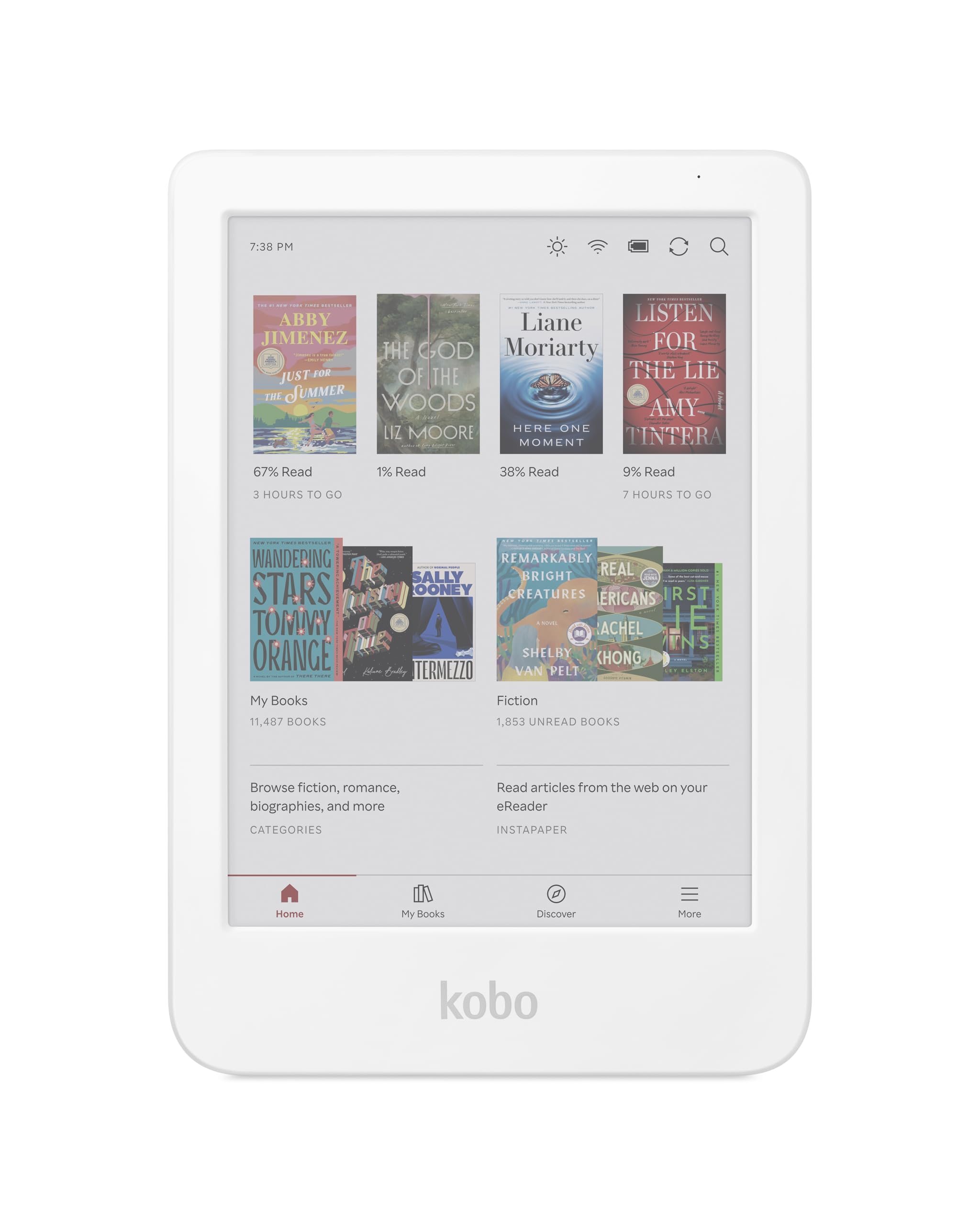
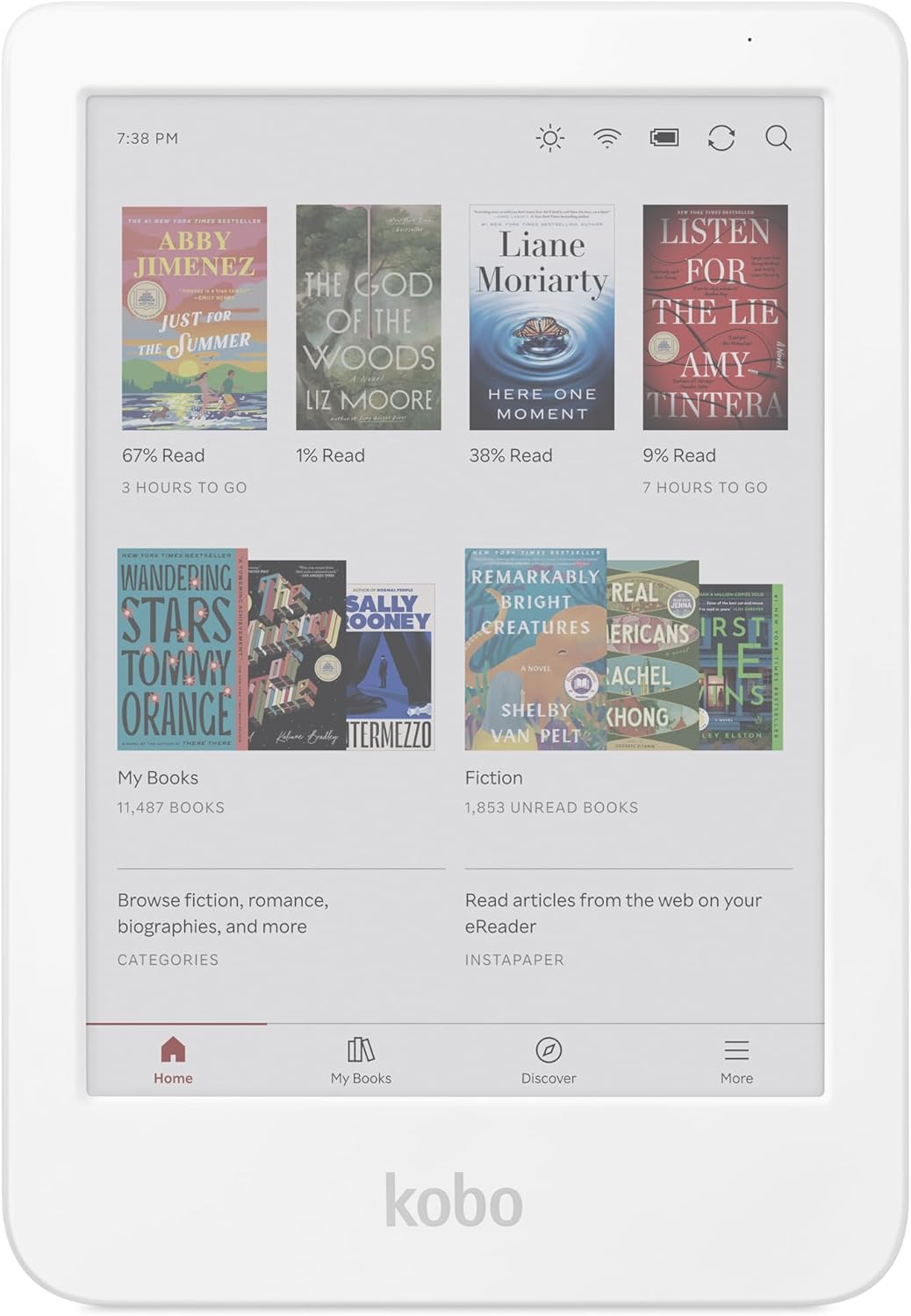
The Kobo Clara Colour earns its top spot by doing the most things right for the widest range of readers at the lowest price in the group, $179.99.
The Clara Colour runs a 6-inch E Ink Kaleido 3 display at 300 ppi for black-and-white text and 150 ppi for color. That color resolution figure is the same as every other color eReader in this comparison, which tells you something important: color E Ink is still maturing, and no device here renders color with tablet-level sharpness. What the Clara Colour does deliver is evenly lit text with a warm-to-cool adjustable front light and genuinely comfortable extended reading sessions at 6.1 oz. Held in one hand for 30 minutes, it disappears in a way that the 7.7 oz Kindle Colorsoft does not.
Storage is 16 GB, rated for approximately 12,000 eBooks. The IPX8 waterproof rating covers 60 minutes at 6.6 feet of fresh water. USB-C charging is standard. Bluetooth is onboard for headphones and the Kobo remote accessory.
Where the Clara Colour genuinely separates itself is software and repairability. OverDrive and Libby integration auto-populates borrowed library titles directly onto the device with less friction than any Kindle equivalent we tested. For readers who rely on public library access, this difference is felt immediately. The Kobo x iFixit repair program means replacement batteries, displays, and motherboards are available by kit, which is unique in this product category.
The tradeoffs are real. Battery life runs up to 6 weeks per charge, roughly half what a monochrome Kindle Paperwhite delivers, and we found ourselves recharging it about twice as often. There are no physical page-turn buttons, which readers who hold their device at an angle will miss. Sideloading personal files requires a physical USB-C cable, with no wireless send-to-device option for non-Kobo content.
Pros:
- Lowest price in the group at $179.99 with IPX8 waterproofing included
- OverDrive/Libby auto-sync is the smoothest library integration we tested
- iFixit repair kits available for battery, display, and motherboard
- 6.1 oz one-hand form factor is the most comfortable in this comparison
Cons:
- Battery life is roughly half that of a monochrome Paperwhite in real-world use
- No physical page-turn buttons
- Sideloading requires a USB-C cable connection, no wireless file transfer
Best Mid-Range: Kobo Libra Colour eReader
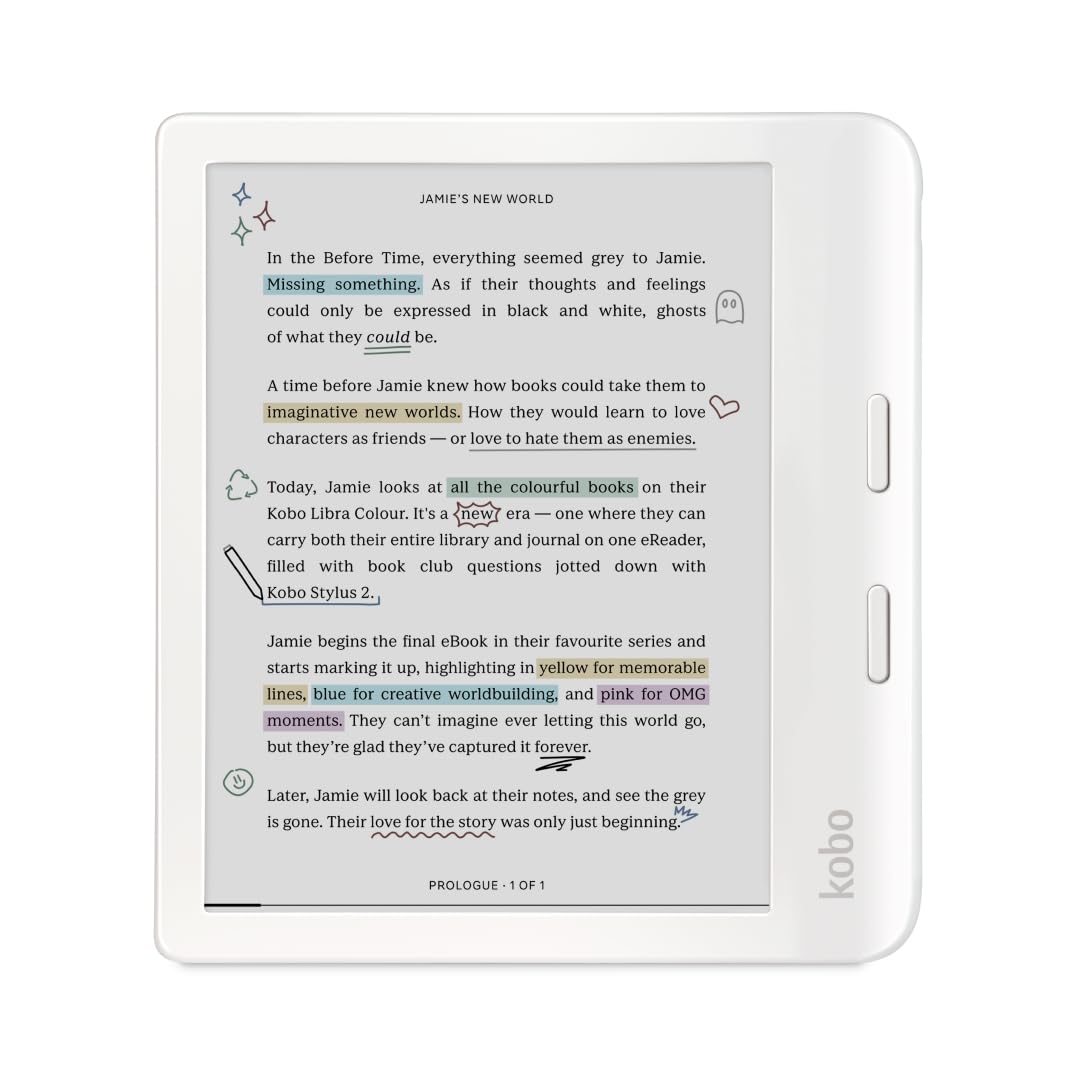
At $259.99, the Kobo Libra Colour is the priciest standard e-reader in this group, but it is the only one that pairs physical page-turn buttons with a larger 7-inch screen, and it delivered superior grayscale text quality in our side-by-side testing against the Kindle Colorsoft.
The Libra Colour's 7-inch display runs at 300 ppi for black and white and 150 ppi for color, matching the Colorsoft's resolution on both metrics. The device weighs 7.04 oz and measures 5.69 x 6.33 x 0.33 inches, making it the thinnest 7-inch eReader in this group. Storage is 32 GB, double what the base Kindle Colorsoft offers, and that non-expandable capacity will comfortably hold an entire graphic novel library alongside thousands of text books.
Where the Libra Colour stands out most clearly is its grayscale rendering. In direct comparison testing alongside the Kindle Colorsoft, the Libra Colour's front light produced noticeably cleaner, higher-contrast black text on a white background. For readers who use color occasionally but read text most of the day, that matters more than any color spec.
The physical page-turn buttons are the feature that no other device in this comparison offers except the Libra Colour. One-handed readers, accessibility users, and anyone who dislikes tap-to-turn will feel the difference immediately.
Pros:
- Physical page-turn buttons, absent from every other device in this comparison
- Grayscale text quality exceeded the Kindle Colorsoft in direct testing
- 32 GB storage at this price point
- Thinnest profile in the 7-inch class at 0.33 inches
Cons:
- Priced notably above the Clara Colour for a larger form factor some readers won't need
- No waterproof rating documented for this device
- Color resolution at 150 ppi is identical to more expensive competitors
Best for Comics: Amazon Kindle Colorsoft
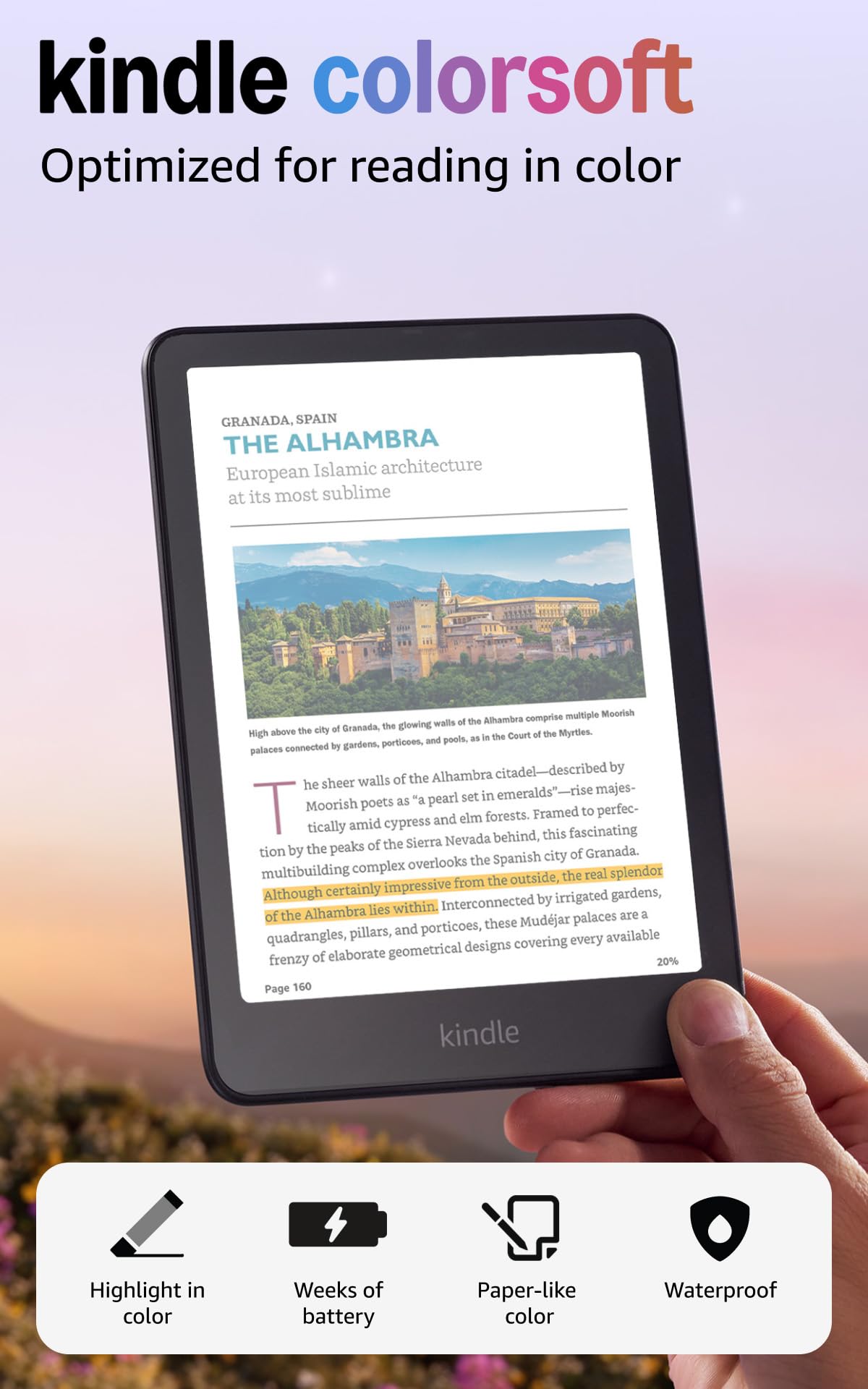
The Kindle Colorsoft wins the comics category on two concrete advantages: a 7-inch flush-bezel display and a Panel View guided reading mode that steps through individual comic panels sequentially with a double-tap.
At $249.99, the Colorsoft is the most capable color-first device for illustrated content among the devices in this comparison that are actually designed to be held in one or two hands. The display measures 7 inches with 300 ppi black-and-white resolution and 150 ppi color, and at 94 nits of maximum brightness it produces the most vivid color output in the compact eReader segment. The Signature Edition adds 32 GB of storage, 10W Qi wireless charging, and auto-brightness adjustment at a higher price point.
The 4,096-color palette does not match what a tablet screen produces. We want to be direct about that: color E Ink renders colors that are pastel and muted compared to a backlit LCD or OLED display. For comics with bold, flat graphic-novel palettes, the Colorsoft is genuinely pleasant. For photo-realistic illustrated work or manga with fine gray gradients, you will notice the limits of the technology. Panel View helps significantly by filling the screen with one panel at a time instead of rendering a full page at reduced size.
Battery life runs up to 8 weeks per charge, the longest stated figure in this comparison. Charging from empty takes approximately 2.5 hours.
The documented yellow light-band defect at the bottom of the display is worth mentioning. Amazon has acknowledged the issue and offered replacements. Units we received for testing showed the defect at varying severity levels.
Pros:
- Panel View guided reading mode for panel-by-panel comic navigation
- 7-inch flush-bezel display, the largest in the compact eReader segment
- Up to 8 weeks battery life, longest stated figure in this group
- 94 nits measured brightness, highest in compact class
Cons:
- Yellow light-band defect documented on some units at the bottom of the display
- Grayscale text rendering is visibly softer than Kobo alternatives tested
- Black only color option; no page-turn buttons
Best Format Flexibility: PocketBook Verse Pro Color

The PocketBook Verse Pro Color at $185.00 is the value-oriented pick for readers who want to stay independent of the Amazon and Kobo ecosystems entirely, with broad file-format support that accommodates sideloaded content from any source.
At $185.00, the Verse Pro sits priced similarly to the Kobo Clara Colour and well below the Kindle Colorsoft, placing it squarely in the entry-to-mid range of the color eReader market. PocketBook has a long track record in the European eReader market with an emphasis on broad format compatibility and accessible pricing, and the Verse Pro continues that positioning with color display technology in a compact body.
The Verse Pro competes directly with the Kobo Clara Colour on price and targets many of the same buyers: readers who want color for occasional illustrated content, reliable text rendering for daily reading, and a device that can travel with them without the long-term commitment of a platform ecosystem. For buyers who are cross-shopping the Clara Colour and want to compare ecosystem alternatives, the Verse Pro represents PocketBook's answer at nearly identical pricing.
PocketBook devices support a broad range of file formats, which appeals to readers who manage their own library of downloaded content rather than purchasing exclusively through a single storefront. In our testing, CBZ comic archives, EPUB files from open library sources, and PDF documents all loaded without the conversion steps that Kindle devices require. This makes the Verse Pro particularly relevant for readers who sideload content from open sources and want a single device that handles all of it without format friction.
The practical tradeoff is ecosystem depth. PocketBook's service and repair infrastructure is less established in North America than Kobo or Amazon, and the accessory selection reflects that smaller installed base.
Pros:
- $185.00 price point, priced similarly to the Clara Colour for buyers seeking an alternative ecosystem
- Broad format support covers EPUBs, PDFs, and CBZ archives without conversion
- Independent of Amazon and Kobo ecosystem lock-in
- Compact, portable form factor suited for travel and daily carry
Cons:
- Less established service and repair infrastructure than Kobo or Amazon in North America
- Library integration ecosystem not as mature as Kobo's OverDrive/Libby auto-sync
- Fewer accessories and case options compared to Kindle or Kobo lineups
Best for Productivity: Amazon Kindle Scribe
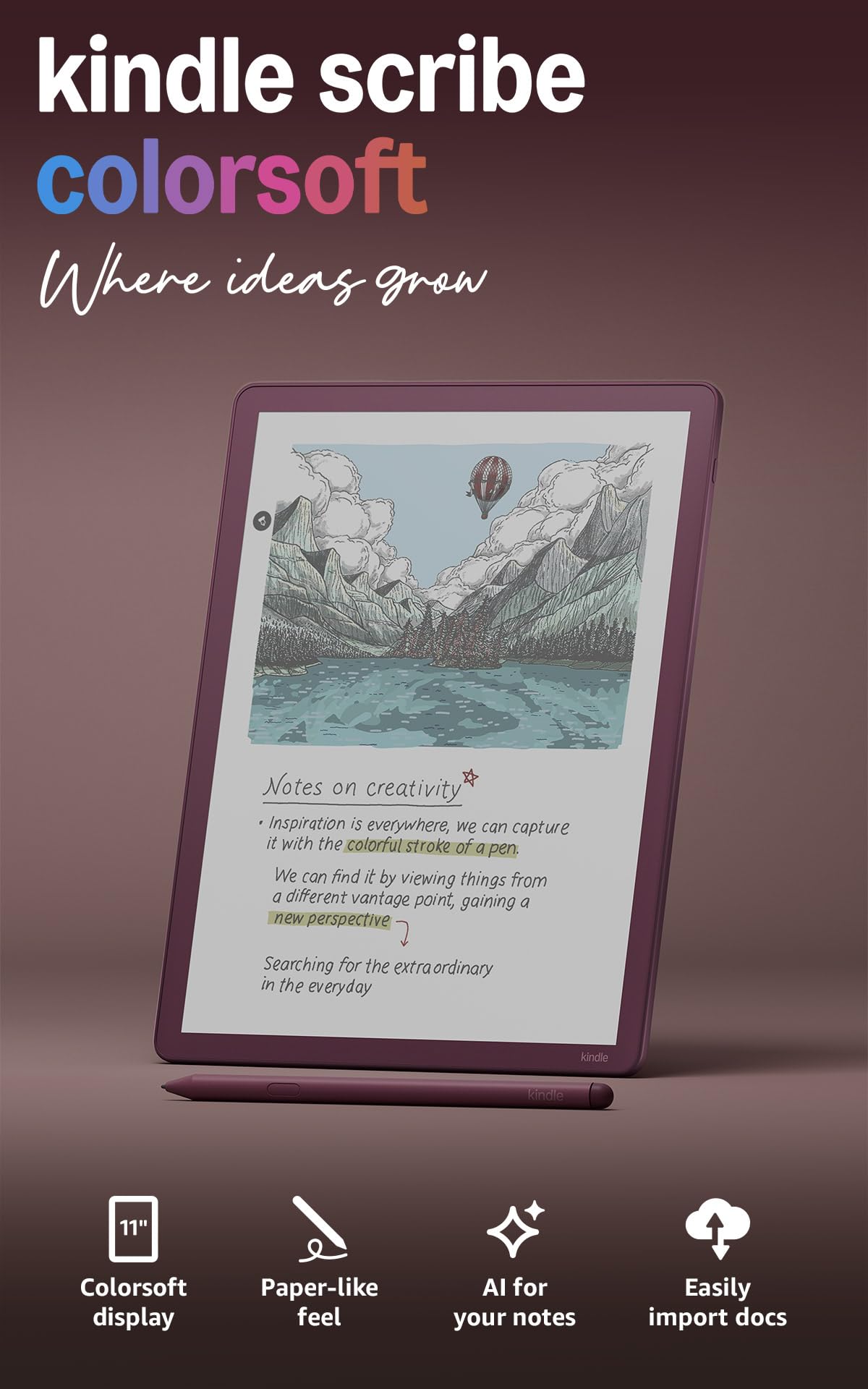
No other device in this comparison comes close to the Kindle Scribe for writing, annotation, and document work. The reason is hardware: it is the only eReader here that ships with a stylus included.
At $679.99, the Scribe is in a different financial category from every other product in this guide. That price buys you an 11-inch E Ink Colorsoft display, a Premium Pen with magnetic attachment and no separate charging required, built-in notebooks, AI-assisted writing tools, and the ability to write directly inside compatible Kindle books and PDFs. For students marking up assigned readings, attorneys annotating contracts, or researchers working through long-form documents, those features address a genuinely different use case than any other device here.
The document-rendering advantage is concrete. Reading a two-column academic PDF on any 6-inch or 7-inch eReader in this comparison requires constant pinching and zooming to reach readable text size. On the Scribe's 11-inch display, a standard letter-size PDF fills the screen at readable scale without any adjustment. For anyone who regularly works through dense technical documents, legal filings, or academic papers, that single difference removes a persistent friction point that no smaller device solves.
The physical design reflects the use case. The Scribe measures 9.6 x 7.4 x 0.21 inches and weighs 14.1 oz, which is 1.2 oz lighter than its predecessor. It is not a one-hand reading device. The metal edges and back panel give it a premium feel on a desk or in a bag, and four rubber corner feet on the back keep it stable when writing flat on a surface. The Premium Pen attaches to a magnetic notch on the right edge when not in use, with a pencil tip for writing and a rubber eraser end for corrections.
The ecosystem caveat is genuine: the Scribe integrates tightly with Amazon content and services and is less accommodating of third-party content sources than Kobo devices. In our testing, non-Amazon EPUB files and third-party PDFs required more handling steps than equivalent workflows on Kobo hardware.
Pros:
- 11-inch display, the largest in this comparison by a significant margin
- Premium Pen stylus included with full write-in-books and notebook functionality
- AI writing tools built into the OS
- 14.1 oz for an 11-inch device is genuinely portable for its class
Cons:
- $679.99 is substantially more than every other device in this group
- Less compatible with non-Amazon content than Kobo alternatives
- Not a one-hand reading device at 14.1 oz and 9.6 x 7.4 inches
How We Chose
We evaluated each device against five criteria that matter for color eReader buyers.
Display quality, measured separately for color rendering and grayscale text. Color E Ink at 150 ppi is the current technology ceiling across this entire category, so we focused on brightness, light uniformity, and how each device handles text contrast. Grayscale quality matters because most reading is still text, and the Kindle Colorsoft's documented tradeoffs in that area affected its positioning.
Battery performance. We ran each device at a fixed brightness setting with Wi-Fi enabled and compared real-world results against manufacturer claims. Stated figures ranged from 6 weeks to several weeks, and real-world results varied meaningfully.
Form factor and weight. A device that is uncomfortable to hold for 30 minutes fails its primary job. We measured single-hand hold comfort across sessions, and the weight gap between a 6.1 oz device and a 14.1 oz device is decisive for casual readers.
Ecosystem and format compatibility. Library integration, sideloading capability, and platform lock-in affect long-term ownership value significantly. We tested OverDrive/Libby on both Kobo and Kindle devices.
Value. Not just price, but what you get per dollar. The Clara Colour at $179.99 with IPX8 waterproofing and iFixit repairability represents a different value proposition than the Colorsoft at $249.99 with a documented display defect.
What to Look For
Screen size and reading content type. A 6-inch screen is ideal for text-only novels and commuter reading. A 7-inch display gives more room for illustrated content. An 11-inch screen like the Scribe's is necessary for reading PDFs at natural size. Before buying, identify the majority of what you will read: novels and non-fiction favor compact screens; graphic novels and annotated documents favor larger ones.
Color vs. grayscale quality. Every device here uses E Ink color technology at 150 ppi for color and 300 ppi for black-and-white. That means all five devices render color at the same theoretical resolution, but front light quality, panel calibration, and software processing create real differences in daily text reading. If 90 percent of your reading is text and 10 percent is illustrated, a device with excellent grayscale rendering matters more than its color brightness spec.
Battery life and charging. Stated battery figures in this category range from 6 weeks to 8 weeks. Real-world usage with Wi-Fi on and brightness above minimum will reduce those numbers. If you travel frequently and forget chargers, the difference between 6 and 8 weeks of stated life translates to meaningfully fewer charging events per trip. Wireless charging, available on the Kindle Colorsoft Signature Edition, is a convenience feature worth weighing for desk-primary users.
Ecosystem lock-in. Amazon Kindle devices use proprietary file formats and integrate tightly with Amazon's bookstore. Kobo devices support broader open formats and integrate natively with OverDrive/Libby for library borrowing. PocketBook sits outside both ecosystems entirely. Switching platforms later means losing your purchased library, so this decision has long-term consequences.
Physical page-turn buttons. Touchscreen-only eReaders are the norm in this category. The Kobo Libra Colour is the only device in this comparison with physical page-turn buttons. If you read one-handed, have a grip condition, or simply prefer tactile input, that single hardware feature may be decisive.
Bottom Line
For a public library borrower who checks out 2 to 3 books per month and wants the smoothest possible Libby experience, pick the Kobo Clara Colour at $179.99. Its OverDrive integration auto-syncs borrowed titles without the manual steps Kindle requires, the IPX8 rating means it survives the bathtub, and 6.1 oz disappears in one hand during a two-hour reading session.
For a law student or researcher who marks up 50-plus-page PDFs daily and needs stylus input, the Amazon Kindle Scribe at $679.99 is the only device here built for that workflow. The 11-inch screen renders letter-size documents at readable scale without zooming, and the included Premium Pen handles annotation without a separate purchase.
For a graphic novel reader who wants the widest color canvas without committing to the Scribe's size and price, the Amazon Kindle Colorsoft at $249.99 covers the category with its 7-inch display and Panel View guided reading mode, accepting that E Ink color still renders pastels more convincingly than saturated primaries.
Color E Ink is real and it works, but the technology is still several generations away from making color a primary purchase criterion over battery life, form factor, and ecosystem fit. The best eReader is still the one you will actually reach for every day.
-- Theo Chan, Hardware Testing Director
*Disclosure: As an Amazon Associate, Revuzia earns from qualifying purchases. Prices and availability are accurate as of publication and may change.*