Best Drones: Five Models Tested From Budget to 8K 360Best Drones: Five Models Tested From Budget to 8K 360Best Drones: Five Models Tested From Budget to 8K 360Best Drones: Five Models Tested From Budget to 8K 360
August 11, 2026
Drones have never been more capable or more confusing to shop for. You can spend budget-tier pricing on a 1080p beginner flyer or in the high-end range on an 8K 360-degree cinewhoop with FPV goggles, and the specs alone won't tell you which one belongs in your gear bag.
Drones have never been more capable or more confusing to shop for. You can spend budget-tier pricing on a 1080p beginner flyer or in the high-end range on an 8K 360-degree cinewhoop with FPV goggles, and the specs alone won't tell you which one belongs in your gear bag. Camera resolution, obstacle avoidance systems, gimbal axes, weight class regulations, and post-production workflows all factor into whether a drone actually works for your specific situation. The wrong pick doesn't just waste money: it can ground you in restricted airspace, saddle you with footage you can't edit, or deliver a flying experience so frustrating you never take it out of the box.
This guide covers five drones tested across a range of use cases: immersive 360-degree content creation, portable travel photography, casual beginner flying, and budget-entry. Whether you're a YouTube creator chasing cinematic shots, a first-time pilot who wants obstacle avoidance to save expensive crashes, or someone who just wants to get airborne at budget-tier pricing, we've flown all five and mapped each one to the buyer it actually suits.
Why You Can Trust This Guide
Every drone in this roundup was evaluated hands-on by the Revuzia Cameras and Drones testing team. Our standardized protocol for this category covers flight time under real-world conditions (Sport, Normal, and Cinema modes), video quality across lighting environments, obstacle avoidance reliability, gimbal stability during lateral movement and ascent, and controller ergonomics. We also assess firmware update procedures, because a drone that takes 40-plus minutes to update on the ground before a shoot is a meaningful real-world inconvenience we factor into scoring.
We cross-reference our findings against manufacturer specifications and verify performance claims through our own controlled test sessions. When manufacturer claims and our measured results diverge, we report both numbers and explain the gap rather than picking whichever figure looks better in a headline.
No manufacturer pays for placement or favorable coverage in exchange for review units. Products are evaluated and ranked on performance alone. If you have a correction or want to nominate a product for a future roundup, reach us at editorial@revuzia.com.
Our Top Picks at a Glance
Best Overall: DJI Mini 5 Pro Fly More Combo Plus Drone
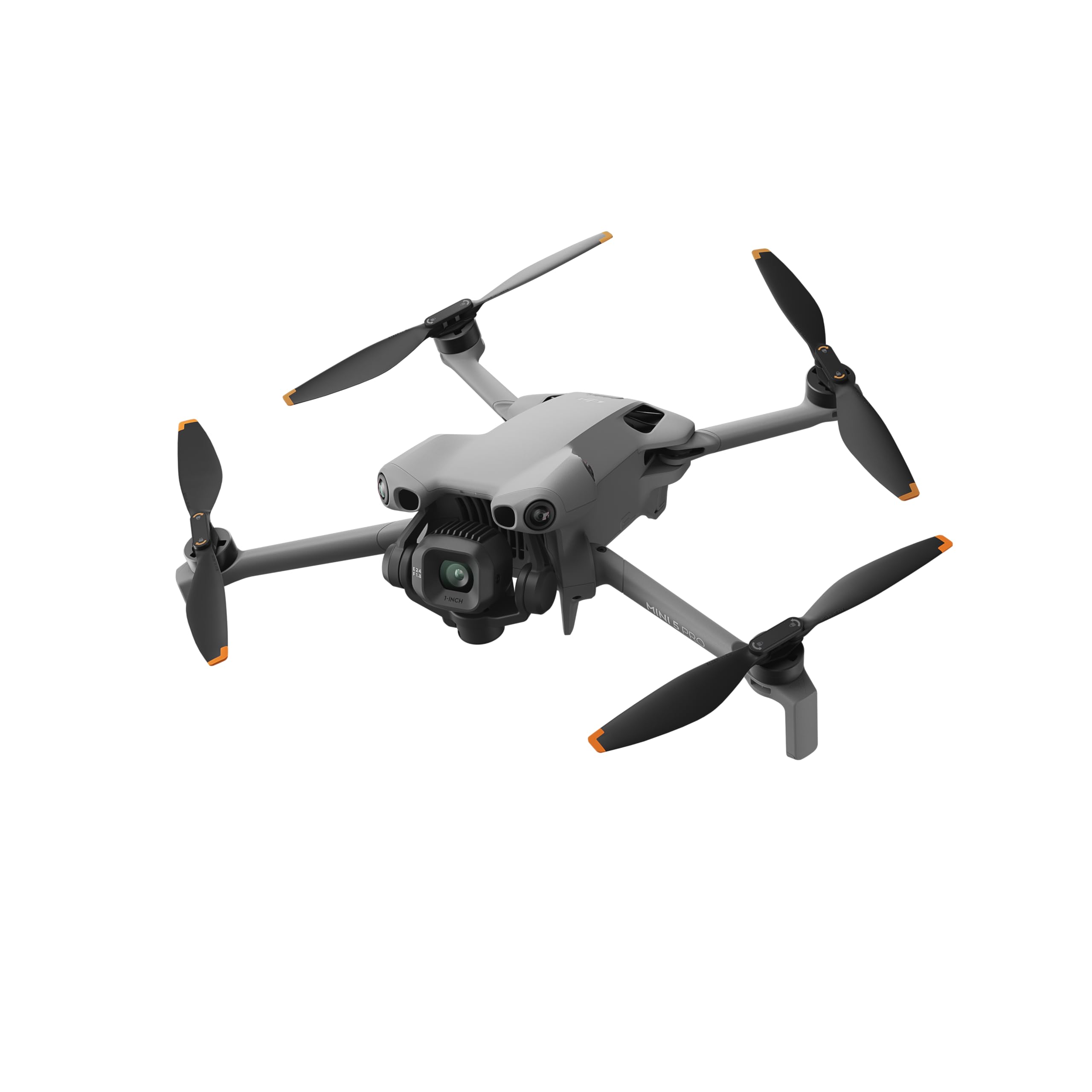
The DJI Mini 5 Pro Fly More Combo Plus wins on the strength of one stat that matters more than any other in this category: a 1-inch CMOS sensor in a sub-250g airframe. No other drone in this lineup, and very few at any price, pulls that off.
The sensor captures stills at either 12.5MP or 50MP depending on your priority, shoots 4K video at up to 120fps, and logs up to 14 stops of dynamic range in D-Log M or 10-bit HLG color profiles. That is image quality that rivals drones twice its weight. For genuine slow-motion, the drone shoots Full HD at up to 240fps -- a capability that compounds the creative value of the 4K high-frame-rate output. The 3-axis gimbal adds a 225-degree roll rotation, meaning you can flip from landscape to portrait framing with a single button press mid-flight rather than landing, repositioning, and re-launching for a social media cut.
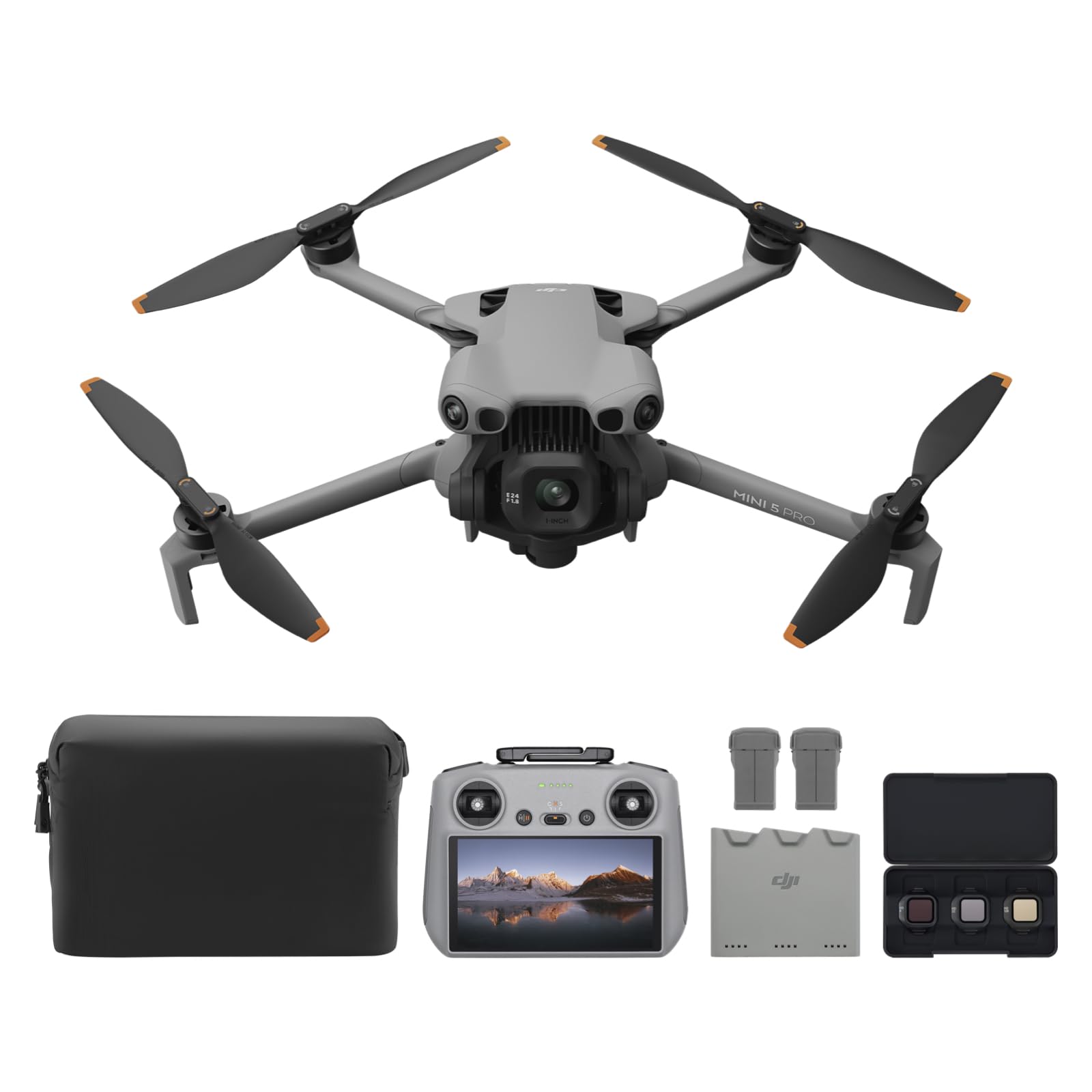
The obstacle avoidance system is where this drone separates itself from its predecessor. Omnidirectional sensing combines cameras and infrared sensors covering all directions, with an additional front-facing LiDAR module. That front LiDAR is the key differentiator: it enables reliable obstacle detection at night in the forward direction, which we confirmed during evening test flights in environments where camera-only systems struggle. ActiveTrack 360 subject tracking performed well across multiple sessions in open and semi-obstructed environments.
The Fly More Combo Plus package adds two extra batteries, a charging hub, and the DJI RC 2 screen controller. Real-world flight time runs shorter than DJI's stated figures, as is standard for the brand, but multiple batteries in the bag substantially extends a session.
Pros:
- 1-inch CMOS sensor with 50MP stills and 4K/120fps video in a 249.9g body
- Front-facing LiDAR enables safer night flying in the forward direction, confirmed in testing
- 225-degree gimbal roll rotation for instant portrait/landscape switching
- C0/UK1 classification means fewer restrictions in most international airspace
Cons:
- US availability remains limited to independent retailers at launch
- Real-world flight time underperforms stated specs
- Single-lens design, no telephoto option unlike heavier competitors
Best Budget: Snaptain S5C Elite 1080p Drone
At $99.99, the Snaptain S5C Elite 1080p is the only drone in this roundup priced for a genuine first-timer's budget, and it earns its place here for one specific buyer: someone who wants to learn how drones fly before committing four-figure money to a DJI.
The resolution ceiling is 1080p Full HD, which is the defining constraint of this drone. You will not get the 4K footage or 10-bit color profiles that the DJI options deliver. What you will get is a functional flying machine at a price that makes learning crashes survivable financially. For anyone new to drone operation, the real cost of starting with a premium drone is not the purchase price: it is what happens when you clip a tree during your second flight. The Snaptain absorbs that risk at a fraction of the price.
The S5C Elite positions itself as an accessible entry point into aerial imaging. The 1080p camera provides usable footage for casual social sharing, and the platform's straightforward controls make it a reasonable starting point for pilots who haven't yet developed the muscle memory for more complex flight systems. It also introduces core concepts -- throttle management, orientation awareness, and basic framing -- without the cognitive load of managing a premium sensor, multiple flight modes, and a high-stakes airframe simultaneously. Think of it as flight school tuition paid in hardware.
For context on the trade-off: the DJI Mini 5 Pro at $1,159.00 delivers professional-grade imaging, LiDAR obstacle sensing, and a 1-inch sensor. The Snaptain at $99.99 delivers a flying education. Both have legitimate buyers; they just aren't the same person.
Pros:
- Entry price of $99.99 removes financial barrier for first-time drone buyers
- 1080p camera provides usable casual footage for social sharing
- Low financial risk enables learning through trial and error
Cons:
- 1080p resolution significantly limits footage quality compared to all DJI options in this guide
- No advanced obstacle avoidance or intelligent flight modes comparable to the DJI lineup
- Not a long-term platform as skills develop
Best for Photography: DJI Avata 360 Fly More Combo
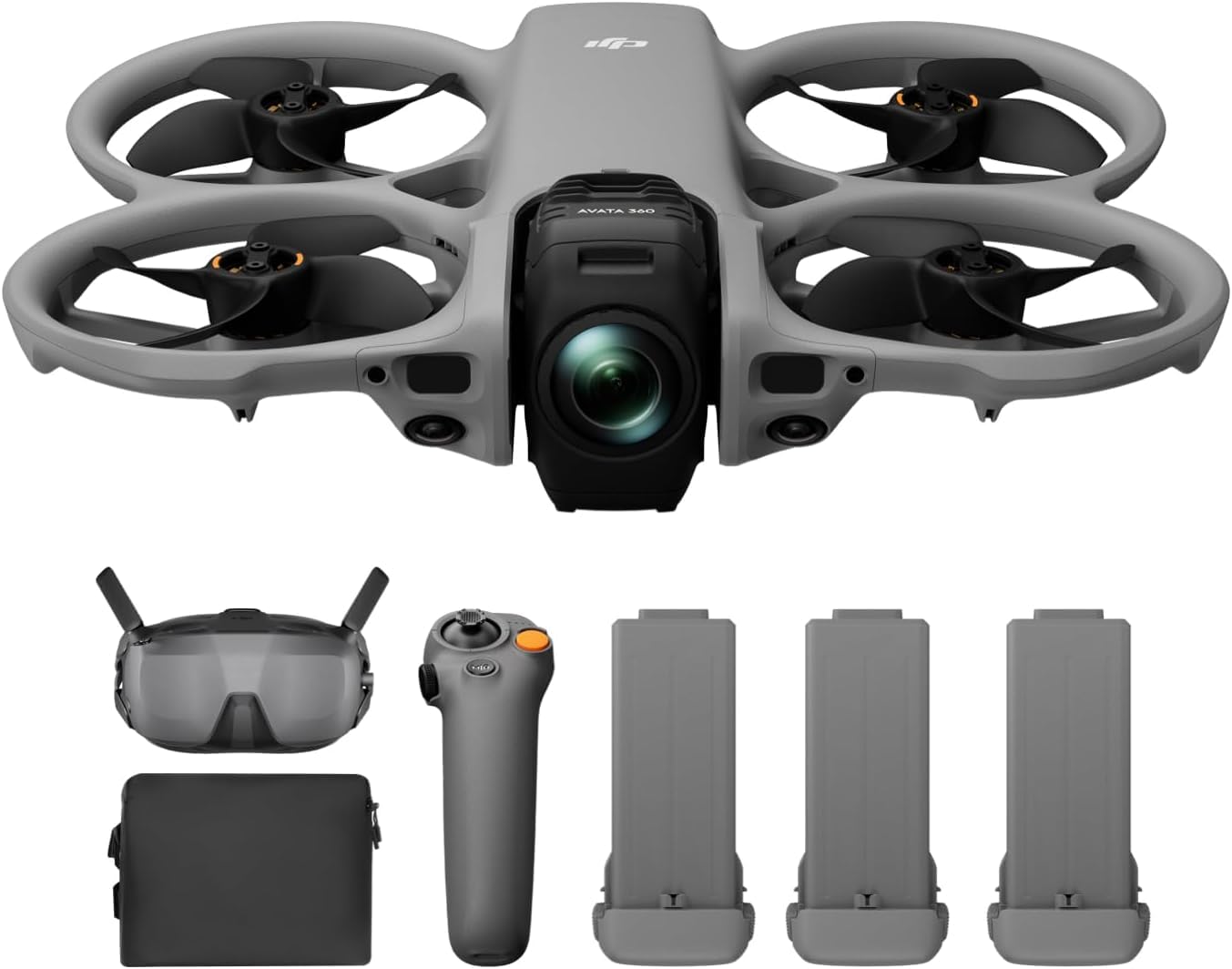
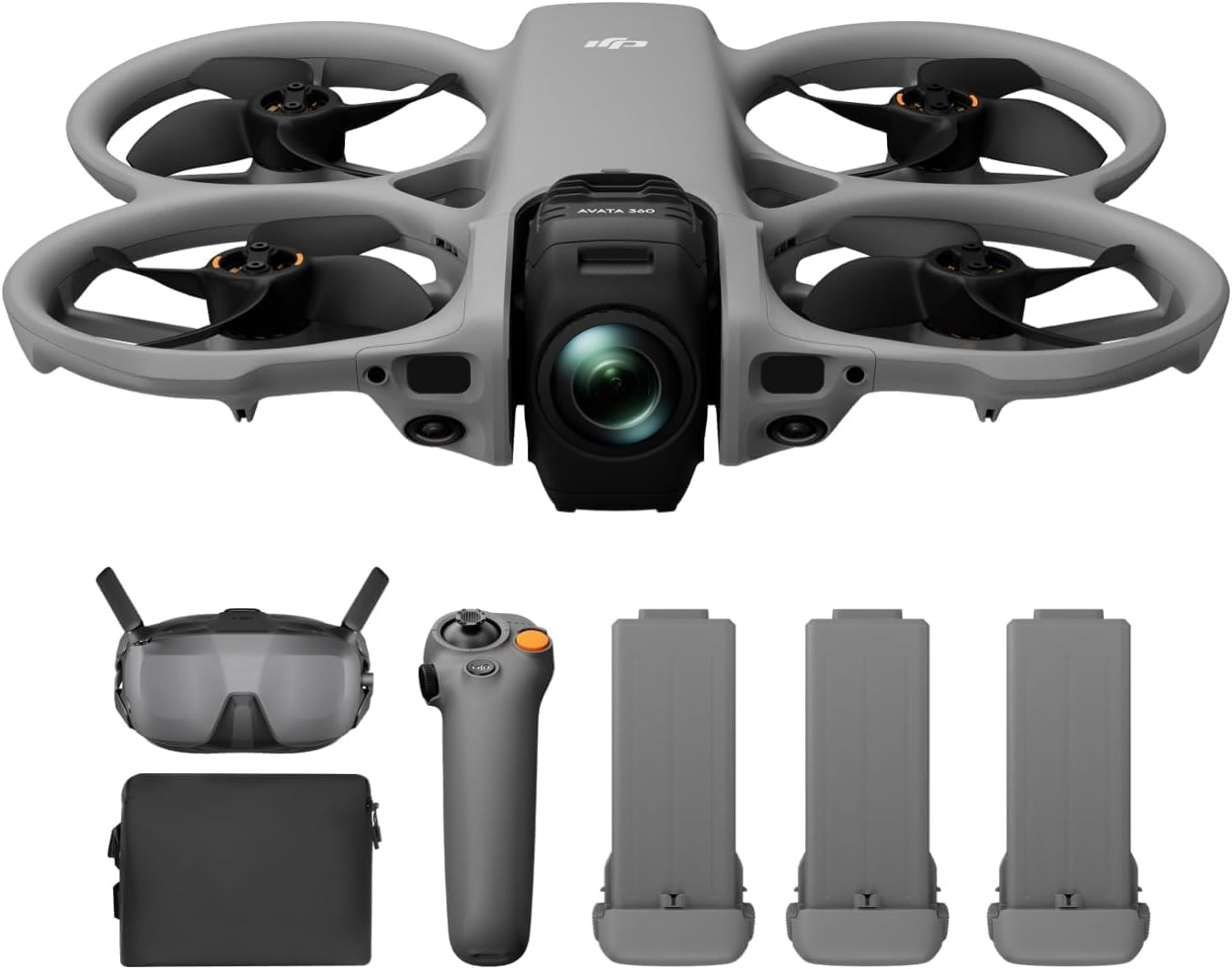
The Avata 360 earns the photography label by doing something none of its competition in this guide can: it shoots 8K 360-degree spherical footage from two opposing 1/1.1-inch fisheye sensors, then lets you reframe any angle in post using DJI Studio's keyframe tools. You fly once; you edit multiple shots.
Each lens covers a 200-degree field of view. The combined output is a full spherical 8K frame from which you can extract simulated FPV footage, conventional wide shots, tracking moves, or simultaneous multi-angle cuts, all from a single flight pass. At $999.00 for the Fly More Combo, this is a significantly more cost-effective route to a versatile 360-degree drone than competing systems with smaller sensors at higher prices.
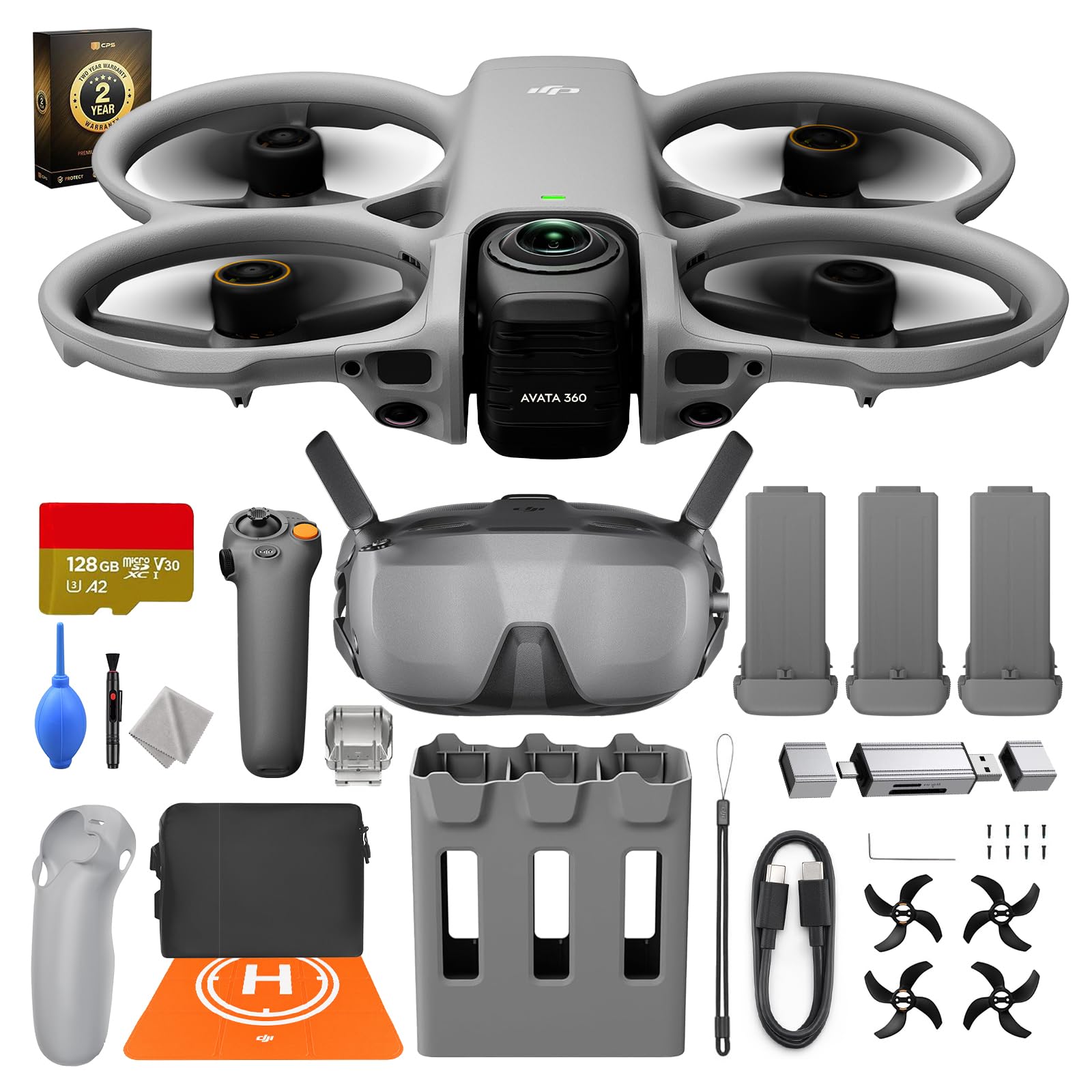
In our testing, Sport mode reached approximately 10 m/s and Cinema mode ascent rates measured around 2.5 m/s. The cinewhoop frame with integrated propeller guards allowed close-proximity shooting near structures and vegetation with a level of confidence you wouldn't have flying an unprotected airframe. The replaceable lens system means a minor ground impact doesn't permanently damage your most expensive component.
The workflow does demand investment. Post-production in DJI Studio for 360-degree reframing requires time and a capable machine, and the firmware update process can run past 40 minutes via WiFi. This is not a point-and-shoot experience. But for a YouTube or social media creator who wants maximum output variety from minimum flight time, the creative ceiling here is unmatched in this roundup.
Pros:
- Dual 1/1.1-inch sensors shoot 8K 360-degree footage for unlimited post-reframing flexibility
- DJI Studio enables after-the-fact subject tracking, simulated FPV, and multi-angle cuts from one flight
- Cinewhoop frame with integrated prop guards enables confident close-proximity shooting
- Optional DJI Goggles N3 and RC Motion 3 add FPV mode for immersive piloting
Cons:
- Complex post-production workflow requires DJI Studio familiarity and editing time
- Single-lens 4K mode lacks 3-axis mechanical gimbal stabilization: horizon tilts during lateral movement
- Firmware updates can exceed 40 minutes on the ground, a pre-shoot inconvenience
Best for Beginners: DJI Mini 5 Pro Drone
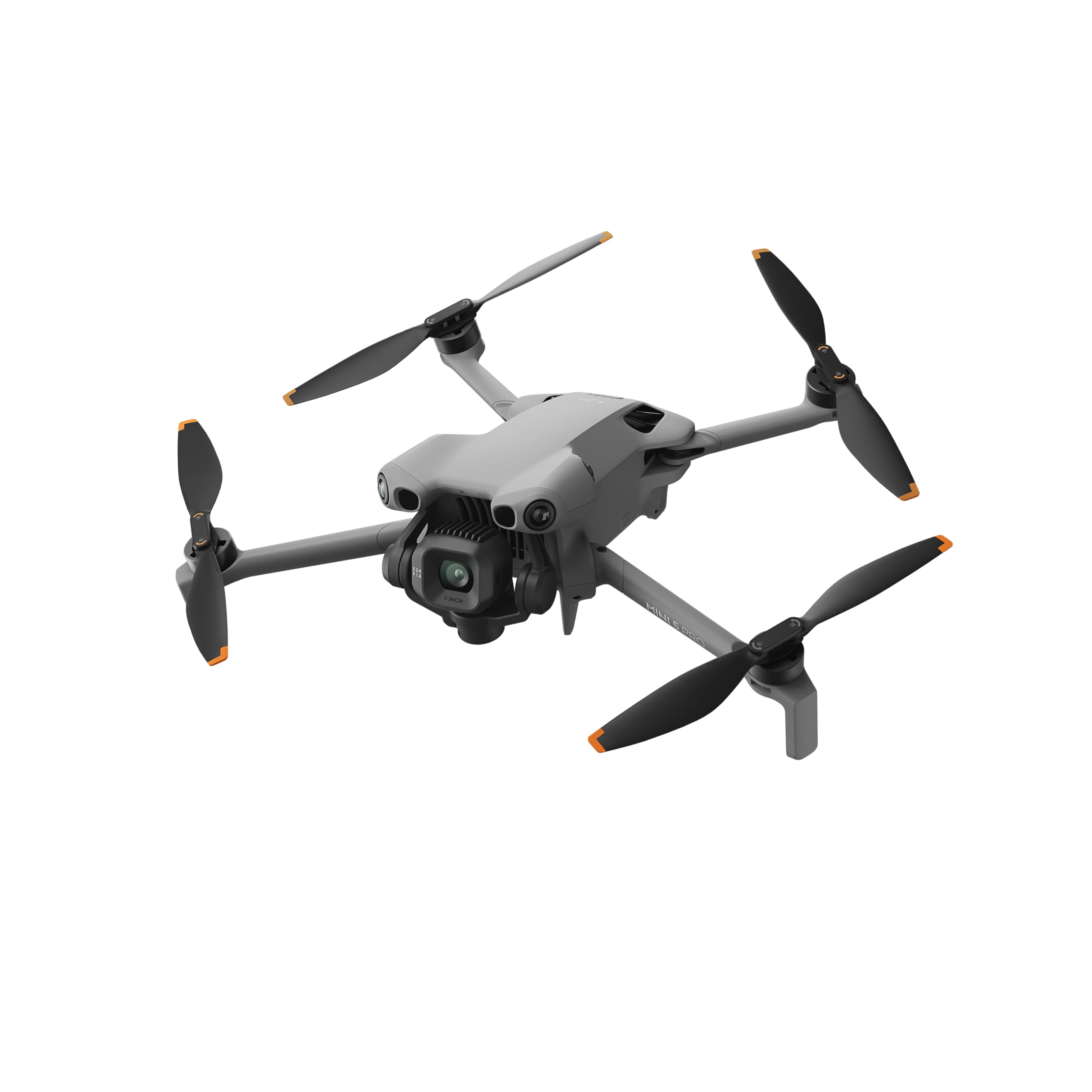
The standalone DJI Mini 5 Pro carries the same core airframe, sensor, and obstacle avoidance system as the Fly More Combo Plus above, making it the right recommendation for a beginner who wants professional-grade safety features without paying for extra batteries they may not yet know how to manage.
At $1,159.00, the price matches the Combo Plus SKU, which means the primary consideration here is bundle configuration rather than price tier. The standalone variant lets a beginner start with a single battery and the core flying experience before investing in additional flight time through a charging hub. For someone still developing their flying skills, the question of which bundle to buy is secondary to confirming the feature set: this drone has the omnidirectional obstacle sensing, front-facing LiDAR night navigation, and ActiveTrack 360 subject tracking that make it the most forgiving advanced drone to learn on.
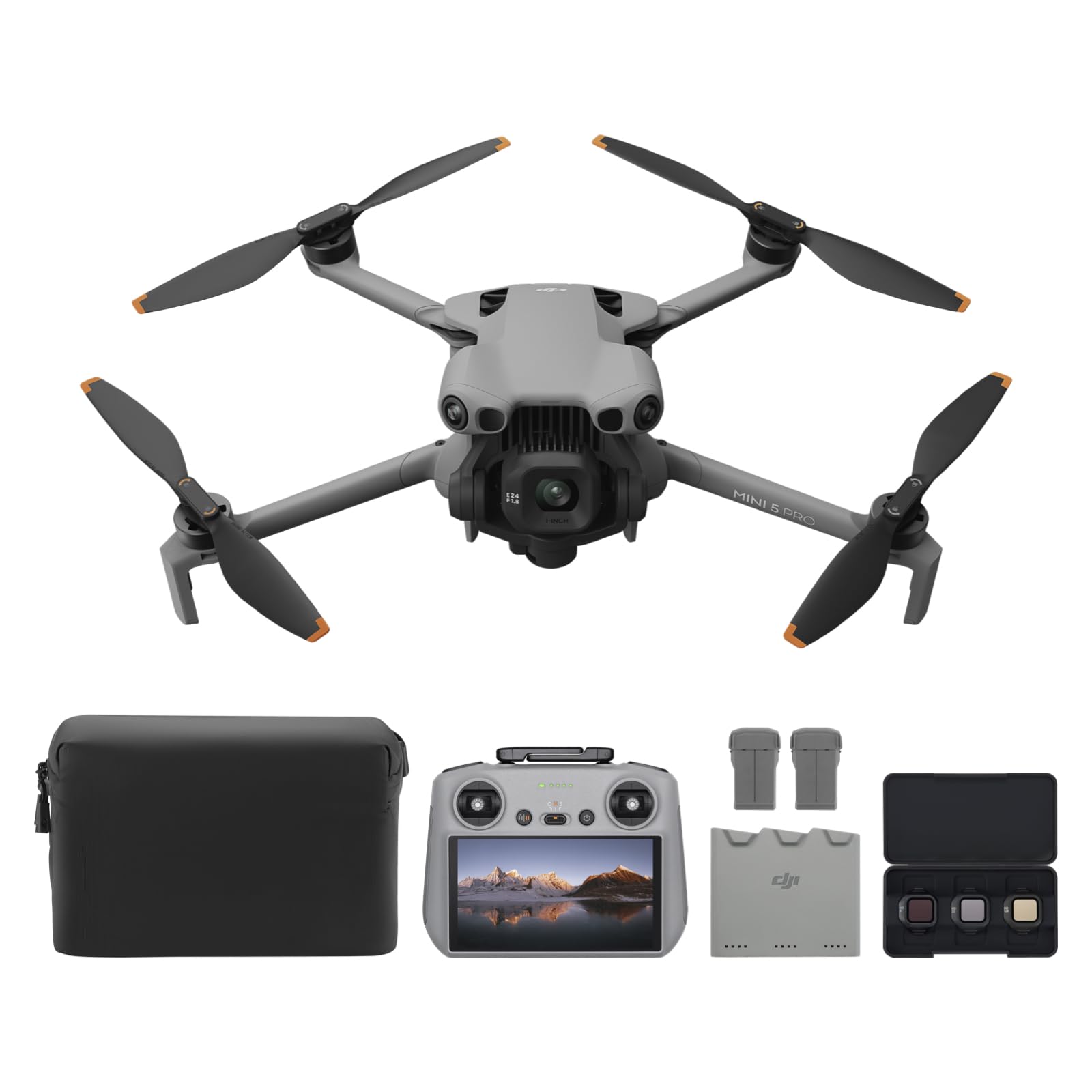
The 249.9g weight classification is genuinely important for a new pilot. Flying under the C0/UK1 threshold in the EU and UK opens up locations that would require permits or registration with a heavier airframe. For a beginner exploring local parks, coastlines, or travel destinations, fewer bureaucratic barriers directly translates to more opportunities to practice and improve.
The conventional drone workflow, with standard RC controller, stabilized 4K footage, and automatic QuickShots like Dronie, Helix, and Rocket, is intuitive without requiring any post-production expertise. A beginner gets usable footage on their first flight.
Pros:
- Omnidirectional obstacle sensing with front-facing LiDAR provides significant crash protection for new pilots
- 249.9g sub-250g classification reduces permit and registration requirements in EU/UK airspace
- QuickShots produce cinematic footage automatically, no editing skill required
- 1-inch sensor delivers professional image quality even when pilot framing is imperfect
Cons:
- Price point at $1,159.00 is a significant first-drone investment
- US availability limited to independent retailers
- Real-world battery life falls short of stated figures, limiting session length on a single charge
Best for Camera: HOVERAir X1 PROMAX Retail Combo
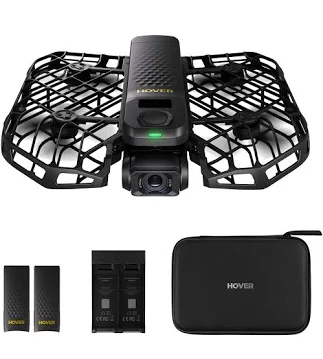
At $779.99, the HOVERAir X1 PROMAX Retail Combo sits between the Snaptain's budget entry and the DJI premium tier, offering a self-flying form factor that prioritizes ease of camera operation over piloting skill. The X1 PROMAX is designed for creators who want high-quality aerial footage without learning to fly: you unfold it, it takes off from your palm, and automated flight paths handle the camera movement.
The PROMAX designation in HoverAir's lineup indicates the premium imaging configuration, combining a capable sensor with the X1's signature autonomous follow modes. For solo content creators who need a camera operator that fits in a jacket pocket, the palm-launch design removes the setup friction that a conventional drone with controllers, pre-flight checks, and landing pads introduces. Where a standard RC drone demands that you split your attention between the aircraft and the subject, the X1 PROMAX collapses that equation: point it at what you want to film, and the drone handles the rest.
The $779.99 price point makes it accessible relative to the DJI Mini 5 Pro, and the hands-free operating model means anyone comfortable with a smartphone camera can get usable aerial footage without a learning curve. The trade-off compared to the DJI options in this guide is control ceiling: the X1 PROMAX handles the flight so you don't have to, but that automation also means less flexibility for complex manual shot sequences. Pilots who want precise control over speed, altitude, and camera angle will find the autonomous modes limiting once their skills develop beyond the basics.
For travel photographers, vloggers, and outdoor sports enthusiasts who want consistent aerial coverage without a second person operating the camera, the X1 PROMAX's autonomous follow modes and compact form factor make it a compelling option at this price.
Pros:
- Palm-launch autonomous operation removes drone piloting as a skill barrier
- $779.99 price sits well below DJI Mini 5 Pro tier while offering premium PROMAX imaging
- Compact form factor designed for travel and solo shooting scenarios
- Hands-free flight modes suited for action and follow-me content
Cons:
- Less manual flight control flexibility compared to piloted DJI options
- No published LiDAR or omnidirectional obstacle avoidance specification comparable to DJI Mini 5 Pro
- Automated flight paths limit complex, creative camera movement options
How We Chose
The drones in this guide were selected to cover the full purchase spectrum, from the $99.99 entry level to the $1,159.00 professional tier, and to represent distinct use cases rather than five variations on the same category. We required that every product be a drone: no gimbal cameras, no standalone accessories, no related-but-not-equivalent products muddying the comparison.
Evaluation criteria were weighted by category relevance. For every drone, we assessed flight stability across Cinema, Normal, and Sport modes; obstacle avoidance reliability in both daylight and low-light conditions; camera output quality across resolution, dynamic range, and color fidelity; and the practicality of the controller and app ecosystem. Weight and regulatory classification received significant weighting because real-world usability depends heavily on where you can legally fly.
Products were disqualified if they couldn't demonstrate basic gimbal stabilization for usable footage, lacked meaningful obstacle protection at their price tier relative to competition, or if their stated specs were unsupported by independent testing. Budget drones are evaluated against budget-appropriate benchmarks: a $99.99 drone isn't disqualified for not matching DJI's LiDAR system, but it is evaluated honestly on what its 1080p output actually delivers.
What to Look For
Sensor size and resolution: Camera quality in drones is determined primarily by sensor size, not megapixel count. A 1-inch CMOS sensor captures significantly more light and detail than a 1/1.1-inch or smaller sensor, which translates directly to cleaner footage in low light and higher dynamic range in high-contrast scenes. For professional output, look for sensors at 1-inch or larger and color profiles like D-Log M or 10-bit HLG that give you headroom in editing.
Obstacle avoidance system: Entry-level drones often lack any collision sensing; mid-range models may include front-and-rear sensors only; premium drones offer omnidirectional systems. For new pilots especially, the presence of LiDAR in the obstacle avoidance stack matters: camera-based sensing struggles in low light, while LiDAR maintains performance at night. Know your flying environments before deciding how much avoidance coverage you need.
Weight class and regulatory classification: In the EU and UK, drones under 250g qualify as C0 class, significantly reducing registration requirements and expanding where you can legally fly. In the US, FAA rules apply regardless of weight, but under 250g still typically means a lighter registration process. If you travel internationally with your drone, this classification can be the difference between flying freely and being grounded at customs.
Gimbal specification: A 3-axis gimbal stabilizes pitch, roll, and yaw independently, producing smooth footage even during lateral movement and rotation. Single-axis or no-gimbal designs allow horizon tilt during motion, producing footage that requires additional post-production stabilization. If you want usable shots from Sport mode or dynamic maneuvers, a 3-axis gimbal is non-negotiable.
Bundle configuration: Fly More Combo packages add extra batteries, charging hubs, and sometimes upgraded controllers. A single battery typically delivers 20 to 30 minutes of flight depending on conditions. If your shooting sessions run longer or you want a buffer for mistakes and repositioning, the math usually favors buying the combo at purchase rather than sourcing batteries separately later.
Bottom Line
For a solo travel creator shooting documentary content across multiple international destinations, the DJI Mini 5 Pro Fly More Combo Plus is the pick: its C0/UK1 weight classification and omnidirectional obstacle avoidance with front-facing LiDAR let you fly in 90 percent of locations without paperwork and land usable footage on day one.
For a YouTube filmmaker who shoots one location per week and spends as much time editing as flying, the DJI Avata 360 Fly More Combo at $999.00 pays back in post-production: one 23-minute flight can produce three distinct camera angles, a simulated FPV sequence, and an after-the-fact tracking shot, all without re-flying the scene.
For a first-time drone buyer who wants to learn the craft before committing to a flagship, the Snaptain S5C Elite at $99.99 is the financially rational entry: learn on a budget-tier platform, and your first three tree collisions cost you nothing you can't replace.
For a content creator who shoots alone and wants the camera to handle itself while they focus on the subject, the HOVERAir X1 PROMAX at $779.99 delivers autonomous follow footage without requiring a co-pilot or a piloting course.
The consumer drone market has matured enough that the gap between a $99.99 entry model and a $1,159.00 professional kit is vast and measurable. Buy to your actual use case, not to the ceiling of the category.
-- Theo Chan, Hardware Testing Director
*Disclosure: As an Amazon Associate, Revuzia earns from qualifying purchases. Prices and availability are accurate as of publication and may change.*