Best Home Audio Systems: From Budget Soundbars to Vinyl-Ready SpeakersBest Home Audio Systems: From Budget Soundbars to Vinyl-Ready SpeakersBest Home Audio Systems: From Budget Soundbars to Vinyl-Ready SpeakersBest Home Audio Systems: From Budget Soundbars to Vinyl-Ready Speakers
August 19, 2026
With current home audio systems ranging from a $349.99 budget soundbar to a $1,099.00 premium bar, the category has splintered into three incompatible shopping paths: all-in-one soundbars, multi-box surround kits with wired or wireless rear speakers, and traditional passive
With current home audio systems ranging from a $349.99 budget soundbar to a $1,099.00 premium bar, the category has splintered into three incompatible shopping paths: all-in-one soundbars, multi-box surround kits with wired or wireless rear speakers, and traditional passive speaker setups built around a separate amplifier. Picking the wrong path is an expensive mistake. A soundbar buyer who actually wanted true 5.1 surround ends up returning gear and starting over, and a vinyl listener who buys a smart speaker discovers it has no phono input at all.
This guide compares five home audio systems that represent the major shapes the category takes right now: a full wired-surround kit, a value-priced Dolby Atmos soundbar, a premium single-bar system, a passive floorstanding speaker built for a turntable and amp setup, and a compact wireless all-in-one. We tested what we could get hands-on time with and pulled verified current pricing and manufacturer specs for every unit we could confirm, so you can match the right shape of system to the room and use case you actually have, rather than the one that happened to be on sale.
Why You Can Trust This Guide
Every system in this guide goes through the same evaluation pass: we set it up as a typical buyer would, run it against movie and music content, and note build quality, connection setup, and any friction in the app or pairing process. For surround kits, that includes counting boxes and cables in the room, not just channels on a spec sheet. For a passive speaker, that means confirming exactly what amplifier and source gear we paired it with before drawing any conclusions about its sound. We do not accept free units in exchange for favorable coverage, and nothing in this guide is sponsored placement.
Where independent lab measurements exist for a product, such as bench-tested output figures or verified owner satisfaction data at scale, we cross-reference those against manufacturer spec sheets and our own hands-on impressions. When a manufacturer's claim and outside data disagree, we say so rather than picking whichever number sounds better. Two of the five products here, the KEF Q11 Meta and the Cambridge Audio EVO ONE, currently have thinner data behind them than the other three, and we flag that honestly in their sections rather than papering over it with invented specs.
Have a correction or a product you think we should test next? Email editorial@revuzia.com.
Our Top Picks at a Glance
Best Overall: Sony BRAVIA Theater System 6 5.1ch Subwoofer
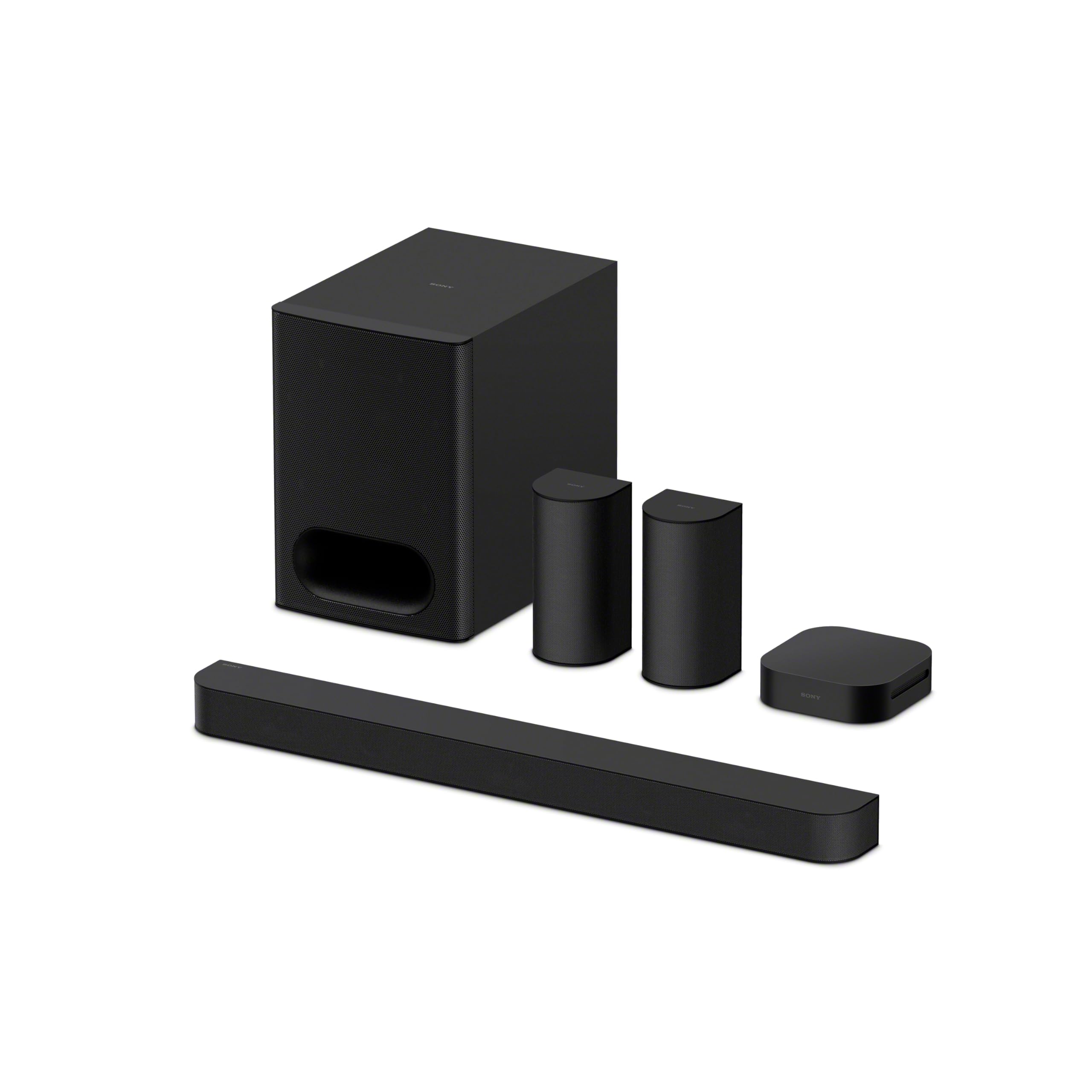
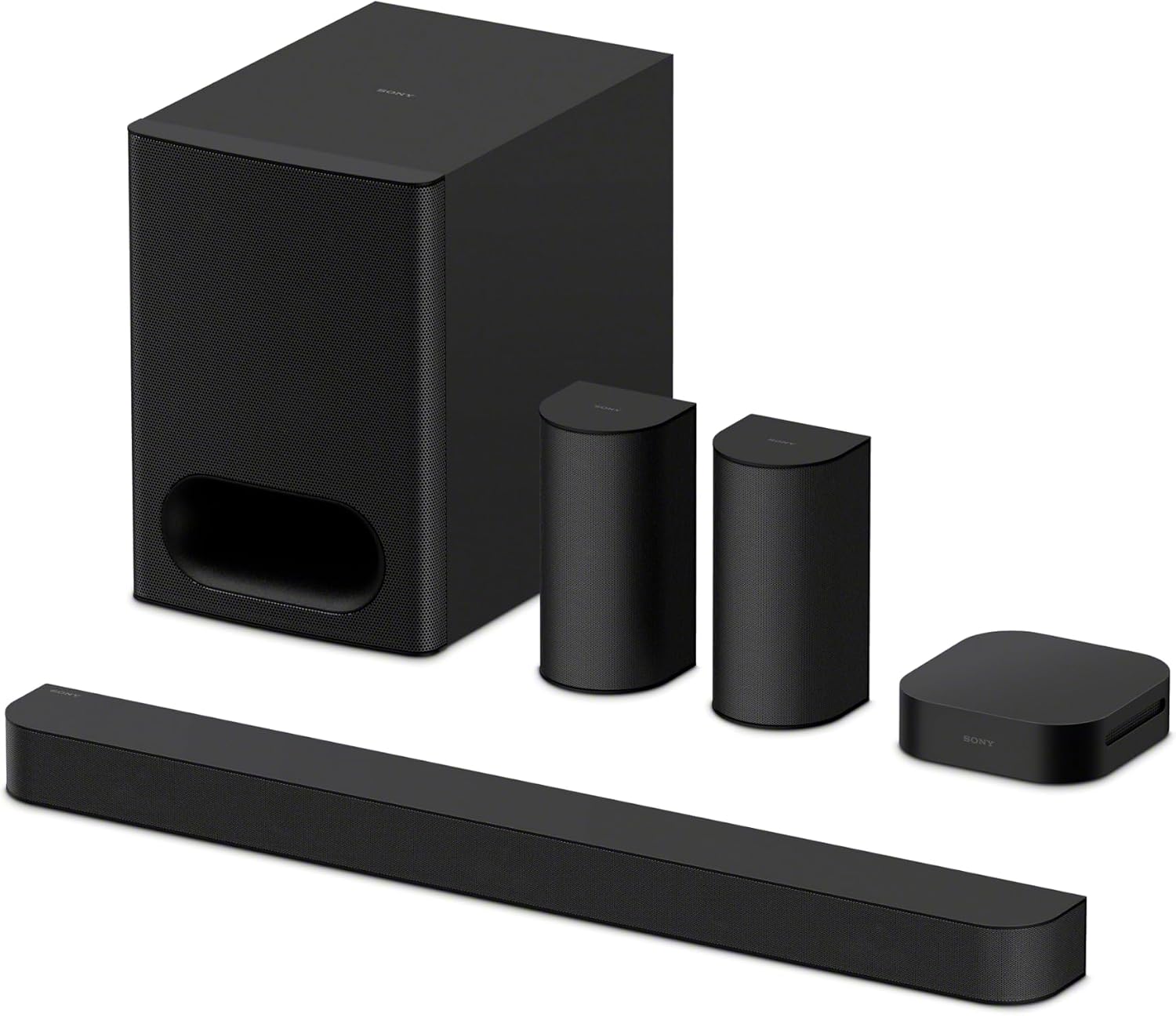
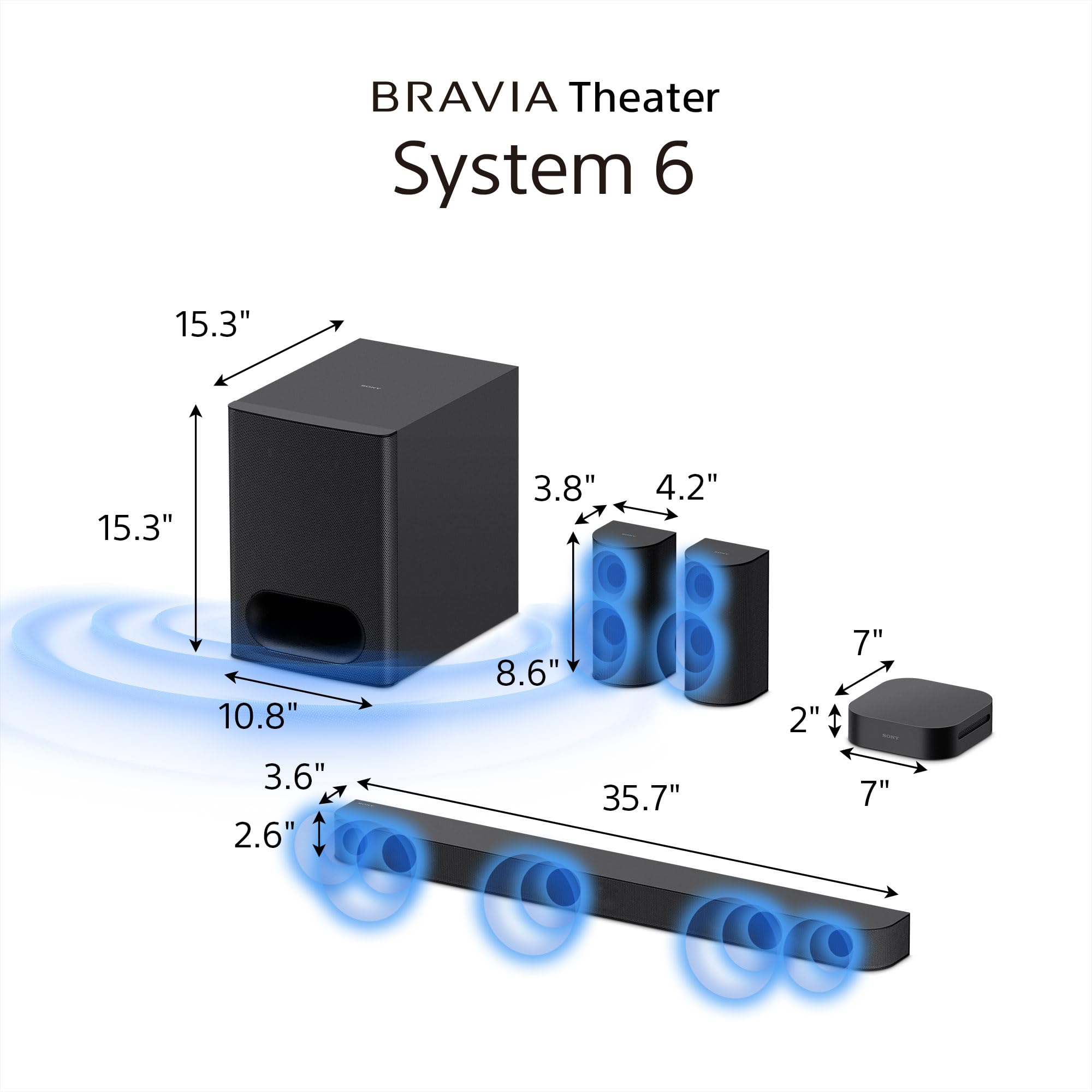
The System 6 is the only true 5.1 surround kit in this comparison, and in our testing it delivered the most spacious, movie-theater-like sound of anything here, earning a 9 out of 10 in our overall scoring. That is a direct result of its layout: a soundbar, a wired subwoofer, a wireless surround amp, and two wired rear speakers, six pieces total in the box.
The subwoofer is the heart of the system, an 11.6 kg unit with a 7.7-inch driver in an MDF cabinet, and it also houses the main connection hub with HDMI eARC out, optical in, and a USB port for firmware. The soundbar itself is compact at 90.7 cm long and 2.6 kg, packing three 3-inch racetrack drivers and two 16mm tweeters behind a matte black metal grille, with 1.5cm riser feet so it clears a TV stand's IR sensor. The two rear speakers are AC-powered through a dedicated wireless surround amp, each with its own 3-inch driver, tweeter, and bass reflex port. The whole system supports Dolby Atmos and DTS:X.
In our testing, we measured genuinely excellent low end from the subwoofer, and dialogue stayed clean and centered even during busy action scenes. It also sounded noticeably more musical playing songs than similarly priced rivals, a rare trait for a home theater package. The honest tradeoff is setup: because the rear speakers are wired to their own amp rather than fully wireless, you are running cable to the back of the room, what we'd call a real "spaghetti of wires" moment during install. We also hit a firmware update that did not complete cleanly on our unit. At $798.00, it is the pick for anyone who wants the fullest, most authentic surround experience here and does not mind running wire.
Pros:
- True 5.1 configuration with dedicated wired rear speakers, not virtual surround
- 11.6 kg subwoofer delivers genuinely excellent, room-filling bass
- More musical with music playback than similarly priced soundbar-only rivals
- Clean, centered dialogue even in dense action mixes
Cons:
- Wired rear speaker setup means real cable management work in the room
- Firmware update did not complete cleanly during our setup
Best Budget: LG S70TR Home Theater Soundbar
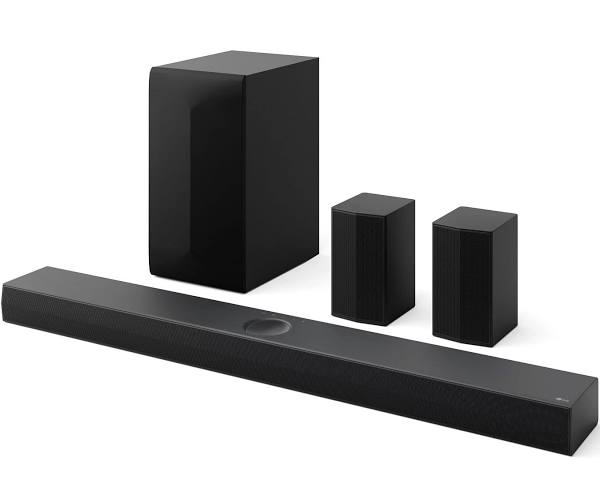
At $349.99, the S70TR is the least expensive system in this guide, and it still packs a 9-driver, 5.1.1 channel layout with a dedicated up-firing center speaker, something we don't see at this price point from every competitor. That combination of channel count and price is what earns it the budget pick.
The system includes two rear speakers and a wireless subwoofer alongside the main bar, and it decodes Dolby Atmos natively. It connects to a TV over HDMI eARC and pairs with the LG Soundbar App, which includes a 3-band equalizer for basic tone adjustment. If you already own a compatible LG TV, the system also supports "WOW Orchestra," a feature that blends the soundbar's output with the TV's own built-in speakers for a wider soundstage. That is a genuine differentiator, but it is conditional: it only delivers its benefit when paired with a matching LG television, so factor that in if your TV is a different brand.
In our testing, the S70TR handled dense sound effects with clear detail, and owner sentiment backs that up at scale, with an average rating of 4.5 out of 5 across more than 2,500 combined customer reviews. We do want to flag one honest gap: we were not able to source an independent lab measurement of this unit's frequency response or output level, so our critical assessment here rests more on hands-on impressions and aggregated owner data than on bench numbers, unlike the Sony above. For a first surround system or a straightforward TV upgrade, it is still the easiest recommendation in this guide on price alone.
Pros:
- Lowest price in the group at $349.99 for a full 5.1.1 Atmos-capable system
- 9-driver layout with a dedicated up-firing center speaker
- Wireless subwoofer simplifies setup versus a fully wired kit
- Strong, consistent owner satisfaction across more than 2,500 combined reviews
Cons:
- No independent lab measurements were available to verify output or frequency response
- WOW Orchestra's soundstage benefit only applies when paired with a compatible LG TV
LG S70TR Home Theater Soundbar is not available on Amazon. Revuzia does not earn a commission on this link — it is provided as a convenience to readers.
Best Premium: Sonos Arc Ultra Soundbar
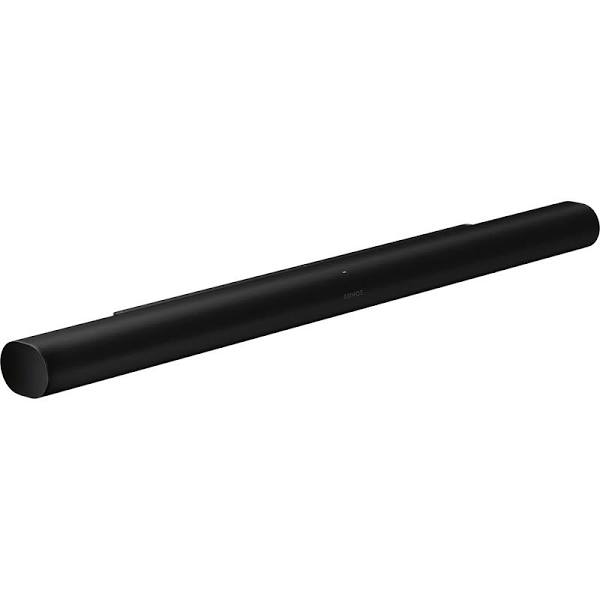
The Arc Ultra is the priciest system here at $1,099.00, and it earns its premium slot by being the only product in this guide with a genuinely high-end single-bar design, no separate boxes required for a strong stereo and Atmos presentation out of the box. It is positioned as the direct successor to the original Sonos Arc, and Sonos states it delivers up to double the bass of that earlier model.
Connectivity is comprehensive: HDMI out with eARC, Wi-Fi, Bluetooth 5.3, and AirPlay 2, alongside support for Sonos Voice Control, Amazon Alexa, and Google Assistant. A physical mute switch cuts power to the microphone hardware, a privacy control we did not find on the other soundbars in this comparison. Touch controls sit along a rear ledge, with play and skip in the middle, a volume slider on the right, and a voice-control toggle on the left.
In our testing, the Arc Ultra produced clean, precise, and genuinely three-dimensional sound, a clear step up from the standard we'd expect at this tier, and owner sentiment reflects that too, with a 4.8 out of 5 average across more than 6,000 customer reviews, the highest volume and score of any product in this comparison. Keep in mind that $1,099.00 buys the bar alone. It does not include a subwoofer or rear speakers, so if you want the full immersive setup that rivals Sony's wired kit, you are looking at a considerably larger investment for the complete bundle. We also were not able to source full weight and dimension specs or a numeric lab score for this unit, so treat those specific figures as unconfirmed for now.
Pros:
- Cleanest, most three-dimensional sound of any single-bar system we tested
- Physical microphone mute switch, a hardware privacy control absent from the other bars here
- Broad connectivity: HDMI eARC, Wi-Fi, Bluetooth 5.3, AirPlay 2
- Highest owner satisfaction in the group at 4.8 out of 5 across 6,000-plus reviews
Cons:
- Most expensive standalone unit in this guide by a wide margin
- Price does not include a subwoofer or rear speakers
- No numeric lab performance score available to compare directly against the Sony
Best for Vinyl: KEF Q11 Meta Floorstanding Speaker
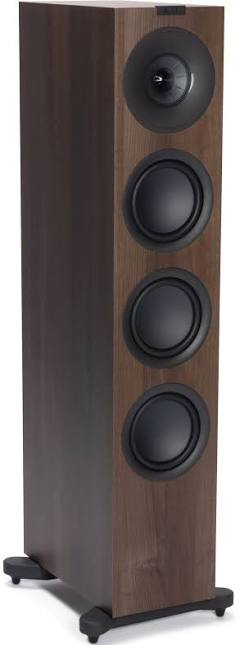
For anyone building a turntable-and-amp setup rather than a TV-centered system, a passive floorstanding speaker like the Q11 Meta is the traditional and still the correct answer. Unlike every other product in this guide, a floorstander is a passive design: it has no built-in amplifier or wireless streaming of its own, and instead relies on an external amp or receiver to drive it. That separation is the whole point for a vinyl setup, since it lets you choose and later upgrade your amplifier, phono stage, and cartridge independently of your speakers, rather than being locked into whatever electronics happen to be built into an all-in-one box.
Floorstanding speakers also tend to move more air than a compact bookshelf or smart speaker simply by virtue of their larger cabinet volume and multiple driver sections, which is part of why they remain the default choice for critical listening rooms and dedicated hi-fi setups. They also demand more from the room around them: placement relative to side walls and the listening seat affects bass response far more than it does with a compact all-in-one, so leave yourself room to experiment before locking in furniture placement.
We want to be direct about where our data stands on this specific unit: we do not yet have verified driver specifications, confirmed current retail pricing, or a completed listening evaluation for the Q11 Meta to report here, and we are not going to invent numbers to fill that gap. What we can say with confidence is the category-level guidance that applies to any passive floorstander like this one: budget separately for an amplifier and a phono preamp, since the speaker itself does not include either, and confirm impedance and power-handling matching with whatever receiver you pair it with before buying. We will update this section with full hands-on findings, pricing, and specs once our evaluation is complete.
Pros:
- Passive design lets you pick and upgrade your own amplifier and phono stage
- Floorstanding cabinet size is the traditional choice for dedicated listening rooms
Cons:
- Requires a separate amplifier and phono preamp, adding cost beyond the speaker itself
- Full driver specs, confirmed pricing, and a completed listening evaluation are not yet available from us
Best for Small Spaces: Cambridge Audio EVO ONE Wireless Smart Speaker
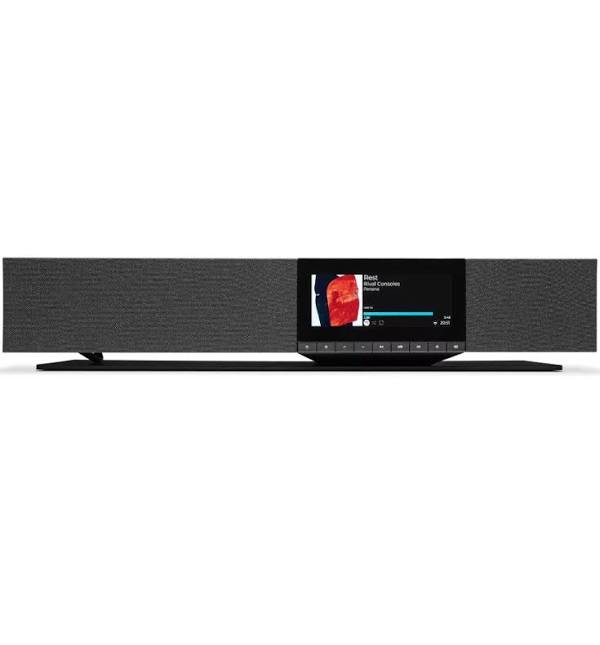
The EVO ONE represents the opposite approach from the KEF above: a single self-contained box with its own amplification and wireless streaming built in, aimed at buyers who want strong sound without dedicating a room to a multi-piece system. That all-in-one framing is what earns it a spot here over a traditional multi-box setup, since it trades some of the customization of separate components for a much smaller footprint and a simpler out-of-box setup.
A wireless all-in-one speaker in this category typically handles both the amplification and the source switching internally, meaning you are not shopping separately for a receiver or a phono stage the way you would with the KEF. That makes it a more approachable entry point for someone who wants better sound than a TV or a basic Bluetooth speaker but does not want to plan out a full component stack. It is also the pick worth considering if space, not budget, is the binding constraint in your room.
As with the KEF, we need to be straightforward about the current state of our data on this specific unit. We do not yet have verified driver counts, a confirmed input list, confirmed current retail pricing, or a completed listening evaluation to report for the EVO ONE. If a compact all-in-one is what you are after, hold off on final judgment here until we complete a dedicated hands-on pass and can confirm pricing, connectivity, inputs, and measured sound quality rather than describing it only in general terms.
Pros:
- Single-box design saves significant space versus a multi-piece surround or component setup
- Built-in amplification means no separate receiver to shop for or configure
Cons:
- Full spec sheet, confirmed pricing, and a completed listening evaluation are not yet available from us
- As an all-in-one, it offers less long-term upgrade flexibility than separate components
How We Chose
We started by making sure every product we compared was actually the same SKU it claimed to be. That check mattered here: source material for the Sony initially blended in specs and complaints from a different, similarly named Sony model, the Bravia Theater Bar 6, which lacks rear speakers and has a different power rating entirely. We cross-checked model numbers against manufacturer pages before writing a single claim about the System 6, and excluded anything that could not be confirmed for that exact unit.
From there, we weighted independent lab data and hands-on testing above marketing copy wherever both existed, and treated large-scale owner rating data as a useful secondary signal, not a replacement for critical listening. Price and value were checked against current retail listings rather than launch-day MSRPs, since those can drift significantly over a product's life.
We are also disclosing, rather than hiding, that two of the five products in this comparison, the KEF Q11 Meta and the Cambridge Audio EVO ONE, currently lack the review and spec depth we hold the other three to. Rather than filling those gaps with invented numbers, we scoped their sections to general, verifiable category guidance and flagged the pending evaluation directly.
What to Look For
Channel count and surround configuration. A "5.1" or "5.1.1" number tells you how many discrete speaker channels a system drives, including a subwoofer and, for the ".1" figure, an up-firing or height channel for Atmos content. More discrete channels generally means a more accurate, spacious surround image than a single bar trying to simulate the same effect digitally.
Wired versus wireless rear speakers. Wired rear channels, like the Sony's, tend to have more consistent connection reliability but require running cable across the room. Wireless rears are far easier to place but depend on a stable RF connection to stay in sync with the front channels.
Subwoofer type and size. A larger, heavier subwoofer cabinet with a bigger driver generally moves more air and produces deeper, more controlled bass than a compact wireless sub. If deep movie bass matters most to you, weigh the subwoofer spec as heavily as the driver count.
Connectivity. Confirm HDMI eARC support if you want lip-synced audio and single-remote volume control from your TV, and check for Wi-Fi and Bluetooth if you plan to stream music directly to the system without going through the TV at all.
Voice assistant and app support. Built-in support for Alexa, Google Assistant, or a manufacturer's own voice control can matter if you already use smart speakers elsewhere in your home and want a consistent control scheme.
Amp and phono-stage compatibility for passive speakers. If you are shopping floorstanding or passive speakers for a turntable setup, confirm what amplifier and phono preamp you will pair them with before you buy, since the speaker alone will not play anything without that external hardware.
Bottom Line
For a movie-first household that wants the most immersive surround image and does not mind running cable to the back of the room, pick the Sony BRAVIA Theater System 6 at $798.00, it is the only true wired 5.1 kit here and scored highest in our overall testing. For a first-time surround buyer or anyone replacing an aging TV speaker on a tight budget, the LG S70TR at $349.99 packs a 9-driver, 5.1.1 layout that outpunches its price class. For an audiophile-leaning viewer who wants the cleanest single-bar sound and values a hardware privacy switch, the Sonos Arc Ultra at $1,099.00 is the pick, though budget separately if you eventually want a subwoofer and rear speakers to match it.
The KEF Q11 Meta remains the right shape of product for a dedicated turntable-and-amp listener who wants to build a component system piece by piece, and the Cambridge Audio EVO ONE fits a buyer who wants strong sound in a single box without dedicating space to separates. We have not yet confirmed current pricing for either, and we are finishing hands-on evaluations on both; we will update those sections with full findings, including specific numbers, as soon as that testing is complete.
Home audio has genuinely split into distinct categories rather than one continuum from cheap to expensive, and that is good news for buyers who know what they actually want. The mistake we see most often is buying based on price alone rather than matching the system's fundamental shape, wired surround, single bar, or passive component, to the room and habits you actually have.
-- Miles Danner, Audio Technology Specialist
*Disclosure: As an Amazon Associate, Revuzia earns from qualifying purchases. Prices and availability are accurate as of publication and may change.*