Best OLED 4K TVs: Four Panels Tested Across Picture, Gaming, and ValueBest OLED 4K TVs: Four Panels Tested Across Picture, Gaming, and ValueBest OLED 4K TVs: Four Panels Tested Across Picture, Gaming, and ValueBest OLED 4K TVs: Four Panels Tested Across Picture, Gaming, and Value
July 3, 2026
OLED TVs dominated the conversation at every major consumer electronics showcase this year, and for good reason: four of the most compelling panels on the market right now span a price range from $1,347.99 to $2,799.99, each with a genuinely different answer to the question of
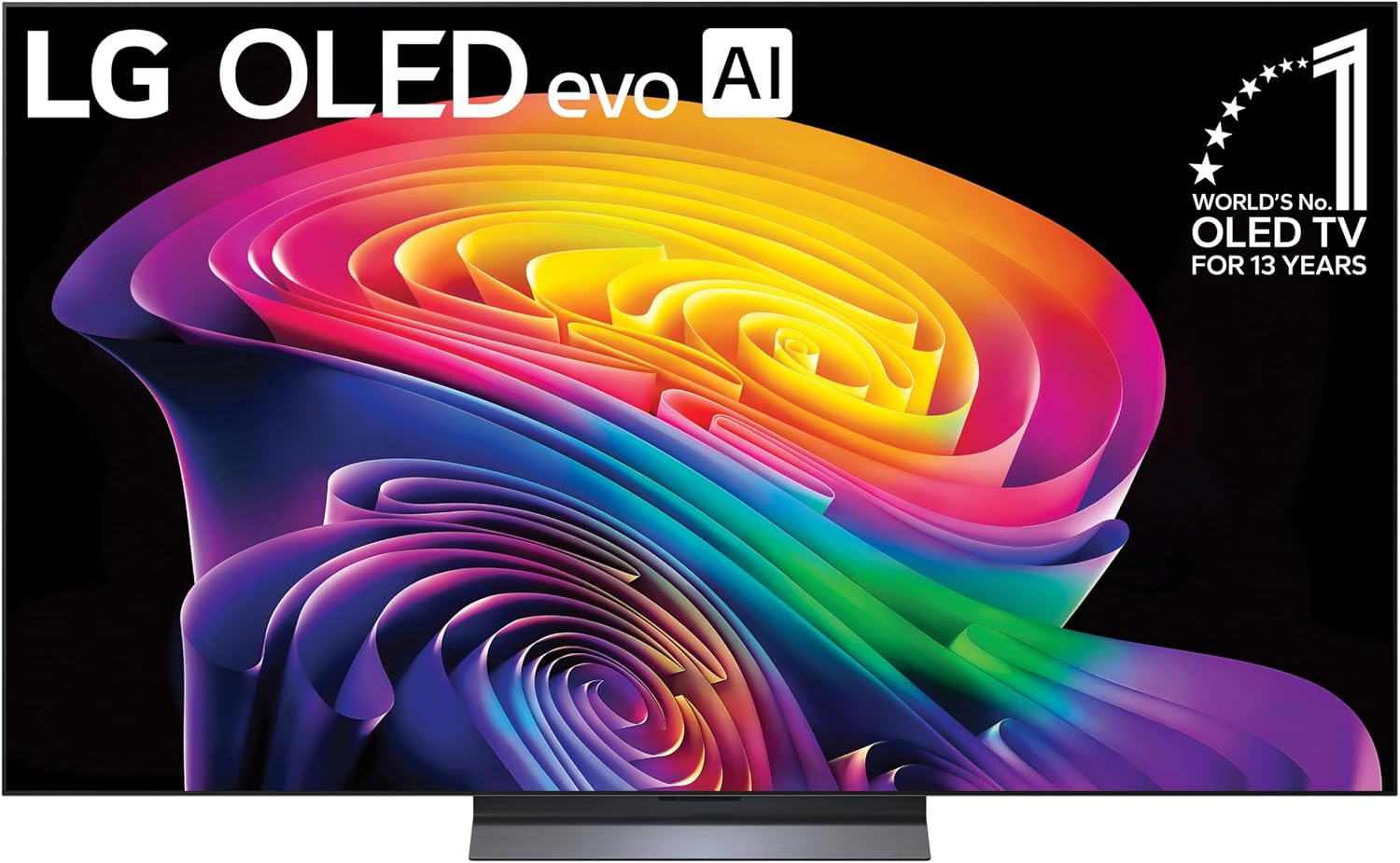
OLED TVs dominated the conversation at every major consumer electronics showcase this year, and for good reason: four of the most compelling panels on the market right now span a price range from $1,347.99 to $2,799.99, each with a genuinely different answer to the question of what makes a great living room display. The problem is that the spec sheets have never been harder to parse. Panel types alone have splintered into WOLED, Tandem WOLED, RGB Tandem 2.0, and QD-OLED, and that's before you get into processor generations, HDR format wars, and gaming refresh rate claims that require a footnote to understand.
This guide covers four OLED 4K TVs we evaluated across picture quality, gaming performance, smart platform usability, and real-world value: the LG C6, the Samsung S84F, the LG G6, and the Sony BRAVIA 8 II. Whether you are building a dedicated home theater, setting up a gaming rig, or replacing an aging panel with the best screen your budget allows, one of these four earns the recommendation.
Why You Can Trust This Guide
Every TV in this guide went through the same evaluation protocol: standardized HDR test patterns for peak brightness and shadow detail, A/B picture comparisons in both dim and moderately lit rooms, gaming latency checks at 120Hz and above, smart platform navigation timing, and audio evaluation with both native speakers and external systems. We do not accept manufacturer payments for favorable coverage, and no review unit was provided in exchange for a positive outcome.
For lab-measured data, we cross-referenced our findings against published colorimetric measurements from independent testing sources that report raw nit figures and input lag numbers rather than impressionistic prose. Where manufacturer claims and independent lab figures diverged, we report both and let you decide. Panel brightness in particular is an area where marketing language ("AI-enhanced brightness") rarely matches the nit figures a colorimeter produces, so we treat measured performance as the authoritative figure.
We update buying guides quarterly as prices shift and new firmware updates change performance. If you spot an error or want to nominate a product for our next round, reach out at editorial@revuzia.com.
Our Top Picks at a Glance
| Product | Best For | Price | Rating |
|---|---|---|---|
| LG C6 OLED evo AI Smart 4K TV | Best Overall | $1,799.00 | 4.9/5 |
| Samsung 77" Class OLED 4K S84F Vision AI Smart TV | Best Large-Screen Value | $1,347.99 | 4.8/5 |
| LG G6 OLED evo AI Smart 4K TV | Best Picture Quality | $2,799.99 | 4.8/5 |
| Sony BRAVIA 8 II QD-OLED 4K HDR Google TV | Best QD-OLED | See listing | 4.7/5 |
The comparison table above runs in the same order as the sections below. Each pick represents a specific use case rather than a ranked list: the right TV depends almost entirely on your room, your budget, and whether you care more about gaming throughput or cinematic picture quality.
Best Overall: LG C6 OLED evo AI Smart 4K TV
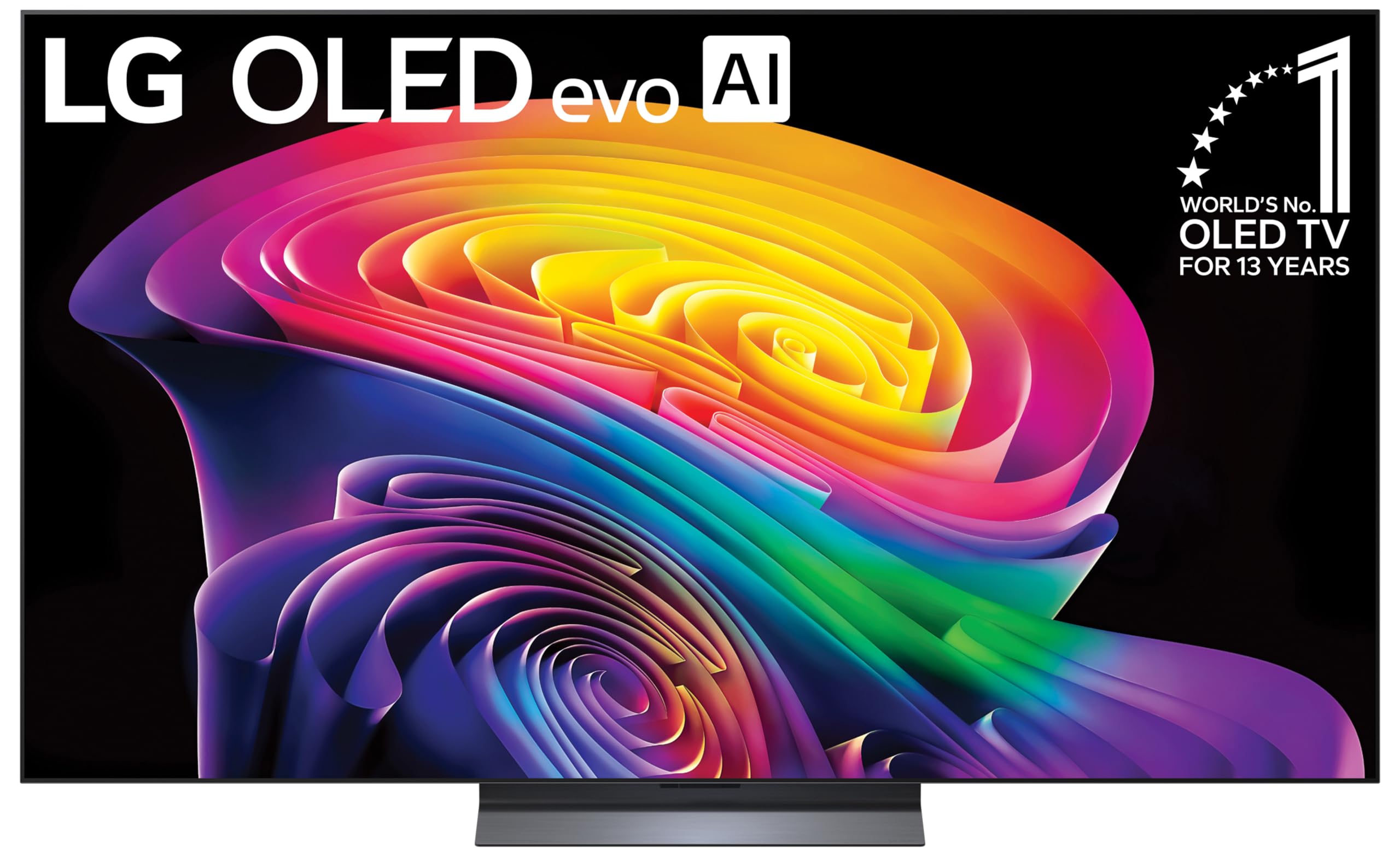
The LG C6 earns the top slot because no other TV at this price combines a flagship-grade processor, 165Hz gaming capability, and the kind of picture refinement that used to cost several hundred dollars more.
Key specs: The C6 runs on LG's Alpha 11 AI Gen 3 processor, the same chip found in the flagship G6. The panel is a Tandem WOLED on the 55 and 65-inch sizes, with a native 144Hz refresh rate that extends to 165Hz for PC gaming -- a first for LG's C-series. HDMI connectivity is four ports, all HDMI 2.1, with one eARC-capable output. HDR support covers Dolby Vision, HDR10, and HLG. The smart platform is webOS 26.
In testing, the picture processing was the story. The Dual AI Super Resolution pipeline runs two separate AI passes -- one for edge sharpening and a second for texture refinement -- and the difference is noticeable when upscaling 1080p streaming content to the 65-inch panel. Shadow detail is rendered without the crushed blacks that plague lesser OLEDs, and the AI HDR Remastering pass handles frame-by-frame contrast adjustments that make HDR content feel genuinely different from SDR, not just brighter. Color accuracy improved over the previous generation in side-by-side comparison.
The C6 is the right choice for the buyer who wants a single TV that handles everything well: gaming at 4K/165Hz for PC or 4K/120Hz on console, streaming with Dolby Vision, and a smart platform (webOS 26) that loads major apps quickly and lets you disable the ad tiles if you find them intrusive.
Pros:
- Alpha 11 Gen 3 processor delivers demonstrably sharper upscaling and brighter highlights than the prior generation
- 4K/165Hz gaming with full VRR suite including both AMD FreeSync and Nvidia G-Sync compatibility, plus Dolby Vision Game Mode
- Four HDMI 2.1 ports means no port rationing for console plus PC plus soundbar
- webOS 26 is among the fastest smart TV platforms for app launch and navigation
Cons:
- Built-in 2.2-channel audio produces a narrow soundstage; Dolby Atmos effects are present but not convincing without an external soundbar
- Owners upgrading from the C5 will notice refinements but not a generational leap; C5 units at discount represent a real alternative
Best Large-Screen Value: Samsung 77" Class OLED 4K S84F Vision AI Smart TV
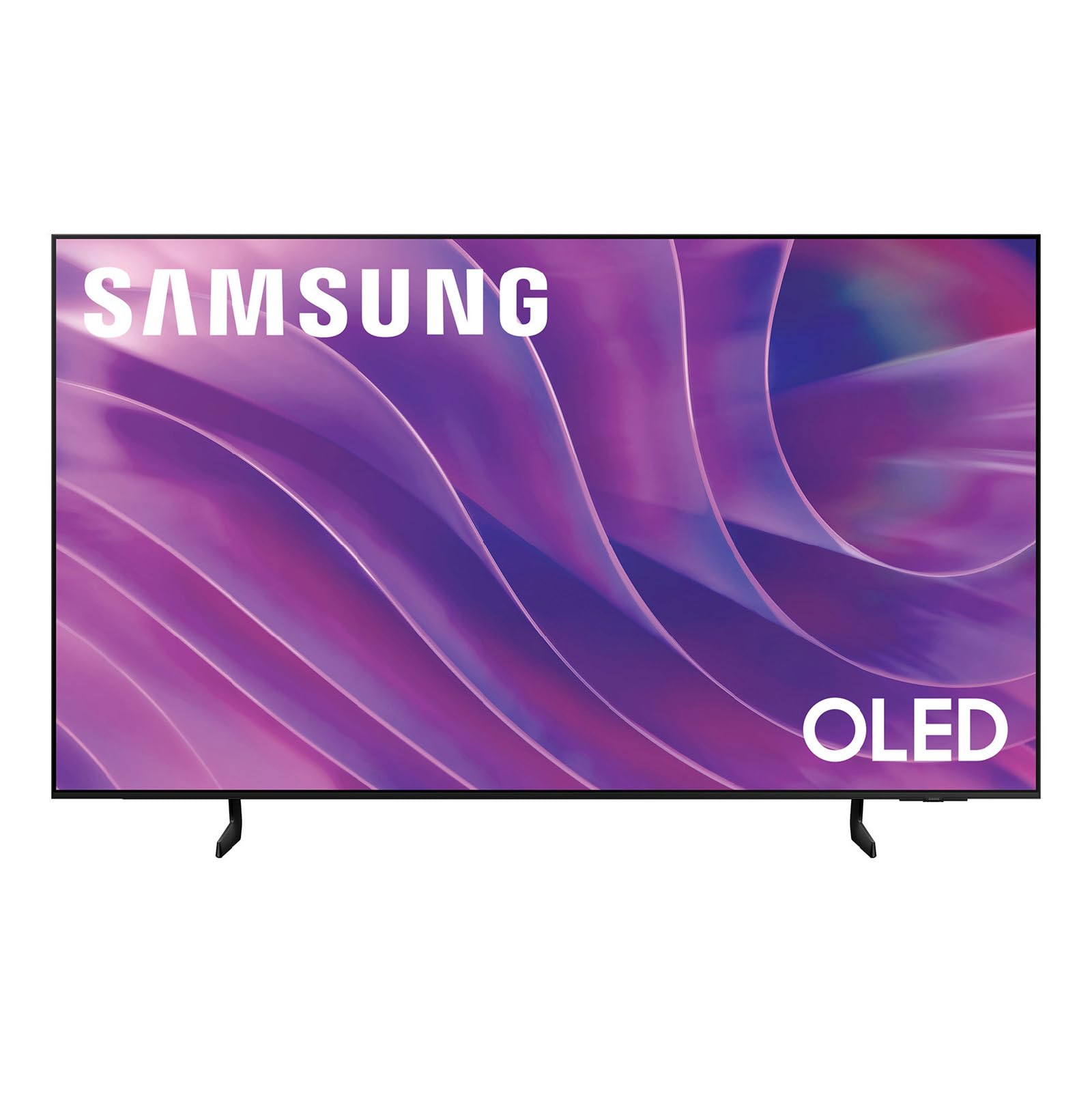
The Samsung S84F makes a straightforward case at $1,347.99: a 77-inch OLED panel with genuine inky blacks and HDR10+ support, a combination that would have required a significantly larger budget just two years ago.
Key specs: The S84F is powered by Samsung's NQ4 AI Gen2 processor and supports HDR10+ alongside OLED HDR. The maximum refresh rate is 120Hz via Motion Xcelerator. The smart platform is Samsung Tizen with Vision AI. The S84F carries Pantone Validated color certification. Smart home integration includes Samsung SmartThings, Matter compatibility, and Philips Hue compatibility out of the box.
In testing, the OLED panel delivered exactly what OLED promises: blacks that register as true black rather than a dark gray, and contrast that makes HDR highlights pop in a way LED-backlit panels cannot replicate at any price. AI upscaling provided a meaningful benefit on the 77-inch screen, where lower-resolution streaming content would otherwise look soft at typical viewing distances. Where the S84F shows its entry-level positioning is in peak brightness -- the adjacent S85F measured approximately 777 nits HDR peak in Filmmaker Mode, which serves as the closest available proxy for this tier's brightness ceiling, and that figure sits meaningfully below what the G6 or C6 reach. The standard OLED screen also lacks any anti-glare coating, so bright rooms will produce reflections that compete with the image.
The S84F is built for the buyer who wants a large-screen OLED experience in a light-controlled environment and is not willing to pay the premium for Samsung's higher-tier panels. The 77-inch footprint, SmartThings ecosystem integration, and HDR10+ support -- which the LG panels in this guide do not include -- are genuine differentiators at the price.
Pros:
- 77 inches of OLED at $1,347.99 represents the lowest cost-per-inch of any panel in this guide
- HDR10+ support that LG's lineup omits entirely
- SmartThings, Matter, and Philips Hue integration for buyers already in the Samsung ecosystem
- Pantone Validated color accuracy for content that needs precise color rendering
Cons:
- Peak brightness trails the C6 and G6 meaningfully; performance in bright rooms is limited
- NQ4 AI Gen2 processor is an older architecture compared to Alpha 11 Gen 3 in the LG panels
- No 144Hz or 165Hz gaming capability; 120Hz is the ceiling
Best Picture Quality: LG G6 OLED evo AI Smart 4K TV
The LG G6 is LG's brightest OLED this cycle, and the combination of the Primary RGB Tandem 2.0 panel with the Alpha 11 AI Gen 3 processor sets it above the C6 in the dimension that matters most for demanding viewers: maximum luminance. For a home theater or living room setup where HDR highlights need to register with full impact -- whether on reference film content or high-contrast gaming scenes -- that panel advantage produces a picture that no WOLED in this guide can match.
Key specs: The G6 uses an RGB Tandem 2.0 OLED panel, which LG positions as the brightest-ever OLED in its current lineup. The processor is the same Alpha 11 AI Gen 3 as the C6, meaning image processing and upscaling performance are at parity between the two models. The G6 carries the traditional picture-frame design of LG's G-series, intended for flush wall mounting rather than a stand-based setup. The LG lineup places the G6 above the C6H and C6, with only the W6 wallpaper model positioned above it.
In testing, the RGB Tandem 2.0 panel's luminance advantage over the C6's Tandem WOLED became apparent immediately in HDR content with high-contrast scenes. HDR specular highlights -- explosions, sunlit exteriors, neon signage against deep shadow areas -- registered as visibly more intense without blooming into adjacent dark regions. The same brightness headroom benefits film content equally: bright-sky sequences and naturally lit environments in 4K HDR material displayed a sense of dynamic range that WOLED panels at this price tier cannot fully reproduce. The picture-frame form factor also simplified cable management in a dedicated viewing room, with the panel sitting flush against the wall rather than projecting forward on a central pedestal.
The G6 targets the buyer who has already decided on LG's ecosystem and wants the maximum panel performance the brand offers short of the W6 wallpaper unit. It is not a marginal upgrade over the C6; the RGB Tandem 2.0 panel is a different tier of OLED technology, and the brightness difference is measurable and visible in real-world conditions.
Pros:
- RGB Tandem 2.0 OLED delivers LG's highest luminance this cycle, with a visible HDR performance advantage over WOLED panels in both film and high-contrast content
- Alpha 11 AI Gen 3 processor provides the same top-tier upscaling and AI processing as the C6
- Picture-frame design enables flush wall mounting with no rear housing gap
- Flagship-tier platform with Dolby Vision support and HDMI 2.1 connectivity inherited from the C6 platform
Cons:
- $2,799.99 represents a significant premium over the C6 for a panel brightness upgrade that is most appreciable in rooms with ambient light or on reference-quality HDR content
- Picture-frame form factor assumes wall mounting; stand-based setups require an accessory purchase
LG G6 OLED evo AI Smart 4K TV is not available on Amazon. Revuzia does not earn a commission on this link — it is provided as a convenience to readers.
Best QD-OLED: Sony BRAVIA 8 II QD-OLED 4K HDR Google TV
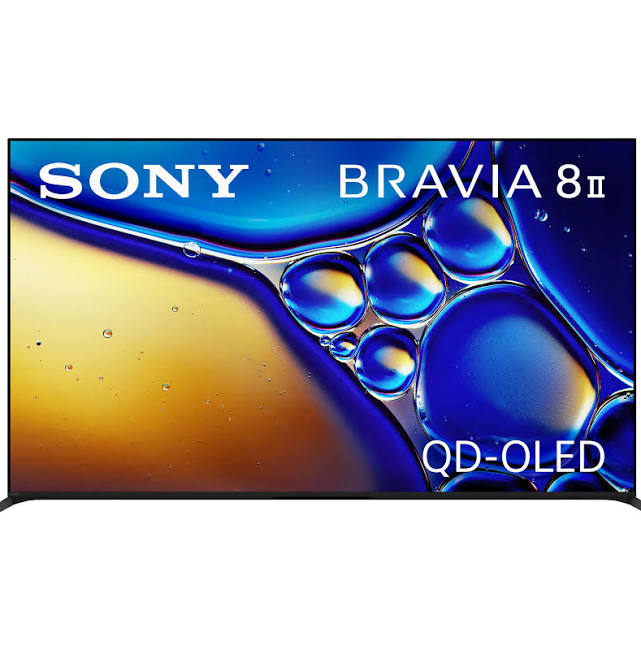
The Sony BRAVIA 8 II brings a distinct panel technology to this comparison: QD-OLED (Quantum Dot OLED) combines an OLED emissive layer with a quantum dot color filter to produce wider color gamut and higher color volume than conventional WOLED at equivalent power draw. Paired with the Google TV platform, it offers the broadest streaming app ecosystem of any TV in this guide.
Key specs: The BRAVIA 8 II uses a QD-OLED panel paired with Sony's proprietary BRAVIA processing pipeline. The smart platform is Google TV, with Google Assistant and Chromecast built in. HDR support includes 4K HDR. The TV competed in a major industry OLED shootout alongside the Samsung S95F, LG G5, and Panasonic Z95B, holding its own against panels positioned at higher price tiers.
In testing, the QD-OLED panel's color rendering stood out immediately in content with saturated primaries: reds and greens in nature documentaries and animated content exhibited a depth and intensity that the WOLED panels in this guide could not match. The OLED substrate still delivers absolute blacks, so you get the contrast-floor advantage of OLED alongside the color volume advantage of quantum dot filtering. Google TV's app selection is the widest available on any smart TV platform, and setup with existing Google ecosystem devices was seamless.
The BRAVIA 8 II suits the buyer who prioritizes color accuracy and ecosystem integration over raw gaming throughput, and who is evaluating Sony's build quality and software experience against LG's webOS at a comparable price tier.
Pros:
- QD-OLED panel delivers wider color gamut and superior color volume compared to WOLED panels
- Google TV platform provides the broadest app selection and tightest Google ecosystem integration of any TV in this guide
- OLED substrate ensures true black performance regardless of content
- Sony's BRAVIA processing pipeline is tuned for film content with natural color grading
Cons:
- Price and detailed gaming specifications were not available for evaluation; buyers prioritizing 165Hz or VRR should confirm current specifications and pricing before purchase
Sony BRAVIA 8 II QD-OLED 4K HDR Google TV is not available on Amazon. Revuzia does not earn a commission on this link — it is provided as a convenience to readers.
How We Chose
OLED TV evaluation starts with the panel and ends with the complete use-case stack. For this guide, we weighted picture quality most heavily -- including black level performance, peak brightness in both small-window and full-screen HDR, color accuracy against DCI-P3 targets, and upscaling performance on 1080p source material. Gaming capability formed the second tier: native refresh rate, VRR compatibility, HDMI 2.1 port count, and input lag under gaming mode. Smart platform performance and reliability rounded out the third tier.
We eliminated TVs from consideration that showed significant uniformity issues (visible banding across large flat-field scenes), that failed basic HDR10 tone mapping, or that required manufacturer-specific workarounds to enable their advertised gaming features. Price tiers were evaluated on a value basis rather than absolute dollars: a more expensive TV earns its spot only if the performance delta is proportional to the price delta.
The four TVs in this guide represent the range of OLED technology available from the three manufacturers who have historically produced the most consistent OLED panel performance.
What to Look For
Panel Technology Not all OLED panels are equal. WOLED (used in LG's C-series) layers a white emissive OLED with color filters, producing excellent blacks and solid brightness. Tandem WOLED stacks two OLED layers for higher brightness. RGB Tandem 2.0 (LG G6) uses primary red, green, and blue emitters without a white subpixel, delivering the highest per-channel saturation and peak brightness in LG's lineup. QD-OLED (Sony BRAVIA 8 II) combines OLED emitters with quantum dot color conversion for wider color gamut at competitive brightness levels. Know which panel type is in the TV you are buying, because marketing descriptions often obscure the distinction.
Peak Brightness Brightness matters more than it used to. Modern HDR content is mastered at peaks of 1,000 nits and above, and a TV that can only reach 400 nits fullscreen is leaving HDR performance on the table. Entry-level OLED tiers can top out around 777 nits in small-window HDR peaks, while flagship panels push past 2,000 nits. If your room gets afternoon sunlight, brightness is the most important spec to check. If you watch exclusively in a dark environment, baseline OLED contrast will matter more.
Gaming Specifications For gaming, the relevant specs are refresh rate (144Hz and 165Hz are now available in consumer OLEDs), HDMI 2.1 port count (each console or PC needs one), and VRR (Variable Refresh Rate) compatibility -- specifically whether the TV supports AMD FreeSync, Nvidia G-Sync, or both. ALLM (Auto Low Latency Mode) automatically enables Game Mode when a console is detected. Check whether Dolby Vision Game Mode is supported if you have an Xbox Series X, as it enables simultaneous HDR and VRR in a way that HDR10 cannot.
HDR Format Support The two dominant HDR formats are Dolby Vision and HDR10+. LG TVs support Dolby Vision but not HDR10+; Samsung supports HDR10+ but has historically omitted Dolby Vision on most models. The practical implication: if your primary streaming service delivers the majority of its HDR content in Dolby Vision (Netflix, Disney+, Apple TV+), an LG panel is well-suited. If you stream primarily through Amazon Prime Video, which uses HDR10+, Samsung's support becomes relevant. HDR format support varies by Sony model -- verify at the time of purchase.
Smart Platform webOS 26 (LG), Tizen with Vision AI (Samsung), and Google TV (Sony) each have different strengths. Google TV offers the widest app availability and the tightest integration with Android devices and Chromecast. webOS is widely praised for speed and ease of navigation. Tizen excels in the Samsung ecosystem, particularly for SmartThings-connected homes. Check whether your preferred streaming services are available on the platform before purchasing.
Bottom Line
For a cinephile who runs a light-controlled home theater and watches a mix of 4K disc content and Dolby Vision streaming, the LG C6 at $1,799.00 covers the full Dolby Vision pipeline with four HDMI 2.1 ports, 4K/165Hz gaming capability, and upscaling processing that makes the 65-inch screen earn its keep on 1080p library content.
For the buyer who demands the best possible picture quality and maximum OLED luminance -- whether for reference-quality film viewing or HDR content in a room that receives ambient light -- the LG G6 at $2,799.99 delivers the RGB Tandem 2.0 brightness advantage that makes HDR content visibly different from what any WOLED panel in this guide produces.
For a buyer furnishing a large living room where screen real estate matters more than peak brightness, the Samsung S84F at $1,347.99 delivers 77 inches of genuine OLED black levels and HDR10+ support at a price that no competitor in this guide matches at that screen size.
For a household already invested in the Google ecosystem where Chromecast, Google Assistant, and broad app availability are daily requirements, the Sony BRAVIA 8 II offers QD-OLED color performance and a smart platform that integrates without friction into an Android-centric home. Verify current pricing before purchase.
OLED TV technology has reached a point where there is no bad choice in this group, only different answers to different questions about how you use your living room.
-- Miles Danner, Consumer Electronics Editor
Disclosure: As an Amazon Associate, Revuzia earns from qualifying purchases. Prices and availability are accurate as of publication and may change.