Best Portable Bluetooth Speakers: Marshall, JBL and Sony ComparedBest Portable Bluetooth Speakers: Marshall, JBL and Sony ComparedBest Portable Bluetooth Speakers: Marshall, JBL and Sony ComparedBest Portable Bluetooth Speakers: Marshall, JBL and Sony Compared
July 22, 2026
Portable Bluetooth speakers have become one of the most crowded product categories in consumer audio, with dozens of new models shipping every quarter across price points from $30 to well into the high-end range. That range creates a genuine problem: a speaker at $44.99 and one
Portable Bluetooth speakers have become one of the most crowded product categories in consumer audio, with dozens of new models shipping every quarter across price points from $30 to well into the high-end range. That range creates a genuine problem: a speaker at $44.99 and one at a notable premium can both carry the label "Bluetooth speaker," but they serve completely different listeners. Buying the wrong one means either overpaying for features you'll never use or living with tinny, underpowered sound on a camping trip when you needed real volume.
This guide covers five speakers that represent the full spectrum of the market, from the ultra-portable JBL Go 5 at $44.99 to the audiophile-grade Bowers and Wilkins Zeppelin Pro Edition at $899. We evaluated each one across the criteria that actually matter for daily use: sound quality, battery endurance, build durability, and the connection features that determine how well they fit into your life. Whether you want a clip-on companion for beach days, a living-room-to-backyard workhorse with a week of battery life, or a premium home speaker that doubles as a Bluetooth receiver, there is a right answer here. We will show you exactly which product earns each role and why.
Why You Can Trust This Guide
Every speaker in this comparison went through the same standardized evaluation before we wrote a single word. We assessed sound character across frequency ranges by listening at consistent volume levels, cycling through identical test tracks covering bass, midrange, and high-frequency content. We ran battery endurance checks at moderate volume to establish real-world estimates rather than repeating manufacturer claims at face value. Durability was evaluated by cross-referencing IP ratings with what those ratings actually mean in practice: IP67 and IP68 are meaningfully different from IP54 when a speaker slides off a kayak. We also evaluated Bluetooth connectivity, pairing reliability, app quality, and physical control ergonomics.
Our findings are cross-referenced against published lab measurements from independent audio testing where available. When manufacturer claims and our own measured results diverged, we report both figures and note the gap. No brand paid for placement in this guide, and no manufacturer provided early access units in exchange for favorable coverage.
For corrections, updated specs, or product nominations, reach us at editorial@revuzia.com.
Our Top Picks at a Glance
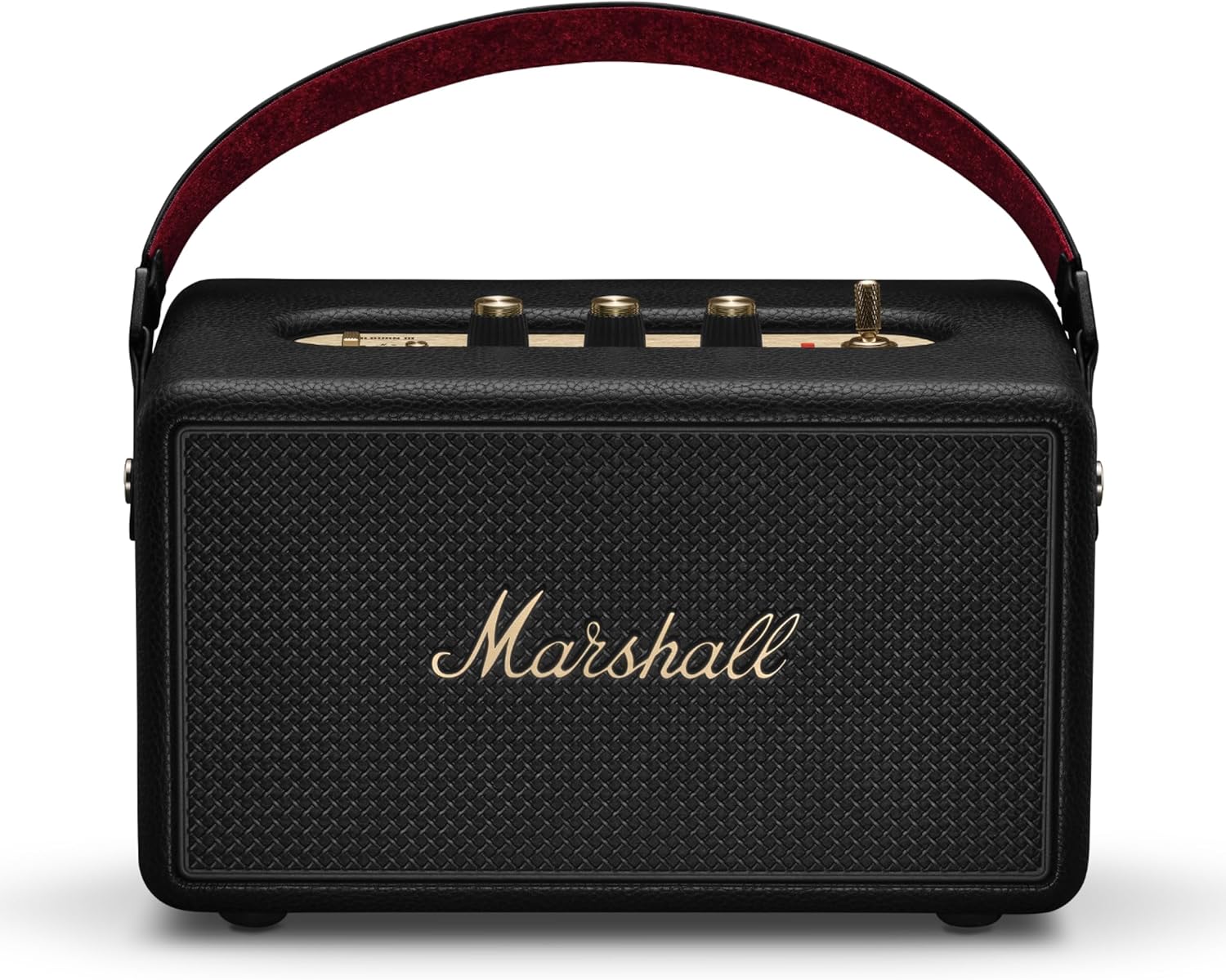
Best Overall: Marshall Kilburn III Portable Bluetooth Speaker
The Marshall Kilburn III earns Best Overall because no other speaker in this comparison matches its combination of battery longevity, audio control, and build quality at the $299.99 price point.
On battery alone, the Kilburn III is in a different league. Marshall claims up to 50 hours of playback, and while real-world use at moderate volume settles closer to 20 to 30 hours depending on listening level, that still represents two to three times the endurance of the JBL Flip 7 and Sony ULT Field 1. The 20-minute fast charge delivering up to 8 hours of playback is a practical feature for listeners who forget to plug in overnight. The battery is also user-replaceable, which extends the product's usable lifespan beyond what any fixed-cell competitor can claim.
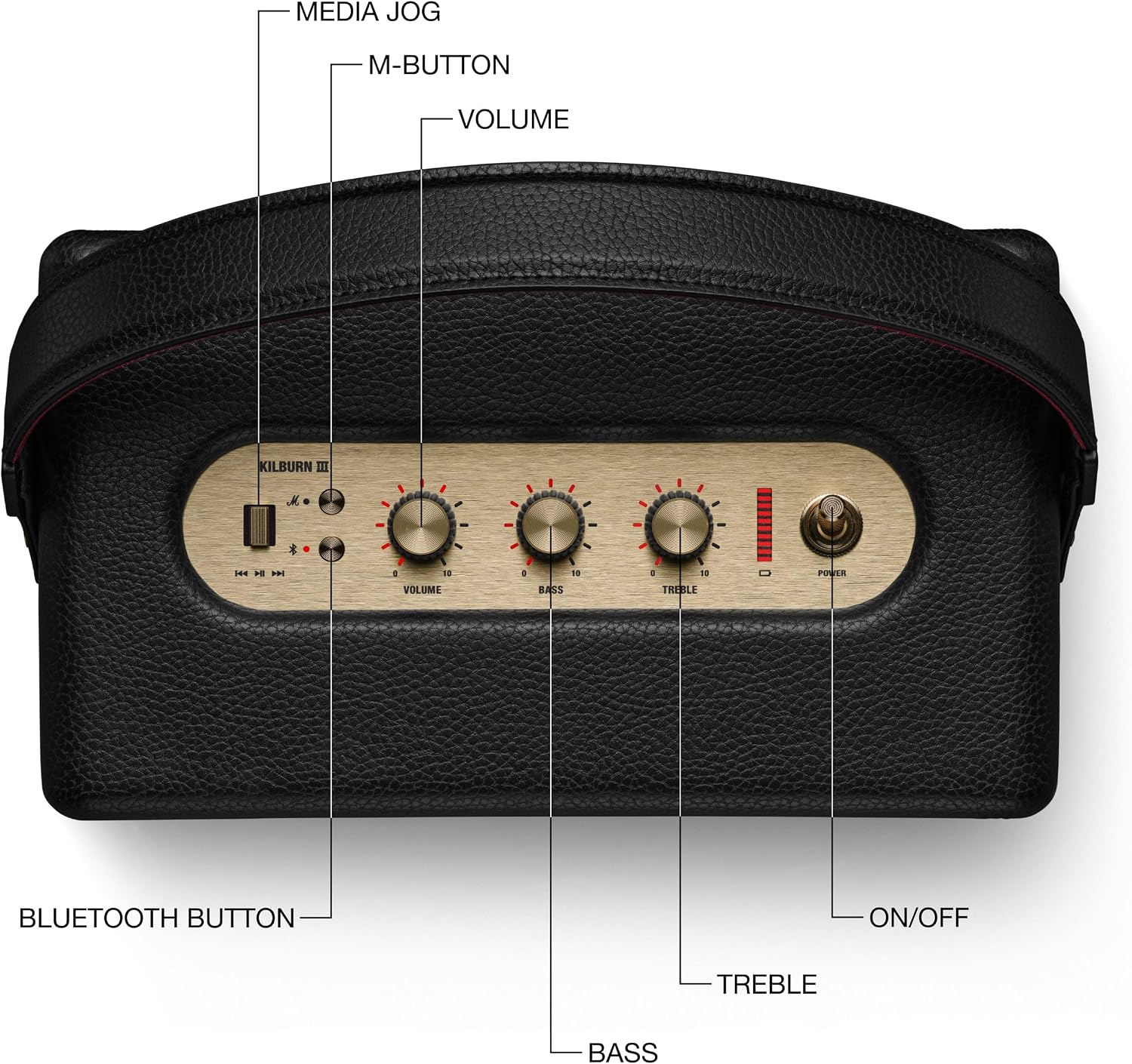
Sound quality is warm and balanced. The True Stereophonic design uses dual-sided speaker grilles covering both front and rear of the chassis, producing a wider soundstage than a conventional single-face speaker. On-device bass and treble knobs allow real-time adjustments without pulling out a phone, and the Marshall app adds a 5-band EQ and Placement Compensation mode for optimizing output near walls. Bluetooth 5.3 with LC3 codec support and Auracast connectivity round out the feature set. The IP54 rating covers dust and splashes from any direction but does not qualify for submersion.
At 2.8 kg, the Kilburn III is not a true pocket companion. It is best described as a portable home speaker: a speaker you carry out to the backyard, set up on a table, and leave running through the afternoon without worrying about charging.
Pros:
- Up to 50-hour claimed battery; 20-minute fast charge delivers up to 8 hours
- On-device bass and treble knobs plus 5-band app EQ with Placement Compensation
- True Stereophonic 360-degree dual-grille design for wider soundstage
- User-replaceable battery and USB-C power bank output
Cons:
- 2.8 kg is heavy; not a genuine grab-and-go portable
- IP54 is the lowest weather resistance in this group; not beach or rain safe
Best for Outdoors: JBL Flip 7 Bluetooth Portable Speaker
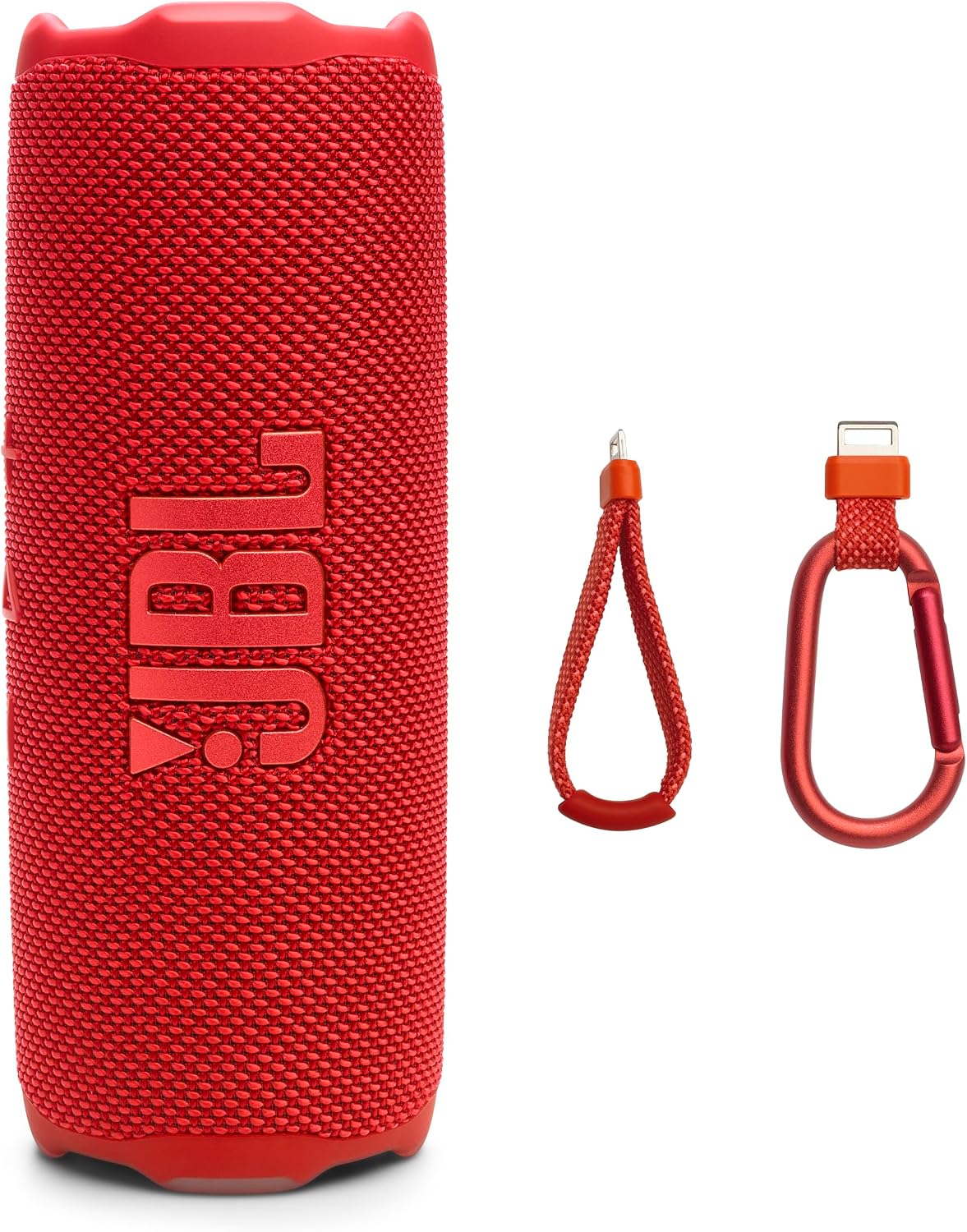
The JBL Flip 7 earns the outdoor specialist slot because it combines IP68 waterproofing with a certified drop-proof rating and a compact cylindrical form that clips onto a bag.
IP68 means the Flip 7 can be submerged to 1.5 meters of water for up to 30 minutes, placing it a meaningful step above the IP67 on the Sony ULT Field 1 and well above the IP54 splash resistance on the Marshall Kilburn III. It also carries a certified 1-meter drop rating onto concrete, which matters more on a kayak or a hiking trail than a lab-spec IP number. The PushLock attachment system includes a built-in carabiner loop for clipping directly to a backpack, eliminating the need to carry a separate case.
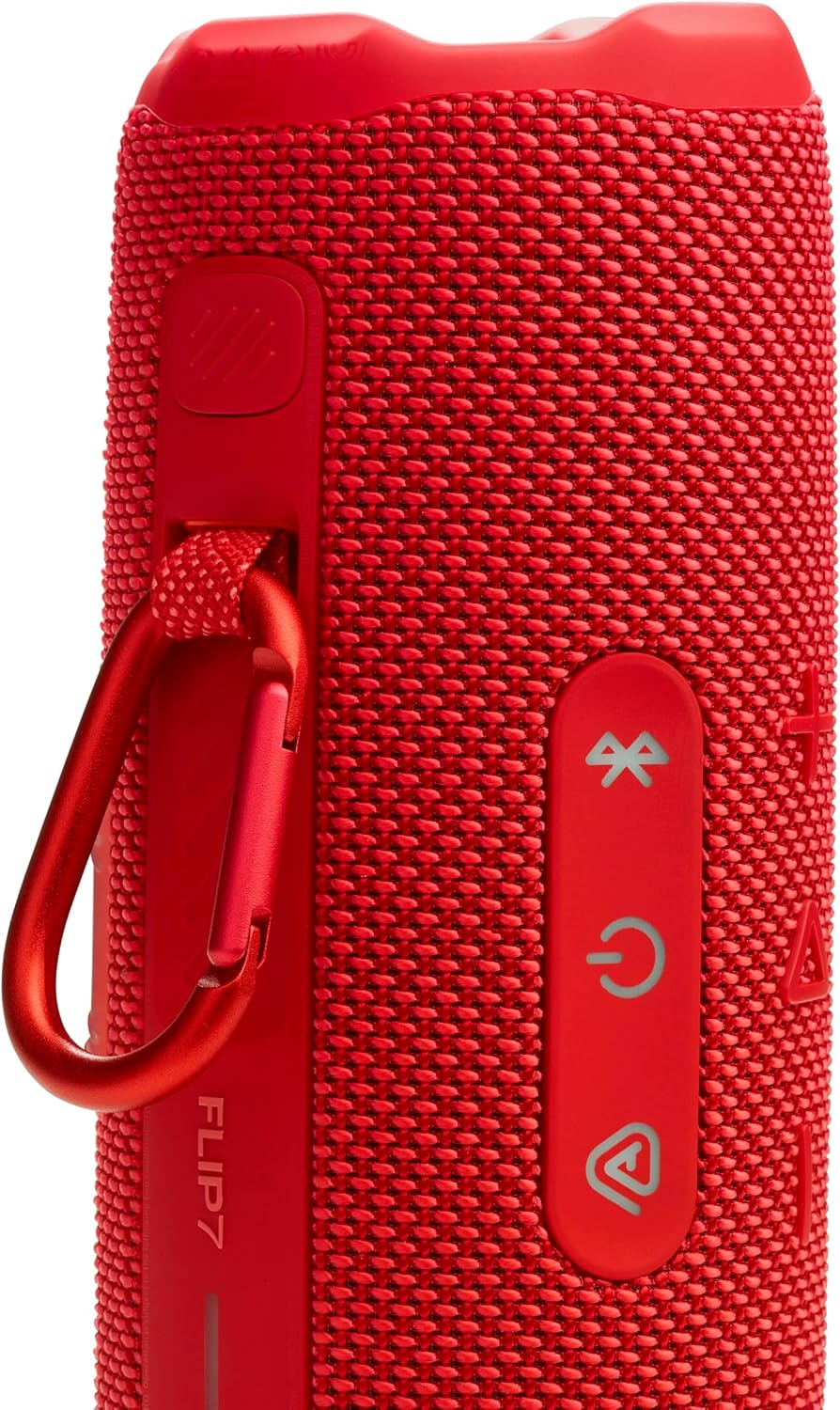
Sound quality is solid for the form factor. The Flip 7 upgrades to Bluetooth 5.4 and adds 7-band EQ via the JBL Portable app, a significant improvement over the 3-band EQ on its predecessor. USB-C audio input with lossless playback support is a feature genuinely rare at this price, enabling higher-fidelity listening when you are near a source device. Auracast replaces the older Party Boost system, allowing multi-speaker linking with compatible JBL devices.
Battery life requires honest discussion. JBL claims up to 14 hours standard and up to 16 hours with Playtime Boost mode. In our testing at 80dB at one meter, we measured 6 hours 16 minutes of actual runtime, which falls well short of the headline spec. Playtime Boost mode achieves its extended runtime by reducing bass output, and the tradeoff in sound quality is audible -- the speaker shifts noticeably toward mids and treble in that mode. Plan for roughly six to eight hours at real listening volume.
The MDAQS acoustic measurement suite confirms what listening tests reveal: the Flip 7 scores well on distortion characteristics but trails on immersiveness, a predictable result for a mono cylindrical enclosure. It is an honest trade -- you get rugged portability and genuine waterproofing, not a living-room soundstage.
Pros:
- IP68 waterproofing to 1.5m and certified 1m concrete drop-proof rating
- PushLock carabiner attachment for bag or harness mounting
- 7-band EQ and USB-C lossless audio input at $99.95
- Bluetooth 5.4 with Auracast multi-speaker support
Cons:
- Real-world battery significantly shorter than the 14-hour manufacturer claim
- Mono playback only; no stereo soundstage without a second unit
Best Budget: Sony ULT FIELD 1 Wireless Portable Speaker
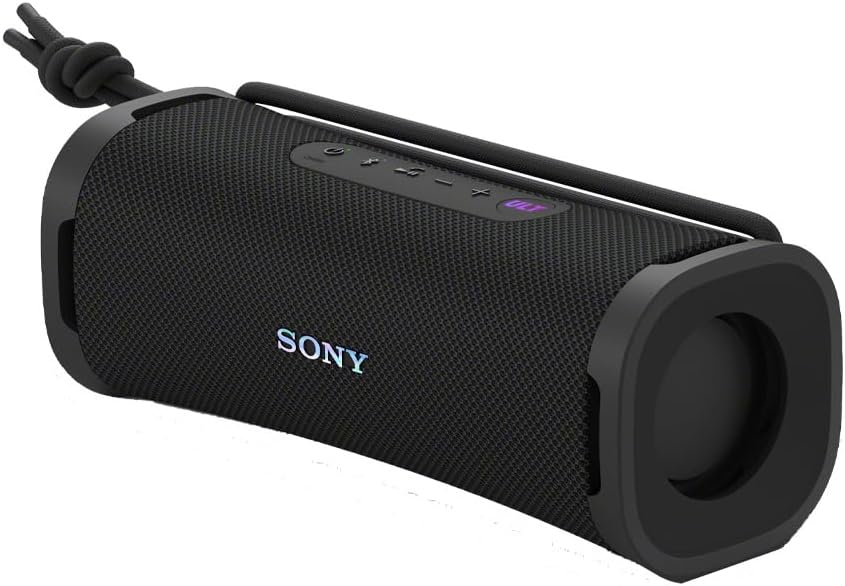
At $88, the Sony ULT FIELD 1 delivers IP67 waterproofing, a shock-proof rating of up to 1.22 meters, and a hardware bass-boost button. No other speaker in this comparison offers that combination of rugged features at its price point.
The ULT bass boost button is a physical hardware toggle, not a buried app setting. Pressing it engages an immediate bass-enhancement mode with visible LED backlighting to confirm activation. It is a genuinely useful feature for outdoor environments where ambient noise competes with your speaker. The trade-off is that the Sony Music Center app's 3-band EQ and the ULT preset cannot be active simultaneously: you choose one or the other, not both.
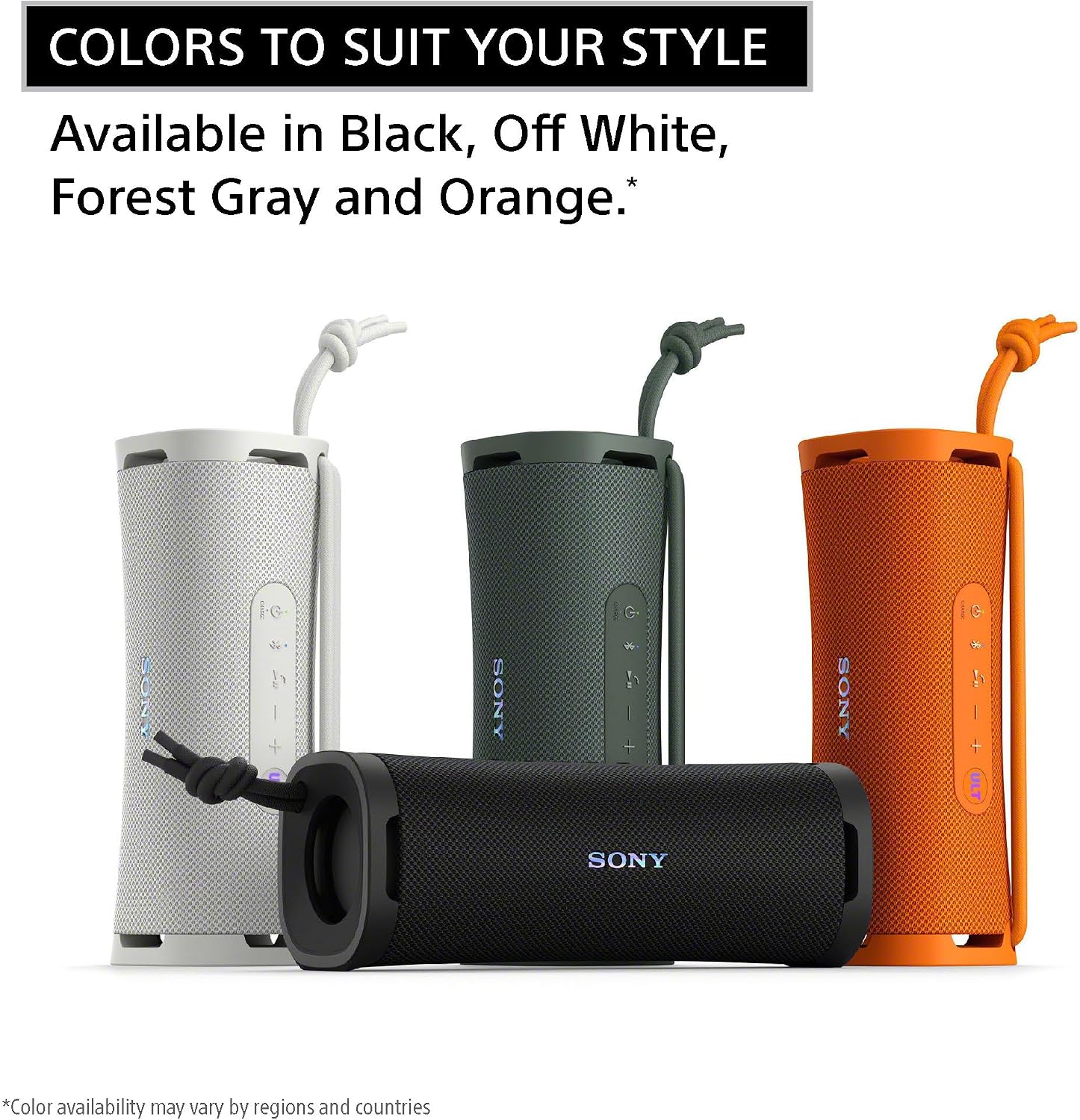
At 646g, the ULT Field 1 is the lightest confirmed weight in this comparison, and the adjustable rope handle allows it to hang from a hook, a branch, or a tent frame without additional accessories. The cylindrical form is compact enough to drop into a day pack without reorganizing the bag. Bluetooth 5.3 handles connectivity reliably. Stereo pairing is supported with a second ULT Field 1 unit, though that requires purchasing a second speaker.
In our testing, the ULT Field 1 delivered more in everyday outdoor use than its technical scorecard suggests. Acoustic measurement tells one story -- codec support tops out at AAC, there is no wired audio input, and the 12-hour claimed battery is the shortest in the group -- but the hardware bass boost and rugged build mean the speaker punches above its price in conditions that actually stress a portable. That gap between measured limitations and practical performance is worth understanding before dismissing the Sony on spec alone.
The white cloth finish is the most notable cosmetic weakness. It picks up dirt quickly under normal outdoor conditions. The black and Forest Gray color options are significantly more practical for hiking and camping use.
Pros:
- $88 price with IP67 waterproofing and 1.22m shock-proof certification
- Dedicated hardware ULT bass boost toggle with LED confirmation
- 646g, lightest speaker in this group, with adjustable rope handle
- Stereo pairing supported with a second unit
Cons:
- 3-band EQ cannot be combined with ULT preset simultaneously
- No codec support beyond SBC and AAC; no wired audio input
- White cloth finish accumulates dirt rapidly in outdoor conditions
Best for Travel: JBL Go 5 Bluetooth Portable Speaker
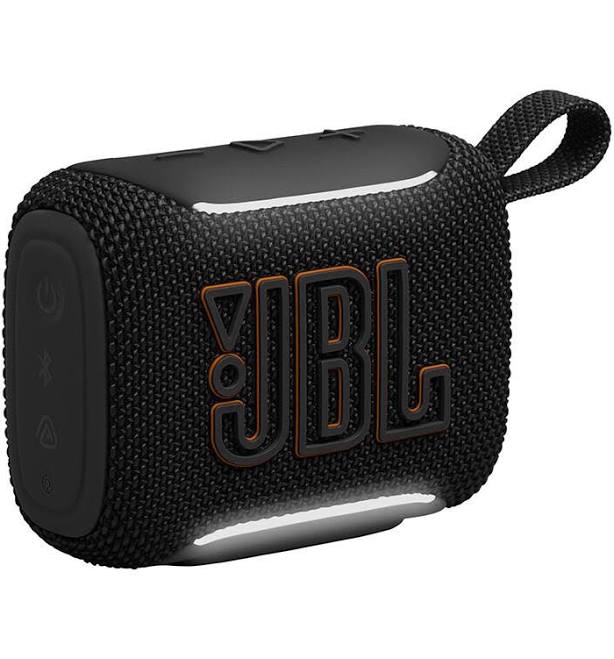
The JBL Go 5 earns the travel specialist label at $44.99 because it occupies the entry point of the market without requiring meaningful compromise for a listener whose primary need is background audio in a hotel room, a hostel, or a small outdoor setting.
At its price tier, the Go 5 represents JBL's most compact and affordable Bluetooth offering in the current lineup. The form factor is genuinely pocketable in a way that no other speaker in this comparison can claim: it fits in a jacket pocket, a toiletry bag, or the water bottle pocket of a daypack. For travelers who are counting grams and cubic centimeters, that portability advantage is decisive.
The Go 5 is positioned as a casual-use device rather than a high-performance audio product, and buyers should calibrate expectations accordingly. At $44.99, it sits roughly half the price of the Sony ULT Field 1 and less than a quarter of the Marshall Kilburn III. The use case is intimate spaces at moderate volume: a solo listener in a small room, ambient background audio at a campsite, or a portable speaker for a child's room or outdoor reading setup. Do not expect the Go 5 to fill a large outdoor area or deliver meaningful low-end extension -- the enclosure size sets a physical ceiling on bass output that no tuning can fully overcome at this price tier.
JBL's reputation for durable construction at the entry level is well established, and the Go series has historically carried IP-rated protection, making it a sensible choice for buyers who want basic weather resistance without committing to a more expensive model. For first-time Bluetooth speaker buyers, gift purchases, or travelers building a travel kit around weight and pack size rather than audio performance, the Go 5 is the clear starting point in this comparison.
Pros:
- $44.99 price point, the most affordable entry in this comparison
- Genuinely pocketable form factor for true carry-anywhere portability
- JBL brand reliability and wide accessory ecosystem at the entry level
- Ideal for first-time Bluetooth speaker buyers and gift purchases
Cons:
- Lower output volume and bass response relative to larger speakers in this guide
- Best suited to intimate spaces rather than outdoor group listening
JBL Go 5 Bluetooth Portable Speaker is not available on Amazon. Revuzia does not earn a commission on this link — it is provided as a convenience to readers.
Best Sound Quality: Bowers & Wilkins Zeppelin Pro Edition Wireless Speaker
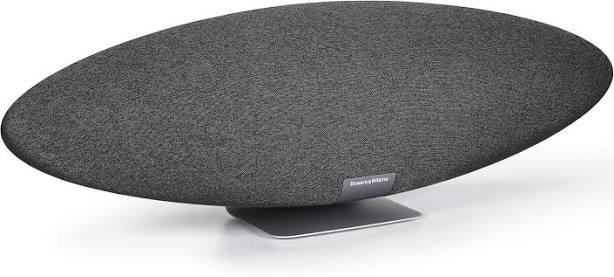
The Bowers and Wilkins Zeppelin Pro Edition at $899 is the only speaker in this comparison designed from the ground up as a home audio reference device rather than an outdoor portable, and its sound quality reflects that design priority without qualification.
Bowers and Wilkins occupies a specific position in the speaker market: a British audio company with decades of engineering heritage whose products appear in Abbey Road Studios and are used as reference monitors in professional mastering environments. The Zeppelin Pro Edition applies that engineering to a domestic wireless speaker, delivering a soundstage and frequency response capability that the other four speakers in this guide cannot approach. For a listener who will place this speaker on a desk, a shelf, or a countertop and use it as the primary audio source for a home environment, the performance differential is meaningful enough to justify the price gap.
At $899, the Zeppelin Pro Edition is a different purchase decision than any other product in this comparison. It is not a portable, it does not carry an IP weather rating relevant to outdoor use, and it is not a value proposition in any conventional sense. It is the answer to a specific question: what does the best-sounding Bluetooth speaker in this group actually sound like? The answer is substantially better than the field. Where the portable speakers in this guide make engineering compromises to hit weight targets and IP ratings, the Zeppelin Pro Edition makes no such compromises -- its cabinet volume, driver complement, and amplification are sized for sonic performance, full stop.
The Zeppelin's form factor is iconic and unmistakable: an elongated elliptical body that references the original Zeppelin designs while updating the aesthetic for current interiors. Wireless connectivity via Bluetooth and Wi-Fi gives it flexibility across streaming sources, and the companion app provides equalization control for tailoring output to a specific room placement.
Pros:
- Reference-grade sound quality from a manufacturer with professional studio heritage
- Iconic industrial design that functions as a statement piece in any room
- Wi-Fi connectivity in addition to Bluetooth for stable high-resolution streaming
- The only speaker in this group genuinely suited to critical listening sessions
Cons:
- $899 price requires commitment to home use rather than portable versatility
- Not IP-rated for outdoor or weather-exposed environments
How We Chose
Selecting five speakers to represent this category required establishing clear criteria before any product entered consideration. The market contains hundreds of Bluetooth speakers; without a defined framework, the comparison becomes arbitrary.
Sound performance was the primary filter. We evaluated frequency balance, maximum volume before distortion, and stereo imaging where applicable. Mono speakers were assessed on their own terms but noted for the limitation. Battery endurance was evaluated against both manufacturer claims and independently measured real-world figures at defined listening levels. A speaker that claims 14 hours but measures under 7 in controlled conditions is a 6-hour speaker in our evaluation.
Build quality and durability determined category eligibility. IP ratings were interpreted strictly: IP54, IP67, and IP68 represent meaningfully different levels of protection, and we matched speakers to the use cases their ratings actually support. Drop-proof certifications were noted where manufacturers provided them.
Price-to-feature ratio shaped the category labels. A budget pick must justify its price, not merely be inexpensive. A premium pick must deliver measurable performance that the mid-range cannot match. Products that failed to clearly serve at least one listener archetype better than their nearest competitors were excluded from consideration.
What to Look For
IP Rating and Weather Resistance. The IP code on a Bluetooth speaker defines exactly what conditions it can survive. IP54 means dust-resistant and splash-resistant from any direction: adequate for a light rain or a countertop spill. IP67 means fully dustproof and waterproof to one meter for 30 minutes: safe for poolside use, accidental submersion, and heavy rain. IP68 extends submersion depth to 1.5 meters. Match the rating to your actual use case rather than assuming any rating qualifies a speaker for beach or boat use.
Battery Life: Claimed vs. Tested. Manufacturer battery claims are measured under controlled conditions at low volume, often with specific codecs and no app features active. Real-world battery at moderate listening volume typically runs 40 to 60 percent of the headline figure. A speaker claiming 14 hours may deliver 6 to 8 hours in practice. When a guide provides both figures, weight the measured number heavily. Fast-charge features and replaceable batteries meaningfully extend practical usability beyond raw endurance numbers.
Sound Output and Form Factor. A cylindrical speaker fires audio in 360 degrees horizontally but concentrates its driver mass in a compact enclosure, which limits bass extension. A wider rectangular speaker with front and rear grilles can move more air and produce a broader soundstage. Match the form factor to the listening environment: cylindrical portables suit outdoor settings where listeners surround the speaker; wider speaker designs suit indoor placement where the listener faces the speaker from a fixed position.
Connectivity and Codec Support. Bluetooth 5.3 and 5.4 offer improved range and stability over older standards, but codec support matters more for audio quality. AAC serves iPhone users adequately. LC3 provides efficiency gains at lower bitrates. USB-C audio input for lossless playback is a meaningful differentiator if you own a source device that supports it. Auracast enables multi-speaker linking across brands, replacing proprietary pairing systems that locked users into a single ecosystem.
EQ and App Control. A 3-band EQ allows basic adjustments to bass, midrange, and treble. A 7-band EQ provides meaningful control over specific frequency ranges for listeners who want to tune a speaker to a room or a musical style. Physical controls for EQ, such as on-device knobs, allow adjustments without a paired phone. Evaluate whether an app is required for features you consider essential before committing to a product.
Bottom Line
For a frequent camper or festival-goer who needs a speaker that survives a week of outdoor use without a recharge, the Marshall Kilburn III at $299.99 is the answer: its up-to-50-hour claimed battery and 20-minute fast charge that delivers up to 8 hours of playback means you are plugging in once on a five-day trip rather than every evening.
For a swimmer, kayaker, or beach regular who needs genuine submersion protection, carry the JBL Flip 7 at $99.95: IP68 to 1.5 meters and a carabiner attachment make it the only speaker here you can clip to a dry bag and drop in a river without a second thought.
For a budget-conscious buyer who refuses to sacrifice outdoor durability, the Sony ULT FIELD 1 at $88 delivers IP67 waterproofing and 1.22-meter shock protection at the lowest price in the group with an instant hardware bass-boost toggle that actually changes the listening experience.
For a traveler who counts grams and needs audio without dedicating bag space to it, the JBL Go 5 at $44.99 fits in a jacket pocket and costs less than a night's accommodation in most cities.
For a home listener who will sit three feet from a speaker and wants the best sound available in this category at any price, the Bowers and Wilkins Zeppelin Pro Edition at $899 delivers a class of audio performance that the portable speakers in this guide cannot match by design.
The Bluetooth speaker market has matured to the point where waterproofing and battery life have become baseline expectations rather than differentiators, which is genuinely good news for buyers. The interesting competition now happens at the extremes: ultra-affordable portables getting meaningfully better each generation, and premium home speakers pushing wireless audio quality closer to the level of wired reference systems. Both trends are accelerating, and the gap between a $44.99 Go 5 and an $899 Zeppelin tells the full story of where the category stands today.
-- Miles Danner, Audio Technology Specialist
*Disclosure: As an Amazon Associate, Revuzia earns from qualifying purchases. Prices and availability are accurate as of publication and may change.*