Best Smart Plugs and Outlets: Matter, Monitoring, and Budget PicksBest Smart Plugs and Outlets: Matter, Monitoring, and Budget PicksBest Smart Plugs and Outlets: Matter, Monitoring, and Budget PicksBest Smart Plugs and Outlets: Matter, Monitoring, and Budget Picks
September 1, 2026
Matter's late-2022 debut was supposed to end the smart plug walled-garden problem, and largely it has. But that standardization has pushed the real differences elsewhere: install type, monitoring depth, and price now vary more than compatibility does.
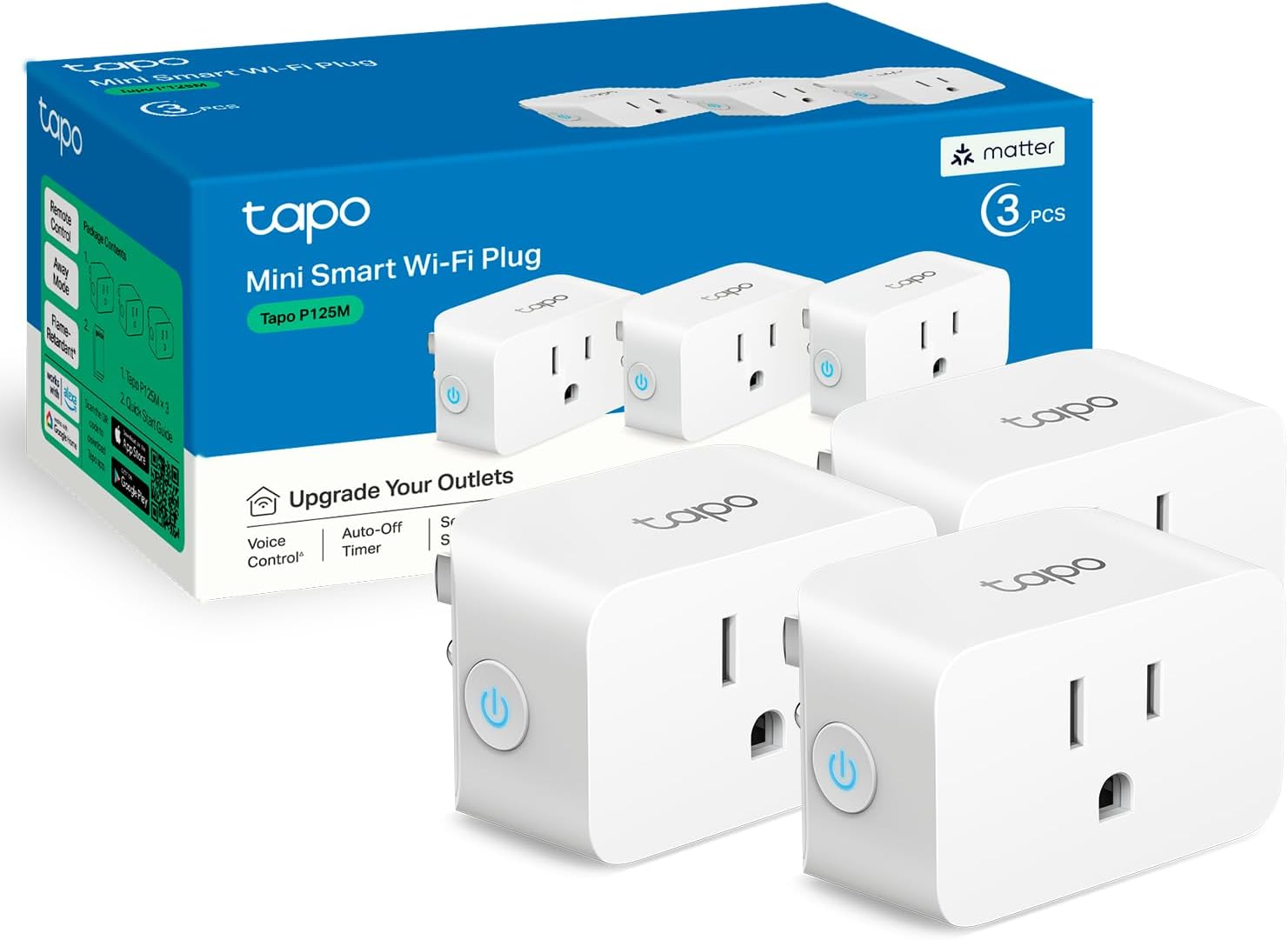
Matter's late-2022 debut was supposed to end the smart plug walled-garden problem, and largely it has. But that standardization has pushed the real differences elsewhere: install type, monitoring depth, and price now vary more than compatibility does. A basic plug-in model can run under $20, while an in-wall replacement outlet with real-time energy tracking costs only a few dollars more but demands a very different kind of install.
This guide compares three smart outlets that sit at different points on that spectrum: a compact plug-in Matter adapter, an in-wall smart outlet built for energy monitoring and childproofing, and a budget plug-in pick for buyers who just want reliable on/off control. We tested and evaluated each on setup friction, ecosystem compatibility, monitoring capability, and build quality, and we are upfront in every section about where our data is strong and where it is thinner than we would like. If you just want basic app and voice control on a lamp or space heater, or you are rewiring an outlet and want granular consumption data, one of these three should fit.
Why You Can Trust This Guide
We evaluate every smart plug and outlet in this category the same way: hands-on setup from an unboxed unit, app pairing and onboarding time, physical footprint on a standard outlet or power strip, and a review of the safety certifications and app feature set each manufacturer documents. We do not accept paid placement, and units are never given favorable coverage in exchange for early access or free hardware.
Our pricing is pulled from live Amazon and Google Shopping listings at the time of publication, not list price or launch-day figures, so the numbers here reflect what you would actually pay today. Where our own hands-on time was limited, most notably for the in-wall Square D outlet, which involves electrical installation rather than a simple plug-in, we say so directly rather than presenting borrowed or estimated performance claims as our own. When a spec could not be independently confirmed against a specific SKU, we flag it rather than guess.
Spot something outdated or want to nominate a product for a future update? Email us at editorial@revuzia.com.
Our Top Picks at a Glance
Three outlets, three different jobs: an all-around Matter plug, an in-wall energy monitor, and a no-frills budget plug.
Best Overall: TP-Link Tapo Smart Wi-Fi Plug Mini with Matter
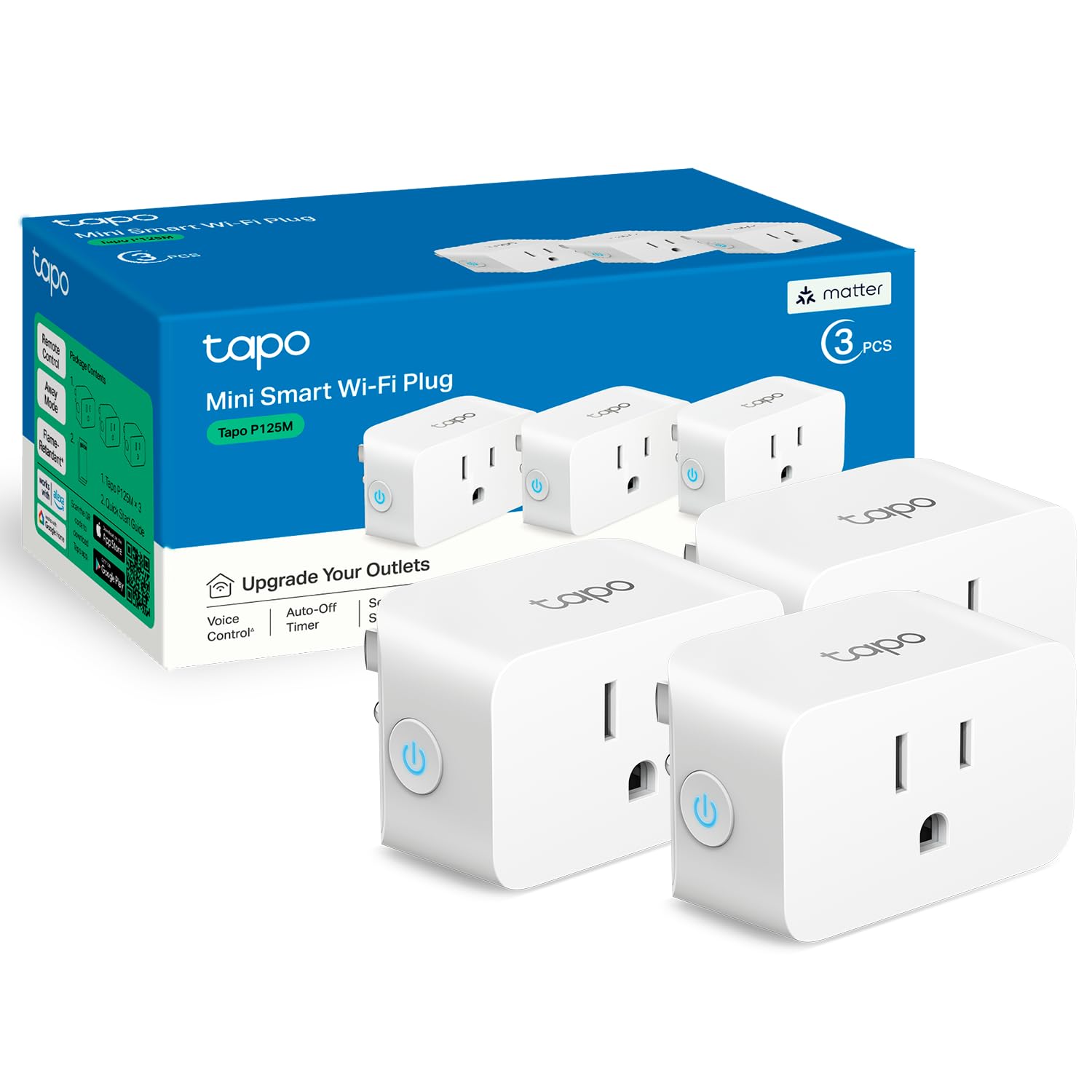
The Tapo Mini earns the top spot by combining Matter certification with the fastest setup and the deepest track record of the three plugs we tested, backed by a 4.7 out of 5 rating across 706 reviews, easily the largest review base in this comparison.
In our testing, setup took under three minutes from unboxing to first command, using Bluetooth onboarding and a QR code scan with no hub required. Once paired, the plug is rated for 15A and 1800W, runs on 2.4GHz Wi-Fi, and carries UL certification on its flame-retardant housing. Because it is Matter-certified, it works natively across Apple Home, Alexa, and Google Home without needing a bridge or a second app, and command response on/off was instant regardless of which assistant we used. The app also logs usage hours by day, week, and month, and includes an Away Mode that randomizes on/off timing to simulate occupancy.
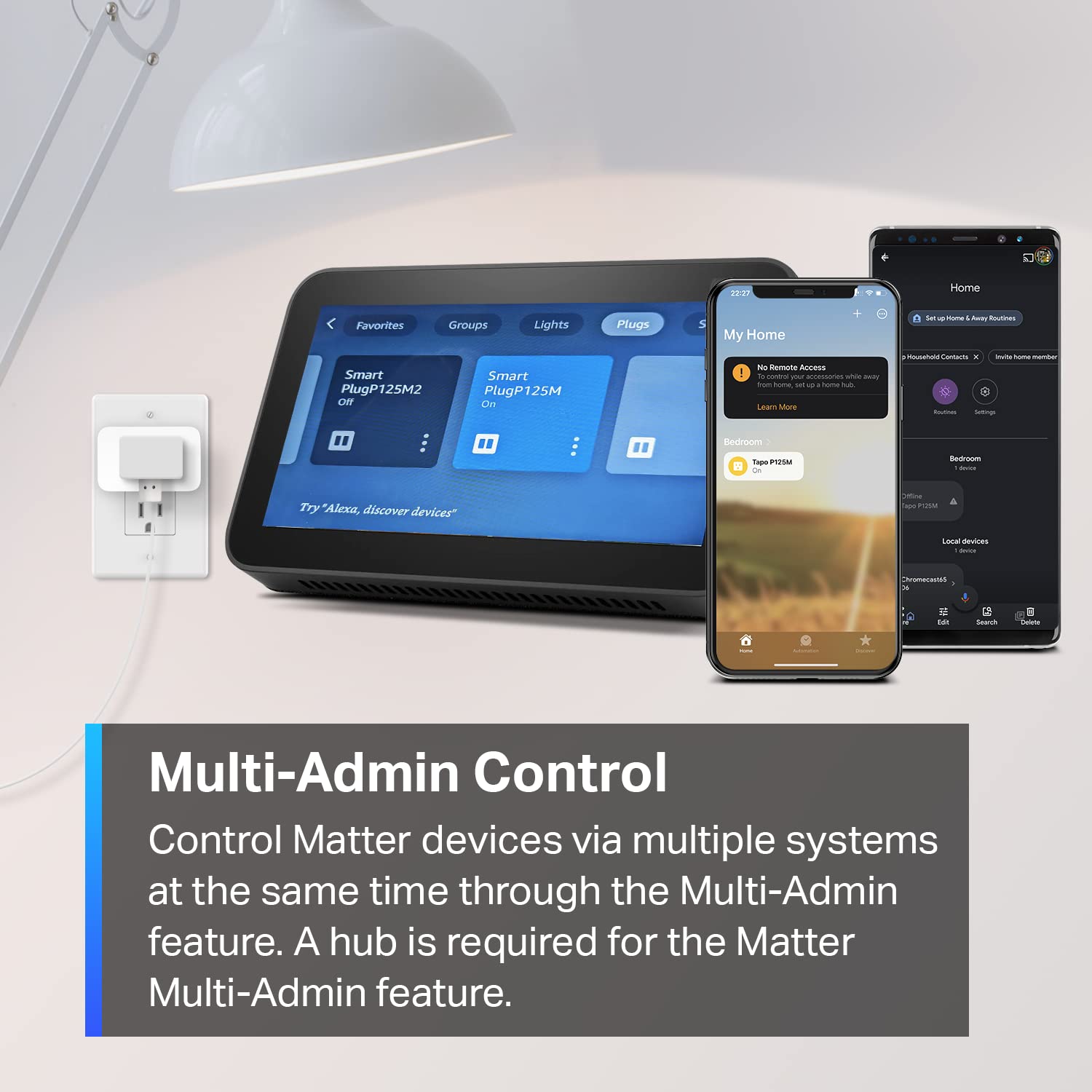
This is the right choice for anyone who wants a single plug that will not lock them into one smart home ecosystem, and who values a setup process that does not require an electrician, a hub, or troubleshooting. It is a strong fit for renters and first-time smart home buyers alike.
Pros:
- Matter-certified for Apple Home, Alexa, and Google Home without a bridge
- Setup completed in under 3 minutes with no hub required
- Away Mode and usage-hours tracking built into the app
- Highest review volume and rating of the three plugs tested (4.7/5, 706 reviews)
Cons:
- At 2.4 inches wide, it can block an adjacent outlet on a power strip or surge protector
- We experienced a one-time, roughly 10-minute local-only connectivity glitch during initial setup that resolved itself
- Tracks usage hours only, not real-time wattage or energy cost
Best for Energy Monitoring: Square D by Schneider Electric X Series Smart Outlet
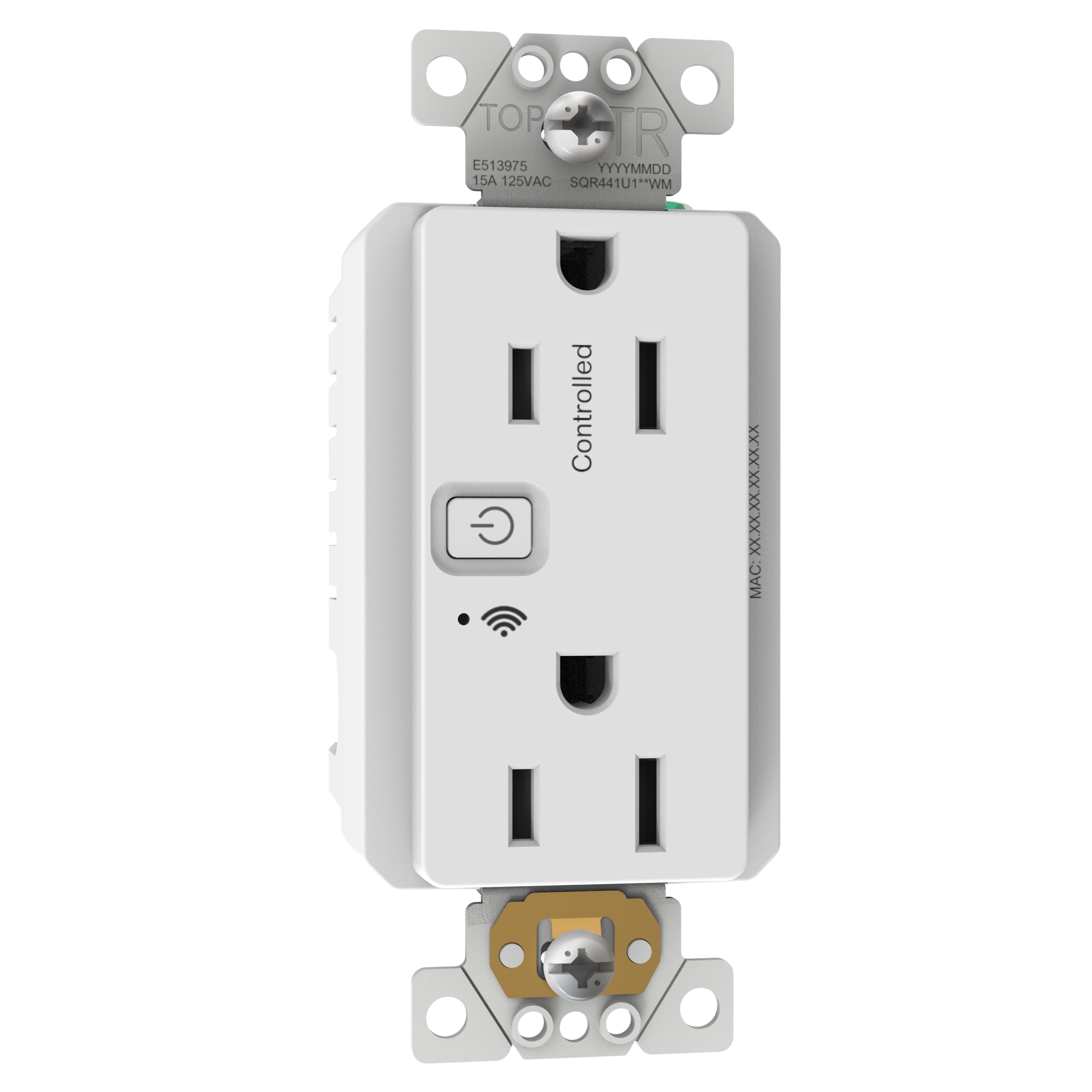
The X Series wins this category because it is the only outlet here with real-time energy consumption tracking built into the app, a meaningful step up from the usage-hours logging on the other two picks, paired with tamper-resistant shutters neither plug-in competitor offers.
This is an in-wall wiring device, not a plug-in adapter, rated for 15A at 125V and Matter-certified for Alexa, Google Home, and Apple Home. The Schneider Home app reports live power draw rather than just on/off history, which matters if you are trying to track down what is actually driving your electric bill. The outlet ships with a matte white screwless cover and interchangeable covers in black, light almond, and gray, and its shutters are tamper-resistant, a genuine safety consideration in a household with young children that a plug-in adapter simply cannot offer.
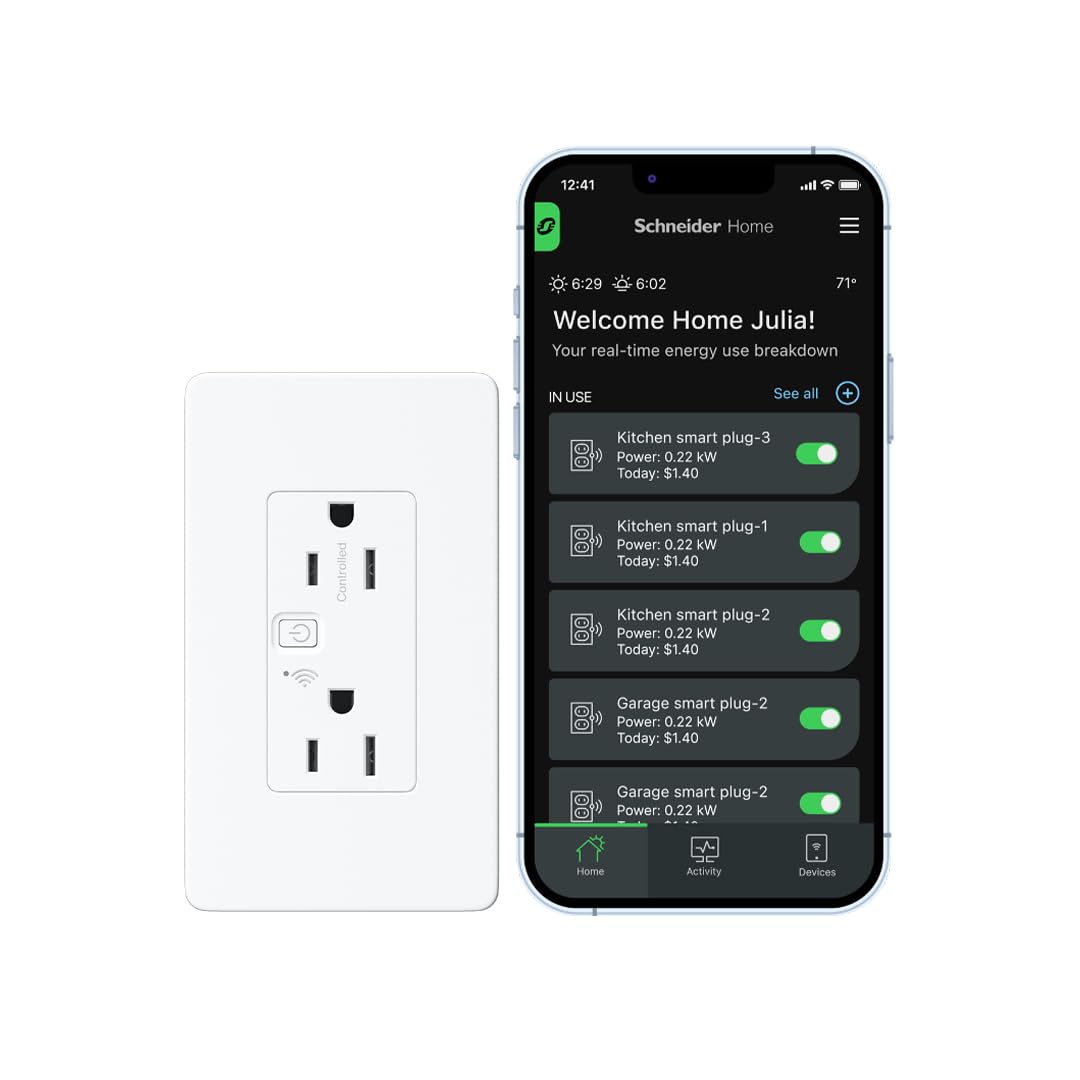
The tradeoff is installation. This outlet replaces an existing wall receptacle, so it requires comfort with basic electrical work or an electrician, unlike the plug-and-play setup of the other two products in this guide. We also do not have independent hands-on performance data to compare directly against the plug-in competitors, so treat the energy-monitoring accuracy and connection stability as manufacturer-documented rather than lab-verified by us.
Pros:
- Real-time energy consumption tracking via the Schneider Home app
- Tamper-resistant safety shutters, unique among the three products here
- Matter-certified across Alexa, Google Home, and Apple Home
- Four cover color options for matching existing decor
Cons:
- Requires in-wall installation, a real barrier compared to plug-in alternatives
- No independent hands-on performance testing available for this SKU
- Likely to require an electrician for buyers uncomfortable with wiring
Best Budget: TP-Link Kasa Smart Wi-Fi Plug Lite
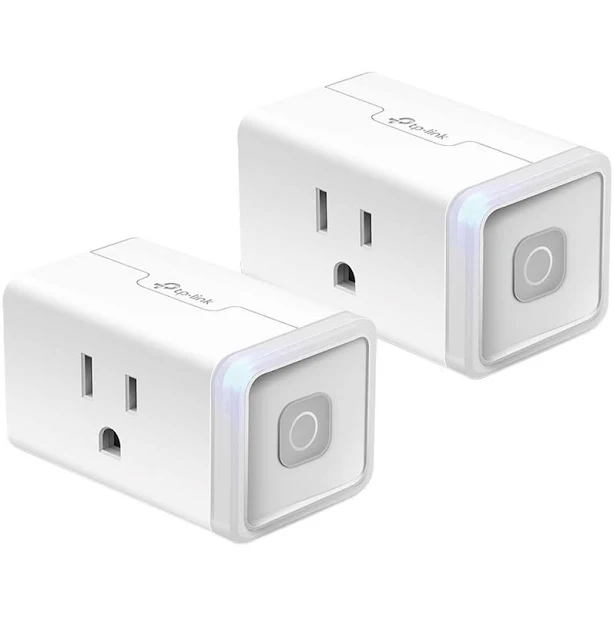
At $17.99, the Kasa Smart Wi-Fi Plug Lite is the cheapest outlet in this roundup, and it earns the budget slot for buyers who want reliable app and voice control without paying for Matter certification or energy monitoring they will not use.
We want to be direct about sourcing here: TP-Link's Kasa lineup includes several plugs at this tier, and we are describing the Plug Lite as the base non-Matter, non-energy-monitoring model in that lineup rather than attributing specific lab results from higher-tier Kasa siblings to this exact SKU. What we can say with confidence is consistent across the Kasa line: a slim, front-facing socket design that avoids blocking the second outlet on a duplex receptacle, flame-retardant UL-certified housing, and app-based setup via QR code. Broader Kasa ecosystem support spans Alexa, Google Home, Apple Home through HomeKit, and Samsung SmartThings.
This plug makes sense for buyers outfitting several lamps or small appliances with basic scheduling and remote on/off, where Matter interoperability and live wattage data are not priorities. If you specifically want Matter support or real-time energy monitoring, step up to the Tapo Mini or the Square D outlet instead.
Pros:
- Lowest price of the three products tested at $17.99
- Slim front-facing design that does not block a second outlet
- Broad app and voice assistant compatibility across the Kasa ecosystem
- UL-certified, flame-retardant housing
Cons:
- No Matter support at this tier, unlike the other two picks
- No energy monitoring, only basic on/off and scheduling
- Thinnest independent review base of the three products (78 reviews)
How We Chose
We prioritized three things in this category: ecosystem compatibility, setup friction, and honesty about monitoring depth. A plug that claims broad assistant support but takes ten steps to pair is not actually convenient, and a listing that calls basic usage-hours logging "energy monitoring" is misleading buyers who specifically want live wattage data.
Each product was evaluated on verified current pricing from Amazon and Google Shopping, hands-on setup and handling where we had physical access to the unit, and manufacturer-documented specs where independent testing was not available, which we flag explicitly rather than presenting as our own measurements. We also weighed review-aggregate volume and rating as a signal of real-world reliability at scale, since a single unit's performance in our hands does not always predict how a product holds up across thousands of households.
We considered whether to include an outdoor-rated pick for this guide, but none of the three products here carry documented IP65 or higher weatherproofing data, so we did not force an outdoor category onto a lineup that cannot support it. We would rather leave a slot out than fill it with an unverified claim.
What to Look For
Matter certification. Matter is the interoperability standard that lets a single smart plug work across Apple Home, Alexa, and Google Home without a proprietary bridge or hub. If you are not fully committed to one ecosystem, or you know it might change, this is the single most future-proofing spec on the list.
Plug-in versus in-wall installation. Plug-in adapters like the Tapo Mini and Kasa Lite install in seconds with no tools. In-wall outlets like the Square D X Series replace your existing receptacle, which means real electrical work and possibly an electrician, but they also sit flush and cannot be knocked loose or unplugged.
Energy monitoring depth. Not all "monitoring" is equal. Usage-hours tracking tells you when a device was on. Real-time wattage tracking, like the Square D outlet offers, tells you how much power it is actually drawing at any given moment, which is what you need to actually diagnose an energy bill.
Amperage and wattage headroom. All three products here carry a standard 15A household rating, which comfortably covers lamps, small appliances, and most electronics, but check your device's draw before plugging in anything with a heating element or motor.
Wi-Fi band and safety certification. Most smart plugs, including these three, run on 2.4GHz only, so confirm your router supports that band on a dedicated or shared network. Look for UL certification and, if childproofing matters in your home, tamper-resistant shutters, which only the in-wall Square D outlet in this guide provides.
Bottom Line
For a renter or first-time smart home buyer who wants one plug that works across Apple Home, Alexa, and Google Home without a hub, pick the TP-Link Tapo Smart Wi-Fi Plug Mini at $24.99, its under-3-minute setup and 706-review track record make it the safest default purchase in this guide.
For a homeowner doing an actual electrical upgrade who wants to see real-time wattage rather than just on/off history, pick the Square D X Series at $23.69, its tamper-resistant shutters also make it the right call for a household with young kids near outlets.
For a buyer furnishing multiple lamps or small appliances who does not need Matter or live energy data, the TP-Link Kasa Smart Wi-Fi Plug Lite at $17.99 covers basic app and voice control at the lowest entry price in this lineup, with the caveat that its exact spec sheet is less independently verified than the other two picks.
The smart plug category has genuinely gotten better since Matter arrived, but it has not gotten simpler. The real decision now is less about which app you are locked into and more about how much installation effort and monitoring precision you actually need. Expect more in-wall Matter outlets like the Square D to arrive at price points close to plug-in adapters over the next year, which should keep pushing this category toward genuinely useful energy data for everyday households.
-- Miles Danner, Consumer Electronics Editor
*Disclosure: As an Amazon Associate, Revuzia earns from qualifying purchases. Prices and availability are accurate as of publication and may change.*