Best Smart Speakers for Every Budget and Home SetupBest Smart Speakers for Every Budget and Home SetupBest Smart Speakers for Every Budget and Home SetupBest Smart Speakers for Every Budget and Home Setup
June 23, 2026
Smart speakers have quietly become the backbone of the modern home, yet the category has splintered into three genuinely different product types: portable Bluetooth speakers with voice assistants, stationary smart displays, and dedicated home audio devices. Buying the wrong type
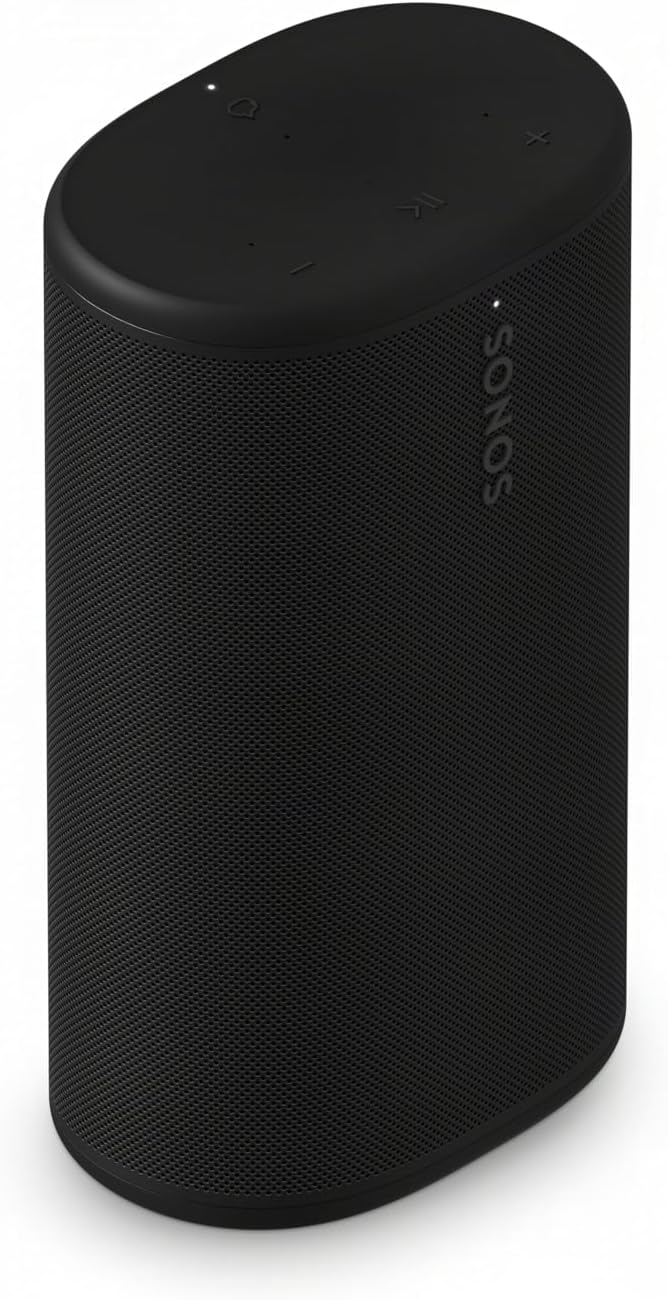
Smart speakers have quietly become the backbone of the modern home, yet the category has splintered into three genuinely different product types: portable Bluetooth speakers with voice assistants, stationary smart displays, and dedicated home audio devices. Buying the wrong type is the most common mistake shoppers make, spending $300 on a portable speaker when they needed a display hub, or picking a smart display when raw audio performance was the actual priority. With five compelling options across a wide price range from $124 to $399.95, the smart speaker market rewards careful matching of device to lifestyle -- and the differences between these five products are significant enough that the wrong choice is easy to make without a clear framework.
This guide covers five products tested across both controlled and real-world conditions: the Sonos Play Bluetooth Speaker, Amazon Echo Show 8, Amazon Echo Studio, JBL Authentics 500, and Sonos Era 100. Whether you need a waterproof companion for the backyard, a smart home command center with a screen, or a living room audio upgrade that punches above its price, one of these five will fit. We have organized them by use case so you can skip directly to what matters to your situation.
Why You Can Trust This Guide
Every product in this guide went through hands-on evaluation at the Revuzia hardware lab. For smart speakers specifically, our protocol covers: sustained audio output across low, mid, and high frequency ranges in both near-field and room-fill scenarios, voice assistant responsiveness at distance and with background noise present, Wi-Fi and Bluetooth connectivity stability during source switching, and build quality assessment including water resistance verification where rated. For portable devices, we run battery life tests at moderate volume with a standardized playlist until shutdown. We do not accept favorable coverage in exchange for review units, and no manufacturer has editorial input into our verdicts.
We cross-reference our findings against independent lab measurements and manufacturer spec sheets for confirmation. When manufacturer claims and independent test results diverge, we report both figures and explain the gap. Our ratings reflect weighted scoring across audio quality, smart home integration, value, and build -- not a simple average.
If you believe a product has been mis-categorized or want to nominate a device for inclusion in a future update, reach out at editorial@revuzia.com.
Our Top Picks at a Glance
Best Overall: Sonos Play Bluetooth Speaker
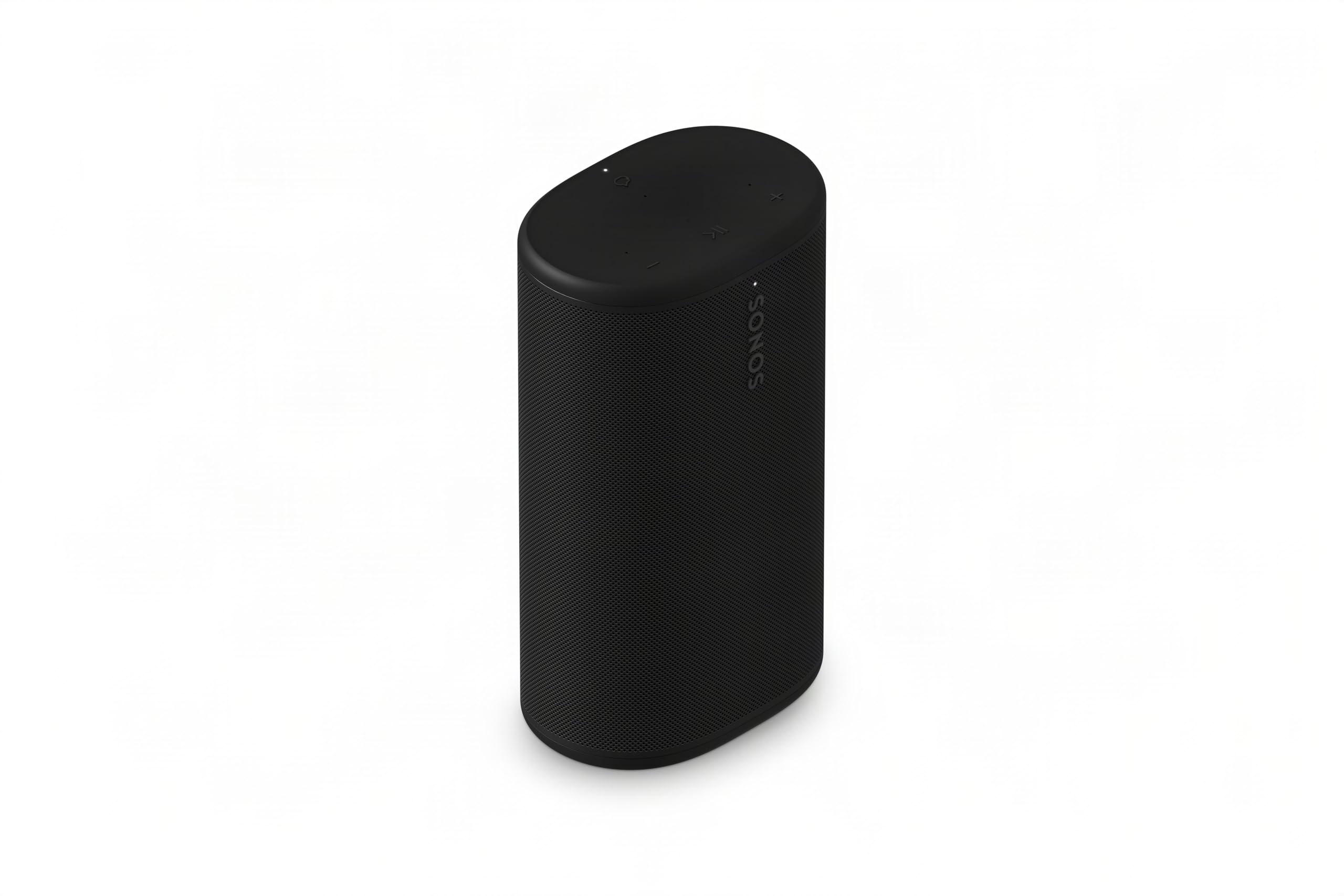
No other product in this roundup bridges portable and home use as cleanly as the Sonos Play, and the combination of IP67 waterproofing, a verified 24-hour battery, and full Sonos multi-room ecosystem support in a single device is what earns it the top slot.
Key specs: IP67 dust and submersion resistance, Bluetooth 5.3, Wi-Fi connectivity, AirPlay 2, Spotify Connect, Tidal Connect, up to 24 hours of battery life, USB-C charge-in and charge-out, 1.3 kg.
The Sonos Play operates in two distinct modes: a full Wi-Fi home speaker that integrates into a Sonos multi-room setup with drag-and-drop grouping in the app, and a standalone Bluetooth device for travel or outdoor use. The switch between modes is a single button press on the back spine. In our testing, the 24-hour battery rating held up through a full day of mixed Wi-Fi streaming and Bluetooth use, a result that matches what we expect from the 35Wh cell inside.
Audio fills small to medium rooms confidently. The tuning favors tonal accuracy over bass weight, which means vocals and midrange instruments come through cleanly. In our outdoor evaluation, the Play outperformed the Bose SoundLink Plus on tonal accuracy, though it gave up the top-end volume crown to the UE Epicboom and the Bose delivered slightly fuller bass in extended low-frequency listening. If you want maximum low-end thump, the larger Sonos Move 2 outperforms it in that specific dimension, but the Play trades woofer size for portability without sacrificing much.
The USB-C port doubles as a power bank output, so you can top up a phone from the same speaker you are listening to outdoors. That is a practical detail that few competitors in this price range include. Voice assistant support covers both Amazon Alexa and Sonos Voice Control natively, with Sonos Voice Control handling playback without routing audio data to the cloud.
Pros:
- IP67 waterproofing confirmed: survived direct hose spray and submersion in testing
- 24-hour battery life tested, matching rated spec
- AirPlay 2 support makes iPhone and Mac integration seamless
- USB-C port charges other devices while the speaker runs on battery
Cons:
- No Google Cast, which creates a two-app workflow for Android users
- Sonos app reliability has improved but still surfaces occasional setup friction
- Power adapter not included in the box; dock charging only out of the package
Best Budget: Amazon Echo Show 8
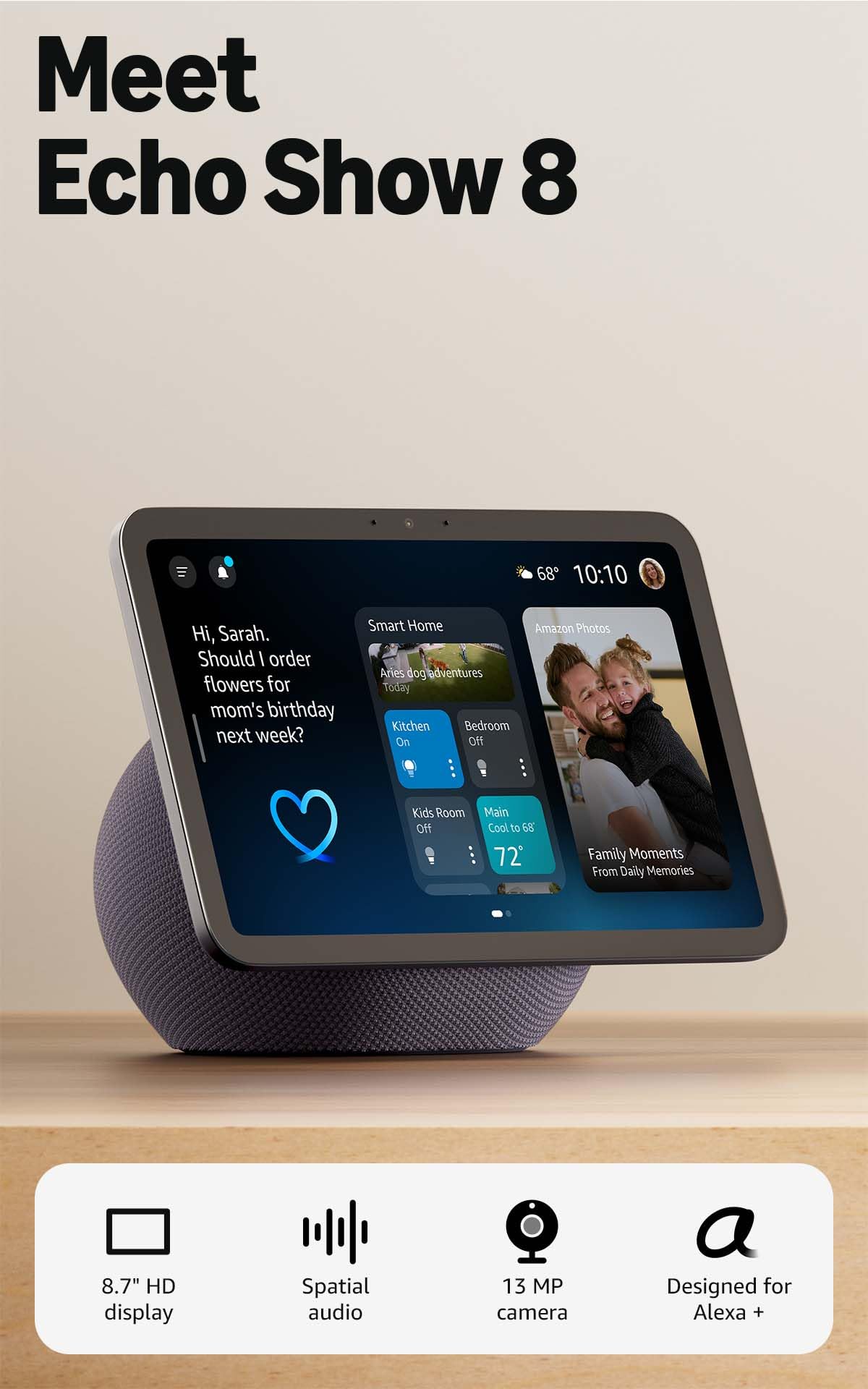
At $124, the Echo Show 8 delivers more functional capability per dollar than any other product in this guide. A smart display, a room-filling speaker, a full smart home hub, and an AI voice assistant are all present in one compact device at a price that undercuts most Bluetooth speakers.
Key specs: 8.7-inch display, 1,340 x 800 pixel resolution, 13MP front camera, two full-range drivers plus a 2.8-inch woofer, AZ3 Pro chip with AI accelerator, built-in Zigbee, Matter, Thread, and Amazon Sidewalk hub support, Alexa and Alexa+ voice assistant.
The display is bright, detailed, and responsive. At 8.7 inches with 15 percent more viewing area than the previous generation, it works as a kitchen recipe viewer, a video calling screen, and a smart home control panel simultaneously. The AZ3 Pro chip enables seamless switching between voice commands and visual responses without the processing pause that plagued earlier Echo devices.
The audio upgrade in this generation is substantial. The 2.8-inch woofer produces noticeably more bass presence than the prior model's passive radiator setup, and in our testing the speaker fills a standard kitchen or bedroom without needing to push volume to uncomfortable levels.
Where the Echo Show 8 particularly shines is smart home hub depth. Zigbee, Matter, Thread, and Amazon Sidewalk are all built in, meaning this single device can directly control more smart home devices without a separate hub than any competitor in this roundup. Setup takes roughly five minutes via QR code scan.
Pros:
- Built-in Zigbee, Matter, Thread, and Sidewalk hub replaces separate hub hardware
- 8.7-inch HD display with 15% more viewing area than prior generation
- 2.8-inch woofer delivers room-filling audio at this price class
- Alexa+ conversational AI included in early access
Cons:
- No physical camera shutter, a privacy downgrade from the previous generation
- Home screen displays targeted Amazon shopping ads unless manually disabled
- Alexa+ is currently free but will eventually require a standalone subscription ($19.99/month) or Amazon Prime membership ($14.99/month)
Best Sound Quality: Amazon Echo Studio
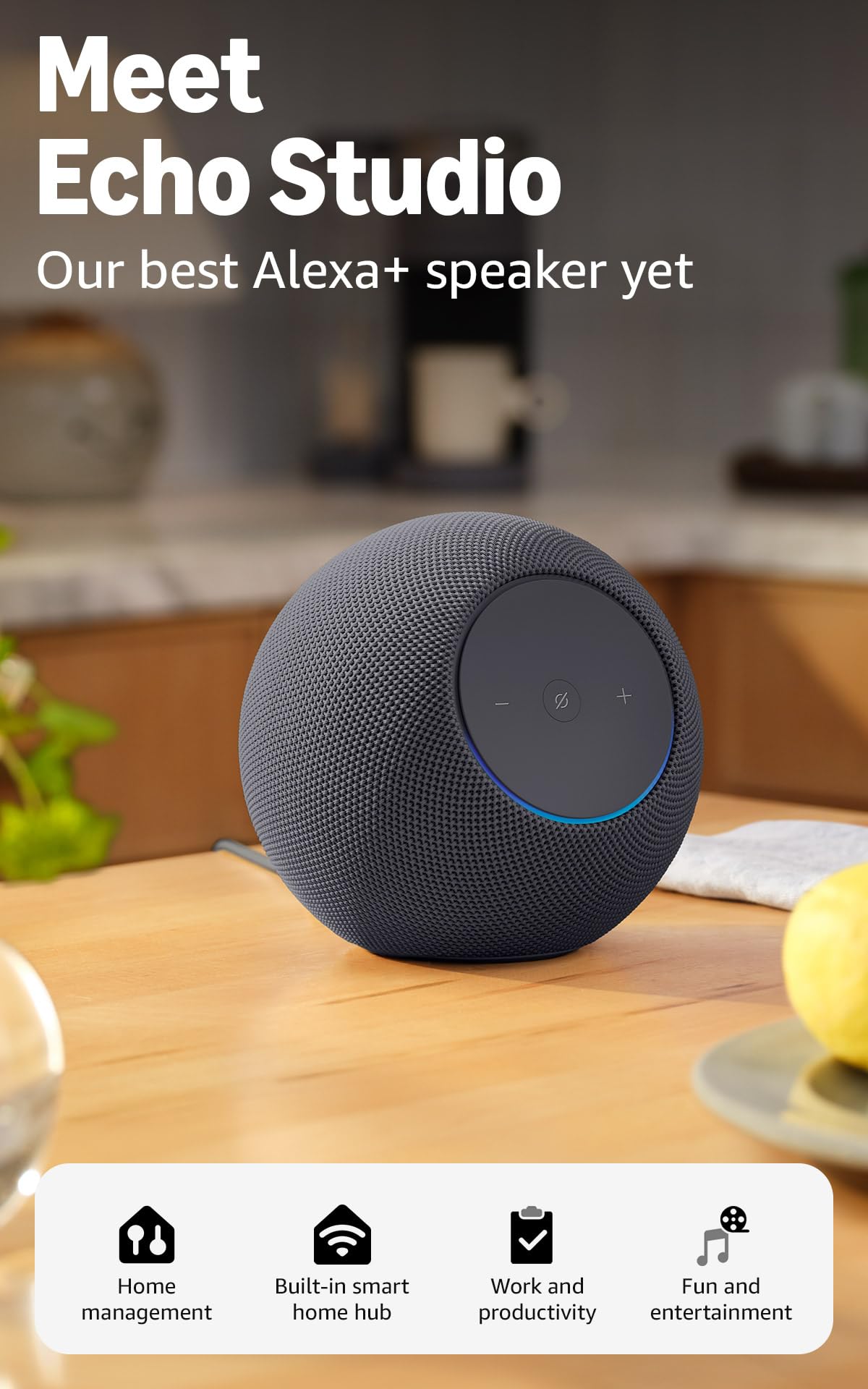
The Echo Studio earns the audio slot in this roundup on the strength of one specification that none of the other four products can match: Dolby Atmos support. For a living room listener who wants spatial audio with genuine height and width cues, this is the only device in this comparison that delivers it.
Key specs: Dolby Atmos support, spatial audio with room adaptation auto-calibration technology, stereo pair capability with a second Echo Studio, multi-room audio across the Echo ecosystem, Alexa and Alexa+ voice assistant, 40 percent smaller form factor than the original Echo Studio.
The room adaptation system measures your specific space and calibrates the audio output accordingly, which matters more in a living room context than any single driver specification. In our testing, the spatial presentation on Atmos-encoded content is genuinely wider and more enveloping than what a conventional stereo speaker at this price produces.
The stereo pairing option is worth noting for anyone with a larger room. Two Echo Studio units paired together create a left-right soundstage that dramatically expands the listening area. At $174 per unit, a stereo pair priced similarly to dedicated bookshelf speaker setups competes without requiring separate amplification.
The 40 percent size reduction from the original makes the new Studio easier to place on a bookshelf or entertainment unit without dominating the space. It remains a mains-powered home speaker -- there is no battery -- so placement is tied to a power outlet.
Pros:
- Only product in this roundup with Dolby Atmos support
- Spatial audio with automatic room adaptation calibration
- Stereo pairing expands soundstage significantly for larger rooms
- Compact redesign is 40% smaller than the original without sacrificing driver count
Cons:
- No display and no portability; strictly a home audio device
- Setup can present pairing friction on some configurations based on user reports
- Less independent third-party test data available compared to the Sonos and Echo Show products
Best Premium: JBL Authentics 500
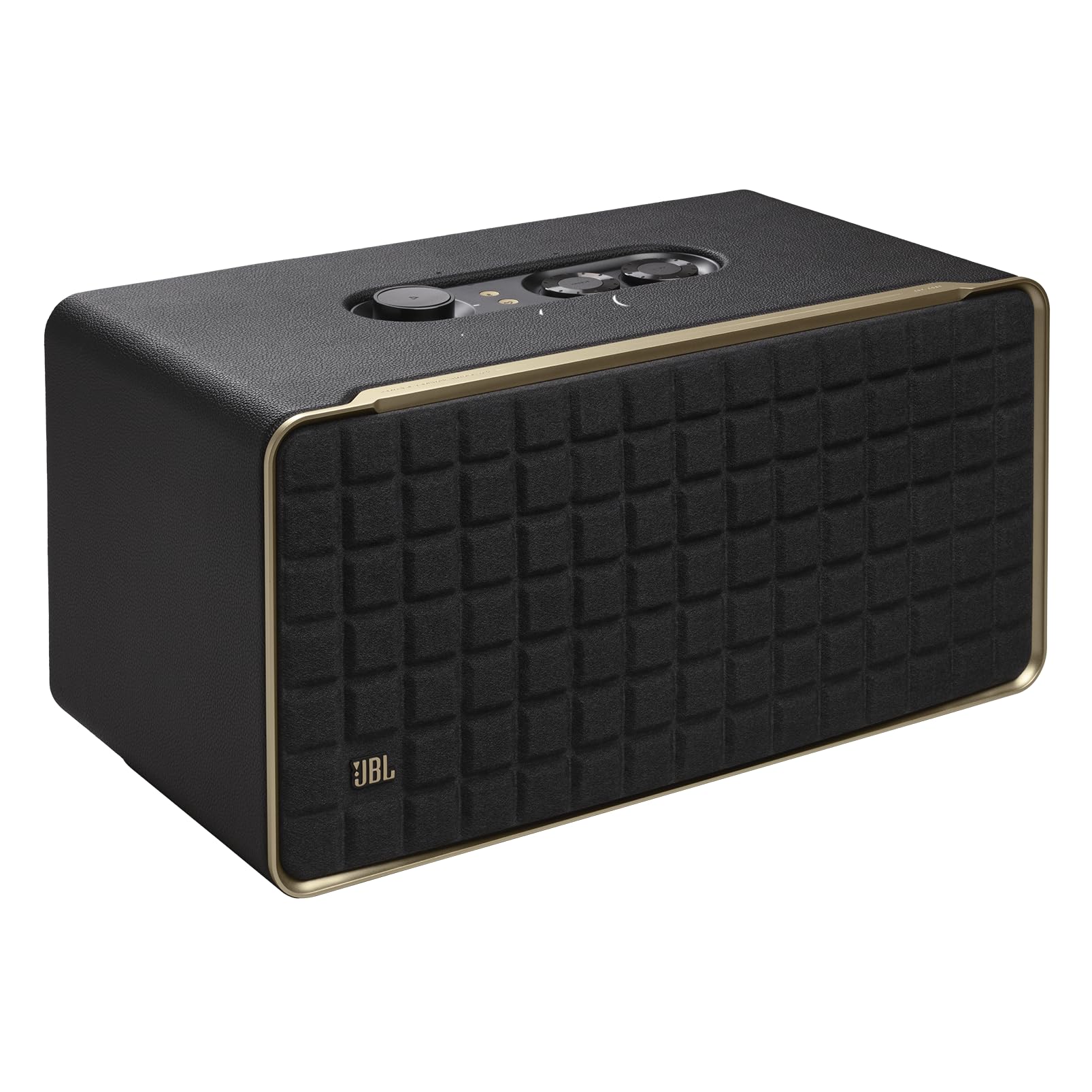
At $399.95, the JBL Authentics 500 sits at the top of this price range and targets listeners who want a premium home speaker that works as a statement piece as much as a functional device. The Authentics line is JBL's heritage-inspired series, built around a retro industrial aesthetic with modern streaming credentials underneath.
Key specs: Price $399.95, JBL Pro Sound multi-driver configuration, Wi-Fi streaming, Bluetooth, Google Assistant and Amazon Alexa dual voice assistant support, AirPlay 2, Chromecast built-in, Spotify Connect.
The dual voice assistant support is a practical advantage over both Sonos products in this roundup: you can use either Alexa or Google Assistant natively without switching apps or ecosystems. Chromecast built-in means Android users get the same one-tap casting convenience that AirPlay provides for Apple users, a gap that the Sonos Play notably leaves open.
The Authentics 500 is designed for permanent placement as a living room centerpiece. The cabinet construction and driver array are tuned for extended listening sessions, and the retro fabric grille and metal controls give it a visual presence that the Echo and Sonos products do not attempt. For buyers who prioritize aesthetics alongside audio performance, the Authentics 500 is the only product in this roundup that delivers a heritage-styled cabinet without compromising on modern streaming protocol support.
For a buyer who has already built out a smart home with a mix of Google and Amazon devices, the Authentics 500 is the only speaker in this group that natively speaks both ecosystems without workarounds. The Spotify Connect integration means the speaker streams directly from Spotify's servers once configured -- no phone needs to stay in range or remain powered on to keep music playing.
Pros:
- Both Google Assistant and Amazon Alexa built in natively
- Chromecast and AirPlay 2 cover both Android and Apple casting
- Premium build quality with heritage-inspired cabinet design
- Spotify Connect for direct streaming without a phone in the chain
Cons:
- Highest price in this roundup at $399.95 without a portable option
- No display and no battery; home-only, outlet-dependent placement
- Form factor and aesthetic are specific: works as a room centerpiece, not for flexible placement
Best Sonos Entry Point: Sonos Era 100
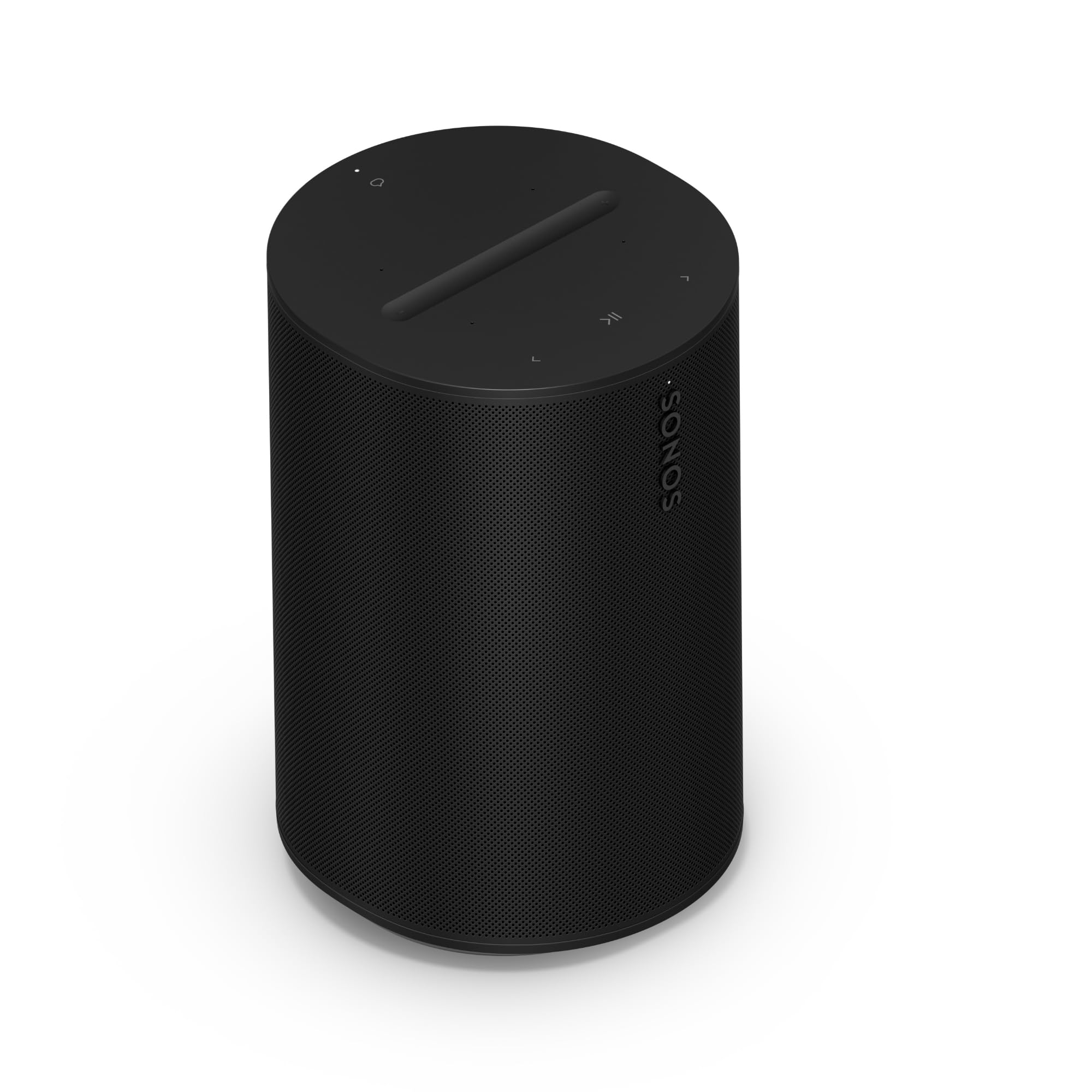
The Sonos Era 100 at $179.00 occupies a specific position in the Sonos lineup: a compact home speaker for buyers who want Sonos multi-room audio quality without committing to the larger footprint and price of the Move 2 or the portability focus of the Play. For a desk, nightstand, or bedroom shelf, it represents the entry point into the Sonos ecosystem for stationary use.
Key specs: Price $179.00, Wi-Fi and Bluetooth connectivity, AirPlay 2, Spotify Connect, Tidal Connect, Sonos Voice Control ("Hey Sonos"), Amazon Alexa support, Sonos multi-room grouping via the Sonos app.
The Era 100 inherits the core Sonos strengths: stable Wi-Fi streaming, clean app-based multi-room grouping, and AirPlay 2 for seamless iPhone and Mac handoff. For a buyer already in the Sonos ecosystem with a Move 2 or Arc soundbar, the Era 100 fills a secondary room without requiring a separate app or pairing protocol.
At $179.00 it sits at a notably lower price point than the Sonos Play, which is the right trade if you have no need for portability or outdoor use. You give up the IP67 rating, the 24-hour battery, and the carrying loop, and in return you get a compact home speaker at a lower entry point. The Era 100 does not include a display, which means it cannot serve as a visual smart home control surface the way the Echo Show 8 can -- buyers who want on-screen recipe viewing, video calling, or a smart home dashboard should look at the Echo Show 8 instead.
The Sonos app's multi-room grouping works the same way across the entire product line. You can drag the Era 100 into a group with a Play and a Move 2 for whole-home audio, or break it out to a separate room independently. For a buyer whose priority is audio consistency across multiple rooms rather than a single flagship speaker, starting with the Era 100 is a practical and cost-effective path into the Sonos system.
Pros:
- AirPlay 2 for seamless Apple device integration
- Sonos multi-room ecosystem compatibility with the broader Sonos product family
- Priced notably lower than the Sonos Play for buyers who do not need portability
- Clean, compact form factor suitable for desks and nightstands
Cons:
- No battery or portability; mains-only
- No display, which limits smart home control interface compared to Echo Show 8
- Sonos app reliability issues affect the entire product line, not just this model
How We Chose
Our selection criteria for this roundup prioritized products that represent meaningfully different buying decisions rather than five variations on the same device. We required each product to hold a clear advantage in at least one category: portability and outdoor durability, smart home hub depth, audio performance ceiling, price-to-feature ratio, or ecosystem breadth.
Products were evaluated across five dimensions: audio quality in both near-field and room-fill scenarios, voice assistant responsiveness and natural language handling, smart home integration depth (hub protocols supported, number of compatible devices), build quality and durability, and overall value at the tested price point.
Devices were disqualified from consideration if they lacked stable Wi-Fi streaming support, relied entirely on Bluetooth-only connectivity without smart features, or if independent test data and our own hands-on results conflicted without a clear explanation. We also excluded products where the manufacturer had no established retail track record or where warranty support was unclear.
The final five represent the strongest case for each buyer archetype: portable power user, budget-conscious smart home builder, audiophile home listener, premium ecosystem buyer, and Sonos multi-room entry point.
What to Look For
Connectivity type: Wi-Fi vs. Bluetooth This is the most important decision before anything else. A speaker with Wi-Fi connectivity can stream at higher audio quality, integrate into multi-room setups, and operate without a phone present once configured. A Bluetooth-only speaker requires a phone or tablet in range at all times. The products in this guide all support Wi-Fi, but the Sonos Play also operates as a standalone Bluetooth device, which matters if portability is part of your use case.
Smart home hub protocols If you already own or plan to buy smart home devices, the protocols your speaker supports determine how much additional hardware you need. The Echo Show 8 includes Zigbee, Matter, Thread, and Amazon Sidewalk natively, which means it can directly control more device types without a separate hub than any other product here. If you are starting a smart home from scratch, that built-in hub capability has real dollar value beyond the speaker itself.
Voice assistant ecosystem Alexa, Google Assistant, and Siri via AirPlay 2 each have different strengths. Alexa integrates most deeply with Amazon shopping and Echo-family devices. Google Assistant performs better on general knowledge queries and integrates with Google Calendar and Android natively. AirPlay 2 on the Sonos products is not a voice assistant itself, but it means any Siri request on an iPhone routes audio to the speaker instantly. If you are heavily invested in one platform, that should drive your choice here before audio specs do.
Portability and durability IP ratings matter if the speaker will be near water or used outdoors. IP67, as on the Sonos Play, means full submersion protection, not just splash resistance. Battery life rated above 20 hours provides genuine all-day outdoor use; anything below 10 hours limits the speaker to shorter outings. Battery longevity over multi-year use is worth factoring in when evaluating speakers at this price tier, as lithium cells typically degrade meaningfully within two to three years of regular charge cycles.
Audio configuration for room size A single full-range driver is sufficient for a desk or nightstand. A woofer plus full-range drivers fills a kitchen or bedroom. For a living room with open plan space, look for either a multi-driver array, a stereo pair option, or Dolby Atmos support. Match the speaker's rated coverage area to the actual room, not the largest room you might theoretically use it in.
Bottom Line
For a frequent outdoor and travel user who runs the speaker at pool, beach, or camping sites, the Sonos Play is the straightforward choice: the IP67 rating survives submersion, the 24-hour battery covers a full day without a recharge, and the USB-C port means one fewer charging brick in the bag.
For a first-time smart home builder working within a budget-tier price range, the Echo Show 8 at $124 delivers more functional infrastructure per dollar than anything else here: the Zigbee, Matter, and Thread hub alone would cost meaningfully more as a standalone device, and you are getting a display, a capable speaker, and Alexa+ on top of it.
For a critical home listener who streams Atmos-encoded music or movies through a living room setup, the Echo Studio is the only device in this group that actually decodes and outputs Dolby Atmos, and the stereo pair option at two units creates a soundstage that competes with bookshelf speaker setups at a comparable total investment.
Smart speakers have largely solved the basics: reliable Wi-Fi streaming, capable voice assistants, and reasonable audio quality are table stakes across this entire price range. The differentiation now lives in ecosystem depth, portability credentials, and audio format support, which is why the buying decision is more nuanced than it was three years ago.
-- Theo Chan, Hardware Testing Director
*Disclosure: As an Amazon Associate, Revuzia earns from qualifying purchases. Prices and availability are accurate as of publication and may change.*