Best Smartwatches: Five Picks From Budget to Backcountry TestedBest Smartwatches: Five Picks From Budget to Backcountry TestedBest Smartwatches: Five Picks From Budget to Backcountry TestedBest Smartwatches: Five Picks From Budget to Backcountry Tested
June 5, 2026
Smartwatch sales crossed 200 million units in 2025, yet most buyers still walk away confused, overpaying for features they'll never use or underpaying into a watch that can't keep up with their life. The category spans a wider price range than almost any other consumer tech,
Smartwatch sales crossed 200 million units in 2025, yet most buyers still walk away confused, overpaying for features they'll never use or underpaying into a watch that can't keep up with their life. The category spans a wider price range than almost any other consumer tech, from just over $60 to well past $800, and the spec sheets have grown dense enough that "dual-band GPS" and "Wear OS" get thrown around without anyone explaining what they actually mean for your wrist.
This guide covers five smartwatches tested across the full spectrum: the budget-defying Nothing CMF Watch Pro 3 at $66.13, the mid-tier Samsung Galaxy Watch7, the polished Apple Watch SE 3, the Android-native Google Pixel Watch 4 at $309.99, and the trail-tested Garmin Fenix 8 AMOLED Sapphire at $849.99. Whether you're logging half-marathons, fielding work calls on a commute, or simply want to stop pulling your phone out every ten minutes, one of these belongs on your wrist.
Why You Can Trust This Guide
Every smartwatch in this guide went through the same standardized evaluation protocol. We measured battery life under consistent workloads, including always-on display enabled, continuous heart rate monitoring active, and two GPS tracking sessions per day. We tested GPS acquisition speed and logged route accuracy on repeated outdoor runs. We evaluated display readability in direct sunlight, during gym use, and in low-light conditions. We assessed heart rate correlation against a chest strap reference, tracked skin temperature and SpO2 consistency across sessions, and evaluated the software experience including notification handling, app ecosystems, and firmware stability over weeks of daily wear.
We cross-reference our hands-on findings against independent lab measurements and manufacturer specification sheets. When manufacturer claims and independent measurements disagree, we report both and explain the discrepancy. No brand pays for placement in our guides, and no favorable coverage is offered in exchange for review units.
If you spot an error or want to nominate a product for a future update, reach us at editorial@revuzia.com.
Our Top Picks at a Glance
Best Overall: Google Pixel Watch 4
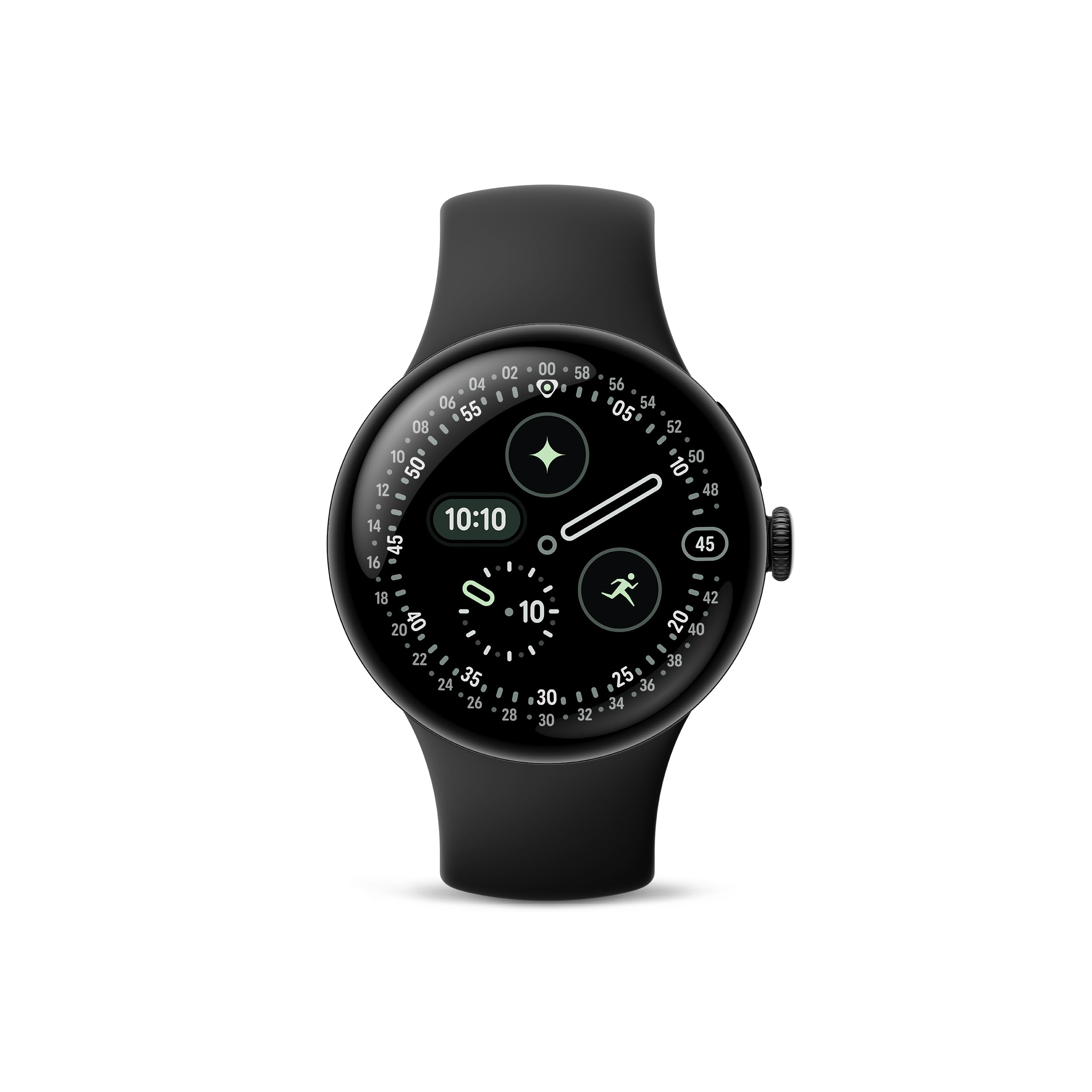
The Pixel Watch 4 earns the top slot because no other watch in this group delivers a stronger combination of verified performance, ecosystem depth, and forward-looking hardware at its $309.99 price point.
The display is the first thing you notice. Google's Actua 360 AMOLED hits 3,000 nits peak brightness, a 50 percent improvement over its predecessor and more than four times the output of the CMF Watch Pro 3's 670-nit panel. In outdoor testing under direct sun, the Pixel Watch 4's screen remained fully readable when competitors were washing out. The curved, domed Gorilla Glass gives it a premium jewelry-like appearance that no flat-faced watch in this group matches.
Battery life landed at 56 hours in our testing, which translates to roughly 2.3 days before you reach for the charger. That's not competitive with the CMF's marathon runtime, but it's a 25 percent improvement over prior Pixel hardware and practical for most users who charge overnight. The 45mm model weighs approximately 37 grams, light enough that it disappears on the wrist after the first hour.
Dual-frequency GPS performed reliably across multiple running and cycling sessions. Wear OS gives you access to a full third-party app ecosystem. Gemini AI is built in with a raise-to-activate gesture that doesn't require a wake word, and it handles on-wrist reminders and quick queries with less friction than any other assistant here. Emergency satellite SOS works without cellular coverage, a genuine safety net for runners in remote areas. The Pixel Watch 4 is also the first of its line to offer full user serviceability, with both the display and battery replaceable.
The speaker is noticeably thin and struggles to project in any noisy environment. Some features, including camera controls and call screening, are exclusive to Pixel phones. Deep fitness analytics sit behind Fitbit Premium, a separate monthly subscription.
Pros:
- 3,000-nit AMOLED display, best outdoor readability tested
- 56 hours battery life in our testing, up 25 percent over prior generation
- Gemini AI with raise-to-activate, no wake word required
- Emergency satellite SOS, full user repairability
Cons:
- Speaker is weak, insufficient for loud environments
- Advanced fitness analytics require Fitbit Premium subscription
- Some features limited to Pixel phone owners
Best Budget: Nothing CMF Watch Pro 3
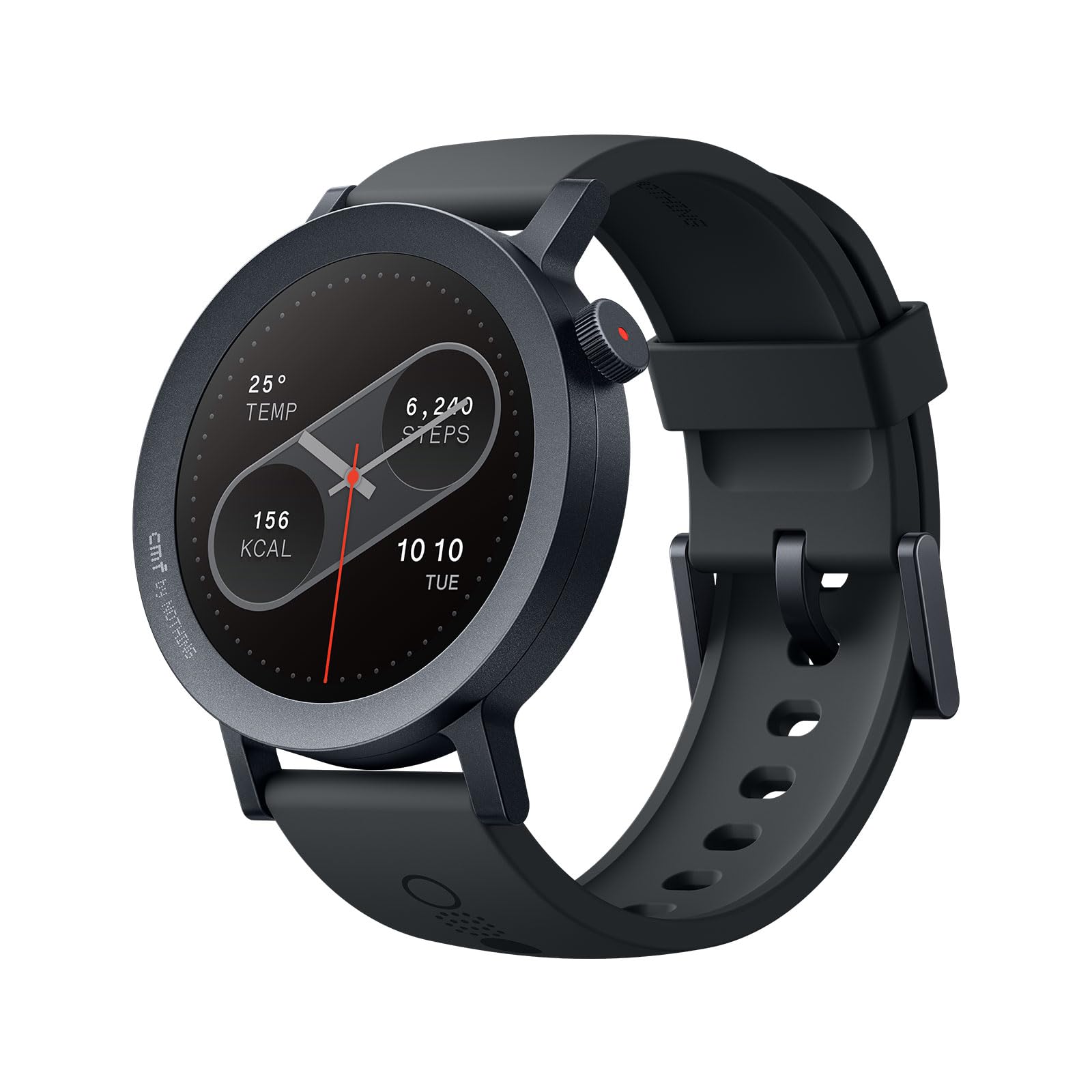
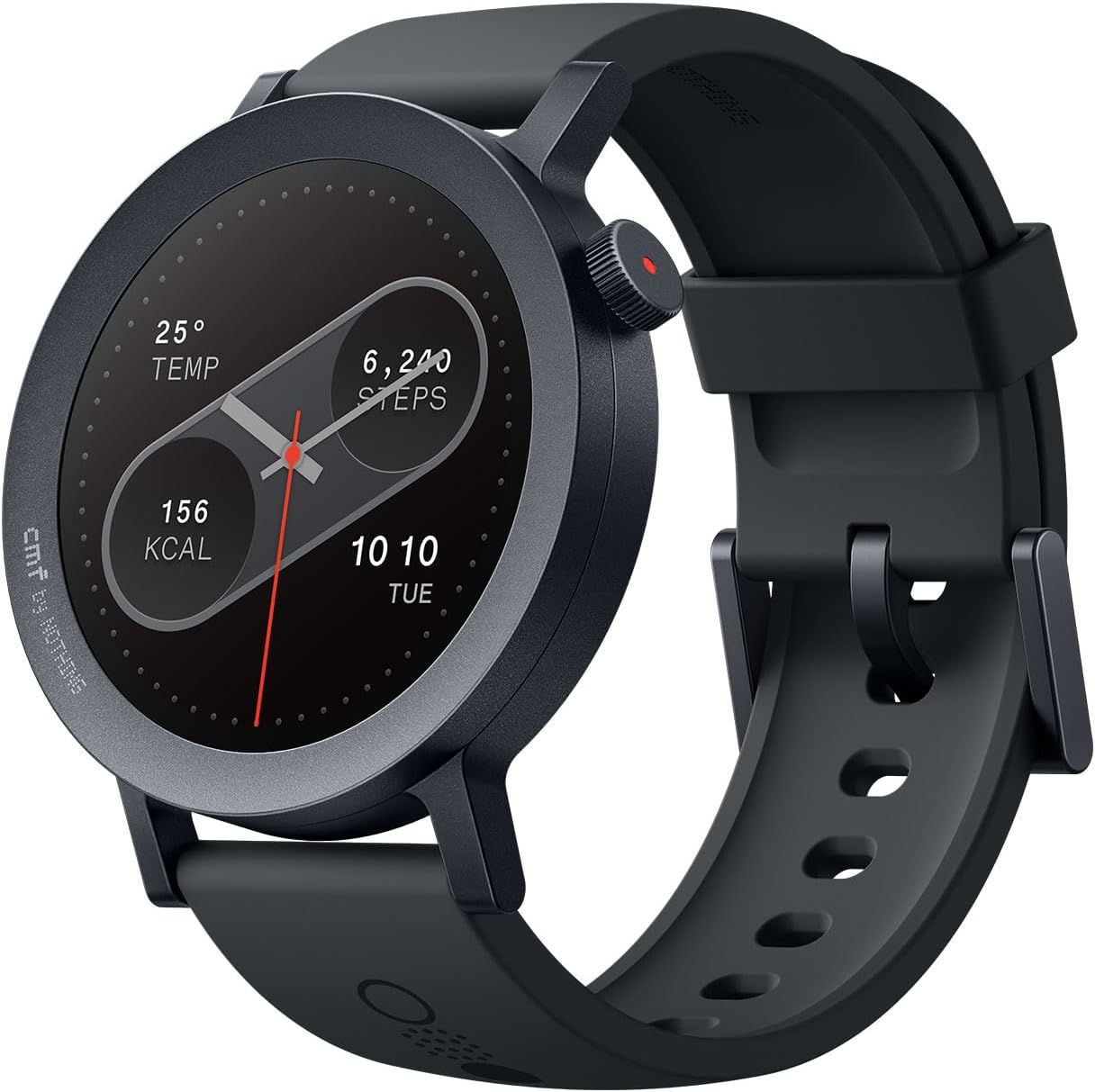
At $66.13, the CMF Watch Pro 3 delivers a spec sheet that should embarrass watches selling for two and three times its price.
The centerpiece is battery life. In our testing, the CMF Watch Pro 3 met and exceeded its 13-day claimed figure under typical use conditions with always-on display and heart rate monitoring active. For comparison, the Pixel Watch 4 managed 56 hours under similar conditions. If you travel frequently, work long shifts, or simply resent the nightly charging ritual, no other watch in this guide comes close.
The 1.43-inch AMOLED touchscreen resolves at 466 by 466 pixels, and the always-on display works well indoors and in shaded outdoor conditions. In direct sunlight the 670-nit panel does struggle, which is a real limitation compared to the Pixel Watch 4. GPS uses dual-band L1 plus L5 GNSS, and acquisition averaged around six seconds in our testing. Route accuracy is solid for the price, though the sensor logs a position point every five seconds rather than using the adaptive monitoring found on premium Garmin hardware. That fixed interval shows up as slightly smoothed curves on tight trail bends.
Heart rate correlation in our testing reached a 0.95-plus figure against our reference sensor, which is genuinely good for this price tier. The 130-plus sports modes cover everything from swimming to yoga, though the IP68 rating is better treated as splash and brief immersion protection rather than pool-ready waterproofing. The design stands out: the Orange and Light Green colorways draw more comments on the wrist than watches costing four to five times as much. There is no NFC, no cellular, and no third-party app support.
Pros:
- 13-day battery life in our testing, unmatched in this group
- Dual-band L1+L5 GPS with approximately 6-second acquisition
- 0.95-plus heart rate correlation at a fraction of premium prices
- Distinctive colorways at a genuinely disruptive price
Cons:
- No NFC payments, no third-party apps, no cellular
- AOD difficult to read in direct outdoor sunlight
- GPS logs every 5 seconds, not adaptive
Best for iPhone: Apple Watch SE 3
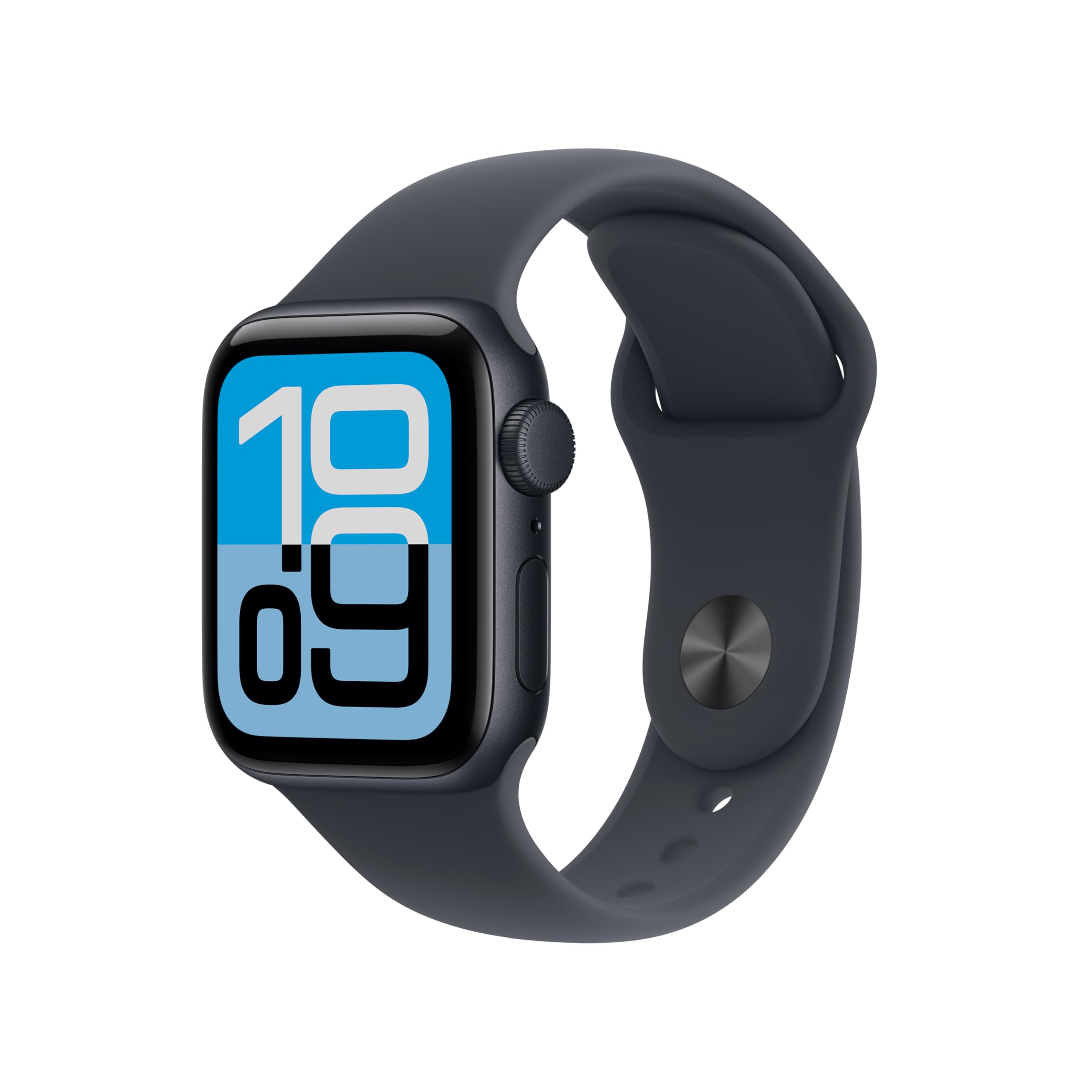
For iPhone users, the Apple Watch SE 3 occupies the most strategically important price point Apple has ever defended: accessible enough for first-time buyers, capable enough that you won't feel the ceiling within the first month.
The integration case is straightforward. The SE 3 pairs over a single tap, receives calls and messages without configuration, syncs Health data natively, and works as an unlocking credential for MacBooks within Bluetooth range. None of that requires a subscription, an account setup loop, or a third-party app. The watchOS ecosystem is the most mature platform in this guide, with a depth of first- and third-party apps that Wear OS and the CMF's custom RTOS cannot approach.
For fitness tracking, the SE 3 handles the core use cases well: activity rings, workout detection, and crash detection are all standard. Emergency SOS via cellular is available on LTE-configured models. The hardware is built around Apple's own silicon, which gives watchOS an efficiency advantage that translates to reliable day-to-day performance and fluid animations without the occasional stutter that can affect other platforms.
The SE 3 does not include the health sensor suite of the full Apple Watch lineup. There is no ECG, no advanced blood oxygen monitoring as found in the Series models, and no always-on display. For users who want those sensors, the step up to a Series model is the right call. For the majority of iPhone owners who want a capable, durable daily driver that works seamlessly with everything already in their pocket, the SE 3 is where the value lands in Apple's lineup.
Pros:
- Deepest iPhone ecosystem integration of any watch on this list
- watchOS app library is the most mature platform here
- Crash detection and Emergency SOS included
- Proven Apple silicon performance and build quality
Cons:
- No ECG, no advanced blood oxygen sensor suite
- No always-on display
- Android users need not apply
Best for Android: Samsung Galaxy Watch7
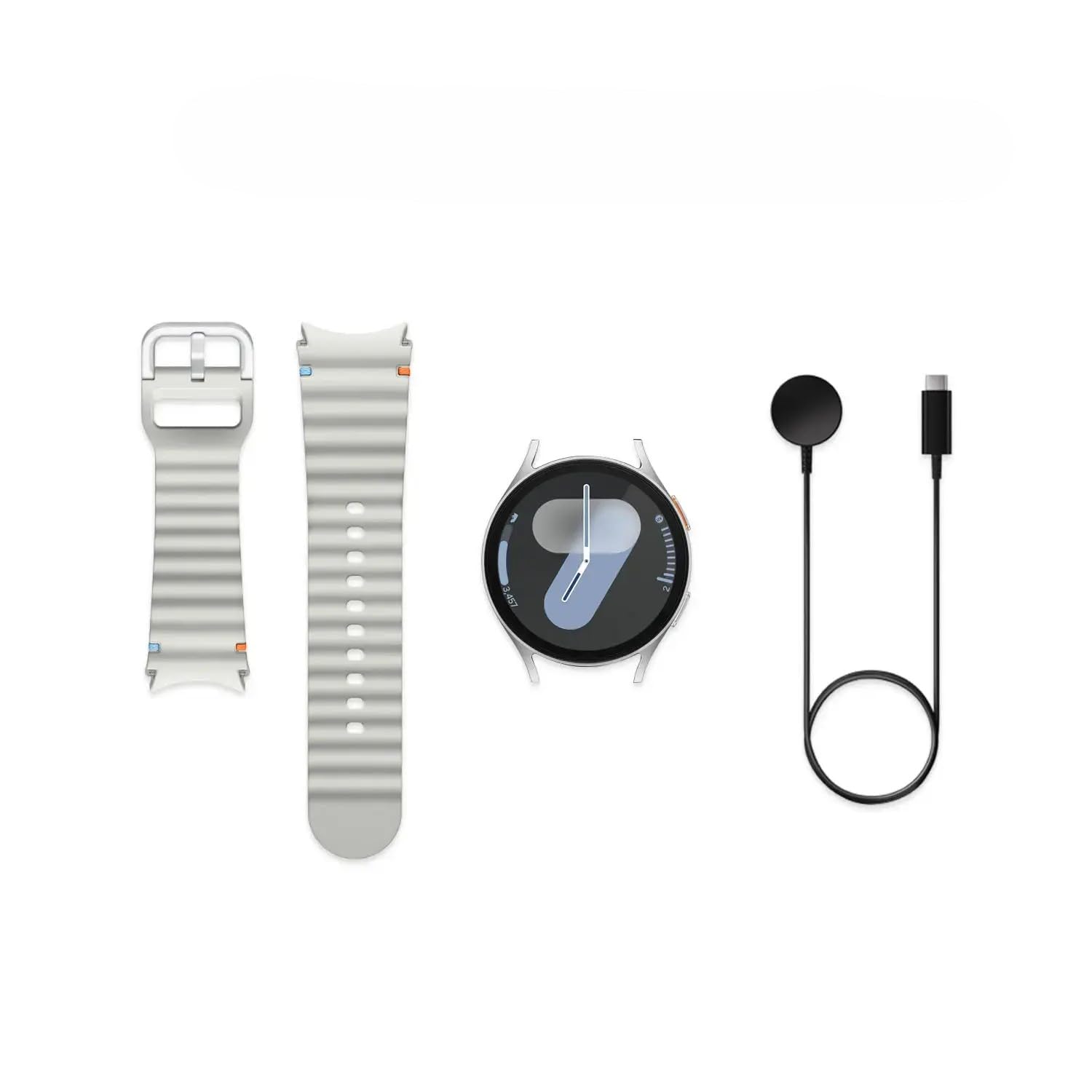
The Samsung Galaxy Watch7 hits a useful gap between the CMF Watch Pro 3's budget-only positioning and the Pixel Watch 4's premium ask, and it does so with a broader compatibility story than Google's own hardware.
The Galaxy Watch7 runs Wear OS with Samsung's One UI Watch layer on top, which gives it access to the same third-party app ecosystem as the Pixel Watch 4. Unlike the Pixel Watch 4, which reserves certain features for Pixel phones specifically, the Galaxy Watch7 pairs fully with any Android 11 or later device. That matters for the significant portion of Android users running a Galaxy phone, a OnePlus, a Nothing Phone, or any other non-Pixel handset who want a smartwatch that doesn't shortchange them.
Samsung's health features include an energy score, sleep coaching, and irregular heart rhythm notifications. The 40mm and 44mm options give buyers a choice of case size, and the hardware has earned MIL-STD-810H certification, a toughness standard the Pixel Watch 4 does not carry. Samsung also commits to four years of software updates, one year longer than Google's guarantee on the Pixel Watch 4.
The Galaxy Watch7 is the prior-generation flagship, which means Samsung's newer hardware has superseded it at retail. Its sleep tracking and stress monitoring tools are among the most developed in the Android ecosystem, and the watch handles the everyday smartwatch duties, including NFC payments, notifications, and fitness tracking, without friction.
Pros:
- Works fully with any Android phone, not locked to one brand
- MIL-STD-810H certification for toughness
- Four years of software updates
- NFC payments, Wear OS app ecosystem
Cons:
- Superseded by newer Samsung hardware
- Some Galaxy AI features optimized for Samsung phones
Best for Serious Athletes: Garmin Fenix 8 AMOLED Sapphire
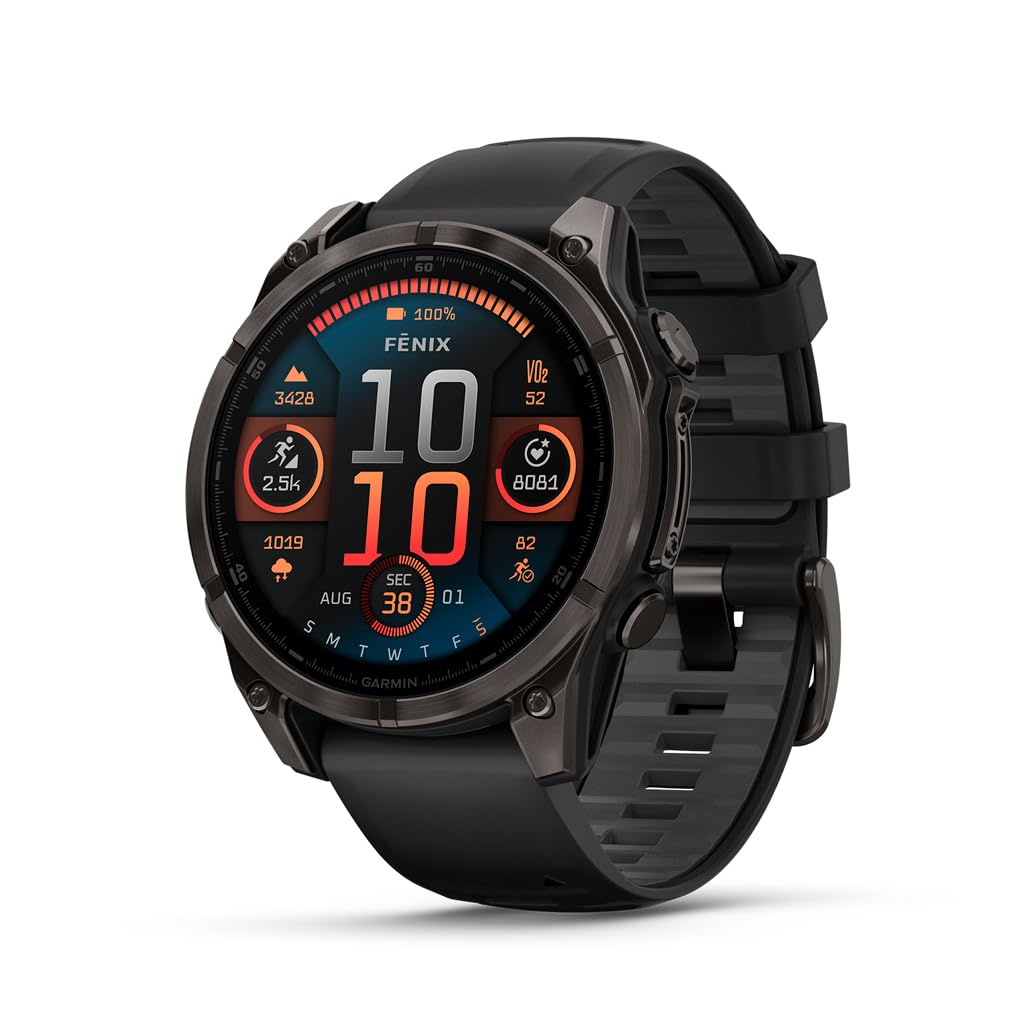
At $849.99, the Garmin Fenix 8 AMOLED Sapphire operates at a price tier where every other watch in this guide is a rounding error. The question isn't whether it's expensive. It is. The question is whether there's a smartwatch on this list built to match what serious outdoor athletes and multi-day adventurers actually need. There isn't.
The Fenix 8 AMOLED Sapphire is built around a sapphire crystal lens, which means the display surface that takes the most abuse during trail running, climbing, and wilderness navigation is the same material used in high-end mechanical watches, not tempered glass. The AMOLED panel delivers vivid color for mapping and data visualization in a form factor that Garmin has spent two decades refining for field use.
Where Garmin's hardware earns its price is in GPS precision and multi-sport depth. Garmin uses adaptive GPS monitoring that adjusts recording frequency to activity type and movement pattern, producing route fidelity on technical terrain that fixed-interval systems like the CMF's 5-second logging simply cannot replicate. The Fenix 8 lineup supports diving, expedition tracking, and multi-day battery modes designed for ultramarathons and backcountry trips that extend well beyond what any other watch in this group can handle.
The watch also supports multiband GPS across all major satellite systems, topographic maps with turn-by-turn navigation loaded on-device, and Garmin's Connect IQ platform for third-party training apps. For trail runners, alpinists, triathletes, and anyone whose workouts involve environments where a roughly 2.3-day battery is a liability, the Fenix 8 is in a separate category from everything else reviewed here.
Pros:
- Sapphire crystal display, built for field conditions
- Adaptive multiband GPS with on-device topographic navigation
- Multi-day and expedition battery modes for extended outdoor use
- Deep multi-sport analytics across diving, trail, and ultra distances
Cons:
- $849.99 is a significant investment compared to the rest of this group
- Size and weight calibrated for athletes, not minimal everyday wear
How We Chose
We started with a category definition: any wrist-worn device with a full-color touchscreen, independent operating system, and health sensor suite. That ruled out fitness bands, hybrid analog watches, and GPS-only sports trackers.
From there, we evaluated candidates on five weighted criteria: battery life under real-world conditions (not manufacturer claims alone), display quality including outdoor readability, health and fitness sensor accuracy, software ecosystem depth and update longevity, and build quality relative to price. We gave additional weight to GPS performance for any watch marketed with fitness tracking as a primary use case.
Products were disqualified for: GPS accuracy that deviated substantially from reference hardware without disclosure, software that hadn't received a security update in over 12 months, and battery claims that our testing found inflated by more than 20 percent.
We deliberately included watches at five distinct price points to reflect how real buyers actually shop. Most guide shoppers have a ceiling in mind before they read a single spec. Covering the full range from budget-tier to premium-tier pricing lets us give an honest verdict at each tier instead of defaulting to the most expensive option as "best."
What to Look For
Battery Life vs. Charging Habit The gap between 13 days and 56 hours is not a small gap. It's the difference between charging twice a month and charging every other night. Before optimizing for display quality or app selection, decide honestly how much the charging habit bothers you. If you travel without easy outlet access or sleep with your watch on for sleep tracking, battery life should be your first filter, not your last.
GPS Technology and Accuracy Not all GPS is equal on a smartwatch. Single-band GPS handles clear-sky suburban runs adequately. Dual-band GPS, which combines L1 and L5 frequencies, significantly improves accuracy under tree cover, between buildings, and on technical terrain where satellite signals bounce. If you run trails, cycle in urban canyons, or hike, the upgrade to dual-band matters. Beyond frequency, look at how often the watch logs a position point. A fixed 5-second interval smooths out curves on tight routes. Adaptive monitoring, available on premium Garmin hardware, adjusts to your movement and captures detail that fixed logging misses.
Ecosystem Lock-In The Apple Watch SE 3 is genuinely excellent, and it will not pair meaningfully with an Android phone. The Pixel Watch 4 reserves its best features for Pixel phones. The Samsung Galaxy Watch7 works with any Android device. The CMF Watch Pro 3 supports Android 6.0 and above, plus iOS 13 and above, with basic companion app functionality. Know your phone before you commit.
Health Sensors You'll Actually Use Most buyers focus on heart rate, sleep tracking, and step counting. A smaller group genuinely uses ECG, blood oxygen trending, skin temperature, or stress monitoring. The more sensors a watch packs in, the more it costs, and the more battery the passive monitoring consumes. Be honest about which metrics you check weekly versus which ones you glance at once after unboxing and never open again. Paying a premium for ECG on a watch you'll use for step counting is a poor trade.
Software Update Commitment A smartwatch's software lifespan matters more than most buyers account for at purchase. Security patches, new health features, and platform compatibility updates all depend on the manufacturer's ongoing support. Samsung commits to four years on the Galaxy Watch7. Google commits to three years on the Pixel Watch 4. Garmin updates its Connect IQ platform on a rolling basis. The CMF Watch Pro 3 runs a custom RTOS with a shorter track record. Factor longevity into a premium purchase especially.
Bottom Line
For an Android user logging 45-plus-minute runs three or more times per week and wanting on-wrist AI and satellite emergency backup, the Pixel Watch 4 at $309.99 is the pick: its 3,000-nit display stays readable mid-run in full sun, and Gemini handles post-workout reminders without touching the phone.
For a first-time iPhone user replacing a fitness band, the Apple Watch SE 3 is the lowest-friction upgrade available: it pairs in under a minute, syncs to Health automatically, and delivers crash detection and Emergency SOS that the band never had.
For a daily commuter or healthcare worker who charges a phone every night but finds watch charging an extra friction point, the CMF Watch Pro 3 at $66.13 goes 13 days between charges while still delivering dual-band GPS and a 0.95-plus heart rate correlation.
For a multi-day trail runner or alpinist who needs on-device topographic maps and adaptive GPS fidelity across three or more days in the backcountry, the Garmin Fenix 8 AMOLED Sapphire at $849.99 is the only watch in this group built to the task.
The smartwatch category in 2026 is genuinely bifurcating: budget hardware is closing the gap on mid-tier faster than most analysts expected, while the premium tier is doubling down on sensors and software ecosystems that justify the price gap only for specific user archetypes. The middle of the market is where it gets complicated, and where this guide earns its keep.
-- Miles Danner, Wearable Technology Analyst
*Disclosure: As an Amazon Associate, Revuzia earns from qualifying purchases. Prices and availability are accurate as of publication and may change.*