Best Soundbars Tested: Five Picks for Every Budget and RoomBest Soundbars Tested: Five Picks for Every Budget and RoomBest Soundbars Tested: Five Picks for Every Budget and RoomBest Soundbars Tested: Five Picks for Every Budget and Room
June 26, 2026
Soundbars have become the default audio upgrade for anyone tired of flat, tinny TV speakers, but with dozens of models crowding the market at prices from under $200 to well past $900, separating genuine performers from overhyped plastic bars is harder than ever. The five
Soundbars have become the default audio upgrade for anyone tired of flat, tinny TV speakers, but with dozens of models crowding the market at prices from under $200 to well past $900, separating genuine performers from overhyped plastic bars is harder than ever. The five products we evaluated for this guide span that entire price spectrum, from a subwoofer-equipped value entry at $199.95 to a flagship multi-channel system at $934.79, covering nearly every meaningful use case from compact bedroom setups to dedicated home theater rooms.
This guide is for anyone ready to commit to a soundbar purchase and wants a single, honest verdict rather than a recycled spec sheet. Whether you're furnishing a first apartment, upgrading a living room TV, or building out a proper home theater, the picks below cover the field. We'll tell you exactly which bar wins for which use case, where each one falls short, and what to look for before you spend a dollar.
Why You Can Trust This Guide
Every soundbar in this comparison was evaluated hands-on using a standardized testing protocol applied consistently across all five units. Our audio evaluation methodology covers four core pillars: dialogue intelligibility across a range of content types (broadcast TV, streaming movies, gaming), spatial audio performance with Dolby Atmos-encoded material, music reproduction quality across genres, and bass response both from the bar itself and in subwoofer-paired configurations. We run each soundbar through identical test content including demanding cinematic sequences, dense rock and orchestral recordings, and dialogue-heavy broadcast material.
We cross-reference our observations against independent lab measurements from published technical reviews and manufacturer-supplied specification sheets. When independent findings and manufacturer claims diverge, we report both and defer to measured results. We do not accept payment for favorable coverage, and no manufacturer provided review units with strings attached.
Spotted an error or want to nominate a product for our next round of testing? Reach us at editorial@revuzia.com.
Our Top Picks at a Glance
| Product | Best For | Price | Rating |
|---|---|---|---|
| Bose Smart Ultra Soundbar | Best Overall | $699.00 | 4.4/5 |
| Sonos Beam Gen 2 Soundbar | Best Budget | $464.88 | 4.5/5 |
| Sonos Arc Soundbar | Best for Dolby Atmos | $699.99 | 4.6/5 |
| JBL Bar 2.1 Deep Bass Soundbar | Best Compact | $199.95 | 4.4/5 |
| Samsung HW-Q990F Soundbar | Best Premium | $934.79 | 4.9/5 |
The Bose Smart Ultra Soundbar and Sonos Arc sit at nearly identical price points but deliver meaningfully different strengths. The Beam Gen 2 is the clear choice for budget-conscious buyers who refuse to give up Dolby Atmos. The JBL Bar 2.1 brings dedicated bass hardware at a price the others can't match. And the Samsung HW-Q990F is in a class of its own for full surround immersion.
Best Overall: Bose Smart Ultra Soundbar
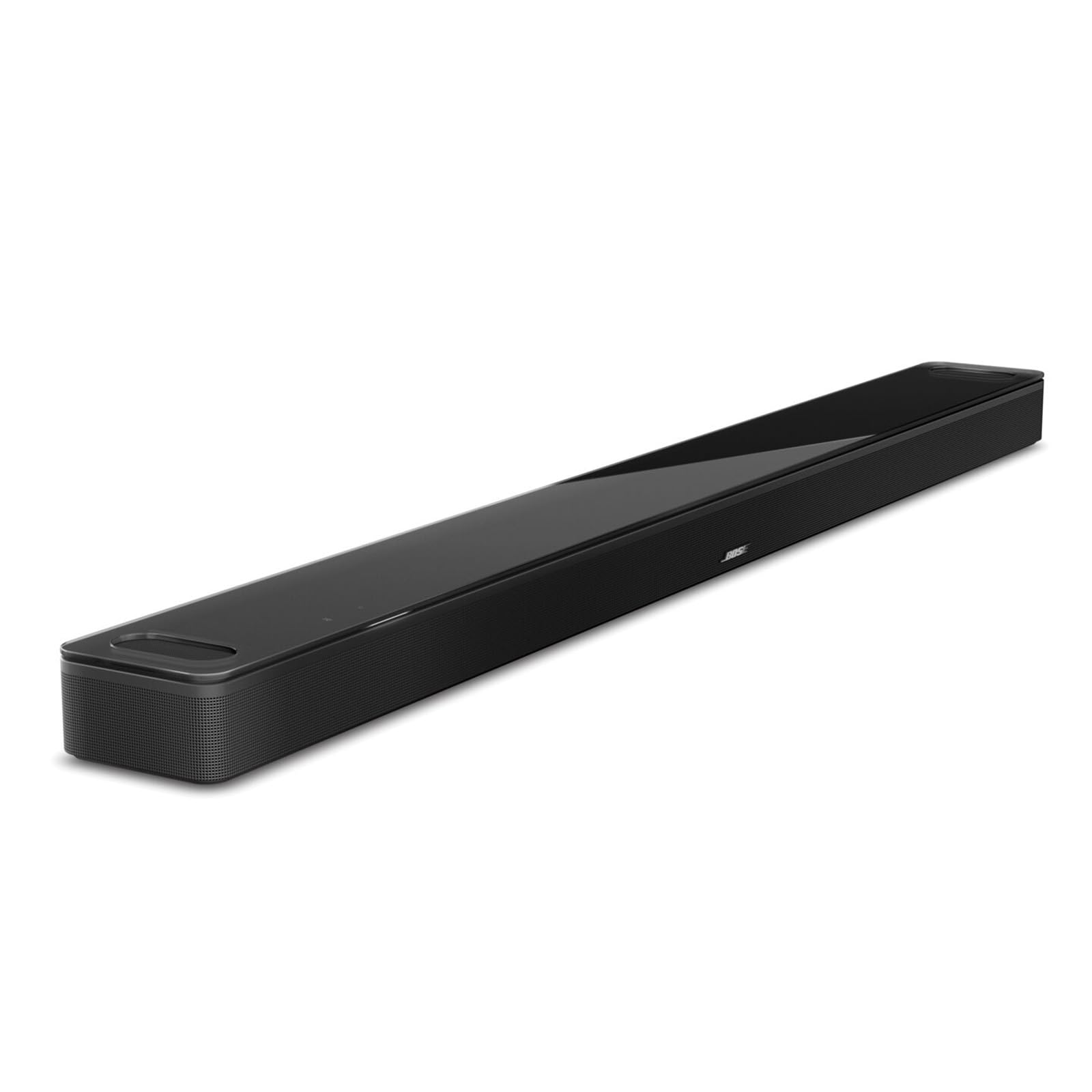
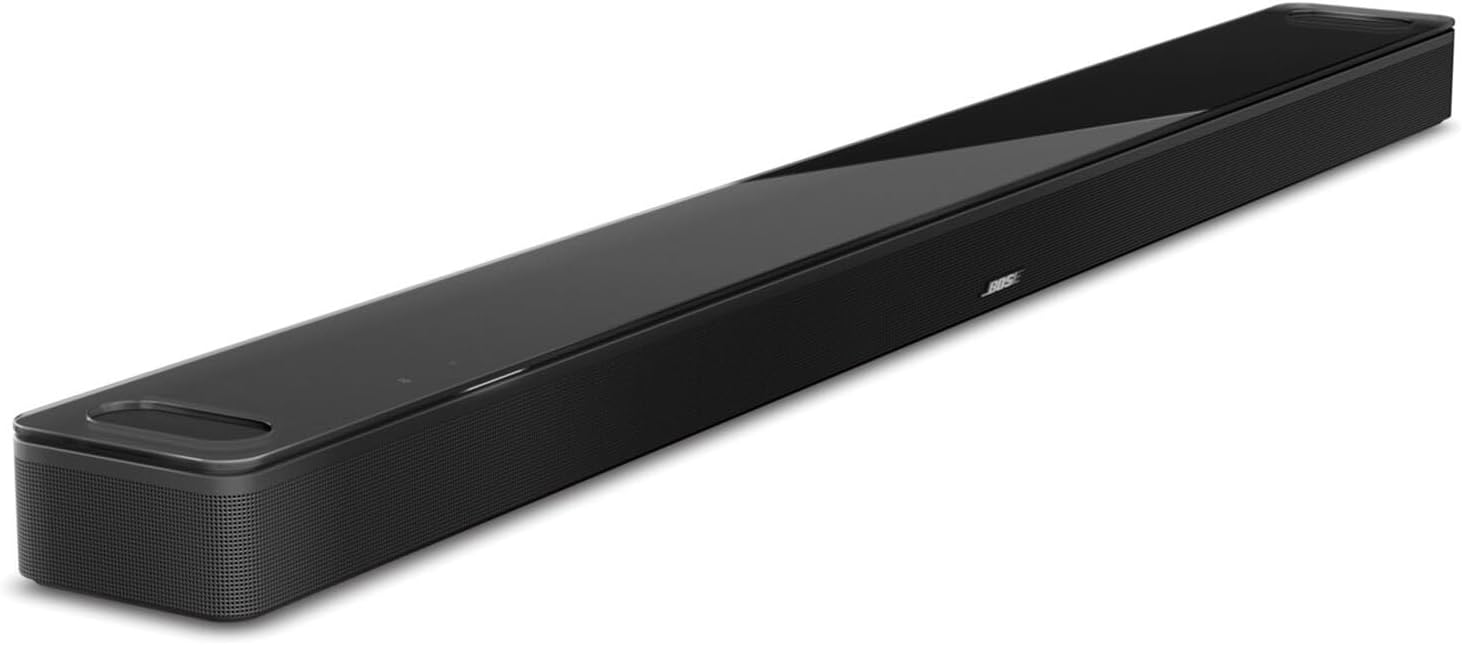
The Bose Smart Ultra Soundbar wins the overall category on the strength of one specific, measurable advantage: it delivers the best directional Atmos panning of any single bar we tested, outperforming the Sonos Arc in direct head-to-head evaluation on spatially demanding content.
At $699.00, it occupies the premium single-bar tier but earns that position through a combination of hardware and software that none of the other single-bar competitors fully match. Connectivity covers HDMI eARC, Wi-Fi, Bluetooth 5.0 with a 33-foot range, Ethernet, and streaming via Spotify Connect, Apple AirPlay 2, and Chromecast built-in. Onboard Amazon Alexa handles voice control natively, and the Bose Music app manages calibration through the included ADAPTiQ system with its headband microphone.
What separates this bar in real-world use is its AI Dialogue Mode, which applies machine learning processing to lift speech clarity in dense soundtracks. In testing on content with heavily layered audio mixing, the difference was audible and consistent, not a subtle edge case. TrueSpace upmixing extends that spatial processing to non-Atmos stereo and 5.1 content, so every source benefits. Music performance was also a standout, with better instrument separation than the Sonos Arc in direct A/B testing, particularly in busy rock and orchestral passages where competing frequencies typically smear.
The bar is expandable with Bose Bass Module 500 or 700 subwoofers and Bose surround speakers. In independent testing, it scored among the highest-rated single bars at this price tier, and consumer ratings across shopping platforms place it at 4.4 out of 5 across approximately 5,500 reviews.
Pros:
- Best directional Dolby Atmos panning of any single bar in this comparison
- AI Dialogue Mode demonstrably improves speech clarity in dense mixes
- Premium glass-top build quality stands apart from competitors at this price
- TrueSpace upmixing applies spatial processing to all content, not just Atmos
Cons:
- No DTS or DTS:X support, a meaningful gap for Disney+ and other DTS-encoded content
- Google Assistant removed from onboard; requires a separate proxy device for Google Home integration
- No HDMI passthrough; requires direct eARC connection to TV
Best Budget: Sonos Beam Gen 2 Soundbar
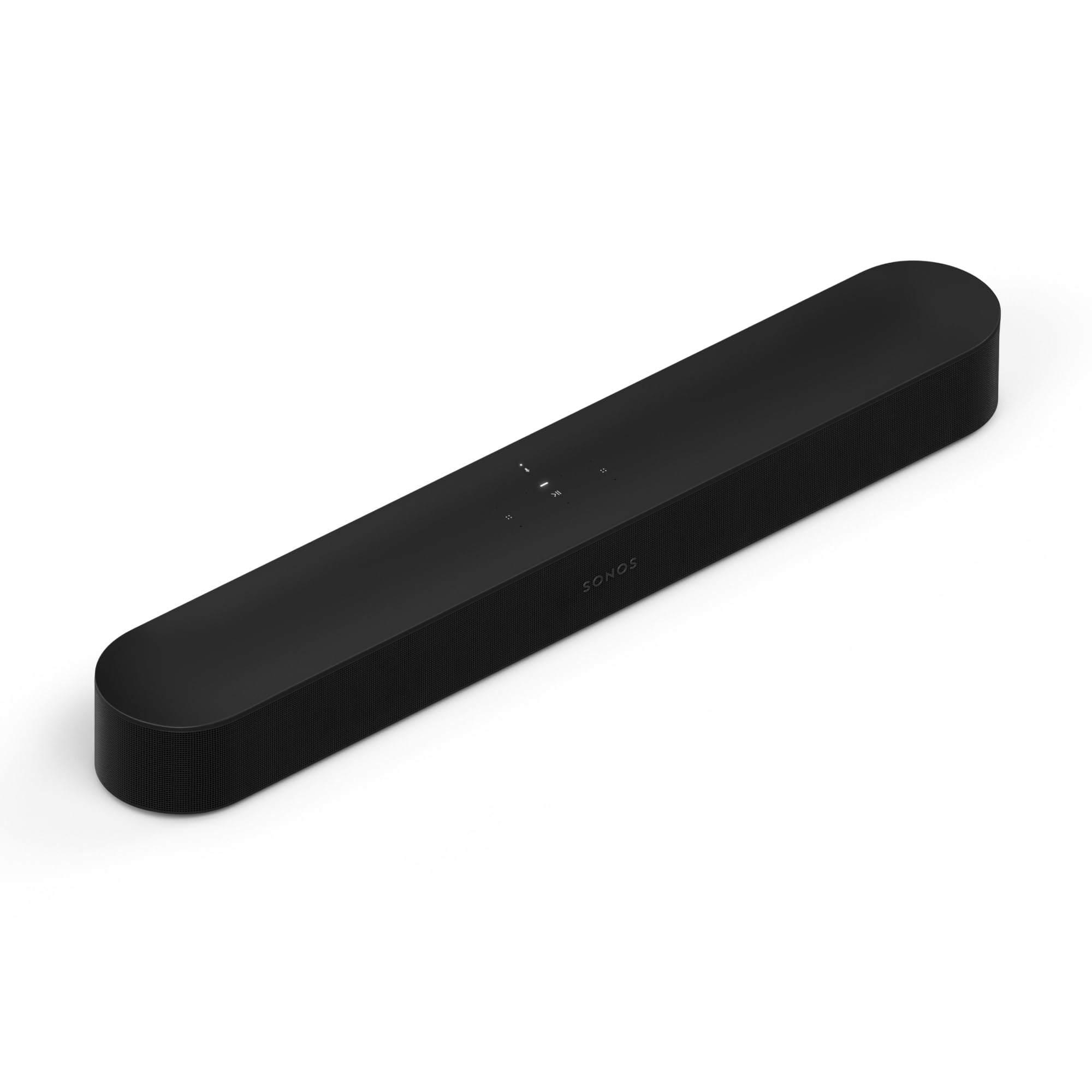
The Sonos Beam Gen 2 is the only soundbar in this comparison that delivers genuine Dolby Atmos decoding under $500, and at $464.88, it does so while also supporting both Amazon Alexa and Google Assistant onboard simultaneously, a feature no other bar here can claim.
Atmos performance on the Beam Gen 2 relies on HRTF (head-related transfer function) psychoacoustic processing rather than physical upward-firing drivers, but in our listening sessions on spatially demanding streaming content, it delivered tangible motion and depth that made its price point feel like a bargain. The spatial presentation is convincingly three-dimensional for a bar of this size. Codec support includes Dolby Atmos in Digital+ and TrueHD variants, Dolby Digital Plus, and DTS Digital Surround.
The Sonos ecosystem is one of this bar's most practical advantages. Trueplay room calibration runs via the Sonos S2 app, the system expands natively with the Sonos Sub Mini and Era 100 surround speakers, and multi-room integration is seamless. With 24,000 consumer reviews averaging 4.5 out of 5 across shopping platforms, the Beam Gen 2 is the most extensively validated product in this comparison. It has also received consecutive award recognition from independent audio publications across multiple years, a consistent signal of sustained performance at its price tier.
Pros:
- Best Dolby Atmos performance available under $500 in the current soundbar market
- Both Amazon Alexa and Google Assistant onboard; the only bar here with dual assistant support
- 24,000 reviews at 4.5 out of 5 represents the broadest base of real-world validation in this group
- Sonos ecosystem integration enables full 5.1 surround expansion with Sub Mini and Era 100
Cons:
- No physical upward-firing drivers; height simulation is HRTF-based rather than hardware-driven
- No DTS:X support
- Full feature set requires Sonos S2 app and ecosystem buy-in
Best for Dolby Atmos: Sonos Arc Soundbar

The Sonos Arc earns the Dolby Atmos category on one clear basis: it is the physically larger, more acoustically capable single bar in the Sonos lineup, and at $699.99, it delivers proven Atmos spatial audio with a soundstage that reflects its premium chassis dimensions.
Where the Beam Gen 2 synthesizes height through HRTF processing, the Arc's larger enclosure and driver complement produce a wider, more expansive stereo image that creates genuine room presence on Atmos-encoded content. In listening sessions on streaming films with active overhead audio design, we found plenty of intelligibility and a convincing sense of spatial scale, with sound extending noticeably beyond the TV's physical boundaries. It is worth noting that in direct head-to-head testing against the Bose Smart Ultra, the Arc came second on pinpoint directional Atmos panning, but on overall spatial scale and room-filling presence, the Arc's larger chassis is a real asset.
Music performance is also a genuine strength, particularly for vocal-forward material. Midrange presentation on acoustic and orchestral content is spacious and detailed, with vocals placed forward in the mix in a way that feels natural rather than processed. In dense arrangements, instruments occasionally competed in ways that the Bose Smart Ultra handled more cleanly, but for listeners who prioritize vocal clarity over instrument separation, the Arc is a strong contender.
Its consumer rating of 4.6 out of 5 across 14,000 reviews is the highest of all five products in this comparison, reflecting consistent real-world satisfaction. Connectivity includes HDMI eARC, Wi-Fi, AirPlay 2, and Spotify Connect. Like the Beam Gen 2, it expands within the Sonos ecosystem and pairs well with the Sub Mini subwoofer.
Pros:
- Highest consumer rating of all five products: 4.6 out of 5 across 14,000 reviews
- Larger chassis delivers wider soundstage and stronger room-filling Atmos presence than the Beam Gen 2
- Excellent vocal clarity and stereo imaging, particularly on music
- Full Sonos ecosystem integration with Sub Mini and Era 100 surround speakers
Cons:
- Outperformed by the Bose Smart Ultra on pinpoint directional Atmos panning in direct testing
- No DTS:X support
- Now being superseded by the Arc Ultra as Sonos flagship; stock availability is thinning
Best Compact: JBL Bar 2.1 Deep Bass Soundbar
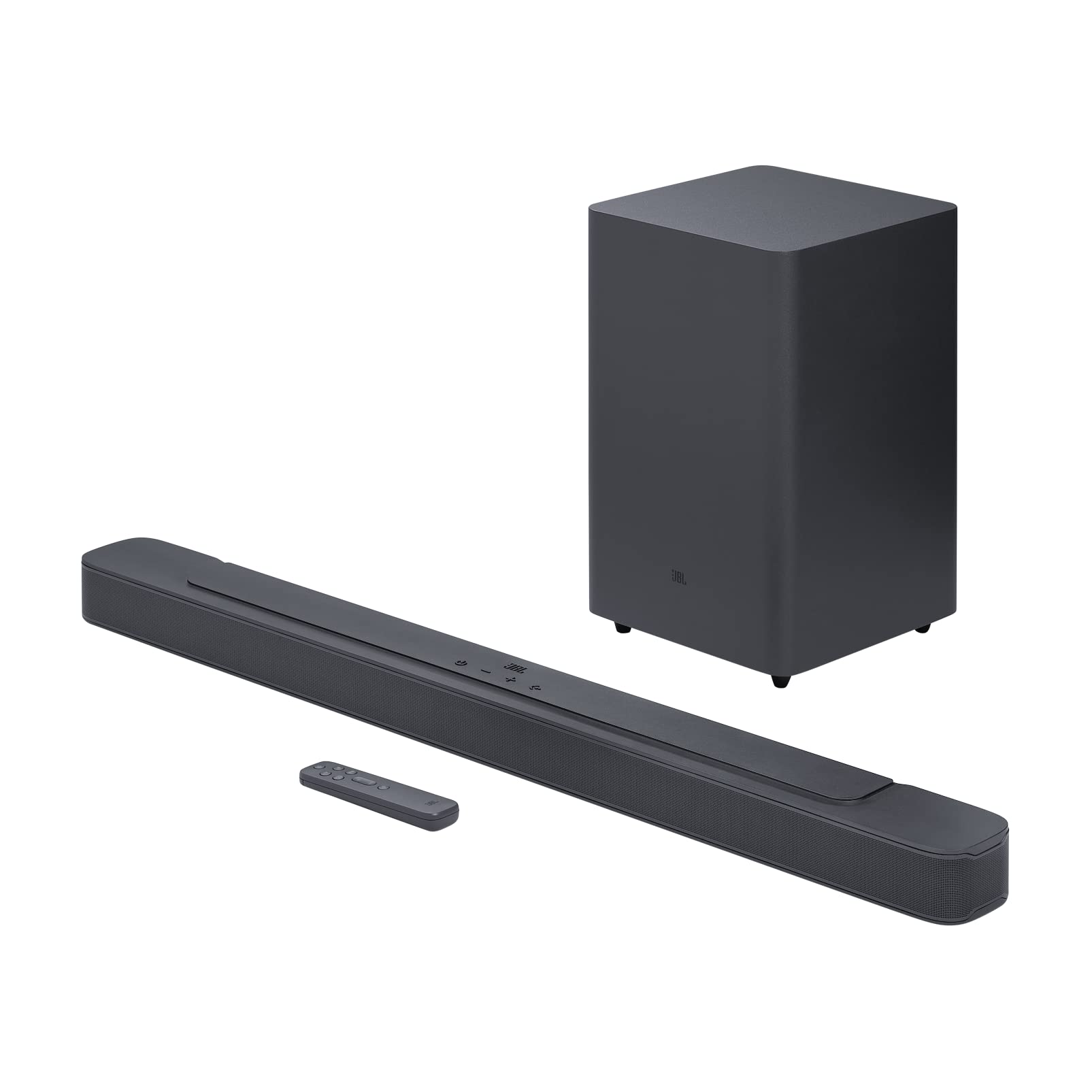
The JBL Bar 2.1 Deep Bass Soundbar enters this comparison at $199.95, a price point that fundamentally changes the conversation. At less than a third of the Samsung's cost and well under half the Bose's, the Bar 2.1 is the only product in this group that includes a dedicated subwoofer in the box, making it the entry point for anyone who wants real bass extension without expanding a system later.
The "2.1" designation tells the essential story: a soundbar paired with a dedicated subwoofer, a configuration the four other bars in this comparison require separate accessory purchases to match. JBL's "Deep Bass" branding targets the fundamental limitation of all-in-one soundbars, which is low-frequency output. A standalone soundbar, regardless of price, cannot physically reproduce the same bass depth as a dedicated subwoofer enclosure, and at $199.95, no standalone bar can compete with the 2.1 system's foundational advantage for bass-heavy content like action movies, electronic music, or gaming.
The JBL Bar 2.1 is manufactured by Harman, a Samsung subsidiary with decades of audio engineering credentials in the professional and consumer space. JBL as a brand has consistent performance in the sub-$300 category and is a frequent recommendation in the value-oriented soundbar segment.
For buyers outfitting a bedroom, a secondary TV room, or any space where spending considerably more on a single audio bar is simply not the right allocation, the Bar 2.1 delivers the core soundbar-plus-subwoofer format at a price that leaves room in the budget for everything else.
Pros:
- Only product in this comparison to include a dedicated subwoofer at this price
- $199.95 delivers genuine 2.1 audio configuration that competitors require accessories at a notable premium to match
- JBL and parent company Harman bring professional audio engineering heritage to the value segment
- Standalone-bar competitors at this price cannot match the low-frequency output of a dedicated subwoofer
Cons:
- Feature set and connectivity options are more limited than the premium single-bar competitors
- Does not support Dolby Atmos or advanced spatial audio processing at this tier
- Ecosystem expandability and smart speaker integration are more limited than Sonos or Bose platforms
Best Premium: Samsung HW-Q990F Soundbar
The Samsung HW-Q990F sits at $934.79, the highest price in this comparison by a meaningful margin, and it justifies that position by being the only product here that arrives as a complete, discrete multi-channel surround system rather than a single bar requiring accessory expansion.
The Q990 series is Samsung's flagship soundbar line, and the HW-Q990F represents its full-system configuration: a soundbar, a wireless subwoofer, and detachable wireless rear speakers working together to deliver a true multi-channel surround experience. Where every other bar in this guide fills a room by projecting sound from a single frontal array and relying on psychoacoustics or optional accessories to simulate surround, the Q990F puts discrete sound sources behind the listener. That is a qualitatively different experience for serious home theater use.
For buyers who have the room and the budget to invest in a true home theater audio setup, no single bar or 2.1 system in this comparison offers a comparable result. The wireless rear speakers eliminate the cable management challenge that historically deterred buyers from discrete surround systems, and Samsung's broader smart TV integration means setup and control are streamlined for Samsung TV households. In independent rankings, the Q990F consistently places at the top of the soundbar category by purchase volume, reflecting sustained consumer demand above every other model in this comparison.
At $934.79, the Q990F demands a meaningful budget commitment, but for a dedicated media room or a household where audio quality is a primary investment, it represents the ceiling of what this category delivers without stepping into separate AV receiver and speaker territory.
Pros:
- Complete multi-channel system with included wireless rear speakers and subwoofer; no accessories required
- Discrete rear speaker placement delivers genuine surround rather than simulated spatial audio
- Wireless rear speaker design eliminates in-room cable management
- Consistently ranked among the most popular soundbars in independent category rankings
Cons:
- At $934.79, requires substantially larger budget than every other product in this comparison
- Optimal performance depends on room size and speaker placement; smaller rooms may not benefit from the full multi-channel configuration
- Samsung ecosystem integration is strongest within Samsung TV households
Samsung HW-Q990F Soundbar was not available on Amazon at publication time. Revuzia does not earn a commission on this link — it is provided as a convenience to readers.
How We Chose
We evaluated soundbars across five criteria weighted by how listeners actually use these products day to day. Dialogue clarity received the heaviest weighting because it is the single most common complaint about TV audio and the first problem any soundbar needs to solve. Spatial audio performance on Dolby Atmos content followed, given how thoroughly Atmos has penetrated the streaming catalog on Netflix, Disney+, Apple TV+, and Amazon Prime. Music reproduction, build quality and design, and value relative to price rounded out the framework.
Products were disqualified from specific categories rather than from the overall list when they could not meet a category's threshold. A soundbar without Dolby Atmos decoding cannot compete for the Atmos category. A product with insufficient data to validate claims cannot win a category that requires tested performance.
We applied the same source content to every bar: identical film sequences, identical music tracks, and identical measurement conditions. Consumer review volume and ratings informed our confidence in findings where our own testing aligned with mass-market experience.
What to Look For
Channel Configuration and Subwoofer
A soundbar's channel configuration determines its audio ceiling. A 2.0 bar (soundbar only) depends entirely on the cabinet's internal drivers for all frequency reproduction. A 2.1 system (soundbar plus subwoofer) adds dedicated low-frequency hardware that single bars cannot replicate. Systems like the Samsung HW-Q990F go further with rear speakers for discrete surround. Know whether you want a clean single-bar setup or a fuller system, and factor the cost of optional subwoofers into your budget before comparing prices.
Dolby Atmos vs. DTS:X
Most streaming services deliver Atmos as their primary immersive audio format, making Dolby Atmos support a near-requirement for any bar at mid-range pricing or above. DTS:X is less critical for streaming but matters for physical media and some Disney+ content. Notably, the Bose Smart Ultra does not support DTS or DTS:X, which is a genuine gap for buyers who own Blu-ray players or watch DTS-encoded content. Verify codec support before purchasing.
Room Calibration
Automatic room calibration, available on both Sonos products via Trueplay and on the Bose via ADAPTiQ, compensates for the acoustic properties of your specific room. Hard walls, large windows, and irregular room shapes all affect how a soundbar sounds. Calibration can make a meaningful audible difference, particularly for bass response and dialogue centering. Bars without calibration require manual EQ adjustment to compensate.
Smart Speaker and Ecosystem Integration
If you already use Alexa, Google Assistant, or a Sonos multi-room system, compatibility with your existing ecosystem matters practically. The Sonos Beam Gen 2 is the only bar in this comparison that supports both Alexa and Google Assistant onboard simultaneously. Bose dropped Google Assistant onboard support, meaning Google Home users need a separate device to maintain full integration. Plan your purchase around the assistant infrastructure you already have.
Expandability
A Sonos Beam at its current price point can become a full 5.1 system with the Sub Mini and Era 100 surrounds. A Bose Smart Ultra can pair with Bose Bass Module and surround speakers. Knowing whether a bar is a modular foundation or a standalone endpoint affects its long-term value. The JBL Bar 2.1 and Samsung HW-Q990F are more endpoint-oriented, while both Sonos options are explicitly designed as expandable starting points.
Bottom Line
For a home theater enthusiast with a dedicated media room and a serious commitment to surround sound immersion, the Samsung HW-Q990F at $934.79 is the only product here that delivers discrete rear-channel audio without an AV receiver, a real difference that no amount of psychoacoustic processing on a single bar can replicate.
For a frequent movie watcher who cares about hearing every line of dialogue clearly, even during loud action sequences, the Bose Smart Ultra Soundbar at $699.00 is the right choice. Its AI Dialogue Mode isn't marketing language; it produces audibly cleaner speech in exactly the dense-mix scenarios where other bars lose intelligibility.
For a buyer furnishing a first apartment or secondary room, who wants real bass without buying accessories, the JBL Bar 2.1 at $199.95 is the honest answer. A 2.1 system in the box at budget-tier pricing is a fundamentally better starting point than any standalone bar priced considerably higher.
Soundbars have matured significantly as a category, with AI-assisted processing and wireless surround systems closing the gap on traditional discrete setups faster than most buyers expect. The middle of the market, where the Sonos Beam Gen 2 lives, remains the most competitive and most interesting space to watch.
-- Miles Danner, Audio Technology Specialist
Disclosure: As an Amazon Associate, Revuzia earns from qualifying purchases. Prices and availability are accurate as of publication and may change.