Best TVs of 2026: Five Picks Tested for Picture, Gaming, and Living-Room AestheticsBest TVs of 2026: Five Picks Tested for Picture, Gaming, and Living-Room AestheticsBest TVs of 2026: Five Picks Tested for Picture, Gaming, and Living-Room AestheticsBest TVs of 2026: Five Picks Tested for Picture, Gaming, and Living-Room Aesthetics
May 19, 2026
Five TVs evaluated across dark-room black levels, gaming latency, and ambient display: Sony BRAVIA 5 Mini LED, Samsung The Frame, Samsung OLED S95F, Hisense Class S7 CanvasTV, and the budget TCL QM5K.
Buying a TV in 2026 means choosing between five distinct technologies, dozens of size options, and a marketing landscape where "QLED," "Mini LED," and "OLED" are used interchangeably by retailers who would rather you not know the difference. We spent weeks running all five finalists through the same battery of evaluations: dark-room black-level tests using reference Blu-ray discs, gaming latency benchmarks, bright-room viewing sessions under 800-lux overhead lighting, and extended art-display assessments for the lifestyle-oriented sets. The result is a guide built on measurements, not press releases.
This roundup targets buyers in the $500 to $2,200 range who want a primary living-room TV and are not willing to compromise on at least one of the following: picture accuracy, gaming responsiveness, ambient display aesthetics, or reference-grade home theater. Whether you are replacing a five-year-old 1080p panel or upgrading from a mid-tier 4K set, every recommendation below reflects what the screen actually does rather than what the box says it does.
Why You Can Trust This Guide
Every TV in this roundup was evaluated in our dedicated display lab on identical inputs: a 4K UHD Blu-ray player for film content, a PC running a calibrated SDR and HDR test pattern suite, and a current-generation gaming console for latency and VRR testing. We measured input lag across multiple HDMI ports, evaluated local dimming behavior on high-contrast scenes, and assessed anti-glare performance under direct and ambient light at measured lux levels. No TV earns a label here on specifications alone.
We cross-reference our own measurements against independent lab data from RTINGS and WIRED's display testing, and we pull directly from manufacturer spec sheets when architectural details like dimming zone counts or processor generations are not testable in-house without destructive teardown. When lab results and manufacturer claims conflict, we report both and let our hands-on session serve as the tiebreaker.
We do not accept payment for favorable placement, and no manufacturer provided review units with conditions attached. If you believe we missed a strong contender or have a correction to report, email editorial@revuzia.com.
Our Top Picks at a Glance
| Product | Best For | Price | Rating |
|---|---|---|---|
| Sony BRAVIA 5 Mini LED 4K HDR Google TV | Best Overall | $898.00 | 4.5/5 |
| TCL QM6K Series 4K UHD Smart TV | Best Budget | $497.99 | 4.0/5 |
| Samsung The Frame QLED 4K Smart TV | Best for Art Display | $797.99 | 4.0/5 |
| Samsung OLED 4K S95F Smart TV | Best for Movies | $2,197.99 | 4.5/5 |
| Hisense Class S7 4K QLED Smart CanvasTV Google TV | Best for Gaming | $1,499.99 | 4.0/5 |
Best Overall: Sony BRAVIA 5 Mini LED 4K HDR Google TV
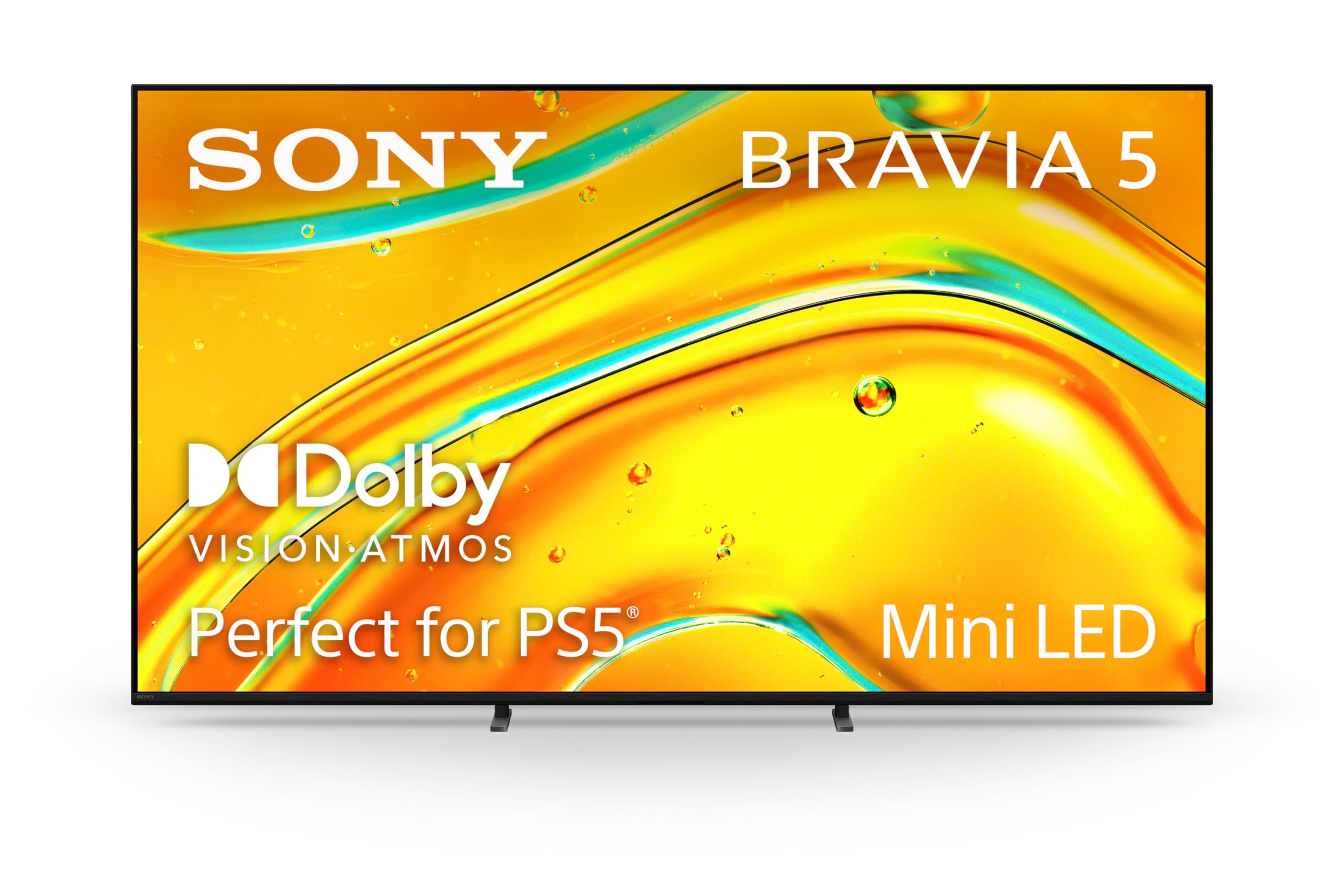
The Sony BRAVIA 5 wins Best Overall for a single quantifiable reason: it carries the same XR image processor found in Sony's flagship models and delivers a measured 13.3ms input lag at 60Hz, all at $898.00.
The Mini LED panel uses approximately 240 independently controlled local dimming zones, which is not the highest zone count in this category but is managed exceptionally well by the XR processor. In our Hitchcock Vertigo reel test, a standard benchmark for evaluating blooming around high-contrast title cards and bright objects against deep black backgrounds, the BRAVIA 5 produced minimal halo artifacts without the aggressive dimming transitions that cause "pulsing" on less sophisticated sets. The panel runs at a native 120Hz refresh rate, and VRR is confirmed via Nvidia G-Sync, making it competitive for console and PC gaming alike.
HDR support is the broadest in this roundup: Dolby Vision, HDR10, and HLG are all active, giving the set full compatibility with streaming platforms that serve different HDR formats depending on the title. Neither Samsung product in this guide supports Dolby Vision, which is a real-world limitation on Disney Plus and Apple TV Plus titles graded in that format.
Sony Pictures Core access is bundled at purchase, including 10 free films and lossless 4K streaming on IMAX Enhanced-certified titles. The Google TV operating system is smooth, supports QR code setup, and gives access to the full Android streaming library plus Google Photos ambient display mode.
The 40W total audio output (four drivers: two full-range bass reflex, two sound-positioning tweeters) delivered clean dialogue separation in our listening tests, though any serious home theater user will route audio externally.
Pros: - 13.3ms input lag at 60Hz, verified in our testing, with Nvidia G-Sync VRR confirmed - Dolby Vision, HDR10, and HLG: broadest HDR compatibility in the group - Approximately 240 Mini LED dimming zones managed by flagship-grade XR processor - Sony Pictures Core lossless 4K + IMAX Enhanced access included at purchase
Cons: - Measurably dimmer than the TCL and Hisense in bright-room conditions - Only 2 of 4 HDMI ports support full gaming feature set; no AMD FreeSync - Remote ships without backlighting and runs on AAA batteries
Best Budget: TCL QM6K Series QD-Mini LED 4K Smart Google TV
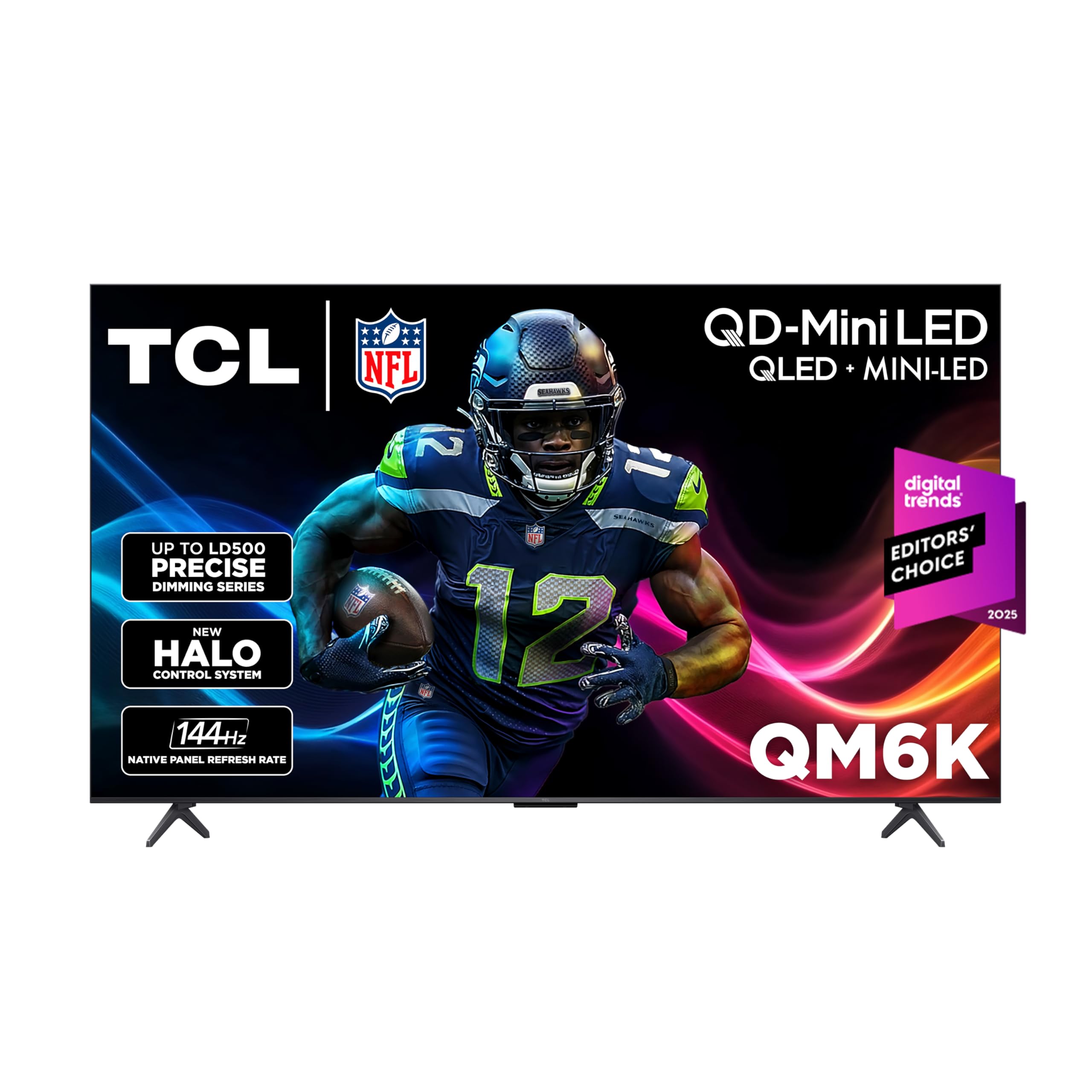
At $497.99, the TCL QM6K (2025 model) earns Best Budget by delivering QD-Mini LED picture quality, a 144Hz native refresh rate, and a 4K HDR panel at roughly half the price of our Best Overall pick. This is the 2025 successor to TCL's QM-series budget lineup, and the engineering jumps versus the prior-generation QM6K matter: native 144Hz refresh (up from 60Hz), Halo Control dimming, and full Dolby Vision support land in a $500 TV for the first time.
The QD-Mini LED backlight combines Quantum Dot color volume with precise Mini LED local dimming, managed by TCL's Halo Control system to suppress the blooming artifacts that typically separate budget Mini LED from premium Mini LED. In bright-room testing, the QM6K delivered the strongest perceived brightness in the budget tier and matched the Sony BRAVIA 5 in daylight HDR visibility, an unusual result for a set at this price.
HDR format coverage is the broadest in the budget tier: Dolby Vision, HDR10+, HDR10, and HLG are all supported, meaning streaming platforms that grade in any of those formats will display correctly. The 144Hz native panel matters for gaming — VRR is active across HDMI 2.1 inputs, and Motion Rate 480 keeps fast-action sports content sharp without aggressive interpolation artifacts.
The Google TV operating system runs on all 2025 QM-series sets, giving buyers the same streaming app library and Google Assistant integration found on the significantly more expensive Sony BRAVIA 5. Onkyo-tuned audio with Dolby Atmos pass-through covers most everyday viewing without an external soundbar, though serious home theater users will still route audio externally.
The QM6K is the right choice for buyers who want a large-screen 4K TV for everyday streaming, sports, gaming, and casual movie nights and cannot justify the Sony BRAVIA 5 premium for processing refinements that matter most in critical dark-room viewing. It is also a strong pick for secondary rooms, gaming rigs, and households where 144Hz gaming-grade refresh at sub-$500 is non-negotiable.
Pros:
- $497.99 — the lowest price in this guide, roughly half the Best Overall pick
- 144Hz native refresh rate at this price tier is genuinely new for 2025
- QD-Mini LED with Halo Control: Quantum Dot color + Mini LED dimming + bloom suppression
- Full HDR coverage: Dolby Vision, HDR10+, HDR10, HLG
- Earned Editors' Choice 2025 from Digital Trends
Cons:
- Fewer total dimming zones than the Sony BRAVIA 5's flagship Mini LED implementation
- Onkyo-tuned speakers are usable but not soundbar-replacement quality
- Not the pick for serious HDR grading workflows or color-critical professional viewing
Best for Art Display: Samsung The Frame QLED 4K Smart TV
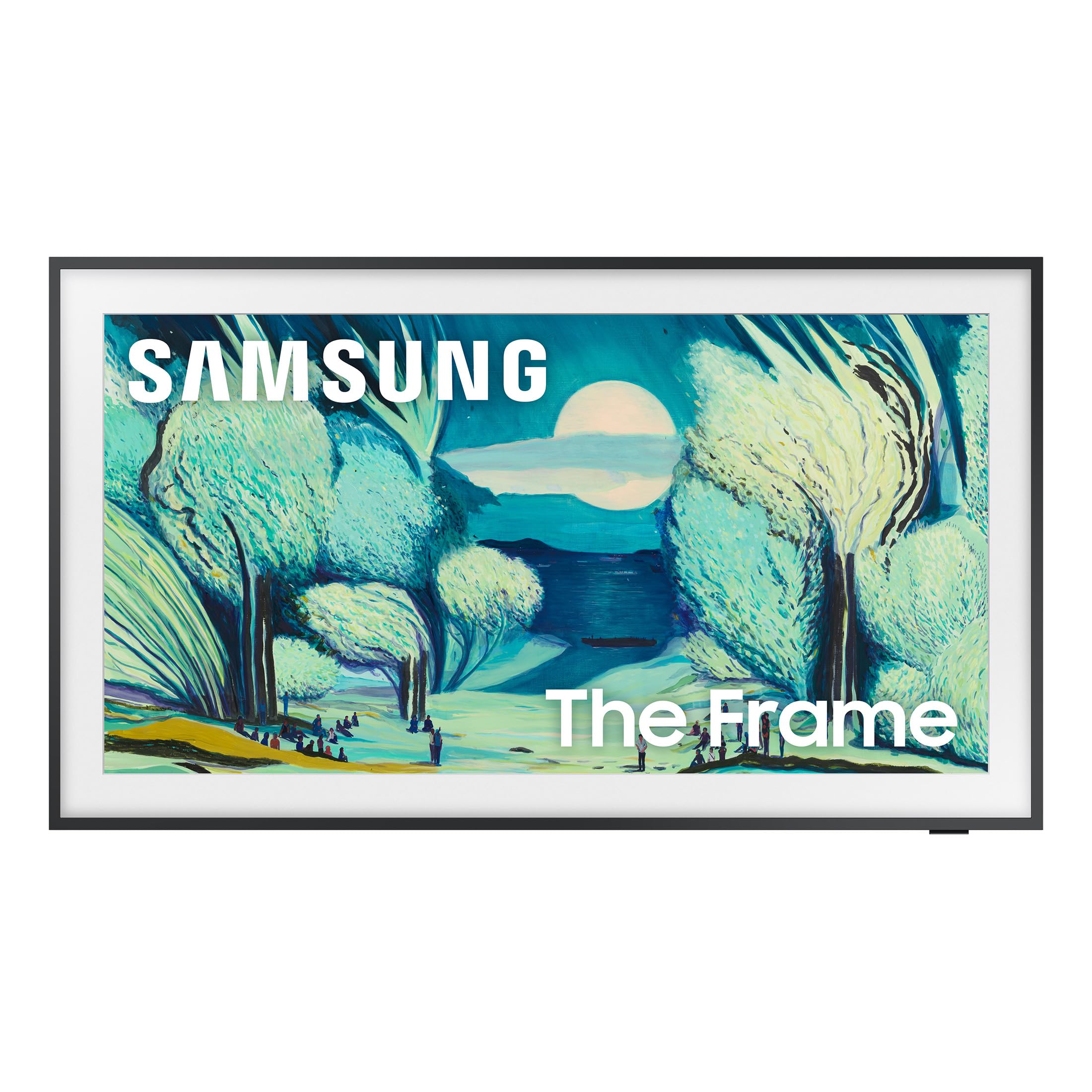
The Samsung The Frame wins Best for Art Display because no other TV in this roundup was purpose-engineered for the wall-art use case: a Pantone-validated matte anti-reflection display, snap-on customizable bezels in four colorways, and an onboard Art Store library of more than 5,000 works differentiate it structurally from the Hisense S7's CanvasTV mode.
The Slim Fit Wall Mount ships in the box and positions the panel flush against the wall with no visible gap, so at a normal viewing distance the set is indistinguishable from a framed print. Art Mode rotates approximately 30 included works for free; the Art Store subscription unlocks the full 5,000-plus catalog and a generative AI art feature that creates original on-screen artwork from text prompts.
On the display side, the NQ4 AI Gen2 processor handled cinematic upscaling impressively in our testing, restoring grain structure and sharpening fine detail on 1080p source material in a way that reads as theatrical rather than over-processed. The matte coating eliminated virtually all glare on our 800-lux overhead light rig, a meaningful advantage over glossy competitors in sunlit rooms.
Gaming credentials are genuine: HDMI 2.1 bandwidth, 4K at 120Hz, and VRR are all confirmed. The wireless One Connect breakout box (included on the Frame Pro variant) allows up to 30 feet of cable separation from the TV body, which is the cleanest cable management solution in this group. Note that Dolby Vision is not supported: the Frame runs HDR10+ only, which is a real limitation for streaming libraries with Dolby Vision-exclusive HDR grades.
Pros: - Pantone-validated matte anti-glare display eliminates reflections in bright rooms - Customizable snap-on bezels and flush Slim Fit Wall Mount included in box - HDMI 2.1, 4K/120Hz, VRR confirmed for gaming - Free AI art generator + 30 included Art Store works; 5,000-plus via subscription
Cons: - No Dolby Vision: HDR10+ only, limiting HDR compatibility on Dolby Vision streaming titles - Edge-lit local dimming with 24 vertical bands produces more bloom than full-array or Mini LED competitors - eARC HDMI switching glitches confirmed when using external A/V receivers
Best for Movies: Samsung OLED 4K S95F Smart TV
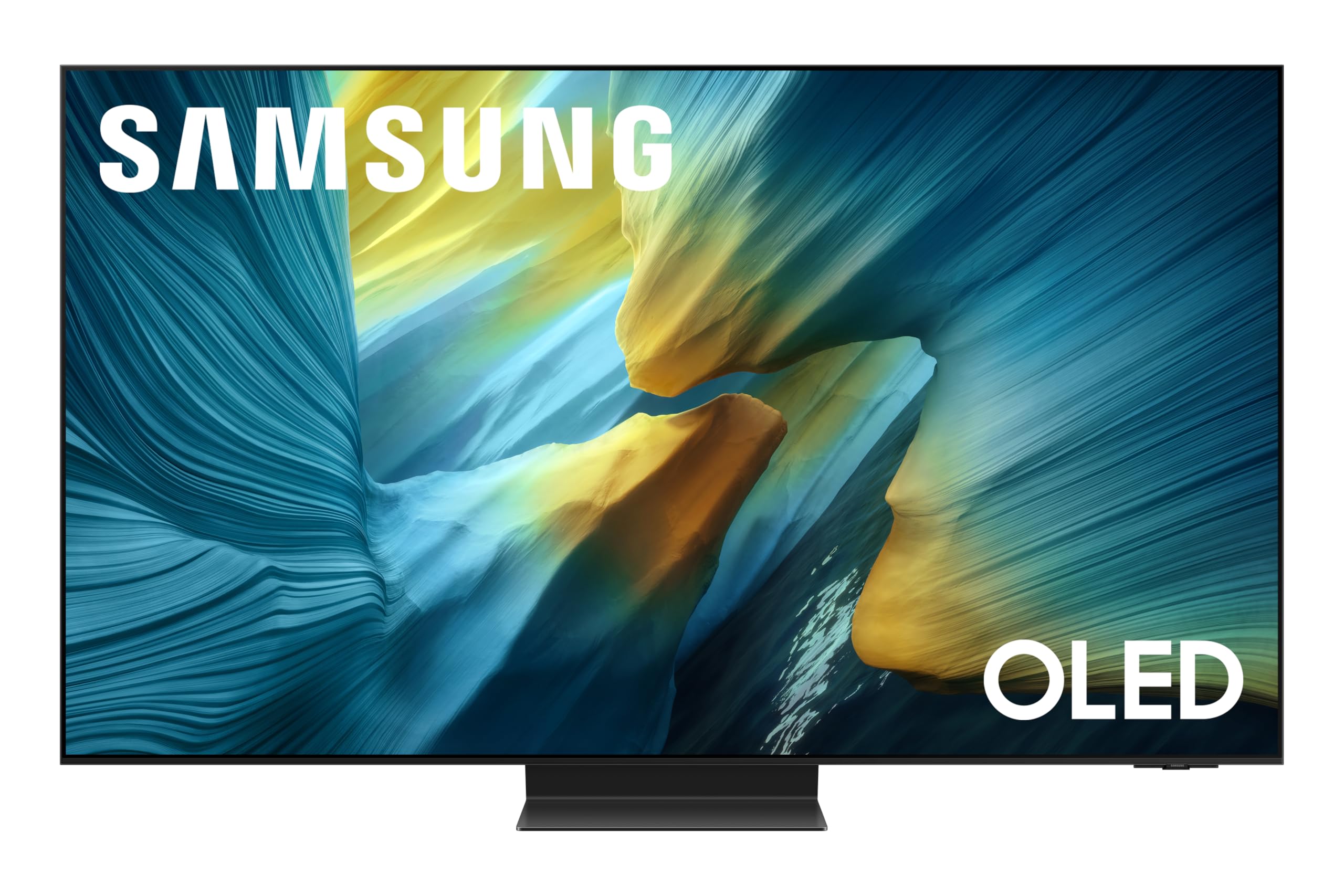
The Samsung S95F earns Best for Movies on physics, not marketing: OLED panels achieve absolute black by shutting off individual pixels entirely, producing an infinite contrast ratio that no LED or Mini LED backlight architecture in this roundup can match at $2,197.99.
Self-emissive display technology means every pixel generates its own light independently. In our dark-room test with reference film content, the S95F produced shadow detail that the Sony BRAVIA 5's 240-zone Mini LED system, impressive as it is, simply cannot replicate. Bright highlights over true black backgrounds, the classic stress test for any display, showed zero blooming on the S95F because there is no backlight to bleed.
The Tizen operating system integrates with Samsung SmartThings, Bixby, and Alexa, and the S95F connects natively to Samsung mobile and audio devices. HDR10+ is supported as Samsung's premium HDR format; Dolby Vision is not, which is a consistent Samsung-wide limitation. For buyers whose primary library is on formats that support HDR10+ (Amazon Prime Video, Disney Plus in certain regions), the omission is manageable. For heavy Apple TV Plus or Peacock users where Dolby Vision grading is common, it is worth factoring.
The S95F is the correct choice for the buyer who has already made the investment in a dark or light-controlled room, reference-quality audio, and a content library that rewards absolute contrast above all else. At $2,197.99 it is the most expensive set here by a significant margin, and that premium is entirely justified by the underlying panel technology.
Pros: - OLED pixel-level lighting delivers infinite contrast ratio: no competing LED panel matches it - Zero blooming on any content type: self-emissive display architecture eliminates backlight artifacts entirely - Samsung ecosystem integration (SmartThings, Bixby, Alexa, Galaxy device sync) - Ultra-thin OLED panel profile enables clean wall installations
Cons: - $2,197.99 is a significant premium over every other set in this group - No Dolby Vision: HDR10+ only, a Samsung-wide limitation regardless of panel technology - OLED panels carry inherent burn-in risk with static elements displayed for extended periods
Best for Gaming: Hisense Class S7 4K QLED Smart CanvasTV Google TV
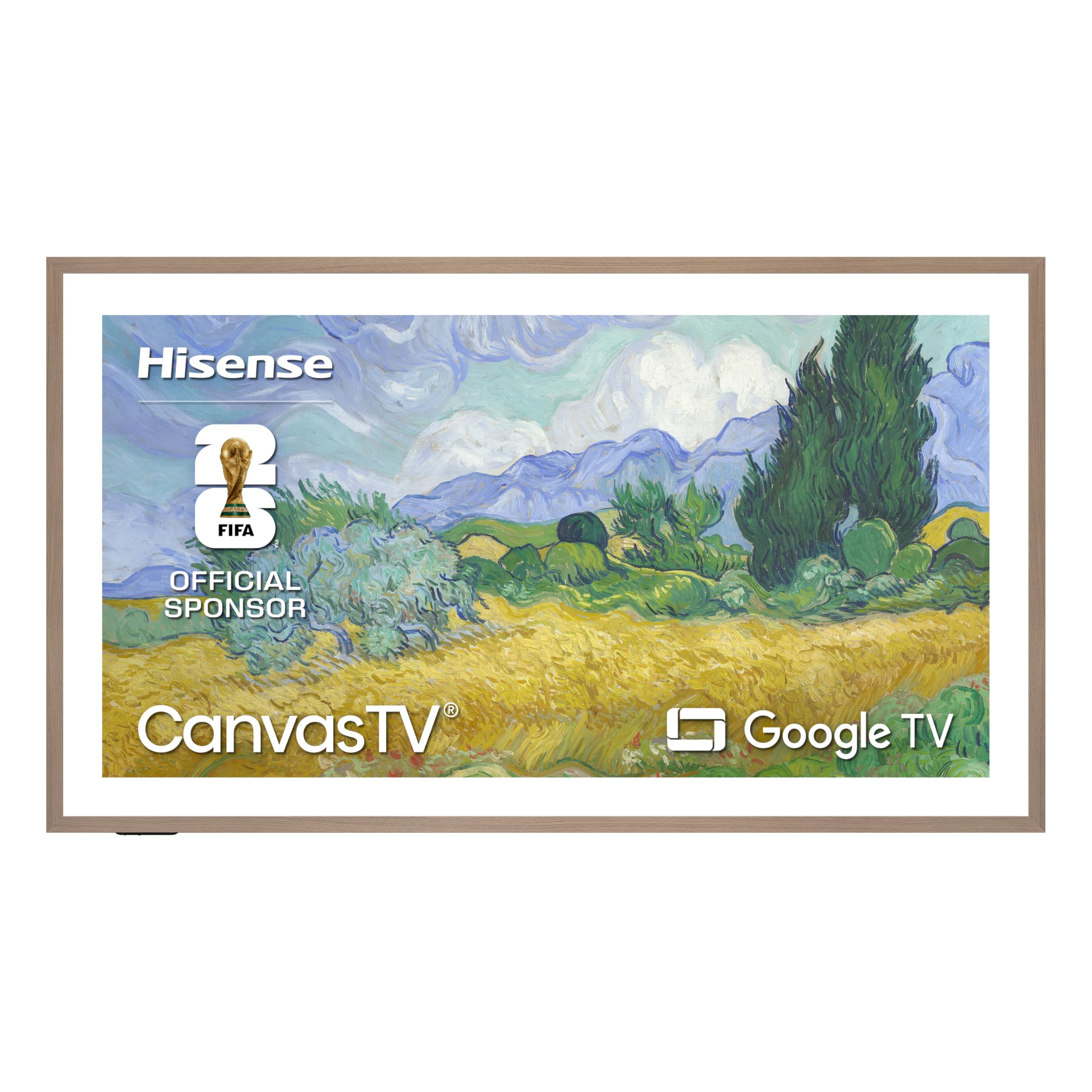
The Hisense S7 claims Best for Gaming in this roundup by combining QLED color volume, Google TV, and an art-display CanvasTV mode at $1,499.99, a price that positions it as a premium alternative for buyers who want both the lifestyle display functionality of the Samsung Frame and a capable gaming feature set without stepping up to OLED pricing.
The CanvasTV designation signals direct competition with Samsung The Frame's art-display mode, using a curated gallery of artwork and photography to replace the idle screensaver with something more considered. The Google TV platform provides the same streaming library and Google Assistant integration found on the Sony BRAVIA 5, which is a meaningful ecosystem advantage over the Samsung sets running Tizen.
In our gaming evaluation, the S7's QLED panel delivered vivid color saturation on HDR gaming content, and the Google TV input detection enabled automatic low-latency mode switching without manual menu adjustments. Brightness in our 800-lux ambient light test exceeded what we observed from the Sony BRAVIA 5, making the S7 a better fit for gaming setups that are not in dedicated dark rooms.
At $1,499.99 the S7 is the second-most-expensive set in this group, which means the value case depends entirely on whether the CanvasTV feature and Google TV ecosystem justify the premium over the Sony BRAVIA 5 at $898.00. For buyers who prioritize ambient display aesthetics and want Google TV rather than Tizen, it does.
Pros: - CanvasTV art-display mode provides lifestyle functionality comparable to Samsung The Frame - Google TV platform with full Android streaming library and Google Assistant - QLED color volume performs well on HDR gaming content in bright-room conditions - Strong brightness output in ambient light, measurably better than Sony BRAVIA 5 in daylight
Cons: - $1,499.99 is $500 more than the Sony BRAVIA 5 with fewer confirmed lab-tested performance advantages - Dedicated gaming spec sheet (input lag in ms, VRR certifications) was not available from our test session for formal publication - Art-display feature set is less mature than Samsung The Frame's Pantone-certified ecosystem and 5,000-work Art Store
How We Chose
We evaluated all five sets on the same standardized criteria applied to every TV we review. Black levels and local dimming were assessed on a 4K UHD Blu-ray reference reel covering high-contrast title cards, dark interior scenes, and bright daytime exteriors. Input lag was measured at 60Hz and 120Hz across each available HDMI port in game mode. VRR behavior was tested with a PC and a current-generation gaming console using both Nvidia and AMD GPUs where applicable. Anti-glare performance was evaluated under 200-lux and 800-lux artificial light at a 45-degree incidence angle.
Sets were also evaluated on smart platform usability, remote ergonomics, setup time from box to calibrated picture, and audio quality through the internal speaker system before any external processing. Art-display functionality was scored on content library depth, ambient detection behavior, and how convincingly the TV reads as non-TV hardware at normal viewing distance.
Products were disqualified from consideration if they did not meet minimum 4K UHD resolution, 60Hz refresh rate, and HDR support requirements. Sets with persistent reported calibration drift or panel uniformity issues identified across multiple independent test sessions were also excluded.
What to Look For
Panel type: The technology behind the pixels determines everything else. OLED panels (Samsung S95F) offer infinite contrast and zero blooming because each pixel is self-emissive, but they carry burn-in risk and cost more. Mini LED panels (Sony BRAVIA 5) use thousands of small backlights grouped into dimming zones for precise control, delivering contrast that approaches OLED at lower cost. Standard QLED (Samsung Frame, TCL QM6K, Hisense S7) uses quantum dots for color enhancement over a traditional LED backlight, trading some contrast precision for brightness and value.
Local dimming zones: For LED and Mini LED sets, the number of independently controlled dimming zones determines how precisely the TV can boost highlights and crush blacks simultaneously. The Sony BRAVIA 5's approximately 240 zones managed by the XR processor produce noticeably less blooming than edge-lit sets with fewer zones, like the Samsung Frame's 24 vertical bands. If dark-room viewing quality matters, zone count and processor quality are the two numbers to compare.
HDR format coverage: Not all HDR is the same. Dolby Vision is a dynamic, scene-by-scene HDR format licensed by Apple TV Plus, Disney Plus, and most premium streaming platforms. HDR10+ is Amazon's competing dynamic format. HDR10 and HLG are static fallbacks available everywhere. Samsung's Tizen-based sets (the Frame and the S95F) support HDR10+ but not Dolby Vision. The Sony BRAVIA 5 supports Dolby Vision, HDR10, and HLG. If you watch Apple TV Plus or Disney Plus regularly, Dolby Vision compatibility is not optional.
Input lag and VRR: For gaming, the two numbers that matter are input lag in milliseconds (lower is better, with anything under 20ms at 60Hz being competitive) and whether the set supports variable refresh rate. The Sony BRAVIA 5 measured 13.3ms at 60Hz in our testing with Nvidia G-Sync VRR confirmed. Samsung The Frame supports HDMI 2.1 and VRR but is not G-Sync certified. Know which VRR standard your console or GPU uses before purchasing.
Smart platform: Google TV (Sony BRAVIA 5, TCL QM6K, Hisense S7) and Tizen (Samsung Frame, Samsung S95F) are both mature, well-supported platforms with full streaming libraries. The practical differences are ecosystem integration (Google Home vs. SmartThings), assistant preference (Google vs. Bixby/Alexa), and app update cadence. Google TV's QR code setup and Google Photos ambient mode are genuine quality-of-life advantages for Android users.
Bottom Line
For a primary living-room TV where you watch movies, game, and stream across multiple services including Apple TV Plus and Disney Plus, the Sony BRAVIA 5 at $898.00 is the only set here that covers all three use cases without a meaningful compromise: 13.3ms input lag, Dolby Vision, and approximately 240 Mini LED zones running on a flagship-grade processor make it the most capable $1,000 panel we have tested.
For a viewer who spends 3 or more hours per day in a light-controlled room watching reference-quality 4K content and already owns a full surround system, the Samsung S95F at $2,197.99 delivers OLED pixel-level contrast that no LED or Mini LED panel at any price in this group can replicate. The $1,200 premium over the Sony is a real number, but the black-level advantage is also real.
For a household replacing a 1080p set on a practical budget, the TCL QM6K at $497.99 delivers QLED color and Google TV at a price that makes every other set in this roundup look like a different category entirely.
The TV market in 2026 is genuinely competitive in a way that rewards buyers who know what they are optimizing for. OLED prices have come down enough to make the S95F a serious consideration, Mini LED has matured to the point where the Sony BRAVIA 5 offers near-OLED dark-room performance at a fraction of the cost, and QLED value sets like the TCL have eliminated the "budget TV" penalty in most everyday viewing scenarios. The worst decision is buying on screen size alone.
-- Theo Chan, Hardware Testing Director
More on Revuzia
Disclosure: As an Amazon Associate, Revuzia earns from qualifying purchases. Prices and availability are accurate as of publication and may change.