Wearable, Vlogging, or Interchangeable-Lens: The Right Camera for Every CreatorWearable, Vlogging, or Interchangeable-Lens: The Right Camera for Every CreatorWearable, Vlogging, or Interchangeable-Lens: The Right Camera for Every CreatorWearable, Vlogging, or Interchangeable-Lens: The Right Camera for Every Creator
August 21, 2026
Content creation now splits into three completely different toolkits, and the gap between them has never been wider. A creator chasing wearable point-of-view footage for TikTok has nothing in common, gear-wise, with someone shooting a scripted YouTube channel from a desk, and
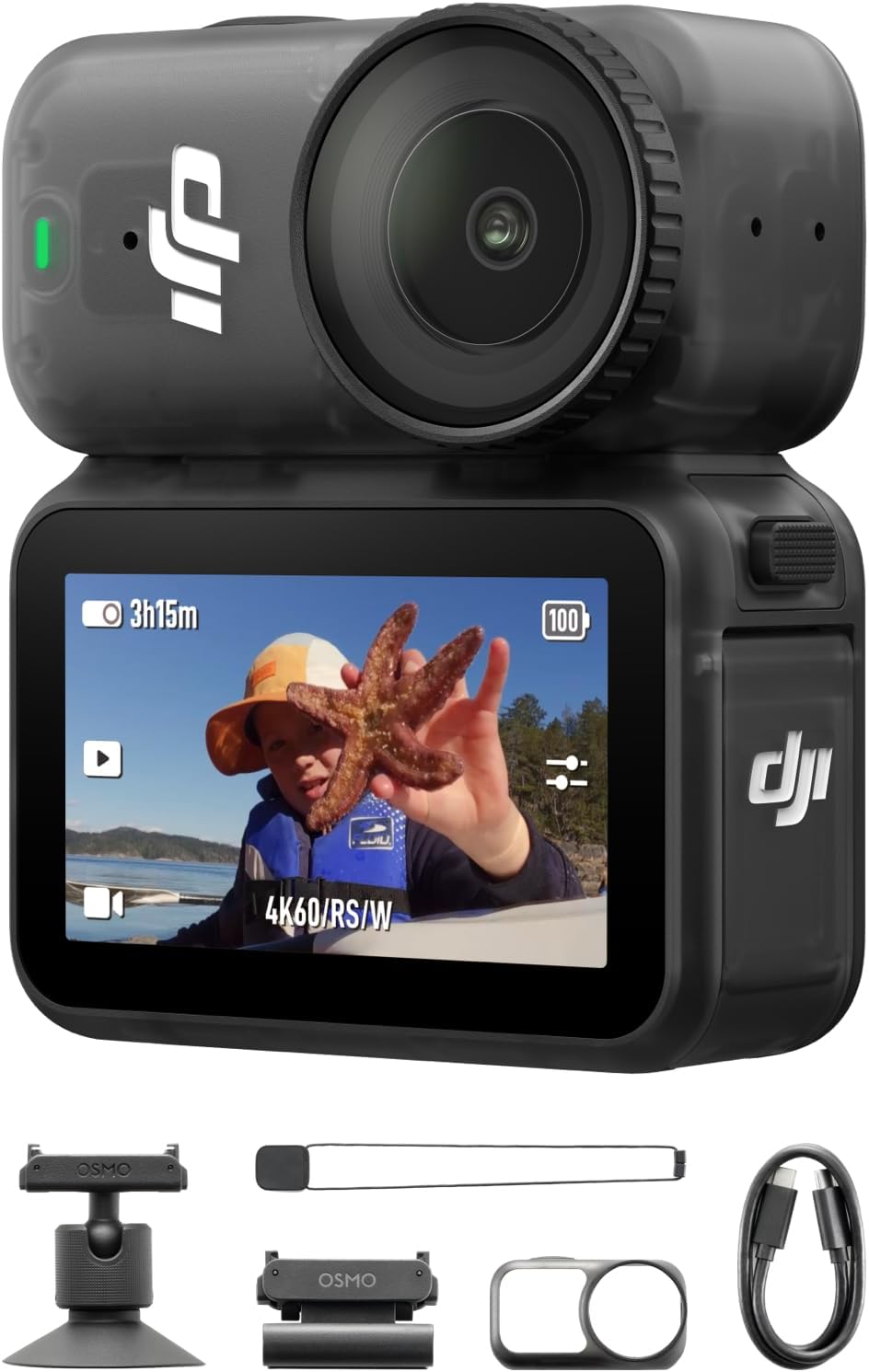
Content creation now splits into three completely different toolkits, and the gap between them has never been wider. A creator chasing wearable point-of-view footage for TikTok has nothing in common, gear-wise, with someone shooting a scripted YouTube channel from a desk, and neither has much in common with a hybrid shooter who wants full manual control and swappable glass. We put three cameras built for three different jobs through hands-on testing: the DJI Osmo Nano Standard Combo, a 52-gram detachable wearable with a 1/1.3-inch sensor and 4K/60fps video; the Canon EOS R10 Mirrorless Camera Content Creator Kit, a full interchangeable-lens system built around a 24.2-megapixel APS-C sensor and bundled with a tripod and stereo microphone; and the Sony ZV-1F, a pocketable fixed-lens vlogging camera built around a wide 20mm equivalent selfie lens and a 1-inch sensor. Prices span $409 to $1,449, a gap wide enough that picking based on price alone tells you almost nothing about which camera will actually work for your workflow.
This guide breaks down which camera fits which use case, based on how each one actually performed once we started shooting with it rather than what its spec sheet promises. We cover video frame rates, sensor size, stabilization, real-world battery life, and thermal limits, the things that determine whether a camera survives an actual shoot day rather than just looking good in a product listing. A camera that overheats twenty minutes into a session or burns through its battery in half the rated time is a different product in practice than the one described on the box, and we tested for exactly that gap. Whether you're strapping a camera to a helmet, filming a sit-down talking-head video, or building a full YouTube production setup with room to add lenses later, one of these three is built for you specifically, and the other two are the wrong tool no matter how good their spec sheets look on paper.
Why You Can Trust This Guide
Every camera in this guide went through hands-on evaluation under Revuzia's standardized testing protocols for the Cameras & Drones category: continuous-recording thermal limits, real-world battery drain at matched video settings, stabilization performance in handheld and outdoor conditions, autofocus reliability on moving subjects, and build quality assessment. We do not accept paid placements, and no manufacturer gets favorable coverage in exchange for providing a review unit. If a camera overheats or a battery falls short of its rated spec, we report it.
We cross-reference our hands-on findings against manufacturer spec sheets and, where available, published lab measurements from independent test outlets to catch any gap between marketing claims and real-world performance. When a manufacturer's rated battery life and our tested runtime disagree, we report both numbers rather than picking the flattering one. Have a correction or a product you think we should test next? Email editorial@revuzia.com.
Our Top Picks at a Glance
Best Overall: Canon EOS R10 Mirrorless Camera Content Creator Kit
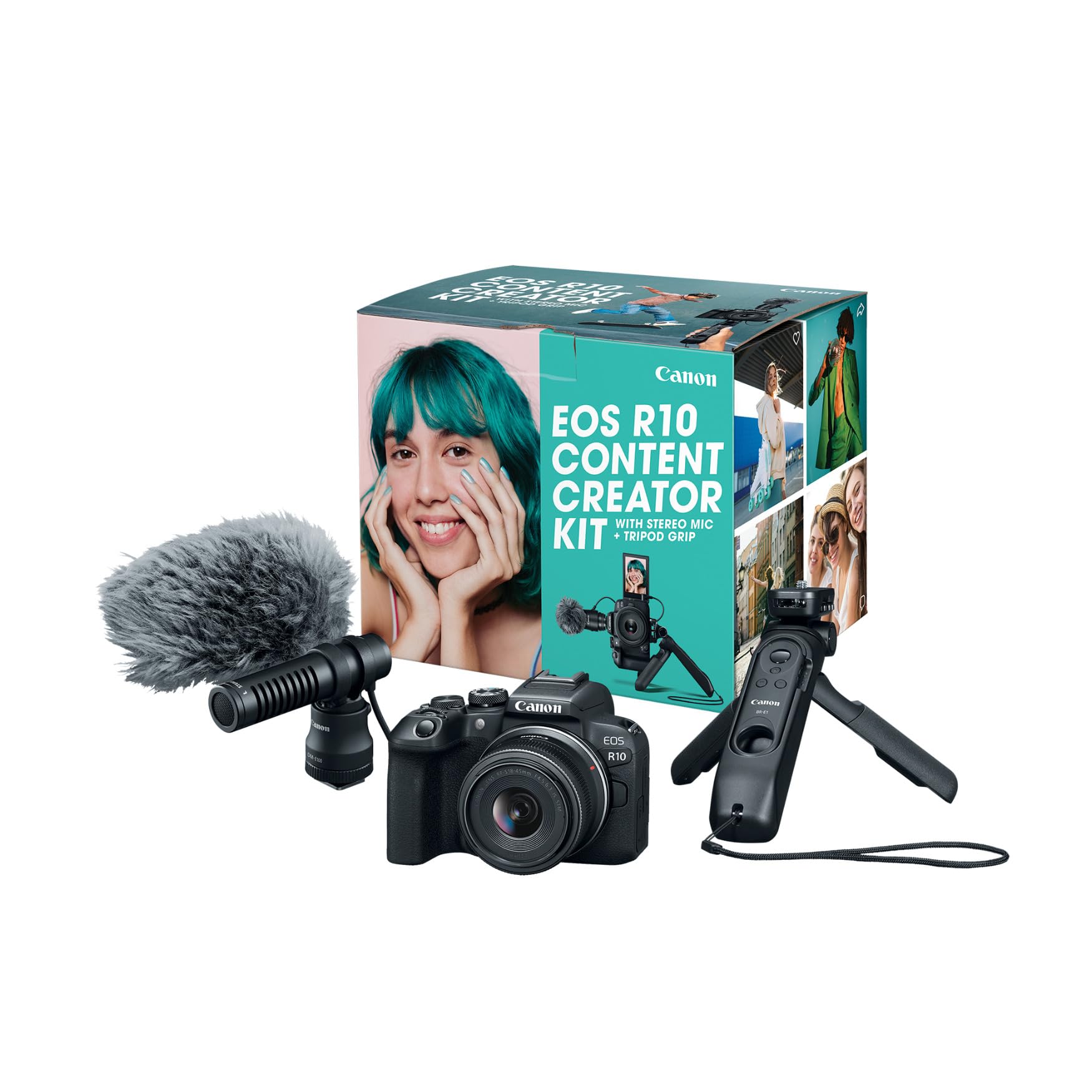
The Canon EOS R10 Content Creator Kit wins on the fundamentals: it's the only interchangeable-lens system in this comparison, and its APS-C sensor dwarfs the 1-inch and 1/1.3-inch sensors packed into the other two cameras here.
Key specs: 24.2-megapixel APS-C CMOS sensor, RF-S18-45mm F4.5-6.3 IS STM kit lens, 4K video capture, and a bundle that includes a tripod and stereo microphone alongside the camera body. In our testing, image quality and dynamic range stood out immediately against the fixed-lens competition, and the body felt notably light in hand for a system with this much capability, with ergonomics closer to Canon's compact Rebel SL line than to a bulky full-frame DSLR.
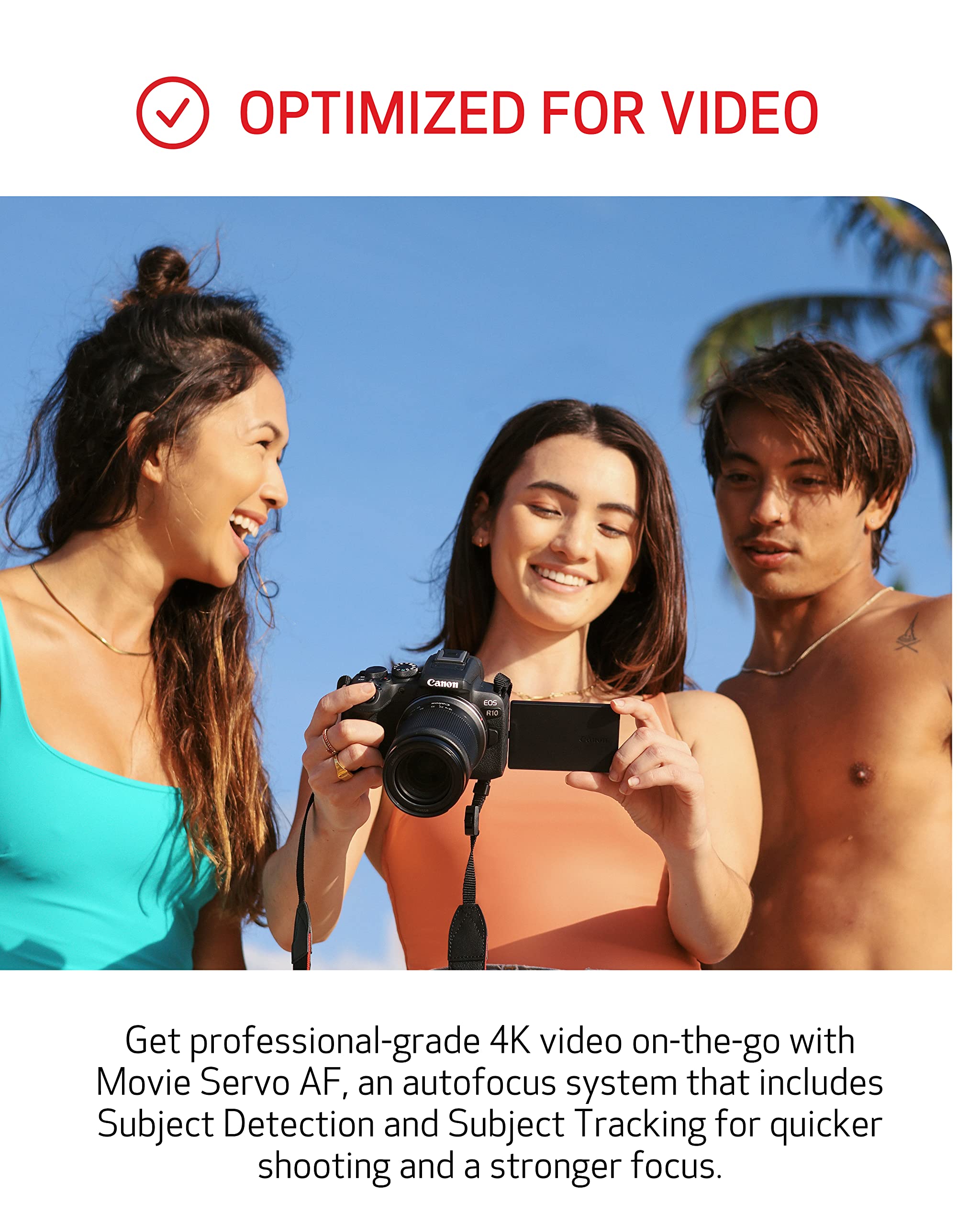
Who should buy this: Creators who plan to grow into different lenses, shoot in genuinely difficult lighting, or want one system that can double for photography and video. The bundled tripod and stereo mic mean you're not shopping for accessories separately just to get a usable setup out of the box, which matters at this price point. At $1,449, the R10 kit costs more than three times what the DJI Osmo Nano runs and nearly three times the Sony ZV-1F, and that gap is the real tradeoff here: you're paying for a lens mount you can grow into, not just a camera for today's project.
Pros:
- Largest sensor in the group by a wide margin: APS-C (24.2MP) versus 1-inch and 1/1.3-inch on the other two
- Only interchangeable-lens system tested, so the kit lens is a starting point, not a ceiling
- Complete out-of-box kit: camera, kit lens, tripod, and stereo microphone included
- Excellent image quality and dynamic range in our hands-on shooting
Cons:
- Highest price of the three by a wide margin at $1,449
- Battery life ran short in our testing, worth planning around on long shoot days
- Lowest crowd-review volume of the group at 52 reviews, versus 2,000-plus for the other two
Best Budget: DJI Osmo Nano Standard Combo
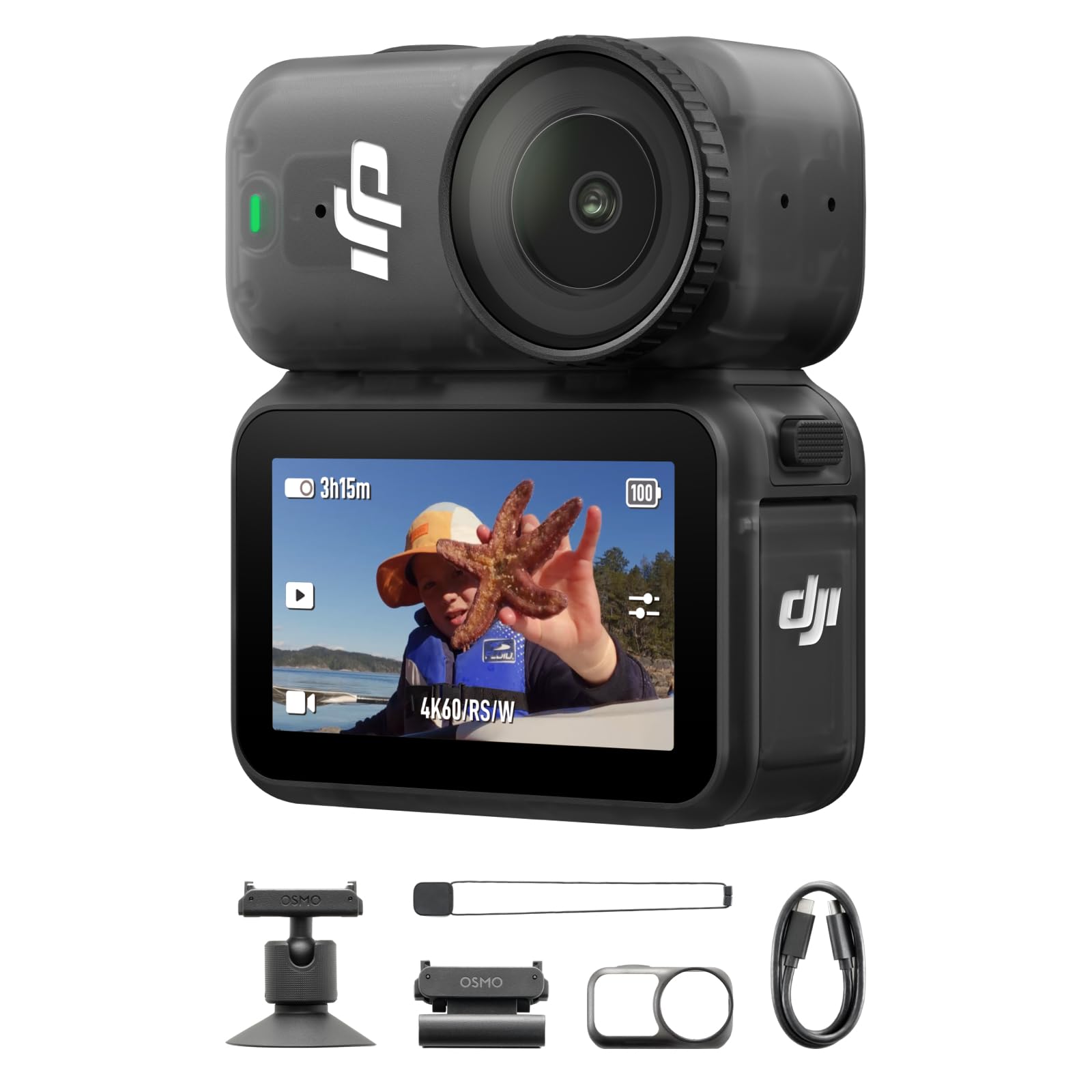
At $409, the DJI Osmo Nano Standard Combo undercuts both competitors while still packing the largest sensor and fastest frame rates of any camera in its wearable class, which is what earns it Best Budget rather than just "cheapest."
Key specs: 1/1.3-inch sensor (larger than the typical 1/2.3-inch found in comparable wearables), a 143-degree fixed ultra-wide lens, 4K video up to 60fps with a 4K/120fps slow-motion mode, 10-bit color with a D-LogM profile and 13.5 stops of dynamic range, and 35-megapixel stills in JPEG, RAW, or both. The camera unit itself weighs just 1.83 ounces (52g) and is rated waterproof to 10 meters. Storage is built in, with 64GB and 128GB configurations available, so there's no microSD card to manage. The body itself is lightweight translucent plastic with a matte finish that resists fingerprints, and it uses a magnetic mount system compatible with existing DJI Action 5 Pro and Osmo 360 accessories, so anyone already in the DJI ecosystem isn't starting from zero on mounts and grips.
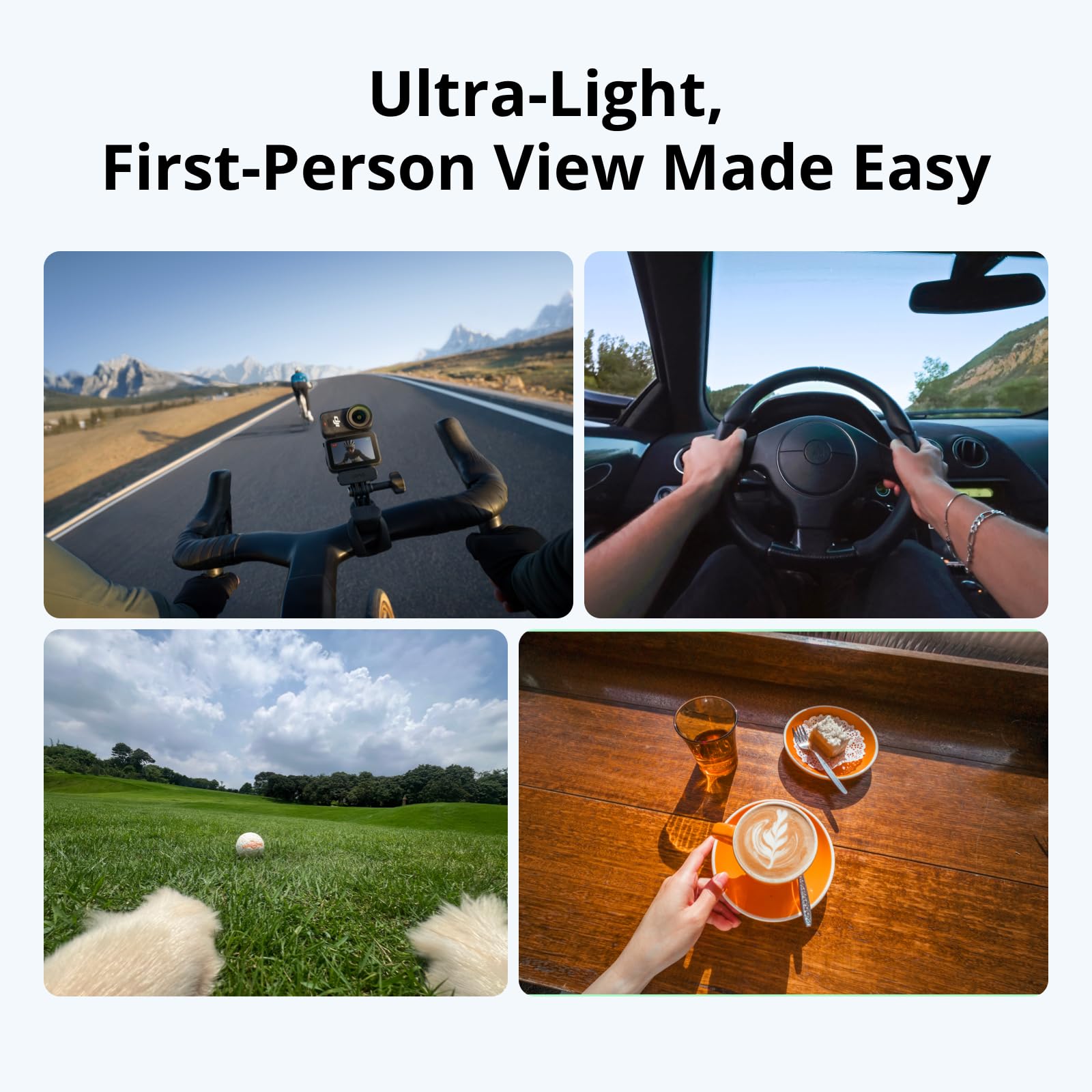
In our testing, the stabilization system handled handheld and action movement well, and reliability was strong with only one freeze across extended use. Real-world battery life told a different story than the spec sheet: at 4K 60p we measured roughly 35 minutes on the camera alone, stretching to about 49 minutes with Endurance Mode enabled and Wi-Fi off, well short of the "up to 90 minutes" 1080p/24p rating on the box. We also hit thermal shutdown after 20 minutes of continuous 4K 50p-or-higher recording. Charging is fast when you do need to top up: 0 to 80 percent in 20 minutes on the camera via the Vision Dock, with a full charge of both the camera and dock taking about 60 minutes.
Who should buy this: Creators prioritizing wearable, POV, or action footage on a budget, especially anyone who wants to clip a camera to a headband or chest mount and forget it's there.
Pros:
- Largest sensor and fastest frame rates (4K/60, 4K/120 slow-mo) in the wearable-camera class
- Only 52g for the detachable camera unit, waterproof to 10 meters
- 10-bit color and 13.5 stops of dynamic range, unusually strong specs for this form factor
- Dual internal storage options eliminate the need for a separate memory card
Cons:
- Fixed ultra-wide lens only, no zoom of any kind
- Real-world 4K60p battery life measured at roughly 35 minutes, well under the spec-sheet claim
- Thermal shutdown after 20 minutes of continuous 4K 50p+ recording
Best for YouTube: Sony ZV-1F Vlogging Camera
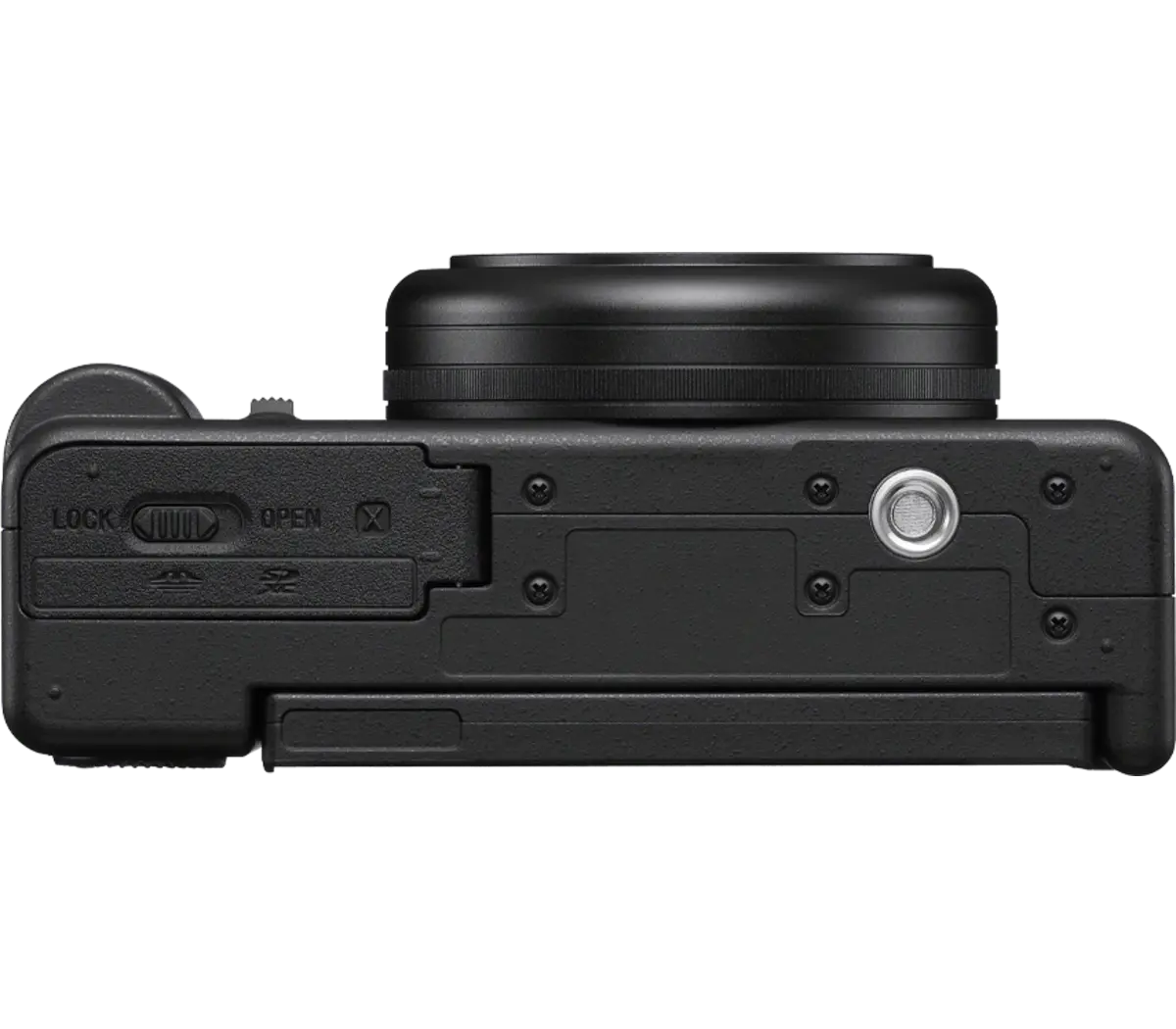
The Sony ZV-1F is purpose-built for exactly one job: sitting across from your face and staying focused on it. Its 20mm f/2 equivalent fixed wide lens and dedicated eye-tracking autofocus make it the camera in this group most tuned for talking-head YouTube content.
Key specs: 20.1-megapixel 1-inch Exmor RS CMOS sensor, a fixed 20mm f/2 equivalent prime lens (no optical zoom, though 5x digital zoom is available in steps), 425-point contrast-detection autofocus, a 3-inch vari-angle touchscreen that flips a full 180 degrees for self-monitoring, and 4K UHD video at up to 30p. In our testing, the eye-tracking autofocus and Face Priority AE combination kept focus locked on the subject's eye through an entire indoor session without dropping it, and framing for a wide, close-in vlog shot came naturally thanks to the 20mm equivalent field of view.
Outdoor performance was the weak spot: colors looked drab and undersaturated in our testing, and because the ZV-1F relies on digital-only stabilization with no optical stabilization, handheld outdoor footage showed a visible jello-like wobble. The polycarbonate body felt solid enough for day-to-day use but noticeably less premium in hand than a metal-bodied camera, and the small rear buttons were tricky to operate for anyone with larger hands, though the rubberized thumb grip made one-handed shooting comfortable. Note that pricing for this camera is sourced from Google Shopping rather than an Amazon-verified listing, so treat the $548 figure as the best available reference point rather than a live Amazon price.
Who should buy this: Solo YouTube creators filming primarily indoors or in controlled lighting, who want reliable face-tracking autofocus and a flip screen without carrying a full mirrorless kit.
Pros:
- Dedicated eye-tracking AF and Face Priority AE kept focus locked on the subject's eye throughout testing
- Largest sensor of any dedicated pocketable vlogging camera in this group, at 1-inch
- Wide 20mm equivalent prime lens frames faces and background naturally for talking-head video
- 180-degree flip touchscreen makes self-monitoring straightforward
Cons:
- Digital-only stabilization produced visibly unstable handheld footage outdoors in our testing
- Fixed prime lens with no optical zoom, only digital
- No RAW photo support and contrast-detection-only autofocus, both downgrades versus its sibling ZV-1
Sony ZV-1F Vlogging Camera is not available on Amazon. Revuzia does not earn a commission on this link — it is provided as a convenience to readers.
How We Chose
Sensor size, frame rate ceiling, real-world battery life, and thermal stability drove our evaluation more than any single spec on a marketing page, because those are the factors that determine whether a camera actually gets through a shoot. We cross-referenced Amazon and Google Shopping verified pricing against manufacturer spec sheets, then layered in our own hands-on testing: continuous-recording thermal checks, matched-setting battery drain tests, autofocus reliability on moving and stationary subjects, and stabilization performance in both handheld and outdoor conditions.
Every product on this list is available through mainstream retail channels, and we verified pricing directly against live retailer listings rather than relying on manufacturer launch pricing, which is frequently outdated within weeks. Where a price came from a marketplace listing rather than a confirmed Amazon purchase, as with the Sony ZV-1F, we say so explicitly rather than presenting it as a verified number. We also weighted real-world testing over marketing copy at every step: a frame-rate spec on a box means nothing if the camera overheats before you can use it, and a battery rating means nothing if it does not hold up in the conditions you actually shoot in.
We disqualified nothing outright in this comparison, but we flagged real limitations rather than smoothing them over. Where source data didn't include a verifiable spec, such as the Canon's exact body weight and dimensions, we left it out entirely rather than estimating or pulling a number from a similar model. The same discipline applied to the Sony ZV-1F's full autofocus point breakdown: if we couldn't verify it, we didn't publish it. That approach means a couple of gaps in this guide, but every number that is here is one we can stand behind.
What to Look For
Sensor size: A larger sensor gathers more light, which translates directly to cleaner low-light footage and shallower depth of field. The Canon's APS-C sensor is meaningfully larger than the 1-inch and 1/1.3-inch sensors on the other two cameras here, and that gap shows up most in dim rooms and mixed lighting. It also affects ISO performance: cameras built around larger sensors can typically push higher ISO settings before noise becomes distracting, which matters most if you shoot indoors under mixed or dim lighting rather than controlled studio conditions.
Fixed lens versus interchangeable-lens flexibility: A fixed lens keeps a camera small and simple but locks you into one field of view forever, whether that's an ultra-wide action lens or a wide-angle selfie lens. An interchangeable-lens system costs more up front but lets you add a telephoto or a wider prime later without replacing the whole camera, which matters most if your content needs are likely to change over the next year or two rather than stay fixed.
Autofocus reliability on faces versus moving scenes: Dedicated eye-tracking and face-priority autofocus modes matter enormously for solo creators who are both the subject and the camera operator, since there's no second person on set to check focus. Contrast-detection-only systems can lag behind hybrid autofocus on fast-moving subjects, so if your content involves movement rather than sitting still at a desk, check which autofocus system a camera actually uses rather than trusting a single spec-sheet point count.
Real-world battery life versus spec-sheet claims: Manufacturer battery ratings are almost always measured under lighter settings, like lower resolution or frame rate, than you'll actually shoot with. Check whether a camera's real-world runtime at your target resolution and frame rate holds up, not just the "up to" number on the box; in our testing, the gap between rated and real-world battery life was one of the largest differentiators between these three cameras.
Thermal limits for long sessions: Small, dense camera bodies can overheat during extended high-frame-rate recording, especially compact wearables that pack a large sensor into a tiny housing. If you're planning long continuous takes rather than short clips, a camera's thermal shutdown point matters as much as its top frame rate, since a camera that can't finish recording a segment isn't actually faster than one with a lower spec-sheet number.
Storage and waterproofing for your use case: Internal storage removes a point of failure for wearable cameras used in action or outdoor settings, while a memory card slot offers more flexibility for higher-resolution work and easier file offloading. Waterproofing ratings only matter if you're actually shooting near water or in bad weather, but they're a meaningful differentiator when you are.
Bottom Line
For a hybrid creator who shoots both photography and video and wants room to add lenses later, pick the Canon EOS R10 Content Creator Kit. Its APS-C sensor and interchangeable-lens mount give it a technical ceiling neither fixed-lens camera here can reach, and the bundled tripod and stereo mic mean you're shooting the same day it arrives.
For a POV or action creator working with a tight budget, pick the DJI Osmo Nano Standard Combo. At $409 it undercuts both competitors while delivering the fastest frame rates and largest sensor in its wearable class, though plan around its roughly 35-minute real-world 4K60p battery life on longer shoots.
For a solo YouTube creator filming indoors who needs reliable face-tracking autofocus more than anything else, pick the Sony ZV-1F. Its eye-tracking AF and 180-degree flip screen are built specifically for that one workflow, at a $548 price that sits between the other two.
The three-way split in this category, wearable versus interchangeable-lens versus dedicated vlogging compact, isn't going away anytime soon, and honestly it shouldn't. Buying based on which camera has the most stars on paper is how creators end up with the wrong tool for their actual workflow. Match the camera to the shoot you're actually doing, not the spec sheet you're most impressed by.
-- Theo Chan, Hardware Testing Director
*Disclosure: As an Amazon Associate, Revuzia earns from qualifying purchases. Prices and availability are accurate as of publication and may change.*