Best Headphones: Five Wireless Pairs From $90 to $479 Compared
November 4, 2026
Choosing headphones means sorting through Bluetooth 6.0 claims, lossless codecs, battery figures that range from 30 to 100+ hours, and price tags that run from $89.95 to $479. A pair that looks like a bargain on paper can turn out to have a harsh treble response, and a flagship
Choosing headphones means sorting through Bluetooth 6.0 claims, lossless codecs, battery figures that range from 30 to 100+ hours, and price tags that run from $89.95 to $479. A pair that looks like a bargain on paper can turn out to have a harsh treble response, and a flagship can sit behind a noise-cancelling system that trails far cheaper rivals. The spec sheet rarely tells you which trade-offs you will actually notice on a commute or at your desk.
This guide covers five wireless headphones across a wide price range: the JBL Tune 780NC, Sennheiser Momentum 5, Nothing Headphone, Bowers & Wilkins PX7 S3 and Marshall Major V. It is written for shoppers who want a clear pick for their situation, whether that means the best sound, the longest battery, the lowest price or a design that stands out. Every product section anchors on published specs and attributed findings, with the strengths and the weak spots laid out side by side, and we say plainly where the evidence is thin.
Why You Can Trust This Guide
Our approach starts with the measures that matter for headphones: battery endurance, noise cancelling, sound character, codec support, microphone setup, comfort and build. The same checklist applies to every Audio product we cover. We accept no paid placement, and we do not give favorable coverage in exchange for review units.
Our second layer is data. We cross-reference (a) published lab measurements and hands-on reviews from independent test outlets, (b) manufacturer spec sheets and retail listings, and (c) retailer customer ratings. When a manufacturer claim and independent testing disagree, we report both so you can weigh them. Battery numbers from manufacturers are labeled as "up to" figures, and measured results are attributed to the independent testing that produced them.
Evidence is not equal across the five pairs, and you should know where. The Marshall Major V has the most measured data, including a tested battery result and scored categories for audio quality and distortion. The Sennheiser Momentum 5, Bowers & Wilkins PX7 S3 and Nothing Headphone have written reviewer verdicts but few lab numbers. The JBL Tune 780NC has manufacturer and retailer data only, with no tested sound or noise-cancelling results that we can attribute to it. Where a label rests on a reviewer's opinion rather than a measurement, the section says so.
Prices in this guide are current retail listings at the time of writing. If you spot an error or want us to consider a pair for a future update, email editorial@revuzia.com.
Our Top Picks at a Glance
Best Overall: Bowers & Wilkins PX7 S3
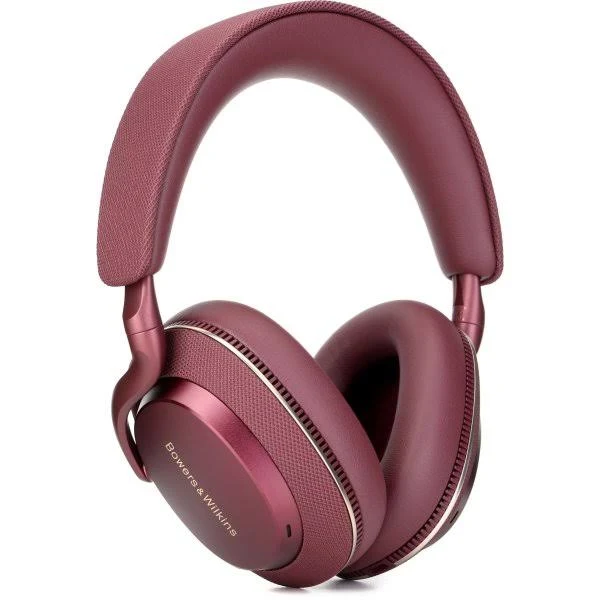
The PX7 S3 earns the top spot because reviewers describe its sound as "utterly gorgeous" and say it plays louder than its predecessors, which is the quality that matters most in any pair of headphones. At $479.00 it is the most expensive pair here. A fair caveat: this pick rests on a reviewer's listening verdict and a strong spec sheet, not on lab measurements, because the visible testing offers no numbers for it.
Key specs. B&W lists aptX Adaptive up to 24-bit/96 kHz, up from 48 kHz, plus aptX Lossless support. Battery is rated up to 30 hours with ANC on. These are the first B&W headphones with a discrete DSP and amplifier, which the manufacturer says improves dynamic range at low volume. Each cup carries two external ANC microphones and one internal microphone, with a voice-pickup microphone on each side. The box includes both a USB-C to USB-C cable and a USB-C to 3.5 mm cable, so wired listening works out of the box. The app offers a 5-band EQ, wear sensor adjustment and an auto-standby toggle.
Design. Ballistic nylon covers the cups and headband, with memory foam and PU-leather pads. Reviewers call the design slimmer, lighter and lower-profile than before, and it ships with a slimmer semi-hard case. Colors are black, canvas white and blue. Spatial audio and head tracking are not supported at review time, although spatial audio was promised for later in 2025.
Who it is for. Buyers who care most about how music sounds, and who have an Android phone or a wired source that can use the higher-resolution codecs.
Pros
- Reviewers describe the sound as the best in this group
- aptX Adaptive up to 96 kHz and aptX Lossless support
- Discrete DSP and amplifier, plus both USB-C and 3.5 mm cables in the box
- Slim, light and comfortable, with ballistic nylon construction
Cons
- Noise cancelling "isn't quite the best", and reviewers rate Bose's ANC higher
- Up to 30 hours of battery is the shortest rating among the pairs with a stated figure
- Apple devices cannot use aptX Adaptive or aptX Lossless
- Folds flat only, the buttons are small, and there is no spatial audio or head tracking
Best Budget: JBL Tune 780NC
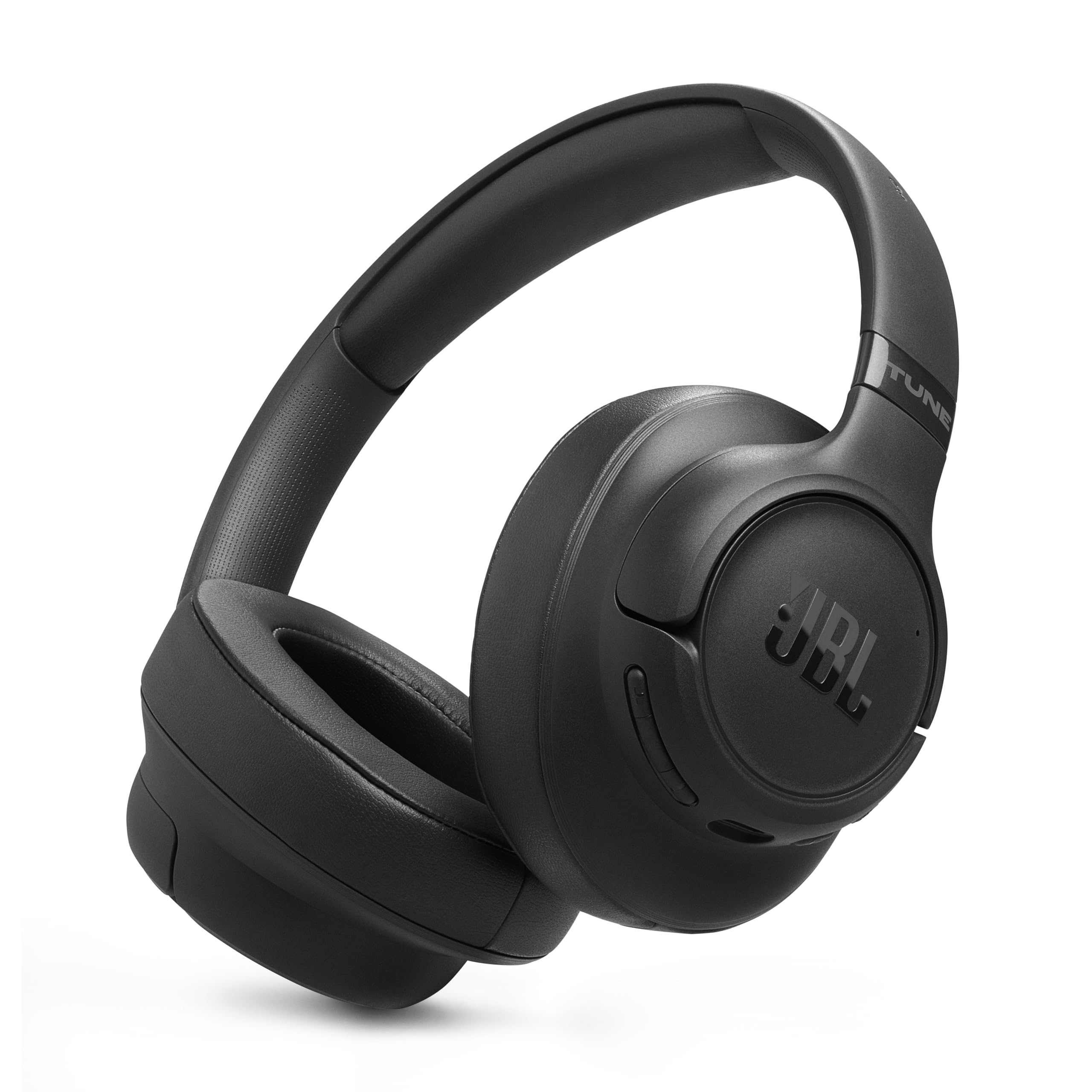
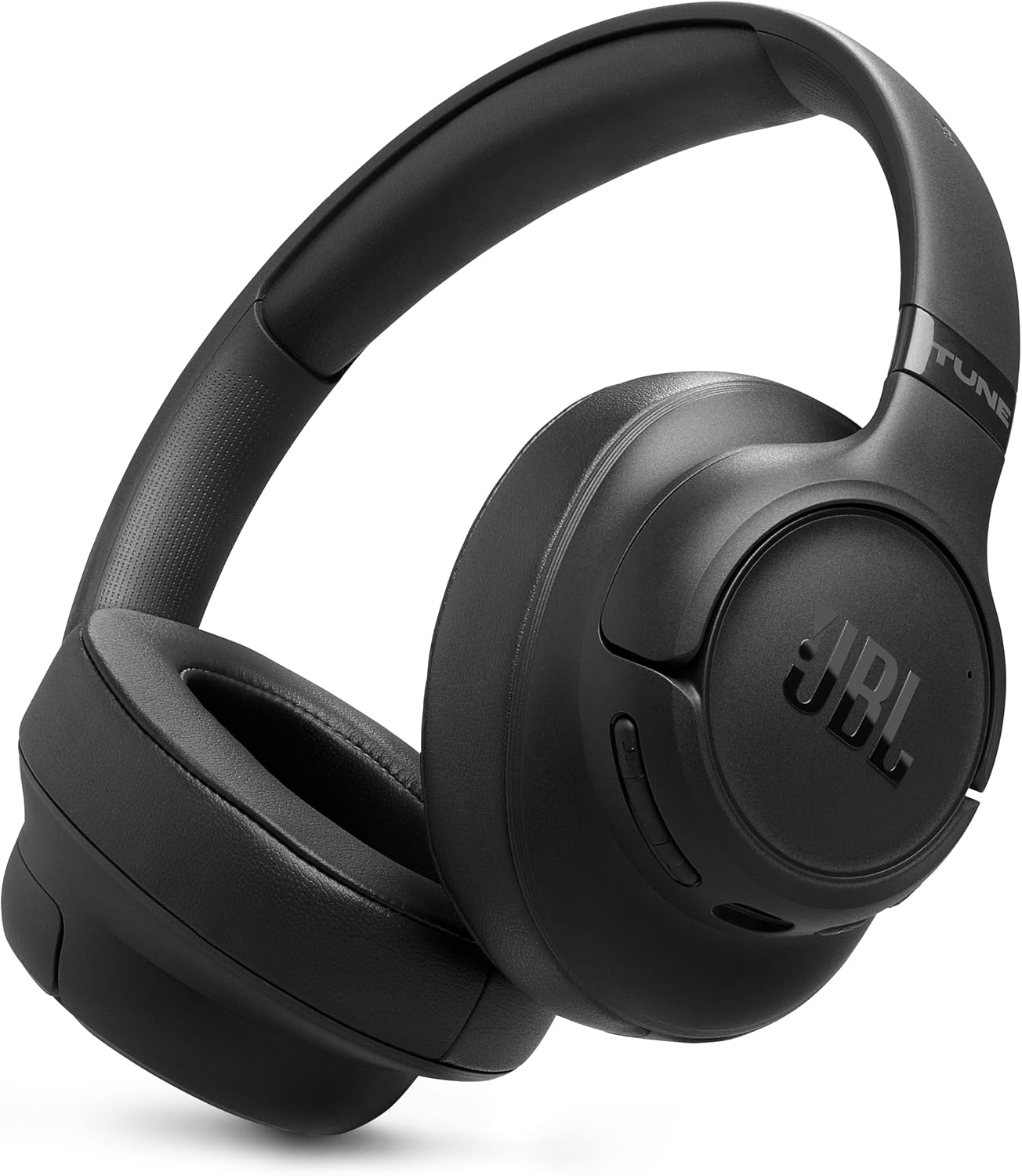
The Tune 780NC is the best budget pick because $89.95 gets you adaptive noise cancelling, Bluetooth 6.0 and a battery rated up to 50 hours with ANC on. Be aware of what is missing: reviewers found no tested sound or noise-cancelling results for this model, so the pick rests on price and specs.
Key specs. JBL lists 40 mm drivers with JBL Pure Bass Sound and JBL Spatial Sound. Battery is rated up to 76 hours with ANC off and Bluetooth on, or up to 50 hours with ANC on. A 5-minute quick charge gives up to 5 hours of playback, and a full charge takes about 2 hours. Bluetooth 6.0 supports multipoint, so two devices stay paired at once. Two microphones with beamforming handle calls. Hi-Res audio works through the included USB-C to 3.5 mm cable.
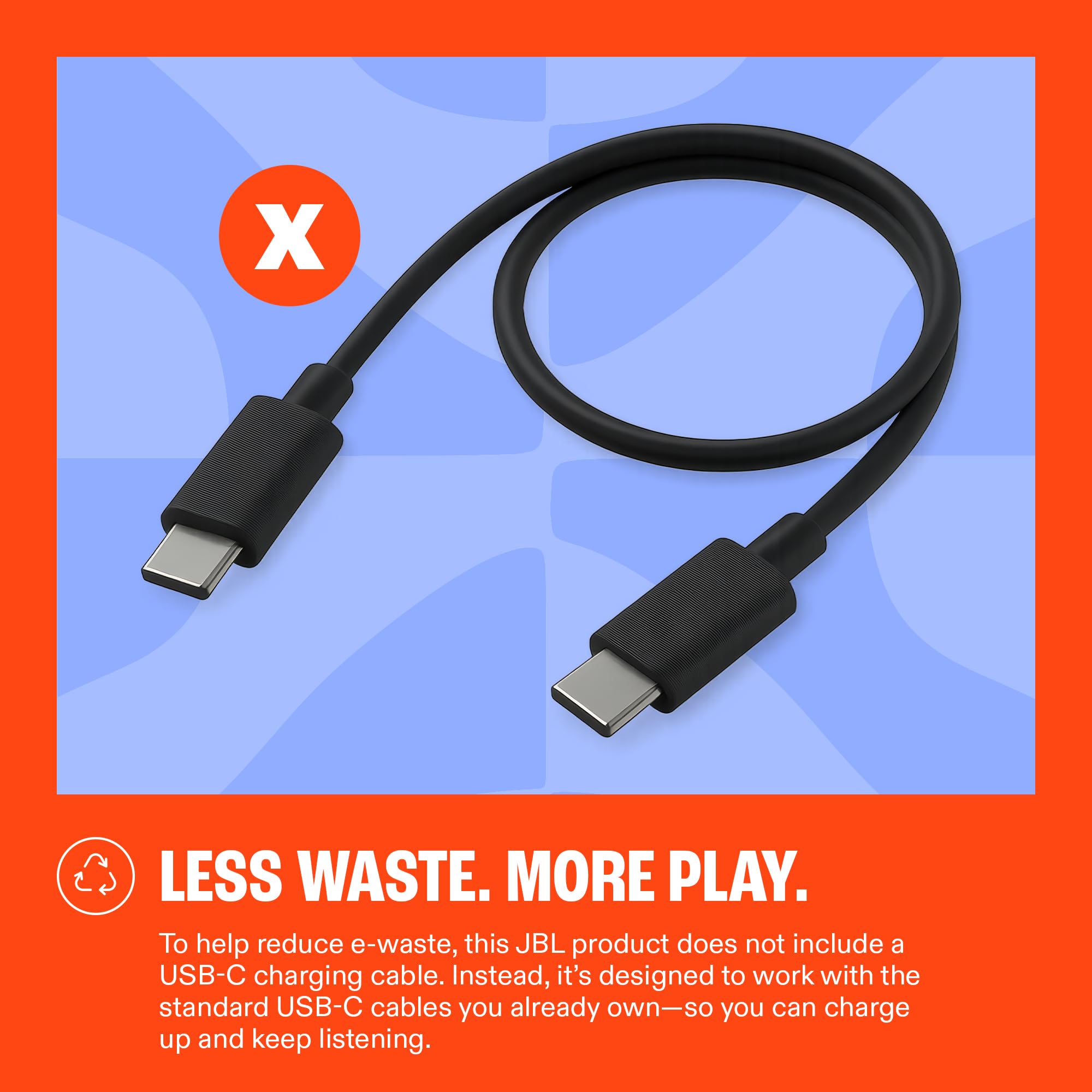
Design. The soft over-ear cups and padded headband are built for long sessions, and the headphones fold flat for a bag. Adaptive Noise Cancelling comes with a Smart Ambient mode for hearing your surroundings. Black is the confirmed color. The charging cable is not included, so plan on using one you already own.
A note on reviews. Written reviews you may find under a similar name often cover JBL's pricier Live 780NC, a different model. We did not apply any of that model's findings to the Tune 780NC.
Who it is for. First-time buyers, students and anyone replacing a worn-out pair who wants ANC, multipoint and big battery numbers without spending triple digits.
Pros
- Adaptive Noise Cancelling with Smart Ambient at $89.95
- Up to 50 hours with ANC on, and up to 76 hours with it off
- Bluetooth 6.0 with multipoint for two devices
- Wired Hi-Res listening through the included USB-C to 3.5 mm cable
Cons
- No tested sound or ANC data that we could attribute to this model
- The charging cable is not included
- Only one confirmed color, black
- Battery figures are manufacturer claims, not measured results
Best for Repairability and Battery: Sennheiser Momentum 5
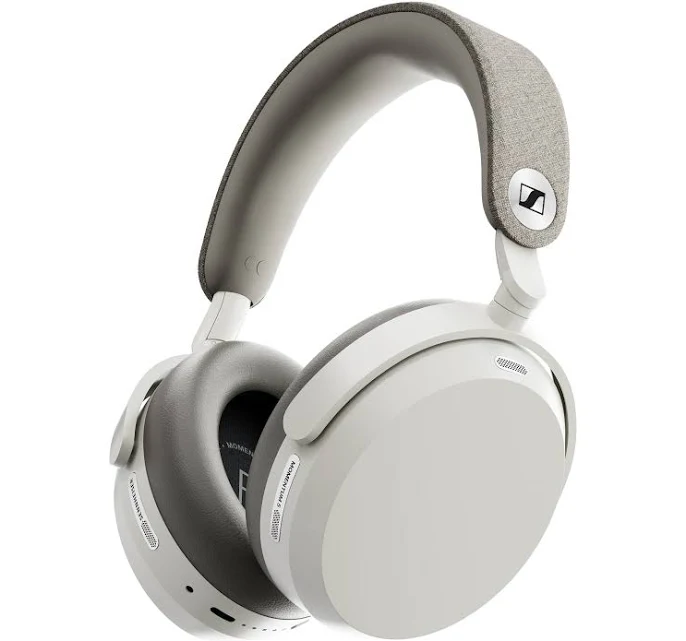
The Momentum 5 does not win on noise cancelling, and we want to be direct about that: independent reviewers called its ANC "pretty poor." What it does offer is a 57-hour battery rating, the longest among the over-ear pairs here, and a battery that is user-replaceable with a screwdriver. Combined with comfort and sound that reviewers praised, that earns it this label.
Key specs. Sennheiser rates battery at up to 57 hours. Weight is 10.2 oz, which reviewers call middleweight: 3 oz lighter than the AirPods Max 2 and 2 oz heavier than the Sony XM6 and Bose QC Ultra 2. Bluetooth 5.4 ships out of the box, with a confirmed future firmware update to 6.0, and multipoint is supported. It comes with a hard-shell zip carry case, a brown fabric headband and touch controls. Reviewers found sound "mostly excellent", with electronic music sounding "particularly fantastic".
Performance notes. One reviewer wore them for 7 hours without needing a break, and walked out of their apartment and through the front door before the connection dropped. The same reviewer rated sound as better on the B&W Px8 S2, AirPods Max 2 and Sony XM6, but noted the Momentum 5 saves up to $400 against those flagships.
Price context. The $399 MSRP is $50 above the Momentum 4's $349. For comparison, the reviewer lists the AirPods Max 2 at $549 with 20 hours of battery, and the Sony XM6 at $459 with 30 hours.
Who it is for. Listeners who want long battery life, a repairable design and very good sound at $399.95, and who will use ANC mostly as a light layer rather than a primary feature.
Pros
- Up to 57 hours of battery, the longest rating among the over-ear pairs here
- User-replaceable battery
- Comfortable enough for a 7-hour session, per one reviewer
- Hard-shell zip case included, with multipoint and a Bluetooth 6.0 update confirmed
Cons
- Reviewers called the ANC "pretty poor"
- Treble can rattle or distort in some genres
- Touch controls annoyed the reviewer, and the on-cup volume adjusts a hidden level, not the device volume
- No IP rating, and the design is plain
Best for Style and Durability: Nothing Headphone
The Nothing Headphone stands out because it carries an IP52 rating, which is unusual for over-ear headphones. Reviewers noted that the Sony XM6 and Bose QC Headphones have no IP rating at all, and the B&O H95 is IP54. At $199.00, it adds dust and splash protection to a distinctive design. The review we relied on covers the Nothing Headphone (a), which matches the $199 listing, and its battery.
Key specs. Controls use a roller for volume, which cycles the two ANC settings when held, and a paddle for track skip and calls. Reviewers found the two easy to tell apart by feel. On compatible Android phones it supports LDAC, which one reviewer found cleaner than AAC in a direct comparison, and Google Fast Pair. It also offers ChatGPT integration and AI features with Nothing phones. Colors are black, white, pink/white and pink/yellow.
Price context. At $199 it matches the Soundcore Space One Pro, and sits above the Sony WH-CH720N at $179. It costs well below the Bose QC Headphones at $359 and the Cambridge Melomania SE P100 at $299.
Who it is for. Style-focused buyers, gym-goers who want some splash resistance, and Android users who can take advantage of LDAC.
Pros
- IP52 dust and water resistance
- Roller and paddle controls that are easy to tell apart
- LDAC and Google Fast Pair on Android
- Four color options, including pink/yellow
Cons
- Some frequency ranges sound "a little muddy" in heavy genres
- One reviewer did not care for the Bluetooth sound quality, and it is not aimed at audiophiles
- Fit is "a touch clampy"
- LDAC works on Android only, and we have no battery or ANC results to report
Best for Battery Life: Marshall Major V
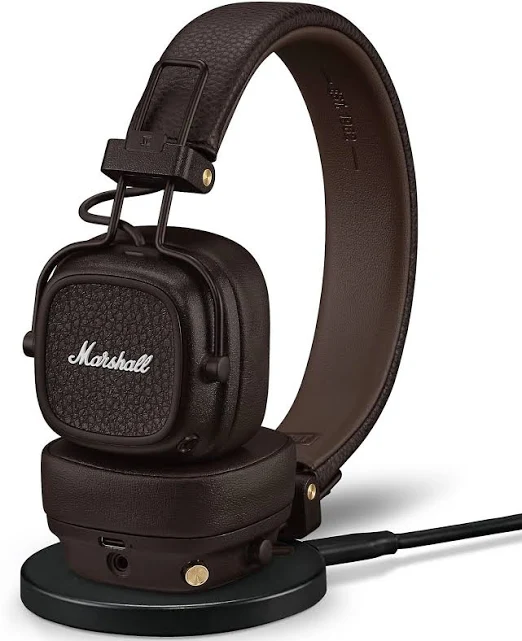
The Marshall Major V is the endurance pick: Marshall claims 100+ hours of battery, and independent testing recorded a result of about 92 hours, with a battery life score of 9.9/10. It is the only battery claim in this guide backed by a test. At $129.99, it is also the most thoroughly measured pair here. Note that this is an on-ear design, not over-ear, and it does not have noise cancelling.
Key specs. The Major V weighs 187 g and has plush pads of roughly 3/4 inch. Bluetooth 5.3 adds SBC, AAC and LC3 support, where the Major IV supported only SBC. Multipoint is supported, and the headphones also work wired through a 1 m coiled 3.5 mm cable. The 3.5 mm port can pass audio to a second pair of headphones. The driver is rated at 106 dB/mW sensitivity and 32 Ohm impedance, so it does not need an amp. Controls include a gold joystick-style button and a customizable M-button. The Marshall Bluetooth app has a 5-band EQ with presets.
Sound. Independent testing scored audio quality at 3.7/5, below average, with timbre at 4.0, immersiveness at 3.9 and distortion at 2.6. Reviewers describe the stock sound as treble-heavy, so plan on using the EQ.
Other scores. Editor scores were Design 8.0, Features 8.0, Connectivity 7.5, Comfort 7.5, Portability 7.0, Durability 6.5 and Value 6.0.
Who it is for. Casual listeners and commuters who hate charging, want to tweak the sound in the app and do not need ANC.
Pros
- About 92 hours measured in independent testing, with 100+ hours claimed
- Multipoint, LC3 and a 5-band EQ at $129.99
- Light at 187 g with plush pads
- Works both wired and wireless
Cons
- No ANC, no IP rating and no carrying case
- Stock tuning is treble-heavy and distortion scored 2.6
- Light clamping force means the headphones shift when you shake your head
How the Five Compare
Battery. Claimed figures are 100+ hours for the Marshall, 76 hours (ANC off) or 50 hours (ANC on) for the JBL, 57 hours for the Sennheiser and 30 hours for the B&W. The Marshall is the only claim confirmed by a test, at about 92 hours.
Sound. The B&W leads on reviewer opinion, described as "utterly gorgeous". The Sennheiser is "mostly excellent". The Nothing is "a little muddy" in heavy genres. The Marshall is treble-heavy and scored lowest on distortion at 2.6. The JBL has no tested sound data. None of these verdicts comes from side-by-side measurements of all five, so treat the ranking as a reviewer-based guide rather than a lab result.
Noise cancelling. No pair here earns a strong ANC verdict. The Sennheiser's is "pretty poor", the B&W's "isn't quite the best", and the Marshall has none. The JBL and Nothing have ANC, but we have no tested results for either. If isolation is your top priority, none of these five comes with evidence that it leads the field.
Price. Listings run from $89.95 for the JBL to $129.99 for the Marshall, $199.00 for the Nothing, $399.95 for the Sennheiser and $479.00 for the B&W.
Design and codecs. The Nothing has the only IP rating, IP52. The B&W has the premium materials and aptX Lossless, and the Sennheiser has the replaceable battery. The Nothing offers LDAC on Android, the JBL has Bluetooth 6.0 and the Marshall has LC3.
How We Chose
We started with the criteria that matter most in wireless headphones: sound quality, noise cancelling, battery life, comfort, codec and connection support, call microphones and build. Price mattered too, but only in relation to what each pair delivers.
We then compared manufacturer specs against independent reviews and measured results where they exist. Battery figures from manufacturers are presented as "up to" numbers, and tested numbers are credited to the independent testing behind them. Where a pair had strong evidence on one trait and weaker evidence on another, we assigned the label the evidence best supports. That is why the Sennheiser is labeled for repairability and battery rather than noise cancelling, and why the JBL's label rests on price and specs.
Every pair needed to be a true wireless headphone with Bluetooth, a real feature set for its price and a clear reason to exist. We kept the group to headphones only, with no earbuds or speakers. Pairs were not disqualified for lacking a feature, but missing ANC (Marshall), a plain design (Sennheiser) or short battery (B&W) are reflected in the cons. We also weighed the spread of prices, from $89.95 to $479.00, so there is a sensible choice at each step.
Our confidence in this set is moderate. The available reviews were incomplete, so some results, such as the JBL's sound and ANC and the Nothing's battery and ANC, are simply not available. We would rather say so than fill the gap with a guess.
What to Look For
Sound quality and codecs. Sound is the reason to buy headphones, and the codec decides how much of a recording reaches your ears. aptX Lossless and LDAC can deliver more detail on Android, while Apple devices rely on AAC and cannot use aptX Adaptive or aptX Lossless. Check which codecs your phone supports before paying for one.
Noise cancelling. ANC quality varies widely. Reviewers rate some premium pairs' ANC as merely adequate, so a higher price does not guarantee quiet. If you ride trains or fly often, prioritize pairs with strong isolation over extra features, and look for tested results rather than a feature checkbox.
Battery life. Manufacturer numbers are "up to" figures, and they change with ANC on or off. The JBL, for example, drops from 76 hours to 50 hours when ANC is on. Compare the ANC-on rating, and look at quick-charge support. The range here runs from up to 30 hours to 100+ hours.
Comfort and fit. Weight, clamping force and pad material decide whether you can wear a pair for hours. Over-ear cups spread pressure, while on-ear designs like the Marshall sit on the ear itself. Light clamp helps comfort but can hurt stability, as the Marshall shows, while a tighter fit like the Nothing's can feel clampy.
Connectivity and extras. Multipoint lets you stay paired to a laptop and phone together. Wired inputs help with flights and critical listening. An IP rating, a carry case and a repairable battery can matter more than they seem.
Bottom Line
For an audiophile with an Android phone or wired source, pick the Bowers & Wilkins PX7 S3: reviewers praise its sound, and its aptX Lossless and 96 kHz support, discrete amplifier and included 3.5 mm cable back that up on paper. Know that its ANC is not top-tier and that the pick rests on reviewer opinion more than measurements.
For a first-time buyer on a tight budget, pick the JBL Tune 780NC: up to 50 hours with ANC on at $89.95 is hard to beat on paper.
For a buyer who wants a long-lasting, repairable pair, pick the Sennheiser Momentum 5: 57 hours and a user-replaceable battery, with the caveat that its ANC is weak.
For a gym-goer or outdoor user who wants some protection from sweat and splashes, pick the Nothing Headphone: its IP52 rating is the only one in this group.
For a frequent commuter who hates charging, pick the Marshall Major V: about 92 hours of tested battery means very long gaps between charges, as long as you accept no ANC and a treble-heavy stock sound.
The wireless headphone market offers real choices at every price, but no pair does everything, and noise cancelling in particular is still a weak spot even at premium prices. Match the pair to the problem you actually have.
-- Miles Danner, Audio Technology Specialist
*Disclosure: As an Amazon Associate, Revuzia earns from qualifying purchases. Prices and availability are accurate as of publication and may change.*