BigQuery Graph Goes GA, Folding Graph Databases Into the WarehouseBigQuery Graph Goes GA, Folding Graph Databases Into the WarehouseBigQuery Graph Goes GA, Folding Graph Databases Into the WarehouseBigQuery Graph Goes GA, Folding Graph Databases Into the Warehouse
September 1, 2026
Google Cloud has taken BigQuery Graph out of preview and into general availability, wiring ISO-standard Graph Query Language (GQL) (a query language purpose-built for traversing relationships between records, not just filtering rows) directly into its data warehouse, with no
Google Cloud has taken BigQuery Graph out of preview and into general availability, wiring ISO-standard Graph Query Language (GQL) (a query language purpose-built for traversing relationships between records, not just filtering rows) directly into its data warehouse, with no separate database and no data movement required to run it. The more consequential shift is not the query syntax itself: it is that an entire category of infrastructure enterprises have run in parallel to their warehouse for two decades, the standalone graph database, just lost its reason to exist for any team already living inside BigQuery. For companies currently maintaining that second system to answer "how is X connected to Y" questions, that is a budget line and an integration headache collapsing into one platform at once.
What's new
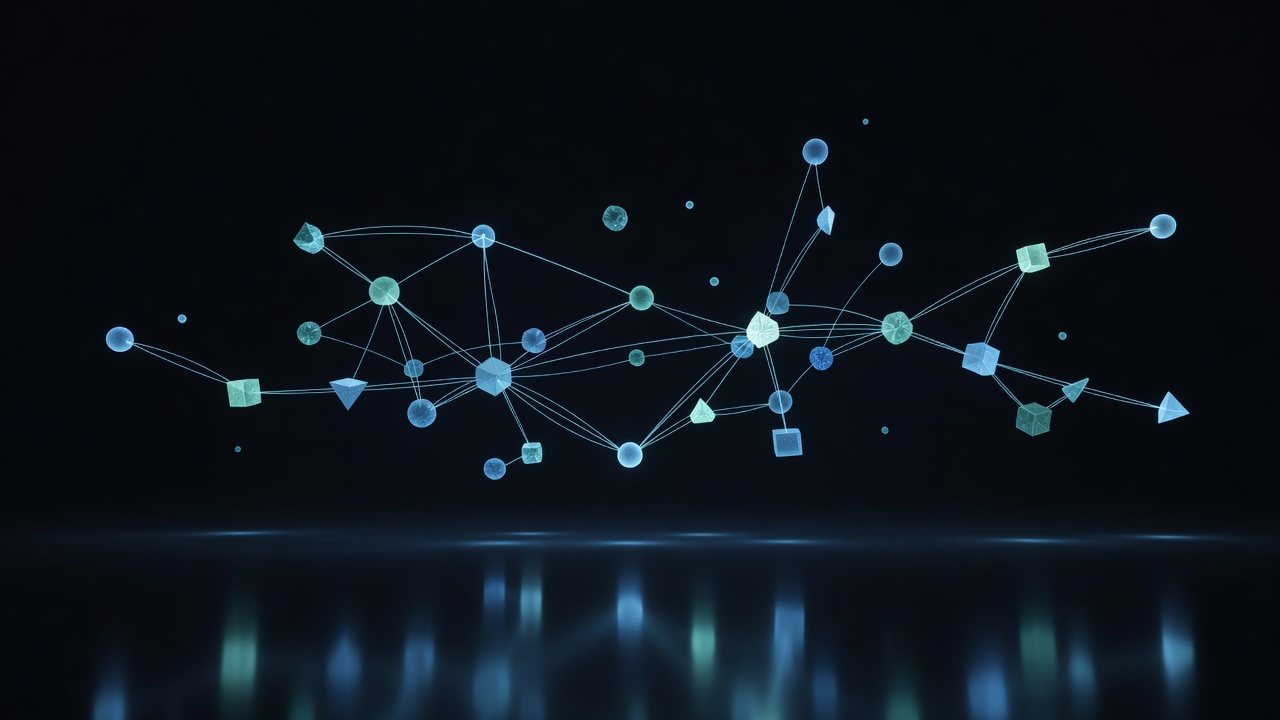
Today's announcement moves BigQuery Graph from its earlier preview status to full general availability inside Google Cloud's BigQuery data warehouse. The headline mechanic is straightforward: GQL now runs natively alongside standard SQL in the same engine, letting analysts model data as a property graph (a structure of nodes and edges, such as customers connected to transactions connected to devices) and query multi-hop connections without exporting anything to a dedicated graph database first. Google Cloud says the feature "reaches petabyte-scale without the memory bottlenecks of a scale-up database," a direct jab at the architecture standalone graph engines typically rely on.
Two design choices matter for anyone running this in production. First, BigQuery Graph inherits BigQuery's existing row- and column-level security model, so access controls already governing a company's tables extend automatically to graph traversals rather than requiring a second permissions system. Second, graph queries can call BigQuery ML and AI functions within the same query, meaning a single GQL statement can traverse relationships and invoke a machine-learning function in one pass rather than round-tripping data between systems.
Why it matters
Google Cloud is pointing to five use cases that emerged from customers during the preview period: threat and fraud detection (tracing multi-hop attack paths and suspicious transaction loops), supply chain digital twins (mapping supplier, parts, and distribution dependencies), identity resolution and Customer 360 (stitching fragmented customer identifiers across channels), knowledge graphs for AI agent grounding (structuring unstructured documents for Gemini and GraphRAG workflows, a technique where an AI model retrieves facts from a graph rather than a flat document index), and network lineage and infrastructure management (tracking topology and data lineage for telecom and enterprise IT).
Pete Rubio, VP of Global Engineering at Thales Cybersecurity Products, described the shift in his own pipeline: "BigQuery Graph has been a game-changer for our threat detection pipeline, allowing us to move beyond simple, siloed alerts. By modeling our security signal data as a property graph, we can now perform complex, multi-hop traversals in seconds, something that was previously computationally prohibitive." Rubio added that the graph-centric approach "automatically clusters anomalies into coherent attack stories," combined with Gemini model integration to generate threat narratives, and said Thales is "looking forward to integrating native BigQuery Graph algorithms" next.
Mikul Bhatt, Director of Engineering for Yahoo's Monetization Platform, framed the change in terms of advertising economics: "Advertising has spent decades optimizing individual events; the agentic era will optimize the relationships between them." At Yahoo, Bhatt said, BigQuery Graph gives AI agents "connected context, campaigns, audiences, exposures, and outcomes, traversable with standard GQL right where our monetization data already lives, with no separate graph engine and no data movement." Between them, Rubio and Bhatt describe the same underlying shift from two different industries: security and advertising both generate event streams that only become actionable once the relationships between events are queryable, not just the events themselves.
Competitive Landscape
BigQuery Graph's pitch rests partly on eliminating the standalone graph database as a separate system, and partly on a "Borderless Lakehouse" capability that lets a single BigQuery Graph span native BigQuery tables and open Iceberg tables (a table format that lets multiple query engines safely share the same data) hosted in other clouds, accessed through Databricks Unity Catalog, AWS Glue, or Snowflake, all without copying data or building an ETL pipeline between systems. Google Cloud also cites a 26 percent to 34 percent lower three-year total cost of ownership for BigQuery generally versus other cloud data warehouse alternatives, a company-reported figure rather than an independently audited one. The federation list doubles as a list of BigQuery's closest rivals in the broader data-platform market:
- Snowflake: one of the three systems BigQuery Graph can federate with directly through Borderless Lakehouse, and a platform Google Cloud otherwise competes with head-on for data warehouse workloads.
- Databricks: its Unity Catalog is a second federation target for cross-cloud graph queries, even as the two companies compete directly on lakehouse architecture.
- AWS: reachable through AWS Glue, the third named federation target, letting a BigQuery Graph query pull in data cataloged inside AWS's own ecosystem without an export step first.
What's next
Google Cloud describes an "agentic ecosystem" built around the graph engine, letting agents build a graph, chat with it, and maintain an auditable memory on top of it. In practice, that last piece means an agent can be pointed at a subset of the graph, asked a question in natural language, and have the platform record which specific nodes and edges it traversed to reach its answer, giving a reviewer a trail for what the agent actually relied on rather than a black-box response. Some of that ecosystem is generally available today; the rest is explicitly described as in preview or rolling out over the coming weeks, without a feature-by-feature breakdown of which is which.

Rubio's comment that Thales is "looking forward to integrating native BigQuery Graph algorithms" signals that graph-native algorithm support is a near-term roadmap item rather than a shipped one. For teams evaluating entry points, Google Cloud is offering $300 in free credit to new Google Cloud users, and early-stage funded startups can apply for up to $350,000 in Cloud credits through the Google for Startups Cloud Program, both general Google Cloud offers rather than BigQuery Graph-specific incentives.
For a security architect evaluating whether to retire a standalone graph database from the threat-detection stack, the relevant unit isn't a feature checklist, it's the multi-hop query that used to be "computationally prohibitive," in Rubio's words, and now runs in seconds inside the same system that already holds the security logs and enforces row-level access, with no second platform to patch, staff, or audit separately.
The irony sitting underneath today's GA announcement is that the systems Google Cloud's Borderless Lakehouse feature was built to plug into, Databricks and Snowflake chief among them, are also two of BigQuery's biggest rivals for the underlying data warehouse business. Google isn't asking customers to abandon multi-cloud data estates; it is betting that whoever owns the query layer that reasons across them wins regardless of where the bytes sit. Whether that bet pays off depends on how much of the "agentic ecosystem" still in preview actually ships in the coming weeks.
-- Aria Lin, Enterprise Technology Analyst
Sources: Google Cloud · Google Cloud Blog: BigQuery Graph · Apache Iceberg