Cat-Claw Drone Grips 58-Degree Iceberg Slopes With Retractable SpinesCat-Claw Drone Grips 58-Degree Iceberg Slopes With Retractable SpinesCat-Claw Drone Grips 58-Degree Iceberg Slopes With Retractable SpinesCat-Claw Drone Grips 58-Degree Iceberg Slopes With Retractable Spines
August 20, 2026
A 2.65-kilogram carbon-fiber drone built at Universite de Sherbrooke touched down on an icy slope tilted 58 degrees, dug in with retractable spines modeled on a cat's claws, and held its grip in wind gusts up to 30 km/h with a 100 percent landing success rate. The harder
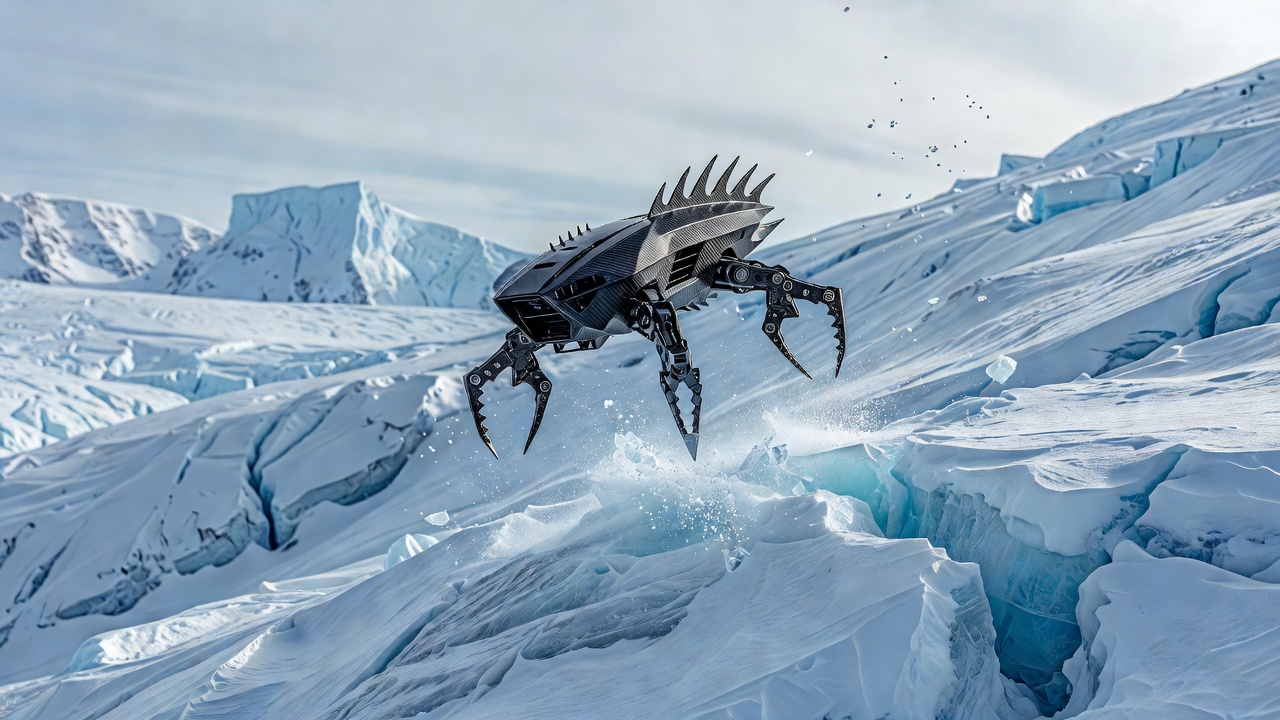
A 2.65-kilogram carbon-fiber drone built at Universite de Sherbrooke touched down on an icy slope tilted 58 degrees, dug in with retractable spines modeled on a cat's claws, and held its grip in wind gusts up to 30 km/h with a 100 percent landing success rate. The harder engineering problem was not the claws: it was the 38-disk friction shock absorber that has to soak up a 3-meter-per-second impact before those spines ever touch the ice. As Arctic ice loss accelerates and satellites struggle to track individual icebergs up close, a drone that can perch for days instead of circling for minutes could change how scientists watch the ice break apart.
What It Does
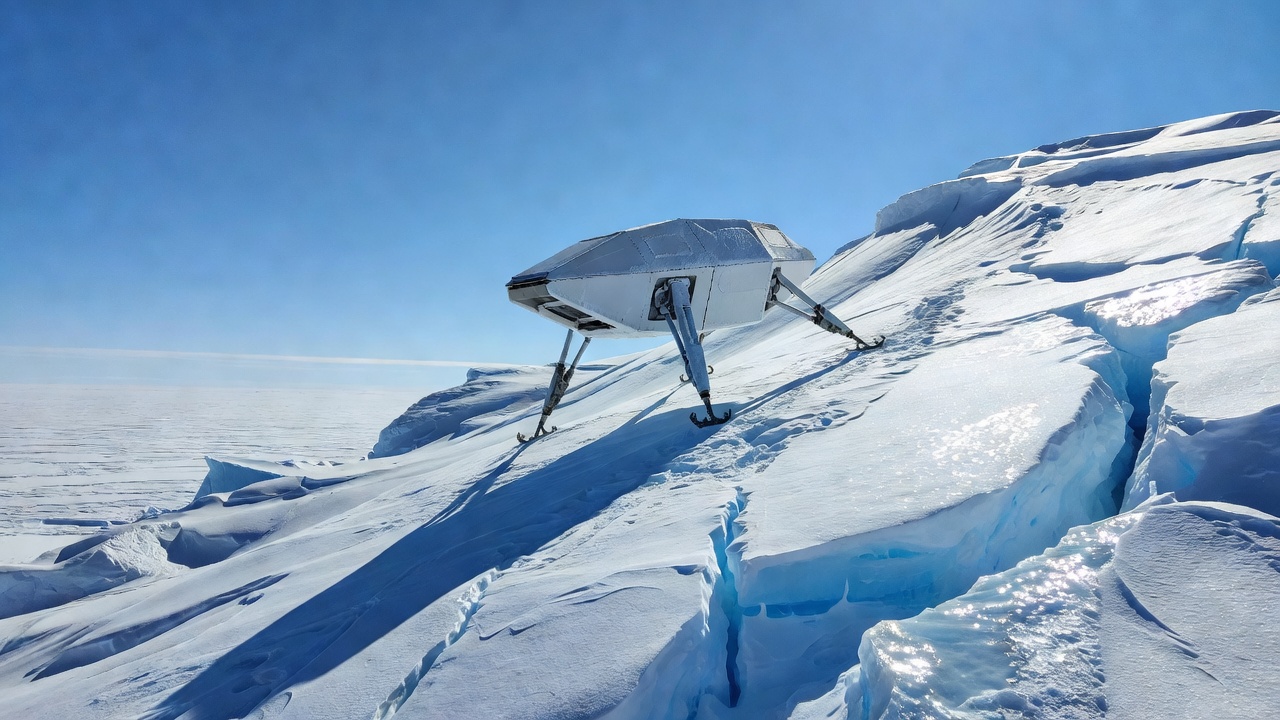
The drone, called Ice Dart, was developed by a robotics team at Universite de Sherbrooke in Quebec, Canada, led by postdoc Isaac Tunney and professor Alexis Lussier Desbiens. It weighs 2.65 kg and lands on four legs arranged in an X shape, a geometry built to spread contact points across uneven, sloped ice rather than relying on a flat pad.
Each foot carries two retractable spines: a larger one for the more heavily loaded downhill foot, and a smaller, thinner spine that engages more easily on the uphill feet even under light loads on steep terrain. The spines are a form of microspines (small hooked spikes that catch on microscopic surface irregularities), a technique earlier generations of climbing robots used on walls and ceilings, now extended to glacier ice.
"The inspiration for the retractable spines in the feet came from looking at a cat's claws and their ability to deploy only when needed," Tunney said. "I wanted to create feet that would naturally and passively engage their spines in the ice at the right moment, regardless of the drone's orientation, the surface geometry, or the ice conditions."
The Technical Achievement
In field tests along the Fjallsjokull glacier in southeast Iceland, which empties into an iceberg-filled lagoon, Ice Dart gripped icy slopes approaching 60 degrees in general operation, with one precise test recording a maximum hold of 58 degrees. The drone landed at speeds of up to 3 meters per second and posted a 100 percent perching success rate, including trials conducted in wind speeds of 30 km/h. Ambient conditions during testing ranged from 0 to 10 degrees Celsius.
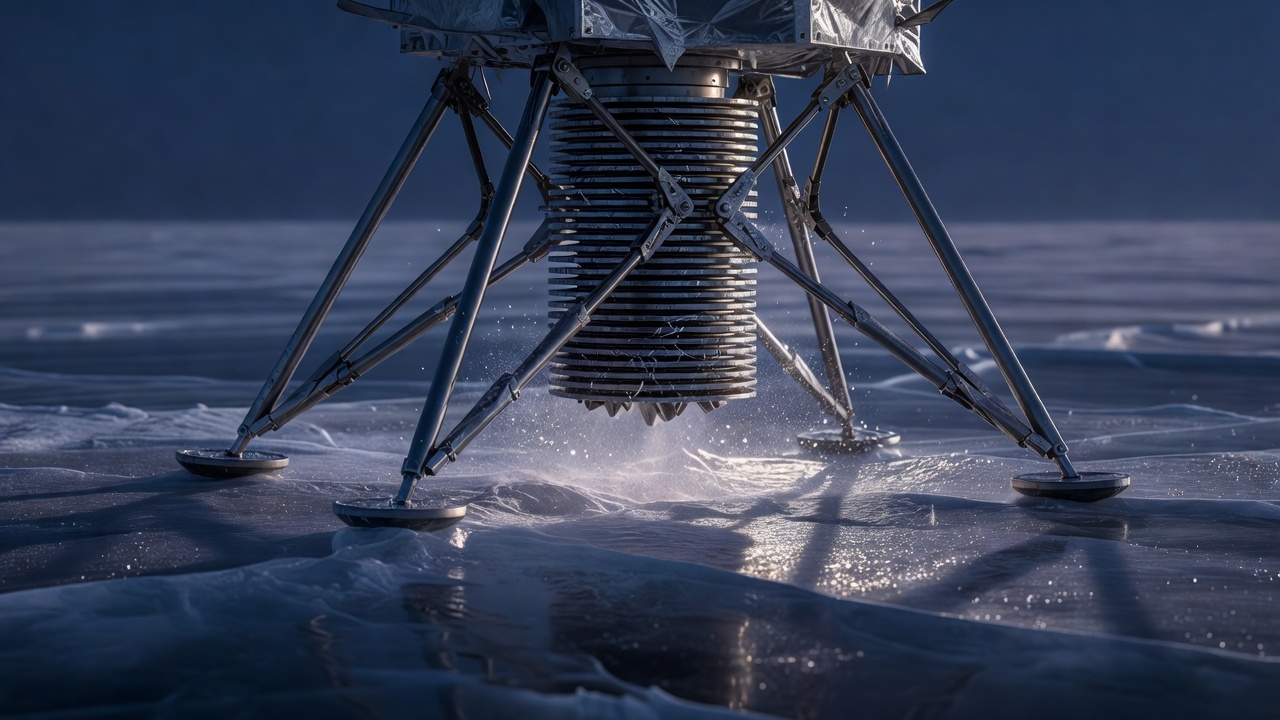
The landing gear absorbs impact through friction shock absorbers (mechanical dampers that convert a leg's up-and-down impact motion into friction-generated torque instead of a sudden jolt) built from 38 disks per leg. That mechanism lowers the drone's center of mass and spreads kinetic energy across the structure rather than concentrating it at the point of contact. The spines only penetrate the ice as the suspension compresses, a sequencing that generates grip while shielding the spines themselves from the full force of impact.
The Sherbrooke group did not start from a blank sheet. The same lab previously built drones capable of landing on fast-moving trucks, trailers, boats and steep roofs, and it adapted the landing gear from that earlier work as the mechanical basis for Ice Dart's ice-specific system. The results are documented in a paper in IEEE Transactions on Field Robotics, coauthored by Tunney and Desbiens.
- 2.65 kg total weight, carbon-fiber airframe
- Four legs in an X configuration, two retractable spines per foot
- 38-disk friction shock absorber per leg assembly
- 58-degree maximum slope grip recorded in testing, landing speeds up to 3 m/s
- 100 percent success rate across trials, including 30 km/h wind conditions
Real-World Impact
The practical case for a perching drone over a hovering one comes down to what happens after touchdown. "The ability to land rather than hover can fundamentally change how drones are used in the field," Desbiens said. "Once a drone has landed, energy consumption drops dramatically, allowing much longer observation periods with a small aircraft. The drone also becomes completely silent and can even reduce or eliminate its thermal and RF signature by shutting down major onboard systems."
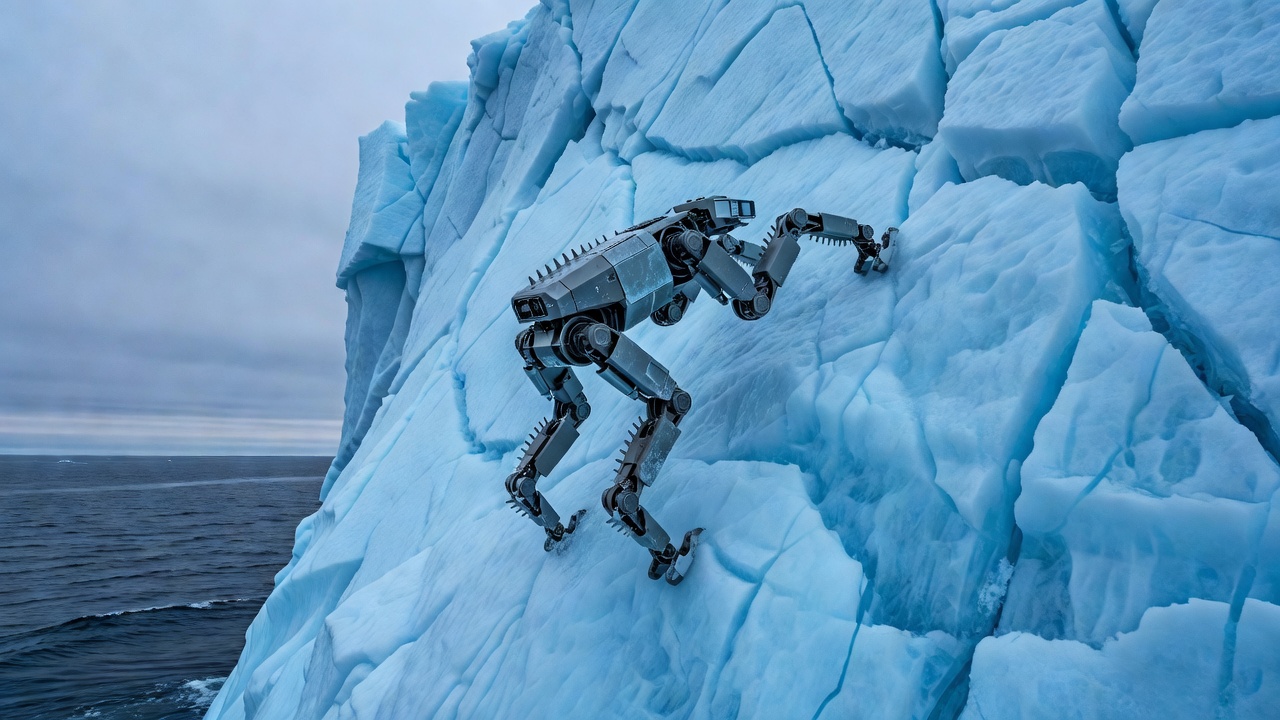
That distinction matters for Arctic fieldwork specifically. A hovering multirotor burns through battery in minutes and generates a persistent hum and heat signature that can complicate long-duration monitoring near active ice. A drone that lands, shuts down its major systems and sits still can instead gather data over hours or days from a single position, something current single-pass helicopter flights, dropped instruments and dart-style tracking devices are not built to provide. Researchers frame Ice Dart as an additional data layer alongside existing methods, not a replacement for satellite or ship-based iceberg detection.
Competitive Landscape
No directly comparable commercial peers were publicly identifiable at publication time in iceberg-perching drone systems. Existing options for tracking icebergs and glacier ice up close are largely non-aerial: helicopter deployment of instruments, dropped sensor packages, dart-style tracking devices fired into the ice, and satellite or ship-based iceberg detection systems that scan from a distance. The space around perching, ice-gripping drones remains emerging rather than active, and a direct competitive ranking would require disclosures or follow-on products that have not yet been announced.
What's Next
According to the IEEE Spectrum report, the Sherbrooke team is working toward autonomous landing-site selection, so the drone could eventually evaluate slope and ice conditions and choose where to perch without a human operator picking the spot, along with an emergency takeoff capability it could trigger if an iceberg it has landed on rolls over or breaks apart. The same report says Ice Dart is scheduled to fly during a Canadian Arctic mission this August, landing on icebergs to collect data and help validate ship-based iceberg-detection systems.
William D. Harcourt, a researcher at the University of Aberdeen in Scotland who studies Arctic glaciers, snow, sea ice, remote sensing and machine learning and who was not involved in the study, sees a specific use case near the fronts of tidewater glaciers, where ice meets ocean water directly and chunks break away in a process scientists call calving. "Near the front of tidewater glaciers, these systems could enable measurement of stress and strain and help us understand calving processes," Harcourt said.
The cat-claw framing is the easy hook, but the real story is a shock absorber nobody will ever photograph for a magazine cover: 38 friction disks quietly deciding whether four carbon-fiber legs survive first contact with 58 degrees of glacial ice. Iceland was the proving ground; the Canadian Arctic, reportedly starting this August, is where Ice Dart finds out if perching scales beyond one glacier.
For field glaciologists choosing instruments for a season on the ice, the trade is concrete: a hovering multirotor buys a few minutes of video per battery, while a 2.65 kg perching platform that shuts down to near-silent standby can hold a fixed vantage point for hours at a stretch, in wind conditions up to 30 km/h, without a second battery swap. That is the difference between a single flyover data point and a continuous strain-and-position record from the same spot on an iceberg.
-- Zara Velez, Emerging Technology Editor
Sources: IEEE Spectrum | IEEE Transactions on Field Robotics | Universite de Sherbrooke