Coral Cilia Generate Oxygen Vortices but Fail Fatally Above 37 DegreesCoral Cilia Generate Oxygen Vortices but Fail Fatally Above 37 DegreesCoral Cilia Generate Oxygen Vortices but Fail Fatally Above 37 DegreesCoral Cilia Generate Oxygen Vortices but Fail Fatally Above 37 Degrees
August 7, 2026
When marine biologist Cesar Pacherres and microbiologist Michael Kuhl raised the water temperature around aquarium-raised Porites lutea corals to 39 degrees Celsius (just over 102 degrees Fahrenheit), the cilia covering the coral surface stopped beating entirely and the coral
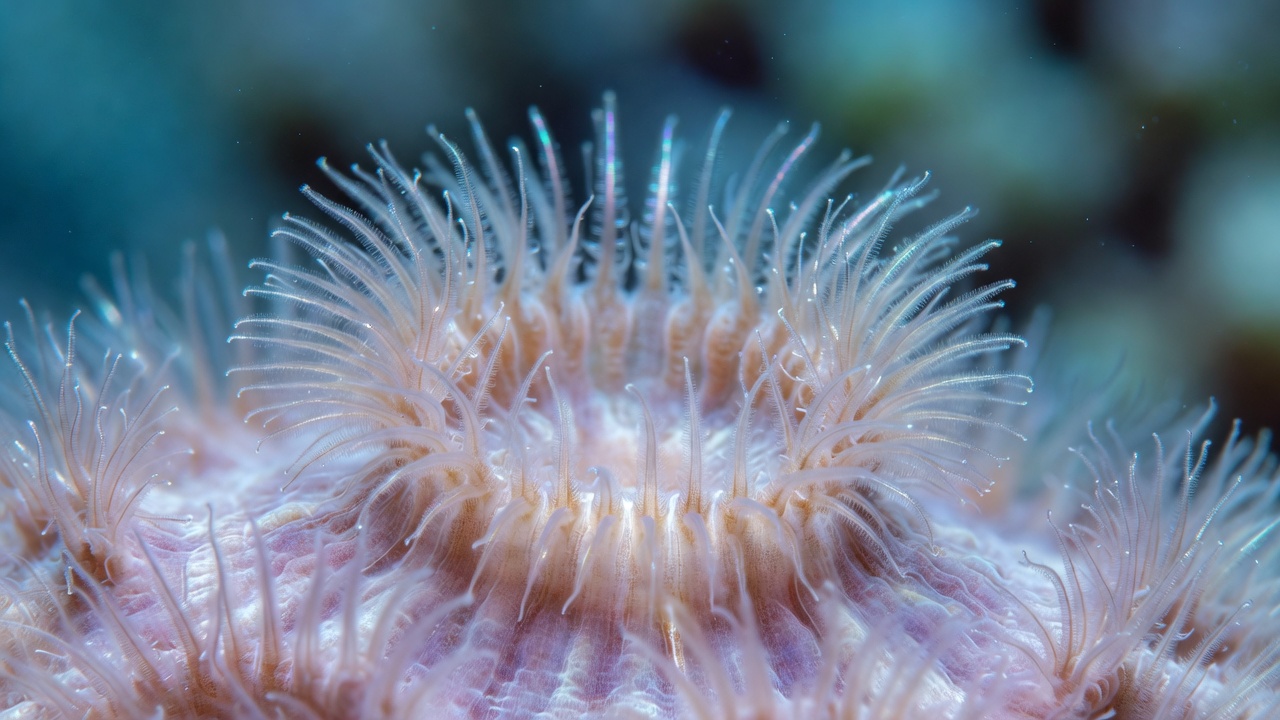
When marine biologist Cesar Pacherres and microbiologist Michael Kuhl raised the water temperature around aquarium-raised Porites lutea corals to 39 degrees Celsius (just over 102 degrees Fahrenheit), the cilia covering the coral surface stopped beating entirely and the coral died. The kill mechanism, described in a 2024 study published in Science, is not the one that has dominated reef science for decades -- not bleaching from expelled algae, not acid erosion, not starvation: it is suffocation, triggered by a self-defeating physiological loop that heat sets in motion in the coral's microscopic respiratory machinery. With record-high surface water temperatures already documented near 38 degrees Celsius off Florida and mass bleaching events threatening coral reefs globally, understanding precisely how heat kills coral tissue has moved from academic question to urgent engineering problem.
What the Researchers Found
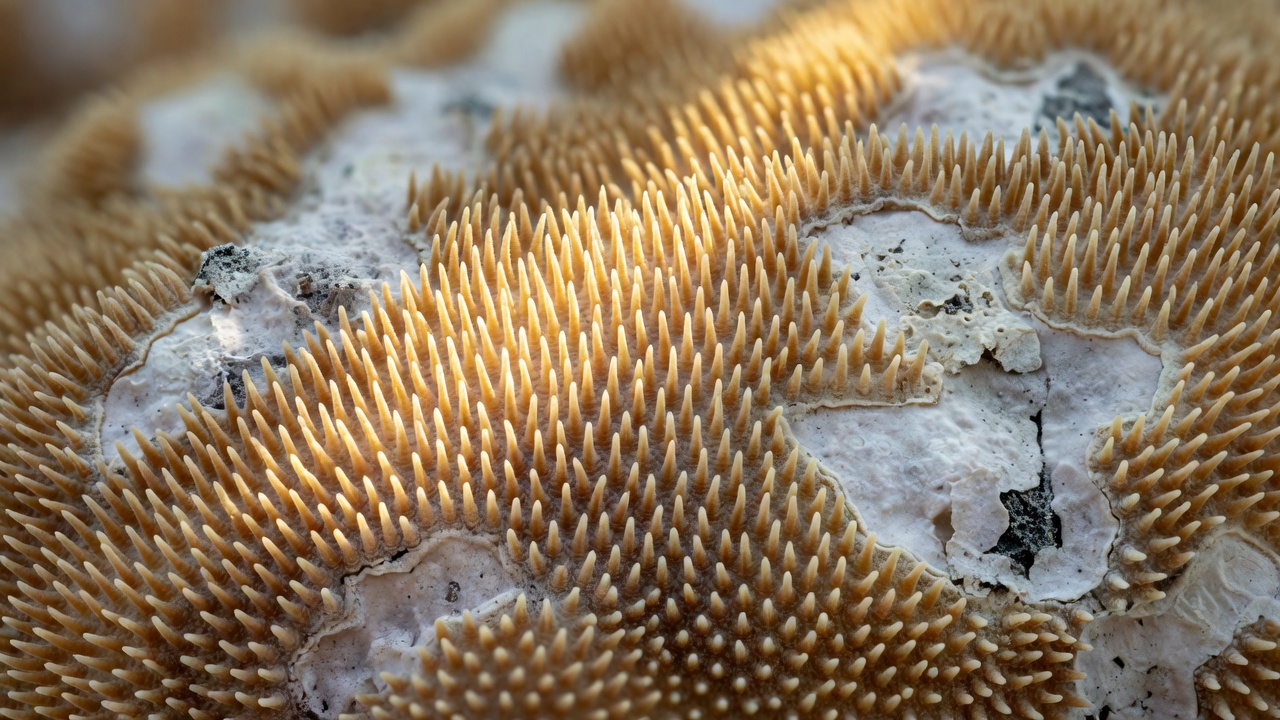
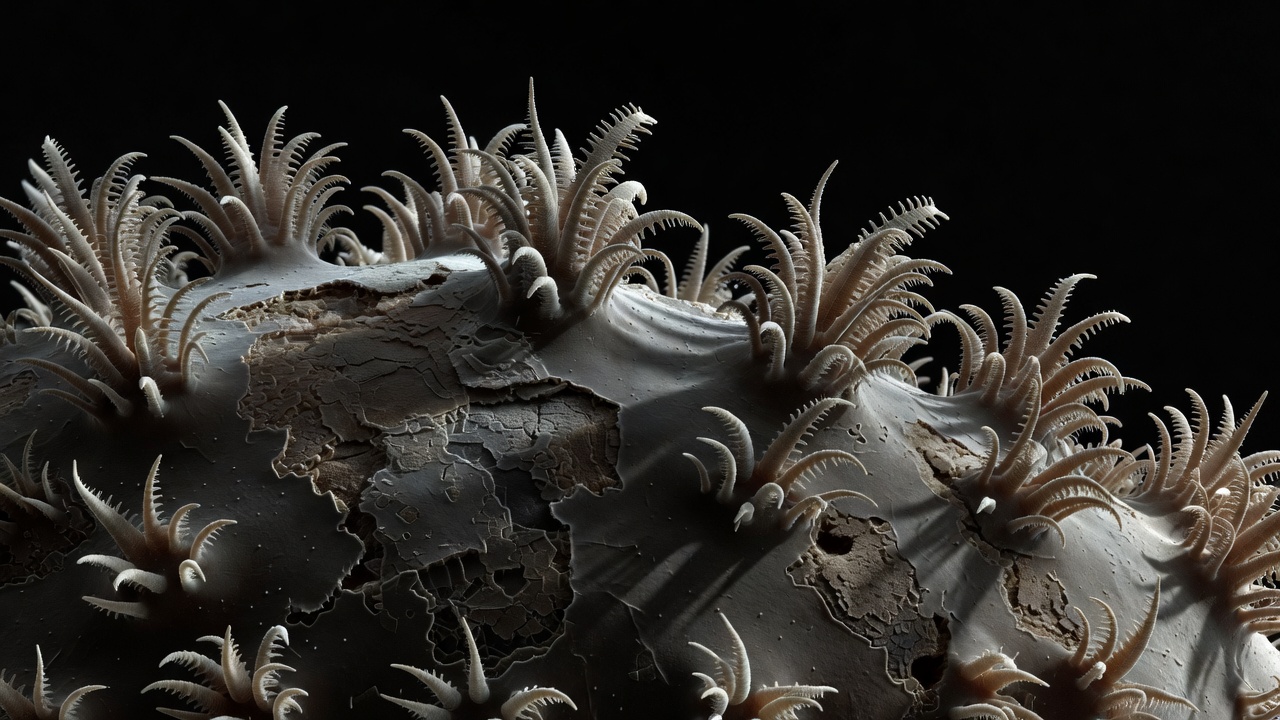
Corals are covered in cilia (microscopic hairlike appendages that whip in coordinated patterns to generate water movement). Prior to a landmark 2014 study from MIT, scientists assumed these cilia were passive brooms, clearing mucus and debris. That study, led by Orr Shapiro as a postdoctoral fellow at MIT, revealed something fundamentally different: the cilia generate fast-moving vortices that actively pull oxygenated seawater through the boundary layer, a thin cushion of slow-moving water trapped against the coral surface by friction. Shapiro described the finding as "a paradigm shift," noting: "It really transformed how we understand this [micro]environment, because suddenly the diffusion is no longer really important." Diffusion alone takes up to 4 minutes to move oxygen just 1 millimeter across the boundary layer -- far too slow for the metabolic rates corals sustain.
The 2024 Science study by Pacherres, Kuhl, and colleagues at the University of Copenhagen extended that understanding into a temperature dimension. As water warms, dissolved oxygen concentration naturally drops. The ciliary response is to beat faster, compensating by pulling more oxygenated water across the boundary layer. The researchers found this compensation begins to fail at 37 degrees Celsius, when ciliary beating started to slow. At 39 degrees Celsius, cilia stopped entirely. Kuhl identified the mechanism precisely: "The oxygen demand of the coral increased faster than the increased swirling of the water." At elevated temperatures, coral tissues require more oxygen even as warmer seawater carries less of it -- and cilia working at maximum capacity end up consuming more oxygen than they can deliver, sending oxygen-depleted water toward the coral tissue instead of away from it. The coral suffocates in part because of its own breathing response.
The Methodology
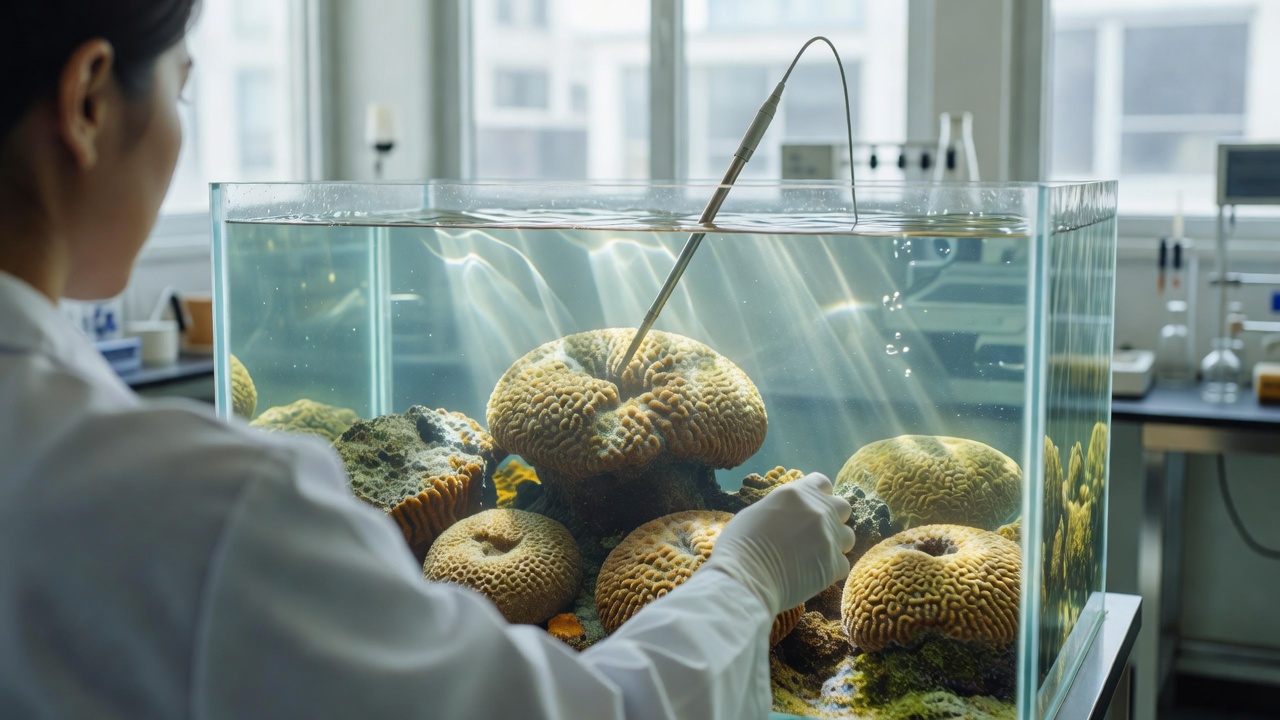
The experimental design reproduced the thermal conditions of real-world marine heat waves. Pacherres noted that "corals can experience an increase in temperature of several degrees in a time frame of a few hours," a reality the team specifically addressed. Experimental temperature ramps mimicked this acute profile rather than gradual warming over days, giving the results direct relevance to the episodic heat spikes corals actually experience during El Nino events.
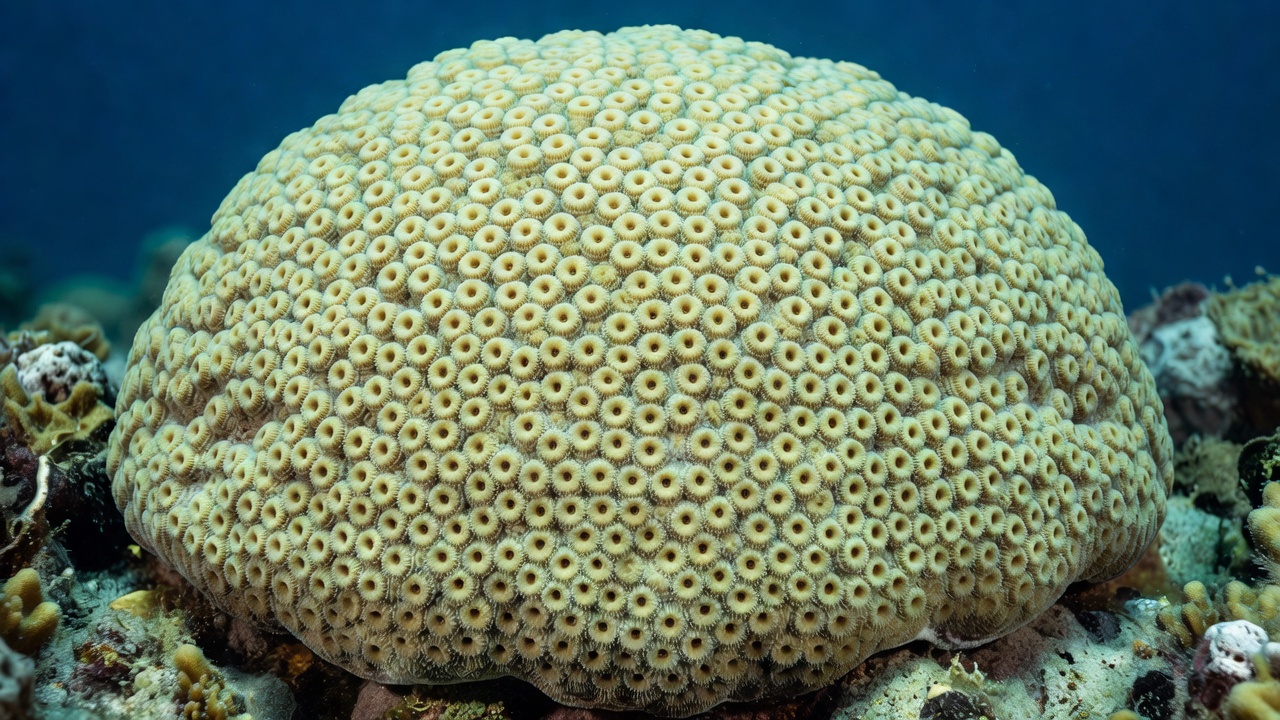
The study organism was Porites lutea, a species of stony coral raised in laboratory aquaria. Experiments ran continuously for 24-hour periods in darkened tanks, eliminating the confounding variable of photosynthesis from the corals' symbiotic algae. This was deliberate: at night, when zooxanthellae (the symbiotic photosynthetic dinoflagellates living within coral tissue) stop producing oxygen, cilia are the coral's sole oxygen-delivery mechanism. Testing in darkness isolated the ciliary system as the variable under investigation.
The team measured oxygen transport and ciliary activity using SensPIV (Sensitized Particle Image Velocimetry), a technique that deploys fluorescent, oxygen-reactive nanoparticles as flow tracers, allowing researchers to map both water movement and oxygen concentration simultaneously in real time. A high-speed camera recorded ciliary movement at hourly intervals across each 24-hour run. What happens between 37 degrees Celsius (slowdown onset) and 39 degrees Celsius (complete cessation) was not quantified in the current paper.
Why It Matters
The thermal thresholds the Copenhagen team identified are not theoretical edge cases. Surface water temperatures approaching 38 degrees Celsius have already been recorded off Florida, and mass bleaching events continue to threaten coral reefs globally. The ciliary failure mechanism adds urgency to that trajectory because it operates on a timescale of hours, not days or seasons. A marine heat wave that raises water temperature by several degrees in a few hours can trigger the oxygen deficit cycle before the more widely discussed bleaching pathway -- in which corals expel their zooxanthellae and begin to starve -- has even had time to develop.
David Suggett, a marine biologist at King Abdullah University of Science and Technology (KAUST), placed the finding in a broader context: "But until this point, we had been focusing on molecular and metabolic machinery [to understand low-oxygen adaptation]. We hadn't really appreciated that there are these behavioral-physiological mechanisms at play." He went further on deoxygenation as a potential primary driver: "We're playing massive catch-up. The amount of information we're gathering quickly is demonstrating just what a problem for corals it is, so much so that we're starting to really revisit long-standing paradigms of the role of other environmental factors, like temperature and light, where in fact, it could be oxygen that's been the smoking gun all along."
The practical implication is that protecting corals from heat events may require thinking about oxygen delivery as an active variable. If the proximate cause of heat-related coral death is ciliary failure and subsequent oxygen starvation, interventions focused solely on cooling water or managing bleaching may be addressing a downstream symptom.
Competitive Landscape
The 2024 Science study is the direct successor to the 2014 MIT study that Shapiro led, which first established that coral cilia actively generate turbulent vortices rather than relying on passive diffusion. Shapiro, now a researcher at the Volcani Institute in Israel, has continued to characterize the challenge as fundamentally interdisciplinary: "It's physics, biology, engineering, all mixed up together, which is what makes it really interesting."
A companion paper co-authored by Pacherres and Kuhl, published simultaneously in 2024 in Science Advances, extended the geometric understanding of those vortices. That study found that cilia-generated vortices are corkscrew-shaped, three-dimensional helical structures that push waste particles away from the coral surface while directing nutrients toward polyps' mouths. The cilia on each polyp are arranged in hexagonal units that coordinate their movement to produce these streamlined swirls. Pacherres described the architectural implication: "It demonstrates that coral skeletal architecture and living tissue are functionally integrated." Related work published in PRX Life highlighted that corals "actively drive microscopic 3D vortices" rather than relying on ambient ocean currents.
At KAUST, Suggett and his colleague Tadd Truscott are conducting field research on patchy bleaching patterns, investigating why individual corals on the same reef bleach while adjacent ones do not. Their working hypothesis correlates patchy patterns with areas of reduced water flow and, by extension, reduced oxygen delivery. That work, if confirmed, would link the Copenhagen lab findings directly to observable reef-scale mortality patterns.
Independent analyst commentary specifically on this announcement was not publicly available at publication time.
Limitations and Caveats
Several significant constraints limit how far the current findings can be extrapolated. The experiments used a single coral species, Porites lutea, raised under aquarium conditions. Whether other stony coral species show different ciliary architecture, different temperature thresholds, or different rates of ciliary slowdown is unknown. Corals that have demonstrated greater heat resilience in field observations have not been examined for ciliary differences that might explain that resistance.
The experiments were conducted in complete darkness. How the dynamic changes under natural light-dark cycles, when zooxanthellae are actively producing oxygen during daylight hours, is flagged as a next-step question by the research team. Real reef conditions involve strong light fluctuations, water current, biological competitors, and complexity the aquarium setup could not replicate.
Rachel Alderdice, a marine biologist at the University of Konstanz studying coral stress biomarkers and genomics, offered perspective: "It's these finer details that could help us understand why some corals bleach and others don't, [even when] they sit right beside each other." Cilia architecture and temperature thresholds may also vary with the genotype of the symbiotic algae as well as the coral host -- complexity not addressed in the current work. The precise molecular mechanism triggering faster ciliary beating as temperature rises remains unresolved; whether the response is driven by decreased seawater viscosity, a heat-sensing biological pathway, or the coral's decentralized nerve net (a neural network without a central brain or nervous system) is not established by either of the 2024 papers.
What Comes Next
The Kuhl and Pacherres team has identified experiments under normal light-dark cycles as the immediate next phase. Understanding how the ciliary oxygen-delivery system interacts with daytime photosynthetic output from zooxanthellae is essential for translating the dark-tank findings to reef conditions. The gap between 37 and 39 degrees Celsius -- where cilia slow but have not stopped -- also warrants quantification: whether that intermediate range represents a recoverable condition or an irreversible trajectory toward failure has direct management implications. Whether cilia recover functionality after a heat event is not addressed in the current data; if ciliary damage is cumulative above certain thresholds, the prognosis for repeated exposure is considerably worse.
At KAUST, the Truscott-Suggett collaboration on flow-bleaching correlation in field settings could provide the observational bridge between laboratory findings and reef-scale mortality patterns. For reef ecologists and marine conservation policymakers, the 2024 findings suggest that water circulation around coral structures deserves attention as a management variable in its own right -- and that a comparative ciliary physiology program spanning heat-tolerant and heat-sensitive species could rapidly clarify whether the 37-to-39-degree Celsius failure window identified in Porites lutea is generalizable or species-specific, with direct implications for which coral populations are prioritized in assisted evolution and transplantation programs.
The most striking aspect of this research is not the specific temperature numbers, but the implication that corals have been dying in plain sight for decades while scientists were measuring the wrong variable. The 2024 Science study suggests the headline may have always been the suffocation happening one millimeter from the coral surface, driven by a mechanical system no one thought to measure until ten years ago. Shapiro's 2014 paradigm shift was the opening chapter; Pacherres and Kuhl have now written the chapter where the physics becomes a death mechanism with a precise temperature number attached to it.
-- Zara Velez, Emerging Technology Editor
Sources: Quanta Magazine, "Corals Spin Tiny Vortices to Get Oxygen, but Not if It's Too Hot" (August 5, 2024)