D-Wave Wins Year 2 Federal Funding for Superconducting Qubit FabricationD-Wave Wins Year 2 Federal Funding for Superconducting Qubit FabricationD-Wave Wins Year 2 Federal Funding for Superconducting Qubit FabricationD-Wave Wins Year 2 Federal Funding for Superconducting Qubit Fabrication
May 27, 2026
D-Wave's subsidiary Quantum Circuits, LLC has secured Year 2 funding from NORDTECH - the Northeast Regional Defense Technology Hub - for its SQFab project (Superconducting Quantum Fabrication), targeting the hardest unsolved problem on most quantum roadmaps: how to manufacture
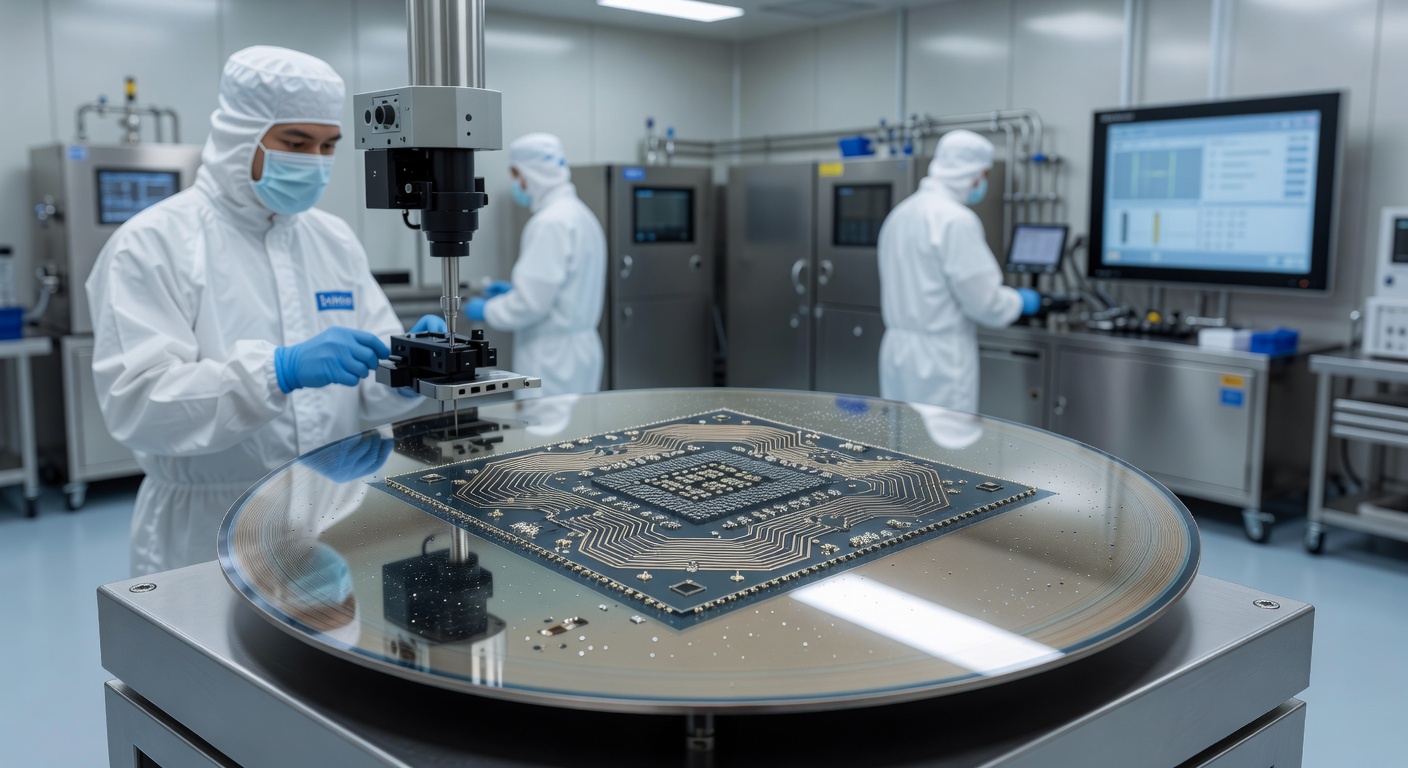
D-Wave's subsidiary Quantum Circuits, LLC has secured Year 2 funding from NORDTECH - the Northeast Regional Defense Technology Hub - for its SQFab project (Superconducting Quantum Fabrication), targeting the hardest unsolved problem on most quantum roadmaps: how to manufacture superconducting qubits at scale without losing them to decoherence in the transition from lab bench to fabrication floor. For a company that built its public identity on quantum annealing, winning gate-model fabrication funding from a defense-aligned federal program is a significant shift in competitive positioning. The award is one of four NORDTECH programs collectively receiving more than $25 million in second-year funding from the U.S. Department of War (DOW) - cited in D-Wave's press release; conventional usage is Department of Defense.
The announcement, made on May 26, 2026 via D-Wave's press release distributed through BusinessWire, positions the company at the intersection of two federal priorities: domestic semiconductor sovereignty and quantum computing leadership. The SQFab project sits within the broader U.S. Microelectronics Commons program - an eight-hub national initiative managed by NSTXL and executed through the Naval Surface Warfare Center Crane Division. Year 2 funding was not automatic: it required documented achievement of first-year benchmarks in design, fabrication, and characterization of key quantum computing components. D-Wave cleared that bar.
What Happened
On May 26, 2026, D-Wave Quantum Inc. (NYSE: QBTS) announced that its subsidiary, Quantum Circuits, LLC, received second-year funding under NORDTECH's Microelectronics Commons initiative. NORDTECH selected four programs for Year 2 awards, collectively receiving more than $25 million. D-Wave's SQFab project is slated to receive $5.4 million out of the $25.53 million Year 2 hub-wide funding cycle, per D-Wave's newsroom announcement.
Key structural facts from the announcement:
- Quantum Circuits, LLC is the direct awardee, not D-Wave's parent entity
- The project is branded SQFab - focused on superconducting qubit fabrication infrastructure
- Year 1 first awards were issued in September 2024; this Year 2 award was announced May 26, 2026
- NORDTECH is one of eight regional hubs composing the full U.S. Microelectronics Commons (MEC) program, originally awarded in 2023
- Year 2 funding was conditioned on achieving Year 1 benchmarks in design, fabrication, and characterization of quantum computing components - D-Wave reports those benchmarks were met
D-Wave describes itself as "the only dual-platform quantum computing company providing both annealing and gate-model systems, software and services." The SQFab work targets the gate-model side of that claim - specifically, building fabrication infrastructure for superconducting gate-model quantum systems.
The Technical Breakthrough
The SQFab project's stated mission is to co-develop technologies necessary to demonstrate scalable quantum error correction (QEC - the process of protecting quantum information from errors caused by decoherence and environmental noise, without directly measuring the quantum state) using new materials, innovative quantum circuits, and qubit control schemes.
The work is organized around what D-Wave calls the "lab-to-fab" problem. In quantum hardware, a research team can demonstrate a functional superconducting qubit in a university laboratory - but replicating those results at manufacturing scale introduces contamination, yield, and coherence-time challenges that have no classical analog. The SQFab project targets the transfer of best-in-class nanofabrication processes (fabrication of structures at the nanometer scale, where quantum effects dominate and surface defects can destroy qubit coherence) from controlled lab environments into scalable fabrication floors.
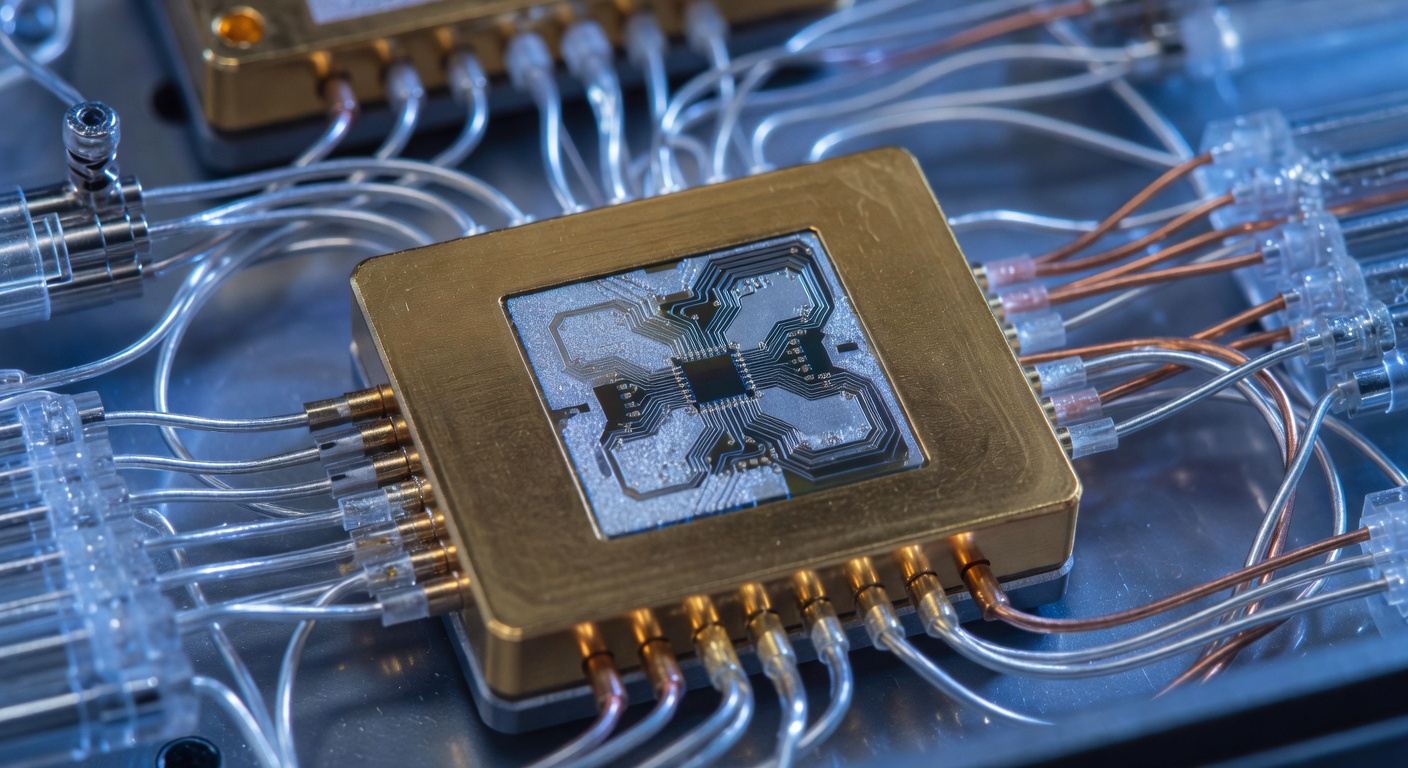
Year 1 work produced results in the design, fabrication, and characterization of key quantum computing components. Year 2 builds on those results toward foundational packaging and testing protocols for gate-model superconducting quantum systems (quantum processors where qubits are controlled by precisely timed electromagnetic pulses - distinct from quantum annealing, which solves optimization problems by evolving toward low-energy states).
Dr. Rob Schoelkopf, Chief Scientist at D-Wave, described the Year 2 trajectory in the press release:
"Building on the progress made last year, we are excited to continue our work in establishing the hub's core infrastructure for superconducting qubit fabrication and system scalability. We believe that this work is critical to advancing the foundational packaging and testing protocols needed for gate-model superconducting quantum systems, enabling the transfer of best-in-class nanofabrication processes from lab-to-fab and supporting broader adoption and scalability."
The emphasis on "packaging and testing protocols" is significant. For superconducting qubits, which must operate at temperatures near absolute zero in dilution refrigerators (cryogenic systems colder than deep space), packaging - integrating a fabricated chip into a deployable system - is often where yield losses occur. Schoelkopf's framing suggests SQFab is targeting exactly that transition layer.
Why It Matters for Industry
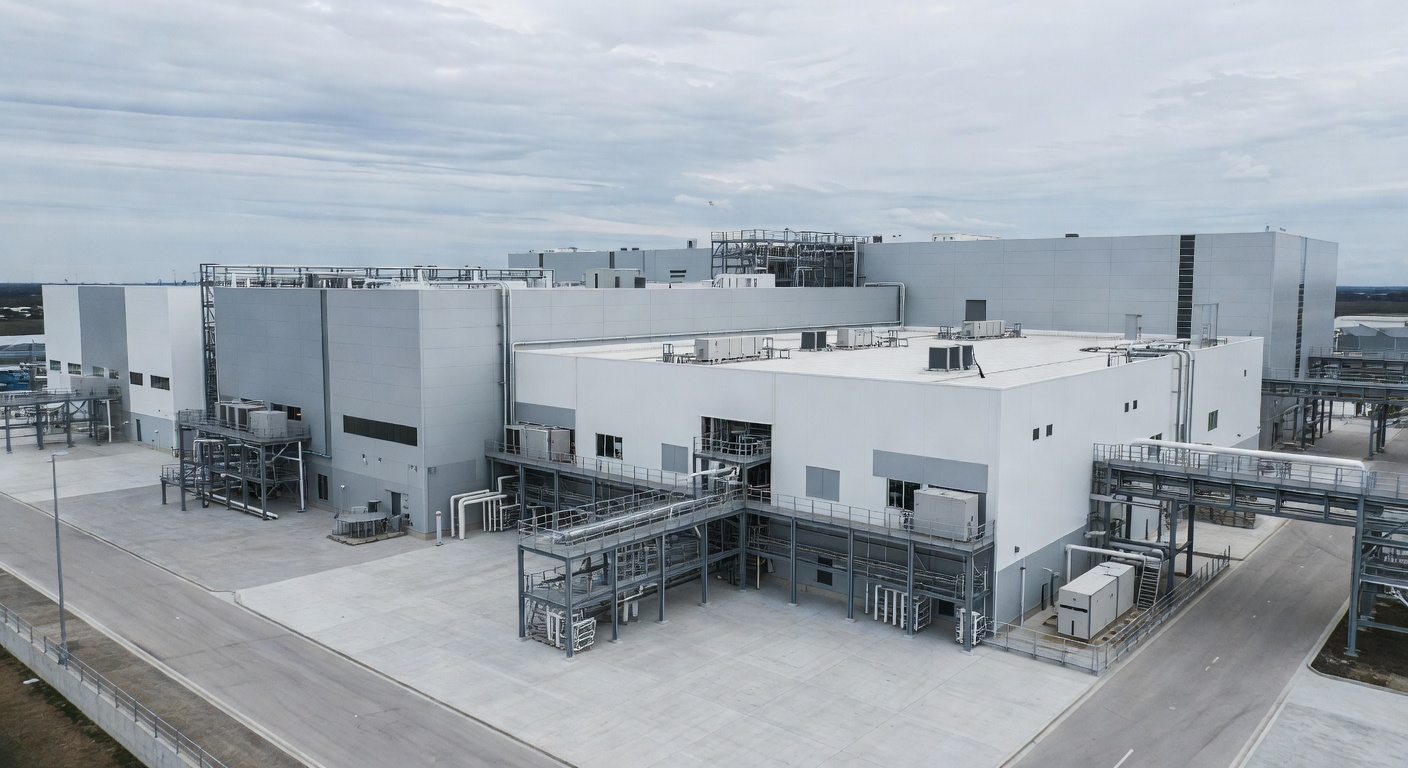
Federal fabrication funding is a different category of validation than cloud access deals or software partnerships. When a defense-aligned program like NORDTECH funds Year 2 work - contingent on Year 1 performance - it means an independent technical review determined D-Wave's subsidiary delivered measurable progress on a fabrication problem the government considers strategically important.
Dr. Alan Baratz, CEO of D-Wave, addressed the dual-use significance in the press release:
"This award reflects the growing recognition that quantum computing will play an important role in advancing U.S. microelectronics innovation. D-Wave is proud to collaborate with leading partners across the region to accelerate the development of scalable, high-impact quantum technologies that support both commercial and national security applications."
The commercial and national security framing reflects the MEC program's design intent. The Microelectronics Commons broadly aims to accelerate domestic microelectronics prototyping, strengthen semiconductor supply chains, and expand U.S. leadership in critical technologies - a mandate that connects directly to the CHIPS and Science Act, signed into law on August 9, 2022, which appropriated $52.7 billion for domestic semiconductor research and manufacturing, with $39 billion in manufacturing subsidies and 25% investment tax credits for manufacturing equipment.
Competitive Landscape
D-Wave occupies an unusual position in the quantum hardware market. The company describes itself as the only dual-platform quantum computing company providing both annealing and gate-model systems simultaneously. The SQFab project is explicitly targeted at gate-model superconducting quantum systems - the architecture historically associated with D-Wave's larger competitors in the hardware race.
The source materials name no quantum competitors within the Microelectronics Commons program. D-Wave's NORDTECH award does not come with a competitive disclosure of which other companies bid on similar programs or were not selected. D-Wave's NYSE listing (QBTS) places it in a public-market context where every federal contract has investor-facing implications.
The CHIPS and Science Act's investment in the public-sector research ecosystem creates a funding environment where fabrication capability, not just algorithm or software development, is becoming a primary competitive differentiator. Winning federal gate-model fabrication funding signals that D-Wave is not ceding that ground.
Independent analyst commentary specifically on this announcement was not publicly available at publication time.
The Bigger Picture
The NORDTECH award does not exist in isolation. The U.S. Department of War's Year 2 Microelectronics Commons commitment totals more than $200 million across 26 projects - a federal semiconductor R&D push that frames D-Wave's SQFab award as one slice of a much larger national manufacturing strategy.
The Microelectronics Commons is organized into eight regional hubs, each with a distinct technology focus and regional industrial base. NORDTECH draws from New York State's research and manufacturing ecosystem. The program is managed by NSTXL and executed by the Naval Surface Warfare Center Crane Division. The hub model distributes investment across regional industrial ecosystems with different strengths in materials, fabrication, and testing - rather than concentrating semiconductor R&D in a single national facility.
The Microelectronics Commons program was originally awarded in 2023. Year 1 first awards followed in September 2024. The Year 2 announcement on May 26, 2026 represents the second performance gate in a multi-year federal investment. Programs that cleared Year 1 benchmarks continue. D-Wave's SQFab cleared that gate.
What's Next
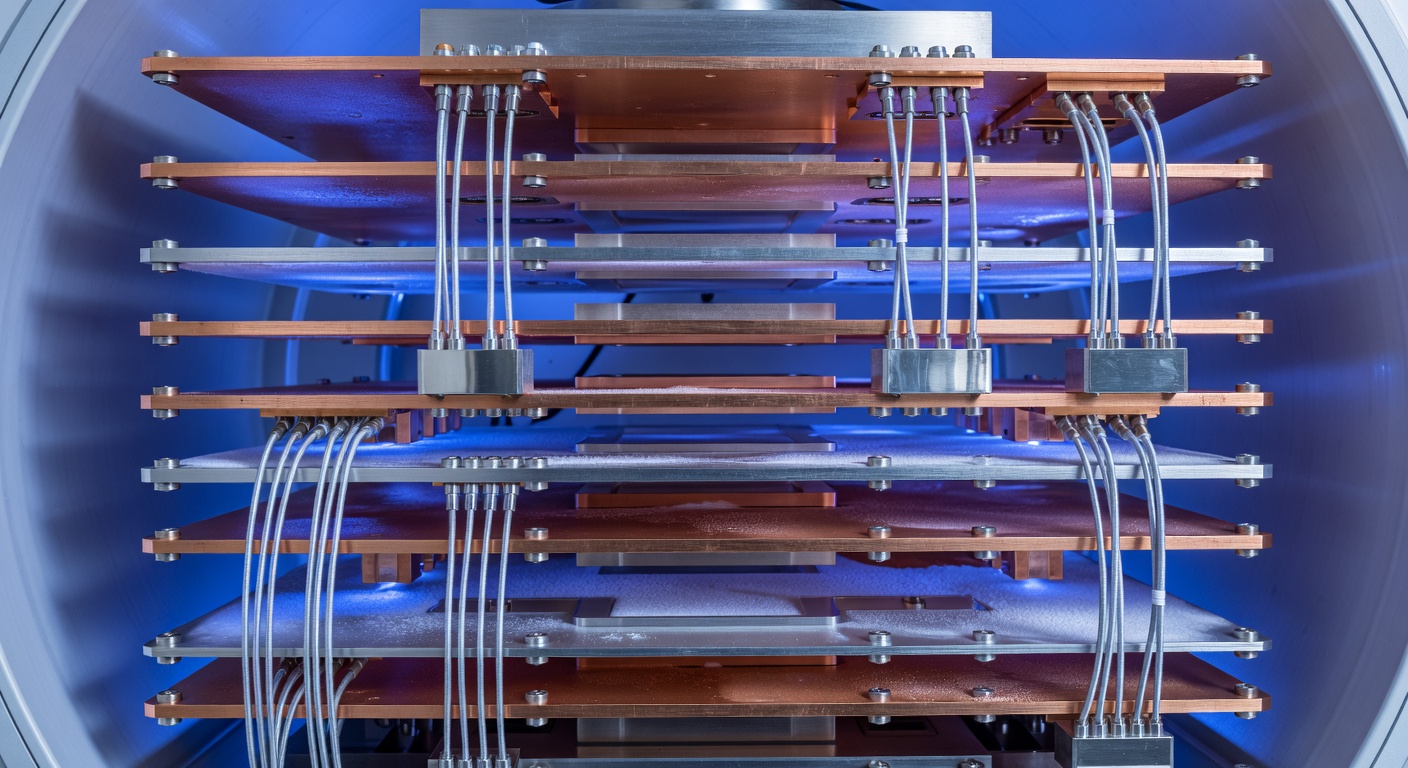
Year 2 for SQFab means continued work on the core infrastructure Schoelkopf described: superconducting qubit fabrication and system scalability, packaging and testing protocols for gate-model systems, and the lab-to-fab transfer of nanofabrication processes. D-Wave's press release does not disclose specific Year 2 milestones, qubit count targets, error rate goals, or a timeline to manufacturing readiness.
The National Quantum Initiative Act, signed into law in December 2018 and coordinated through NIST, the National Science Foundation, and the U.S. Department of Energy, established the policy foundation for programs like MEC. In May 2025, U.S. lawmakers introduced bipartisan Senate bill S.1344 - the Quantum Sandbox for Near-Term Applications Act - to amend the NQI Act with a focus on applications deployable within 24 months, targeting manufacturing, energy, and healthcare. That legislative trajectory points toward increasing pressure on the quantum hardware supply chain to deliver practical systems. SQFab Year 2 is D-Wave's answer to that pressure.
For developers building on gate-model superconducting hardware: the SQFab project's practical significance is in the fabrication layer, not the algorithm layer. Gate-model superconducting systems require physical qubits with coherence times long enough to run meaningful circuits - and that coherence is directly determined by fabrication quality. Every improvement in nanofabrication yield and packaging reliability translates into more usable qubits per run, lower error rates before quantum error correction overhead kicks in, and eventually lower cost per logical qubit. D-Wave has not disclosed qubit targets or error rate goals for SQFab Year 2. What the award confirms is that the program's Year 1 fabrication results were sufficient to warrant continued federal investment - a fabrication milestone, not a software one.
D-Wave spent years building advanced quantum annealing hardware. Now it is using defense dollars to solve a manufacturing problem that the entire gate-model quantum industry has treated as someone else's future problem. Whether SQFab produces protocols that move the needle on scalable superconducting fabrication - or whether this is a well-funded research program with no clear commercial transfer path - is a question the Year 2 results will have to answer. The federal investment says someone thinks the answer matters enough to fund it twice.
-- Aria Lin, Enterprise Technology Analyst
Sources: D-Wave Quantum Inc. press release via BusinessWire, May 26, 2026 (source name; URL not included per verified-URL policy); The Quantum Insider, "D-Wave Awarded Year 2 Microelectronics Commons Project Funding," May 27, 2026.