One Particle Collision Reignites the Hunt for Dark MatterOne Particle Collision Reignites the Hunt for Dark MatterOne Particle Collision Reignites the Hunt for Dark MatterOne Particle Collision Reignites the Hunt for Dark Matter
September 2, 2026
After sifting through 220 days of data from a detector buried nearly a mile underground in South Dakota, physicists with the LUX-ZEPLIN collaboration have flagged a single particle collision, recorded in June 2023, that looks like it could be dark matter. But the more
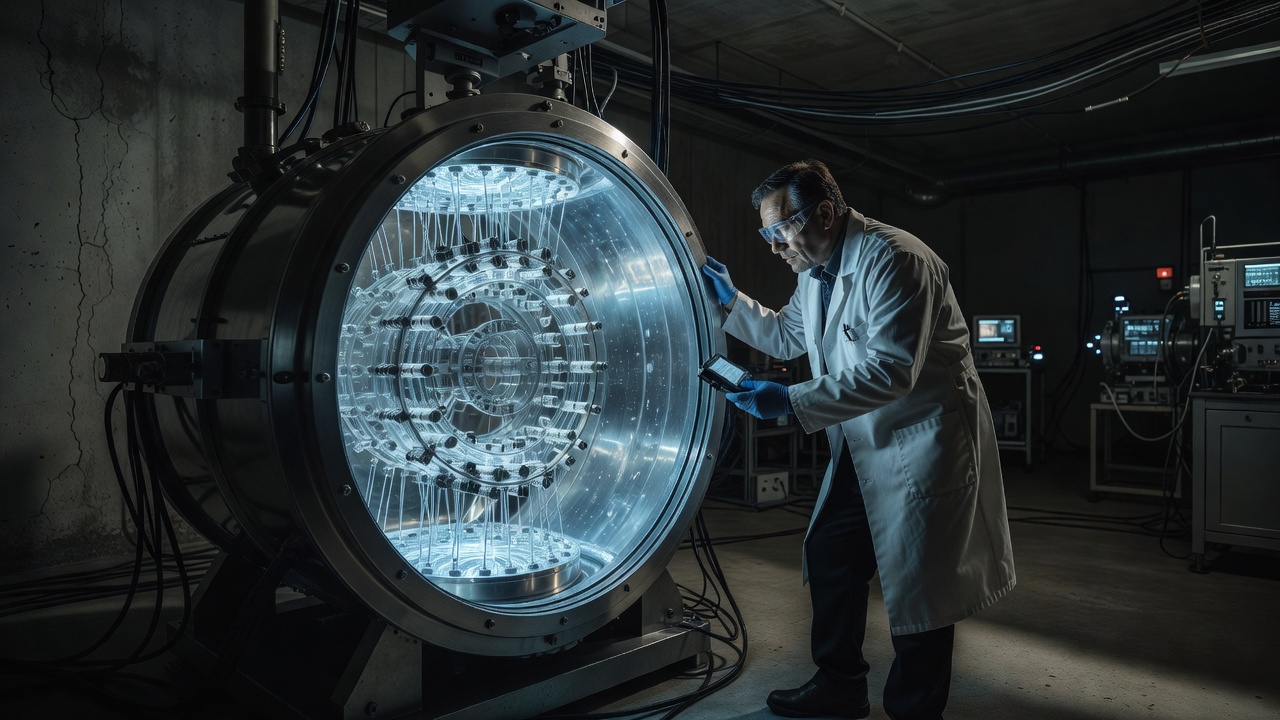
After sifting through 220 days of data from a detector buried nearly a mile underground in South Dakota, physicists with the LUX-ZEPLIN collaboration have flagged a single particle collision, recorded in June 2023, that looks like it could be dark matter. But the more consequential number in this story may not be the one making headlines: LZ has already banked at least three times as much additional data that has not yet been analyzed for this signal. For a field that has spent decades chasing a particle it has never definitively caught, one flagged event, still short of the statistical bar for real evidence, is enough to send the community scrambling for a second look.
What the Researchers Found
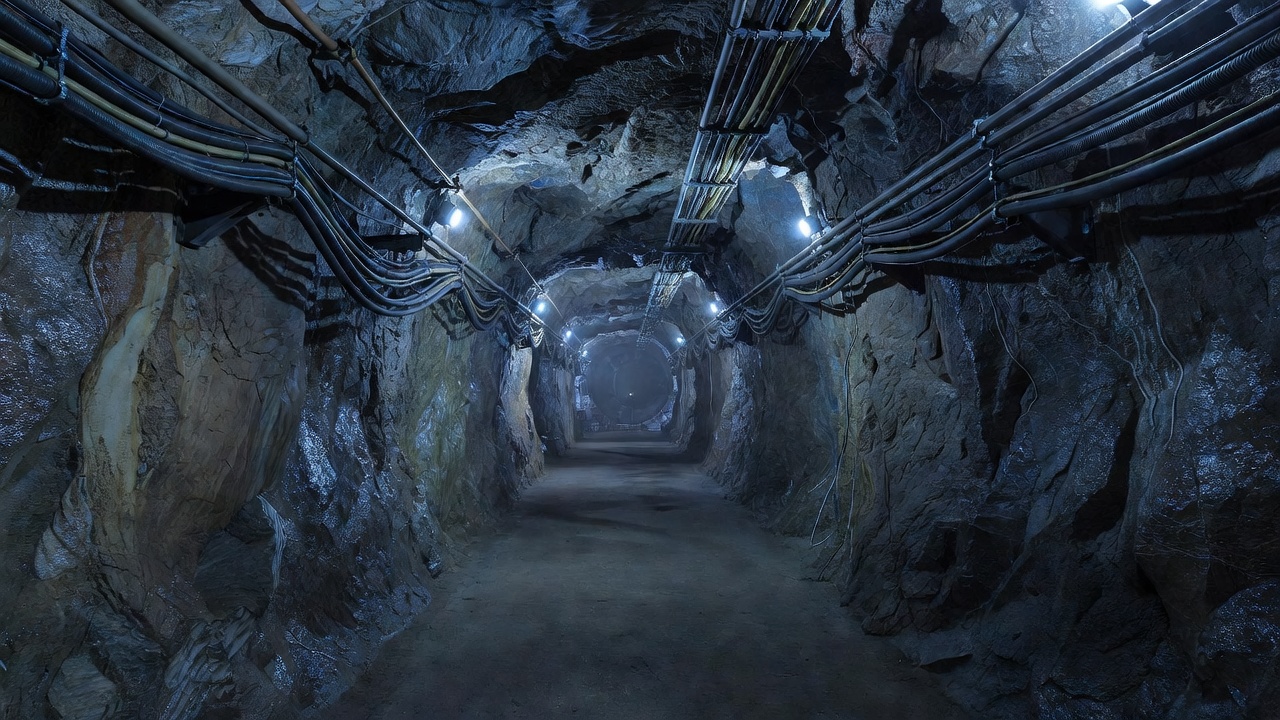
The event turned up in a reanalysis of 220 days of data collected by the LUX-ZEPLIN (LZ) experiment, a dark matter detector built around a tank of liquid xenon at the Sanford Underground Research Facility in Lead, South Dakota. Researchers were searching specifically for high-energy nuclear recoils, a hypothesized signature of dark matter distinct from the low-energy interactions LZ normally hunts for, when they found exactly one particle interaction consistent with a WIMP (weakly interacting massive particle, a leading dark matter candidate). The event dates to June 2023.
Statistically, the finding sits at 2.6 sigma, physicists' shorthand for how unlikely an observation is to be a random fluctuation, with roughly a 1 in 100 chance that a known, non-dark-matter particle produced it. That is well short of the 3-sigma bar conventionally required to call something "evidence," and further still from the 5-sigma threshold needed to claim a confirmed detection.
The finding was presented September 1, 2026, at the TeV Particle Astrophysics meeting in Tendo, Japan. LZ spokesperson Rick Gaitskell, a physicist at Brown University, summed up the outcome bluntly: "we got left with one event, which is fascinating, absolutely fascinating."
The Methodology
LZ works by watching for collisions between dark matter and atomic nuclei inside a tank of liquid xenon. A collision sends the struck xenon nucleus recoiling, producing a flash of light and releasing electrons. LZ's sensors register two back-to-back signals for each candidate event: an immediate light flash from the nucleus recoil, followed by a second flash when the freed electrons drift, pulled by an electric field, to the top of the detector. Researchers separate genuine dark matter candidates from known backgrounds, such as radioactive decay, by plotting the relationship between those two signals; background events cluster along a predictable arcing band, while the June 2023 event and this search's target window fall outside it.
This particular analysis targeted a hypothesized variant of dark matter that kicks the struck nucleus with unusually high energy, a distinct search from LZ's standard low-energy-recoil hunt. A separate pass over the same 220-day dataset, looking for the conventional low-energy signature, turned up nothing.
| Parameter | Value |
|---|---|
| Detector | LUX-ZEPLIN (LZ), liquid xenon |
| Location | Sanford Underground Research Facility, Lead, S.D. |
| Data window analyzed | 220 days |
| Search type | High-energy nuclear recoil |
| Candidate events found | 1 (June 2023) |
| Observed significance | 2.6 sigma |
| Chance of known-particle background | ~1 in 100 (~1%) |
| "Evidence" threshold | 3 sigma |
| "Detection" threshold | 5 sigma |
| Unanalyzed additional data on hand | At least 3x this dataset |
Why It Matters
Reaction from physicists outside the LZ collaboration ranged from cautious to genuinely energized. Wick Haxton, a theoretical physicist at the University of California, Berkeley who was not involved in the research, called it "the most interesting thing that's come up in recent times," adding, "So I definitely think that there'll be a flood of people looking at this event."

Neal Weiner, a theoretical physicist at NYU, framed the result as a test of the field's instrumentation as much as its theory: "We have these incredible machines that these teams have put together. And the question is, can they use them to look for these broader categories of scenarios? And one really exciting top-line result is, yes, they can."
One theoretical framework under discussion would make the June 2023 timing meaningful: dark matter particles could carry discrete energy states, similar to an atom, and interact only once bumped above an energy threshold, with high-energy collisions expected preferentially in summer, when Earth's motion through space meets the galaxy's dark matter stream head-on. Matthew Reece, a theoretical physicist at Harvard University, said of the signal: "It's not a crazy signal. From that point of view, it's very plausible, which makes me relatively optimistic."
Haxton connected the moment to a longer arc of frustration in the field: "People have looked for [dark matter] for such a long time, and with growing frustration that it hasn't been found."
Competitive Landscape
Direct dark matter detection is a small, specialized field, and no independently verified peer-landscape data on rival detection programs was available for this announcement. LZ's own reporting does not name any currently operating rival experiment as directly contesting the June 2023 event, a relative quiet that is itself notable given the field's history: single-experiment dark matter claims tend to draw heavy scrutiny precisely because no other detector has yet weighed in.
Independent analyst commentary specifically on this announcement was not publicly available at publication time.
Limitations and Caveats
The headline number carries a hard qualifier: this is one event. Dan Hooper, a theoretical physicist at the University of Wisconsin-Madison, put it plainly: "It's only one event. So who knows what's really going on here. That said, it's intriguing."
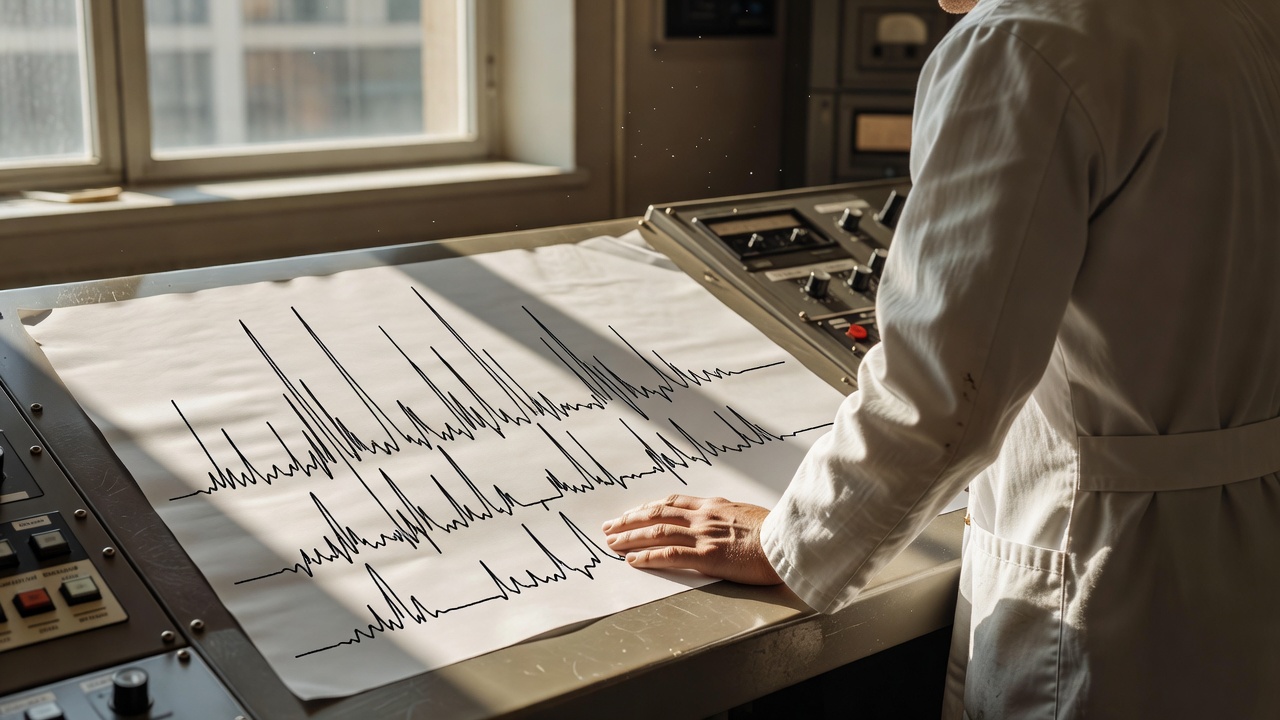
The statistics reinforce the caution. At 2.6 sigma, the result falls below the 3-sigma line physicists conventionally require before using the word "evidence," and far below the 5-sigma line required to claim an actual detection. Researchers estimate roughly a 1 in 100 chance that a known, non-dark-matter particle, rather than a WIMP, produced the signal, which means the mundane explanation cannot be ruled out.
- Only one qualifying event was found in the 220-day search window
- 2.6 sigma significance, versus a 3-sigma bar for "evidence" and a 5-sigma bar for "detection"
- ~1% estimated chance the event came from a known background particle rather than dark matter
- A parallel low-energy-recoil search of the same 220-day dataset found nothing
The field has been burned by single-experiment claims before. In 2020, the XENON1T experiment saw a possible sign of unidentified new particles that was later ruled out by its own successor experiment. That precedent is part of why physicists are treating the LZ event as intriguing rather than conclusive: a lone anomaly, even a well-measured one, has a track record of dissolving under more data.
What Comes Next
The most immediate path forward is not a new experiment but existing data: LZ has already collected at least three times as much information as went into this analysis, and that additional dataset has not yet been searched for the same high-energy-recoil signature. Whether the June 2023 event turns out to be a statistical fluke or the first entry in a pattern depends largely on what that unanalyzed data shows.
Haxton's prediction of "a flood of people looking at this event" points to the next phase: independent theorists and rival collaborations picking apart the public paper, testing whether models like the discrete-energy-state framework hold up against the full dataset. Haxton also named the outcome the field is hoping for: "It would be very nice if this event is followed by a few more." A second and third event in the expanded dataset, at even modest significance each, would compound quickly toward the 3-sigma and eventually 5-sigma thresholds that separate a curiosity from a discovery.
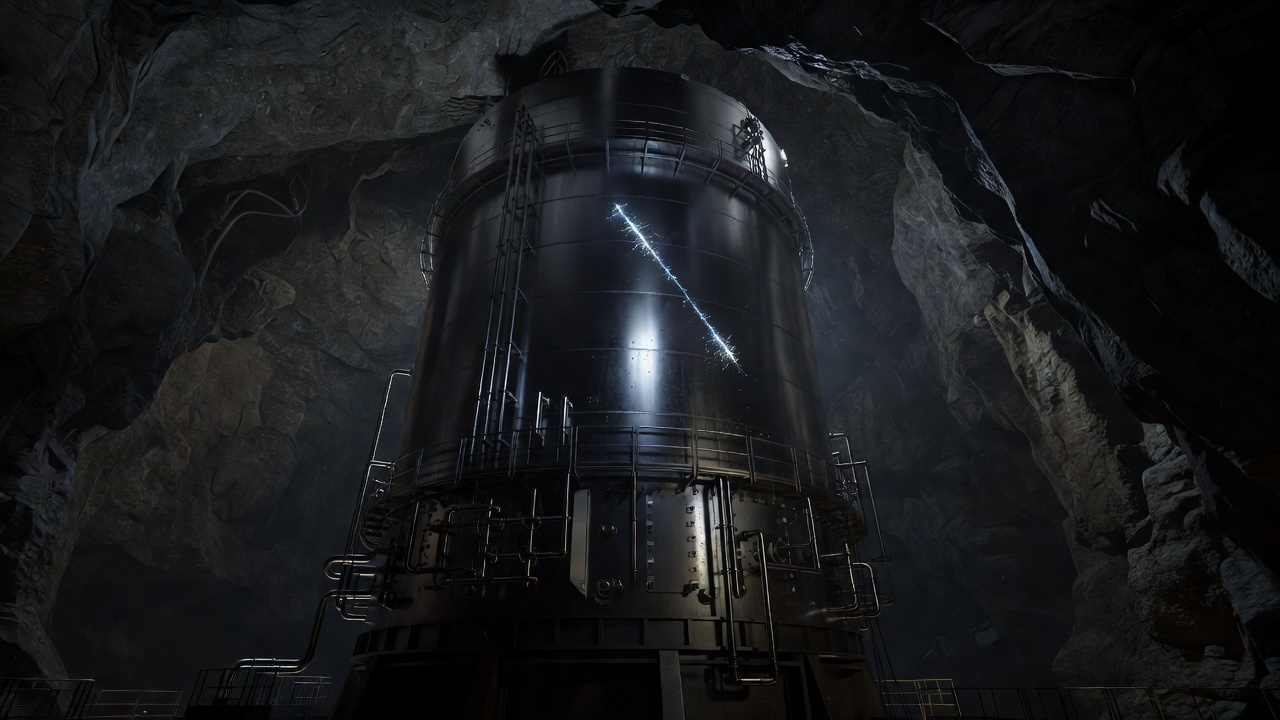
For academic researchers designing the next round of direct-detection searches, the practical takeaway is about exposure, not excitement: a single event in 220 days of live time defines the current sensitivity floor for high-energy-recoil WIMP searches, and tripling that exposure, which LZ has already banked, is the difference between a 2.6-sigma blip and a claim the whole field has to take seriously.
The result LZ needs may already exist. It just has not been read yet, sitting in a hard drive at a facility built into a former gold mine, waiting for the same statistical test that turned up one event in June 2023 to run again on data three times as large. If dark matter finally gets caught, it may not be by a new machine but by a second pass over an old file.
For readers who follow this kind of story for the thrill of it rather than the math, the plain-English version is this: think of LZ's detector as a security camera the size of a swimming pool, buried under a mile of rock, that has been quietly recording for years. Scientists just reviewed 220 days of that footage looking for one specific kind of suspicious motion and found exactly one frame worth a second look, not proof, just a frame worth a second look. The reason to keep paying attention is that the same camera already has three times more footage sitting on a hard drive, unreviewed, and if a second suspicious frame turns up in it, this becomes the story physics has been waiting decades to tell.
-- Zara Velez, Emerging Technology Editor
Sources: LUX-ZEPLIN (LZ) Collaboration, presented at the TeV Particle Astrophysics meeting, Tendo, Japan Science News