Euclid telescope finds most distant black hole, doubling early quasar censusEuclid telescope finds most distant black hole, doubling early quasar censusEuclid telescope finds most distant black hole, doubling early quasar censusEuclid telescope finds most distant black hole, doubling early quasar census
July 20, 2026
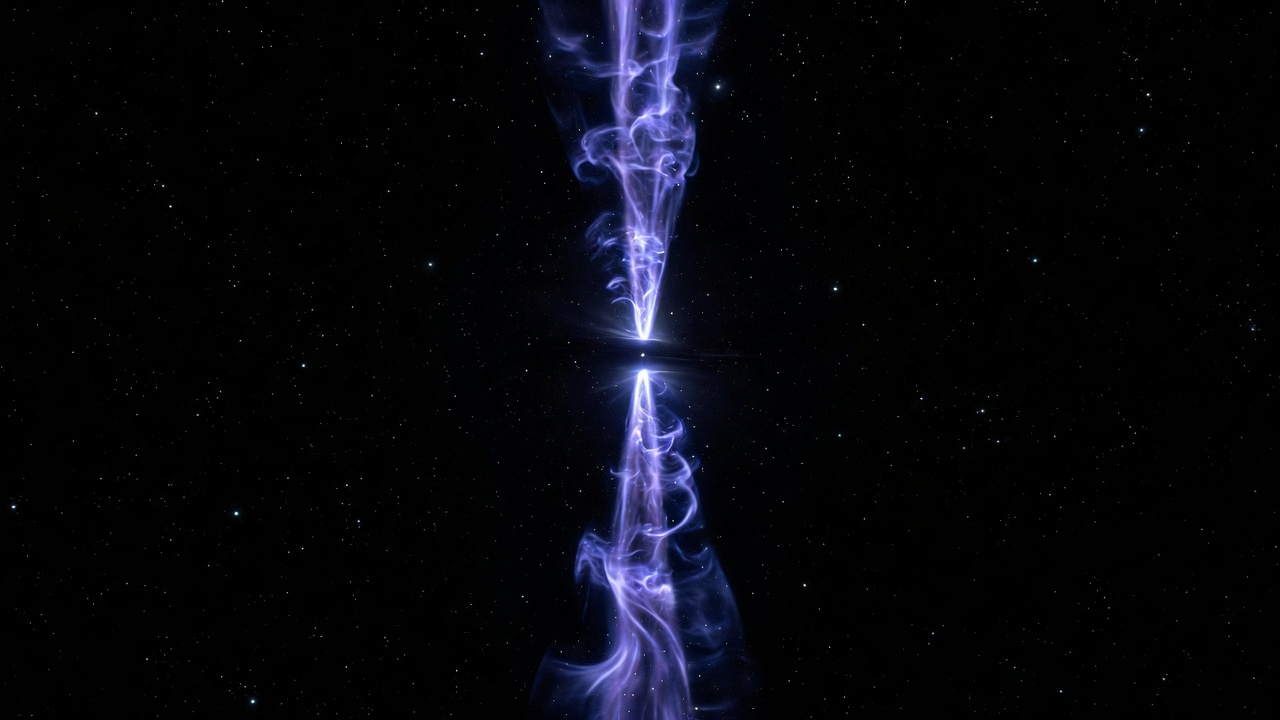
The European Space Agency's Euclid space telescope has identified a quasar whose light left its source just 662 million years after the Big Bang, setting a new distance record for supermassive black holes and beating the previous mark by 15 million years. The more disorienting
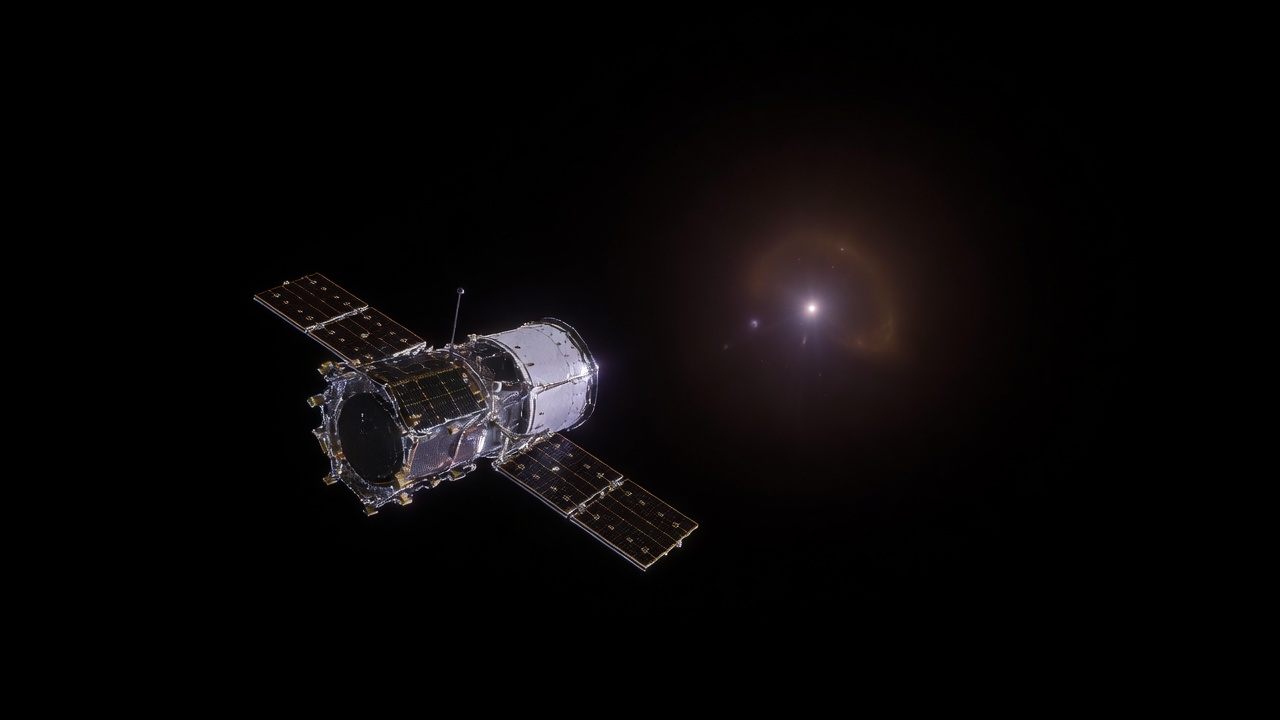
The European Space Agency's Euclid space telescope has identified a quasar whose light left its source just 662 million years after the Big Bang, setting a new distance record for supermassive black holes and beating the previous mark by 15 million years. The more disorienting detail is buried in the census: before Euclid began its sky survey, astronomers had identified only nine quasars from earlier than 770 million years after the Big Bang; in 18 months, the telescope added 12 more, more than doubling that entire sample and placing three of its discoveries at the top of the all-time distance ranking. The quasar behind the record, designated EUCL J1729, is not just the most distant supermassive black hole ever found. It is evidence that the field has been studying the wrong objects for decades.
The findings, led by astronomer Daming Yang of Leiden University in the Netherlands and published July 6, 2026, in the journal Astronomy & Astrophysics, land at a moment when theoretical cosmology is under mounting pressure. Every new early black hole confirmed makes the central unsolved problem of the field harder, not easier, to explain: how did supermassive black holes accumulate so much mass in the first few hundred million years of a universe that had barely formed its first stars?
What the Researchers Found
EUCL J1729 emitted the light Euclid detected when the universe was just 662 million years old, roughly 4.8 percent of its current age. The previous record holder, discovered in 2021, had its light dated to 677 million years after the Big Bang, a cosmological event roughly 13.8 billion years ago. The new record beats that by 15 million years, a margin that sounds small but represents an observational frontier that took five years to cross.
The same Euclid data set produced two additional discoveries: the second- and third-most-distant quasars now known, also from this 18-month survey. Together, the three new entries at the top of the distance ranking represent a structural shift in what astronomers can actually study. Before Euclid, attempts to understand early supermassive black holes rested on a sample of nine objects, all of them exceptionally luminous, from the period before 770 million years after the Big Bang. That number now stands at 21.
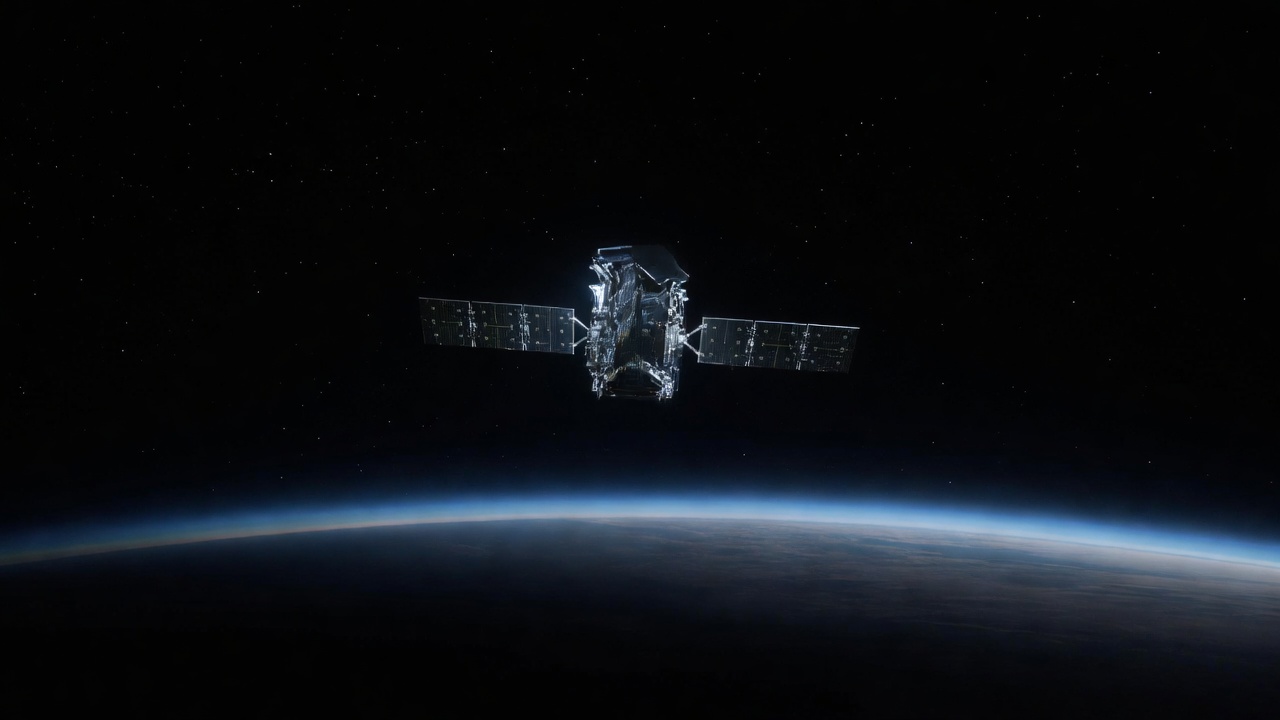
A quasar (a quasi-stellar object in which a supermassive black hole accretes matter so rapidly that the resulting friction and radiation make it visible across billions of light-years) is detectable at cosmological distances precisely because of that extreme luminosity. But the quasars Euclid is finding, including EUCL J1729, are notably fainter than the previously known population at similar distances. That faintness is not a limitation of the new detections. It is the finding. Prior surveys were sensitive only to the brightest examples, producing a sample skewed toward outliers rather than typical members of the population.
Yang summarized what the population shift represents: "This turns the field from studying a few outliers to studying the earliest massive black holes as a population. That's equally as important as breaking the record."
The Methodology
The detection of extremely distant quasars requires infrared telescopes. Cosmic expansion stretches light: the farther away the source, the more its photons are redshifted (shifted from visible wavelengths toward longer, infrared wavelengths) by the time they reach a detector. Objects from 662 million years after the Big Bang, near the end of the universe's Epoch of Reionization (the period between roughly 150 million and one billion years after the Big Bang when energetic photons from the first stars and galaxies stripped hydrogen atoms of their electrons), emit light that arrives at Earth deep in the infrared. Optical surveys simply cannot see them.
Euclid, launched July 1, 2023, and operated by the European Space Agency, surveys roughly one-third of the entire sky in infrared wavelengths. That combination of wide coverage and infrared sensitivity is what shifted the detection frontier. Before this Euclid survey, the practical limit for quasar detection was around 770 million years after the Big Bang, and only the brightest objects crossed it. Euclid's broader and deeper infrared sweep is reaching fainter sources at greater distances.
| Parameter | Value |
|---|---|
| Study published | Astronomy & Astrophysics, July 6, 2026 |
| Lead institution | Leiden University, Netherlands |
| Telescope | ESA Euclid (launched July 1, 2023) |
| Survey duration | 18 months (first phase) |
| Sky fraction surveyed | ~1/3 of the full sky (infrared) |
| New early quasars found | 12 (from before 770 million years after Big Bang) |
| Record quasar | EUCL J1729, 662 million years after Big Bang |
| Prior detection limit | 770 million years after Big Bang |
| Prior sample (before 770 Myr) | 9 quasars known |
| Follow-up instrument | James Webb Space Telescope (mass, environment) |
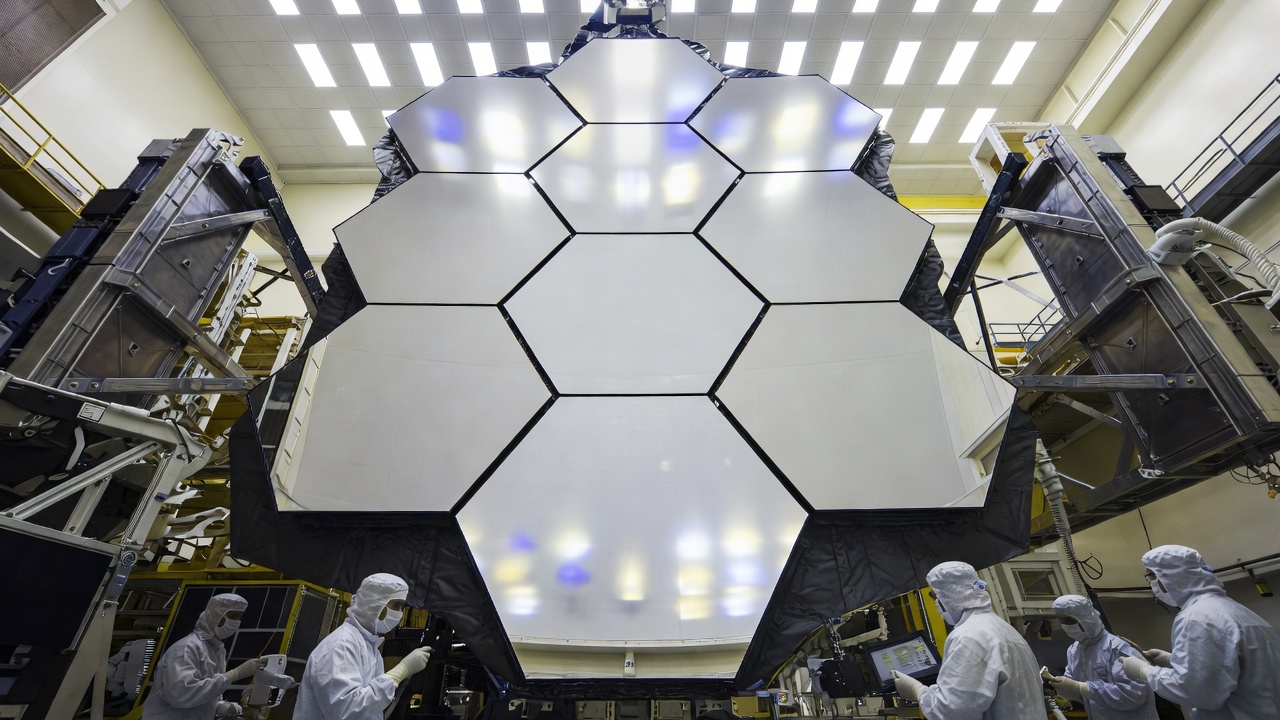
Determining the mass of EUCL J1729's central black hole and the environment of its host galaxy will require follow-up observations with the James Webb Space Telescope (JWST). Euclid identifies the objects and fixes their distances; JWST provides the spectroscopic resolution needed to characterize what is actually there.
Why It Matters
The central problem that EUCL J1729 sharpens is not new, but each new data point makes it harder to dismiss as a measurement artifact. Supermassive black holes are thought to grow by accreting surrounding gas and, in some models, by merging with other black holes. Either process takes time. Standard cosmological models, built on the Lambda-CDM framework (a model describing a universe composed of roughly 68 percent dark energy, 27 percent cold dark matter, and 5 percent ordinary matter), do not comfortably accommodate black holes of this scale appearing so early in cosmic history.
The difficulty is not merely that EUCL J1729 exists 662 million years after the Big Bang. It is that the faint quasars Euclid is finding suggest this population is not rare. If the only known early quasars were extraordinarily luminous outliers, a theorist could argue they formed through unusual circumstances. A population of fainter, more numerous early quasars is harder to explain away.
Yang described the dynamic plainly: "Every step further back in time is making this question even harder to explain."
The theoretical candidates for forming black holes quickly enough to match the observations include so-called direct collapse black holes (in which a massive cloud of primordial gas bypasses the stellar phase and collapses directly into a black hole), abnormally high accretion rates, and seed black holes (smaller initial black holes formed from the first generation of massive stars). None of these mechanisms is fully confirmed, and the new Euclid census does not resolve which is correct. It does constrain the models further, by establishing that early supermassive black holes are not a phenomenon limited to a handful of exceptional cases.
Competitive Landscape
The distance-record competition in observational cosmology has historically been driven by wide-field optical and near-infrared ground surveys, followed more recently by space-based infrared instruments. The Euclid findings reorder that competitive picture in a specific way.
- Previous record holder (2021, unnamed) - The quasar that held the distance record before EUCL J1729 was discovered in 2021 and dated to 677 million years after the Big Bang. That record stood for roughly five years. It was, like its predecessors, an atypically luminous object, the kind of extreme outlier that ground-based and early space surveys could detect at those distances.
- Pre-Euclid survey infrastructure (nine-quasar sample) - Before Euclid's first 18 months of data, the total known population of quasars from earlier than 770 million years after the Big Bang numbered nine. Those nine objects came from years of targeted searches by various ground and space observatories, all of which faced the same limitation: they could only detect the most luminous examples. The faint-end population was effectively invisible.
- James Webb Space Telescope - JWST is not a competitor in the wide-field survey role Euclid occupies. Its strength is spectroscopic resolution and sensitivity at specific targets. For the newly found Euclid quasars, JWST is the designated follow-up instrument for measuring black hole masses and characterizing host galaxy environments, functions Euclid's survey mode is not designed to perform.
Independent analyst commentary specifically on this announcement was not publicly available at publication time.
Limitations and Caveats
The Euclid data behind EUCL J1729 represents only 18 months of a planned six-year mission. The telescope is mapping roughly one-third of the sky in infrared, which means the overwhelming majority of the survey area has not yet been analyzed for early quasars. The current census of 21 objects from before 770 million years after the Big Bang is almost certainly not the final count.
The mass of EUCL J1729's central black hole has not been reported in the available findings. Yang and colleagues identified and fixed the distance of the object; the spectroscopic follow-up required to measure mass and environment is planned with JWST but not yet completed. That mass figure matters enormously for theoretical models: without it, the object's existence is a constraint but not a tight one.
The current detection frontier sits at 662 million years after the Big Bang. According to Yang's team, Euclid's projected next target is 645 million years after the Big Bang, which they suggested could be reachable as soon as 2026. The redshift value for EUCL J1729 was not released in the available reporting from the July 6 paper.
What Comes Next
Euclid has four and a half years of its planned six-year mission remaining. The telescope's one-third-of-the-sky infrared survey will continue accumulating data, and the pipeline for identifying early quasars in that data is now calibrated and running. Yang confirmed the trajectory simply: "[T]he search will just keep going."
In parallel, JWST follow-up observations of the 12 new early quasars Euclid has identified will begin filling in what the survey data cannot provide: the masses of the central black holes, the properties of the surrounding host galaxies, and the gas environments that fed early growth. Those mass measurements are the data point theorists need most. A black hole at 662 million years after the Big Bang with a precisely measured mass is a far harder constraint on formation models than a confirmed detection without one.
Going from 9 objects to 21 in 18 months is a pace that, if it continues, will produce a statistically meaningful sample before the mission ends -- and statistical significance is what moves the field from speculation to falsifiable models. For anyone following early-universe physics, that shift from outlier-chasing to population science is the development worth watching: not the record itself, but the census behind it. The record will fall again. The population is what survives.
-- Zara Velez, Emerging Technology Editor
Sources: Science News -- Record-distant quasar EUCL J1729 (July 14, 2026) · Yang et al., Astronomy & Astrophysics, July 6, 2026 (Leiden University / ESA Euclid collaboration)