Fujitsu and Yaqumo Begin Hardware Testing on Neutral-Atom Quantum ComputerFujitsu and Yaqumo Begin Hardware Testing on Neutral-Atom Quantum ComputerFujitsu and Yaqumo Begin Hardware Testing on Neutral-Atom Quantum ComputerFujitsu and Yaqumo Begin Hardware Testing on Neutral-Atom Quantum Computer
September 9, 2026
Fujitsu Limited and Yaqumo Inc. began testing on an actual neutral-atom quantum computer in August 2026, four months after the two companies opened joint theoretical research in April 2026 into whether Fujitsu's STAR architecture (a design built to cut the number of qubits
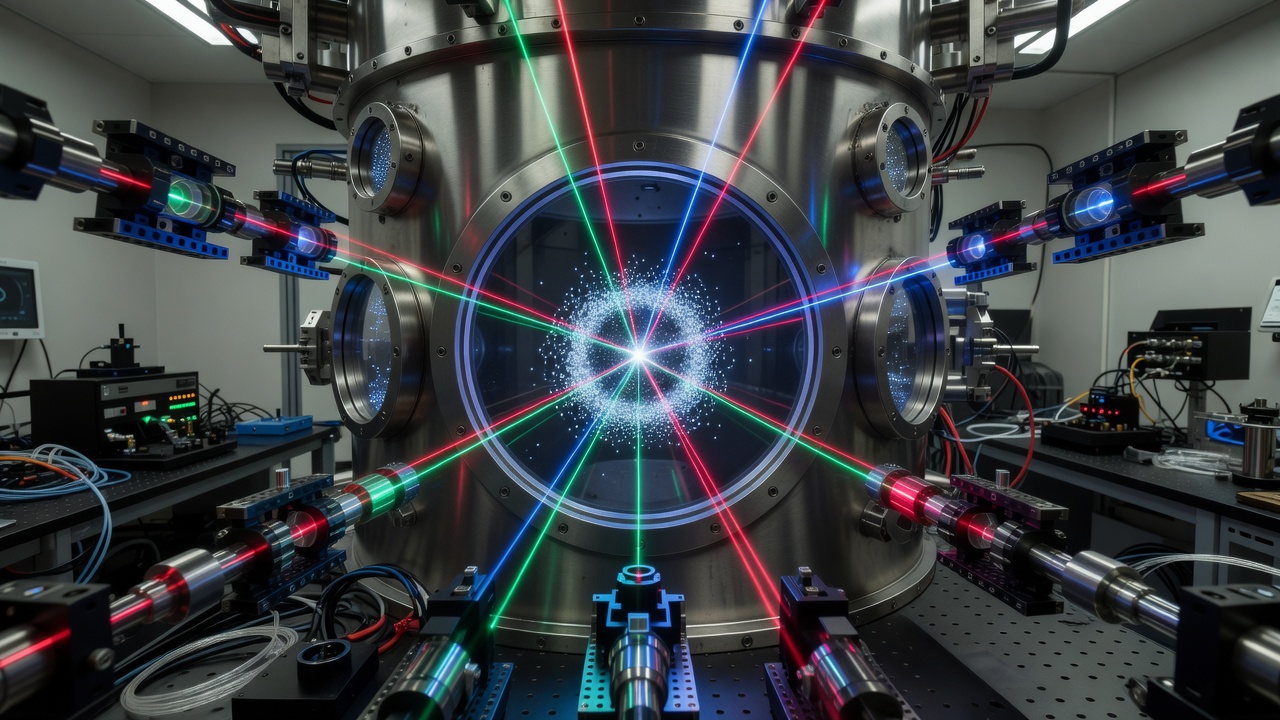
Fujitsu Limited and Yaqumo Inc. began testing on an actual neutral-atom quantum computer in August 2026, four months after the two companies opened joint theoretical research in April 2026 into whether Fujitsu's STAR architecture (a design built to cut the number of qubits needed for a working superconducting quantum computer) could work on hardware it was never designed for. The headline is the hardware handshake, but the structural shift underneath it matters more: whether a quantum computing architecture can be transplanted wholesale from one physical qubit substrate to a fundamentally different one. For enterprise technology buyers watching superconducting, neutral-atom, trapped-ion, and diamond-spin qubits race toward commercial viability with no consensus winner, an architecture that only works on the hardware it was built for is a far smaller bet than one that transfers.
What Happened
Since April 2026, Fujitsu, a Japanese global information and communication technology company, and Yaqumo, a startup engaged in the research and development of quantum computer hardware using ytterbium neutral atoms, have conducted joint theoretical studies on whether STAR architecture, originally developed for superconducting quantum computers in the Early-FTQC (Early-Fault-Tolerant Quantum Computer) era, could apply to Yaqumo's neutral-atom hardware, a qubit design that traps and controls individual atoms with lasers rather than etching circuits onto a superconducting chip. That research moved off the whiteboard in August 2026, when the two companies began testing on an actual neutral-atom machine.
- April 2026: Fujitsu and Yaqumo begin joint theoretical research on STAR architecture's applicability to neutral-atom hardware.
- August 2026: Testing begins on an actual neutral-atom quantum computer.
- Fiscal year 2027: Yaqumo's target for a working system exceeding several hundred qubits with quantum error correction.
- March 24, 2025: Fujitsu's prior launch of the Open Quantum Toolchain for OPerators and USers (open-source software covering everything from environment setup to operation for quantum computer cloud services), the software now being tested alongside STAR.
Neither company has disclosed a qubit count for the physical machine under test, nor released benchmark or performance results from the August 2026 testing, a gap that leaves the scale and success criteria of the collaboration undefined for now. What's actually being tested is not a new chip but a transplant: whether Fujitsu's architecture and cloud software, engineered around superconducting qubits, can be adapted to handle commands, job management, and calibration on a fundamentally different physical system.
The Technical Breakthrough

The core technical question is connectivity. Superconducting qubits are wired together in fixed physical layouts, which constrains which qubits can interact directly. Neutral-atom qubits achieve all-to-all connectivity more easily, according to the joint release, because individual atoms can be rearranged and linked with laser-controlled optical tweezers rather than fixed wiring. That difference could also enable more efficient quantum error correction (the techniques used to detect and fix the small mistakes that accumulate as qubits interact with their environment), since algorithms do not have to route information around a fixed physical map.
STAR architecture's selling point is that it has the potential to significantly reduce the number of qubits required for quantum computation, per the announcement, but the companies caution that its effectiveness varies greatly depending on the type of quantum computer, which is exactly why hardware validation, rather than further theoretical study, is the next step. Bringing STAR and the Open Quantum Toolchain onto Yaqumo's ytterbium-based system required adapting command conversion, job management, and device status monitoring and calibration functions, since the commands sent to neutral-atom machines differ from those used on superconducting machines. That adaptation work, more than any single benchmark, is what the August 2026 testing phase is actually measuring: whether a software layer built for one qubit modality can be rewritten, rather than rebuilt from scratch, for another.
Why It Matters for Industry
Yaqumo frames the stakes in its own words: "We believe that Fujitsu's expertise in architecture design and cloud infrastructure, accumulated through its work on superconducting and diamond spin quantum computing, will strongly support our research and development of neutral-atom quantum computers. Through demonstrations involving connectivity with Open Quantum Toolchain for OPerators and USers and other Early-FTQC era technologies such as the STAR architecture, we aim to accumulate technical expertise that further unlocks the potential of neutral-atom quantum computing. This joint research will steadily advance our efforts toward realizing FTQC."
The significance is that Fujitsu is not a neutral-atom newcomer bringing generic cloud tooling. It is applying architecture and infrastructure lessons already tested on superconducting systems and diamond spin quantum computing (a qubit approach that uses defects in diamond crystals) to a third qubit type, and using the STAR and Open Quantum Toolchain demonstrations specifically to accumulate the expertise needed to reach FTQC (fault-tolerant quantum computing: machines capable of running long computations without accumulated errors destroying the result). The stated end goal for both companies is a cloud platform where external users eventually access neutral-atom systems, and ultimately multiple quantum computer types, through a single unified interface, rather than learning a new toolchain for every qubit modality that reaches market.
Competitive Landscape
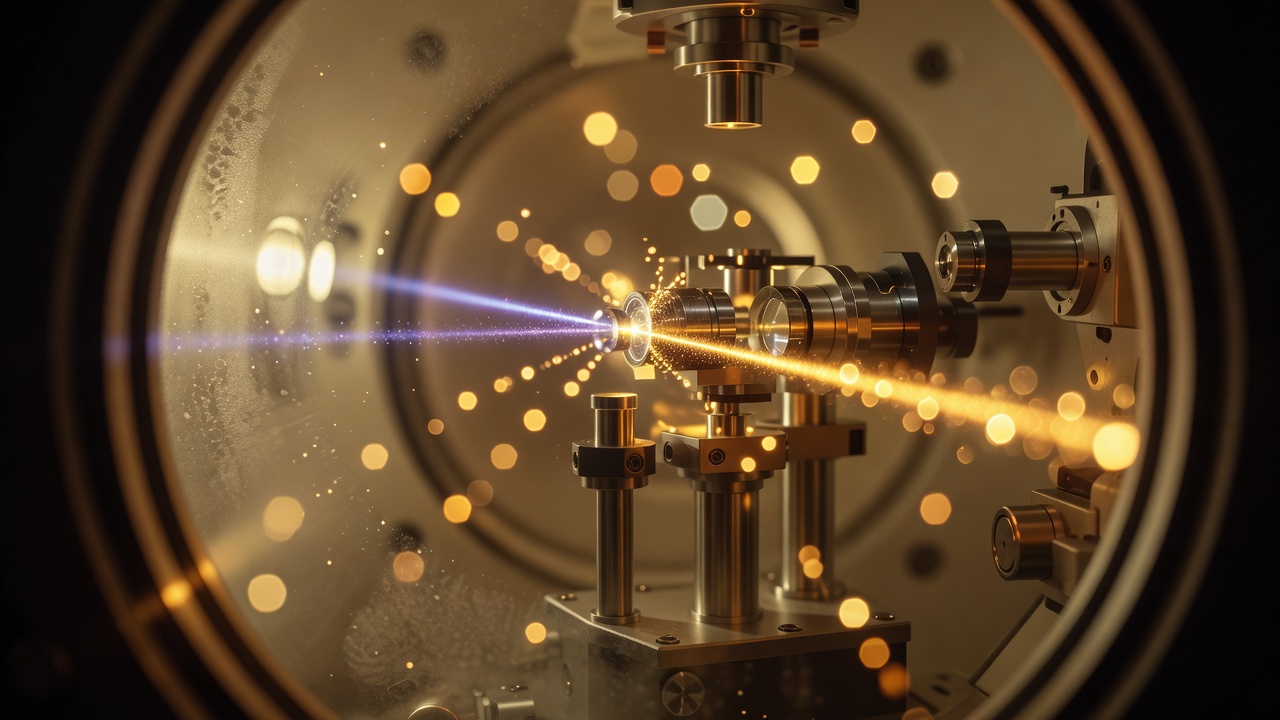
The joint release frames the industry bluntly: multiple hardware approaches are competitively advancing toward practical quantum computing, and it is crucial to broadly explore diverse quantum computer technologies rather than commit early to one modality. Yaqumo enters that field as an early-stage challenger, a startup built specifically around ytterbium neutral-atom hardware, competing for attention against far larger superconducting and trapped-ion efforts. Unlike the superconducting and trapped-ion programs backed by much larger technology companies, Yaqumo's route to scale runs through partnerships like this one rather than in-house cloud infrastructure, which is precisely why a validated software layer from Fujitsu matters more to a startup than it would to a bigger rival building its own tooling from scratch.
Fujitsu's differentiator is breadth rather than a single hardware bet. Its quantum research portfolio already spans superconducting qubits, diamond spin quantum computing, and FTQC architecture work, and it is now testing whether that experience, along with the STAR architecture and Open Quantum Toolchain built on top of it, generalizes to a fourth substrate. Independent analyst commentary specifically on this announcement was not publicly available at publication time.
The Bigger Picture
Yaqumo's own roadmap gives the collaboration a deadline: the company aims to develop a working system with more than several hundred qubits and quantum error correction capabilities by fiscal year 2027, which turns the current testing phase into a checkpoint rather than an endpoint. Reaching several hundred error-corrected qubits within roughly a year and a half would be a significant jump from where the joint testing program stands today, since neither company has disclosed how many qubits the machine currently under test actually has.
The Open Quantum Toolchain for OPerators and USers is not new software built for this partnership. Fujitsu launched the open-source toolchain on March 24, 2025, as basic software covering everything from environment setup to operation for quantum computer cloud services, more than a year before the Yaqumo collaboration began. That the same toolchain is now being tested against a qubit modality it was never designed for is the clearest evidence of what Fujitsu is trying to prove: that its software and architecture layer, not any single chip, is the durable asset while the underlying hardware race remains unsettled, and that Yaqumo's ytterbium hardware is the proving ground for whether that bet holds outside superconducting qubits.
What's Next
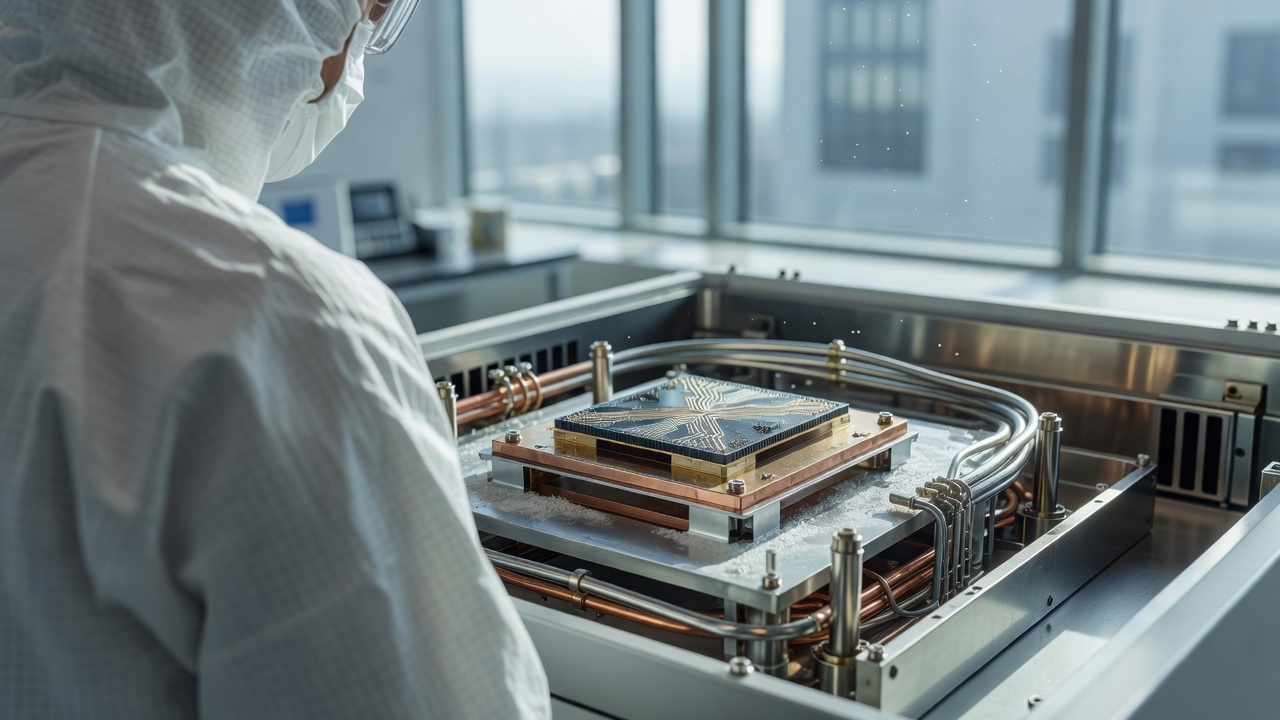
The immediate next step is more hardware, not more theory: continued joint testing on Yaqumo's neutral-atom machine, verifying whether STAR architecture and the Open Quantum Toolchain can reliably handle command conversion, job management, and calibration on ytterbium-based qubits at whatever scale the current system supports. Neither company has published a timeline for when this testing phase will conclude or when results will be released, so the next concrete marker to watch is Yaqumo's fiscal year 2027 target of a working system exceeding several hundred qubits with quantum error correction built in.
Beyond that milestone, both companies have described the same end state: a cloud platform where users access neutral-atom quantum computers, and eventually multiple quantum computer types, through one unified interface rather than a separate toolchain for every qubit modality. Whether that unification happens depends on whether the current testing phase proves STAR's qubit-reduction advantage survives outside the superconducting hardware it was designed for. If it does, Fujitsu has a template for porting the same architecture to other qubit modalities as they mature. If it doesn't, the fiscal year 2027 milestone becomes a Yaqumo-only story, and Fujitsu's cross-modality bet resets to theoretical.
The real test here is not whether Yaqumo's ytterbium atoms hold a qubit state long enough to matter. It is whether Fujitsu just proved, or is about to disprove, that quantum architecture can be written once and ported anywhere, the same bet every cloud company already won on classical silicon. Quantum computing has not settled on its transistor yet, and this quiet August test is one of the first real attempts to build the operating system before the hardware war is even decided.
For developers building on quantum cloud platforms, the practical question is portability of tooling, not just qubit count. If Fujitsu's Open Quantum Toolchain and STAR architecture genuinely work across both superconducting and neutral-atom systems, the same job submission, calibration, and monitoring code could run against multiple qubit backends without a rewrite, similar to how a single cloud SDK can target different processor families. Until Yaqumo publishes a qubit count and benchmark data from the August 2026 testing, that portability promise remains unverified in production, but it is the metric worth tracking before committing development time to any single quantum hardware vendor.
-- Aria Lin, Enterprise Technology Analyst
Sources: The Quantum Insider · NIST Quantum Algorithm Zoo · Quantum Computing 2025: State of Play