Heat Acclimation Training Works as Well in Older AdultsHeat Acclimation Training Works as Well in Older AdultsHeat Acclimation Training Works as Well in Older AdultsHeat Acclimation Training Works as Well in Older Adults
September 14, 2026
Seven days of daily hot water immersion produced nearly identical heat acclimation in healthy adults in their 20s and adults in their 60s and 70s, according to a study led by heat physiologist Daniel Gagnon of the Montreal Heart Institute and Universite de Montreal: both age
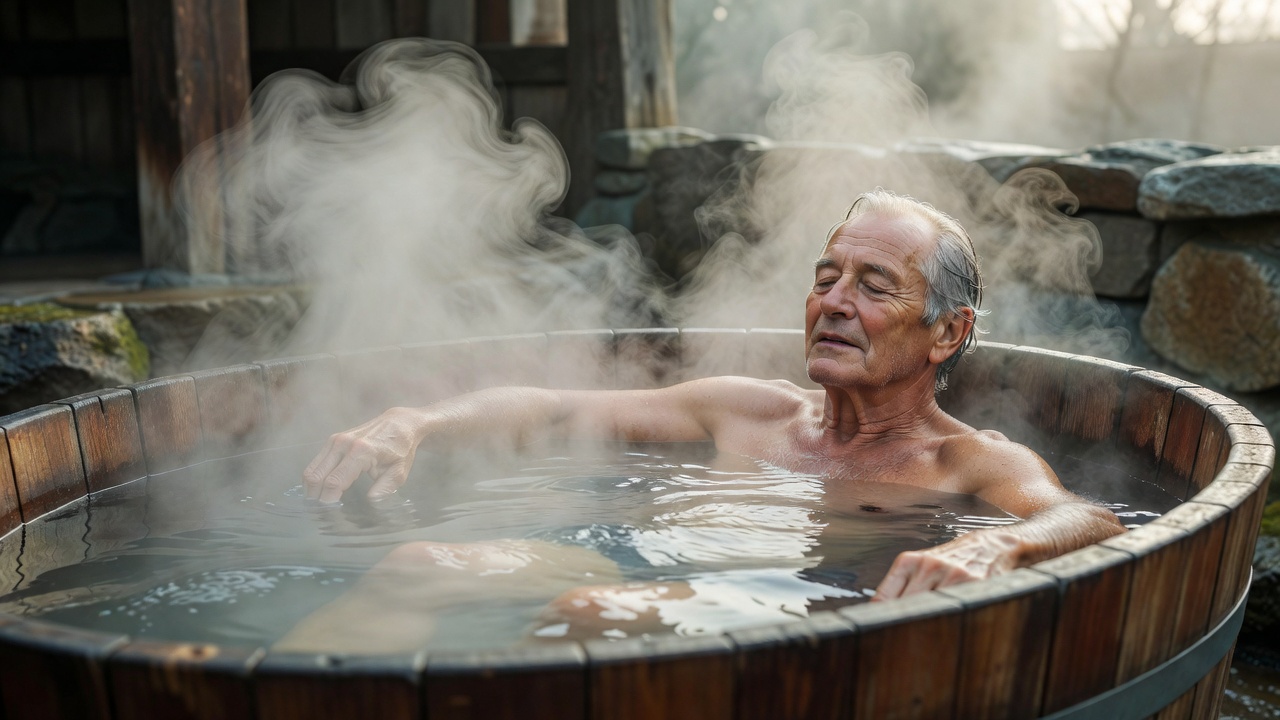
Seven days of daily hot water immersion produced nearly identical heat acclimation in healthy adults in their 20s and adults in their 60s and 70s, according to a study led by heat physiologist Daniel Gagnon of the Montreal Heart Institute and Universite de Montreal: both age groups saw a 0.4 degrees Celsius drop in resting body temperature and a five beats per minute drop in heart rate after the weeklong protocol. The number itself is modest. What matters more is the assumption it challenges: physiologists have documented heat acclimation for decades in young athletes, soldiers and outdoor workers, but whether older adults, the group most likely to die in a heat wave, retain the same capacity to adapt has stayed unresolved until now. With more than 10,000 Europeans estimated dead in this year's June heat wave, that question has stopped being academic.
What the Researchers Found
The question driving all three research programs is the one Gagnon poses directly: "With more frequent periods of extreme heat ... can we actually acclimate older populations, especially those with chronic diseases?" His team's answer, published in May 2026 in the Journal of Physiology, is a qualified yes. Comparing 15 adults in their 20s and 30s against 16 adults in their 60s and 70s who underwent an identical weeklong immersion protocol, Gagnon's team found the same magnitude of adaptation in both age brackets: sweating and skin blood vessel dilation, the two mechanisms that move heat from the body's core to its surface for radiative cooling, began earlier in the exposure, resting body temperature fell by an average of 0.4 degrees Celsius, and heart rate dropped by five beats per minute in both groups by the end of the week.
"We know for sure that the body can acclimate, but we have to be exposed to heat on a regular basis," Gagnon said. "It has to be a pretty considerable dose." The upshot, he said, "is that even if we're older, our body still has the ability to adapt to heat."
A parallel study from Caroline Li-Maloney, a Ph.D. candidate at the University of Ottawa's Human and Environmental Physiology Research Unit, tested whether that adaptation holds up under a second heat wave. Women in their 60s, 70s and 80s who completed her acclimation protocol maintained a core body temperature 0.2 degrees Celsius lower, and a heart rate several beats per minute lower, than before acclimation, during a one-hour seated exposure to simulated heat wave conditions of 36 degrees Celsius air at 45 percent humidity. Li-Maloney's findings were presented in April 2026 at the American Physiology Summit in Minneapolis.
The Methodology
All three protocols rely on hot water immersion (repeated shoulder or waist-deep soaking in heated water to raise core body temperature and trigger the same adaptations the body would develop from exercising or working in the heat). At the University of Ottawa, a woman in her 60s lowered herself into a 40 degrees Celsius immersion tub and had an immediate reaction: "I can't do this." Li-Maloney, who ran the protocol, put it bluntly: "I'm going to be straight up: People hated doing this."
Gagnon's version held participants in 40 degrees Celsius water for the first hour, then alternated shoulder-high and waist-high water for a second hour to keep core body temperature at or above 38.5 degrees Celsius, repeated daily for seven days. Jeremy McCormick, an integrative physiologist also at the University of Ottawa, ran a separate weeklong immersion study on a small group of healthy men in their 60s and 70s, published in August 2026 in the Journal of Sport and Health Science. His team measured heat shock proteins (molecules found across most organisms, including plants and bacteria, that stabilize and repair cellular proteins damaged by heat and other stress) in blood immune cells and found elevated concentrations after the week of immersion, a change McCormick said "seemed to alleviate some of the cellular stress."
| Study lead | Sample | Protocol | Publication venue |
|---|---|---|---|
| Daniel Gagnon | 15 adults, 20s-30s vs. 16 adults, 60s-70s | 1 hr at 40C water, then alternating shoulder/waist-high water holding body temp at/above 38.5C, daily x 7 days | Journal of Physiology, May 2026 |
| Caroline Li-Maloney | Women in 60s, 70s, 80s | Shoulder-deep 40C immersion protocol; simulated heat wave retest at 36C / 45% humidity, seated 1 hr | American Physiology Summit, April 2026 (conference presentation) |
| Jeremy McCormick | Small group of men, 60s-70s | Weeklong hot water immersion; blood immune cell heat shock protein measurement | Journal of Sport and Health Science, August 2026 |
Despite the discomfort, Li-Maloney said participants kept volunteering: "They love the idea that a study like this might make them at least feel better when summer starts."
Why It Matters
More than 10,000 people are estimated to have died in the heat wave that swept Europe this June, a toll weighted heavily toward older adults, the same population these acclimation studies target. The physiological stakes are precise: sustained elevation of core body temperature above 39-40 degrees Celsius can progress to heat exhaustion and, left unaddressed, to delirium, seizures, organ failure and death. Europe has confronted mass heat mortality at even larger scale before: the 2003 heat wave is widely reported to have killed tens of thousands of people continent-wide, a toll driven in large part by heat's disproportionate impact on the elderly.
Whether a population is acclimated to heat shows up directly in mortality data. Critical care physician Abderrezak Bouchama of the King Abdullah International Medical Research Center found that Mecca residents have a minimum mortality temperature (the temperature associated with the lowest risk of death from natural causes, interpreted by many scientists as a marker of physiological adaptation) of 26 degrees Celsius, measured between 2006 and 2014. International Hajj pilgrims visiting the same city over the same period had a minimum mortality temperature of just 23.5 degrees Celsius, a gap Bouchama's team, publishing in Environmental Health Perspectives in 2023, attributes to some combination of air conditioning access, outdoor exposure, genetics and physiological acclimation. Mecca's mortality numbers "started skyrocketing" above 38 degrees Celsius, per the same research team, while in a cooler climate like the UK, the minimum mortality temperature sits in the high teens or low twenties. "It sits far higher" in hot countries, Bouchama said.
Competitive Landscape
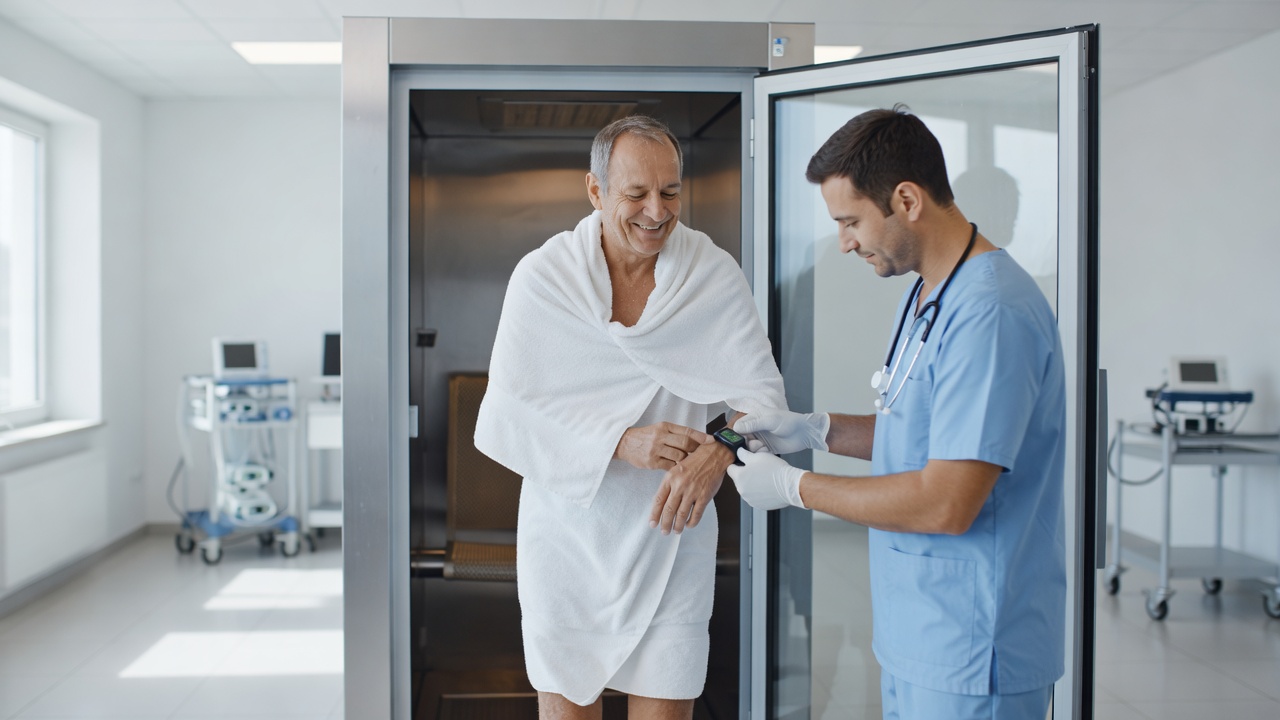
Three independent research groups are converging on the same experimental approach from different angles. Daniel Gagnon's team at the Montreal Heart Institute and Universite de Montreal ran the most direct age comparison, testing 15 younger and 16 older adults side by side under an identical protocol. Caroline Li-Maloney's group at the University of Ottawa's Human and Environmental Physiology Research Unit is focused specifically on women in their 60s, 70s and 80s and on whether acclimation survives a second, simulated heat wave. Jeremy McCormick, also at the University of Ottawa, is working a level down, tracking heat shock protein changes in older men rather than whole-body temperature and heart rate.
- Daniel Gagnon, Montreal Heart Institute / Universite de Montreal: cross-age whole-body thermoregulation comparison, Journal of Physiology, May 2026.
- Caroline Li-Maloney, University of Ottawa: older women, repeat heat wave durability, American Physiology Summit, April 2026.
- Jeremy McCormick, University of Ottawa: cellular heat shock protein response, Journal of Sport and Health Science, August 2026.
No directly comparable commercial peer to this clinical acclimation research was publicly identifiable at publication time. Independent analyst commentary specifically on this research was not publicly available at publication time.
Limitations and Caveats
Only two of the three studies cited here have cleared peer review. Gagnon's cross-age comparison appeared in the Journal of Physiology and McCormick's heat shock protein findings in the Journal of Sport and Health Science, but Li-Maloney's results on older women were presented at the American Physiology Summit in Minneapolis, a conference presentation rather than a published, peer-reviewed paper. McCormick's sample is described only as "a small group" of men in their 60s and 70s, with no exact participant count given, and several of Li-Maloney's reported figures, including the heart rate reduction after acclimation, are stated only as "several beats-per-minute" rather than a precise number.
The studies also cover a narrow slice of a much larger problem. All three protocols ran for roughly a week, and acclimation gained from repeated heat exposure is known to fade within weeks without continued exposure. None of the studies test whether a week of laboratory immersion actually reduces heat-related illness or death outside a controlled setting. And the protocol carries its own risk calculus for the population it targets: whether older adults with heart disease, mobility limitations or cognitive impairment could safely replicate a week of daily hot water immersion outside a supervised laboratory setting is a question none of the three research teams has directly addressed.
What Comes Next
Bouchama's Mecca mortality-threshold work offers one template for population-specific heat benchmarks: each population's minimum mortality temperature reflects its own mix of climate, infrastructure and acclimation, rather than one global safety number. Applying that logic to older adults would mean tracking real-world illness and death after acclimation protocols, not just lab measurements of temperature and heart rate.
That gap matters because the physiological ceiling is real. Sustained wet-bulb temperature (a combined measure of heat and humidity representing the coolest temperature achievable through evaporation) above 35 degrees Celsius for six hours can cause lethal hyperthermia even in an acclimated body; one set of experiments found a wet-bulb temperature above 30.55 degrees Celsius already produces uncompensable heat stress in young, healthy adults. Acclimation can lower the temperature at which the body starts to struggle, but it cannot move that ceiling indefinitely.
For an older adult without a research lab, the finding is roughly replicable at home: about two hours a day of shoulder-deep soaking in 40 degrees Celsius water, repeated daily for a week, done before the first heat wave of the season arrives. "By the time the first heat wave hits, you should be more protected," Li-Maloney said. One participant described a trip to Thailand after the protocol, recalling her tour group struggling in the heat while she did not: "Everyone [else in] my tour group was suffering, and I felt great." No researcher involved is yet recommending unsupervised immersion for people with heart disease or mobility limitations.
-- Zara Velez, Emerging Technology Editor
Sources: Daniel Gagnon et al., Journal of Physiology (May 2026) · Jeremy McCormick et al., Journal of Sport and Health Science (August 2026) · Abderrezak Bouchama et al., Environmental Health Perspectives (2023)