Hydrogen Buses Work -- The 15-Year Procurement Risk Is What Doesn'tHydrogen Buses Work -- The 15-Year Procurement Risk Is What Doesn'tHydrogen Buses Work -- The 15-Year Procurement Risk Is What Doesn'tHydrogen Buses Work -- The 15-Year Procurement Risk Is What Doesn't
June 5, 2026
The $88 million in UK hydrogen bus trials that "largely failed due to high costs, technical faults, and unreliable fuel supply" did not fail because the buses stopped working. They failed because the systems around the buses did not hold.
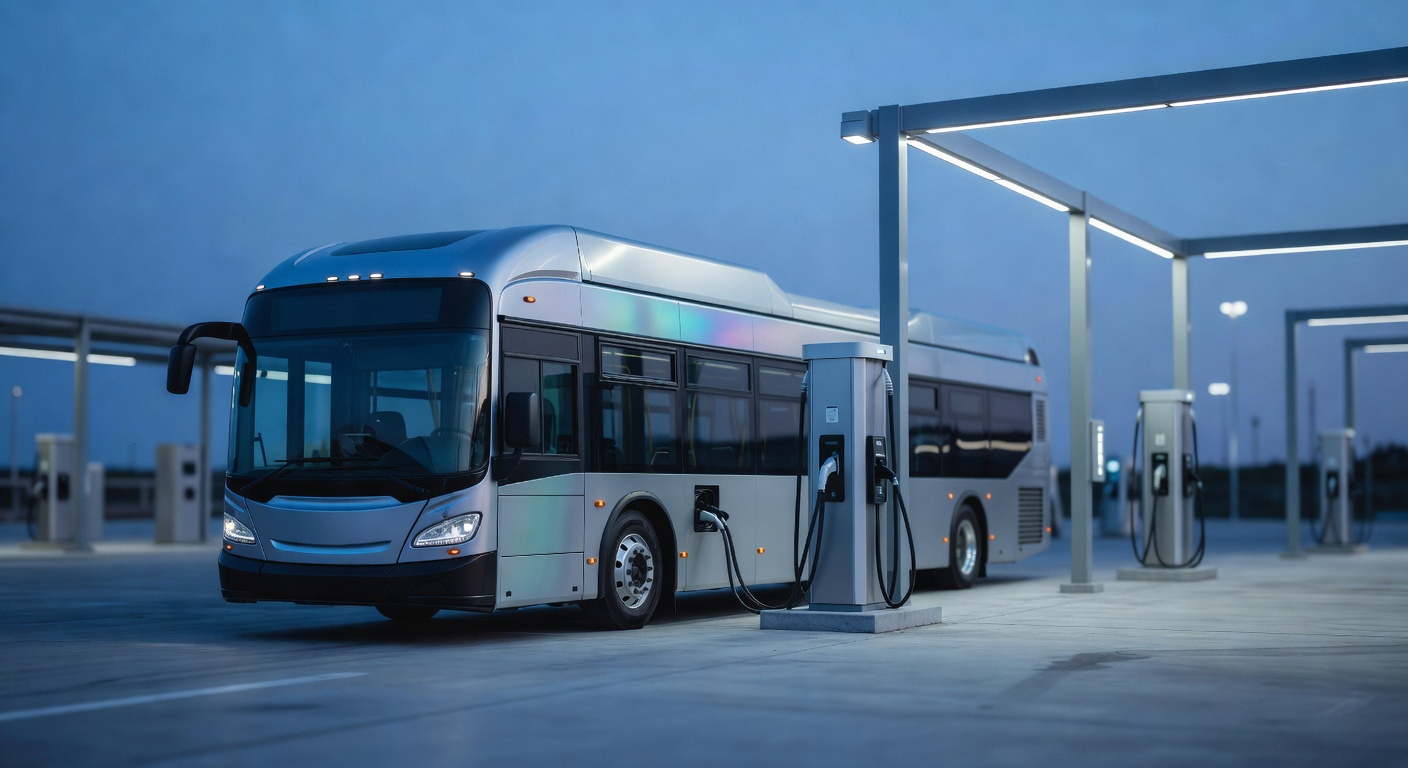
The $88 million in UK hydrogen bus trials that "largely failed due to high costs, technical faults, and unreliable fuel supply" did not fail because the buses stopped working. They failed because the systems around the buses did not hold. For transit agencies evaluating procurement decisions that will bind operating budgets for 12 to 15 years, that distinction is the procurement question.
A worldwide review of 153 sources on hydrogen fuel cell buses reaches a conclusion that technology advocates have resisted: hydrogen bus technology can be made to work, and that is no longer the relevant test. The test is whether it works economically, repeatably, and maintainably against a battery-electric baseline that keeps improving. In most procurement contexts today, it does not clear that bar.
The timing matters because procurement cycles are long, subsidy windows are closing in some jurisdictions, and the gap between what hydrogen bus programs announce and what they deliver has become measurable. The analysis draws on operational cases in Aberdeen, Scotland, and Vienna, Austria, among others. Readers of this article will get a structured account of why the fuel chain, not the fuel cell, carries most of the operating risk.
What's New
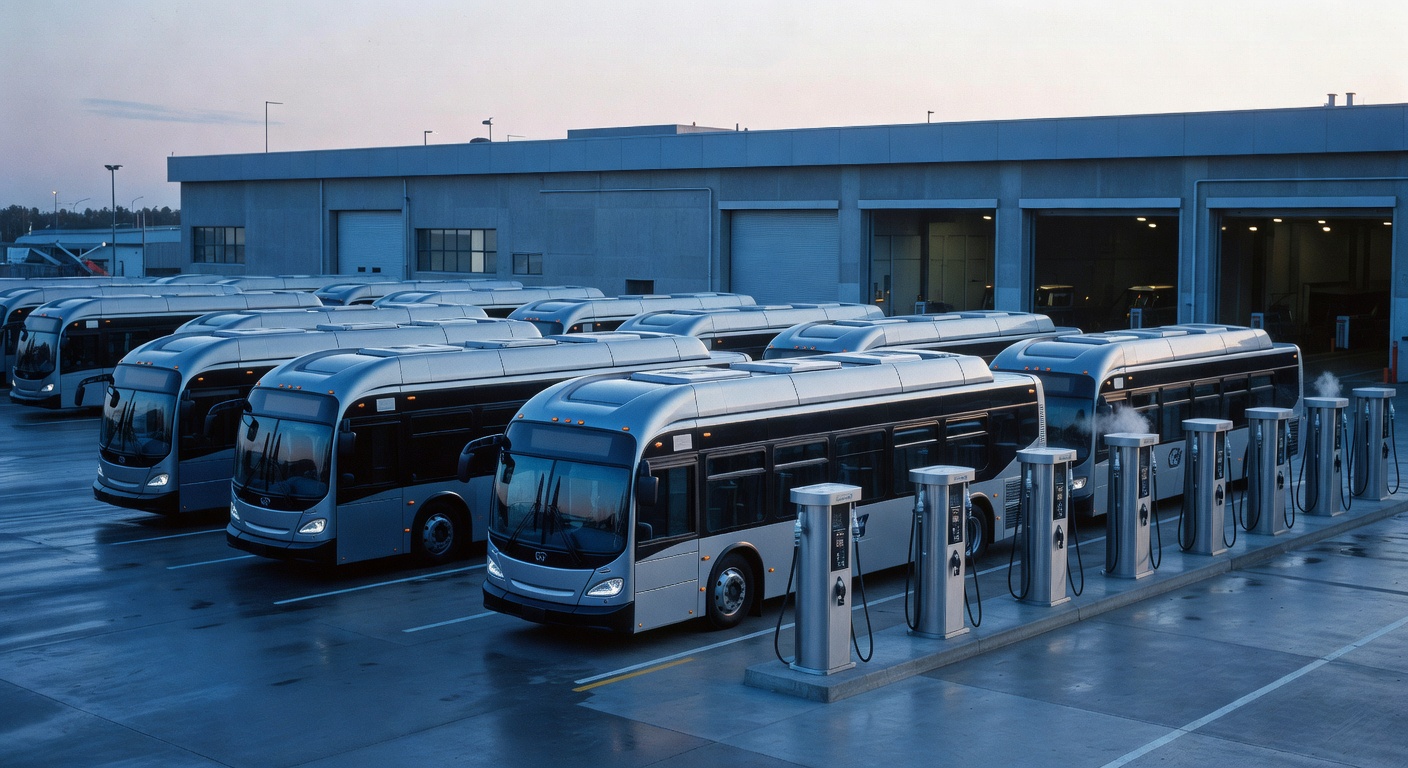
The analysis arrives as market forecasters are projecting sharp hydrogen bus growth. Coherent Market Insights estimates the global hydrogen buses market at $23.51 billion in 2025 and projects a 47.7% compound annual growth rate, reaching $360.51 billion by 2032. Future Market Insights puts the US segment at $0.64 billion for 2026, up from $0.50 billion in 2025, with a projected endpoint of $7.75 billion. These are vendor forecast figures and should be read as directional interest, not operating reality.
Against that backdrop, the 153-source review documents a consistent pattern: programs that were announced, funded, and photographed as progress, but that shrank or collapsed after the demonstration phase. Aberdeen bought hydrogen buses tied to a local hydrogen economy strategy linked to replacing oil and gas employment, then ended up trying to sell them when the refueling station was not refurbished by its owner. Vienna sidelined its hydrogen fleet, with the failure attributed not to propulsion but to ecosystem breakdown: parts availability, service depth, and supplier responsiveness.
How It Works
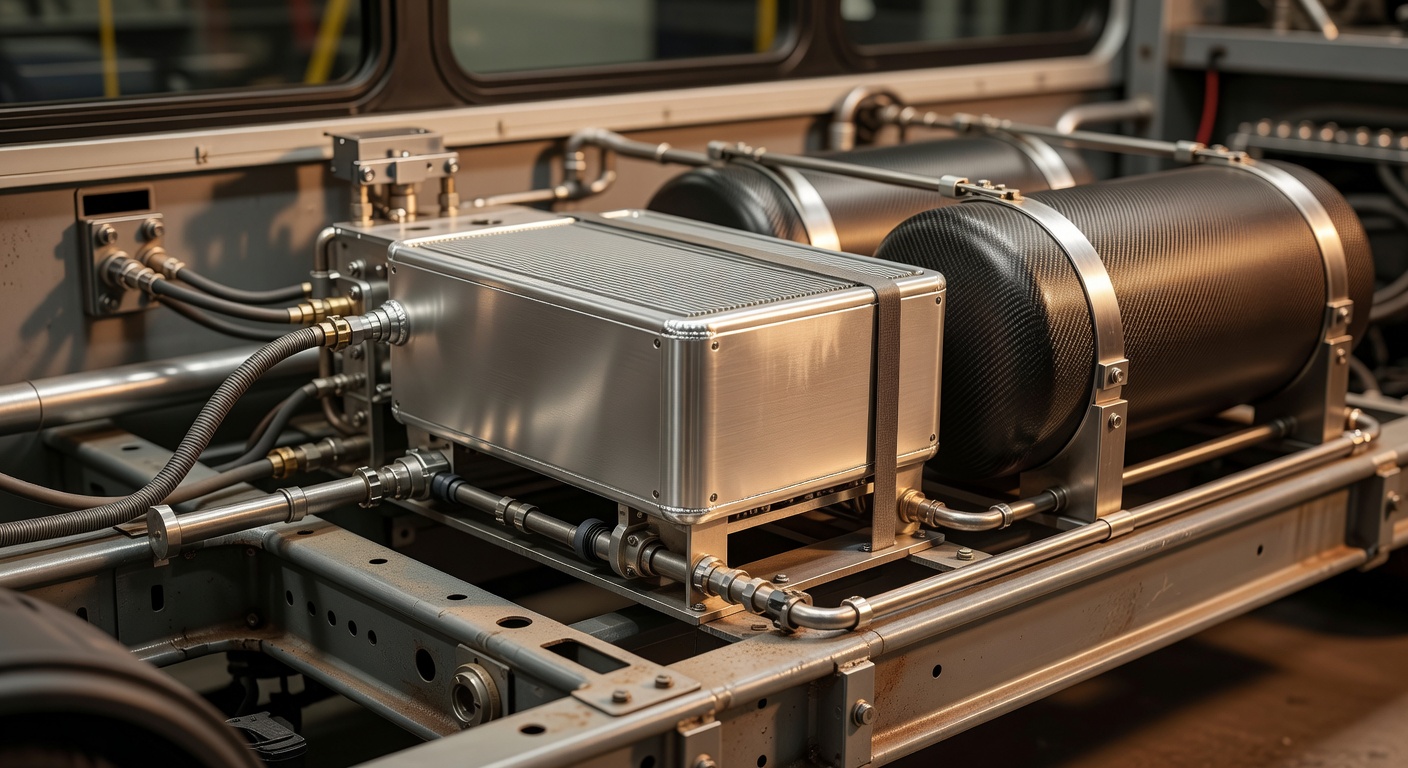
A hydrogen fuel cell bus uses a proton exchange membrane (a polymer sheet that conducts hydrogen ions while blocking electrons, forcing current through an external circuit) to convert hydrogen and oxygen into electricity. Individual fuel cells produce approximately 0.7 volts; series stacking meets the voltage requirements of a transit bus drivetrain. PEM fuel cell start-up time is 1 second, and the propulsion system itself is technically mature -- New Flyer delivered the world's first hydrogen fuel cell powered bus in 1994, and the core physics traces to Sir William Grove's fuel cell invention in 1838.
What the vehicle-level description omits is the parallel fuel chain that hydrogen transit requires: hydrogen production or sourcing (with carbon intensity determined by method), compression or liquefaction, delivery to the depot, on-site storage rated for cryogenic or high-pressure hydrogen, and dispensing systems with their own maintenance and certification requirements. Each step carries independent failure risk.
Fuel-cell stack warranties, parts supply chains, and emergency response procedures are operational variables that do not appear in vehicle-level comparisons, but they appear in operating budgets. Barnard's formulation is precise: "Outsourcing parts of the chain does not make the exposure disappear." Aberdeen's case confirmed this. The buses were functional. The refueling station, owned by a separate party, was not refurbished. The fleet stopped operating. That is a supply-chain failure, not a propulsion failure -- and it is the failure mode that procurement frameworks rarely price in advance.
The Economics
The economic case for hydrogen buses has been tested against a deliberately favorable input. The analysis notes that even at a hydrogen price of £5 per kilogram, described as "deeply unrealistic," fuel cell buses were still not competitive. The $88 million in UK hydrogen bus trials that "largely failed due to high costs, technical faults, and unreliable fuel supply" represents the realized cost of a system that looked viable on paper but carried unpriced operational risks.
Station utilization is a structural denominator problem. A hydrogen refueling station carries capital and maintenance costs that must be spread across the kilograms of hydrogen it dispenses. Small fleets mean low utilization, which means high per-kilogram effective cost. As Barnard writes: "A hydrogen station can be announced, funded, opened, photographed, and counted as progress while still being expensive infrastructure serving too few buses." That gap between announced and operational is what the 153-source review tracks: "Hydrogen buses still require too much sorting between what was announced, what was funded, what was ordered, what was delivered, what is running regularly, and what faded after the demonstration phase."
The battery-electric comparison is not static. Battery-electric buses consume approximately 1.2 kWh per kilometer, giving them a total cost of ownership advantage over diesel that is already established. The relevant procurement question is not hydrogen versus diesel but hydrogen versus battery-electric as battery costs decline, OEM support expands, warranties improve, and electrical infrastructure grows. Barnard's framing is that hydrogen must clear a compounding bar, not a fixed one.
Some jurisdictions procure hydrogen buses to support industrial policy goals: electrolyzer manufacturing, domestic fuel-cell supply chains, local hydrogen economy narratives. Barnard acknowledges this without endorsing it as a transit rationale. A transit agency buying hydrogen buses to support a regional hydrogen economy may be serving a legitimate policy goal while making a poor transit procurement decision. The two objectives require separate accounting.
Competitive Landscape
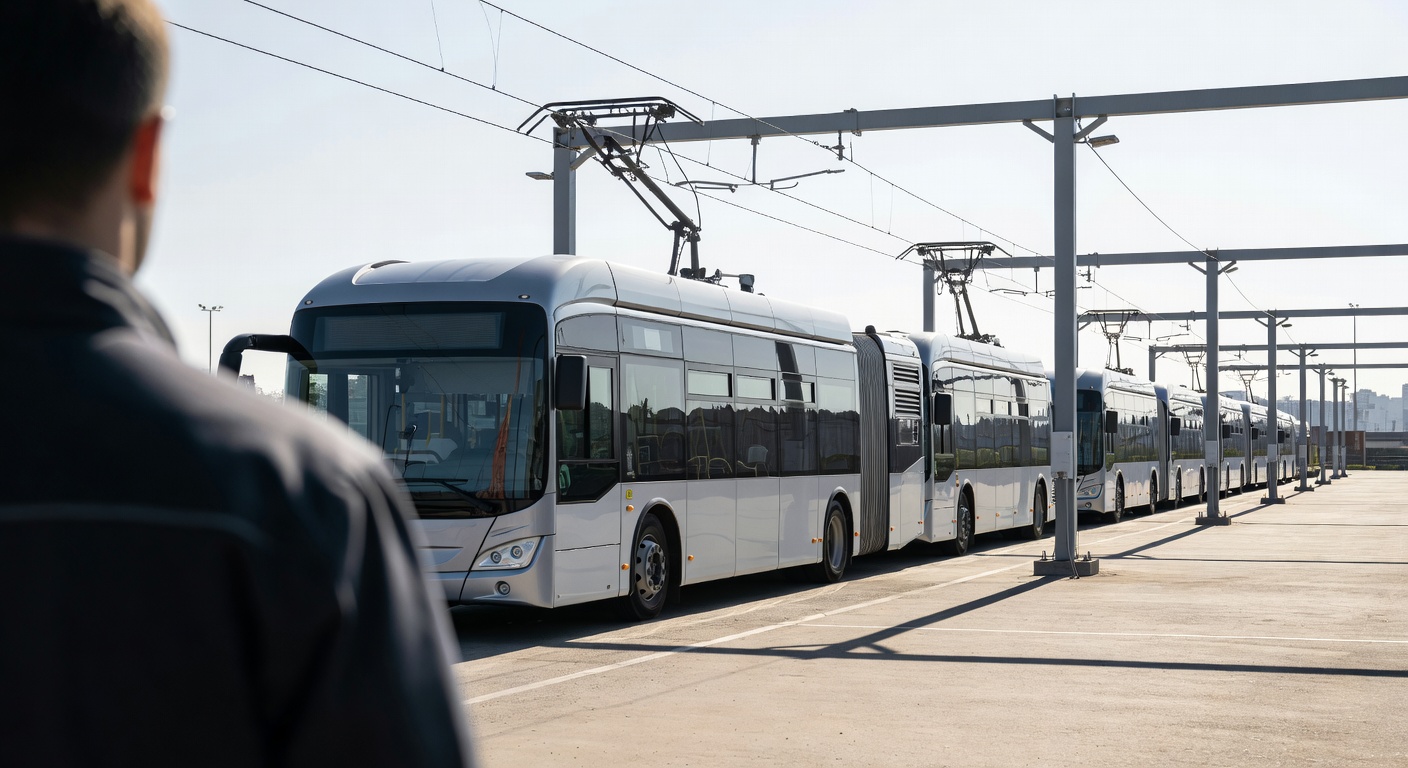
Air Products operates commercial liquid hydrogen refueling infrastructure for transit fleets and supplied the Crawley, UK station serving Go-Ahead Group's hydrogen bus fleet. That station dependency illustrates a dynamic documented across multiple programs: infrastructure serving a single operator or small fleet concentrates supply-chain risk at one point. If the station operator exits, delays maintenance, or declines to refurbish, the transit program ends regardless of vehicle condition. Aberdeen's program ended on exactly those terms.
Alstom, the train manufacturer behind the Coradia iLint, acquired Cummins' rail hydrogen fuel cell activities in April 2026 -- a rail integrator absorbing a fuel cell supplier rather than independent suppliers expanding into new transit markets. The broader competitive context is the battery-electric bus trajectory: Shenzhen replaced its entire fleet of over 16,300 buses with electric buses by 2017. Opportunity charging at 450 kW for 6 to 8 minutes per hour, alongside overnight DC charging that fully charges buses in 8 to 10 hours, has addressed the range and scheduling constraints that once favored hydrogen's faster refueling advantage.
Independent analyst commentary specifically on this announcement was not publicly available at publication time.
What's Next
The analysis does not predict the end of hydrogen bus deployment. It predicts that weak procurement cases will become expensive operating problems at the 12-to-15-year service horizon that transit agencies actually manage. Programs that survive demonstration phases and reach scaled, sustained deployment will be those where the full fuel chain -- not just the vehicle -- meets the operating bar.
The jurisdictions most likely to sustain hydrogen bus programs are those where the industrial policy rationale is explicit, the hydrogen supply is vertically integrated or contracted at guaranteed volume and price, and the fleet is large enough to achieve station utilization that keeps per-kilogram costs from compounding. Transit agencies that do not meet those conditions face a choice between battery-electric infrastructure investment and a hydrogen program with unpriced supply-chain exposure.
The procurement framework described asks five questions before any technology commitment: Is the fuel supply chain controlled or dependent on a third party's continued willingness to invest? Are fuel-cell stack warranties and parts availability verified over a 12-to-15-year horizon? Does the hydrogen source have confirmed low carbon intensity? Is station utilization sufficient to make per-kilogram hydrogen costs competitive against battery-electric total cost of ownership? And what will the battery-electric alternative look like in five years -- not as it existed when the analysis began?
Barnard's summary framing is direct: "Transit agencies should not reject hydrogen because it is hydrogen. They should reject weak procurement cases because weak procurement cases become expensive operating problems."
For a transit authority evaluating a 50-bus procurement over a 12-to-15-year service horizon, the framework translates to a specific due diligence obligation: the refueling infrastructure, its ownership, its maintenance contract, and its capacity utilization at fleet scale must each survive independent scrutiny before the vehicle specification is set. Aberdeen's program closed not because a bus malfunctioned, but because a station owner made a different capital allocation decision. A transit authority that did not contractually control that decision absorbed the full stranded-asset cost. Battery-electric procurement requires depot electrical redesign, utility coordination, and charger scheduling -- but those obligations plug into an existing and expanding infrastructure base with multiple competing suppliers. Hydrogen procurement requires building a parallel fuel system from production to dispensing, with each link carrying independent failure risk over the full procurement horizon.
The lesson Aberdeen offers is not that hydrogen is unworkable. It is that "workable" and "procurable under operating-budget pressure for 12 to 15 years" are different tests, and the transit sector is now accumulating enough operational data to tell them apart. The fuel cell has been functional since Grove's 1838 demonstration. What it has not yet demonstrated, in most transit markets, is the supply-chain durability that a 15-year operating commitment requires. Until it does, battery-electric is not the default because it is fashionable. It is the default because it has earned the operating record.
-- Raj Malhotra, Market Analysis Director
Sources: Michael Barnard / TFIE Strategy, CleanTechnica; Future Market Insights, Coherent Market Insights (market sizing)