IBM's 120-Qubit Chip Highlights the Quantum Computing Scaling GapIBM's 120-Qubit Chip Highlights the Quantum Computing Scaling GapIBM's 120-Qubit Chip Highlights the Quantum Computing Scaling GapIBM's 120-Qubit Chip Highlights the Quantum Computing Scaling Gap
August 24, 2026
IBM's newest quantum processor, built on a chip design the company calls Nighthawk, packs 120 qubits (the basic unit of quantum information) onto a single superconducting chip. That number sounds impressive until it is set against the scale researchers say is actually required:
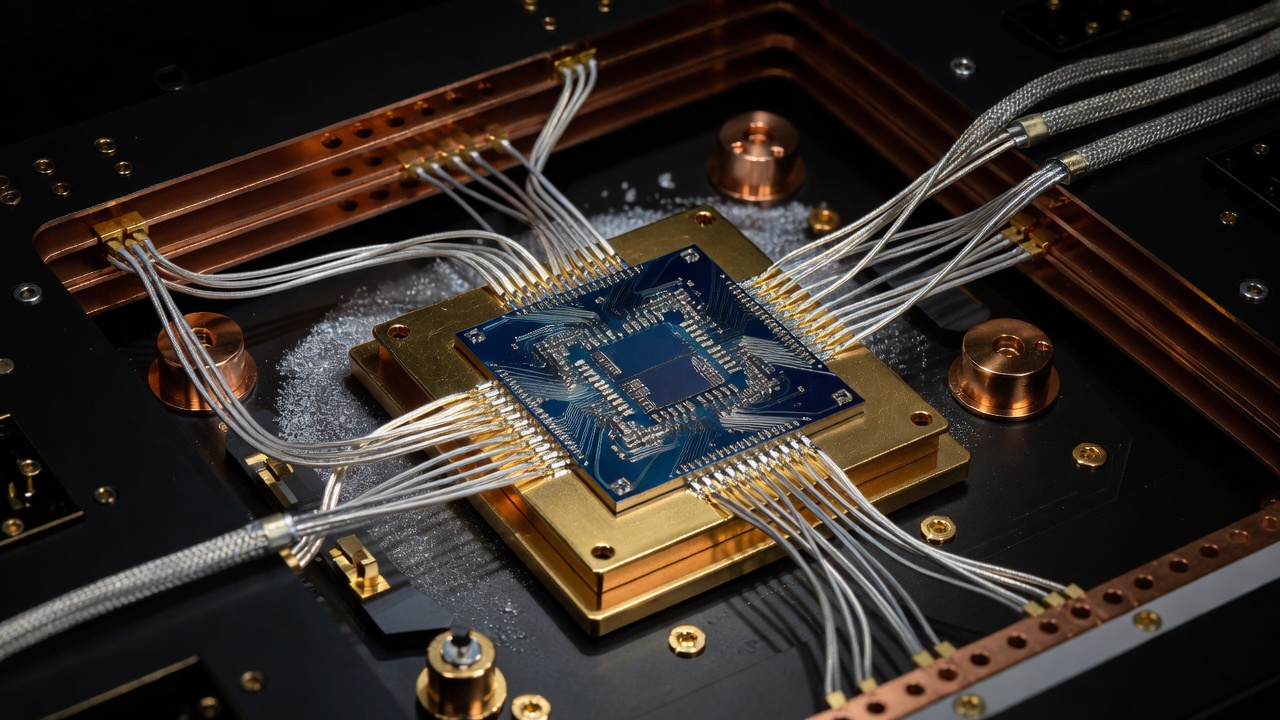
IBM's newest quantum processor, built on a chip design the company calls Nighthawk, packs 120 qubits (the basic unit of quantum information) onto a single superconducting chip. That number sounds impressive until it is set against the scale researchers say is actually required: even the most optimistic estimates put a useful, beyond-prototype quantum computer at tens of thousands of qubits, with some projections running to perhaps millions. The gap between those two numbers, two to three orders of magnitude, is the real story behind an August 19, 2026 photo essay from Quanta Magazine's Ben Brubaker, which documents three incompatible physical technologies all racing toward that same distant finish line, with no consensus yet on which one gets there first.
What Happened
The piece uses IBM's Nighthawk-design superconducting chip, which hosts 120 qubits alongside supporting superconducting circuitry, as a visual entry point into a broader survey of how physicists actually build the hardware that runs quantum algorithms.
The Nighthawk chip is a snapshot of where the industry stands today: a working, 120-qubit device built with superconducting qubits (artificial qubits fabricated from metals like aluminum and niobium that only exhibit their quantum properties when cooled to near absolute zero). It is not, on its own, a breakthrough number. It is a data point in a much longer race, one the field frames explicitly around scale: getting from chips that host qubits in the low hundreds to systems that host them in the tens of thousands, a jump the reporting treats as the defining engineering problem of the next phase of quantum computing.
The Technical Breakthrough
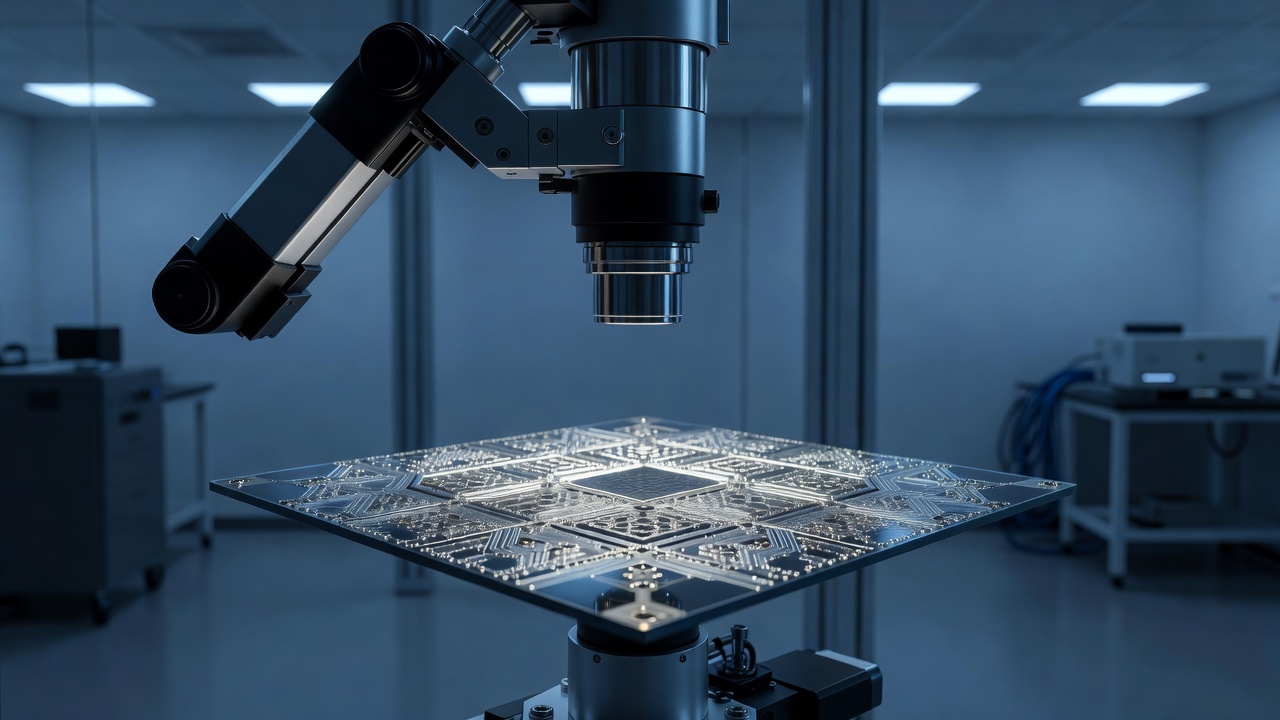
Every qubit technology now being pursued has to resolve the same underlying conflict. A qubit (the quantum equivalent of a classical bit) gets its computational power from two properties that classical bits do not have: superposition (existing in a blend of the 0 and 1 states at once, rather than strictly one or the other) and entanglement (a correlation between qubits so strong that measuring one instantly determines information about the other, regardless of distance). Those two properties are what let quantum computers, in principle, explore many possible answers to a problem simultaneously instead of checking them one at a time, the way a classical processor must.
Classical computers, from a dishwasher's microcontroller to the silicon powering today's AI hardware, do not have this problem. They rely on transistors that simply toggle between two stable states, 0 and 1, and that stability is a feature: it is what makes classical bits cheap, fast, and easy to manipulate at room temperature. Qubits do not have that luxury. Superposition and entanglement are fragile states, easily destroyed by stray interactions with the environment: a stray photon, a vibration, or a fluctuation in an electromagnetic field can collapse a qubit out of its useful quantum state.
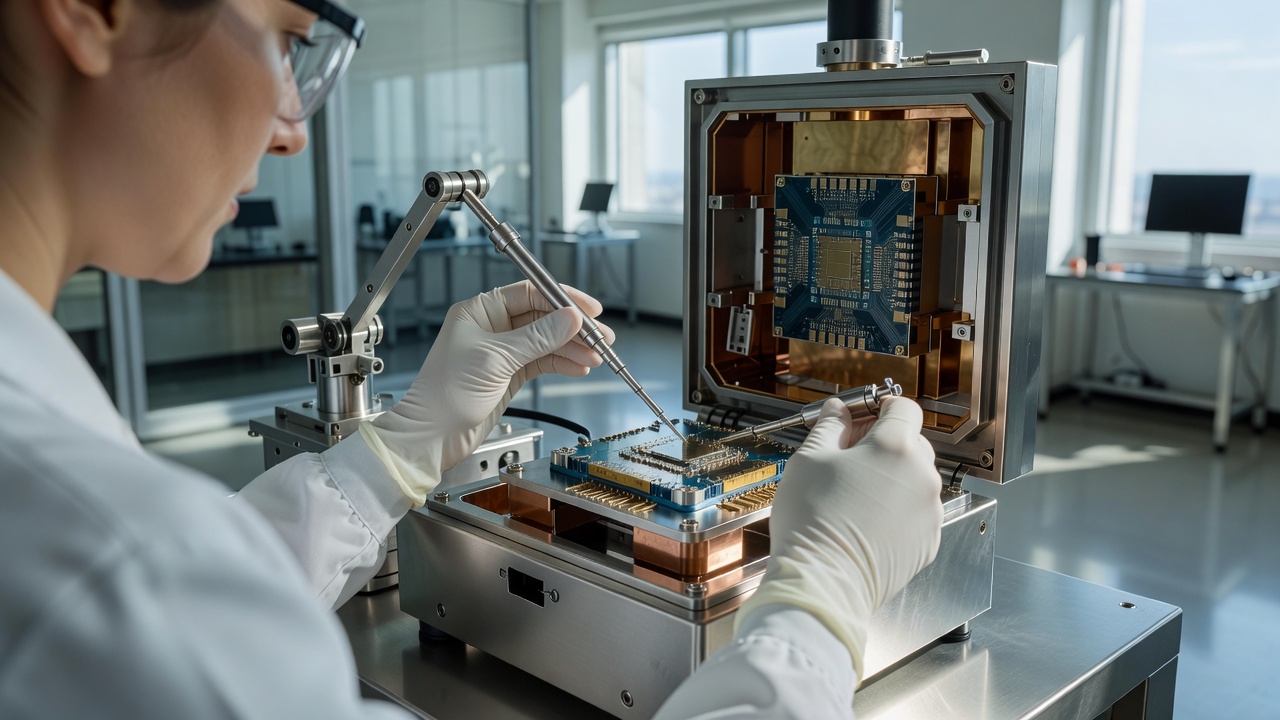
That fragility is why every qubit technology has to balance two competing needs at once: isolating the qubit well enough from the outside world that it holds its quantum state, while still leaving it accessible enough that researchers can manipulate and read it out on demand. Trapped-ion qubits (individual charged atoms held in place by electric fields) solve this by knocking a single electron off a neutral atom, creating an ion that electric fields can grip precisely. Superconducting qubits solve it by building the qubit directly into a modified classical-chip fabrication process, then isolating the whole circuit inside a cryogenic system called a dilution refrigerator (a cooling apparatus that brings superconducting circuits down to temperatures near absolute zero). Neither approach eliminates the tradeoff. Both are different bets on how to manage it.
Why It Matters for Industry
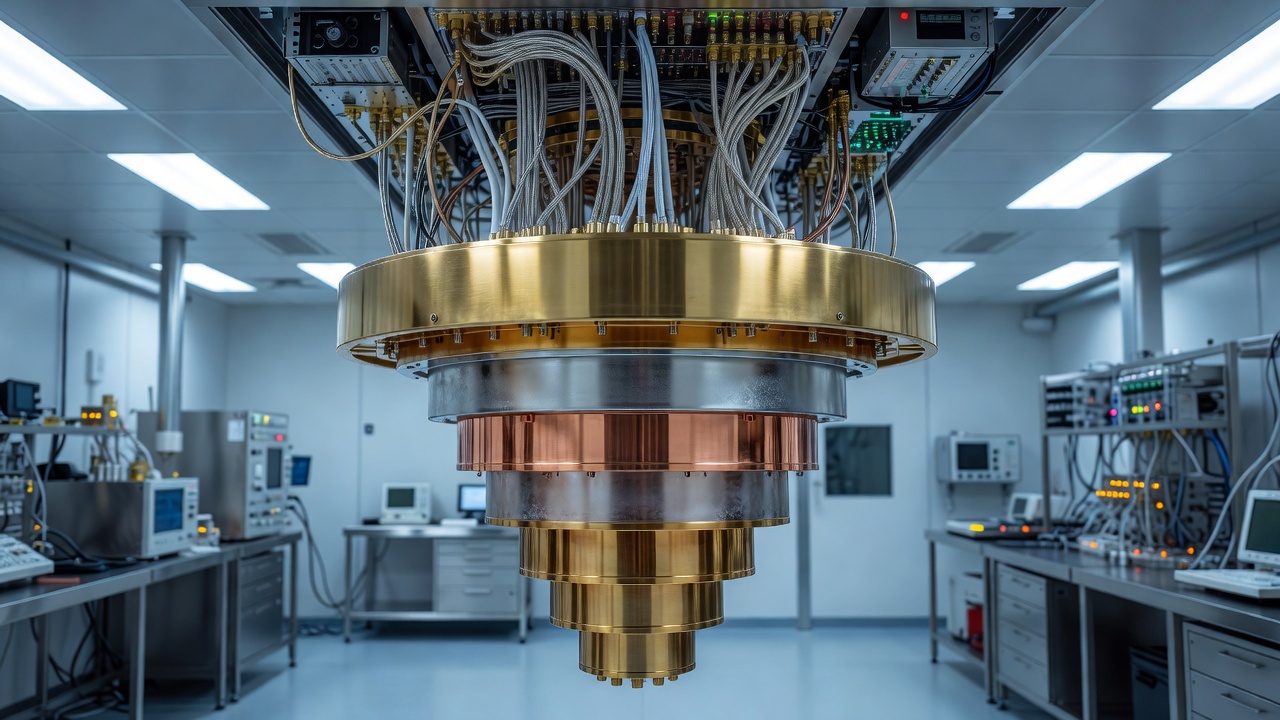
The 120 qubits on IBM's Nighthawk chip are a meaningful engineering milestone, but they are nowhere near the scale the field says is required for quantum computing to do commercially transformative work. Researchers cited in the reporting put the floor for a useful, beyond-prototype quantum computer at tens of thousands of qubits, even under the most optimistic assumptions, with some estimates running as high as perhaps millions.
That gap is not just a matter of adding more qubits to a chip. It is a matter of scaling the entire support apparatus around them: the control electronics, the wiring, and the measurement systems that read qubits out all have to grow in complexity alongside the qubit count itself, not stay fixed while the qubit number climbs. For enterprise buyers evaluating quantum computing roadmaps, this is the number that matters more than any single chip announcement: whether a given qubit technology has a credible path from hundreds of qubits to tens of thousands, not just whether it can post an incremental chip upgrade.
Competitive Landscape
No single qubit technology has won the argument yet. The reporting frames three physical approaches as directly competing paths toward the same tens-of-thousands-to-millions-qubit target, each with a different answer to the isolation-versus-manipulation tradeoff:
- Superconducting qubits (IBM's approach): builds artificial qubits into modified classical-chip fabrication processes, using metals like aluminum and niobium that become superconducting inside a dilution refrigerator. The Nighthawk-design chip, at 120 qubits, is IBM's current commercial data point on this path.
- Trapped-ion qubits: hold individually charged atoms in place using electric fields, the architectural alternative to superconducting circuits, trading the cryogenic-cooling requirement for the precision of electric-field-trapped, individually addressed ions.
- Optical tweezers: use arrays of tightly focused laser beams to trap neutral, non-ionized atoms inside a vacuum chamber, sidestepping both the cryogenics of superconducting qubits and the ionization step of trapped-ion systems.
The reporting explicitly declines to predict a winner among the three approaches: it remains, in the reporting's own framing, too early to say which technology, if any, will win out.
Independent analyst commentary specifically on this announcement was not publicly available at publication time.
The Bigger Picture
Fragility is not a side effect of quantum computing hardware. It is the defining constraint the entire field is designing around. The same properties that give a qubit its computational advantage over a classical bit, superposition and entanglement, are also exactly what makes it vulnerable to being knocked out of its useful state by the outside world. There is no version of a qubit that gets the advantage without the vulnerability; every fabrication choice across trapped-ion, optical-tweezer, and superconducting hardware is a different negotiation with that same physical fact.
That framing helps explain why the field has not converged on one dominant technology the way classical computing eventually converged on the silicon transistor. A trapped ion, a laser-trapped neutral atom, and a lithographically patterned superconducting circuit are three fundamentally different physical objects, held in place and read out by three fundamentally different sets of hardware. Each one represents a distinct bet on where, exactly, to draw the line between isolating a qubit from noise and keeping it accessible enough to actually compute with. Until one of those bets demonstrably scales past the tens-of-thousands-of-qubits threshold that researchers say useful quantum computing requires, the competition between them stays open.
What's Next
The path from a 120-qubit chip to a tens-of-thousands-or-more-qubit machine is not a matter of simply repeating today's fabrication process at larger scale. Each of the three approaches carries its own scaling bottleneck: superconducting circuits need larger and more complex cryogenic and control systems as qubit count grows; trapped-ion systems need precise control over larger numbers of individually addressed ions; optical-tweezer systems need larger, more stable laser arrays to hold larger numbers of neutral atoms in place at once.
No dated milestones or cost figures for closing that gap are attached to the current reporting, and none of the three approaches has yet demonstrated a credible, publicly documented path past the low thousands of qubits, let alone into the tens of thousands the field says useful quantum computing requires. What comes next, in the reporting's own framing, is not a single breakthrough but a continued three-way competition, with the eventual winner, or winners, determined by whichever physical bet scales furthest without losing the fragile quantum states the entire enterprise depends on.
The most telling number in this story is not 120. It is the fact that "tens of thousands" and "perhaps even millions" sit in the same sentence as the field's own best guess, a range wide enough to admit that nobody, including the physicists trapping ions and freezing circuits to get there, actually knows the shape of the machine that clears it. Quantum computing's transistor moment has not happened yet. Right now, it is still three separate physics experiments racing each other toward the same unclaimed finish line.
For developers and engineering teams evaluating quantum computing roadmaps rather than just chip-count headlines, the number to track is not qubits per chip but qubits per fabrication approach that can survive scaling: a 120-qubit superconducting chip housed in a single dilution refrigerator is a meaningfully different procurement bet than a trapped-ion or optical-tweezer system claiming a similar qubit count, because the cryogenic, control, and measurement infrastructure each one demands scales at a different rate. Judging a roadmap on today's qubit count alone, without asking how that count is expected to reach the tens of thousands, is judging half the problem.
-- Aria Lin, Enterprise Technology Analyst
Sources: Quanta Magazine