Infleqtion Reports Record $12.6 Million Quarter with 116% Revenue GrowthInfleqtion Reports Record $12.6 Million Quarter with 116% Revenue GrowthInfleqtion Reports Record $12.6 Million Quarter with 116% Revenue GrowthInfleqtion Reports Record $12.6 Million Quarter with 116% Revenue Growth
August 13, 2026
Infleqtion (NYSE: INFQ) reported $12.6 million in Q2 2026 revenue, a 116% year-over-year increase that beat the Zacks consensus estimate of $10.22 million by roughly 23%, a derived comparison based on publicly available analyst data the company's press release does not cite
Infleqtion (NYSE: INFQ) reported $12.6 million in Q2 2026 revenue, a 116% year-over-year increase that beat the Zacks consensus estimate of $10.22 million by roughly 23%, a derived comparison based on publicly available analyst data the company's press release does not cite directly. The structural shift beneath the headline matters more: after growing 163.3% in 2024, Infleqtion's annual revenue growth rate fell to 12.6% in 2025 before Q2's sharp reacceleration, a deceleration-and-rebound pattern that reframes the raised full-year 2026 outlook of approximately $43 million as a recovery story as much as a growth story. For enterprise technology buyers and investors tracking when neutral-atom quantum systems transition from government laboratory to commercial production contract, Q2 2026 is the quarter that supplies the first concrete evidence the transition is underway.
What Happened
Infleqtion, founded in 2007 at the University of Colorado Boulder and now publicly traded on the NYSE as INFQ, released its Q2 results after market close on August 12, with a conference call at 4:30 PM Eastern Time. The company's two product lines, neutral-atom quantum computing and quantum sensing, are built on the same underlying atomic physics platform.
The $12.6 million Q2 figure is the company's highest quarterly revenue on record. CEO Matt Kinsella stated in the earnings press release:
"Q2 was a record quarter for Infleqtion, and the pace of quantum commercialization is accelerating. Governments are putting dates and dollars behind quantum, and we are building applications with customers now as they prepare for the next generation of quantum systems. We delivered 116% revenue growth, all organic, raised our revenue outlook, and remain on track for 30 logical qubits this year. The quantum market is entering an execution phase, and Infleqtion has spent more than a decade preparing for it."
The phrase "all organic" carries defined meaning in earnings disclosure: it signals that no portion of the growth was acquisition-driven, distinguishing Infleqtion's expansion model from competitors that have pursued capital-intensive M&A strategies. Infleqtion simultaneously raised its full-year 2026 outlook to approximately $43 million, up from the prior guidance floor of at least $40 million set during Q1. Key Q2 2026 figures:
- Record quarterly revenue: $12.6 million
- Year-over-year growth: 116%, described as "all organic" with no acquisition contribution
- Analyst consensus beat: roughly 23% above the Zacks estimate of $10.22 million (derived comparison; not stated in the press release)
- Updated full-year 2026 outlook: approximately $43 million, raised from a prior floor of at least $40 million
What remains undisclosed in available public materials: GAAP net loss, current cash position, and per-segment revenue breakdown, all material for assessing burn rate at a pre-profitability company raising guidance.
The Technical Breakthrough
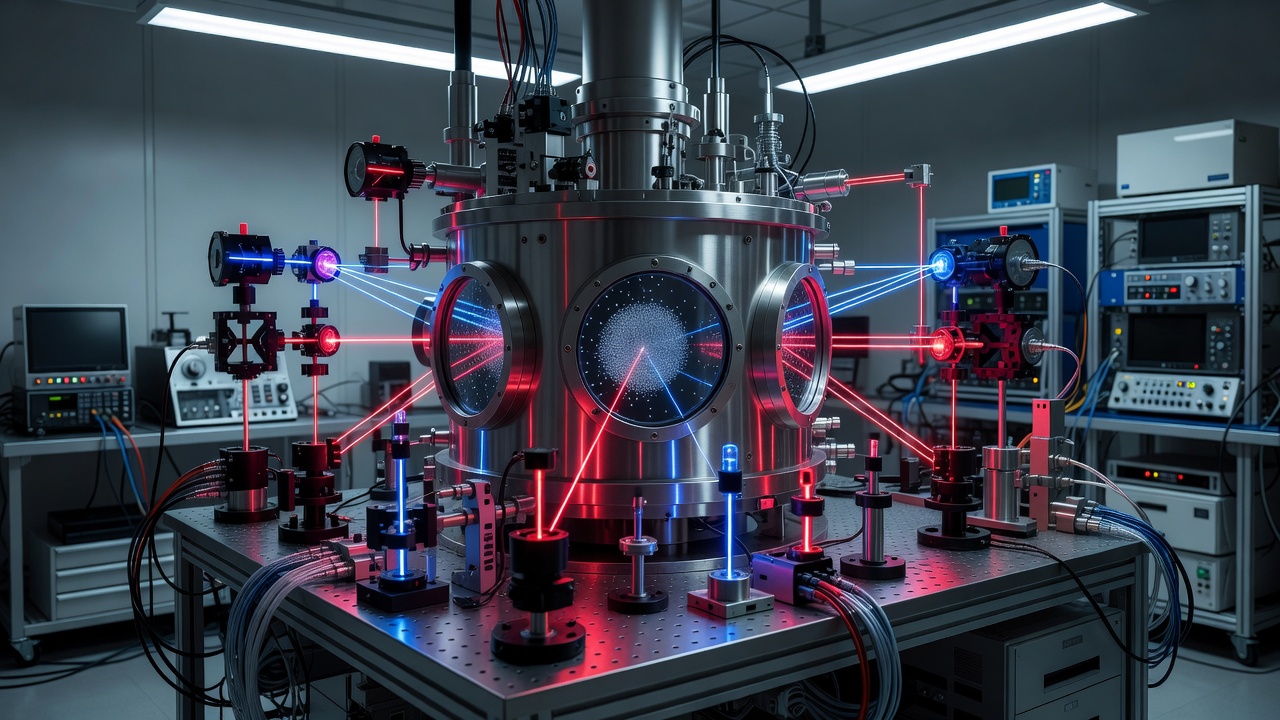
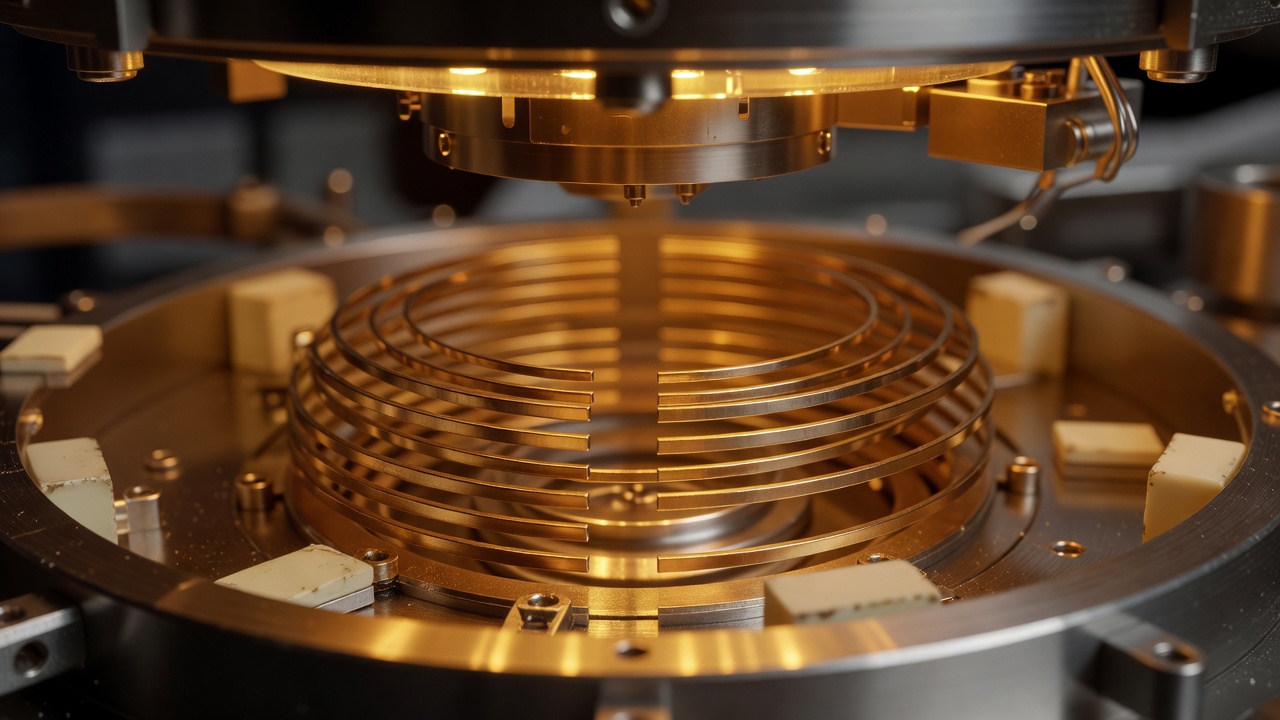
Infleqtion's platform is built on neutral-atom quantum computing (a hardware modality that encodes qubits in the electronic energy levels of individual neutral atoms, as opposed to superconducting circuits or electrically charged ions). The architecture begins by laser-cooling atoms, typically rubidium, caesium, ytterbium, or strontium, to temperatures in the microkelvin range inside a magneto-optical trap (a device using intersecting laser beams and a magnetic field gradient to slow and suspend individual atoms in place). Computation is executed by exciting atoms into high-energy Rydberg states (electron configurations with principal quantum numbers in the hundreds, which exhibit interaction strengths roughly twelve orders of magnitude larger than ground-state atoms at 10-micrometer separations). Measurement is performed via a camera that images the fluorescence emitted when atoms return to their ground state.
Infleqtion's 2026 engineering target is 30 logical qubits by year-end, a milestone the company characterizes as on track. The distinction between logical and physical qubits is fundamental: a logical qubit is protected by quantum error correction (QEC) (a set of techniques that encodes quantum information redundantly across multiple physical qubits so that errors can be detected and corrected without destroying the computation). A QEC code is described by the notation [[n,k,d]], where n is the number of physical qubits used, k is the number of logical qubits encoded, and d is the code distance. Prior neutral-atom laboratory demonstrations have achieved 48 logical qubits using Rydberg atom arrays; Infleqtion's 30-logical-qubit target, if delivered, would represent fault-tolerant computing capability rather than a raw qubit count.
The Department of Energy selected Infleqtion for three projects under its Genesis Mission program, a federal initiative focused on quantum computing systems for high-consequence applications. The specific technical requirements of each project have not been publicly detailed, but the selection constitutes federal-level validation of the neutral-atom approach for government-priority computing use cases.
Why It Matters for Industry
Infleqtion's three active enterprise deployments illustrate the dual-track nature of its business across quantum computing and quantum sensing.
The State of Illinois has contracted Infleqtion to deliver a fault-tolerant quantum computing system (one that uses active error correction to maintain accurate computation despite hardware imperfections, distinct from noisy intermediate-scale quantum, or NISQ, systems that operate without error correction and are limited to shorter circuit depths before errors accumulate). A fault-tolerant contract implies Infleqtion is committing to a system with functioning QEC. Contract value and delivery timeline have not been publicly disclosed.
NASA's Cold Atom Lab, an orbital research facility aboard the International Space Station, relies on Infleqtion-supplied atomic clocks and quantum sensors. Cold Atom Lab exploits the microgravity environment to extend the coherence times of ultracold atomic systems far beyond what Earth-based experiments allow, enabling precision physics research that depends on long-duration quantum state preservation.
Infleqtion also contributes quantum sensors to the Quantum Gravity Gradiometer Pathfinder mission, a space program using quantum-precision instruments for navigation, timing, and Earth observation. A gravity gradiometer (an instrument that measures spatial variations in gravitational acceleration) can detect underground geological structures, mineral deposits, and seafloor features with sensitivity that classical instruments cannot match, an application with direct commercial and defense utility. Together, the two sensing programs provide Infleqtion with a distinct revenue stream alongside its computing business, both derived from the same atomic physics platform.
Competitive Landscape
The quantum computing sector's public-company landscape in 2026 is defined by a wide disparity in capital efficiency. The most directly comparable public company to Infleqtion is IonQ (NYSE: ION) (the largest publicly traded quantum computing company by 2026 revenue guidance, using a competing modality called trapped-ion computing, which holds electrically charged ions in electromagnetic traps rather than neutral atoms in optical arrays).
According to IonQ's public investor disclosures, IonQ is guiding for approximately $235 million in 2026 revenue. The company has pursued an acquisitive expansion strategy, reportedly acquiring Oxford Ionics, Capella Space, and SkyWater Technology across 2025 and 2026. Set against Infleqtion's "all organic" 116% quarterly growth and approximately $43 million full-year outlook, the two public quantum companies present structurally different commercialization models: one capital-intensive and acquisitive at scale, the other organic and government-program-anchored at a smaller revenue base.

Infleqtion's government-program portfolio also includes a proposed funding relationship with the U.S. Department of Commerce, for which no dollar figure has been publicly disclosed. Independent analyst commentary specifically on this announcement was not publicly available at publication time.
The Bigger Picture
Infleqtion's revenue trajectory over three years is the more textured story behind the Q2 headline. Full-year 2024 revenue grew 163.3%. In 2025, growth decelerated sharply to 12.6%, with full-year revenue reaching $32.46 million. Q2 2026 alone produced $12.6 million, nearly 39% of the company's full-year 2025 total in a single quarter. The full-year 2026 outlook of approximately $43 million implies annual growth of approximately 32% over 2025's base, substantially below Q2's 116% quarterly rate because the comparison period broadens across all four quarters.
The concentration of revenue in government contracts provides important context for this trajectory. The DOE Genesis Mission (three projects), NASA Cold Atom Lab supply, State of Illinois fault-tolerant system contract, and proposed Department of Commerce funding represent four distinct federal and state program relationships. Government contracts provide revenue predictability that early commercial markets cannot match, but they also create sector-concentration exposure that commercial expansion would need to offset over time. The company's current disclosures do not name commercial customers individually, making independent assessment of the commercial-versus-government revenue split impossible from public data.
Infleqtion, founded at the University of Colorado Boulder in 2007, has operated for nearly two decades building neutral-atom quantum technology toward commercial deployability. CEO Kinsella's "execution phase" framing in Q2 2026 is the company's formal declaration that the preparation period has ended. Quarterly data from here forward will confirm or complicate that assertion.
What's Next
The 30-logical-qubit milestone by year-end 2026 is Infleqtion's most technically specific public commitment. Delivering it requires not only a physical qubit array of sufficient scale but also functioning error correction circuits capable of real-time syndrome measurement and classical decoding. Infleqtion has not disclosed its current logical qubit count or the specific QEC protocol in use, making independent assessment of "on track" status impossible from available public data.
The full-year 2026 revenue outlook of approximately $43 million implies roughly $30.4 million from the year's other three quarters combined, compared with $12.6 million in Q2. Whether that ramp reflects milestone payments on existing government contracts, new commercial customer deployments, or program deliverables tied to specific dates is not specified in available disclosures. Revenue-segment detail in Q3 reporting will be the most informative near-term data point for analysts tracking the commercial-versus-government composition of Infleqtion's business.
For retail investors tracking the quantum computing sector: Infleqtion's Q2 result, a roughly 23% beat above the Zacks consensus and a guidance raise to $43 million for the full year, provides a concrete quarterly performance signal in a sector where most companies are years from profitability. The comparison that carries most weight is not the absolute revenue figure but the capital efficiency profile: Infleqtion's "all organic" growth claim and absence of major M&A activity contrast with sector peers that have reportedly spent more than a billion dollars per acquisition to generate comparable or higher top-line growth. Investors assessing position sizing should note that Infleqtion's Q2 net loss figures have not been publicly released and remain essential context for any burn-rate analysis.
The most precise phrase in Infleqtion's Q2 earnings release is not the revenue record or the qubit target. It is "all organic." In a sector where competitors have reportedly spent billions on acquisitions to generate comparable top-line growth, a neutral-atom company doubling revenue without a single acquisition check argues that its technology, not its capital access, is the differentiated asset. The 30-logical-qubit milestone scheduled for year-end will be the first hard test of whether that argument holds against physics as well as it holds against financials.
-- Aria Lin, Enterprise Technology Analyst
Sources: The Quantum Insider: Infleqtion Q2 2026 Earnings Coverage · Infleqtion Q2 2026 earnings press release (Infleqtion Investor Relations)