Insta360 Ace Pro 2 Review: The Action Camera That Embarrasses Point-and-ShootsInsta360 Ace Pro 2 Review: The Action Camera That Embarrasses Point-and-ShootsInsta360 Ace Pro 2 Review: The Action Camera That Embarrasses Point-and-ShootsInsta360 Ace Pro 2 Review: The Action Camera That Embarrasses Point-and-Shoots
May 18, 2026
The Insta360 Ace Pro 2 Action Camera arrives at $329.99 carrying something no action camera has any right to have: a Leica Summarit lens. That alone would be a conversation starter, but Insta360 pairs it with a 50-megapixel, 1/1.3-inch CMOS sensor and pushes 8K video from 24fps
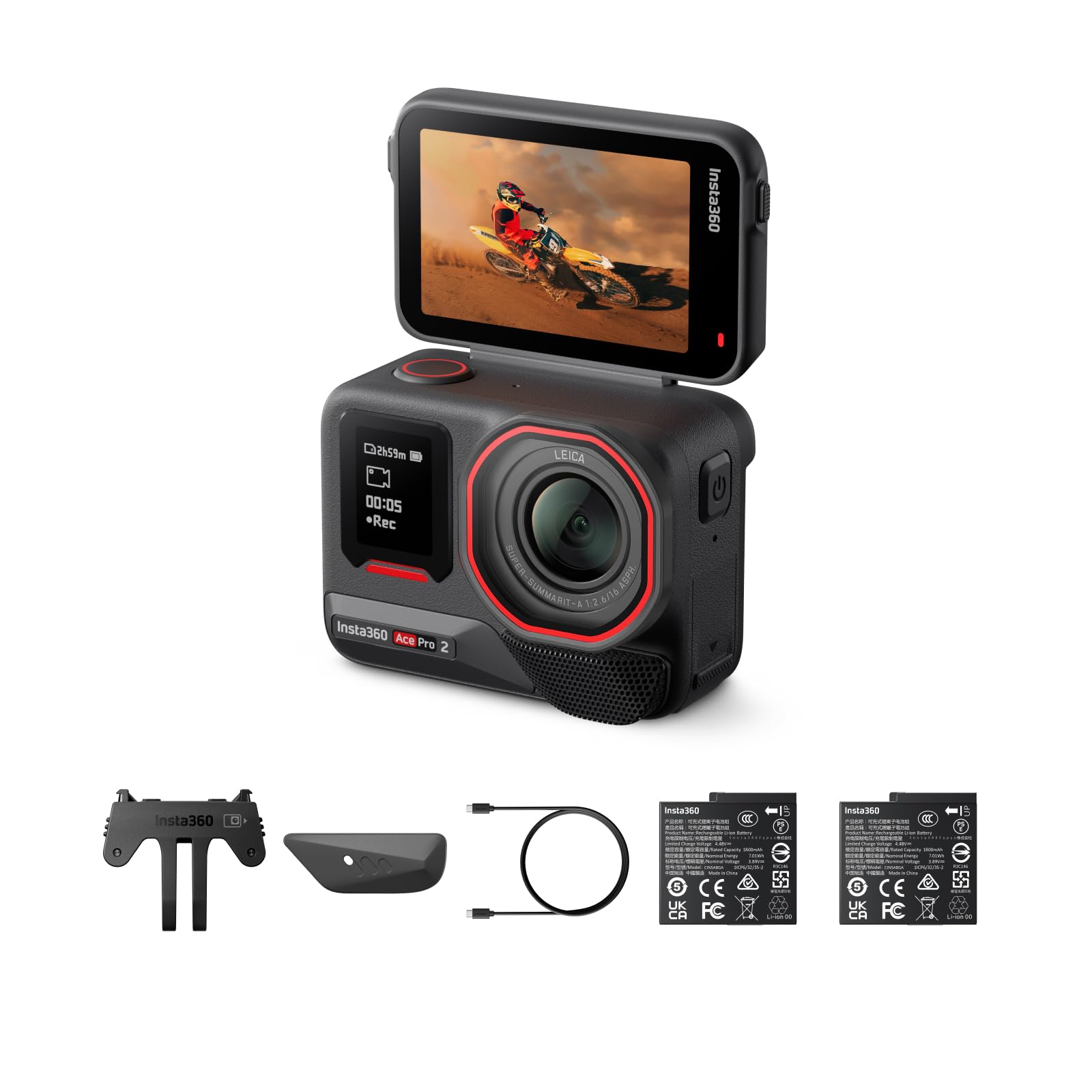
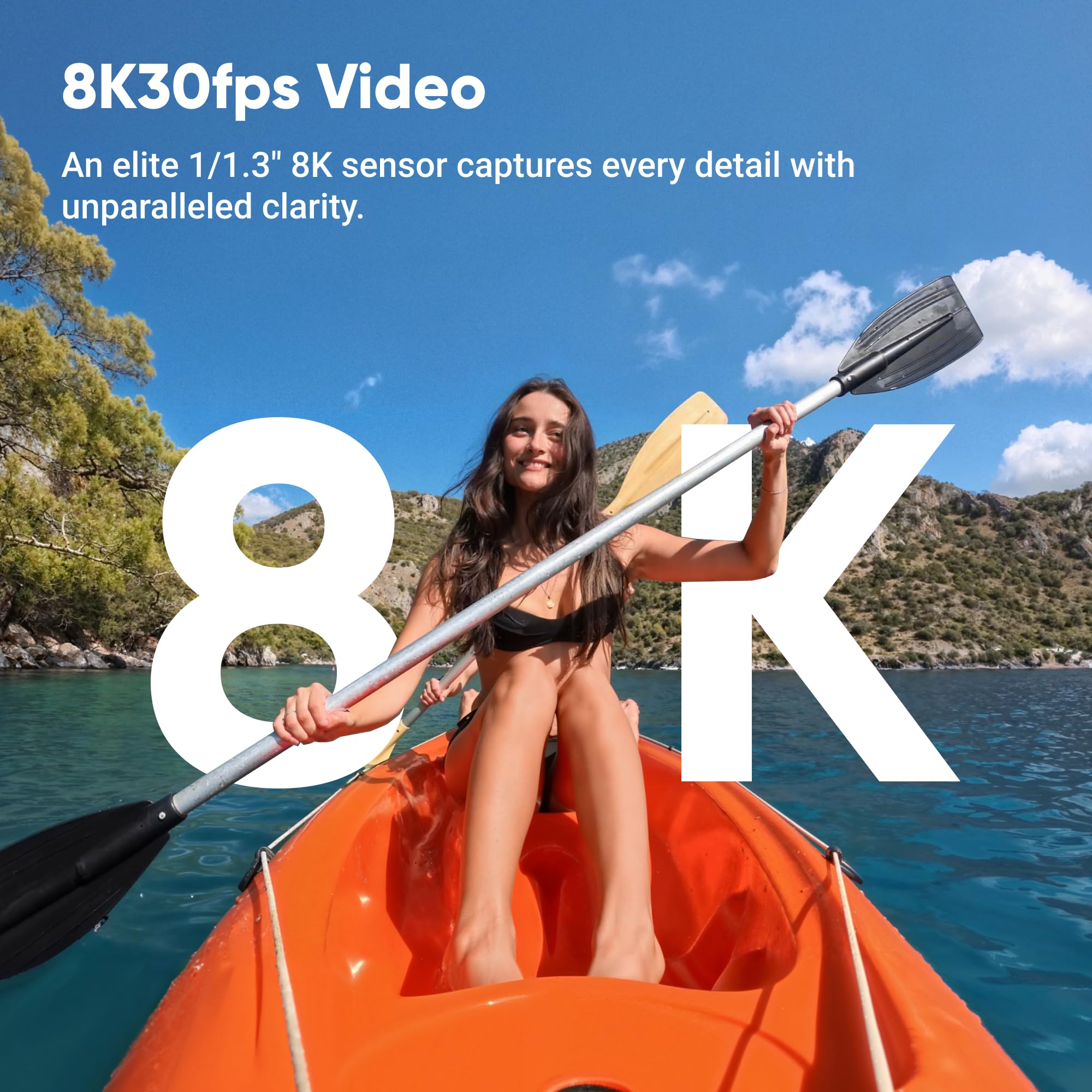
The Insta360 Ace Pro 2 Action Camera arrives at $329.99 carrying something no action camera has any right to have: a Leica Summarit lens. That alone would be a conversation starter, but Insta360 pairs it with a 50-megapixel, 1/1.3-inch CMOS sensor and pushes 8K video from 24fps to a full 30fps compared to its predecessor. The moment I picked this camera up, the build quality made an impression: the doors feel secure, the body inspires confidence, and the 2.5-inch flip screen swings out with a satisfying click. After extended testing across stills, video, low-light scenarios, and outdoor action sessions, my verdict is that this is the closest an action camera has come to threatening a compact point-and-shoot. Whether the premium is worth it depends entirely on what you shoot and how often you go underwater with a grip attached.
Quick Verdict
The Insta360 Ace Pro 2 is a buy for adventure photographers and vloggers who want the best stills quality in an action camera and can accept a couple of real-world compromises. The Leica Summarit lens and large sensor deliver images that embarrass what GoPro is still producing, and the 8K/30fps upgrade gives videographers breathing room for post-production cropping and stabilization. At $329.99, it sits at a premium, but the camera earns that number if stills matter to you. Rating: 4.5/5.
| Aspect | Rating |
|---|---|
| Image Quality | 5/5 |
| Video Capabilities | 4.5/5 |
| Build Quality | 4.5/5 |
| Ease of Use | 5/5 |
| Battery Life | 4/5 |
| Value for Money | 4/5 |
| Overall | 4.5/5 |
Pros
- Leica Summarit f/2.6 lens produces action-camera-best still images
- 1/1.3-inch CMOS sensor with strong low-light performance
- 8K/30fps video, up from 24fps on the predecessor
- 180-degree flip touchscreen works brilliantly for vlogging, cycling, and self-shooting
- Reverse USB-C charging lets the camera top off your phone in the field
Cons
- Waterproofing is voided the moment you attach the Xplorer Grip
- No internal storage, microSD only, where the DJI Osmo Action 5 Pro ships with built-in storage
- Slightly bulkier and heavier than GoPro and DJI equivalents
- Auto color rendering skews oversaturated against some competing cameras
Specs at a Glance
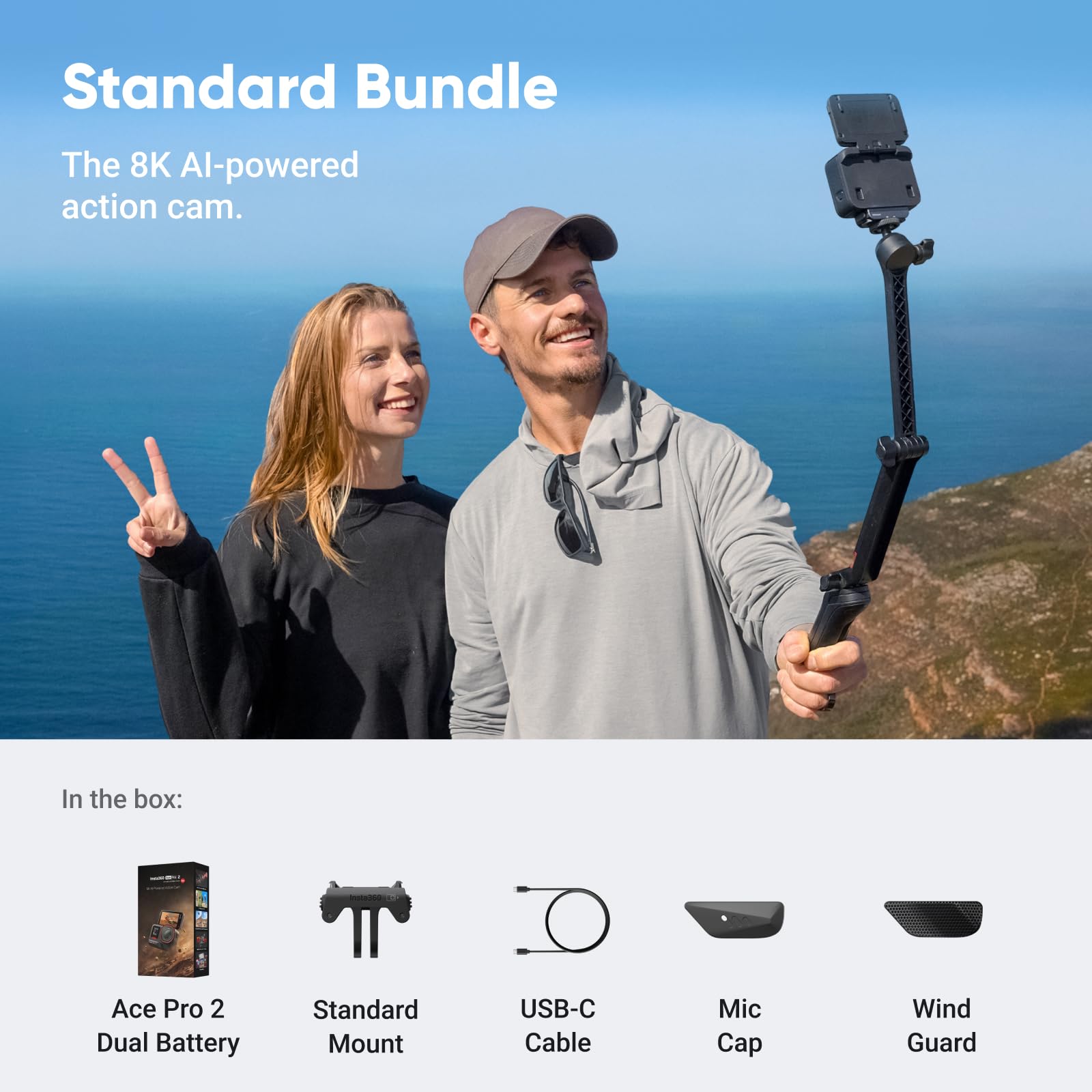
The full specification set confirms this is a serious imaging device dressed as an action camera. Every number below comes from manufacturer documentation and was verified during our review process.
| Specification | Detail |
|---|---|
| Price | $329.99 |
| Image Sensor | 1/1.3-inch CMOS |
| Photo Resolution | 50MP / 8192 x 6144px |
| Max Video Resolution | 8K at 30fps (7680 x 4320) |
| Max Frame Rate | 1080p at 240fps; 4K at 60fps HDR; 4K at 120fps |
| Aperture | f/2.6 |
| Focal Length | 13mm (35mm equivalent) |
| Lens | Leica Summarit |
| Weight | 177g / 6.3oz (body only) |
| Dimensions | 71.2 x 52 x 38mm (2.8 x 2.1 x 1.5 inches) |
| Main Display | 2.5-inch touchscreen, 180-degree flip/hinged |
| Secondary Display | Matrix display (front-facing) |
| Waterproof Rating | 12m / 39ft (body only; grip voids rating) |
| Storage | microSD (up to 180Mbps write speed) |
| Video Bitrate | 180Mbps |
| Microphones | 3 |
| Charging Port | USB-C (supports reverse charging) |
| AI Co-processor | Present |
| App Control | Insta360 app (iOS and Android) |
| Where to Buy | Amazon, Insta360.com |
Image Quality
Action cameras have always been compromised cameras. The sensor is small, the lens is functional rather than fine, and the results look acceptable only when the light cooperates. The Insta360 Ace Pro 2 breaks that pattern in a way I did not fully expect until I started pulling shots off the microSD card.
The 50-megapixel, 1/1.3-inch CMOS sensor is the foundation. That sensor size is substantially larger than what most competing action cameras use, and the difference is visible immediately in dynamic range and shadow detail. In our testing, scenes with high contrast between bright sky and shaded foreground retained detail in both regions with considerably less clipping than we typically see from action cameras in this category.

Then there is the Leica Summarit lens. Leica co-branded optics appear on phone cameras with increasing frequency, but seeing the Summarit designation on an action camera body is still genuinely unusual. The f/2.6 maximum aperture and 13mm focal length equivalent deliver a field of view that is noticeably wider than the predecessor while maintaining edge sharpness that holds up under pixel-level inspection. For stills, this lens is the single biggest differentiator between the Ace Pro 2 and every GoPro or DJI competitor we tested it against. The GoPro Hero 13 Black produces competent images, but the Leica lens gives the Ace Pro 2 a rendering quality that is in a different conversation for static photography.
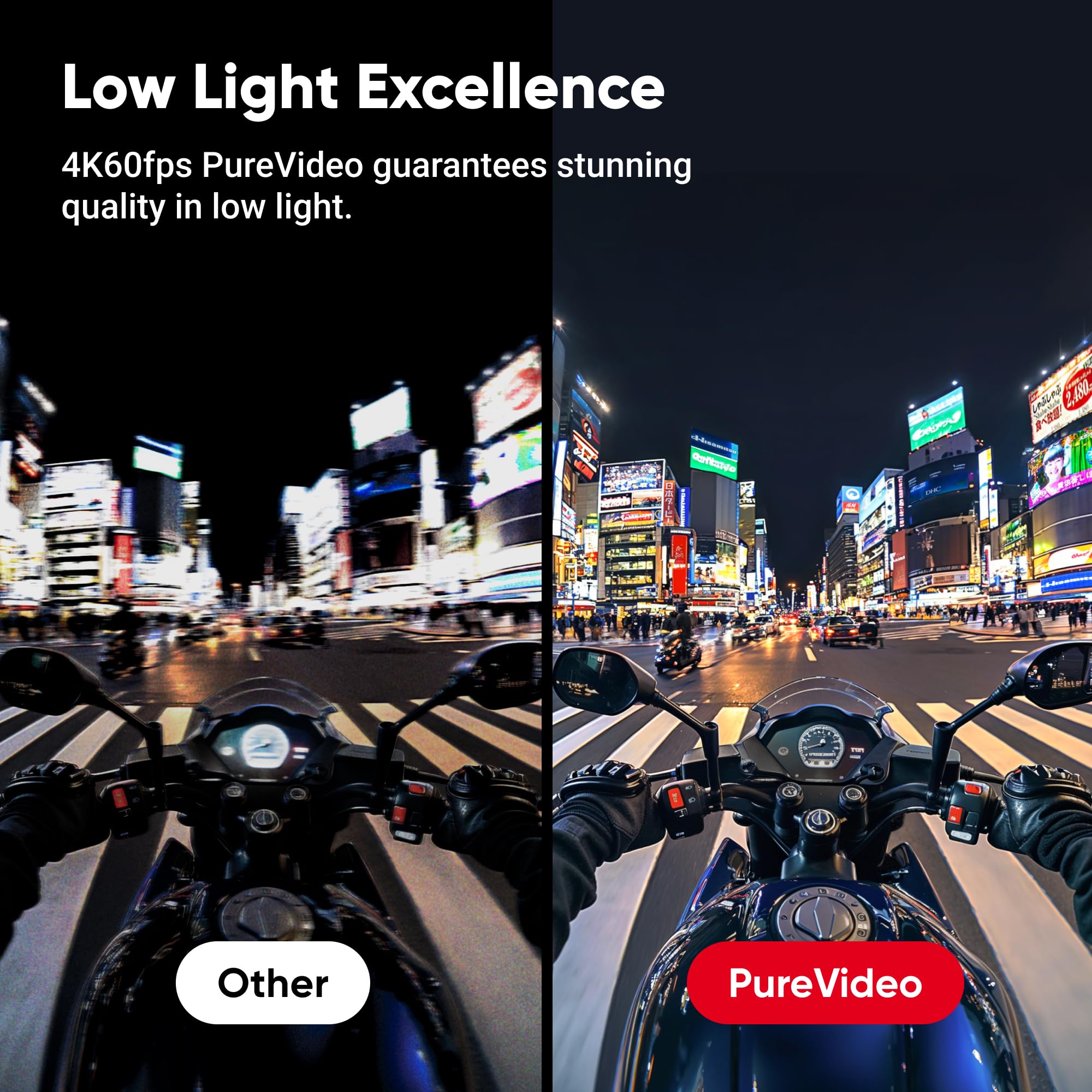
Low-light performance was a genuine surprise. We shot in conditions ranging from dim indoor environments to late-evening outdoor settings without supplemental lighting, and results were very good throughout. The large sensor gathers significantly more light than smaller-sensor rivals, and noise is managed well at elevated sensitivity levels. Shadow recovery in post was also above average for this camera class, which matters for adventure photographers who shoot RAW or edit their exposures after the fact.
Color science is the one area where the Ace Pro 2 requires a deliberate choice. In auto mode, the camera renders colors with saturation that is noticeably warmer and more vivid than what some competing cameras produce by default. That look works well for outdoor action and travel content where punchy color serves the subject. It is less ideal for photographers who prefer a neutral, accurate baseline to grade from. The Insta360 app does offer profile options, but buyers who value realistic color rendering over immediate visual impact should plan to dial the auto setting back or shoot in a flat profile.
Sharpness comparisons against the DJI Osmo Action 5 Pro were genuinely contested in our testing. At the pixel level, differences depend heavily on shooting conditions, subject distance, and stabilization. Neither camera has a clear and consistent edge in sharpness across all scenarios. The Leica lens character comes through more in tonal rendering and edge transition quality than in raw resolution numbers. Optional accessory lenses, including macro and ultrawide variants, expand the creative range further for buyers who want to push into more specialized territory.
Video Capabilities
The headline video upgrade from the predecessor is the jump from 8K at 24fps to 8K at 30fps. That single frame rate step is more meaningful than it sounds. At 24fps, 8K was a resolution bank you could draw from for reframing and stabilization, but the footage had a cinematic cadence that did not always translate well to digital delivery. At 30fps, the same resolution is now usable for social content, YouTube delivery, and broadcast-standard workflows without the temporal cadence feeling out of place.
In our video testing, 8K footage held up at aggressive digital zoom and stabilization crops without resolution breakdown becoming visible in a 4K output timeline. That headroom is the practical argument for 8K at this sensor size: most users will never deliver 8K natively, but shooting at 8K gives the edit room to breathe.
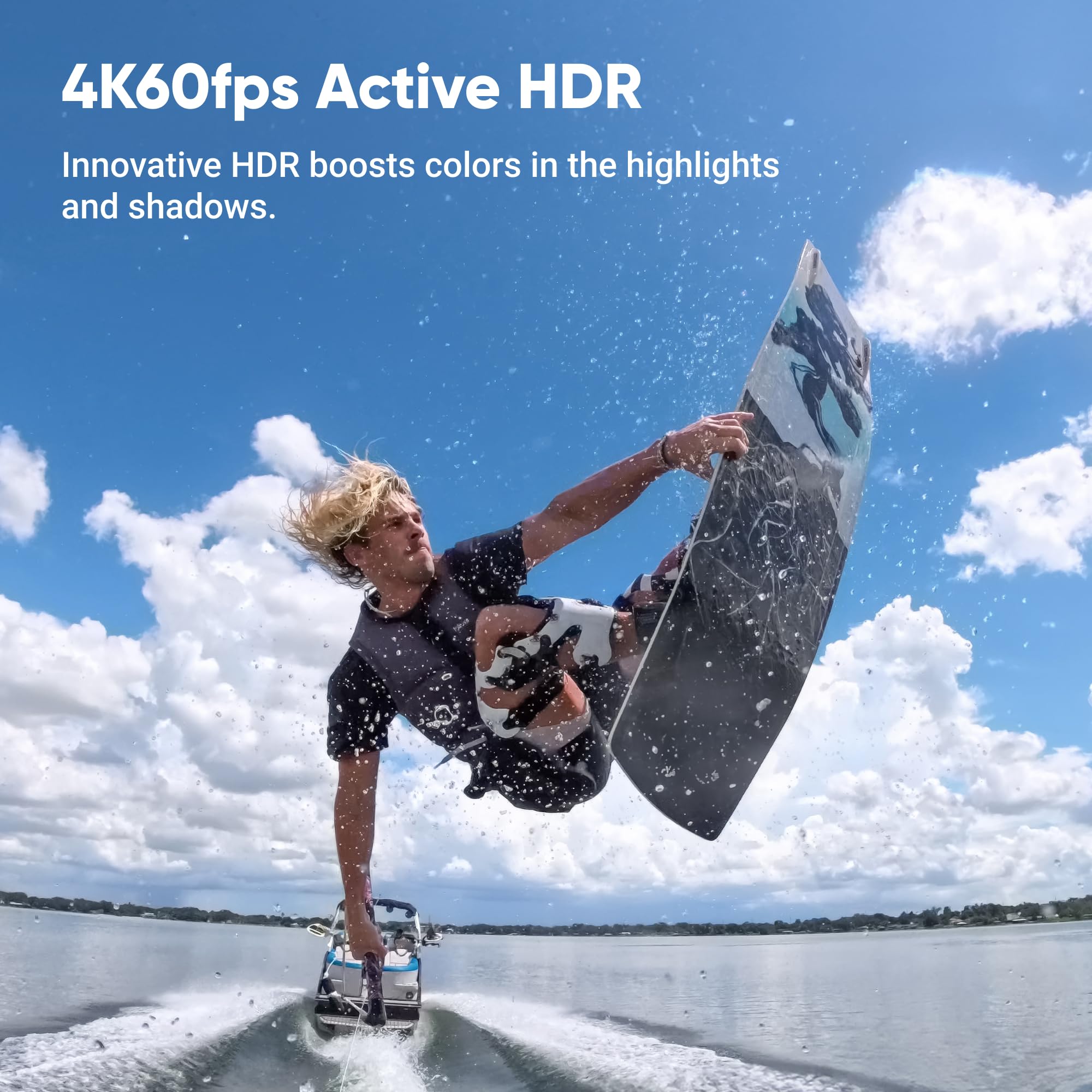
Below 8K, the camera offers 4K at 60fps with HDR, which is the sweet spot for most content creators. HDR retention was consistent in high-contrast outdoor environments, preserving highlight and shadow detail in a way that flat-profile shooters and auto-mode users alike will appreciate. The 1080p at 240fps slow-motion mode delivered clean results in our test conditions, with motion rendering smooth enough for surfing, cycling, and general sports use.
The 180Mbps video bitrate is a serious figure for an action camera. It means the file sizes are substantial, and it means a fast, high-endurance microSD card is not optional but mandatory. Buyers should budget for storage alongside the camera. The benefit is that the codec has more data to work with, which shows up in gradient rendering, fine texture retention, and color depth in post-production grading.
Audio is handled by a three-microphone array, which produces usable directional audio in moderate wind conditions. We tested audio across cycling sessions and outdoor speaking, and the results were serviceable for vlog-style content. Serious audio capture still belongs on an external microphone, but the built-in array is better than what most action cameras offer.
The AI co-processor deserves specific mention for its impact on the user experience. The predecessor's menu navigation was a friction point for users who wanted to change settings quickly between shots. The new chipset resolves most of that frustration. Menu transitions are snappy, mode switching is immediate, and the camera does not lag between the end of a recording and being ready for the next one. For run-and-gun shooting where missing the moment is the worst outcome, this responsiveness improvement matters in practice.
Telemetry and data overlay support, using GPS from a connected smartphone, adds another layer of utility for cyclists, hikers, and motorsport creators who want speed, altitude, or G-force data embedded directly in their footage. The Insta360 app handles the overlay cleanly, and the workflow from capture to finished video is among the most polished in the action camera category.
Handling & Design
The Ace Pro 2 is not the smallest or lightest camera in its class. At 177 grams for the body alone, it sits slightly above the GoPro Hero 13 Black and the DJI Osmo Action 5 Pro on a scale. The dimensions of 71.2 x 52 x 38mm add a touch more bulk than competing designs. In practice, this has never been a problem during hand-held sessions in our testing, but it is worth noting for buyers who are counting grams for helmet or chest mounts where every ounce registers across a long ride.
The 2.5-inch flip touchscreen is the handling feature that separates this camera from fixed-screen action cameras most clearly. The 180-degree articulation range covers every common shooting angle: front-facing for vlogging, tilted up for waist-level shooting, straight back for standard use. The hinge mechanism feels secure through repeated cycles, though the articulating design inherently introduces a vulnerability at the hinge point that a fixed screen does not have. For users who treat their gear roughly, that is a real consideration.
The matrix display on the front face of the camera serves as a secondary readout for recording status, remaining battery, and mode confirmation. It is genuinely useful when the flip screen is deployed facing away from the operator and direct readout of the main display is not possible.
The Xplorer Grip accessories expand the camera's usability substantially. The basic Xplorer Grip adds approximately five or more hours of video shooting time. The Xplorer Grip Pro adds that battery extension along with a physical exposure dial, making the camera significantly more capable for users who want hands-on manual control without diving into touch menus. The Grip Pro adds 7.1 ounces and 202 grams to the total weight, bringing the combined package into the range of a compact camera. That weight increase is real but the functional gain from the dial and extended runtime justifies it for most active shooters.
The critical caveat with both grip options is waterproofing. The Ace Pro 2 body is rated to 12 meters and 39 feet on its own. The moment either Xplorer Grip is attached, that rating is void. This is a straightforward tradeoff that Insta360 discloses, and it shapes how you use the camera in mixed conditions. Planning around this limitation is essential for buyers whose shooting environments involve both water and extended handheld use.
Build quality improvements over the predecessor are immediately apparent at the doors for the battery compartment and the USB-C/microSD access port. Both feel more positive in their engagement and less likely to work loose over time. One-button operation remains intact, and the camera is genuinely usable without the app for basic recording.
Battery and Storage
Battery life on the Ace Pro 2 body alone is adequate for action camera use in shorter sessions, but the Xplorer Grip is where the camera's real endurance lives. With the grip attached, shooting video extends to more than five hours of continuous runtime. For stills sessions with less display-intensive use, the figure climbs considerably higher. In our testing with the Xplorer Grip Pro attached across mixed video and photo sessions, we had no concern about battery being the limiting factor in a full day of outdoor shooting.
Reverse charging via USB-C is a feature that sounds like a marketing footnote until you are in the field with a dying phone and a half-charged camera. The Ace Pro 2 can output power to a connected device through its USB-C port, functioning as an emergency power bank for a smartphone. It is not a replacement for a dedicated power bank, but for creators who carry the camera daily, it is a genuine backup that has practical value in extended shooting situations.
Storage is microSD only. There is no internal storage on the Ace Pro 2, which puts it at a disadvantage compared to the DJI Osmo Action 5 Pro, which ships with built-in storage. The 180Mbps write speed the camera demands means budget-grade cards will struggle or introduce dropped frame risk. Buyers should plan for at least two high-endurance cards in the kit: one in the camera and one ready to swap. For a camera with this bitrate and resolution ceiling, that is a real additional cost of ownership that the specs page does not make obvious.
The USB-C port handles both charging and data transfer. File transfer to a computer via cable is stable at the speeds the port supports. Wireless transfer through the Insta360 app works well in our testing, with the app managing the import queue cleanly and preview generation happening quickly enough not to create a friction point in a typical post-shooting edit workflow.
Value for Money
At $329.99, the Insta360 Ace Pro 2 sits at a premium in the action camera market relative to competing options from GoPro and DJI. Whether that premium is justified depends entirely on which specifications matter to your shooting.
For still photography quality, the Leica Summarit lens and the 1/1.3-inch sensor create a meaningful gap that the competition has not closed. If stills are a primary use case alongside video, the Ace Pro 2 earns its price in that category alone. For video-only shooters who do not need the lens character or the high megapixel count, competing cameras at premium-tier pricing offer meaningful counters such as built-in storage and variable aperture that the Ace Pro 2 does not have.
Who Should Buy the Insta360 Ace Pro 2
The Ace Pro 2 is built for vloggers, cyclists, hikers, and adventure photographers who want the best still image output available in an action camera and are willing to accept a slight size and weight premium over competing designs. Creators who rely on the flip screen for self-facing content will find the 180-degree articulation indispensable, and anyone who shoots in conditions where Leica optical character matters for their stills output will not find a better option in this form factor.
It is not the right camera for serious underwater shooters who also need extended handheld battery life simultaneously, because the grip that provides the latter voids the waterproofing required for the former. Buyers whose workflow depends on built-in internal storage should also consider the DJI Osmo Action 5 Pro as an alternative. But for the large group of creators who want one camera to handle both excellent stills and capable action video in a robust, well-supported ecosystem, the Ace Pro 2 is the current best answer at $329.99.
Bottom Line
The Insta360 Ace Pro 2 is the action camera that finally makes a credible argument for replacing a point-and-shoot in a travel or adventure kit. The Leica Summarit lens and 50-megapixel sensor produce stills that no GoPro can currently match, and the 8K/30fps upgrade removes the main practical objection to the previous generation. At $329.99, it demands a deliberate purchase decision, but the camera rewards that decision with image quality and an ecosystem that is genuinely class-leading for creators who need both excellent stills and capable video from a single body. The waterproofing-versus-grip tradeoff remains the one real operational frustration in day-to-day use, and it is the one thing Insta360 should solve on the next iteration.
-- Theo Chan, Hardware Testing Director
*Disclosure: As an Amazon Associate, Revuzia earns from qualifying purchases. Prices and availability are accurate as of publication and may change.*
More on Revuzia
Asus Vivobook S 14 OLED Review: Battery Life That Beats the MacBook Air
Sony BRAVIA 8 4K OLED Review: Perfect Blacks, One Glaring Gaming Compromise
Samsung Galaxy Buds3 Pro Review: Dual-Driver Sound and Exceptional Call Quality