JWST's Vanishing Little Red Dots May Be Ancient Globular Clusters in DisguiseJWST's Vanishing Little Red Dots May Be Ancient Globular Clusters in DisguiseJWST's Vanishing Little Red Dots May Be Ancient Globular Clusters in DisguiseJWST's Vanishing Little Red Dots May Be Ancient Globular Clusters in Disguise
July 23, 2026
Since 2022, the James Webb Space Telescope has been cataloguing a class of compact, intensely bright objects called Little Red Dots that crowded the early universe roughly 600 million years after the Big Bang, then vanished entirely by the time the cosmos was 2 billion years
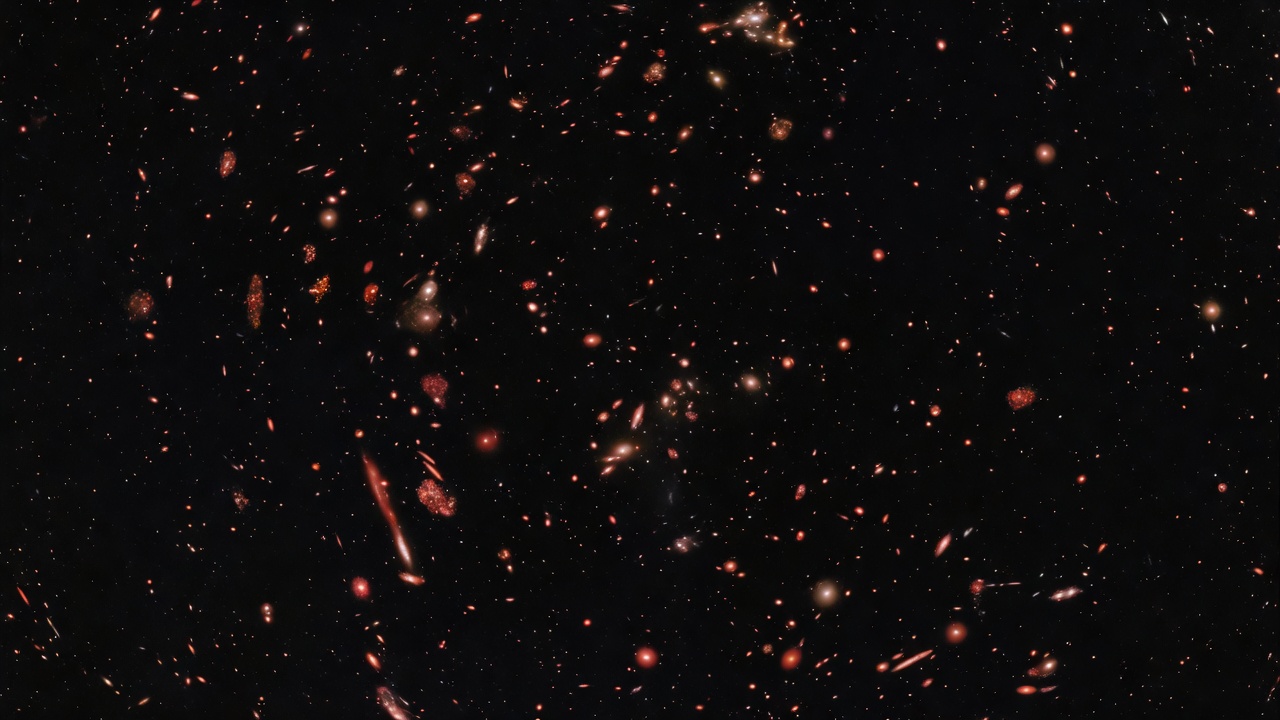
Since 2022, the James Webb Space Telescope has been cataloguing a class of compact, intensely bright objects called Little Red Dots that crowded the early universe roughly 600 million years after the Big Bang, then vanished entirely by the time the cosmos was 2 billion years old. A University of Texas Austin team led by John Chisholm now proposes, in an arXiv pre-print, that those objects did not disappear at all: they evolved into the globular clusters that still orbit galaxies today, including the more than 150 already mapped inside the Milky Way. The implications reach in two directions simultaneously, offering a candidate explanation for why Little Red Dots wink out and for why the stars inside modern globular clusters carry a chemical signature that astronomers have never fully explained.
What Happened
JWST began routine science operations in 2022, and among its earliest surprises was an abundance of compact reddish sources at high redshift, objects that came to be called Little Red Dots. These sources appear concentrated at an epoch roughly 600 million years after the Big Bang, and then become undetectable by approximately 2 billion years after the Big Bang. That disappearance is the central puzzle the Chisholm team set out to address.
Chisholm, working with teammates Danielle Berg and Mike Boylan-Kolchin at the University of Texas Austin, published their analysis as a pre-print on arXiv. The paper has not yet undergone peer review. Their core argument: a forming globular cluster hosting a supermassive star (a hypothetical stellar object between 1,000 and 10,000 times the mass of the Sun) at its core would produce a visual and spectral signature consistent with a Little Red Dot. When that supermassive star dies, after a lifespan of roughly 1 million years -- a blink compared to the Sun's 4.6-billion-year middle age -- the Little Red Dot appearance disappears with it, even though the underlying star cluster survives for billions of years afterward.
As Chisholm stated in an institutional release: "These may not be just a strange new JWST population with no connection to the universe around us today. Instead, Little Red Dots may persist past the early universe, evolving into something relatively familiar."
The Science Behind It
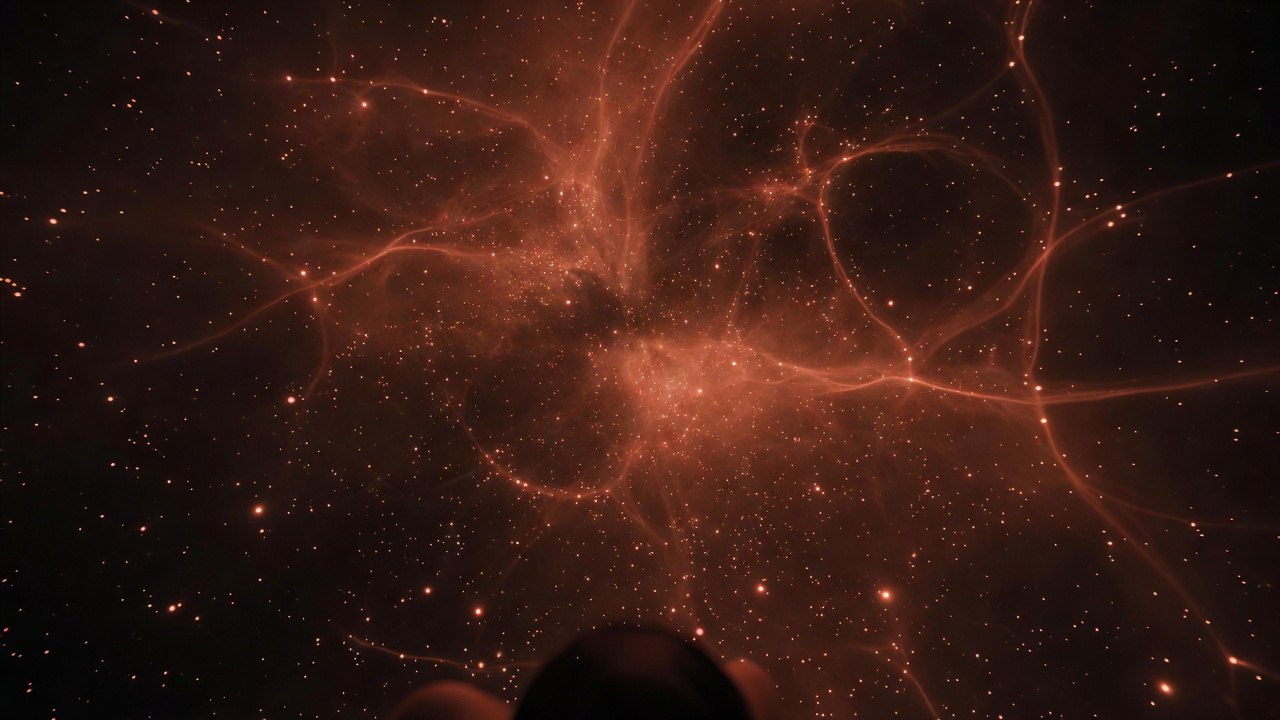
The proposed mechanism begins in the extreme density of the early universe, where proto-globular clusters formed through repeated stellar collisions and mergers. In the UT Austin model, those collisions build a supermassive star at the cluster's core -- a stellar object in the 1,000 to 10,000 solar mass range that would burn through its fuel and explode in roughly 1 million years.
The reason those stars burn so fast is also the reason they leave a detectable imprint. Boylan-Kolchin described it directly: "This specific pattern indicates nuclear fusion at very high temperatures, much higher than in the cores of even massive normal stars. A supermassive star is precisely the kind of environment that could produce this combination." The combination he refers to is a suite of anomalous chemical abundances observed in modern globular cluster stars: elevated levels of helium, nitrogen, sodium, and aluminum, alongside depleted carbon, oxygen, and magnesium relative to what standard stellar models predict.
The UT Austin hypothesis ties those two observations together. Supermassive stars fuse elements at extreme temperatures, producing the anomalous chemical signature. When those stars die, their ejecta become the raw material for subsequent stellar generations inside the cluster -- a second generation that inherits the unusual chemistry, explaining why astronomers find those anomalous abundances baked into globular cluster stars billions of years later.
Berg underscored why this has been so difficult to reconstruct from the modern universe alone: "We usually see them after billions of years of evolution, at a time when their massive stars are gone, their gas has been cleared out, and dynamical processes have changed their masses and structures. That makes it very hard to reconstruct the original conditions they formed in." JWST, by observing the epoch when those original conditions were active, may be providing a direct window into a process that has been inferred but never directly witnessed.
Why This Mission Matters
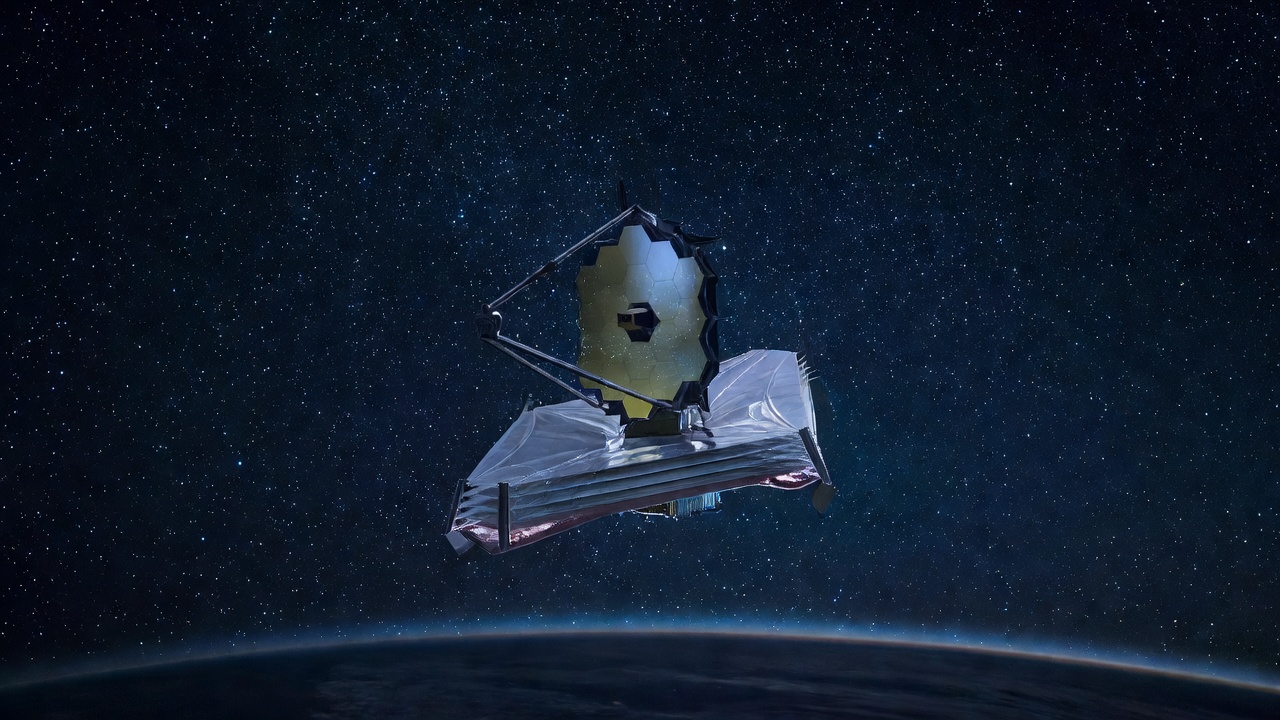
JWST was the instrument that made this detection possible. The Little Red Dot population is among the clearest demonstrations of why: these are objects at redshifts corresponding to the first few hundred million years of cosmic history, inaccessible to earlier observatories at this level of detail.
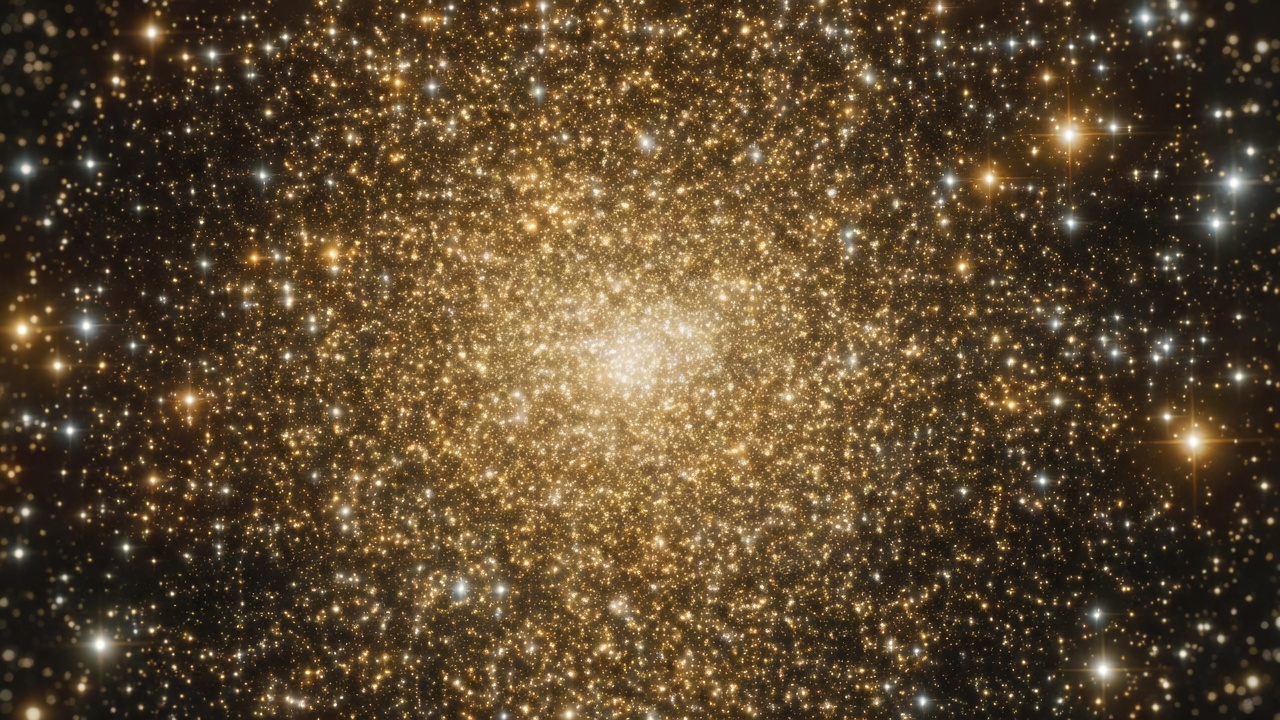
The Milky Way alone hosts at least 150 globular clusters, each containing up to many millions of stars packed into relatively compact volumes. Globular clusters are among the oldest structures in the galaxy, and their origin has remained an open problem in stellar astrophysics. If Little Red Dots are proto-globular clusters caught in the act of forming, then JWST is not just cataloguing a strange new population of early-universe objects; it is observing the formation of structures that still surround us today.
That connection between the early and present-day universe is precisely what the UT Austin team finds most significant. As Chisholm put it: "Little Red Dots could be galaxies, they could involve black holes, or they could be something even more unexpected. Our work shows that forming globular clusters with supermassive stars should be part of that conversation."
The timing alignment supports the hypothesis. Little Red Dots appear at approximately 600 million years after the Big Bang, which is also the estimated epoch when globular clusters are thought to have begun forming. Their disappearance by 2 billion years after the Big Bang aligns with the predicted lifespan of the supermassive stars the model places at their cores.
Competitive Landscape
The globular cluster hypothesis enters a field where at least two other explanations for Little Red Dots are actively under discussion. The UT Austin team frames their proposal as additive rather than exclusionary, but the candidate interpretations carry different implications for early-universe physics.
- Conventional galaxy interpretation: Little Red Dots may be compact early galaxies, dense stellar systems whose red color and compactness reflect the conditions of star formation in the early universe. This is the most conservative reading and does not require any exotic stellar physics.
- Black hole interpretation: As Chisholm himself acknowledged, Little Red Dots "could involve black holes" -- a reading that connects them to active galactic nucleus physics, a well-established framework involving accretion of gas onto massive black holes producing extreme luminosity.
- Globular cluster with supermassive stars (UT Austin pre-print): The new hypothesis, not yet peer-reviewed, proposes that a forming globular cluster powered by a short-lived supermassive star would match both the Little Red Dot appearance and the anomalous chemistry of present-day globular cluster stars. If confirmed, it would resolve two long-standing puzzles simultaneously.
Independent analyst commentary specifically on this announcement was not publicly available at publication time.
What Comes Next
The arXiv pre-print has not yet been peer-reviewed, and no target journal has been named publicly. Peer review will subject the team's mass estimates, distribution matching, and chemical abundance arguments to independent scrutiny. The key question reviewers are likely to press: whether the spatial and numerical correspondence between Little Red Dots and modern globular clusters is tight enough to constitute meaningful evidence, or whether the overlap is consistent with coincidence.
Several observational tests could sharpen the picture. JWST's spectroscopic capabilities, particularly its Near Infrared Spectrograph, could in principle search for the specific helium, nitrogen, sodium, and aluminum abundance patterns inside Little Red Dots directly. The current chemical evidence comes from modern globular cluster stars, not from the Little Red Dots themselves. Detecting those signatures in objects at high redshift would significantly strengthen the hypothesis.
The supermassive star mechanism also remains hypothetical. Stars in the 1,000 to 10,000 solar mass range have not been directly observed, and the collision-and-merger process proposed to build them in proto-cluster environments has not been confirmed. Future JWST observations at the epochs where Little Red Dots first appear, combined with high-resolution spectroscopy, could constrain whether the energy output and spectral shape of those objects match what supermassive stars would produce.
For academic researchers and observational astrophysicists: the UT Austin pre-print offers a testable prediction that cuts across two unsolved problems simultaneously. If JWST spectroscopy can detect elevated helium, nitrogen, and sodium in Little Red Dot spectra at redshifts above z=7, that would provide the independent observational confirmation the model currently lacks. A single confirmed detection would move this from a plausible hypothesis to a competitive explanation, and would open a direct observational window onto globular cluster formation that ground-based astronomy has never been able to reach.
The deeper irony is that the objects JWST found most baffling may turn out to be the ancestors of the oldest, most familiar structures in our own galaxy. Astronomers have spent decades puzzling over the anomalous chemistry frozen into globular cluster stars. Now a telescope pointed at the universe's infancy may have accidentally found the forge where that chemistry was made.
-- Zara Velez, Emerging Technology Editor
Sources: Space.com, July 23, 2026 · University of Texas Austin research team (John Chisholm, Danielle Berg, Mike Boylan-Kolchin), arXiv pre-print