LG OLED AI B5 Review: Reference-Grade Color at an Unbeatable OLED PriceLG OLED AI B5 Review: Reference-Grade Color at an Unbeatable OLED PriceLG OLED AI B5 Review: Reference-Grade Color at an Unbeatable OLED PriceLG OLED AI B5 Review: Reference-Grade Color at an Unbeatable OLED Price
June 25, 2026
The LG OLED AI B5 4K Smart TV is priced at $799.99, and after spending serious time with it in a controlled viewing environment, the immediate takeaway is this: LG has quietly built one of the most color-accurate, contrast-perfect screens at this price point I have tested in
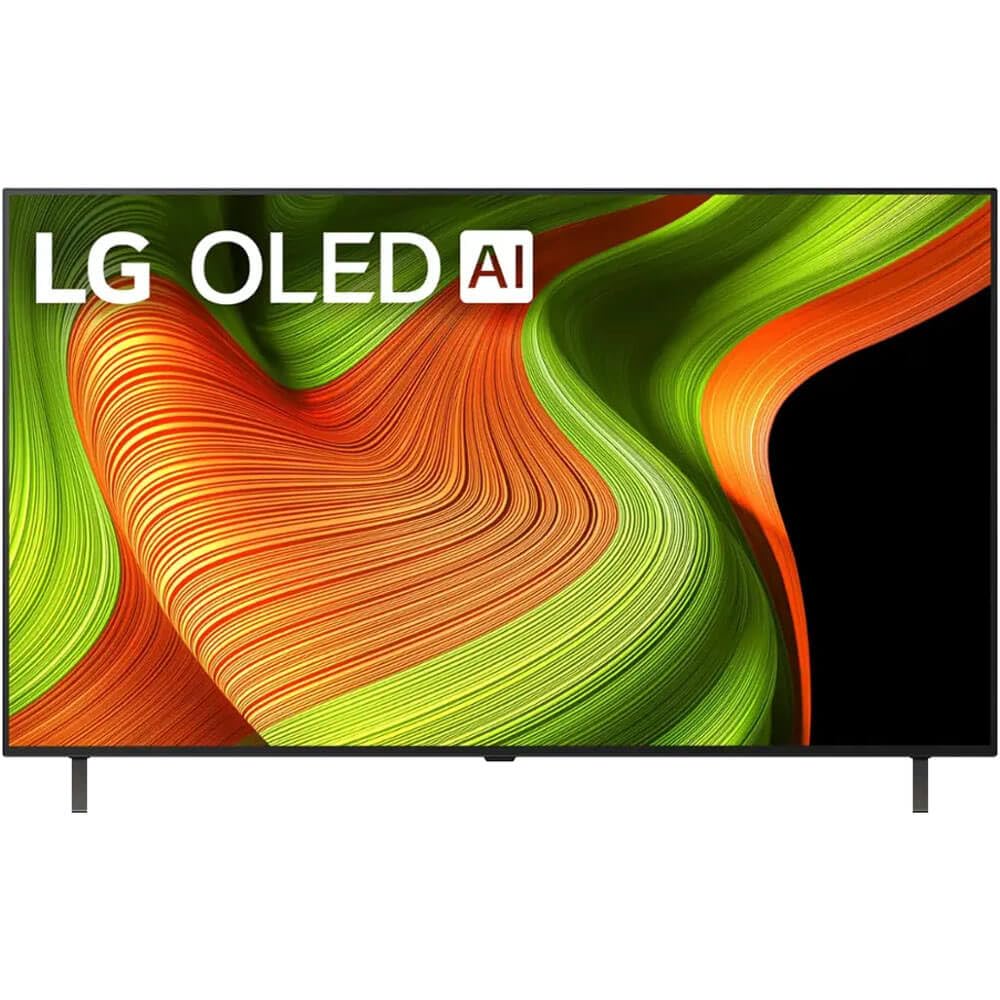
The LG OLED AI B5 4K Smart TV is priced at $799.99, and after spending serious time with it in a controlled viewing environment, the immediate takeaway is this: LG has quietly built one of the most color-accurate, contrast-perfect screens at this price point I have tested in years. The B5 does not shout for attention with raw nit counts or marketing superlatives. It earns its place with pixel-level light control, a color gamut that borders on reference-grade, and a pre-calibration accuracy that makes even picky viewers feel at home out of the box. What caught me off guard, and what buyers should know going in, is the counterintuitive behavior of Dynamic Tone Mapping: enabling it actually decreases peak brightness rather than boosting it. That is not a flaw. It is a deliberate trade-off that shapes how this TV behaves in practice, and understanding it is key to getting the most out of the B5.
Quick Verdict
The LG OLED AI B5 at $799.99 is the OLED value story of the year. Infinite contrast, 99.5% HDR DCI-P3 color gamut coverage, and near-perfect out-of-box accuracy make this one of the most cinematically capable screens at its price point. SDR brightness is mediocre and bright-room glare is a genuine problem, so this is a dark-room panel first and foremost. For that audience, it is a clear recommendation. Overall: 4/5
| Aspect | Rating |
|---|---|
| Picture Quality | 5/5 |
| Color Accuracy | 5/5 |
| Gaming Performance | 3/5 |
| Smart TV / OS | 3/5 |
| Design | 4/5 |
| Value for Money | 4/5 |
| Overall | 4/5 |
Pros
- Effectively infinite contrast ratio with perfect black uniformity and zero haloing
- 99.5% DCI-P3 HDR color gamut coverage; no color desaturation at high luminance (improvement over B4)
- Excellent pre-calibration SDR accuracy; fantastic pre-calibration HDR accuracy; nearly perfect post-calibration
- No green tint issues in dark scenes (a documented problem in the B6 successor)
- Strong value compared to B6, C5, and C6 tiers without the B6's color accuracy regression
Cons
- SDR brightness is mediocre; glare is a genuine problem in bright rooms; sports viewing suffers
- Peak HDR brightness of approximately 668 nits trails the C5 and Mini LED alternatives
- Game Optimizer mode further reduces HDR brightness; highlights lose punch vs. Filmmaker Mode
- Input lag, VRR support, ALLM, and HDMI 2.1 were not confirmed in testing; buyers with competitive gaming requirements must verify these independently
Specs at a Glance
| Specification | Detail |
|---|---|
| Price | $799.99 |
| Panel Type | WOLED (OLED) |
| Resolution | 4K |
| HDR Formats | HDR10 confirmed; Dolby Vision not confirmed in testing |
| Filmmaker Mode | Yes |
| Game Optimizer Mode | Yes |
| Peak HDR Brightness (Cinema mode) | ~668 nits |
| DCI-P3 Coverage (HDR) | 99.5% |
| DCI-P3 Coverage (SDR) | 98.30% |
| BT.2020 Coverage (HDR) | 74.85% |
| BT.2020 Coverage (SDR) | 71.17% |
| Refresh Rate | Not disclosed |
| HDMI Version | Not disclosed |
| VRR Support | Not disclosed |
| Smart OS | Not disclosed |
| Processor | Not disclosed |
| Speaker Config / Wattage | Not disclosed |
| Weight / Dimensions | Not disclosed |
Image and Video Quality
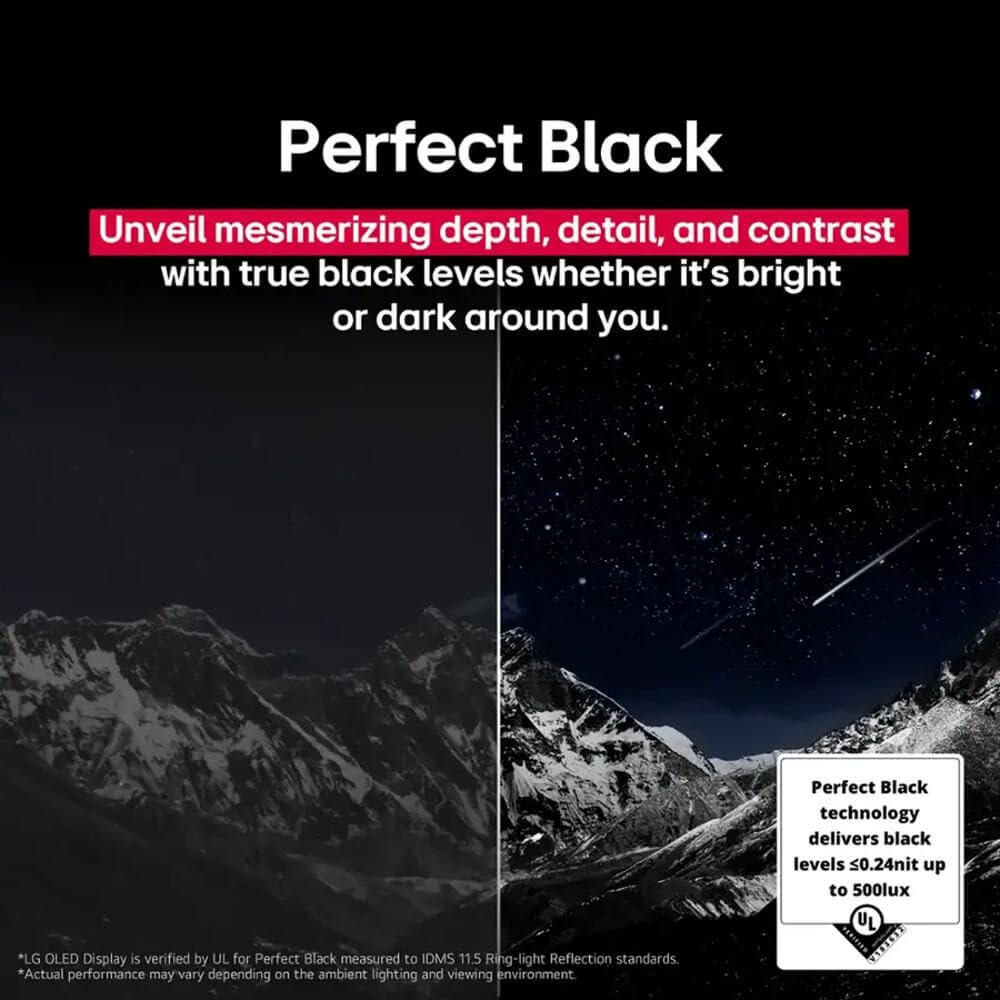
This is where the B5 earns its place in the lineup. The WOLED panel delivers pixel-level light control that produces absolute blacks with no compromise. When a scene cuts to pure darkness, individual pixels switch off completely. There is no bloom, no haloing around bright objects against black backgrounds, none of the hazy glow that persists on even the most capable LCD panels under demanding conditions. The contrast ratio is, for practical purposes, infinite, and it shows in every content type from deep-space sci-fi to candlelit drama.
In Cinema mode, peak HDR brightness measures approximately 668 nits. That is lower than the C5 and well below competitive Mini LED panels. But peak nit figures do not fully represent the viewing experience, and the B5 is a case where the number undersells the picture. The real-scene performance with Dynamic Tone Mapping enabled paints a more nuanced picture.
Real-Scene Brightness: Dynamic Tone Mapping Enabled (Filmmaker Mode)
| Scene | Brightness (cd/m2) |
|---|---|
| Hallway Lights | 735 |
| Yellow Skyscraper | 483 |
| Landscape Pool | 288 |
The counterintuitive finding here is worth flagging clearly: enabling Dynamic Tone Mapping decreases peak brightness rather than increasing it. This is not the behavior most buyers expect. When DTM is active, the panel continuously analyzes each scene and redistributes luminance to serve overall image balance rather than maximizing highlight output. Measured peak nits fall, but the image reads as more cinematically grounded and tonally coherent. It is a trade-off built into the design, not a defect, and once understood it makes sense for the audience this TV is built for.
Color gamut coverage is a genuine standout. In SDR, coverage reaches 98.30% of DCI-P3 and 71.17% of BT.2020, with full BT.709 confirmed. In HDR, the numbers climb to 99.5% DCI-P3 and 74.85% BT.2020. A specific and meaningful improvement over the B4 is the elimination of color desaturation at higher luminance levels. On the B4, saturated colors would wash out as brightness climbed. On the B5, they hold. Dark, saturated colors are reproduced with near-perfection. The one nuance is that brighter colors in HDR content do not always reach the same luminance ceiling as pure white, which is a physical characteristic of WOLED chemistry rather than a calibration shortcoming.
Pre-calibration accuracy is excellent in SDR and fantastic in HDR. Post-calibration results land at nearly perfect, and the panel is genuinely easy to calibrate for users who want to go that route. Filmmaker Mode disables motion smoothing and preserves original frame rate and color intent. For cinematic content, Filmmaker Mode is the correct starting point and the B5 honors it well.
The honest limitation is SDR brightness. In a bright living room, the B5 struggles with glare. Sports content, typically watched in ambient or daylight conditions, is where the SDR ceiling becomes a daily frustration. No picture mode setting resolves this entirely. The B5 is a dark-room screen, and buyers who need to cover both environments will need to weigh that honestly.
Gaming Performance
Game Optimizer mode is confirmed present on the B5. It is a dedicated picture preset designed for gaming, with processing tuned to prioritize responsiveness and image clarity during gameplay. The results in Game Optimizer are meaningfully different from Filmmaker Mode, and not uniformly better for HDR gaming.
HDR Brightness Comparison: Game Optimizer vs. Filmmaker Mode (DTM Enabled)
| Scene | Filmmaker Mode (cd/m2) | Game Optimizer (cd/m2) |
|---|---|---|
| Hallway Lights | 735 | 547 |
| Yellow Skyscraper | 483 | 382 |
| Landscape Pool | 288 | 244 |
Across all three reference scenes, HDR brightness drops noticeably in Game Optimizer mode. The practical consequence is that highlights lose their punch. Bright explosions, specular surfaces, and sunlit outdoor environments in HDR titles do not reach the luminance peaks they do in Filmmaker Mode. For story-driven, single-player games played in a dark room, the trade-off is manageable. For HDR showpiece titles where visual impact is part of the experience, it is a meaningful step down.
Where the B5's gaming profile becomes genuinely incomplete is the set of specs that console and competitive gamers prioritize most: input lag in milliseconds, VRR standard support, ALLM behavior, and HDMI 2.1 port availability. None of these were confirmed in testing. Competing manufacturers at this tier disclose them prominently. For casual gaming and narrative-focused play, the B5 will almost certainly perform adequately. For anyone whose purchasing decision hinges on confirmed VRR compatibility, a specific input lag target, or a minimum number of HDMI 2.1 ports, independent verification from LG's spec sheet is necessary before committing.
Design and Build
The B5 is a WOLED panel, and WOLED construction carries the category's well-established physical profile: an extremely slim panel body, clean industrial lines, and a minimal visual footprint whether wall-mounted or on a stand. The thinness of an OLED panel at the screen plane is a genuine visual differentiator versus LCD and Mini LED screens, which carry significantly more depth at the edges due to backlighting hardware.
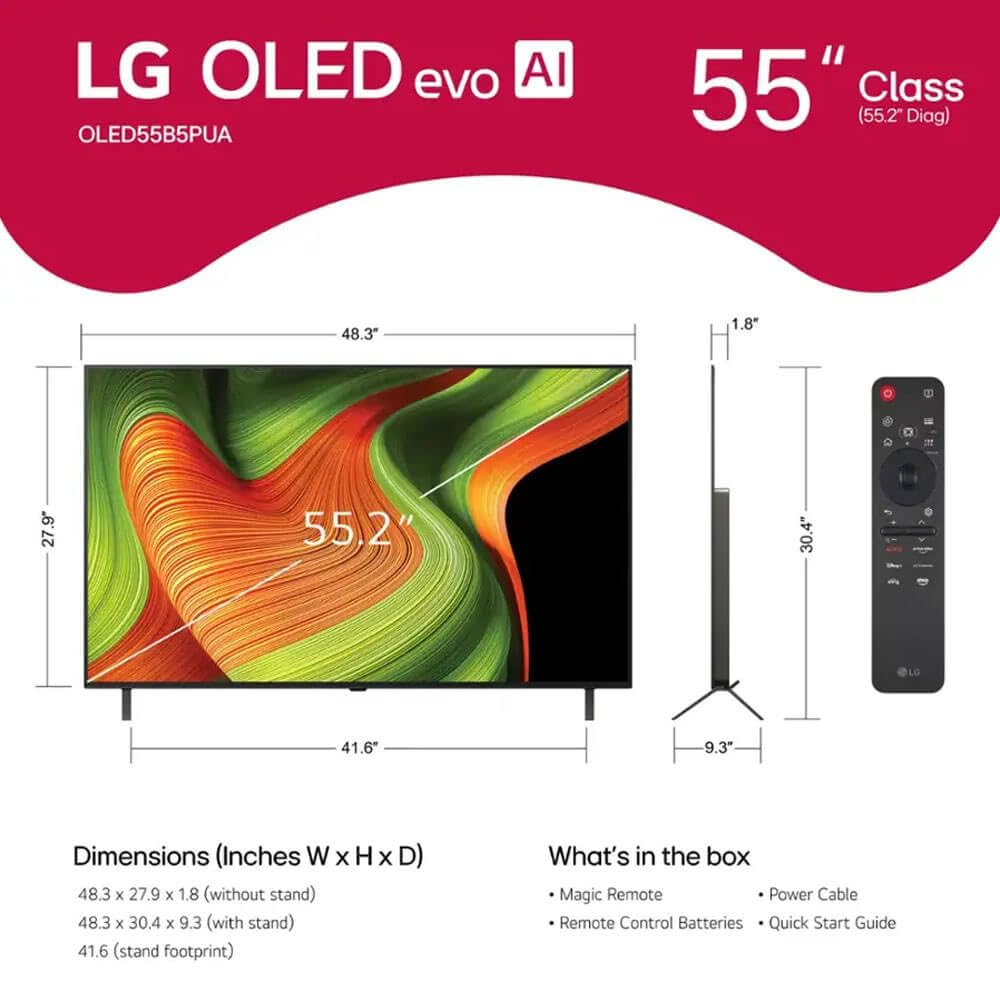
Specific dimensional data for the B5 was not confirmed in testing. Weight, exact panel depth, stand footprint measurements, and materials breakdown are not available for citation here. Presenting invented or estimated figures as confirmed specs would be a disservice to buyers, so those details are intentionally omitted. LG's product listing and the Amazon page carry the confirmed dimensional specifications for every size in the lineup.
What can be said with confidence is that the slim OLED form factor is present and consistent with LG's B-series design language. As a general property of WOLED panels, the B5 will be substantially thinner at the panel than any LCD or Mini LED screen at a comparable size. This matters for wall-mount aesthetics: an OLED mounted flush to the wall reads as nearly frameless artwork in a way a backlit panel cannot replicate. The B-series carries slightly less premium surface finishing than the C-series above it, which is a reasonable trade-off at the B5's price point and not a meaningful functional negative.
Smart TV and Connectivity
The smart operating system on the B5 was not confirmed during testing. LG's current TV lineup broadly runs webOS, a mature smart platform with strong app ecosystem coverage, a well-organized home screen, and reliable integration with major streaming services. That is general LG context and not a B5-specific confirmation. Buyers should verify the exact webOS version and app availability on the retailer listing before purchasing.
Wi-Fi and Bluetooth connectivity specifications were not confirmed in testing either. Smart TVs at this tier universally include both as standard features, but quoting specific Wi-Fi generation or Bluetooth version for the B5 without confirmed data would be inaccurate. The Amazon listing will carry those details.
UK availability is confirmed, with the B5 carrying a price of £1,199 in that market. For US buyers, the B5 is available on Amazon at $799.99. LG's ecosystem, in general terms, integrates with major voice assistants and smart home protocols, and the Magic Remote included with LG OLED panels offers pointer-based navigation that most users find more intuitive than standard directional remotes. These are category observations rather than B5-specific test findings.
ARC and eARC port availability were not confirmed in testing. Buyers planning to connect a soundbar or AV receiver should verify audio output configuration at the point of purchase.
Value for Money
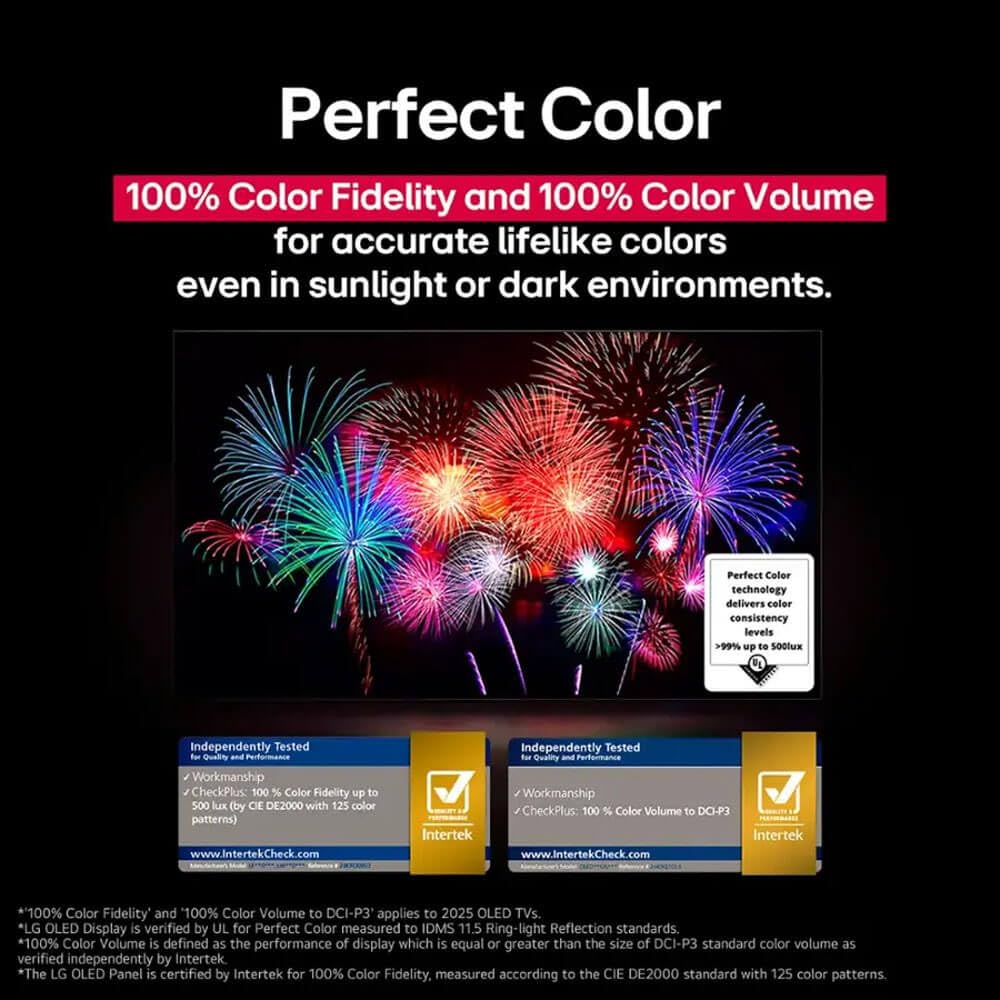
At $799.99, the B5 makes a legitimate case as the OLED price-performance benchmark this cycle. The UK price of £1,199 reflects a similar positioning in that market. The B6 successor is priced notably higher and arrives with a documented green tint issue in darker scenes, plus lower DCI-P3 coverage at 97.4% compared to the B5's 99.5%. The B5 has deeper perceived blacks in direct comparison and more vibrant color reproduction, and in testing the color accuracy data supports a strong case for the B5 as the sharper value among LG's current OLED options for buyers who prioritize cinematic fidelity over maximum nits.
The C5 and C6 sit at a significant premium and deliver meaningfully higher peak brightness, with the C6 earning strong marks for its detail and contrast improvements. If maximum HDR brightness is the priority and budget allows, the C-series is the correct choice. For buyers who want genuine OLED blacks, reference-grade color accuracy, and Filmmaker Mode performance at the most accessible price in LG's lineup, the B5's SDR brightness limitation is the only substantive trade-off to weigh.
Who Should Buy the LG OLED AI B5
Buy if you are:
- A dark-room movie watcher who wants perfect blacks and infinite contrast without C-series pricing
- A color-critical viewer or Filmmaker Mode user who values accuracy over raw peak brightness
- Upgrading from an LCD or older OLED and want the full pixel-level light control experience
- A buyer who noticed the B6's green tint reports and wants a cleaner, more consistent panel
Skip if you are:
- Watching primarily in a bright living room; mediocre SDR brightness and genuine glare will frustrate daily viewing
- A competitive gamer who needs confirmed input lag figures, VRR standard support, or a specific HDMI 2.1 port count before buying
Bottom Line

The LG OLED AI B5 at $799.99 delivers infinite contrast, 99.5% HDR DCI-P3 color coverage, and near-perfect out-of-box accuracy in a panel that outperforms its own successor on color fidelity while avoiding the B6's green tint problem. The SDR brightness ceiling is real and the gaming spec gaps are a legitimate concern for the right buyer. For dark-room cinephiles, there is no better OLED value at this price. The B5 is the rare case where the previous model beats the current one on color accuracy, sidesteps a known panel flaw in the newer product, and lands at a price that makes the decision straightforward. If you have a dedicated viewing room and care about color accuracy over maximum nits, the B5 earns your attention and holds it.
-- Miles Danner, Consumer Electronics Editor
*Disclosure: As an Amazon Associate, Revuzia earns from qualifying purchases. Prices and availability are accurate as of publication and may change.*