USC Roboticist Maja Mataric Turns Autism Therapy Robots Toward Campus Mental HealthUSC Roboticist Maja Mataric Turns Autism Therapy Robots Toward Campus Mental HealthUSC Roboticist Maja Mataric Turns Autism Therapy Robots Toward Campus Mental HealthUSC Roboticist Maja Mataric Turns Autism Therapy Robots Toward Campus Mental Health
April 21, 2026
In 2005, Maja Mataric helped define socially assistive robotics as a formal field; twenty years later, the University of Southern California professor is deploying that same research framework to address the mental health crisis overwhelming university counseling centers -- work

In 2005, Maja Mataric helped define socially assistive robotics as a formal field; twenty years later, the University of Southern California professor is deploying that same research framework to address the mental health crisis overwhelming university counseling centers -- work that earned her MassRobotics' 2025 Robotics Medal at a Boston ceremony. The recognition arrived at a moment when the field she co-founded has moved from theoretical justification to clinical testing, with robots now being evaluated as delivery systems for structured psychological treatment.
College students are facing record rates of anxiety and depression, and the supply of trained therapists has not kept pace with demand. Cognitive behavioral therapy (CBT) (a structured psychological treatment that targets negative thought patterns, maladaptive behaviors, and disordered emotional responses) sits at the center of most campus mental health protocols. Mataric's lab at USC is now testing whether robots can deliver it. The question is no longer whether machines can simulate empathy. The question is whether simulated empathy is enough.
What It Does
Socially assistive robotics (a subfield in which robots provide personalized therapy and care through social interaction rather than physical manipulation) is the discipline Mataric helped formalize in 2005. Unlike industrial robots that grip, weld, or assemble, socially assistive robots are designed to talk, listen, observe, and respond in ways that produce measurable behavioral or therapeutic outcomes in the person they are working with.
The interactions these robots are built for include structured conversation, game-playing, emotional mirroring, and reinforcement through words of affirmation. The robot does not need to feel anything. It needs to produce a response at the right moment, in the right register, calibrated to the individual sitting across from it. That calibration, built through machine learning and behavioral modeling, is where most of the engineering complexity lives.
Mataric's lab has been refining this interaction model across multiple populations. The robot Bandit, developed at USC, plays structured games with children who have autism spectrum disorder (ASD) (a neurodevelopmental condition affecting social communication and behavior) and delivers verbal encouragement during those sessions. The goal is not to replace a human therapist but to provide a consistent, patient, and endlessly available interaction partner that can supplement clinical care.
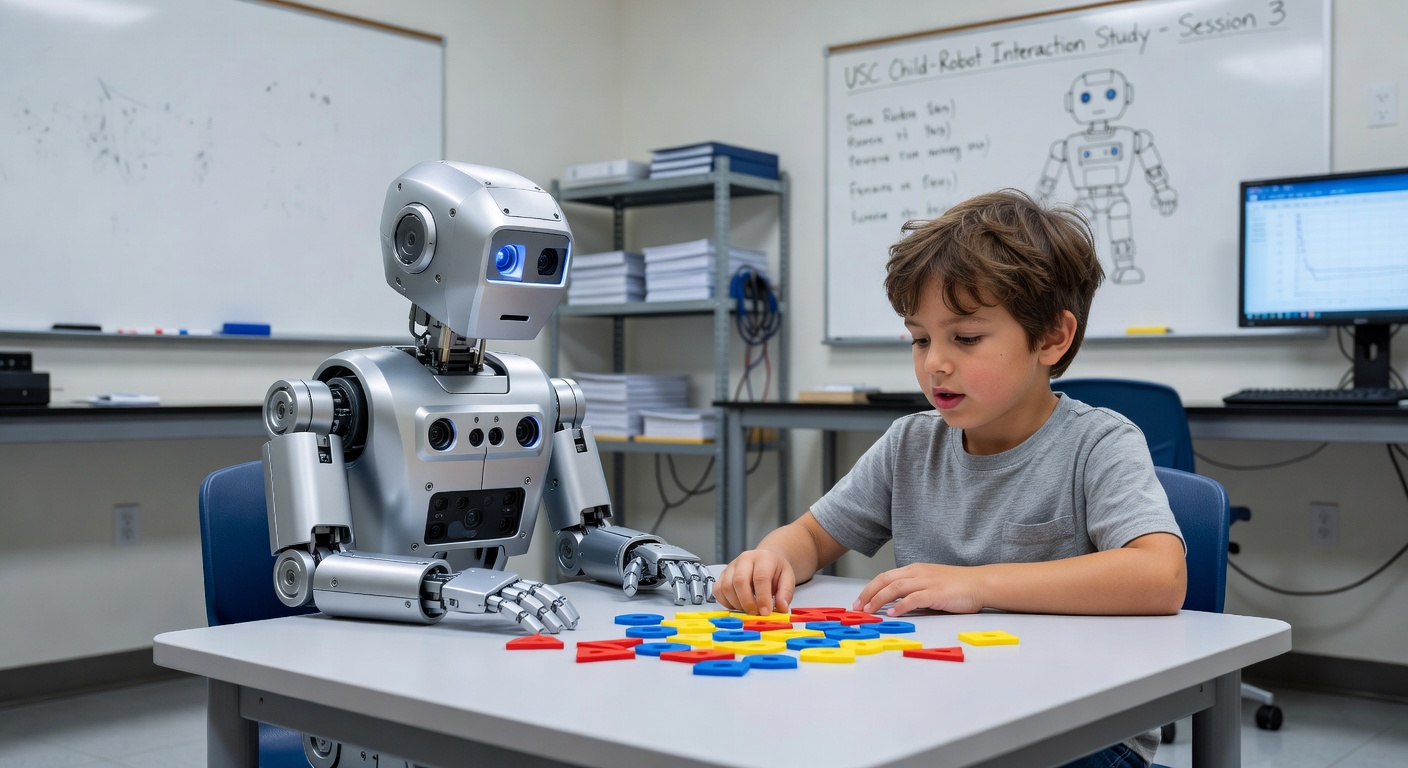
That model, applied to autism, is now being extended toward anxiety and depression in adult students. The therapeutic mechanism shifts, but the core premise holds: a robot that shows up every time, never fatigued, never distracted, and capable of tracking subtle behavioral signals across many sessions.
The Technical Achievement
When Mataric co-defined socially assistive robotics as a field in 2005, the idea that robots could function as therapeutic agents required significant justification. Robotics research was dominated by manipulation, locomotion, and autonomous navigation. Social interaction was treated as a soft problem, not an engineering one.
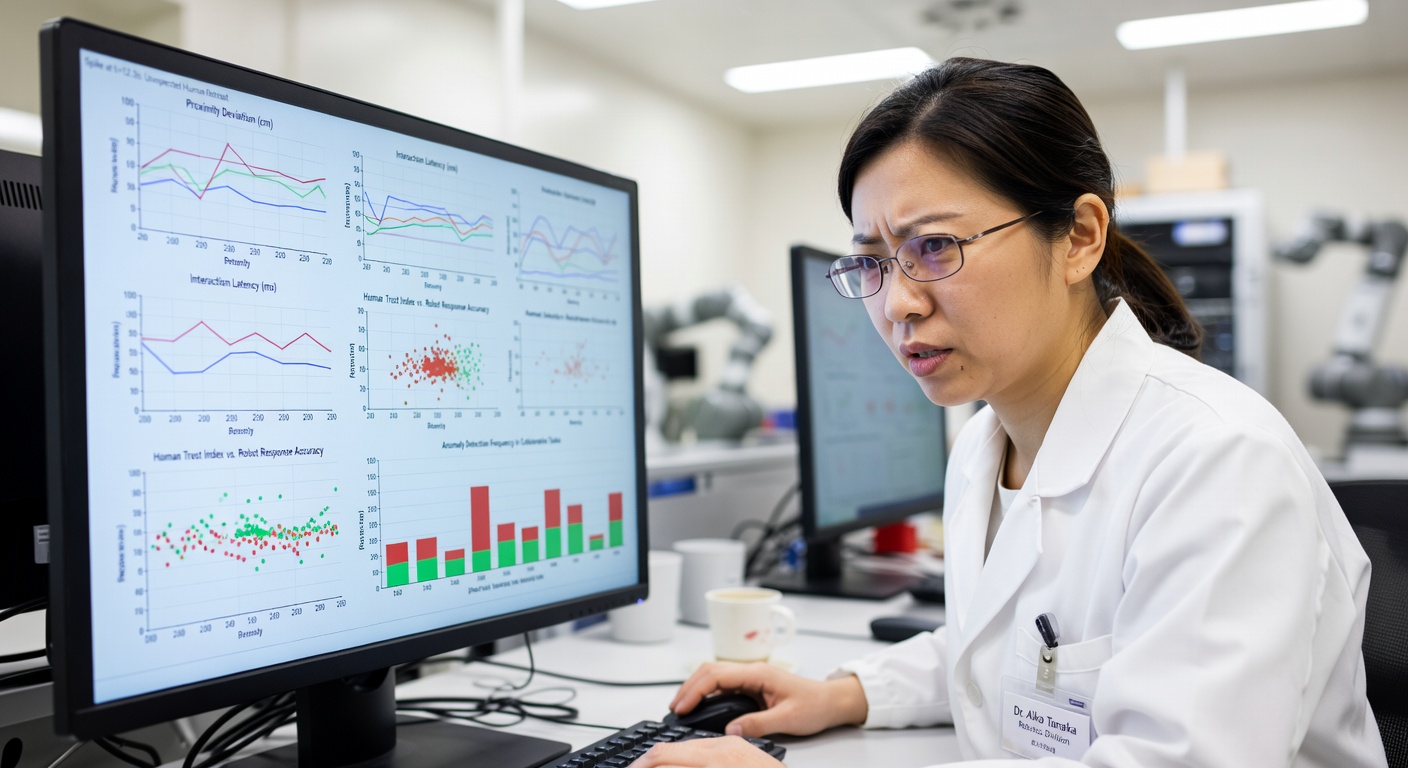
Mataric's contribution was to argue, and then demonstrate, that the social dimension was itself a technical discipline with measurable outcomes. A robot that could sustain a child's engagement during a CBT session for fifteen minutes longer than a previous session was producing a quantifiable result. The interaction had a signal that could be studied, optimized, and replicated.
Her current research targets students with anxiety and depression undergoing CBT. The therapy addresses three interlocking components:
- Negative thought patterns: identifying and challenging automatic cognitive distortions
- Maladaptive behaviors: reducing avoidance, increasing behavioral activation
- Emotional responses: building tolerance for distress and improving emotional regulation
Delivering CBT requires a practitioner, or a system, capable of tracking where a patient is in the therapeutic arc across sessions, prompting at the right moments, and adjusting based on the patient's responses. Mataric's lab is building the scaffolding that allows a robot to do that work in a structured, protocol-driven way.
Bandit's autism work provides the foundational evidence that robots can sustain meaningful therapeutic engagement over time. Translating that architecture to CBT for adult students involves longer session structures, more complex linguistic modeling, and a different set of outcome metrics, but the underlying interaction loop is the same.
Mataric holds appointments in computer science, neuroscience, and pediatrics at USC -- a combination that signals how seriously the university treats the convergence of engineering and clinical application. She is also an IEEE Fellow, the institute's highest membership grade.
Real-World Impact
The biography behind the research is not incidental to it. Mataric was sixteen when her father died. She and her mother relocated from Belgrade, Serbia to the United States, arriving in a country whose language and systems she had to learn without a built-in support structure. She completed her undergraduate degree at the University of Kansas and her graduate work at MIT before joining USC.

That trajectory shaped a specific orientation toward problems. Mataric did not arrive at assistive robotics as an abstract engineering challenge. She built a career in a field that, for most of its early existence, she had to explain and defend to a research community that did not yet take it seriously.
The 2025 MassRobotics Robotics Medal, awarded in Boston, recognized that career. MassRobotics, a Boston-based nonprofit that supports robotics startups through workspace access, prototyping resources, mentorship, and networking, has used its annual Robotics Medal to recognize researchers whose work has shaped the field's direction. For Mataric, the ceremony carried a particular weight.
"I've been very fortunate to be honored with several awards, which I am grateful for. But there was something very special about getting the MassRobotics medal, because I knew at least half the people in the room," she said after receiving the award.
"Everyone was just smiling, and there was a great sense of love," she added.
Recognition from a peer community carries a different valence than recognition from a broader institution. The MassRobotics medal -- given by a Boston nonprofit that works daily with the robotics startup ecosystem -- signaled that the field Mataric helped define in 2005 had developed enough of a community that its members could look back at the work and assess it with some historical distance.
What's Next
The clinical frontier for socially assistive robotics in mental health remains largely unmapped. No peer-reviewed outcome data, study scale, or efficacy comparisons for Mataric's robot-delivered CBT work appear to be publicly available at this time. That absence reflects where the work sits in the development pipeline, not a judgment on its direction.
What the MassRobotics recognition signals is that the field's infrastructure -- its commercial ecosystem, research networks, and institutional legitimacy -- has matured enough to support this kind of clinical ambition. Mataric's work sits near the top of the research-to-application chain.
The open questions are substantial. Whether robot-delivered CBT produces outcomes comparable to therapist-delivered CBT is an empirical question that requires large-scale trials with rigorous controls. Whether students experiencing anxiety and depression respond to a robot with the same therapeutic openness they bring to a human clinician is a behavioral question that the existing autism research does not fully answer. The ethical contours of deploying machines in mental health contexts -- where the therapeutic relationship is itself a clinical instrument -- remain actively contested.
None of those questions diminish the scale of the problem Mataric is addressing. University counseling centers in the United States are operating under sustained demand pressure, with waitlists that can extend weeks into a semester. A robot that can deliver structured CBT modules to a student who would otherwise wait is not a replacement for a therapist. It is a different kind of intervention, with a different risk profile and a different cost structure.
The field Mataric co-defined in 2005 is old enough now to start producing answers. The hard argument about whether this was worth doing has been won. What remains is measurement -- and for a campus mental health system that has been losing the numbers game for years, a robot that shows up reliably and never burns out is not a philosophical proposition. It is a capacity problem looking for a solution.
-- Zara Velez, Emerging Technology Editor
Sources: IEEE Spectrum / The Institute · NSF Public Access Repository, socially assistive robotics research · MassRobotics (massrobotics.org)
More on Revuzia
Suniva Plans 564-Job Solar Manufacturing Facility in South Carolina
India Adds 44.6 GW of Solar in One Year While US Falls Further Behind
Algorithmiq Raises EUR 18 Million, Beats Harvard and Stanford on Quantum Drug Simulation