Moon Landings Could Permanently Contaminate Billions-Year-Old Lunar Ice DepositsMoon Landings Could Permanently Contaminate Billions-Year-Old Lunar Ice DepositsMoon Landings Could Permanently Contaminate Billions-Year-Old Lunar Ice DepositsMoon Landings Could Permanently Contaminate Billions-Year-Old Lunar Ice Deposits
July 14, 2026
A computational study published in the American Geophysical Union journal has found that a single rocket landing near the lunar south pole could trap 42% of its methane exhaust in permanently shadowed polar craters within roughly seven months -- and that exhaust cannot be
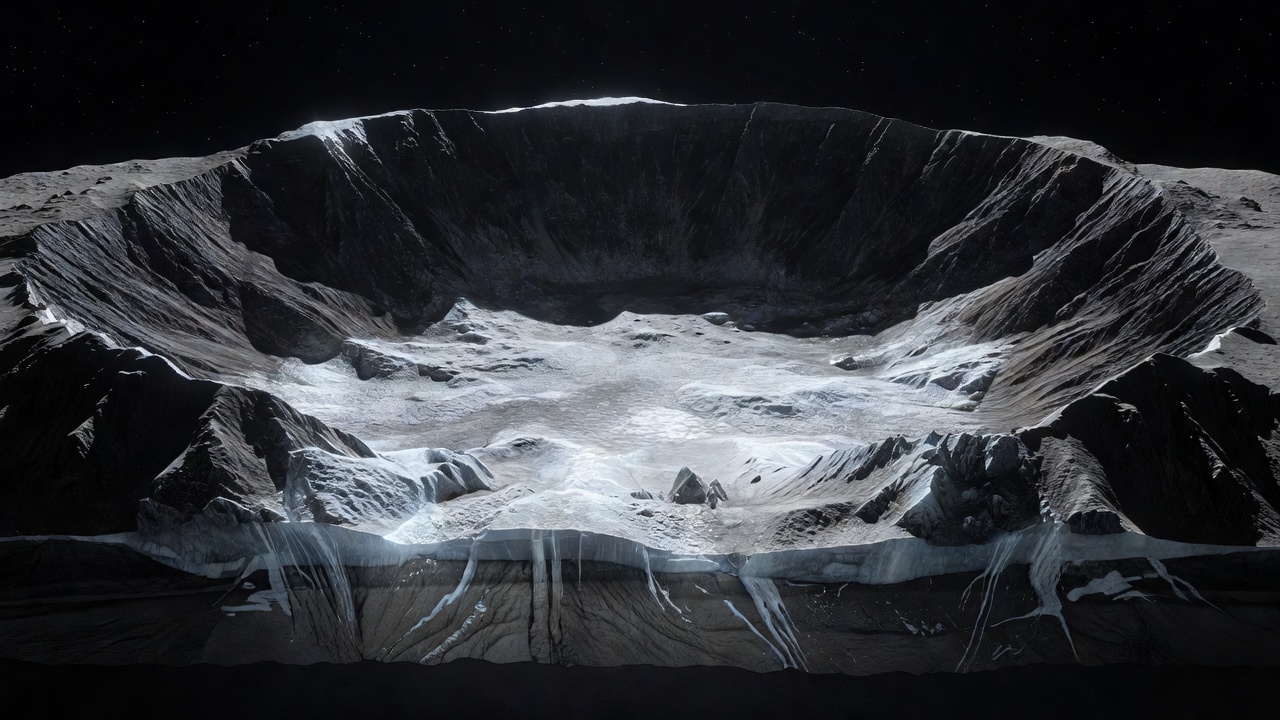
A computational study published in the American Geophysical Union journal has found that a single rocket landing near the lunar south pole could trap 42% of its methane exhaust in permanently shadowed polar craters within roughly seven months -- and that exhaust cannot be separated from the billions-of-years-old prebiotic organic molecules already frozen inside those deposits. The counterintuitive cost is that the scientific case for going to the south pole, its preserved ancient ice and the chemistry locked inside it, is precisely what the act of going there threatens to destroy permanently before it can be studied.
What Happened
Researchers Francisca Paiva, a physicist at Instituto Superior Tecnico in Portugal, and Silvio Sinibaldi, Planetary Protection Officer at the European Space Agency, ran computational simulations to model what happens to methane exhaust after a rocket-powered lunar lander touches down near the south pole. Their findings, published in the American Geophysical Union journal, are specific and quantified: within one lunar day -- approximately 29.5 Earth days -- over 50% of expelled methane becomes trapped at the moon's two polar cold-trap regions combined. The south pole alone captures 42% of that exhaust; the north pole accounts for another 12%.
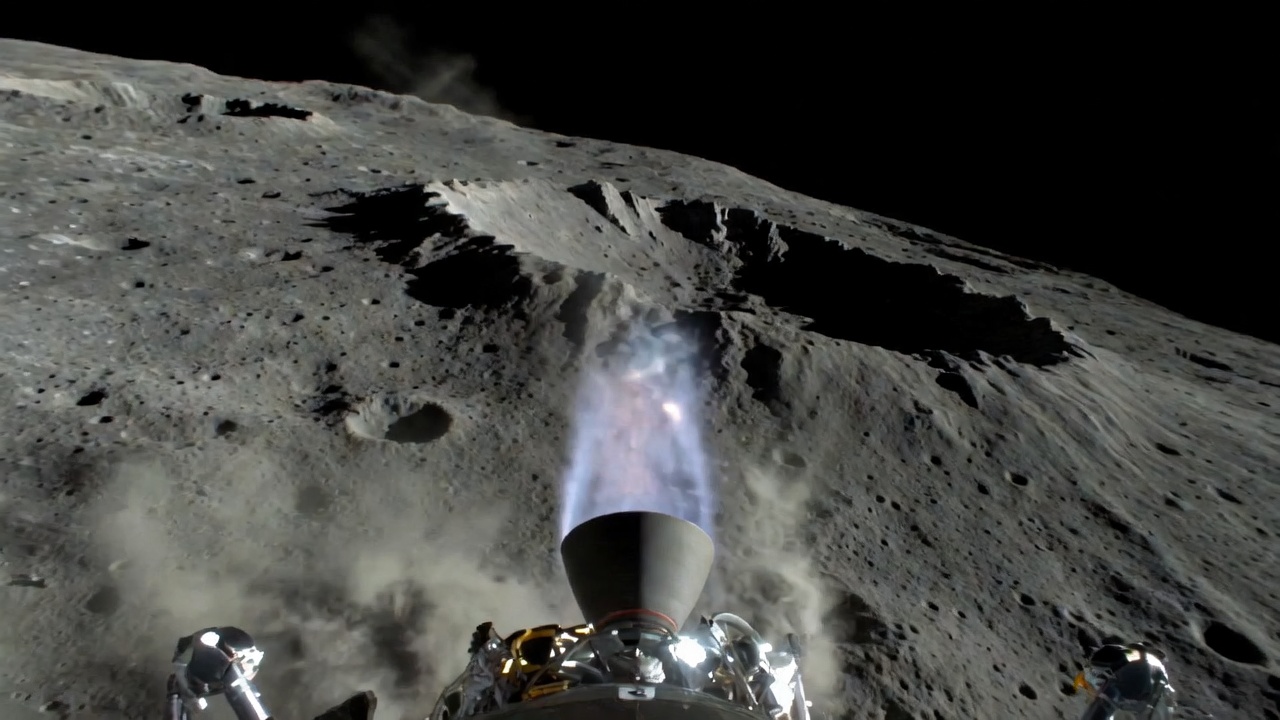
The mechanism is not gradual diffusion. Because the moon has no atmosphere, exhaust molecules travel ballistically across the surface, reaching the north pole from a south-pole landing site in under seven Earth days. The simulations also incorporated the effects of solar wind and radiation on methane dispersion, making the modeled environment more realistic than a simple vacuum assumption.
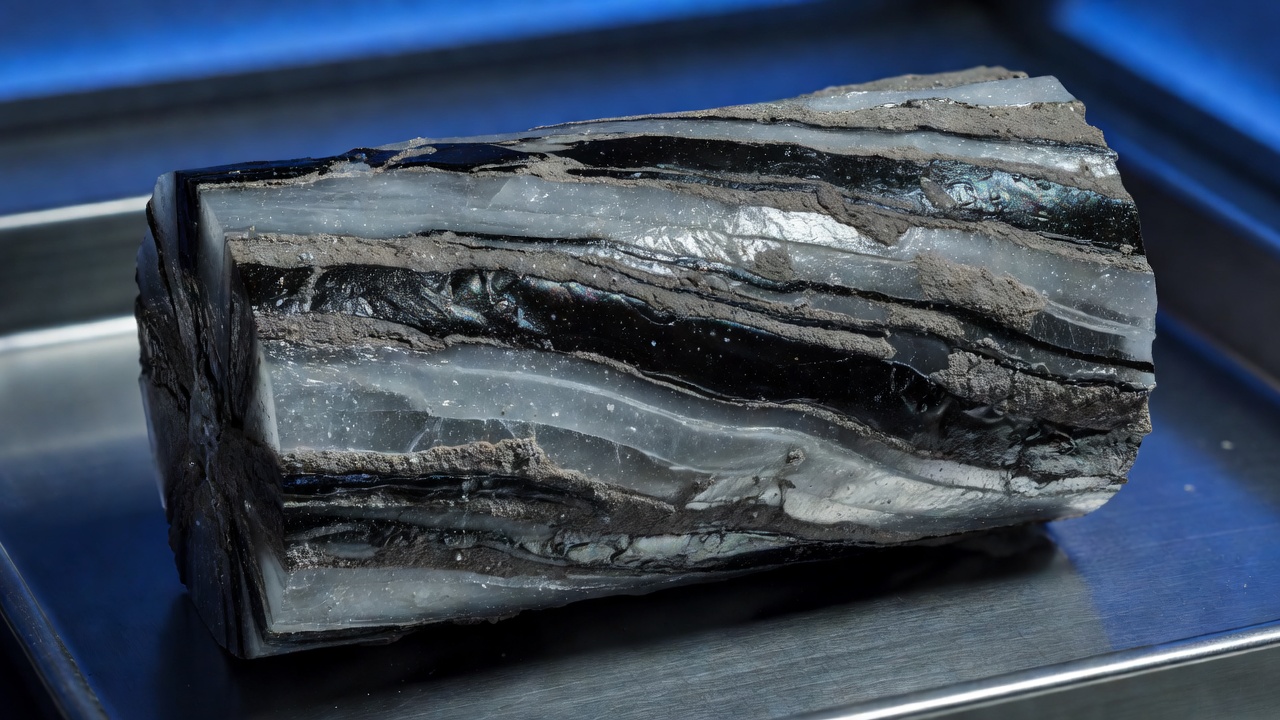
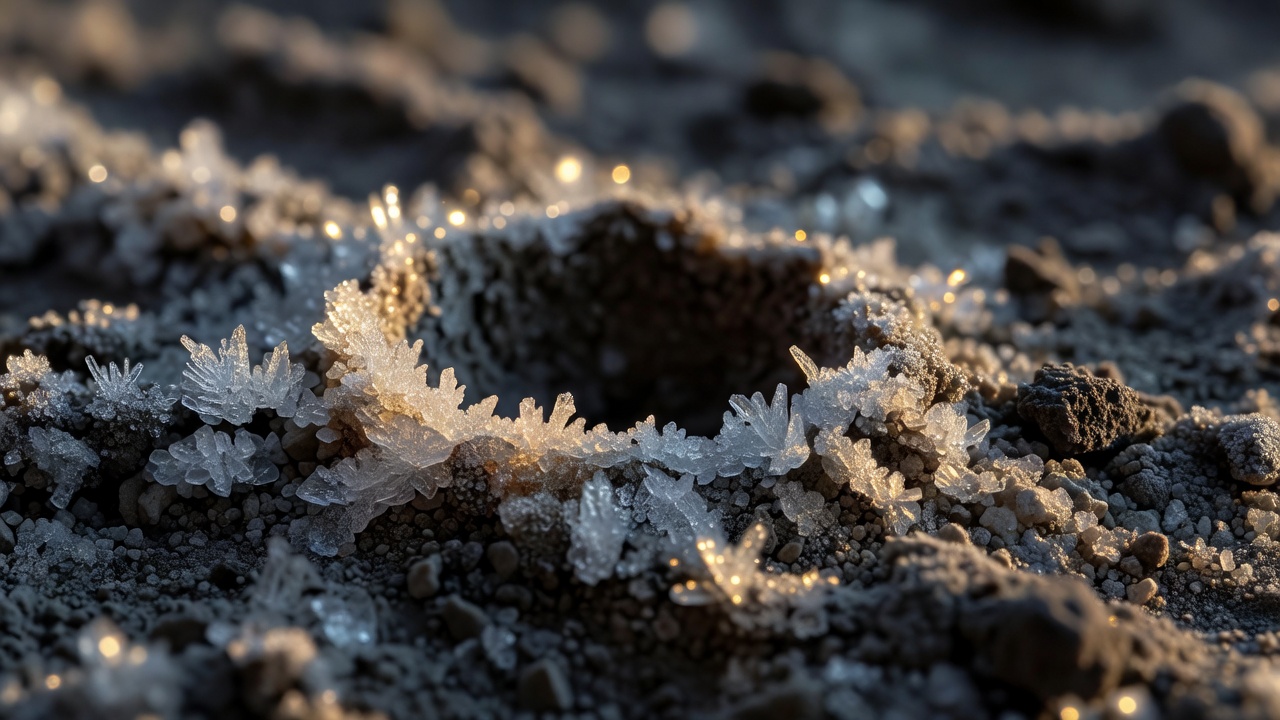
What makes those polar cold traps scientifically irreplaceable is what they already hold: ancient ice containing prebiotic organic molecules -- chemical precursors to life -- deposited by asteroids and comets billions of years ago. These deposits represent a preserved chemical record of the early solar system that no longer exists on Earth, where geological and biological activity have destroyed equivalent molecular evidence. Contaminating them with rocket exhaust, the study warns, is a permanent alteration with no known analytical remedy.
The Science Behind It
Paiva's description of how methane molecules move across the lunar surface cuts to the physics quickly. "Their trajectories are basically ballistic. They just hop around from one point to another," she explained in the study release. Without aerodynamic drag, each molecule follows a predictable arc governed by the moon's gravity and surface temperature gradients until it reaches a region cold enough to freeze it in place.
Those cold-enough regions are concentrated at both poles, in permanently shadowed craters -- bowl-shaped depressions whose geometry keeps sunlight from ever reaching their floors. At the temperatures found in these craters, volatile compounds including water ice and organic molecules do not sublimate; they accumulate over geological timescales.
The organic molecules preserved alongside that ice are the scientific prize at stake. They represent the raw chemical inventory available to the early solar system before life began on Earth, a window into what chemists call prebiotic chemistry -- the stage of molecular evolution before biology takes over. Earth's own record of that era has been overwritten by plate tectonics, a liquid water cycle, and biology itself. The moon's has not. Its polar ice deposits are effectively a freezer that has been running, undisturbed, for billions of years.
The study's simulations focused on methane as the primary contaminant because methane is the main organic compound expelled by planned lunar landers. The researchers identified choosing colder landing sites as a possible mitigation strategy, since lower surface temperatures would reduce the speed and distance methane molecules travel after release. Additional simulations assessing exhaust compounds beyond methane are identified as a needed next step.
Why This Mission Matters
The scientific stakes are framed precisely by Sinibaldi, who holds formal responsibility at ESA for preventing biological and chemical contamination of celestial bodies. "We know we have organic molecules in the solar system, in asteroids, for example. But how they came to perform specific functions like they do in biological matter is a gap we need to fill," he said in the study release. The polar ice deposits, if studied before contamination, could provide direct evidence bearing on that gap: how simple organic molecules assembled into the complex, function-performing chemistry that preceded life.
Sinibaldi's other quoted statement carries both scientific and institutional weight: "We are trying to protect science and our investment in space. We can't let human activity hinder scientific exploration." That tension -- between the act of going to the moon and the scientific value of what the moon contains -- is not theoretical. It is arriving on a specific mission timeline.
Humans have not visited the lunar surface in over 50 years, since the Apollo program ended. The upcoming Artemis era changes that. Artemis IV, planned for the early 2030s, is expected to land astronauts near the moon's south pole, in the same geographic zone where the study models the highest exhaust-trapping rates. NASA's longer-term plans include a permanent lunar base requiring many additional trips, each adding cumulative methane load to the polar environment.
Independent analyst commentary specifically on this announcement was not publicly available at publication time.
Competitive Landscape
The field of planetary protection -- the discipline governing contamination policy for space missions -- has a documented history stretching back to 1956, when the International Astronautical Federation first raised the concern at its congress in Rome. In 1958, the U.S. National Academy of Sciences passed a resolution that remains relevant today, urging scientists to plan lunar and planetary studies with great care so that initial operations do not "compromise and make impossible forever after critical scientific experiments."
Regulatory responsibility for planetary protection has since passed through COSPAR, the Committee on Space Research, which has held it since 1959. The legal backbone is Article IX of the 1967 Outer Space Treaty, ratified by the United States, the Soviet Union, and the United Kingdom and now in force among 118 countries. That treaty limits celestial bodies to peaceful purposes and prohibits contamination but does not specify exhaust chemistry thresholds for lunar polar landings.
The gap between the treaty's broad language and the specificity needed to protect polar ice deposits is where the Paiva-Sinibaldi study sits. Paiva draws the analogy explicitly: "We have laws regulating contamination of Earth environments like Antarctica and national parks. I think the moon is an environment as valuable as those." Antarctica has the Antarctic Treaty System; the moon has no equivalent operational framework governing exhaust from commercial or government landers.
What Comes Next
The study's immediate practical implication is a call for mission planners to integrate contamination modeling into landing site selection. Choosing sites farther from permanently shadowed crater rims, or preferring colder landing zones where methane molecules travel shorter distances before freezing, could reduce the contamination footprint. Whether those constraints are compatible with the scientific and operational requirements driving current south-pole site selection -- including access to ice for potential resource extraction and proximity to peaks of eternal light for solar power -- is a question the study identifies but does not resolve.
Additional simulations are needed to model exhaust compounds beyond methane, particularly for missions using different propellant combinations. The study's publication in a peer-reviewed journal is an opening move in that conversation, not a concluded policy outcome. Whether NASA or ESA formally incorporate the findings into mission planning has not been publicly confirmed.
- Methane trapping at south pole: 42% of exhaust captured within one lunar day
- Methane trapping at north pole: 12% of exhaust captured within the same window
- Combined polar trapping: over 50% of total exhaust within approximately one lunar day
- Travel time to north pole: under seven Earth days from a south-pole landing
- Ice age in polar craters: billions of years, deposited by asteroids and comets
For academic researchers in astrobiology and prebiotic chemistry, the practical stakes are immediate: the polar cold traps represent the only known repository of ancient solar system organic chemistry that is both accessible and physically undisturbed. If contamination from a single landing introduces methane that permanently freezes alongside billion-year-old prebiotic molecules, any future sample-return mission or in-situ analysis will face the problem of distinguishing ancient organic signatures from recent rocket exhaust -- a problem with no clean analytical solution once contamination occurs.
Humanity spent more than six decades developing the capability to reach this freezer full of molecular history. Whether it arrives with the equivalent of a clean-room protocol or a blowtorch is still an open policy question -- and the window to answer it is measured in mission-planning cycles, not decades.
-- Zara Velez, Emerging Technology Editor
Sources: Space.com, "Moon landings could destroy evidence of life's origins"