STS-69: NASA's 100th Crewed Flight Hid a Space Station RehearsalSTS-69: NASA's 100th Crewed Flight Hid a Space Station RehearsalSTS-69: NASA's 100th Crewed Flight Hid a Space Station RehearsalSTS-69: NASA's 100th Crewed Flight Hid a Space Station Rehearsal
September 8, 2026
On Sept. 7, 1995, space shuttle Endeavour lifted off from Pad 39A at Kennedy Space Center in Florida carrying NASA's 100th successful crewed spaceflight, mission STS-69, a five-astronaut crew tasked with running two independent, free-flying science payloads during an 11-day
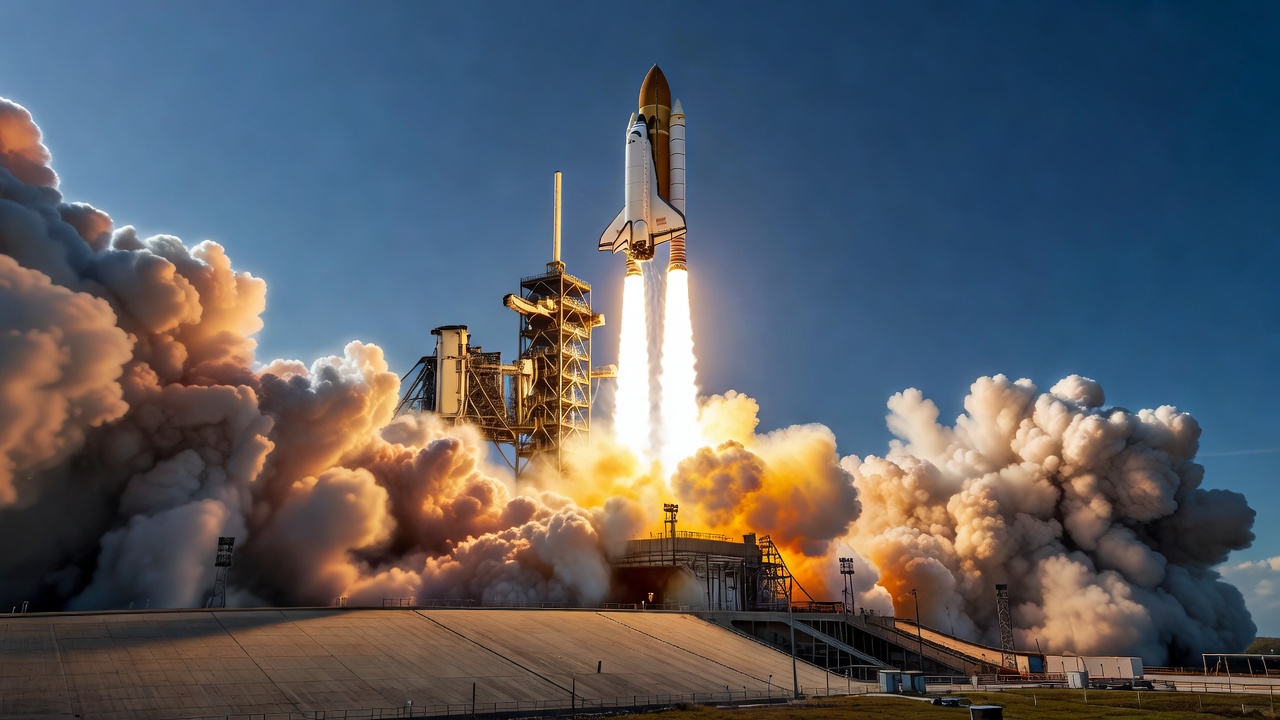
On Sept. 7, 1995, space shuttle Endeavour lifted off from Pad 39A at Kennedy Space Center in Florida carrying NASA's 100th successful crewed spaceflight, mission STS-69, a five-astronaut crew tasked with running two independent, free-flying science payloads during an 11-day flight. The milestone number is the easy headline. The more consequential story is buried inside the mission timeline: a 6-hour, 46-minute spacewalk that doubled as a dress rehearsal for the hardware and procedures that would later assemble the International Space Station. Two payloads deployed and retrieved on the same flight, a solar-observation satellite and a stainless-steel chamber for growing semiconductor thin films in the vacuum of space, made STS-69 a genuine engineering test bed, not just a counting milestone.
What Happened
Endeavour's STS-69 crew was commanded by David Walker, with Kenneth Cockrell as pilot, Jim Voss as payload commander, and Jim Newman and Michael Gernhardt rounding out the team as mission specialists. The crew was NASA's second "dog crew," or Dog Crew II, a naming tradition in which each astronaut adopted a dog nickname. As NASA's own overview of the mission put it: "Walker was Red Dog; Cockrell was Cujo; Voss, Dog Face; Newman, Pluto; and Gernhardt, Under Dog."
Over the course of the 11-day flight, the crew deployed and retrieved the Spartan 201 satellite, a free-flying science platform released from the shuttle's payload bay and recovered days later using the robotic arm. STS-69 marked the first time two different payloads were both retrieved and deployed during the same shuttle mission, a scheduling and operations feat that put extra demand on the crew's robotic-arm and rendezvous procedures across a single flight window. Coordinating two separate retrievals in one flight window left less margin for error than a single-payload mission would have, since a scheduling slip on either retrieval could cascade into the timeline for the other.
The launch itself, from Kennedy Space Center's historic Pad 39A, came at a moment when NASA counted its 100th successful crewed flight cumulatively, spanning every era of American human spaceflight rather than the shuttle program alone. That framing matters for scale: STS-69 sits deep into the shuttle era, but the 100th-flight count reaches back through every American human spaceflight program that came before it, not just the shuttle years.
The Science Behind It
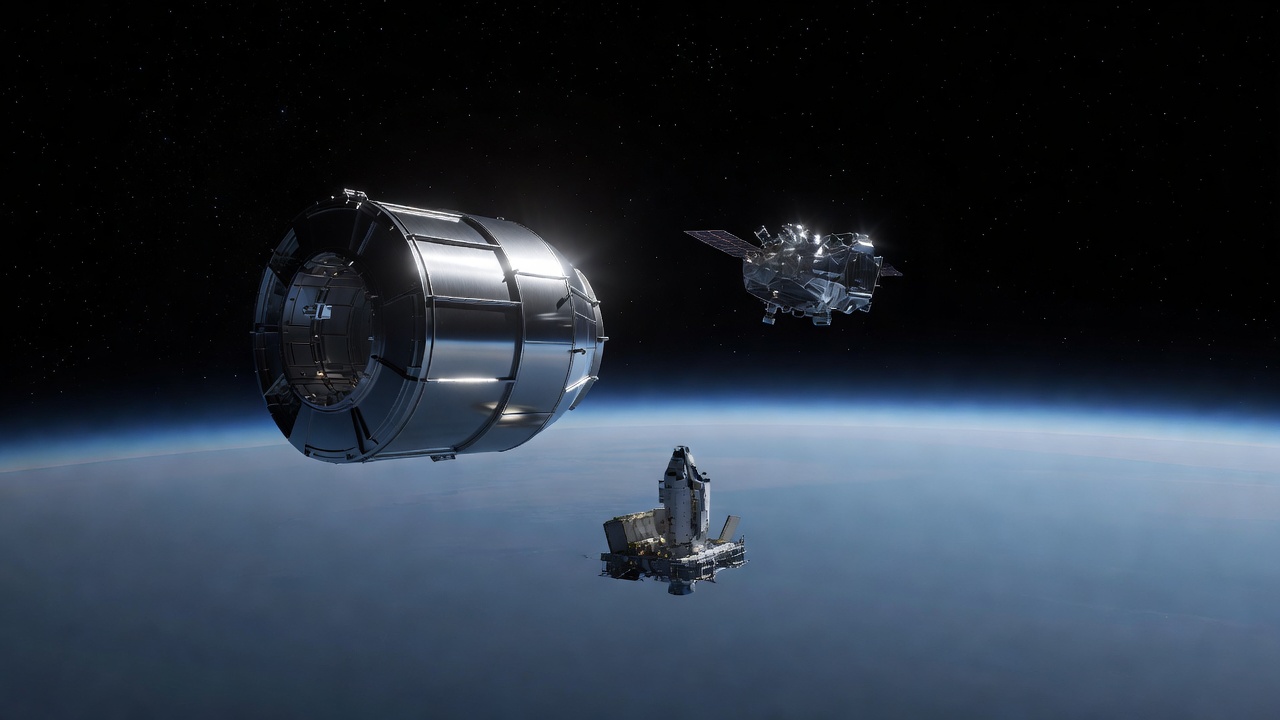
The mission's signature payload was the Wake Shield Facility-2 (WSF-2), a free-flying stainless steel disk designed to operate apart from the shuttle so it could create an ultra-clean vacuum in orbit, shielded from the orbiter's own exhaust and outgassing (gas released from the shuttle's own surfaces and equipment), for growing thin films used in advanced electronics. Thin films like these are building blocks for semiconductors and other electronic components, and manufacturers have long sought to grow them in a vacuum purer than anything achievable inside Earth's atmosphere, since even trace contamination can introduce flaws at the atomic scale. WSF-2 was deployed twice during the 11-day mission and successfully grew four of the seven thin films NASA had planned for the flight, a yield that reflects how hard it is to hit every target even inside a purpose-built vacuum chamber flying free of the shuttle.
The mission's second payload, Spartan 201-03, was the third of four planned Spartan 201 flights carried on NASA shuttle missions, a recoverable free-flying satellite released from the payload bay and retrieved before the crew returned home, the same deploy-and-retrieve profile the mission used for its other free-flying payload.
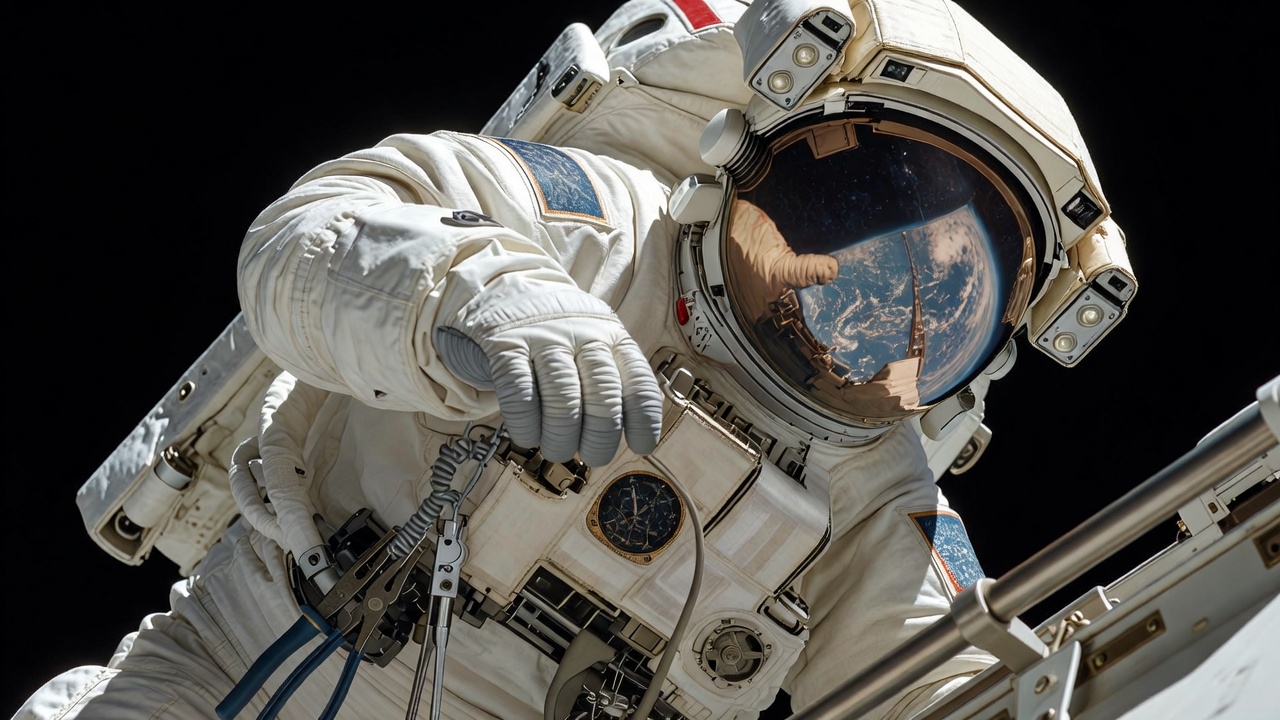
The mission's single spacewalk, performed by Voss and Gernhardt, lasted 6 hours and 46 minutes. The two astronauts tested tools and techniques for EVA (extravehicular activity, meaning work performed outside the spacecraft in a pressurized suit) operations intended for future International Space Station assembly, treating the excursion as a working rehearsal rather than a standalone task.
Why This Mission Matters
STS-69 crossed a threshold that had nothing to do with any single payload: it was NASA's 100th successful crewed spaceflight, a running total across every U.S. human spaceflight program. Milestones like this mark endurance as much as achievement, a signal that the underlying systems, ground crews, and flight-readiness processes had matured to the point of routine, repeatable execution.
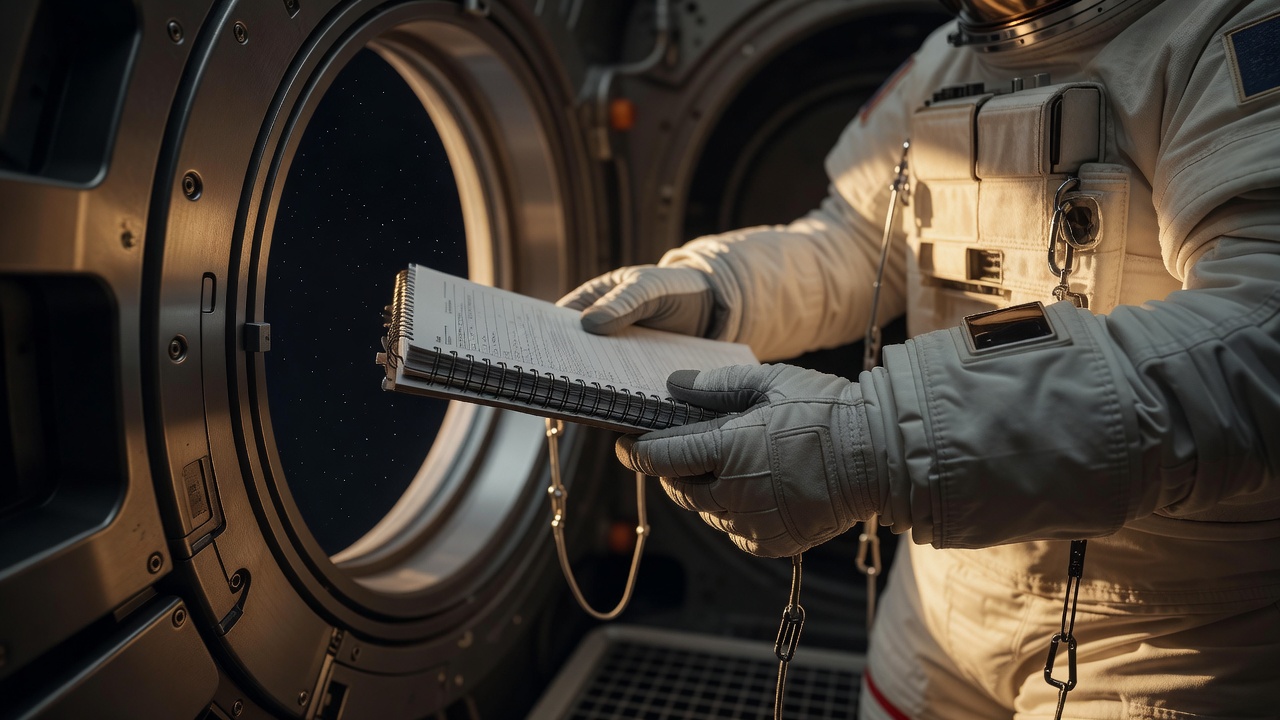
The spacewalk carried the more practical stakes. Voss and Gernhardt's 6-hour, 46-minute excursion was explicitly built to practice methods future astronauts would use to build the International Space Station, rehearsing hardware-handling techniques under real orbital conditions rather than in a pool or simulator. Every hour spent validating those tools and procedures in 1995 reduced risk for the far larger, multi-year construction campaign to come. That kind of incremental, repeatable spacewalk practice is exactly what large-scale orbital construction requires: not a single heroic feat, but dozens of similar excursions performed reliably enough that mission planners can build a multi-year assembly schedule around them. Pairing that human spaceflight test with two simultaneous uncrewed science payloads, one a free-flying satellite, one a semiconductor-manufacturing platform, showed a shuttle program capable of running crewed operations and hands-off orbital research on the same flight without one crowding out the other.
Competitive Landscape
No directly comparable commercial peers were publicly identifiable at publication time in 1995-era human spaceflight operations. Adjacent activity within NASA's own flight manifest, specifically the ongoing Spartan 201 series, already three flights deep with a fourth still to come, suggests an active internal research cadence rather than a single one-off demonstration. By 1995, the shuttle program itself had been flying regularly for over a decade, and no rival national program was operating an equivalent reusable orbiter capable of running two independent, free-flying research payloads on a single flight, which left NASA's own manifest as effectively the only benchmark for judging how ambitious an 11-day mission like this one really was. A direct competitive ranking against other national human spaceflight programs operating in the same period would require disclosures not covered in NASA's own STS-69 mission materials.
Independent analyst commentary specifically on this announcement was not publicly available at publication time.
What Comes Next
Spartan 201-03 was only the third of four planned flights in its series, meaning NASA had at least one more free-flying deployment of that satellite already on its manifest before STS-69 had even landed. The Wake Shield Facility, having just completed its second deployment of the mission and its fourth-of-seven thin-film harvest, left NASA with a working record of what the disk could and could not grow in orbit, data that would shape how the next flight's targets were chosen.
The spacewalk's real payoff arrived on a longer timeline. The International Space Station would go on to require years of assembly spacewalks using exactly the category of hardware-handling techniques that Voss and Gernhardt tested during STS-69's 6-hour, 46-minute excursion. What began as a single rehearsal spacewalk on an 11-day science mission became a proving ground for procedures the shuttle program would repeat many times over as station assembly ramped up.
There's a small irony in naming a crew after dogs on a mission built around vacuum chambers and solar-observation satellites, but Dog Crew II earned its milestone the unglamorous way: by testing tools nobody would notice until they worked. The 100th crewed flight wasn't the point. The rehearsal inside it was.
For aerospace engineers and mission planners working on today's EVA suit and assembly-procedure design, STS-69's spacewalk is a reminder that hardware validation happens incrementally, one 6-hour, 46-minute test at a time, years before the systems it informs carry their real workload. A single rehearsal spacewalk in 1995 fed directly into the hardware-handling procedures later used across the International Space Station's assembly campaign.
-- Zara Velez, Emerging Technology Editor
Sources: Space.com · NASA Technical Reports Server · NASA