NASA Retires MAVEN After 11 Years: Mars Relay Network Loses Its Most Efficient OrbiterNASA Retires MAVEN After 11 Years: Mars Relay Network Loses Its Most Efficient OrbiterNASA Retires MAVEN After 11 Years: Mars Relay Network Loses Its Most Efficient OrbiterNASA Retires MAVEN After 11 Years: Mars Relay Network Loses Its Most Efficient Orbiter
June 17, 2026
NASA has officially retired the MAVEN (Mars Atmosphere and Volatile EvolutioN) orbiter after 11 years of operation, following an unrecovered contact loss in December 2025 that left the spacecraft spinning at 2.7 revolutions per minute in safe mode until its batteries drained.
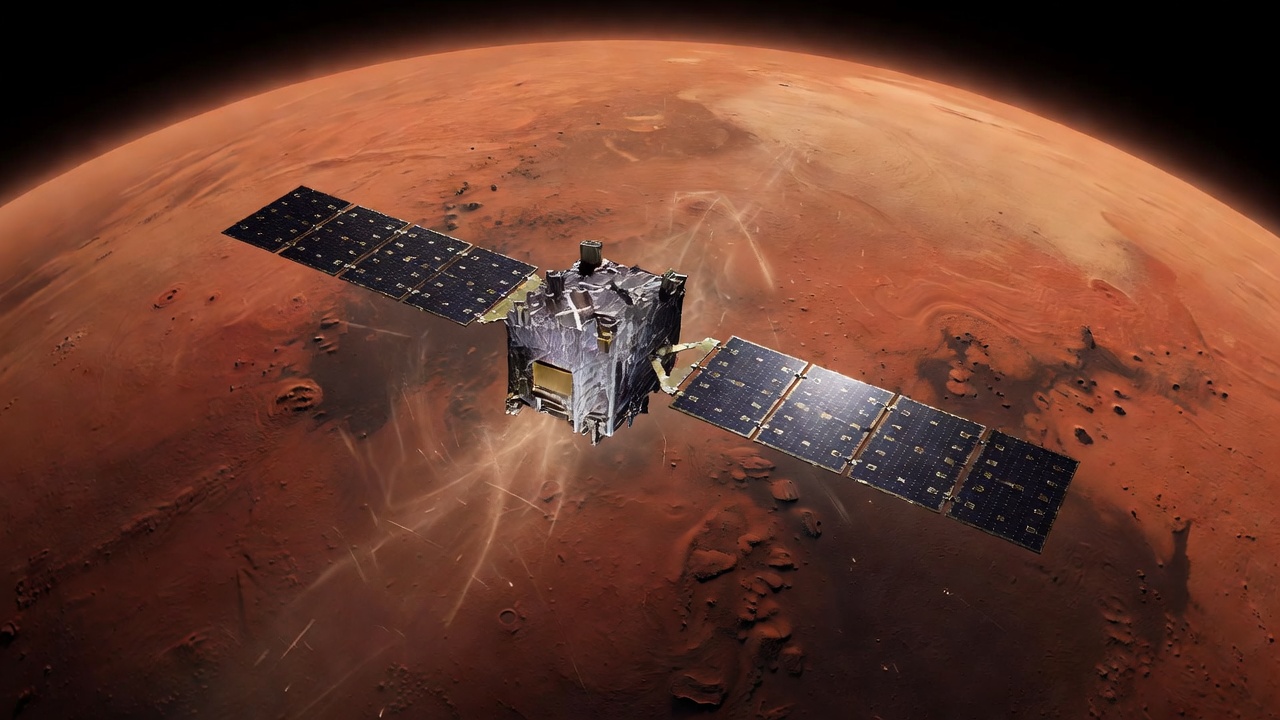
NASA has officially retired the MAVEN (Mars Atmosphere and Volatile EvolutioN) orbiter after 11 years of operation, following an unrecovered contact loss in December 2025 that left the spacecraft spinning at 2.7 revolutions per minute in safe mode until its batteries drained. The counterintuitive detail in that obituary: MAVEN conducted just over 8 percent of all relay sessions in the Mars Relay Network, yet returned nearly 18 percent of all science data transmitted from the Martian surface -- more than double its proportional share -- making it the most data-efficient relay asset in the network. That asymmetry matters now because four orbiters remain where five operated before, and the gap opens precisely as NASA's next-generation atmospheric mission, ESCAPADE, begins its work.
The decommissioning closes a mission planned to last two years that instead ran for six times that span, generating more than 800 scientific publications and producing the most detailed picture of atmospheric escape ever assembled for any planet in the solar system. MAVEN's absence will be felt at every level of Mars science, from daily data relay to the foundational models of how Mars lost its ancient ocean.
What Happened
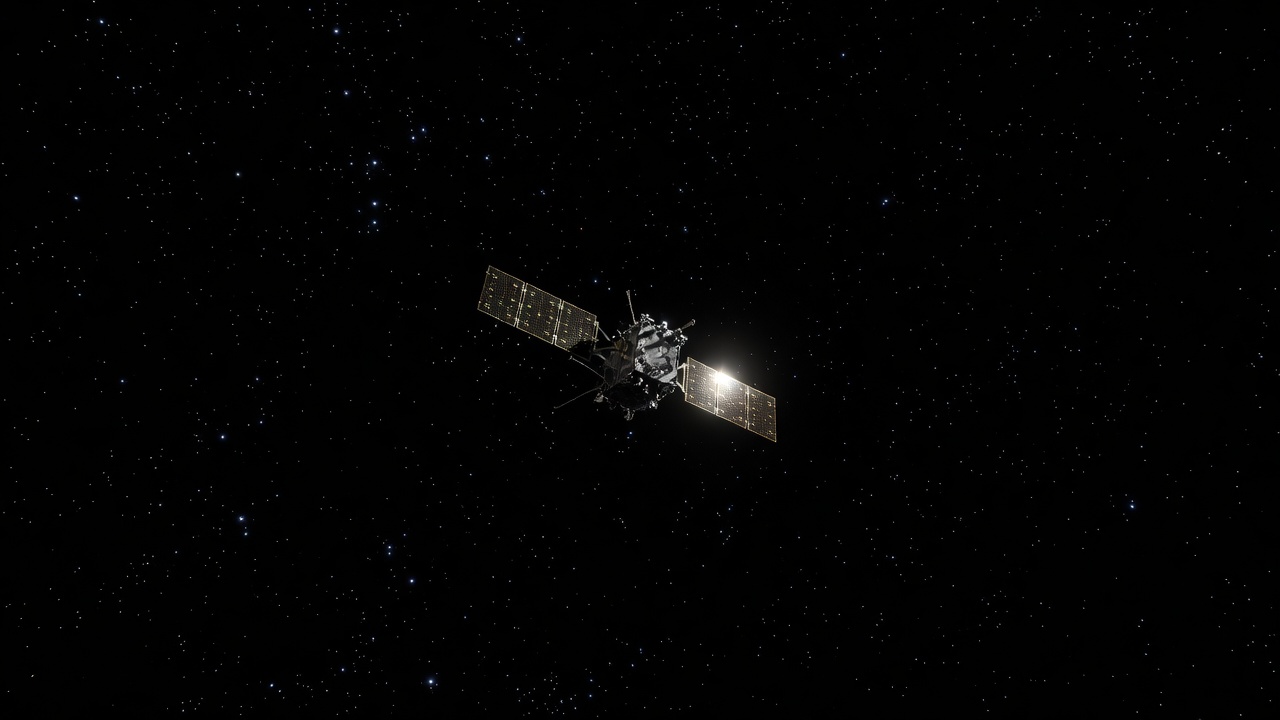
MAVEN went silent in December 2025 during a routine communications blackout as the spacecraft passed behind Mars. When it emerged on the other side, recovered telemetry fragments told a troubling story: the orbiter was in safe mode (an autonomous low-power state spacecraft enter when onboard systems detect a fault) and spinning at approximately 2.7 revolutions per minute. That spin rate is inconsistent with normal operations. According to NASA, the rotation is believed to have drained the spacecraft's batteries over several hours, eventually cutting power to its communications system entirely. What triggered the spin remains unknown.
Over the following months, engineers at NASA Goddard Space Flight Center sent repeated computer-reboot commands and worked through every plausible recovery scenario. In February 2026, NASA convened a formal review board. The board found that MAVEN had been operating normally in the weeks before the anomaly, which ruled out slow degradation as the cause but left the root mechanism unexplained. A final report is expected later in 2026.
"The conclusion is that the spacecraft is not recoverable," said Mike Moreau, MAVEN project manager at NASA Goddard Space Flight Center, at a press conference earlier in June 2026. "The team really has experienced the loss of a loved one with the end of the mission."
MAVEN will not disappear from Mars immediately. Its highly elliptical orbit (an elongated path that swings close to Mars at one end and far away at the other, used to sample atmospheric layers at multiple altitudes) will sustain it for an estimated 50 to 100 years before atmospheric drag pulls it into reentry. Scientists are exploring whether Mars rovers might photograph the silent orbiter passing overhead later in 2026, though previous surface-based attempts to spot it have not succeeded.
The Science Behind It
MAVEN launched from Cape Canaveral in November 2013 as NASA's first mission devoted exclusively to understanding Mars's atmosphere. Its core mandate: measure particles escaping into space and observe how the Martian upper atmosphere responds to solar activity, in order to reconstruct how Mars shed the thick atmosphere it likely possessed billions of years ago. The mission was designed for two years. It ran for 11.
Over that span, managed by NASA Goddard with Shannon Curry of the University of Colorado Boulder serving as principal investigator, MAVEN produced findings that reshaped the scientific consensus on planetary atmospheric evolution. Among its primary discoveries:
- Solar storms can dramatically accelerate atmospheric gas loss from Mars, providing a mechanism for rapid planetary desiccation during periods of high solar activity.
- MAVEN delivered the first direct observations of atmospheric sputtering (a process in which energetic charged particles strike the upper atmosphere and physically knock atoms into space, stripping the planet's air molecule by molecule).
- Global dust storms, which periodically engulf the entire Martian surface, accelerate the loss of water from Mars's atmosphere.
- Mars hosts entirely new categories of planetwide auroras (diffuse light emissions caused by charged particles interacting with an uneven crustal magnetic field, unlike the pole-concentrated auroras on Earth).
The cumulative scientific output reached more than 800 peer-reviewed publications. Curry offered a pointed summary: "We now have a better understanding of atmospheric escape at Mars than at any other planet, including Earth."
That statement carries weight because atmospheric escape (the process by which gas molecules reach sufficient velocity to overcome a planet's gravity and disperse into space) is the central mechanism explaining Mars's transformation from a potentially habitable, water-bearing world into the barren, thin-aired surface explored by rovers today. MAVEN's data forms the empirical backbone of current models for that transformation.
Why This Mission Matters
MAVEN's scientific legacy is substantial, but its operational role in the Mars Relay Network (the constellation of orbiters that ferry data between surface rovers and Earth) was arguably its most underappreciated contribution. The numbers reveal a significant efficiency gap between MAVEN's share of relay sessions and its share of delivered data.
MAVEN conducted just over 8 percent of all relay sessions in the network during its lifetime. Yet it returned nearly 18 percent of all science data transmitted from the Martian surface -- more than double its proportional share. That disparity reflects MAVEN's orbit geometry and high-bandwidth communications architecture, which made it an unusually efficient conduit for large science data files.
Curry acknowledged the emotional weight while situating it against the mission's record: "The team is certainly broken up about this. But at the same time, we are incredibly proud of the science we've accomplished over the last decade."
MAVEN's 11-year operational span also demonstrates a broader principle for planetary mission design: the science return from extended missions can substantially exceed the return from the primary mission phase. MAVEN's original two-year design lifetime would have yielded a fraction of the 800-plus publications that the full run produced.
Competitive Landscape
MAVEN's retirement reduces the active Mars orbital fleet from five to four spacecraft. The remaining orbiters are:
- Mars Odyssey (NASA) -- the oldest currently active Mars orbiter, which has served as a relay platform for surface missions for over two decades.
- Mars Reconnaissance Orbiter (NASA) -- the highest-bandwidth imaging orbiter at Mars, also a primary relay asset for surface missions including the Perseverance rover.
- Mars Express (ESA, European Space Agency) -- Europe's first Mars orbiter, carrying a broad suite of atmospheric and subsurface instruments.
- Trace Gas Orbiter (ESA) -- focused on detecting trace atmospheric gases including methane, and a relay participant for the ExoMars surface mission.
Tiffany Morgan, Director of NASA's Mars Exploration Program, acknowledged the relay gap while framing it as manageable: "There is a slight delay on occasion, because we don't have as many assets in view, to getting our science data back, and MAVEN was critical in returning science data versus operational data. The Mars Relay Network is resilient enough at this point in time to accommodate, for the most part, the loss of MAVEN with the added delay."
Independent analyst commentary specifically on this announcement was not publicly available at publication time.
What Comes Next
The timing of MAVEN's loss creates a specific scientific problem. In 2025, NASA launched ESCAPADE (Escape and Plasma Acceleration and Dynamics Explorers), a pair of small spacecraft designed to study the Martian magnetosphere (the region of space influenced by Mars's magnetic field) and the mechanisms driving atmospheric escape. ESCAPADE was designed in part to build on MAVEN's foundational measurements with a two-spacecraft formation capable of simultaneous multi-point observations.
MAVEN will not be available to provide that complementary dataset. With more than 800 publications and over a decade of atmospheric measurements in the record, the baseline is not thin -- but the loss of an operating MAVEN removes the ability to cross-calibrate measurements from the two eras in real time.
On the relay side, Morgan's assessment that the remaining four-orbiter network can absorb MAVEN's absence "for the most part" is qualified by that phrase. The science data return rate will slow for surface missions, including the Perseverance rover at Jezero Crater. NASA is exploring a commercial Mars telecommunications network to fill the long-term gap, but no operational timeline has been announced.
The final report on the December 2025 anomaly is expected later in 2026. Pending that report, MAVEN joins a short list of Mars spacecraft whose end-of-mission cause remains officially undetermined -- cases where unexpected failures in otherwise healthy spacecraft have resisted straightforward explanation. Whether the anomaly reflects accumulated wear, a software fault, or an external event such as a micrometeorite strike, the answer will inform how NASA designs and operates the next generation of deep-space assets.
For academic researchers and planetary scientists building on the MAVEN archive: the mission's 800-plus publications represent a baseline for atmospheric escape modeling that will take years to fully incorporate. The 18-percent-from-8-percent relay efficiency figure means that surface datasets passed through MAVEN's antenna at a higher rate than its session share implies. As ESCAPADE begins returning data, cross-referencing its atmospheric escape measurements against MAVEN's decadal record will be one of the defining calibration challenges in Mars atmospheric science for the next several years.
A spacecraft that spent 11 years studying how Mars loses its atmosphere to space will itself spend the next 50 to 100 years slowly succumbing to that same thin atmosphere, its orbit decaying until it burns up in the skies it once measured. MAVEN is simultaneously a decommissioned mission and an active Mars artifact, orbiting in silence above the surface science it enabled. The next generation of orbiters will work in the data environment MAVEN created, under skies it still occupies.
-- Zara Velez, Emerging Technology Editor
Sources: Space.com · NASA Mars 2020 Perseverance Mission