NIO CEO Warns Golden Era Is Over Despite 23% Sales GrowthNIO CEO Warns Golden Era Is Over Despite 23% Sales GrowthNIO CEO Warns Golden Era Is Over Despite 23% Sales GrowthNIO CEO Warns Golden Era Is Over Despite 23% Sales Growth
May 29, 2026
NIO CEO William Li declared this week that the "golden era" of China's auto industry is probably over, even as his own company posted 23% year-over-year sales growth -- a number that makes the warning land harder, not softer. When the executive with the strongest results in the
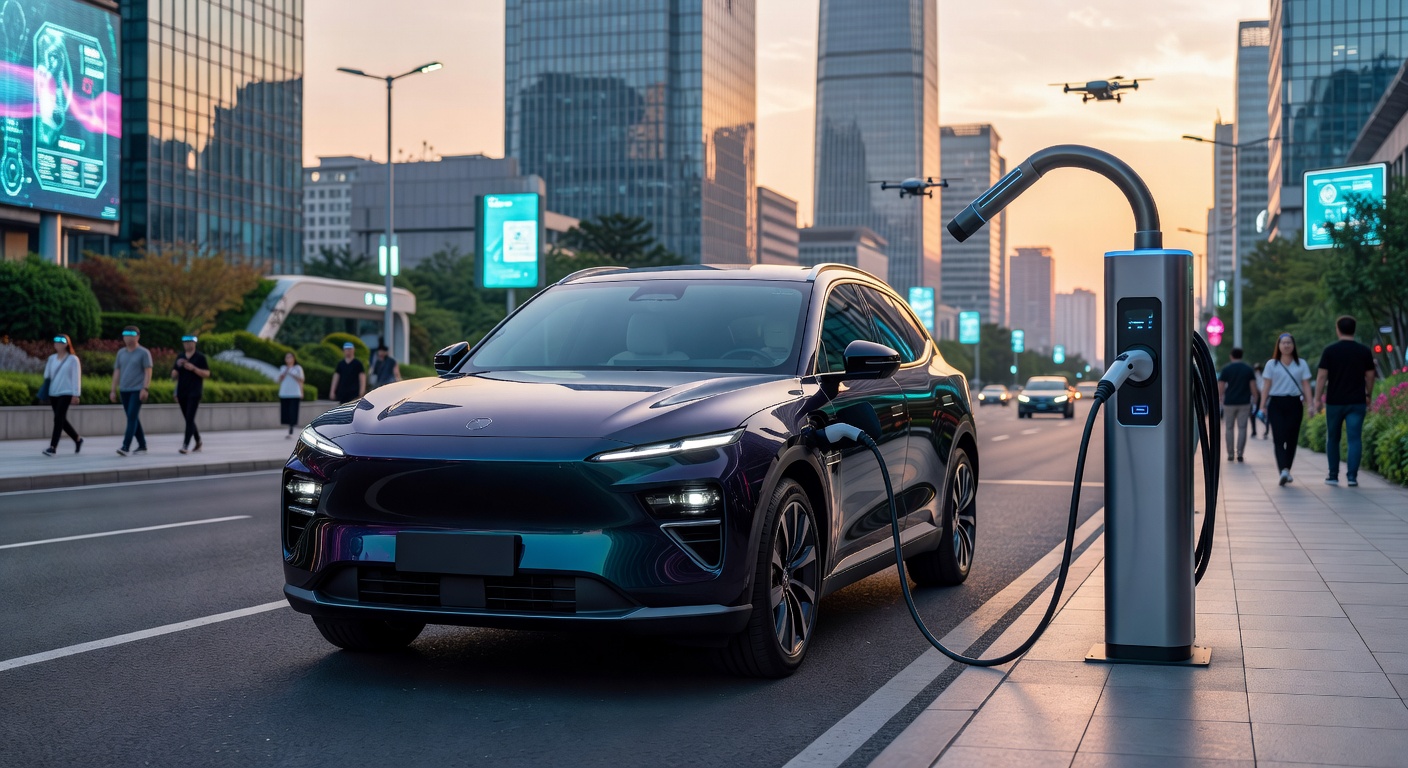
NIO CEO William Li declared this week that the "golden era" of China's auto industry is probably over, even as his own company posted 23% year-over-year sales growth -- a number that makes the warning land harder, not softer. When the executive with the strongest results in the room calls time on an era, investors and competitors have reason to pay attention in a way they might not if the statement came from a struggling manufacturer looking for cover. For anyone tracking capital flows through the clean energy transition, Li's assessment reframes the entire Chinese EV story from a volume narrative into a market-share fight.
What's New
Speaking publicly about industry conditions in late May 2026, Li said the hyper-growth phase that defined China's auto sector over the past several years has ended. His word for it was the "golden era," a phrase he deployed to describe the period when the entire market expanded fast enough that nearly every manufacturer could post strong numbers simply by showing up. That era, in his view, is probably over.
The timing of the statement is notable on its own terms. NIO itself reported 23% year-over-year sales growth in the most recent month, a number that most Western automakers would treat as a banner headline. Li is not speaking from a position of distress about his own company's performance. He is speaking from a read of the structural conditions surrounding it.
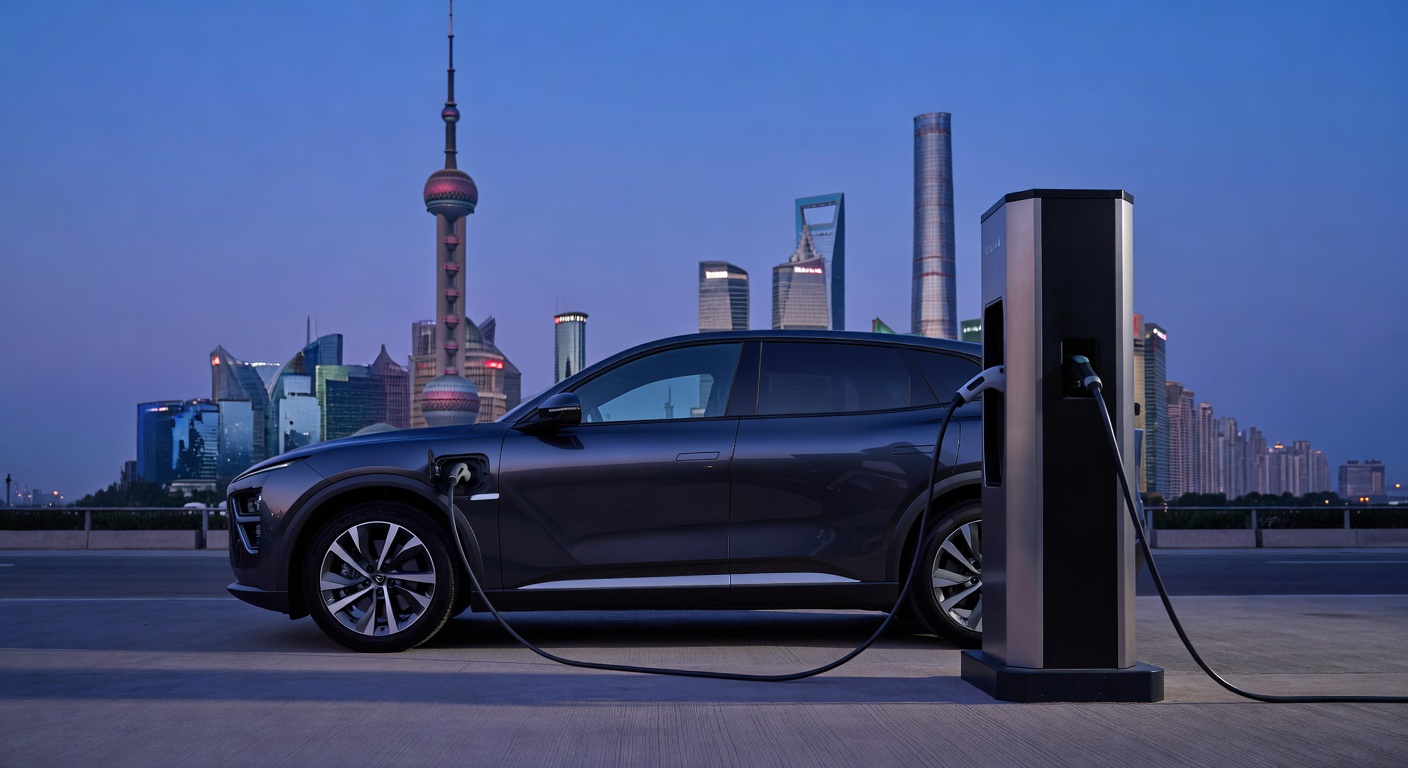
Concurrent with the warning, NIO launched the ES9, its newest model. Early reception described the ES9 as appearing to be a hit. The company is executing well at the product level even as its CEO characterizes the broader environment as fundamentally changed. The launch and the warning are not contradictory. They are two faces of the same strategic reality: competing harder for a share of a market that is no longer expanding the way it once did.
How It Works
China's domestic car market has now recorded seven consecutive months of declining sales through April 2026. That is not a single bad quarter. It is a sustained contraction across the broadest measure of the market.
The composition of that decline, however, is not uniform. The projected 2026 full-year picture breaks along a clean fault line:
- Non-plugin vehicles (internal combustion and conventional vehicles without a charging port) are expected to decline in 2026 versus 2025.
- Plugin vehicles (battery electric and plug-in hybrid) are still projected to grow in 2026, though not at a strong rate.
- Total China auto sales are projected at 0% growth for the full year 2026 versus 2025, meaning the plugin segment's modest gains are being offset almost entirely by the non-plugin drop.
What this means structurally is that the overall market has effectively plateaued while a substitution effect runs beneath the surface. Consumers are not buying fewer cars because they have lost interest in transportation. They are shifting from one powertrain category to another, and the legacy powertrain category is contracting fast enough to cancel out the electric segment's gains at the aggregate level. The headline number, zero growth, masks a significant internal reallocation.
The Economics

A market growing at zero percent in aggregate does not mean zero economic activity. It means the economics of the industry have shifted from a volume-growth model to a market-share competition model, and those two environments reward very different strategies.
During a volume-growth era, manufacturers can expand revenue simply by increasing production. Pricing discipline matters less because demand absorbs supply. The entire ecosystem -- dealers, suppliers, logistics networks -- benefits from the rising tide. That is the "golden era" Li described.
In a market-share competition era, every unit sold by one manufacturer is a unit not sold by another. Pricing pressure intensifies. Margins compress. Weaker players exit or consolidate. The manufacturers left standing are those with the most defensible product positions, the lowest cost structures, or the most loyal customer bases. For the EV sub-sector specifically, the 2026 projection of modest plugin growth means the substitution effect is still running, but the growth is not strong enough to replicate the volume-expansion economics of earlier years.
The implication for capital allocation is direct. NIO's 23% growth last month is real, but it was achieved inside a market posting seven consecutive monthly declines. That number reflects competitive execution, not a favorable tide. The company is taking share, not floating upward with an expanding market.
Competitive Landscape
The structural response from most Chinese automakers to stagnant domestic demand has been aggressive international expansion. NIO is notably absent from that strategy.
Chinese automakers with hybrid lineups in their portfolios have pursued international expansion as a hedge against weakening domestic demand. Those manufacturers can offer plug-in hybrid vehicles in markets where charging infrastructure is sparse -- a commercial flexibility that full-electric-only lineups cannot match. In markets where public charging remains limited, a plug-in hybrid (a vehicle that can run on gasoline when no charger is available) is often a more practical product than a battery-electric vehicle. Manufacturers carrying hybrid options can compete in those markets in ways that a full-electric brand structurally cannot.
NIO's lineup contains no hybrids. It is a fully electric automaker by design and strategy. Li explicitly cited this as a constraint: foreign markets present more challenges for full-electric cars than for plugin hybrids. That position is the correct long-term bet on where the industry is going. It is also, in the near term, the specific reason NIO cannot replicate the export hedge that hybrid-equipped competitors are executing. While those competitors diversify their revenue geographically, NIO has stated it remains focused on its domestic Chinese market.
Independent analyst commentary specifically on this announcement was not publicly available at publication time.
The competitive irony is precise. NIO is constrained internationally because of the purity of its electric commitment, while manufacturers that kept one foot in hybrid technology have greater freedom of movement in 2026. The market is rewarding flexibility in the short term even as long-term policy direction continues to favor full electrification.
What's Next
NIO's stated near-term strategy rests on two pillars: continued domestic focus and the ES9 launch. The ES9, described as appearing to be a hit in early reception, represents the product-level answer to the tighter competitive environment Li described. Winning in a market-share fight requires products that move customers from competitors, not just products that serve a growing pool of new buyers.
The plugin segment remains the one area of the Chinese market where growth is still projected in 2026, even if that growth is modest rather than strong. For a company with no non-plugin vehicles in its lineup, NIO is entirely exposed to the plugin segment's performance, with no revenue buffer from the ICE side. That is a concentration risk in a year when the plugin growth rate is expected to be limited.
The broader industry adjustment underway in China has a direction that favors NIO's long-term positioning even as it creates near-term pressure. The non-plugin decline running through the 2026 data represents ICE and conventional vehicles losing share to electrified alternatives. NIO is already on the right side of that transition. The question the next several quarters will answer is whether the domestic plugin growth rate, even at a subdued pace, is sufficient to sustain the competitive performance NIO posted last month -- 23% year-over-year -- as the broader market absorbs its structural reset.
What Li's declaration provides, beyond a candid read of industry conditions, is a recalibration of expectations. Companies and investors that priced in "golden era" growth rates as a baseline are now operating with a different set of inputs.
For retail investors holding exposure to Chinese EV names, the core takeaway from Li's statement is a valuation signal, not a sales alarm. NIO growing 23% in a market down seven consecutive months means it is taking share, not just riding volume. But a 0% total market growth projection for 2026 means the TAM (total addressable market -- the full pool of potential buyers for a given product) in China is not expanding the way earlier price multiples may have assumed. If your thesis on any Chinese auto position was "rising tide lifts all boats," that thesis needs updating. The boats are still moving, but they are now racing each other, not floating upward together. Plugin segment growth remains the one live vector, but "modest" growth in that segment does not support the same growth-rate assumptions that justified peak-cycle valuations.
The man calling the end of China's automotive golden era runs a company growing at 23% and launching a new model that looks like a hit. That is not contradiction. That is what the beginning of a market-share war looks like from the inside: the strongest players are still winning, but the game they are playing has changed. NIO bet everything on the vehicle type the future demands and finds itself, in 2026, constrained precisely because of that bet -- free to win at home, boxed out abroad. The golden era ended. The harder era is already underway.
-- Raj Malhotra, Market Analysis Director
Sources: CleanTechnica · Reuters