OpenAI Pushed Washington to Restrict Chinese AI. Its Business Model Explains Why.OpenAI Pushed Washington to Restrict Chinese AI. Its Business Model Explains Why.OpenAI Pushed Washington to Restrict Chinese AI. Its Business Model Explains Why.OpenAI Pushed Washington to Restrict Chinese AI. Its Business Model Explains Why.
July 21, 2026
OpenAI's head of strategic futures, Dean W. Ball, publicly argued that the US government should manufacture "regulatory fear, uncertainty, and distrust" around Chinese open-weight models (AI models whose underlying parameters are publicly released, allowing anyone to run them on

OpenAI's head of strategic futures, Dean W. Ball, publicly argued that the US government should manufacture "regulatory fear, uncertainty, and distrust" around Chinese open-weight models (AI models whose underlying parameters are publicly released, allowing anyone to run them on their own hardware) before retracting the claim after receiving pushback. The reversal matters less than the reason it was made: Moonshot AI, a Beijing-based lab, had just released Kimi K3, described as the largest open-weight large language model yet released, and frontier labs in San Francisco appear to have concluded they cannot beat it on price. What Ball's episode revealed, inadvertently, is that the national security argument for restricting Chinese open-weight models is considerably weaker than the business model argument, and that those two arguments are being conflated in Washington.
The policy stakes are real. Axios reported that the Trump administration was considering banning Kimi K3 and comparable Chinese models outright. Politico subsequently reported that the Department of Commerce would not act on any such ban "anytime soon." In the gap between those two reports sits a genuine policy question that OpenAI's regulatory push has muddied: does Kimi K3 threaten American national security, or does it threaten American AI incumbents' margins? The answer shapes everything from export-control strategy to graduate research funding to the competitive trajectory of domestic chip markets.
What Happened
Moonshot AI, a Beijing-based AI laboratory, released Kimi K3 in July 2025, positioning it as the most capable open-weight large language model publicly available. No parameter count was disclosed, but the model was described as capable of competing with class-leading closed models from OpenAI and Anthropic at substantially lower effective cost, given that open-weight models run on the deploying organization's own infrastructure rather than billing through a proprietary API.
Shortly after the release, Ball publicly called for the US government to direct regulatory pressure against Chinese open-weight models. He later retracted the specific claim, but the episode drew sharp responses from the open-source and academic communities. Yann LeCun, a tech luminary and open-source advocate, and Martin Casado, a tech investor, emerged as vocal critics of Ball's framing. Hugging Face CEO Clem Delangue stated publicly that restricting open models "wouldn't make AI safer," adding that it "would simply hide the risks, concentrate power in the hands of a few and make it harder for the next generation of builders, researchers, academia, non-profits, governments to participate in making AI safer and more beneficial for all."
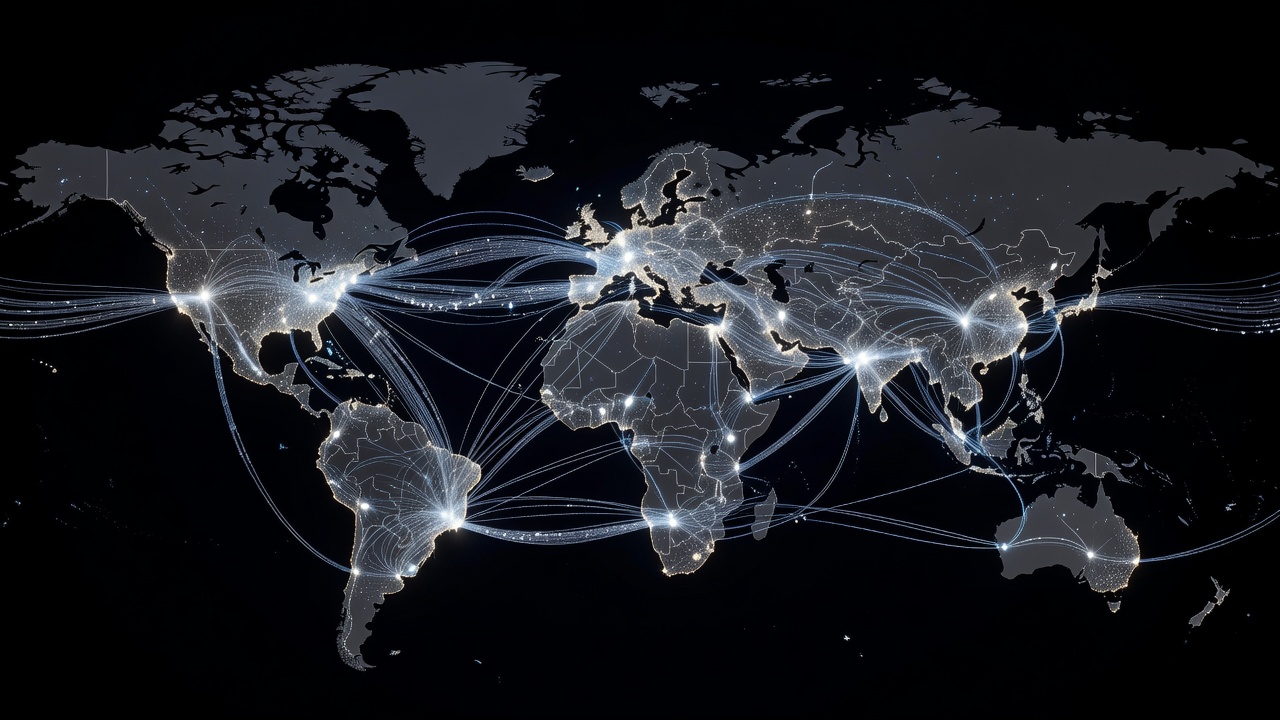
The administration's posture remains ambiguous. Axios flagged the ban consideration; Politico's sourcing at Commerce suggests no imminent action.
Why It Matters
The economic logic of Kimi K3's threat to frontier labs is direct. Open-weight models, once released, can be deployed by enterprises, universities, and individual developers without paying per-token fees to OpenAI or Anthropic. Braden Hancock, co-founder of Snorkel AI and a research partner at the Laude Institute, described the mechanism plainly: "Strong, frontier-caliber open source models will place a squeeze on the margins and will bring down the prices of the frontier companies. It will not necessarily mean that the amount of AI usage goes down a little bit. You know, obviously, quite the opposite."
The distinction is crucial. AI usage expands as price falls, but revenue captured by closed-API incumbents shrinks as a share of that usage. For companies like OpenAI and Anthropic, still working out how to generate durable profit from model inference, a frontier-caliber open-weight competitor is not merely a product threat; it is a challenge to the entire pricing architecture their current valuations depend on.
Sam Bresnick, a China-focused research fellow at Georgetown's Center for Security and Emerging Technology (CSET), identified a structural problem with the policy frame Ball was advancing: "Why should the weight of the U.S. government be aimed at protecting these companies from competitors that are being locked out from the U.S. market based on their origins?" That draws a line between the state's legitimate national security interest and a regulatory intervention that would primarily benefit private frontier labs against a competitive threat from abroad.
The guardrails irony compounds the problem. David Sacks, a venture capitalist serving as a Trump adviser, has circulated documented cases of US companies turning to Chinese large language models to close security and operational gaps that US frontier models, constrained by content policies set through what sourcing describes as an "opaque process," refuse to handle. A ban would not eliminate the underlying demand; it would push that usage underground or offshore.
Competitive Landscape
The open-weight model space has fragmented significantly along national and corporate lines. Three positions define the current field:
- OpenAI (closed frontier, primary regulatory advocate): The company whose strategic futures lead publicly pushed for government intervention against Chinese open-weight models before retracting the claim. OpenAI's commercial model depends on API billing and enterprise contracts that open-weight competition directly undercuts.
- Anthropic (closed frontier, named as a margin-compression casualty): Georgetown's Bresnick identified Anthropic alongside OpenAI as a company whose economics are pressured by open-weight releases. Its position as a high-margin inference provider makes it structurally exposed to frontier-caliber open alternatives.
- Nvidia (open-model investor via Nemotron, structural beneficiary): Hancock identified Nvidia's strategic rationale directly: a fragmented market with hundreds of AI companies buying compute is more valuable to Nvidia than one dominated by two or three large players who might develop proprietary silicon. A world where Kimi K3 and comparable models proliferate is, for Nvidia, a world where more companies need GPUs.
Thinking Machines Lab, a US company named in sourcing as building a business around open model releases, represents a domestic bet on the open-weight commercial model. Bresnick offered the clearest statement of the policy alternative: "The main point is the U.S. would be very well served to have its own very capable, much less expensive open models. It just clashes with the approach the frontier labs have taken."
The Bigger Picture
Hancock raised a data point that reframes the policy debate away from product competition and toward research infrastructure. Roughly half the papers US graduate students study, he claimed, originate from Chinese institutions, though no citation was provided in sourcing. The directional claim reflects a documented pattern: Chinese AI research output has scaled substantially, and open-weight model releases from Chinese labs are increasingly the substrate on which US academic and applied research builds.
The historical precedent Hancock cited is specific and instructive. PyTorch, Meta's open-source deep learning framework, became the industry standard precisely because its open availability meant the entire global research community could contribute to it. Proprietary alternatives lost not because they were technically inferior at launch but because open contribution compounded faster than any single company's internal effort. Hancock put it directly: "The bigger impact of having these open source models come from China is less that they're sneaking in back doors, and more that they are owning the innovation. You end up with, effectively, an expanded workforce on your model."
If Chinese open-weight models become the default substrate for global AI research, the community-contribution dynamic that made PyTorch dominant would accrue to Chinese-origin models, not to OpenAI's or Anthropic's closed systems. The national security dimensions are real but distinct from the economic ones: open-weight models running on US-based servers are unlikely to route data back to China by design, though Georgetown's Bresnick noted it is "not impossible" with deliberate engineering. Bresnick noted a further complication: "The open business model, the proprietary business model, neither one is figured out. AI companies are struggling to figure out how to make money on their tools."

What's Next
The Commerce Department's stated position, per Politico's sourcing, is that no ban action is imminent. That leaves the policy debate in an unstable equilibrium: OpenAI has made the regulatory ask publicly, drawn significant criticism, and partially retreated, while the administration has neither committed to action nor closed the door.
Whether US frontier labs respond by accelerating their own open-weight strategies -- as Nvidia's Nemotron investment and Thinking Machines Lab's positioning suggest is commercially viable -- will signal whether the industry is converging on openness as a competitive necessity. On the research side, which open-weight models US graduate programs default to has compounding effects: if the answer tilts toward Chinese-origin models for reasons of cost and capability, the community-contribution dynamic Hancock described around PyTorch begins to apply to the model layer. That is a slower-moving risk than a product ban, but structurally more durable.
For enterprise IT and procurement teams evaluating AI infrastructure: the Kimi K3 moment clarifies a decision that was already arriving. If your organization is paying per-token rates to closed-API providers for workloads that a locally deployed open-weight model could handle, the cost differential is now a documented, durable feature of the market. The policy uncertainty cuts both ways: a ban could disrupt access to specific model weights, but the broader open-weight ecosystem -- including US-origin models from Nvidia -- is sufficiently developed that procurement strategies built around a single closed provider carry more vendor-lock risk than they did eighteen months ago.
Ball's retraction was the tell. When a company's head of strategic futures asks the government to manufacture uncertainty rather than compete on merit, the business model problem is already diagnosed. The harder question now is whether Washington will treat that business model problem as a national security emergency, or recognize that the US research and commercial ecosystem is better served by winning the open-weight race than by banning the competition.
-- Aria Lin, Enterprise Technology Analyst
Sources: TechCrunch (Tim Fernholz, July 20, 2026)