Harvard Lab Fails to Replicate 1960s Memory Transfer, Points to Better WormsHarvard Lab Fails to Replicate 1960s Memory Transfer, Points to Better WormsHarvard Lab Fails to Replicate 1960s Memory Transfer, Points to Better WormsHarvard Lab Fails to Replicate 1960s Memory Transfer, Points to Better Worms
June 8, 2026
A Harvard University lab spent more than a year collecting flatworms from frozen rivers, driving to an Oregon nonagenarian's basement to examine mimeographed journals, and running footage through machine-learning pipelines -- then posted a bioRxiv preprint in April 2026
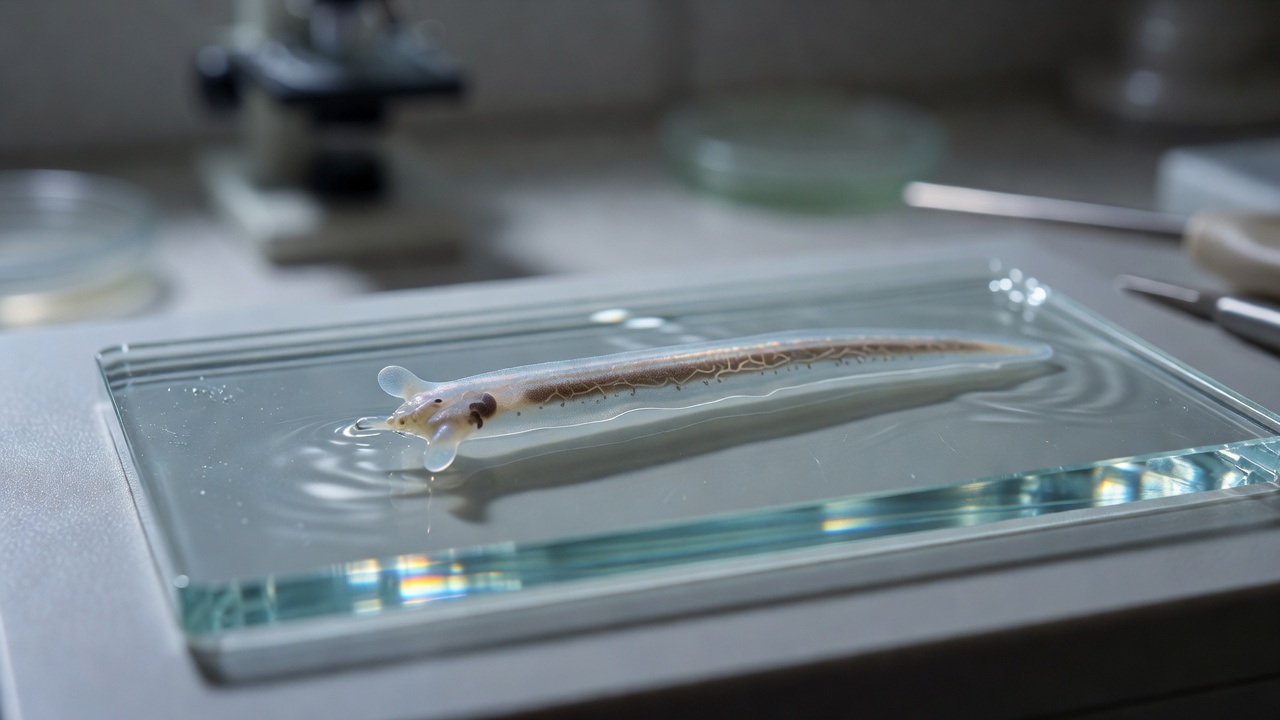
A Harvard University lab spent more than a year collecting flatworms from frozen rivers, driving to an Oregon nonagenarian's basement to examine mimeographed journals, and running footage through machine-learning pipelines -- then posted a bioRxiv preprint in April 2026 confirming what they could not make happen: none of 12 tested strains of planarian (free-living flatworms of the order Tricladida) could be conditioned to respond to light the way James McConnell's lab claimed in the 1960s. The buried lead is not the failure itself but what it clarifies: new results in Caenorhabditis elegans and Aplysia californica are now producing exactly the molecular memory-transfer evidence McConnell spent his career chasing, using organisms whose neurobiology is fully characterized and reproducible.
The story begins and ends with a question neuroscience has never fully closed: where, physically, does a memory live? If memory is encoded in molecules, it could in principle be extracted, transferred, or consumed. That question drove McConnell's controversial program in the 1950s and 1960s, got him dismissed by the scientific mainstream, and has now drawn Harvard neuroscientist Sam Gershman back into the same territory -- with better tools and the same basic problem: he cannot get the worms to learn.
What the Researchers Found
In April 2026, Gershman and postdoctoral researcher Maddie Snyder posted their results to bioRxiv. The preprint describes a systematic attempt to replicate the classic planarian conditioning protocol developed by Alan Jacobson, a student of McConnell's whose papers were considered the most methodologically rigorous of the 1960s memory-transfer era. The protocol required training planarians by pairing electric shocks with bright light until the worms produced a characteristic "scrunch" contraction in response to light alone, then transferring that conditioned response by feeding naive worms a puree of the trained animals.
Gershman's lab could not complete step one. "At some point, we had like 12 different strains of planaria, none of which showed any learning," Gershman said. The lab ran planarian footage through a machine-learning pipeline to score behavioral responses objectively and examined a vintage "inductorium" -- a midcentury electric-shock device held at the Harvard Science Museum -- to check whether equipment differences between decades could explain the discrepancy. Nothing worked. "I was really scratching my head about this," Gershman said.
The failure forced a pivot. Gershman's lab is now directing attention to C. elegans, microscopic roundworms with exactly 302 neurons, a fully sequenced genome, and a completed connectome, making them among the most tractable model organisms in neuroscience. The pivot draws on two convergent findings: in 2018, neuroscientist David Glanzman at UCLA transferred a sensitization memory in Aplysia californica sea slugs by injecting RNA from trained donors into naive recipients; in 2021, geneticist Coleen Murphy at Princeton found that C. elegans could acquire avoidance behavior toward pathogenic bacteria by swimming in a puree of trained conspecifics, with the retrotransposon Cer1 implicated as a potential molecular carrier. "I just hope we're not going down another rabbit hole," Gershman said.
The Methodology
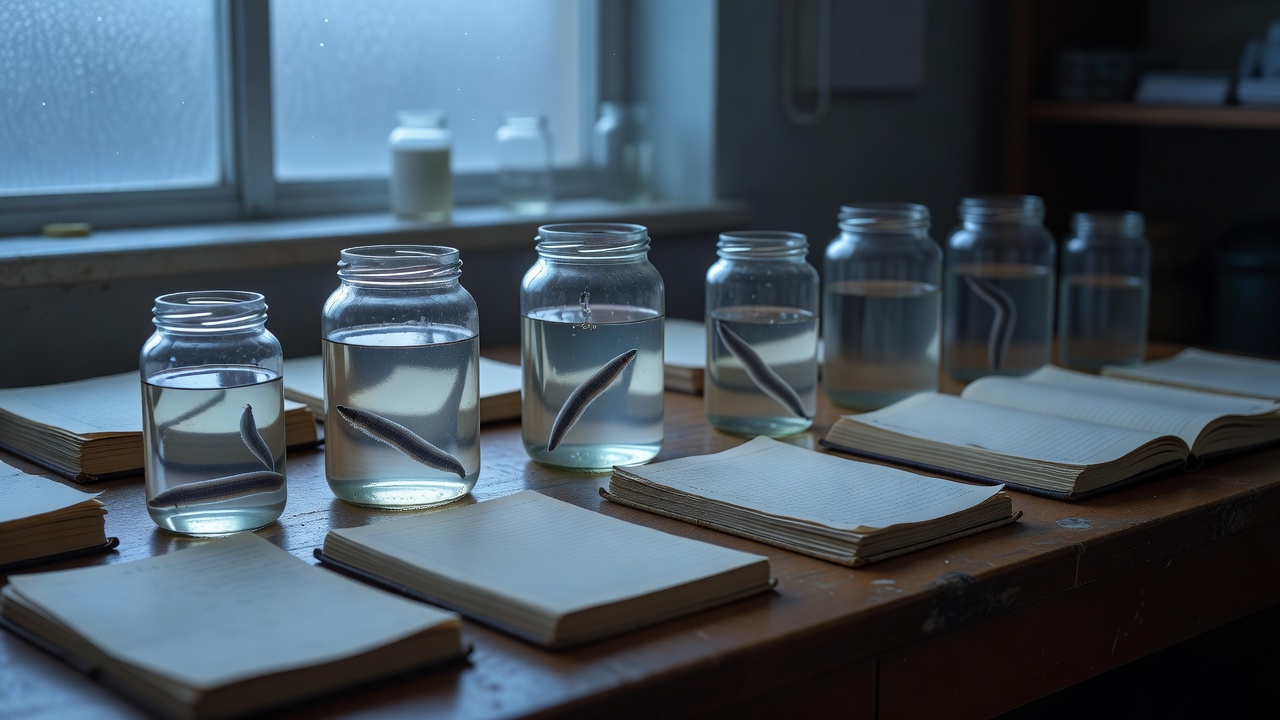
The replication attempt was unusually thorough. Research assistant Zachary Kelso made two field collection trips: in early 2025, he drove to Eugene, Oregon, to meet Daniel Kimble -- now in his 90s, who ran most of McConnell's 1960s experiments -- and his wife Reeva. The Kimbles retained a complete physical archive of The Worm Runner's Digest in a basement box, the primary documentary record for reconstructing Jacobson's original protocol. In June 2025, Kelso waded Michigan lakes where McConnell had originally sourced his planarians, reasoning that commercially supplied strains might differ biologically from wild-caught animals.
Snyder explained the deeper motivation: "We wanted a behavioral basis to be able to study the circuits that are driving memory in these extremely unstable animals. Are those circuits at all being used for memory consolidation or storage? Because if you lose your head and all those circuits are gone, then what is the mechanism of storing memory?"
That question is not rhetorical. Planarians can regenerate from a fragment as small as 1/279th of the original worm into a completely normal adult, driven by adult stem cells called neoblasts. McConnell found that tail segments that regrew new heads retained the conditioned light response, leading him to conclude the memories were laid down throughout the animal's body.
For the C. elegans pivot, Murphy's 2021 protocol involved animals learning to avoid a pathogenic bacterium and transferring that avoidance by cannibalism or by swimming in a trained conspecific's puree, with Cer1 as a candidate molecular carrier. A parallel group at the Indian Institute of Science found that trained C. elegans release extracellular vesicles containing genetic information that transfer training to naive worms.
Why It Matters
The stakes of a confirmed memory-transfer mechanism are substantial. If RNA species or retrotransposons can carry the functional trace of a learned experience from one animal to another, the implications reach into both basic neuroscience and medicine. The dominant model of memory, most closely associated with Nobel laureate Eric Kandel's Aplysia program, holds that memory is encoded in the strength and structure of synaptic connections. A molecular transfer mechanism does not contradict that model outright but requires it to be incomplete: something upstream of synaptic structure must be carrying information.
For medicine, a molecule that "carries a memory," as Murphy described Cer1, would represent a new category of biological information carrier. Understanding how Cer1 or extracellular vesicles encode behavioral history could open paths toward interventions in memory disorders, from trauma to neurodegeneration.
Snyder framed the planarian question directly: "The reason that we learn associations, to some degree, is so that we can predict danger and avoid it. [Planarians'] regenerative physiology protects them from blunt trauma. Bitten in half, they simply grow back. What use is memory to such a creature?" Whether memory is substrate-independent -- a property of molecules rather than circuits -- is not a settled question. The failure to condition planarians narrows the search to organisms where it can be tested cleanly.
Competitive Landscape
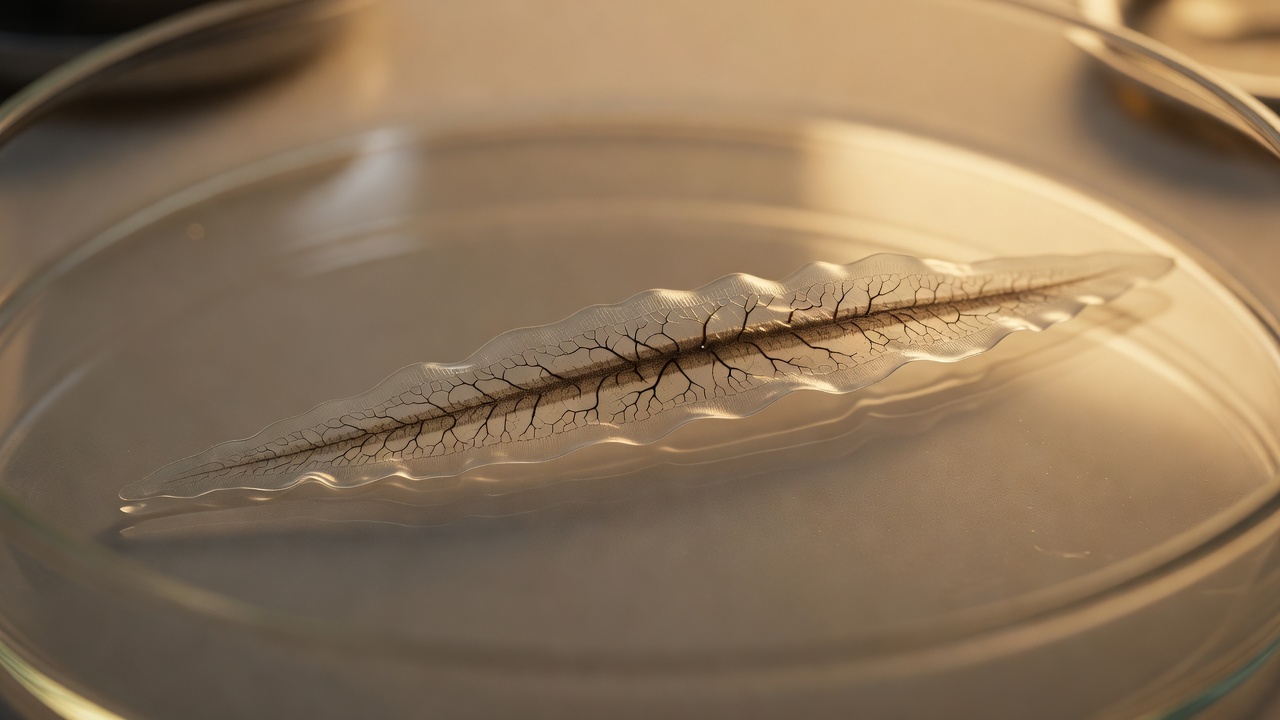
The modern memory-transfer field is a methodological lineage with multiple branches, some validated and some still contested.
McConnell began conditioning planarians as a graduate student in the early 1950s, then moved the program to the University of Michigan. By the peak of the 1960s, multiple labs had reported successful planarian conditioning results. McConnell published in The Worm Runner's Digest, his self-published journal. The journal later split its satirical and scientific content; the serious half was renamed The Journal of Biological Psychology. McConnell closed his laboratory in 1971, was targeted by the Unabomber in 1985, and died in 1990.
RNA memory-transfer papers were published in Nature and Science using rat brain RNA injections, but those experiments also became inconclusive. According to the Quanta report, science historians Harry Collins and Trevor Pinch characterized the outcome precisely: "memory transfer was never quite disproved; it just ceased to occupy the scientific imagination."
The validated branch now runs through two better-characterized organisms. Glanzman's 2018 UCLA work on Aplysia californica provided modern RNA-transfer evidence using rigorous controls. Murphy's 2021 Princeton findings in C. elegans added a candidate molecular mechanism in Cer1, with independent replication from the Indian Institute of Science. According to the Quanta report, Nobel Prize-winning biochemist Melvin Calvin reportedly failed to replicate McConnell's worm experiments as early as 1965 -- the planarian branch has never cleared its most basic prerequisite.
Independent analyst commentary on this research was not publicly available at publication time.
Limitations and Caveats
The April 2026 Gershman/Snyder preprint is posted to bioRxiv and has not been peer-reviewed or accepted for journal publication. It represents a significant negative result and a careful attempt to reconstruct a 60-year-old protocol, but requires peer review before its findings can be considered settled.
The failure to replicate raises a genuine question about what the 1960s positive results measured. Snyder's proposed explanation is methodological: researchers in McConnell's era may have misclassified "turns," baseline worm movement, as the definitive "scrunch" of the conditioned light response. The machine-learning pipeline Gershman's lab applied did not exist in the 1960s, and its absence was a systematic vulnerability.
- The primary living protocol source, Daniel Kimble, is now in his 90s, making further clarification of procedural details increasingly difficult to obtain.
- McConnell's original raw data and lab notebooks were not described as having been located or examined during the replication attempt.
- No other currently active planarian biology lab is cited as having attempted conditioning since the 1970s, leaving unresolved whether any lab has successfully conditioned planarians in the intervening decades.
- The specific molecular mechanism by which Cer1 carries memory in C. elegans is named but not yet mechanistically explained in the published literature.
Gershman was direct about the sociology of science surrounding the project. "Throughout this entire project, I was like, 'What are the things that I am taking for granted now in our models of neuroscience, and our assumptions of what is known and unknown, that I should really notice?'" McConnell's legacy, Gershman noted, has become "a cautionary tale that neuroscientists tell to their students at bedtime to scare them away from ill-fated projects." The irony is that the caution may have been aimed at the wrong lesson: not that RNA memory transfer is impossible, but that planarians were the wrong model.
What Comes Next

C. elegans offers Gershman's lab a substantially cleaner experimental platform. With exactly 302 neurons, a completed connectome, and a fully sequenced genome, it is one of the most completely characterized multicellular organisms in biology. Murphy's 2021 protocol has been reproduced by at least two independent groups, including the Indian Institute of Science's extracellular vesicle findings -- a reproducibility that is the fundamental difference from the planarian literature.
The specific experimental design Gershman's lab will apply and the timeline were not disclosed at publication time. The success criteria are implicit in the existing literature: can the lab reproduce Murphy's findings under controlled conditions, and can they identify which molecular species are responsible? Cer1 is the leading candidate, but the mechanism by which a retrotransposon encodes and transfers behavioral information remains uncharacterized at the molecular level. Gershman's broader research program also encompasses, according to the Quanta report, Stentor coeruleus -- a single-celled ciliate with no neurons that can nonetheless modify its behavior based on prior experience -- as part of a wider inquiry into non-neural memory.
For academic researchers and molecular biologists working on memory encoding: Murphy's 2021 identification of Cer1 offers a concrete genetic target. Any lab with standard nematode handling protocols can attempt to reproduce the conditioning and transfer assay, test Cer1 knockouts against wild-type transfer efficiency, and ask whether extracellular vesicle fractions alone are sufficient to carry the behavioral phenotype. The Indian Institute of Science vesicle paper provides a second independent protocol to replicate before investing in molecular characterization work.
The most pointed irony of this story is that McConnell's work was dismissed largely because he published in a journal he described as "sort of Mad Magazine meets a serious scientific journal," while multiple independent labs were producing results that no one properly adjudicated. The cautionary tale was not about the science. It was about what happens when the sociology of a field decides something is ridiculous before the methodology is settled. C. elegans may finally give McConnell's hypothesis the rigorous hearing it never received.
-- Zara Velez, Emerging Technology Editor
Sources: Quanta Magazine, "Are Memories Transferable -- or Edible?" (June 5, 2026) · PubMed Central, peer-reviewed literature via NLM