PsiQuantum Breaks Ground in Queensland on First Utility-Scale Quantum ComputerPsiQuantum Breaks Ground in Queensland on First Utility-Scale Quantum ComputerPsiQuantum Breaks Ground in Queensland on First Utility-Scale Quantum ComputerPsiQuantum Breaks Ground in Queensland on First Utility-Scale Quantum Computer
June 18, 2026
PsiQuantum broke ground on June 17, 2026 at Moreton Bay Central Innovation Precinct in Queensland, Australia, marking the start of civil construction on what the company describes as the world's first utility-scale, fault-tolerant quantum computer. The most consequential piece
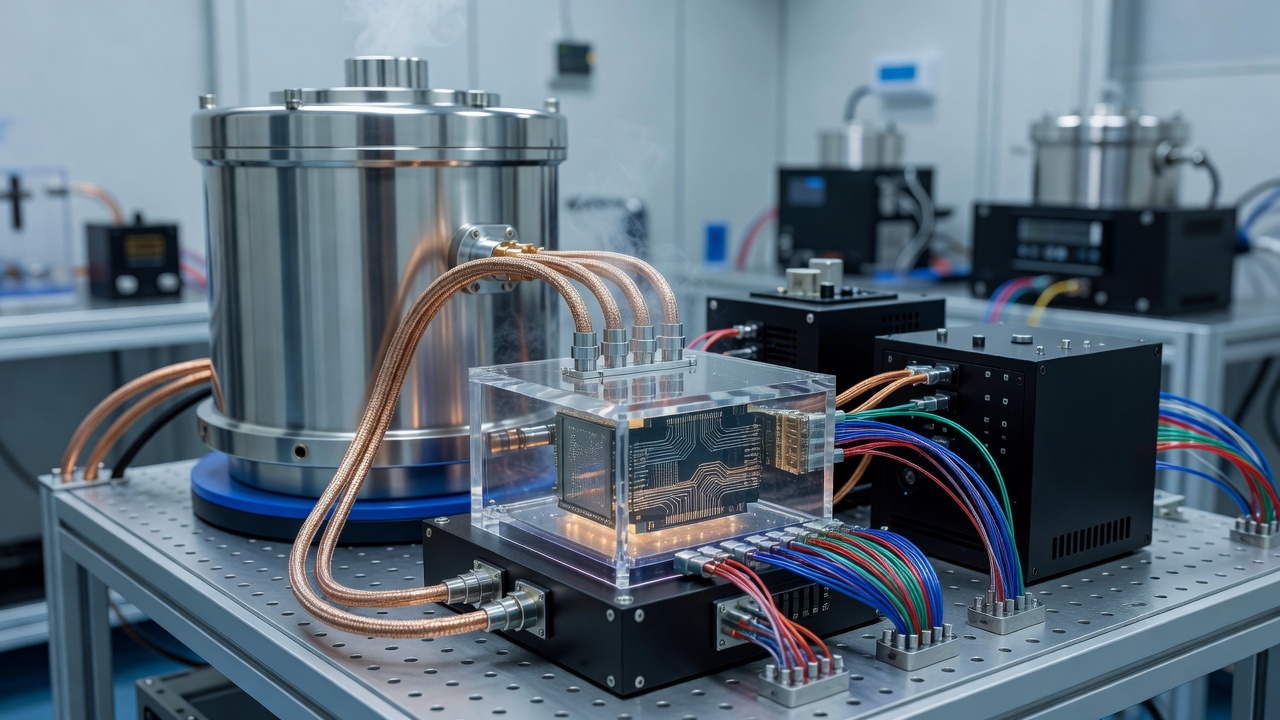
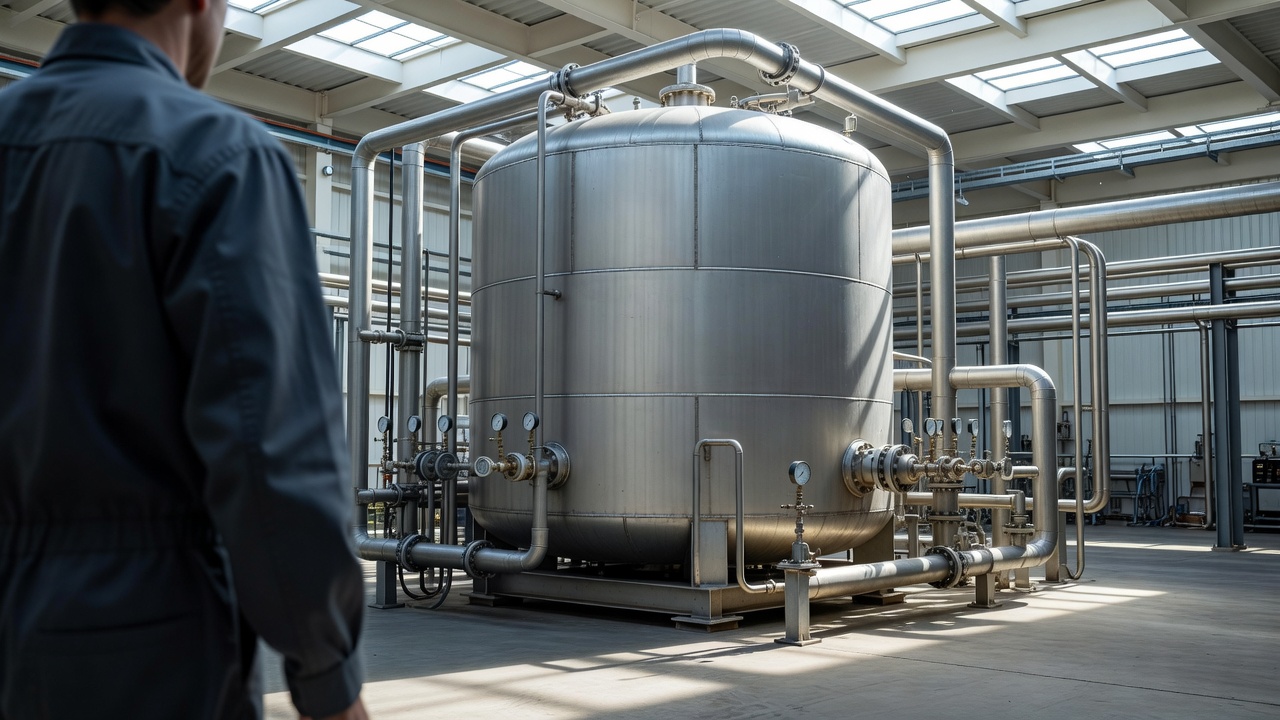
PsiQuantum broke ground on June 17, 2026 at Moreton Bay Central Innovation Precinct in Queensland, Australia, marking the start of civil construction on what the company describes as the world's first utility-scale, fault-tolerant quantum computer. The most consequential piece of hardware for that system, a cryoplant (an industrial-scale refrigeration unit capable of cooling quantum hardware to temperatures near absolute zero) ordered from Linde Engineering in late 2024, is not scheduled to arrive until the second half of 2027. That gap between groundbreaking and machine-on tells the real story: this facility is years from switching anything on, and the path from concrete pour to first computation runs through a multi-year equipment supply chain, a phased commissioning process, and a workforce ecosystem being assembled alongside the physics.
What Happened

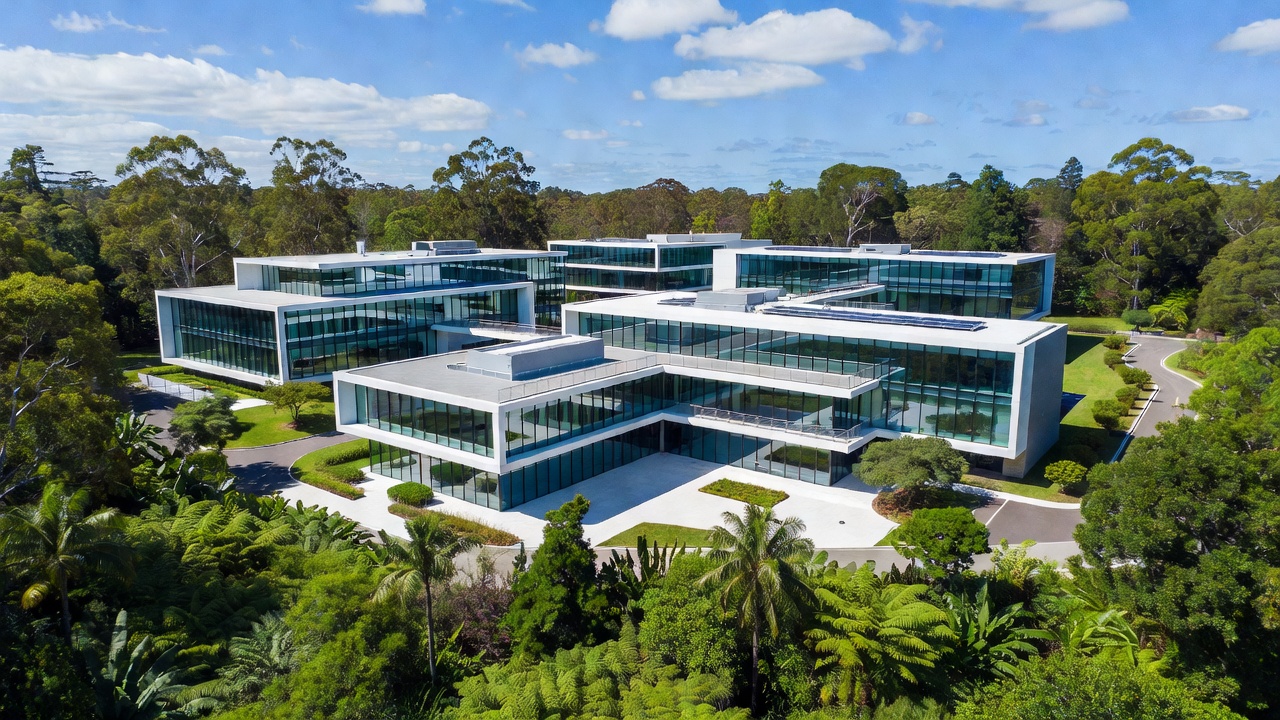
On June 17, 2026, PsiQuantum held a formal groundbreaking ceremony at Moreton Bay Central, a mixed-use innovation precinct co-located with the University of the Sunshine Coast and a TAFE Centre of Excellence north of Brisbane. The event drew senior representation from the company and from both the federal and state governments backing the project.
Victor Peng, CEO of PsiQuantum, set the scope of what the company is attempting: "Building a quantum computer that solves real world problems is one of the great engineering challenges of our time. For decades, quantum computing has held the promise of transforming what humanity can achieve through computation, and today in Australia we are beginning to turn that promise into reality. We are grateful for the partnership and support of the Australian Government, the Queensland Government and City of Moreton Bay as we take this step forward."
Prof. Jeremy O'Brien, Co-Founder and Executive Chair of PsiQuantum, drew a direct line from the foundational research that preceded the company to the facility now under construction: "Australia has been part of this journey from the very beginning. Returning to break ground on a utility-scale quantum computer, so close to where much of the foundational work was done, is a powerful reminder of how far the field has come. This facility will be critical infrastructure, strengthening Australia's sovereign capability while helping build the workforce that will power the next era of computing, and I'm thrilled to see PsiQuantum leading this revolution here in Australia."
Also present: Senator Tim Ayres, Australia's Minister for Industry and Innovation and Minister for Science; Andrew Powell, Queensland Minister for Science and Innovation; Peter Flannery, Mayor of the City of Moreton Bay; and Prof. Helen Bartlett, Vice-Chancellor and President of the University of the Sunshine Coast. The alignment of federal, state, and local government signals the degree to which this project has been positioned as a national infrastructure undertaking rather than a private commercial build.
The Technical Architecture
PsiQuantum's approach differs fundamentally from the systems operated by superconducting-qubit programs. Where those programs encode quantum information in the energy states of superconducting circuits, PsiQuantum uses photonic qubits (quantum bits encoded in individual photons, the massless particles that carry light). The underlying theoretical framework, linear optical quantum computing (LOQC), was established as a viable path to universal quantum computation by Knill, Laflamme, and Milburn in 2000. In the KLM scheme, effective interactions between photons are induced not by direct coupling but by projective measurements (quantum operations performed by photon detectors that collapse a quantum state, generating the conditional logic required for computation).
PsiQuantum's implementation networks photonic quantum chips together via standard optical fiber inside cryogenic cabinets. The optical fiber interconnect is a significant architectural advantage: standard telecom-grade fiber can carry quantum states between modules without the specialized microwave waveguides that superconducting systems require. The tradeoff is that photon detectors must still operate at cryogenic temperatures, making the cryogenic plant an unavoidable infrastructure requirement regardless of the photonic approach.
The construction sequence at Moreton Bay Central is explicitly phased:
- Civil construction begins now (June 2026)
- Linde Engineering cryoplant delivery: second half of 2027
- Cryoplant commissioning
- Cryogenic cabinet acceptance testing
- Photonic chip installation and integration
No firm date has been given for when the system will run its first computation. The incoming Linde Engineering unit is characterized in PsiQuantum's press release as "one of the largest ever built for quantum computing," though no wattage, cooling capacity figure, or square footage has been disclosed publicly. The company opened a Test and Validation Lab at Griffith University in Brisbane in May 2026, one month before the groundbreaking. That facility uses a high-powered cryogenic system to test photonic quantum chips and subsystems as pre-deployment validation, providing a working pipeline for hardware qualification before any chip reaches Moreton Bay Central.
Why It Matters for Industry
The phrase "utility-scale quantum computing" carries specific weight in PsiQuantum's framing. A utility-scale system, by analogy with the energy sector, is one large enough to deliver commercially relevant computational output at cost-effective scale rather than serving as a research instrument. PsiQuantum's press release describes the Moreton Bay Central facility as the "world's first utility-scale, fault-tolerant quantum computer," a claim the company makes without citing independent third-party verification. No qubit count, logical qubit target, gate fidelity specification, or error rate benchmark has been disclosed.
The practical threshold for utility-scale operation is not settled in the field. Published research suggests useful error-corrected computation requires roughly 100 logical qubits for simple chemical modeling tasks and tens of thousands of logical qubits for operations such as breaking current encryption standards. Where Moreton Bay Central will land on that spectrum remains undisclosed.
O'Brien's reference to "critical infrastructure" and workforce development points to the dual function the facility is being asked to serve: advancing PsiQuantum's commercial roadmap while simultaneously building the domestic technical talent pipeline that would allow Australia to operate and evolve quantum systems without depending on foreign expertise. The co-location of USC and the TAFE Centre of Excellence at Moreton Bay Central is a structural attempt to create that pipeline, with graduate and vocational training physically adjacent to the hardware being deployed.
Competitive Landscape
PsiQuantum's photonic approach sits in contrast to the dominant commercial paradigm. IBM's quantum processors use superconducting transmon qubits housed in dilution refrigerators, a modality that has driven significant commercial traction since IBM Quantum Platform launched in May 2016 with a five-qubit processor. Google Quantum AI, founded in 2012 and headquartered in Santa Barbara, California, builds superconducting processors including the Willow and Sycamore chips. Both IBM and Google have published peer-reviewed benchmarks, error rate data, and qubit counts alongside their announcements. PsiQuantum's Moreton Bay Central announcement does not include equivalent technical disclosures.
PsiQuantum has secured independent government validation through a separate channel: DARPA's US2QC (Underexplored Systems for Utility-Scale Quantum Computing) program advanced PsiQuantum to its Second Phase, with the company described as one of just three industry partners selected. Whether the Moreton Bay Central facility is the physical site associated with that DARPA program or a parallel commercial build has not been clarified in public statements reviewed for this article.
Independent analyst commentary specifically on this announcement was not publicly available at publication time.
The Broader Context
Moreton Bay Central sits in one of Queensland's fastest-growing corridors. The University of the Sunshine Coast opened its Moreton Bay campus in 2020, and the precinct's development arc extends toward the 2032 Brisbane Olympic and Paralympic Games as a regional growth anchor. Mayor Peter Flannery framed PsiQuantum's arrival in direct economic terms: "PsiQuantum's building technology that will have an impact globally, and they're doing it right here in our city. The economic benefits will be felt for years through new jobs, new skills, and new opportunities for local businesses. Combined with the education and training facilities being developed within the precinct, this project helps create a pathway from classroom to career in one of the world's most advanced industries."
Prof. Helen Bartlett described the groundbreaking as the realization of a deliberate design: "We worked with City of Moreton Bay to create a site that would enable businesses to co-locate with industry experts and research facilities, to promote knowledge sharing, opportunities for collaboration and access to skilled local graduates. It's wonderful to see this very purposeful industry ecosystem coming to life in Moreton Bay with PsiQuantum breaking ground today."
Federal support is reflected in the presence of Senator Tim Ayres and in Victor Peng's explicit acknowledgment of the "Australian Government" partnership. The total capital investment figure and the specific dollar amounts committed by the federal and Queensland governments have not been disclosed publicly.
What Comes Next
The next hard milestone in PsiQuantum's public timeline is cryoplant delivery from Linde Engineering in the second half of 2027. The sequence that follows -- commissioning the cryoplant, running acceptance tests on the cryogenic cabinets, and installing the photonic chip arrays -- adds further time before any computation can begin. No date for first operation has been announced.
In parallel, the Test and Validation Lab at Griffith University will continue qualifying photonic chips and subsystems ahead of their deployment at Moreton Bay Central, reducing dependency on overseas testing infrastructure and generating the hardware qualification data the main facility will need before it can commission.
The questions that will define whether Moreton Bay Central delivers on the "utility-scale" claim are not yet answerable from public information: how many logical qubits the first operational configuration will support, what error correction codes will be implemented, and what computational tasks will be selected for demonstration. The field broadly expects useful error-corrected quantum computers to remain five to ten years from widespread deployment. PsiQuantum's construction timeline does not appear to conflict with that estimate.
For enterprise technology decision-makers, the groundbreaking is not a signal to begin migrating workloads. It is a signal that the physical infrastructure layer of fault-tolerant quantum computing is now being built, and that Australia has secured a position as the location of one of the first facilities at that scale.
For software engineers and technical architects building enterprise systems today: the Moreton Bay groundbreaking means the hardware supply chain for fault-tolerant quantum computing is now active, not theoretical. Linde Engineering is manufacturing a cryoplant. Griffith University is qualifying chips. The practical implication is that quantum-readiness planning -- identifying which computational workloads in your stack are candidates for quantum acceleration (optimization, simulation, cryptography migration) and which post-quantum cryptographic standards your systems will need to adopt -- belongs on a 3-to-5 year roadmap rather than a 10-year one. The machine will not be ready in 2027. The planning should be.
-- Aria Lin, Enterprise Technology Analyst
Sources: The Quantum Insider - PsiQuantum press release