Robot Report's 2026 Startup Radar Lists 60 Young Robotics Companies
November 2, 2026
The Robot Report's second annual 2026 Robotics Startup Radar features 60 robotics companies, none older than five years, based in more than a dozen countries. What can be checked is the entry rule, the data fields the report promises and the dates that follow.
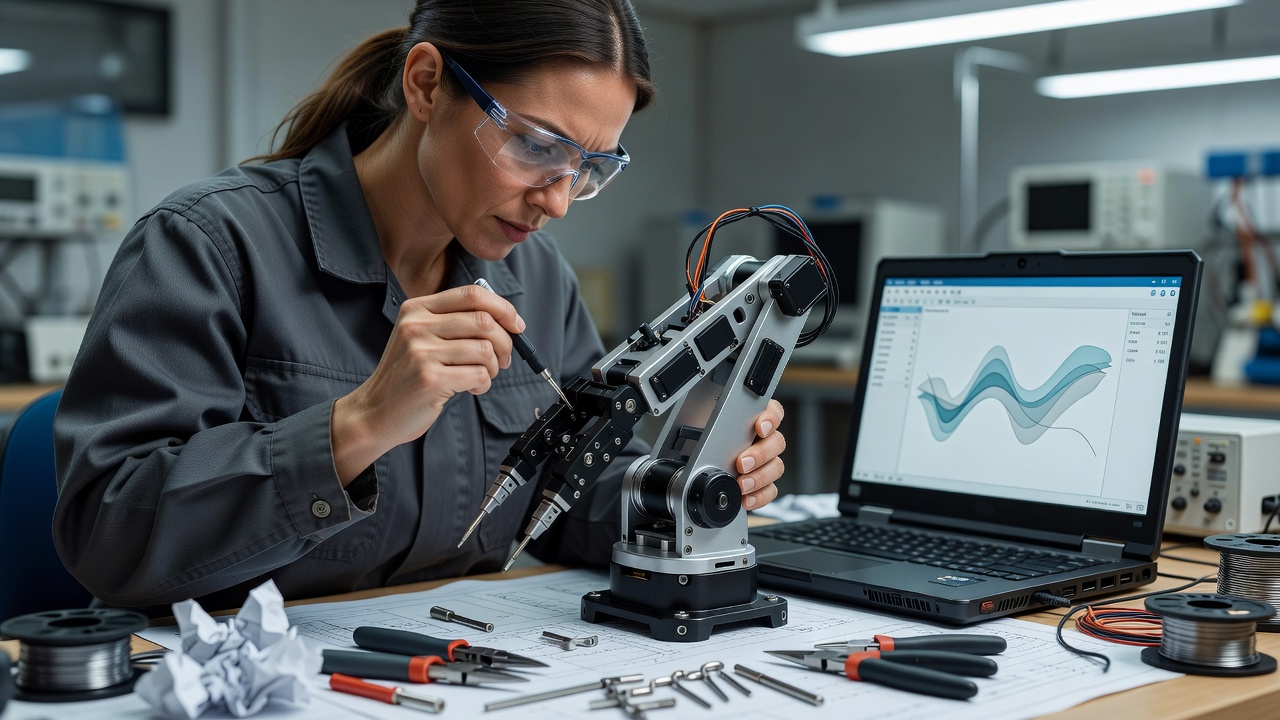
The Robot Report's second annual 2026 Robotics Startup Radar features 60 robotics companies, none older than five years, based in more than a dozen countries. What can be checked is the entry rule, the data fields the report promises and the dates that follow.
What It Does
The Robot Report's 2026 Robotics Startup Radar features 60 companies. To qualify, "organizations must be no more than five years old," and the publication calls this its "second annual Startup Radar." The companies are based in "more than a dozen" countries. The age cap is the one hard filter the public page states, and it means the list is about newcomers rather than established vendors.
The free download lists each company's "application, headcount, and total funding raised to date." Those three fields are the ones a reader would use to sort a list of 60 unfamiliar names: application says what the robot does, headcount gives a rough sense of how large the team is, and funding to date shows how much money has been raised so far.
The report is sponsored by maxon and PTC. The only funding signal on the public page is that "several" of the featured companies have "successfully raised millions of dollars."
The Technical Achievement
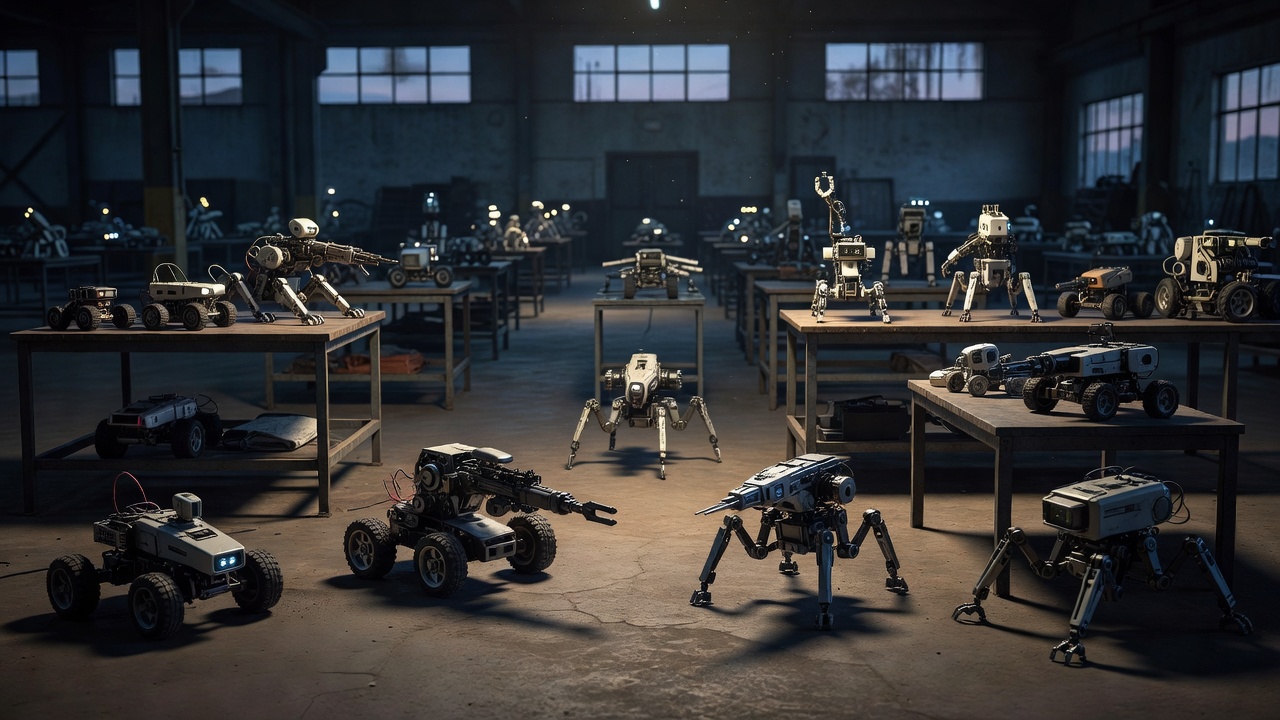
The Radar is a curation effort, not a technical feat. To show what startup-stage robotics research looks like, this article turns to a separate story from the same publication. It is not part of the Radar.
LiberAI, a Beijing-based startup, built a robot model called Liber-0. Its numbers are specific:
- Pretraining data: 2.2 million hours of human experience. Pretraining means the model learns from a large body of data before it is pointed at any particular job. For scale, 2.2 million hours is roughly 250 years of nonstop recording (simple arithmetic: 2.2 million divided by 8,760 hours in a year).
- Evaluation: 60 tasks proposed by GPT-6, split into 20 pick-and-place, 20 non-pick-and-place manipulation, and 20 challenging non-pick-and-place and long-horizon tasks.
- Result: 36.0% overall zero-shot success (the model attempts tasks it was never explicitly trained on), with no robot demonstrations collected for the target tasks.
Two details matter here. First, the task list was proposed by another AI system rather than chosen by the LiberAI team, which is a point in favor of the test's independence. Second, no robot demonstrations were collected for the target tasks, so the 36.0% reflects what the human-experience pretraining alone transferred to a robot.
A 36.0% success rate is a research result, not a product spec. Put plainly, the model fails on the majority of tasks it is given. That is the honest context for any startup pitch built on this kind of approach: the idea is promising, and the distance to a dependable machine is still large.
Real-World Impact
Not every startup story is about foundation models. GlobalLogic's Silicon & Embedded division built a UV disinfection robot for Haystack Robotics, a Santa Clara, Calif.-based company. It is an AMR (autonomous mobile robot, one that navigates on its own without fixed tracks) that uses ultraviolet light to disinfect spaces. Neither company is confirmed to be on the Radar.
Kunaal Mahanti, physical AI lead at GlobalLogic, told The Robot Report: "Obviously, this was a big use case at that point of time, in terms of being able to sanitize hospitals and care facilities." He added: "While there were disinfections which are happening manually, it wasn't really good coverage."
Those two sentences carry the practical argument for the machine. Manual disinfection depends on a person remembering and reaching every surface, and Mahanti's point is that coverage was inconsistent. A robot that follows a route can be asked to cover the same ground every time. Mahanti also described GlobalLogic's role as the engineering and collaboration partner to Haystack, meaning the robot was a joint build rather than an off-the-shelf product.
The pattern is worth noting for anyone reading the Radar. A young robotics company often pairs with an engineering firm to turn a concept into hardware. The Radar's editors say several featured companies have raised millions of dollars. Without the gated figures, the scale of that capital cannot be assessed.
Competitive Landscape
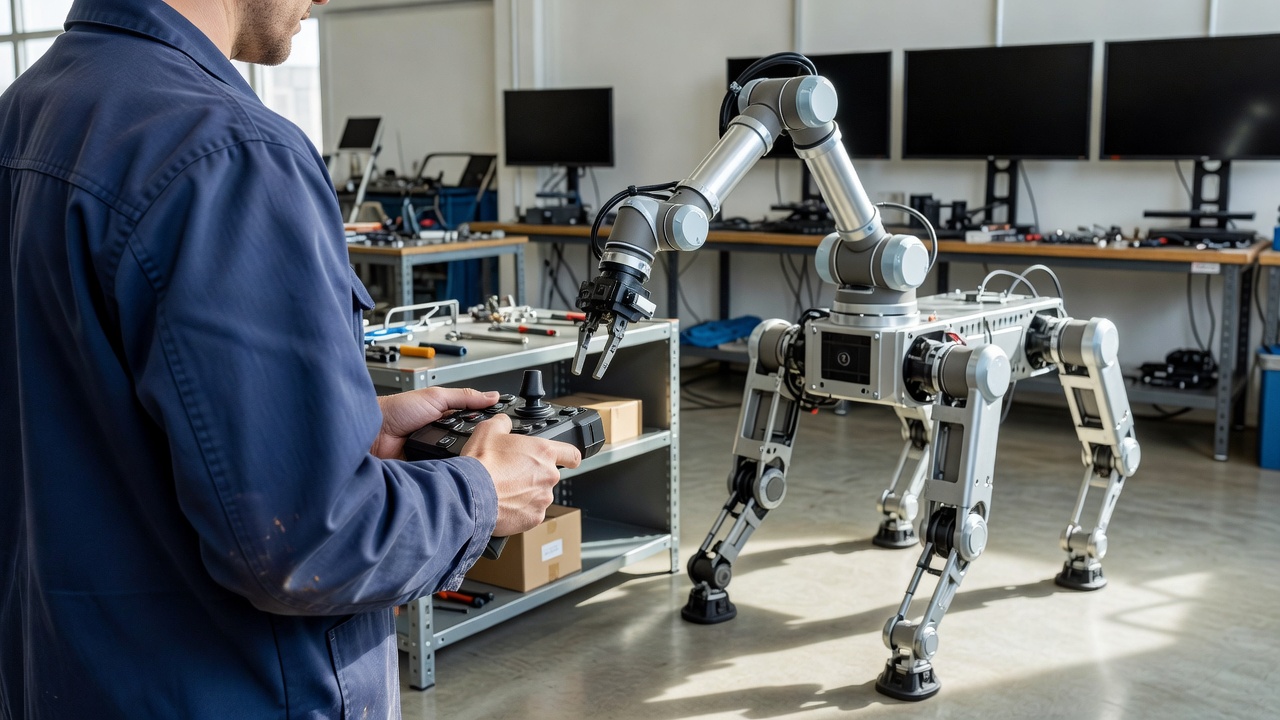
Adjacent activity suggests the space is active. The Radar spans more than a dozen countries, and its five-year age cap keeps the focus on newer entrants. Elsewhere, IEEE Spectrum's Video Friday features RAI demonstrating whole-body manipulation on Spot. That item is a demonstration, not a funding or market signal, and it says nothing about which startups lead.
What's Next
The Robot Report's TRR 50 Robotics Innovation Awards will be presented on June 2 and 3, 2027 at the Robotics Summit & Expo in Boston. The call for entries is "already open." Companies that did not appear on the 2026 Radar have a defined next step in the publication's calendar.
Two research and industry events come sooner. CoRL 2026 runs 9-12 November 2026 in Austin. Humanoids 2026 runs 6-9 December 2026 in Santa Clara, CA. Both fall within weeks of the Radar's publication.
For a procurement lead at a manufacturer or hospital system, the practical use of the Radar is as a shortlist source: the free download gives each startup's application area, headcount and funding to date, enough to screen vendors by stage and focus before any pilot conversation. The five-year age cap also tells that buyer to expect young vendors, so questions about support and company stability belong in any pilot conversation.
The most striking thing here is the gap between the headline and the evidence. Liber-0's 36.0% zero-shot figure shows how far new approaches still have to go, and the Haystack robot shows the kind of narrow job where robots already pay off. Treat the Radar as a pointer, not a verdict.
-- Zara Velez, Emerging Technology Editor
Sources: arXiv · Mit · The Robot Report, Robotics Startup Radar 2026