Samsung Galaxy A57 5G Review: Sharp Display, Inconsistent BatterySamsung Galaxy A57 5G Review: Sharp Display, Inconsistent BatterySamsung Galaxy A57 5G Review: Sharp Display, Inconsistent BatterySamsung Galaxy A57 5G Review: Sharp Display, Inconsistent Battery
August 17, 2026
The Samsung Galaxy A57 5G brings a 6.7-inch Super AMOLED display, a 5,000mAh battery, and a new Exynos 1680 chip with an extra performance core into a noticeably thinner, lighter body than the phone it replaces. In a mid-range field that now includes the Pixel 10a, the iPhone
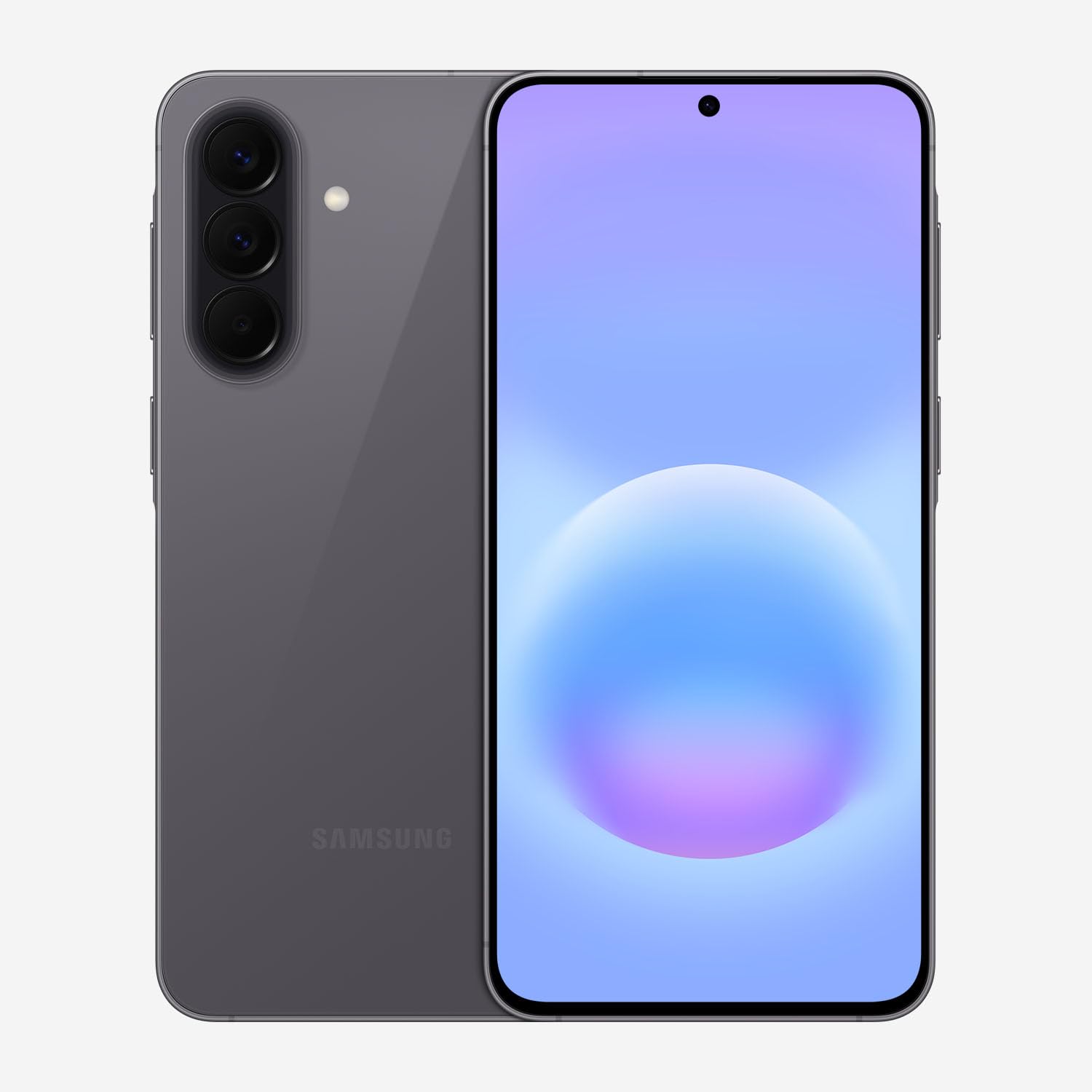
The Samsung Galaxy A57 5G brings a 6.7-inch Super AMOLED display, a 5,000mAh battery, and a new Exynos 1680 chip with an extra performance core into a noticeably thinner, lighter body than the phone it replaces. In a mid-range field that now includes the Pixel 10a, the iPhone 17e, and the OnePlus 15R, "thinner and slightly faster" is a modest promise. After putting it through daily use, a road trip, and repeated battery runs, our first impression is that the redesign is real, but the story underneath it is more complicated than the spec sheet suggests.
Quick Verdict

The Galaxy A57 5G is a genuinely pleasant phone to hold, with a bright 120Hz Super AMOLED display and fast 45W wired charging carrying most of the appeal. It is held back by the lack of wireless charging, a non-LTPO panel that cannot idle below 60Hz, and battery results that swung wildly depending on how we tested it. It is a good phone. It is not an obvious upgrade over the phone it replaces.
| Aspect | Rating |
|---|---|
| Display | 4/5 |
| Camera | 3/5 |
| Battery Life & Charging | 3.5/5 |
| Performance | 3.5/5 |
| Build Quality | 4.5/5 |
| Value | 3/5 |
| Overall | 3.5/5 |
Pros
- Noticeably thinner and lighter than the outgoing model at 179g and 6.9mm
- Bright, vivid 120Hz Super AMOLED display with HDR10+ support
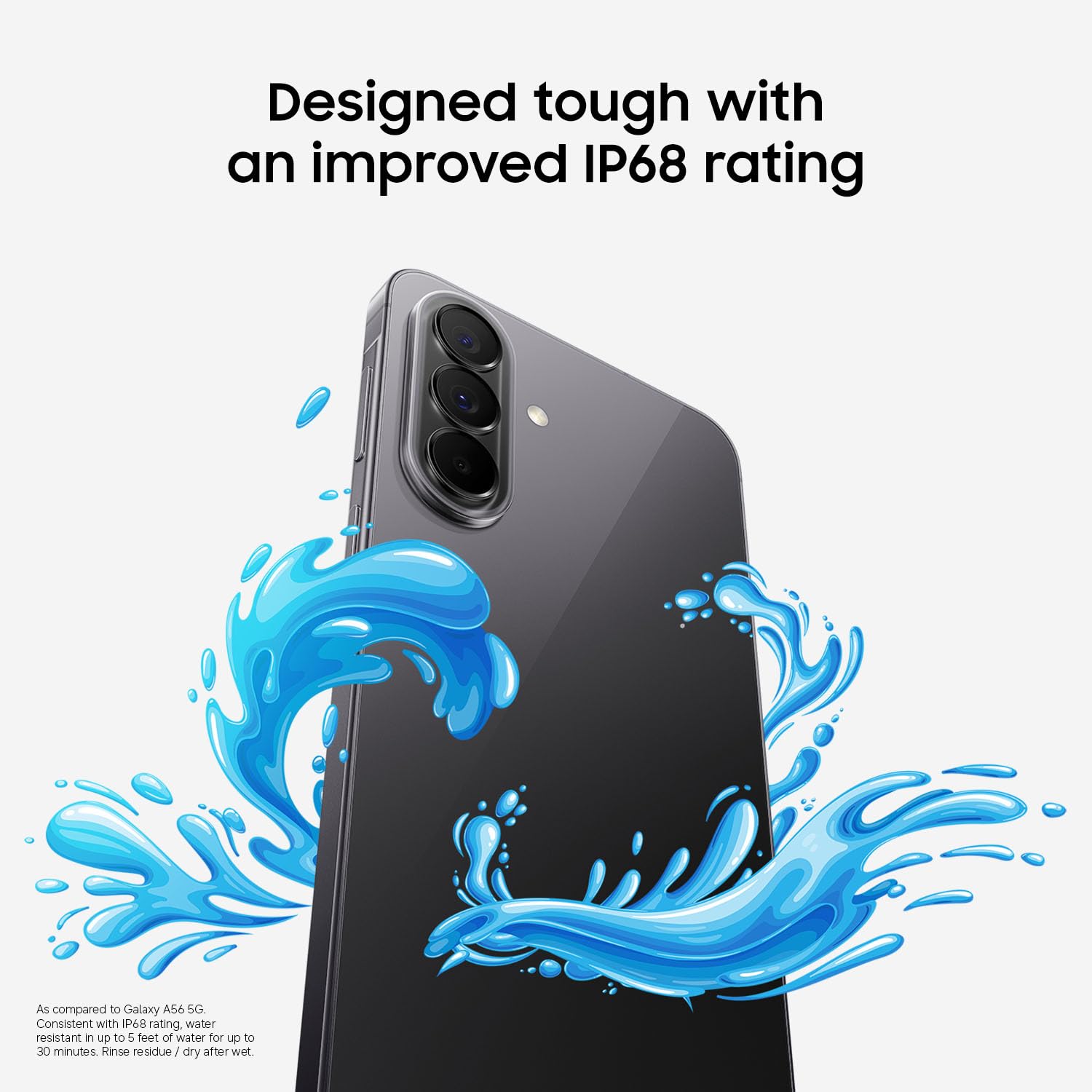
- IP68 water and dust resistance, upgraded from IP67
- Six years of OS upgrades and six years of security updates
- Fast 45W wired charging in our bench tests
Cons
- No wireless charging
- Glossy back panel picks up fingerprints almost immediately
- Optical in-display fingerprint sensor is slow and often needs a second attempt
- No charging brick included in the box, just a cable and SIM tool
- Processor showed thermal throttling and unresponsiveness during extended Android Auto sessions
Specs at a Glance
| Specification | Detail |
|---|---|
| Price | See current Amazon listing for live US pricing |
| Display | 6.7-inch Super AMOLED, 120Hz, HDR10+ |
| Chipset | Samsung Exynos 1680 |
| RAM / Storage (US) | 8GB RAM with 128GB or 256GB storage |
| RAM / Storage (International) | Up to 12GB RAM with 256GB or 512GB storage |
| Battery | 5,000mAh |
| Charging | 45W wired, no wireless charging |
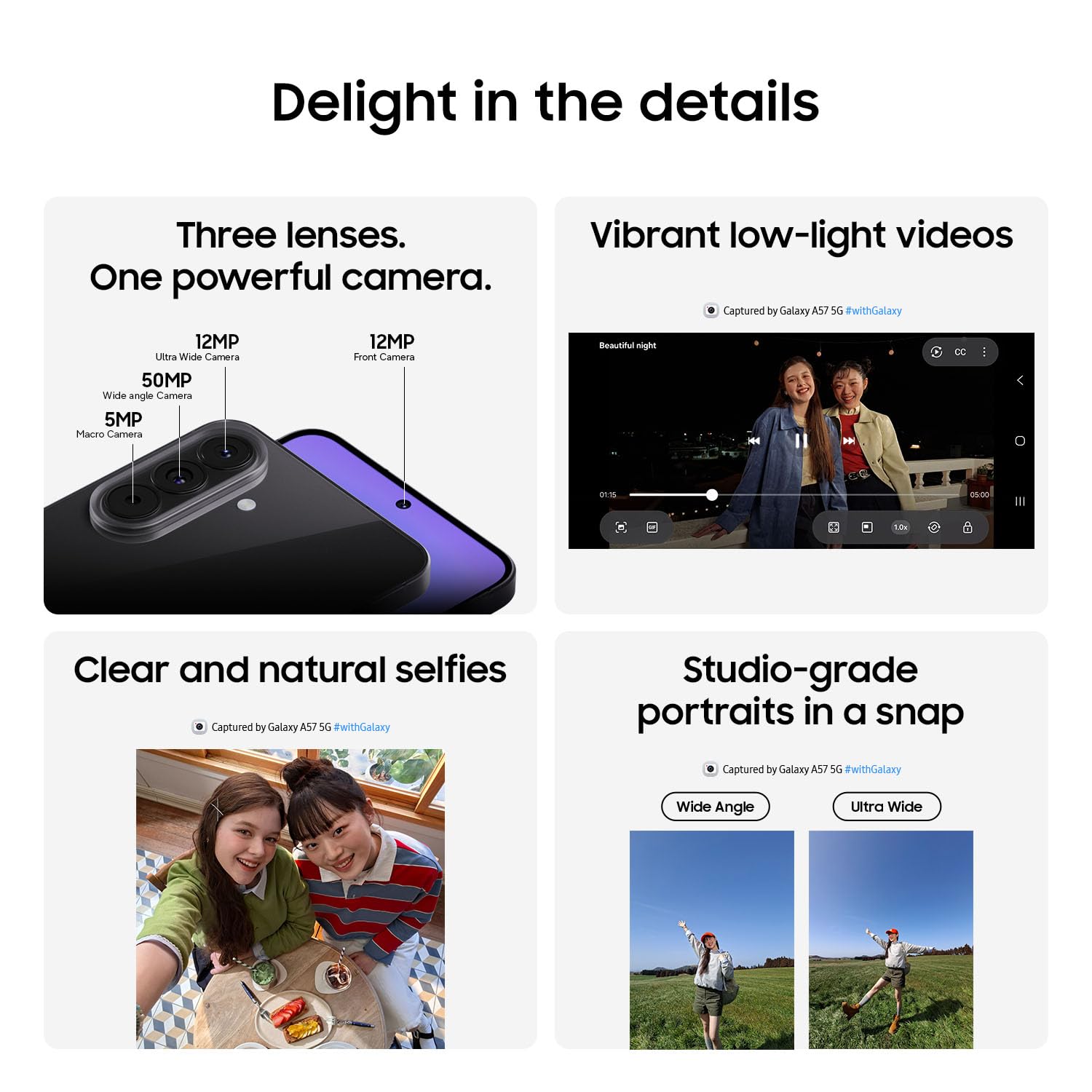
| Rear Cameras | 50MP main (f/1.8, OIS), 12MP ultrawide (f/2.2), 5MP macro (f/2.4) |
| Front Camera | 12MP (f/2.2) |
| Video | 4K at 30fps, 1080p at 60fps, 240fps slow motion capped at 720p |
| Weight | 179g |
| Dimensions | Approximately 162 x 77 x 6.9mm |
| Build | Gorilla Glass Victus+ front and back, aluminum frame |
| Water Resistance | IP68 (rated to 1.5m for 30 minutes) |
| Connectivity | 5G, Bluetooth 6.0, Wi-Fi 6E, USB-C, NFC |
| OS / Software | Android 16 with One UI 8.5 |
| Software Support | 6 years of OS upgrades, 6 years of security updates |
| Biometrics | Optical in-display fingerprint sensor, face unlock |
Display
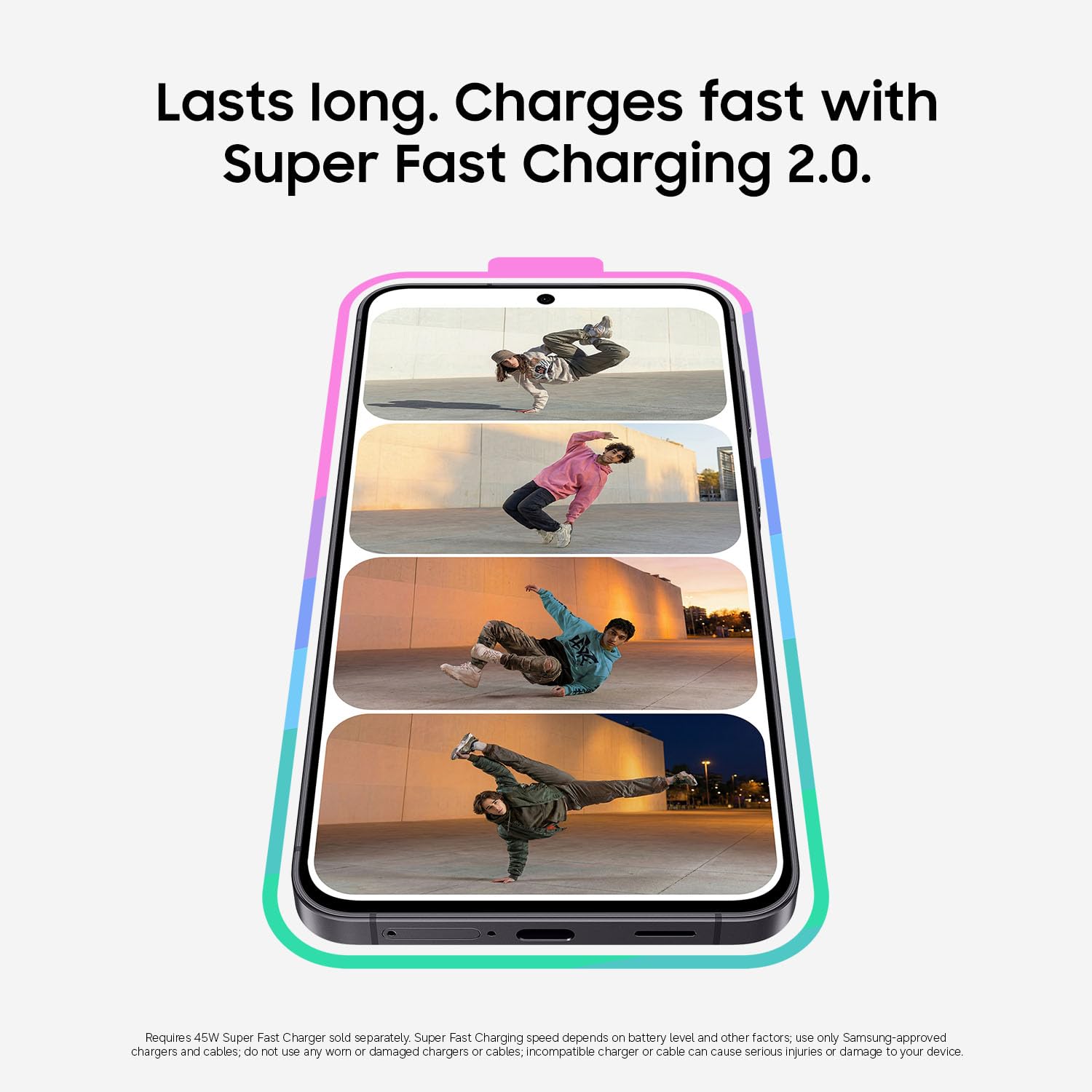
The 6.7-inch Super AMOLED panel is the easiest thing to like about this phone. Colors are punchy without tipping into cartoonish, and the 120Hz refresh rate keeps scrolling and gaming feeling fluid. Viewing angles held up well in our testing, too, with only a slight color shift when the phone was tilted sharply off-axis. HDR10+ content looks appropriately deep in dark scenes, and side by side with the outgoing model, we could see a modest but real improvement in color accuracy during our testing.
Resolution is where things get murkier. Our own measurements put the panel at 2,340 x 1,080 pixels, which is worth flagging because some retail spec sheets for this phone list a slightly higher 2,400 x 1,080 figure. We're reporting the number our testing produced rather than the retail listing, since it's what we actually measured on the unit in front of us. In practical terms, either figure lands in the same sharp, easily-readable territory at this screen size, so we would not let this discrepancy alone sway a buying decision.
Brightness is a more meaningful gap. Samsung's own marketing lists a 1,200-nit high-brightness mode and a 1,900-nit HDR peak. When we ran our light meter against the panel, adaptive brightness in typical daily use topped out closer to 1,124 cd/m2, and even with HDR content pushing the panel hardest, we measured a peak closer to 1,614 cd/m2. That's still bright enough to read comfortably outdoors on most days, but it's a noticeably lower ceiling than the manufacturer number implies, and buyers chasing that headline spec should adjust expectations accordingly. In direct sunlight on a clear afternoon, we still had to shield the screen with a hand at certain angles to frame a shot, which lines up with a panel that peaks meaningfully below its rated maximum rather than well above it.
One limitation we noticed quickly in daily use: this is not an LTPO panel, so it cannot drop its refresh rate below 60Hz the way pricier phones can to save power. There's no true low-power always-on mode that dims the refresh rate way down, which matters more than it might sound like once you get to how the battery behaved in our testing. Phones built on LTPO panels can idle the display down to single digits of Hz when showing a static screen; this one is always spending at least 60Hz worth of power on the panel, whether you're reading an article or leaving the phone face-up on a desk.
The glass itself, Gorilla Glass Victus+ on both front and back, felt reassuringly solid in hand, and the bezels around the screen are tight and even. Samsung paired the display upgrade with a genuinely well-built chassis, aluminum-framed and rated IP68 this generation, an upgrade from the IP67 rating on the previous model. We ran the phone through half a dozen drops from waist height onto marble, tarmac, and hardwood during testing and came away with only minor frame scuffing and no cracked glass, which speaks well of the build even if it's not a substitute for a formal lab drop test. The matte-feeling frame also resisted the kind of slipperiness that plagues some glossy-backed phones, though as noted below, the back panel itself is a fingerprint magnet.
Camera System
The rear camera array pairs a 50MP main sensor at f/1.8 with optical image stabilization, a 12MP ultrawide at f/2.2, and a 5MP macro lens at f/2.4. Up front sits a 12MP selfie camera at f/2.2. In daylight, the main sensor produced sharp, well-exposed shots with accurate color, and the OIS noticeably helped steady handheld shots in dimmer rooms. Indoors under mixed lighting, shadow detail got noticeably noisier the moment the sun went down, and we found ourselves reaching for the dedicated night mode more often than we expected on a phone with OIS on the main sensor. The ultrawide is serviceable but softer at the edges, and the macro lens is the kind of camera you will use a handful of times and mostly forget about.
There's no telephoto lens here, so all zoom is digital. The phone tops out at 10x digital zoom, but in our testing, image quality held up reasonably well only up to around 2x before noise and softness set in noticeably. Beyond that, shots are usable for a quick social post but not much more. Portrait mode edge detection was reliable around hair and glasses in our test shots, though it occasionally struggled to separate busy backgrounds cleanly.
Video tops out at 4K at 30 frames per second on the main camera; stepping up to 60fps means dropping down to 1080p, since there's no 4K/60fps option available. Slow-motion capture is available at 240fps but is capped at 720p resolution, which limits how usable those clips are for anything beyond casual sharing. Worth noting for anyone upgrading from a recent Galaxy A-series phone: this core camera hardware configuration has now carried over largely unchanged across several generations, so if photography is your main upgrade driver, this may not deliver the leap you're hoping for.
Battery Life & Charging
The Galaxy A57 5G keeps the same 5,000mAh cell as its predecessor, and this is where our testing produced the most genuinely conflicting results of the whole review. In a controlled looping-video rundown test, we measured 31 hours and 51 minutes of runtime, nearly four hours longer than we recorded on the outgoing model under identical conditions. That's an excellent number on paper, and on its own it would suggest the A57 comfortably beats its predecessor for battery life.
But it didn't hold up consistently across other testing scenarios. In extended real-world use with mixed screen-on activity, we saw battery life that actually came in shorter than the previous generation, not longer, which points to software power management rather than the battery cell itself as the likely culprit. On a heavy-use day with 8 to 10 hours of screen time, we were down to 10 percent battery by 9pm. Samsung markets a two-day battery experience, but in our hands, a full single day of busy use was the realistic ceiling, something we would tie back to that non-LTPO display having to run at 60Hz minimum even when the phone is otherwise idle. Our working theory is that background app activity and that always-on 60Hz floor are eating into the same margin that the looping-video test never touches, since that test keeps the screen on one static app the entire time rather than switching between apps the way a real day of use does.
Charging tells a similarly two-sided story. Samsung brands the 45W wired charging as Super Fast Charging 2.0 and claims up to 60 percent battery in 30 minutes. Our bench testing landed close but not identical: we measured 0 to 50 percent in 22 minutes, with a full charge taking about 1 hour and 10 minutes from empty. That gap between the marketed figure and the bench result is modest enough that we would not call it misleading, but it is a reminder to treat manufacturer charging claims as a ceiling rather than an average.
| Claim vs. Test | Result |
|---|---|
| Samsung's claim | Up to 60% charge in 30 minutes |
| Our bench result | 0% to 50% in 22 minutes; full charge in ~1 hour 10 minutes |
There is no wireless charging on this phone at all, which puts it behind several competitors at a similar price point and is one of the more consistent complaints we would raise. We would also flag that the retail box includes only a USB-C cable and a SIM tool, no charging brick, so budget for that separately if you don't already own a compatible fast charger. A 45W-capable charger is required to hit the numbers above; anything slower will still charge the phone, just more slowly than our bench results suggest.
The most concerning finding from our testing came during a wired Android Auto session on a road trip. The phone became almost completely unresponsive at points, repeatedly dropped the Android Auto connection, and for a full 20 minutes afterward took 5 to 6 seconds just to open basic apps. Screen brightness also self-throttled several times during that trip, to the point of being essentially unreadable in direct sunlight, even in mild ambient conditions around 70 degrees Fahrenheit. A restart cleared the sluggishness, but needing one mid-drive is a real mark against a phone being used as a navigation device. We did not see this level of thermal struggle in general day-to-day use, but anyone who regularly relies on Android Auto should treat this as a real consideration.
Software & Features
The Galaxy A57 5G ships on Android 16 with Samsung's One UI 8.5 layered on top, and the standout headline here is support: Samsung is committing to six years of OS upgrades and six years of security updates, which is a genuinely strong commitment in this price tier and one of the best reasons to consider this phone for anyone who keeps a device a long time. In day-to-day use, One UI 8.5 felt fluid and largely free of the stutter or slowdown we sometimes see on mid-range Android skins, though otherwise it looks and behaves close to what recent Galaxy A-series phones have shipped with.
On the AI front, the phone includes Circle to Search with a "find the look" visual search mode, an Object Eraser tool for cleaning up photos, Best Face for picking the best expression out of a group shot, Edit Suggestion prompts, a voice transcription feature for turning speech into text, Gemini Live, and Bixby's voice-controlled settings shortcuts. In day-to-day use, we found Circle to Search and Object Eraser to be the two features we reached for most, both working reliably in our testing, with Circle to Search in particular returning relevant results quickly enough that it became a habit rather than a novelty during our review period.
Notably absent is Samsung DeX, the desktop mode available on higher-end Galaxy phones, so this isn't a device you can plug into a monitor for a desktop-style workflow. The phone also lacks a proactive, agentic system-wide AI assistant; there's a limited "Now Nudge" style feature present, but it's a much smaller ambition than what some rivals are pushing toward. For most buyers in this price range, the AI feature set will feel adequate rather than exciting -- none of it felt essential in our testing, but none of it felt broken or half-finished either.
Value for Money
The Galaxy A57 5G sits in a genuinely crowded part of the market. Internationally, it starts at 529 British pounds in the UK (up from 499 pounds for the outgoing model) and 529 euros in Germany for the base configuration. The Pixel 10a is priced closely enough to be a direct cross-shop and, in our view, offers a stronger camera, an extra year of software support, and wireless charging, which the Galaxy A57 5G notably lacks. The iPhone 17e sits a tier above and delivered dramatically stronger benchmark performance in our testing, though at a real premium. The OnePlus 15R and Xiaomi 15T Pro land in a higher bracket with beefier specs, while the OnePlus Nord 5 undercuts this phone for buyers who can live with fewer features. Against its own predecessor, the A57 costs more while delivering the same core camera hardware for a fourth straight generation, which makes the price increase harder to justify on camera merits alone.
Who Should (and Shouldn't) Buy This
Buy the Galaxy A57 5G if you want a genuinely bright, fluid 120Hz AMOLED display, a durable IP68-rated build, and the reassurance of six years of software updates on a mid-range budget. It's a comfortable, well-made phone to carry every day.
Skip it if wireless charging is a must-have, if you want an LTPO display that can idle down for better standby efficiency, if camera improvements matter to your upgrade decision given the unchanged hardware, or if you regularly rely on Android Auto, given what we saw during extended sessions in our testing.
Bottom Line
The Samsung Galaxy A57 5G is a legitimately nicer phone to hold than its predecessor, with a strong display and fast wired charging carrying it through most everyday use. But contested battery results, no wireless charging, and camera hardware that hasn't moved in years make it a harder sell against a stacked field of 2026 mid-rangers. It's worth considering, but shop it against the competition before you commit.
We came away impressed by the build quality and display, and genuinely frustrated by how inconsistent the battery results were across our test methods. That inconsistency is what we would want Samsung to resolve before calling this an easy recommendation.
-- Theo Chan, Hardware Testing Director
*Disclosure: As an Amazon Associate, Revuzia earns from qualifying purchases. Prices and availability are accurate as of publication and may change.*