Samsung Galaxy Watch Ultra2 Review: Battery Life That Beats the HypeSamsung Galaxy Watch Ultra2 Review: Battery Life That Beats the HypeSamsung Galaxy Watch Ultra2 Review: Battery Life That Beats the HypeSamsung Galaxy Watch Ultra2 Review: Battery Life That Beats the Hype
September 3, 2026
The Samsung Galaxy Watch Ultra2 arrives at $699.99 with a promise that hasn't been possible on a Galaxy Watch before: the company's first Qualcomm chip inside its rugged flagship, a bigger battery, and a dive certification that's new to the entire lineup. After two weeks on the
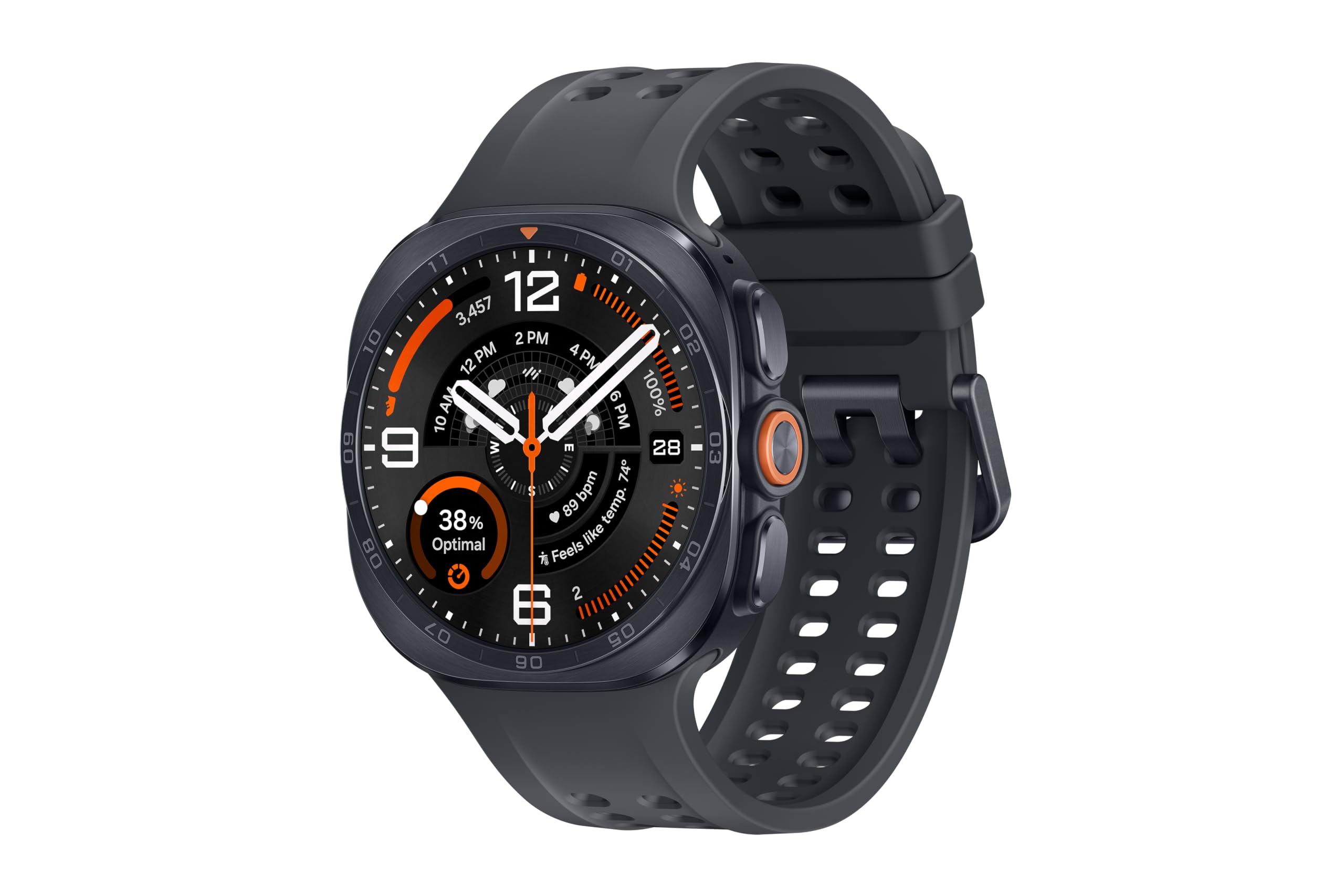
The Samsung Galaxy Watch Ultra2 arrives at $699.99 with a promise that hasn't been possible on a Galaxy Watch before: the company's first Qualcomm chip inside its rugged flagship, a bigger battery, and a dive certification that's new to the entire lineup. After two weeks on the wrist, that promise mostly checks out, though the notable premium over the outgoing model's launch price isn't just a rounding error dressed up as inflation.
Quick Verdict
The Galaxy Watch Ultra2 is a real generational upgrade, not a cosmetic refresh, and at $699.99 it earns its keep for anyone who actually uses the rugged features. The 800mAh battery outlasted Samsung's own estimates in our testing, the display is legible in direct sun, and the new Snapdragon Wear Elite chip makes the whole interface feel snappier. Casual upgraders coming from a one- or two-year-old Ultra won't find enough here to justify the switch, but first-time buyers and outdoor athletes should feel good about the spend.
| Aspect | Rating |
|---|---|
| Battery Life | 5/5 |
| Display | 5/5 |
| Design & Durability | 4.5/5 |
| Performance | 4.5/5 |
| Health & Fitness Tracking | 3.5/5 |
| Value for Money | 3.5/5 |
| Overall | 4/5 |
Pros
- 800mAh battery, a 35% capacity jump over the original Ultra's 590mAh, that beat Samsung's own runtime estimates in our testing
- 10.7mm case is 12% thinner than the original Ultra, with a lighter strap that locked down better during workouts
- 5,000-nit peak brightness spec held up as genuinely sunlight-legible in our outdoor testing
- IP69K dust/water resistance plus MIL-STD-810H toughness and the first EN13319 dive-instrument certification on a Galaxy Watch
- New Snapdragon Wear Elite chip makes app launches and navigation noticeably smoother than we expected
Cons
- A notable premium over the original Ultra's launch price, with no size options besides the single 47mm case
- Optional cellular service adds a recurring monthly cost on top of the watch price
- Full charge time was unchanged from the previous generation in our testing despite Samsung's "fast charging" marketing, and the watch refused to charge on several third-party and older Samsung wireless chargers
- Several regulated health features, including ECG, blood pressure, and sleep apnea detection, only work when paired with a Samsung phone, not any Android device
Specs at a Glance
| Specification | Detail |
|---|---|
| Price | $699.99 |
| Case Size | 47mm, single size only |
| Thickness | 10.7mm (12% thinner than original Ultra) |
| Display | 1.52-inch circular Super AMOLED, 498 x 498px, sapphire crystal cover, up to 5,000 nits peak brightness |
| Chipset | Qualcomm Snapdragon Wear Elite, penta-core (1x 2.1GHz + 4x 1.95GHz) |
| Memory / Storage | 2GB RAM / 64GB storage |
| Battery | 800mAh (up from 590mAh on the original Ultra) |
| Durability | 10ATM water resistance, IP69K dust/water rating, MIL-STD-810H certified, EN13319 dive-instrument certification |
| GPS | Dual-frequency L1+L5 GPS |
| Connectivity | Bluetooth, optional LTE cellular, NFC, Wi-Fi |
| Software | Wear OS with Samsung One UI 9.0 (One Watch UI) |
| Colors | Titanium Silver, Titanium Grey |
| Bands | Marine Band, Trail, Peakform |
| Weight | Approximately 61g (case only), 24g (strap) |
Design & Comfort
Samsung kept the "cushion" case shape from the original Ultra, a squircle titanium body wrapped around a circular display, and it's still an unmistakable design on the wrist. What's changed is the thickness: at 10.7mm, this is 12% slimmer than the original Ultra's case, and it's a difference you can feel the moment you strap it on. Combined with a lighter strap, the whole package sat noticeably flatter against our wrist than we expected from a titanium sports watch, and it stayed put through gym sessions without the strap creeping loose the way some rugged watches do.
The single 47mm case size is worth flagging up front. There's no smaller option here, and testers with narrower wrists will want to try one on before buying, since the case and lugs are built for a bigger frame. Two finishes are available, Titanium Silver and Titanium Grey, and both wear more like jewelry-grade metal than the brushed aluminum on cheaper smartwatches. Three band options ship for the Ultra2: a Marine Band with a perforated design for sweat and water drainage, a hybrid fabric-and-rubber Trail band, and an all-fabric Peakform band. We tested primarily with the Marine Band and found it drained quickly after a rinse under the sink, with none of the water-trapping feel of a solid silicone strap.
Samsung dropped the mechanically rotating bezel this generation. The center Quick Button no longer spins, and while that sounds like a downgrade on paper, we didn't miss it in daily use, since touch navigation around the fixed bezel felt just as fast. The three-button layout carries over: a circular, orange-ringed Quick Button that opens exercises by default (with a reassignable long-press shortcut, set to an emergency siren out of the box), plus separate Home and Back buttons. All three have crisp, tactile clicks even with gloves on.
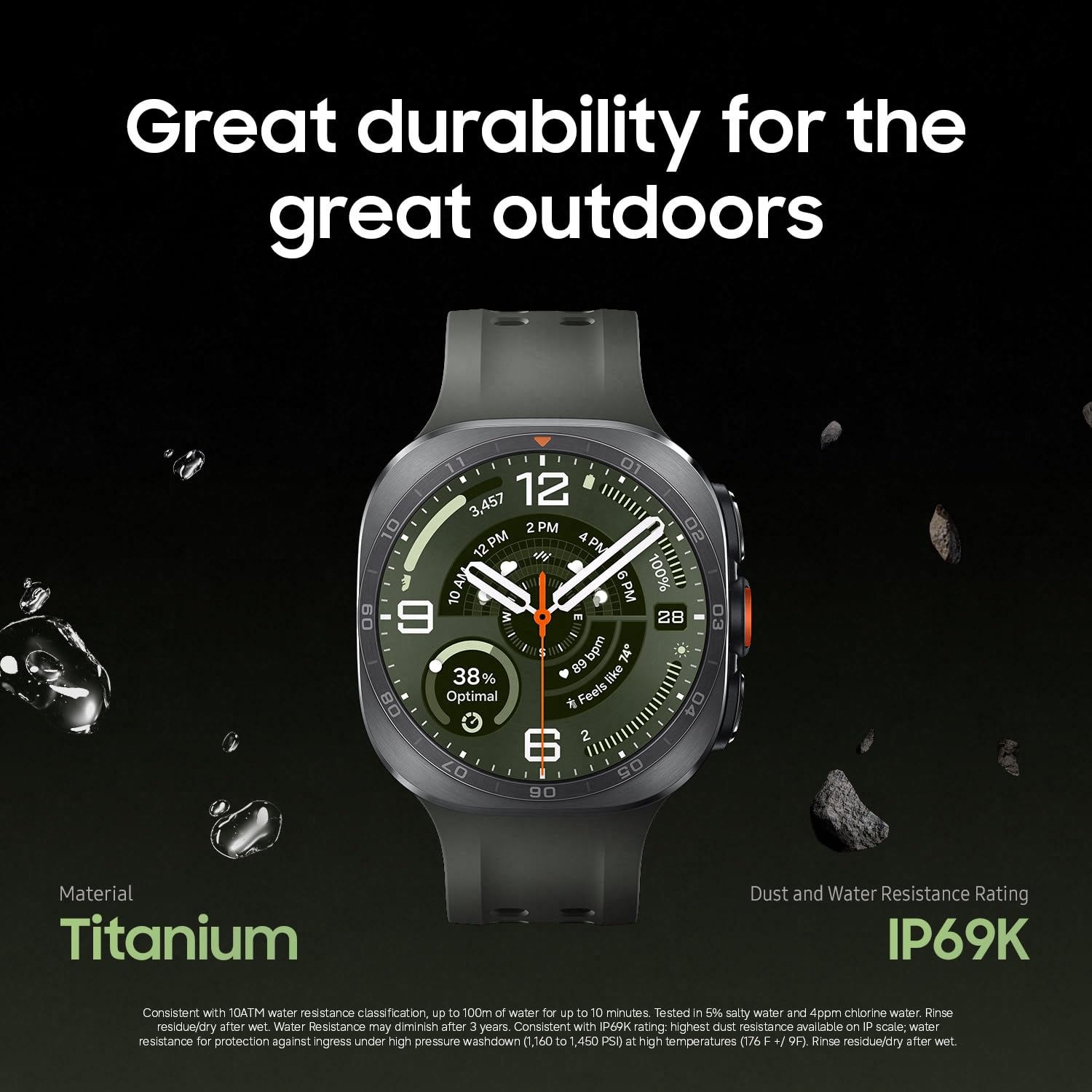
Where the Ultra2 separates itself from the standard Galaxy Watch line is durability. It carries 10ATM water resistance and an IP69K dust and water rating, an upgrade from the original Ultra's IP68, along with MIL-STD-810H military-grade toughness certification. The bigger news is the new EN13319 dive-instrument certification, the first time Samsung has put a Galaxy Watch through that standard. It's worth being precise about what that covers: the general water-resistance rating and the certified dive depth are two different numbers measuring two different things, and Samsung is clear that the dive-instrument certification applies specifically to its dedicated dive mode, not the watch's everyday splash rating. Sapphire crystal protects the display throughout, and after two weeks of gym bags, car keys, and countertops, ours shows no scratches we could find.
Health & Fitness Tracking
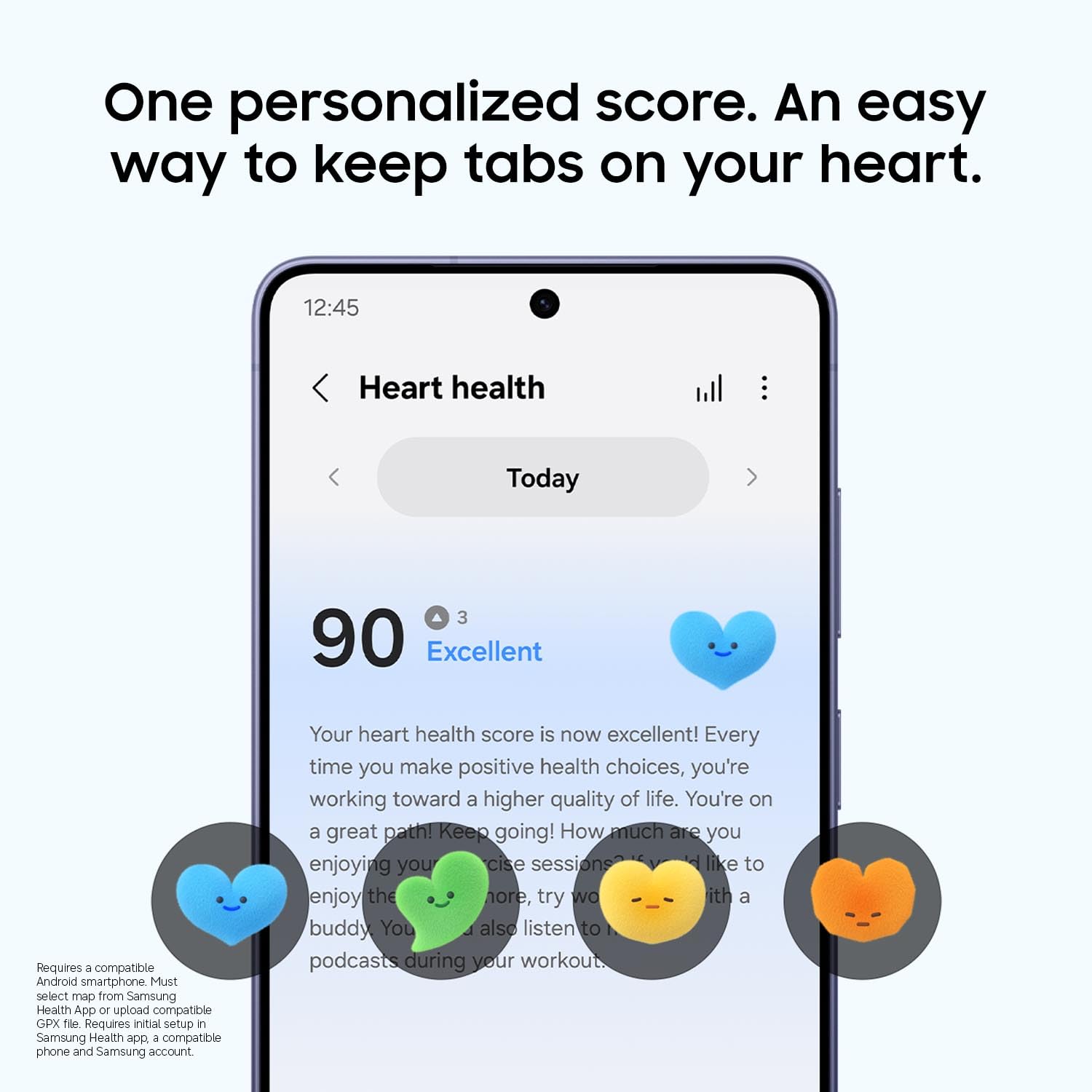
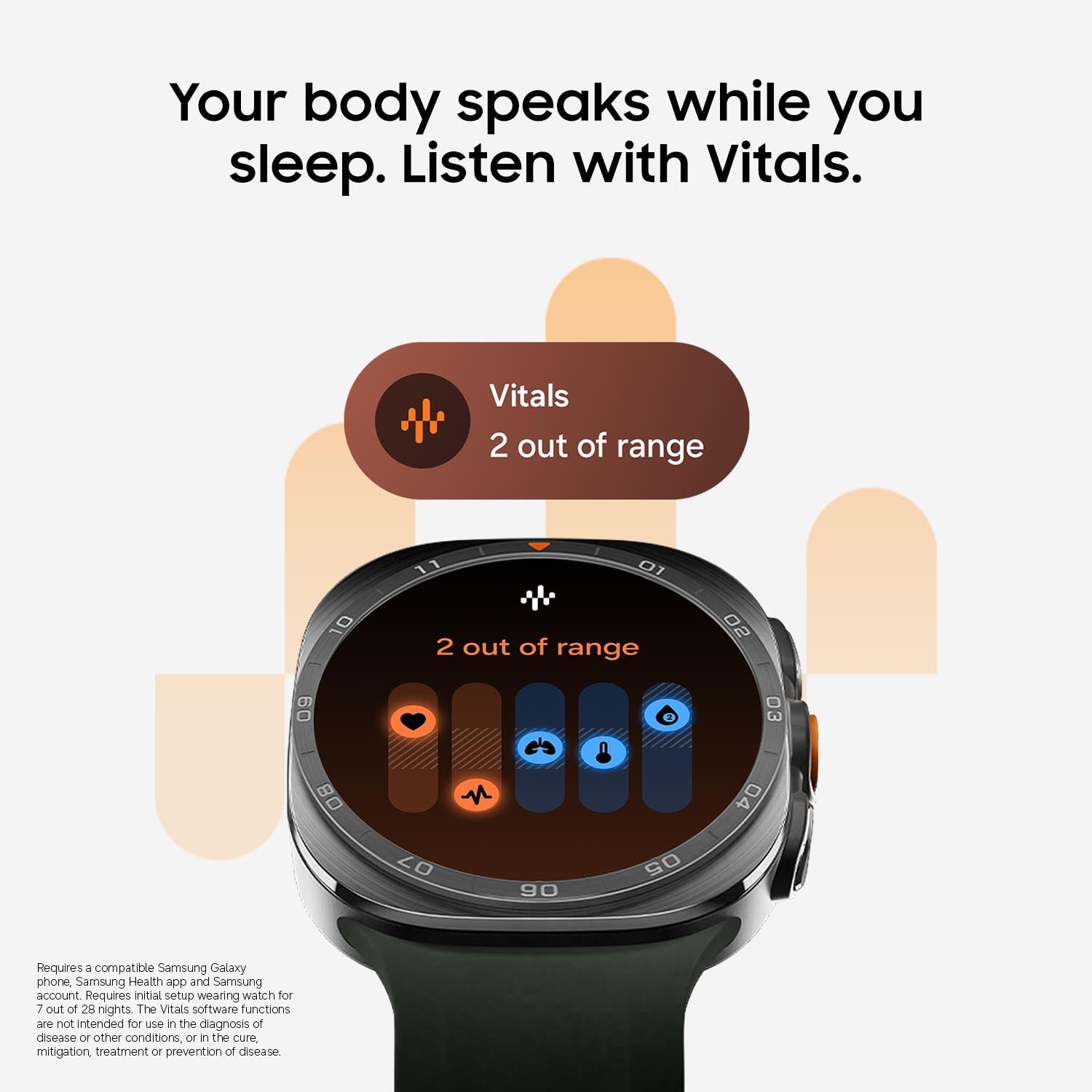
The Ultra2's sensor suite is extensive on paper: ECG, blood pressure, body composition analysis, a Heart Health Score, Vascular Load, Daily Cardio Load, Sound Exposure tracking, and an Antioxidant Index. In practice, results were a mixed bag. Sleep tracking landed close to a reference sleep tracker we ran alongside it night after night, agreeing within minutes on total sleep time and sleep window, though it consistently flagged brief nighttime movement as "awake" time and occasionally logged sedentary downtime, like sitting through a movie, as a nap. Auto workout detection was more reliable, correctly picking up on walking and running after roughly ten minutes and auto-pausing the moment we stopped moving, with a haptic tap when it resumed.
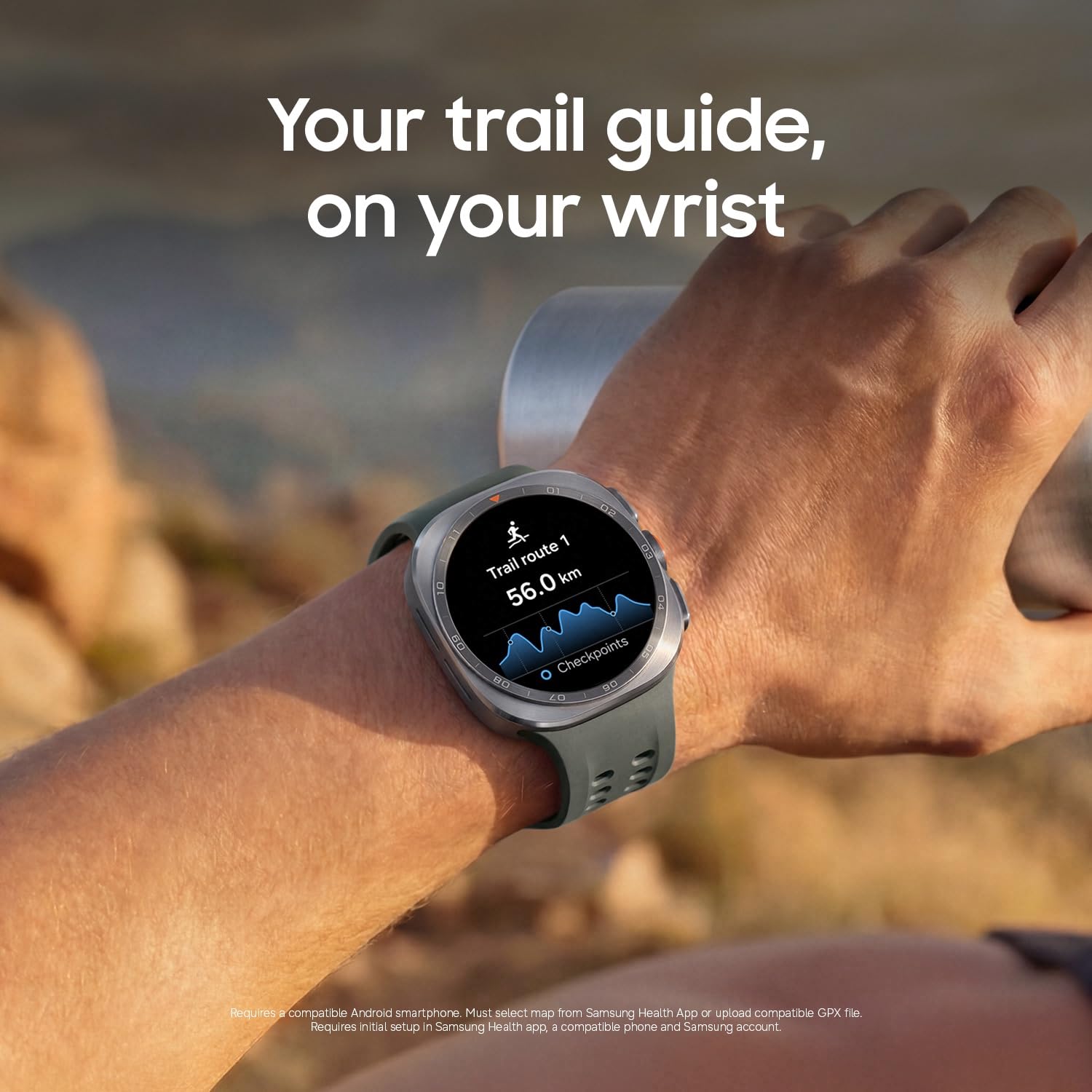
Heart-rate accuracy during a steady-state run started rough. In the first minutes of exercise, optical readings ran well below a chest-strap reference before settling into close agreement roughly fifteen minutes in, a known limitation of wrist-based optical sensors during the initial ramp-up. GPS tracking, helped by the dual-frequency L1+L5 setup, held a clean, accurate line through a dense urban canyon of skyscrapers and waterways where GPS signals typically bounce and drift, locking on within a couple of seconds at the start of each run.
The Antioxidant Index and hydration guidance features feel less finished. Antioxidant readings barely moved even after supplements and juice, and we noticed the score behaved inconsistently between testers with different skin tones, worth flagging as anecdotal rather than conclusive. Hydration guidance also needs to be manually switched on per workout, and it's limited to a handful of activity types like Trail Run, Hiking, and Treadmill, leaving out Bike, Elliptical, and Walking entirely. Given the strength of the durability and battery story elsewhere, the sensor software feels like the area Samsung still needs to polish.
Battery Life
This is where the Ultra2 makes its strongest case. Samsung bumped the battery to 800mAh, up from 590mAh on the original Ultra, a 35% capacity increase, and it shows in daily use. Running the watch through a heavy-use pattern, including frequent heart-rate checks, nightly sleep tracking, gym sessions, and GPS-tracked outdoor rides, we got 96 hours out of a single charge with the always-on display disabled and raise-to-wake handling the screen instead. With always-on display switched on, that dropped to 72 hours, still three full days of use before needing a charger.
Both numbers beat Samsung's own official estimates of 80 hours without always-on display and 60 hours with it enabled, which is a rare case of a manufacturer's runtime claim being conservative rather than optimistic. For anyone who has grown tired of nightly charging routines on other smartwatches, this is the number that matters most, and it's the single biggest reason to consider this watch over the original Ultra or a rival flagship.
Charging is the one place the story flips. Despite Samsung marketing this as its first-ever Galaxy Watch with fast charging, capable of a meaningful top-up in about 30 minutes, a full charge from near-empty took us the same 1.5 to 2 hours as the previous generation, with no improvement we could measure. We also ran into a compatibility wall: the watch refused to charge on third-party wireless chargers, an older genuine Galaxy Watch charger, and a Galaxy phone's reverse wireless charging feature, each time throwing an "incompatible charger" message after a few seconds. Stick with the charger in the box and budget your charging windows the same way you would have with the original Ultra.
Smart Features & Compatibility
Under the hood, this is the biggest architectural shift Samsung has made to the Ultra line. The Ultra2 is the first Galaxy Watch to run on a Qualcomm Snapdragon Wear Elite chip, replacing the Exynos silicon in the original Ultra. It's a penta-core design, one main core running at 2.1GHz backed by four efficiency cores at 1.95GHz, and Samsung claims 32% faster CPU performance and 19% faster GPU performance over the prior generation. We didn't run synthetic benchmarks, but the real-world difference was obvious: app switching, exiting workouts, and pulling up widgets all felt quicker and less hesitant than we remembered from earlier Galaxy Watches, and third-party apps like music streaming loaded with barely a pause.
Memory got a boost too, with 2GB of RAM and 64GB of storage, double the 32GB on the original Ultra. That extra headroom means more room for offline music and maps without having to manage storage as carefully.
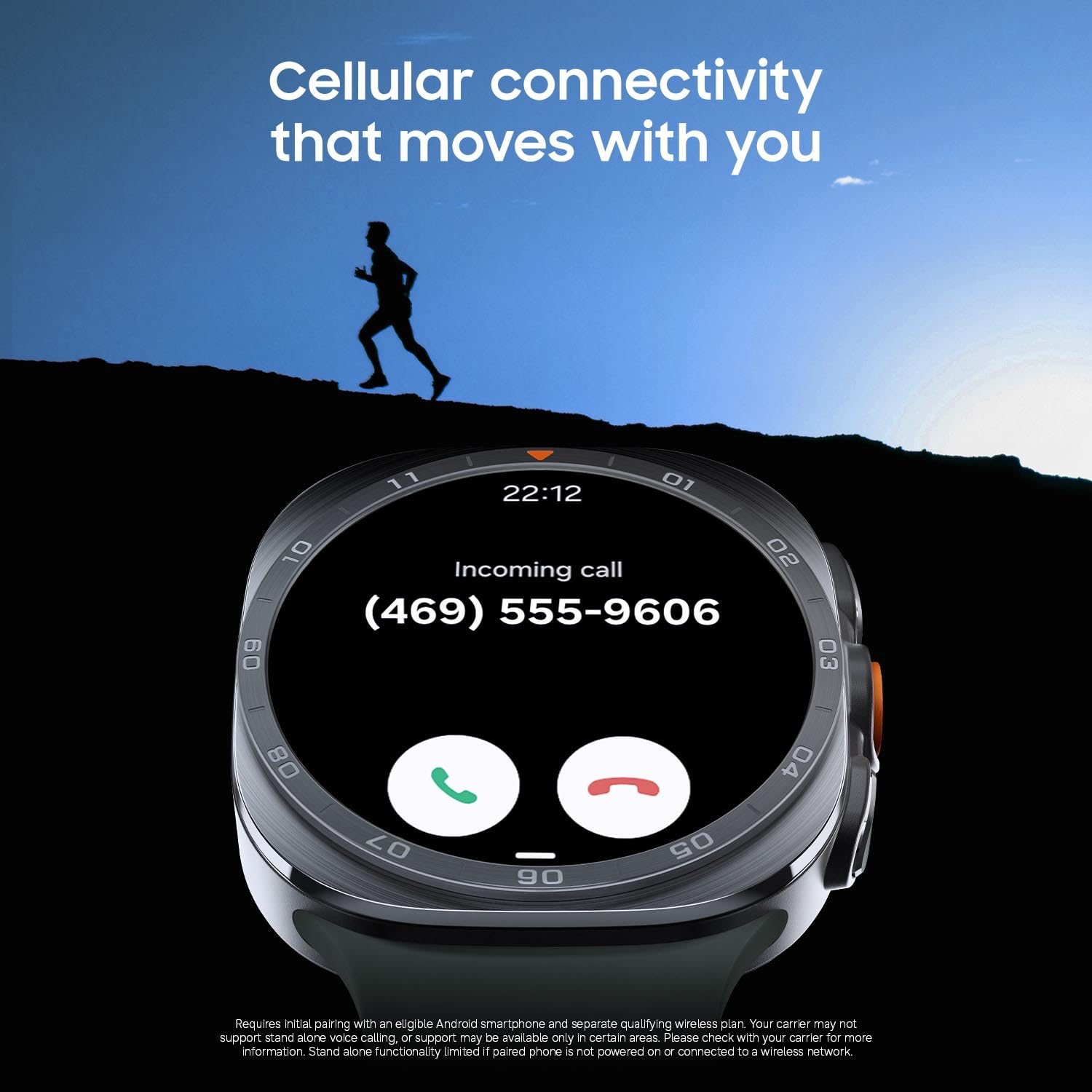
Software runs on Wear OS with Samsung's One UI 9.0 skin layered on top, and cellular connectivity is available as an option for anyone who wants to leave their phone behind on runs, though it adds a recurring monthly cost on top of the watch's purchase price depending on carrier. The bigger caveat is on the health side: several of the regulated features, ECG, blood pressure monitoring, and sleep apnea detection, only activate when the watch is paired with a Samsung phone specifically, not any Android device. Getting the full experience running also means juggling up to three separate apps, Galaxy Wear, Samsung Health, and, for Samsung phone owners, Samsung Health Monitor. It works, but it's not the streamlined single-app setup some rivals offer.
Value for Money
At $699.99, the Galaxy Watch Ultra2 sits at a notable premium over where the original Ultra launched, and that increase is easy to feel once you know the original is now available at a steep discount. If your priority is simply a rugged Samsung smartwatch and you don't need the new chip, the extra battery capacity, or the dive certification, the discounted original Ultra is hard to ignore on pure value. But judged as its own product, the Ultra2 earns its higher price with genuine hardware gains rather than a marketing refresh. Against pricier rivals like the Apple Watch Ultra 3, which sits in a noticeably higher price tier, the Ultra2 looks like the better-value rugged option, especially since its display brightness spec outpaces that watch's. Against Garmin's adventure-focused lineup, the value calculation shifts toward Garmin for anyone who lives inside detailed training analytics, since Garmin still offers deeper route-building tools the Ultra2 lacks.
Who Should (and Shouldn't) Buy This
Buy the Galaxy Watch Ultra2 if you want a rugged, dive-rated Samsung smartwatch with real multi-day battery life and don't mind paying a premium for the newest chip and materials. Divers and serious outdoor athletes get the most from the EN13319 certification and IP69K rating, and anyone tired of nightly charging will appreciate the 800mAh battery's real-world endurance. It's also the right call for Samsung phone owners who want the full suite of regulated health features unlocked.
Skip it if you already own the original Galaxy Watch Ultra and don't need the extra battery or chip speed, since the discounted original delivers most of the same rugged experience for meaningfully less. Buyers who don't need Trail Run modes, diving features, or titanium toughness are better served by a cheaper, lighter Galaxy Watch, and anyone who lives on Garmin's training ecosystem or an iPhone should look elsewhere entirely, since this watch is Wear OS and Android only.
Bottom Line
The Galaxy Watch Ultra2 backs up its two biggest marketing claims, sunlight-beating brightness and multi-day battery life, with results that held up and even beat Samsung's own numbers in our testing. The notable premium over the original Ultra and unchanged charging speed keep it from being an easy universal upgrade, but for divers, outdoor athletes, and first-time Ultra buyers, this is a genuinely stronger watch than the one it replaces.
The Ultra2 isn't chasing incremental spec bumps, it rebuilt the parts that mattered most: the chip, the battery, and the durability rating. That's the kind of upgrade worth paying for if you'll actually use it, and a skippable one if you won't.
-- Miles Danner, Wearable Technology Analyst
*Disclosure: As an Amazon Associate, Revuzia earns from qualifying purchases. Prices and availability are accurate as of publication and may change.*