Samsung OLED S90F Review: Flagship Picture Quality Without the Flagship PriceSamsung OLED S90F Review: Flagship Picture Quality Without the Flagship PriceSamsung OLED S90F Review: Flagship Picture Quality Without the Flagship PriceSamsung OLED S90F Review: Flagship Picture Quality Without the Flagship Price
May 4, 2026
The Samsung OLED 4K S90F Smart TV at $1,247.99 delivers 1,271 cd/m2 peak HDR brightness and S95F-level picture quality without the external connection box or flagship price. In testing across film, sports, and gaming, the S90F earns that position convincingly.
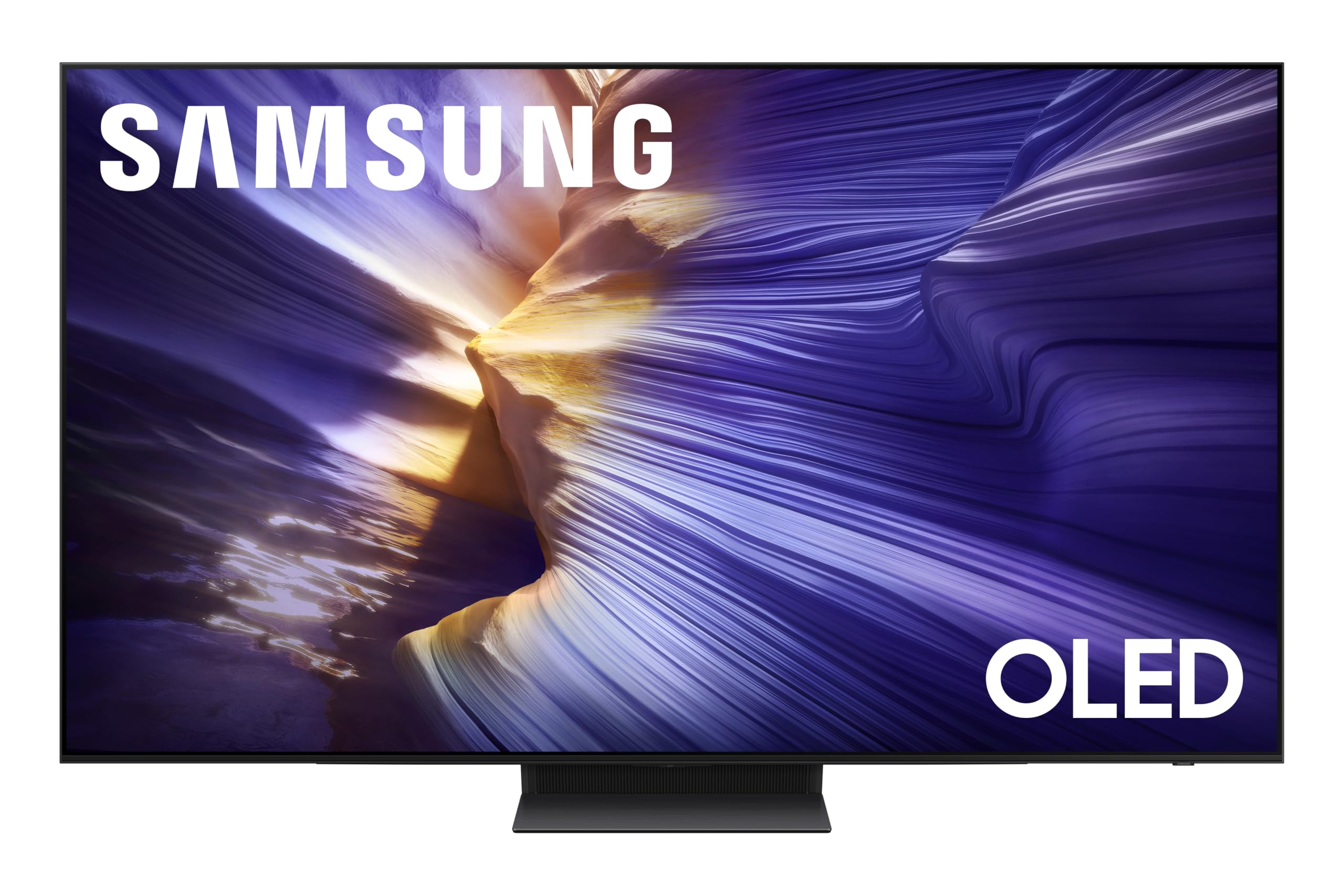
The Samsung OLED 4K S90F Smart TV at $1,247.99 delivers 1,271 cd/m2 peak HDR brightness and S95F-level picture quality without the external connection box or flagship price. In testing across film, sports, and gaming, the S90F earns that position convincingly. The blacks are genuinely perfect, peak brightness in the right modes punches well above what most OLED panels manage, and the 2025 Samsung smart platform is a genuine upgrade over prior years. Where it falls short, the shortcomings are specific enough that most buyers will never notice them. This is a serious television that earns its place at the top of the mid-range OLED conversation.
Quick Verdict
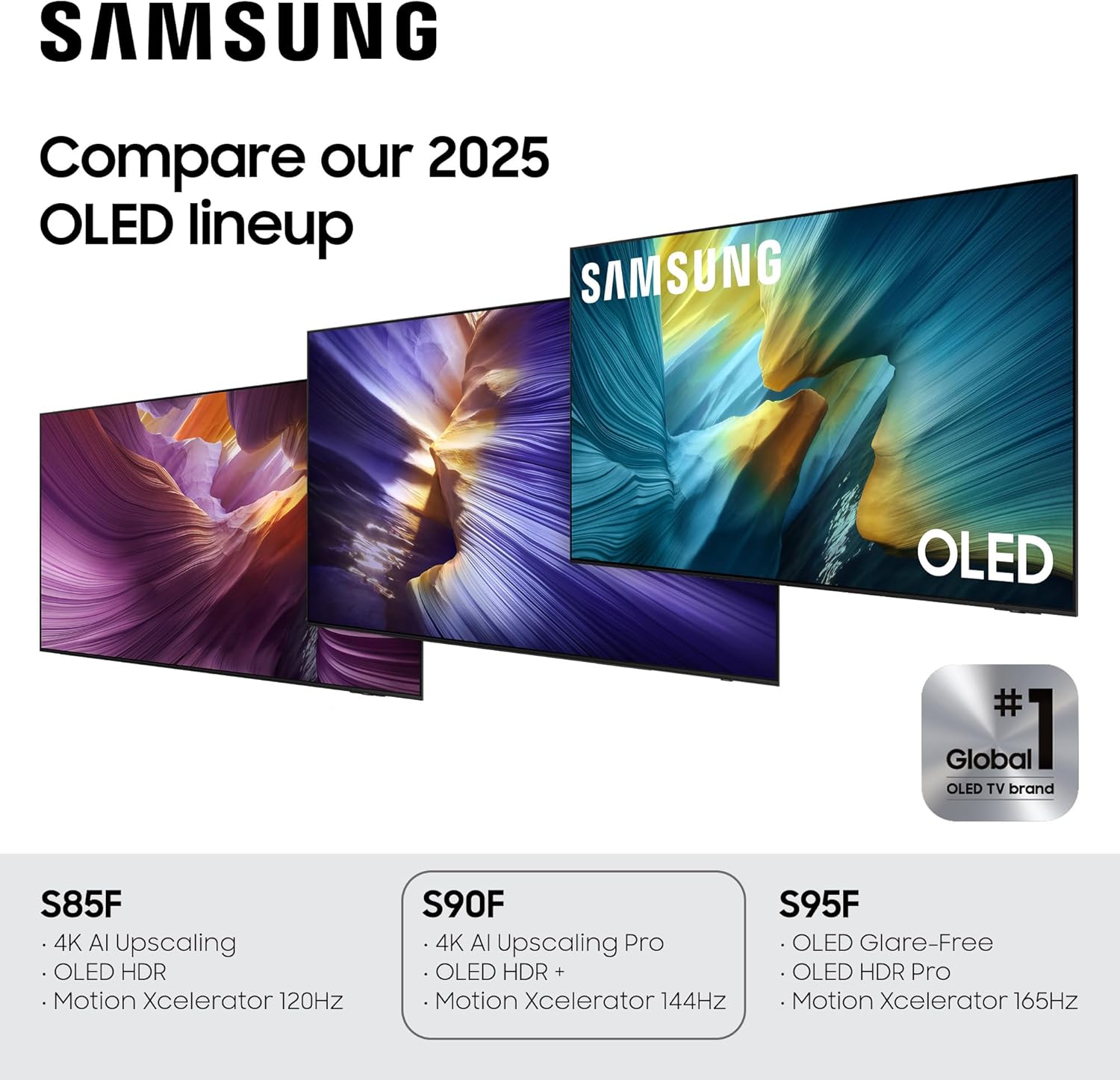
Buy it. The Samsung S90F at $1,247.99 matches the picture quality of Samsung's more expensive S95F flagship in most real-world viewing scenarios, skips the external connection box, and comes in six sizes from 42 to 83 inches. The only meaningful reasons to hesitate are a lack of confirmed Dolby Vision support, moderate SDR brightness in very bright rooms, and panel-type variability across the size range. For everything else, this is one of the strongest OLED value propositions available right now. Overall rating: 4.5/5.
| Aspect | Rating |
|---|---|
| Picture Quality | 5/5 |
| Design & Build | 4.5/5 |
| Smart TV Features | 4/5 |
| Gaming Performance | 4.5/5 |
| Value for Money | 4.5/5 |
| Overall | 4.5/5 |
Pros
- Near-infinite contrast with perfect, absolute blacks and zero blooming or haloing
- Peak HDR brightness of 1,271 cd/m2 in Filmmaker Mode with HDR Tone Mapping active
- Game HDR Advanced mode hits 1,651 cd/m2 on highlights, outstanding for cinematic and competitive gaming
- Six size options from 42 to 83 inches covering every room scale
- No external connection box required, unlike the S95F flagship
Cons
- No confirmed Dolby Vision support
- SDR brightness is adequate but not strong in very bright or sunlit rooms
- Panel type varies by size: 55", 65", 77" use QD-OLED while 42", 48", 83" use WOLED, with real color reproduction differences between the two panel types
- HGIG support was removed in firmware 1125.9 and only restored in 1133, an unnecessary disruption for gaming users
Specs at a Glance
| Specification | Detail |
|---|---|
| Display Type | OLED (OLED HDR Plus) |
| Resolution | 4K |
| Available Sizes | 42", 48", 55", 65", 77", 83" |
| Panel Technology | QD-OLED (55", 65", 77"); WOLED (42", 48", 83") |
| Wall Depth (65-inch) | 1.6 inches |
| HDR Support | HDR Tone Mapping, HGIG (restored in firmware 1133); SDR-to-HDR upconversion via NQ4 AI Gen3 |
| Smart Platform | Samsung 2025 |
| Refresh Rate | Up to 4K 144Hz with VRR (manufacturer spec) |
| Audio | 2.1 channel, 40W (Object Tracking Sound Lite) |
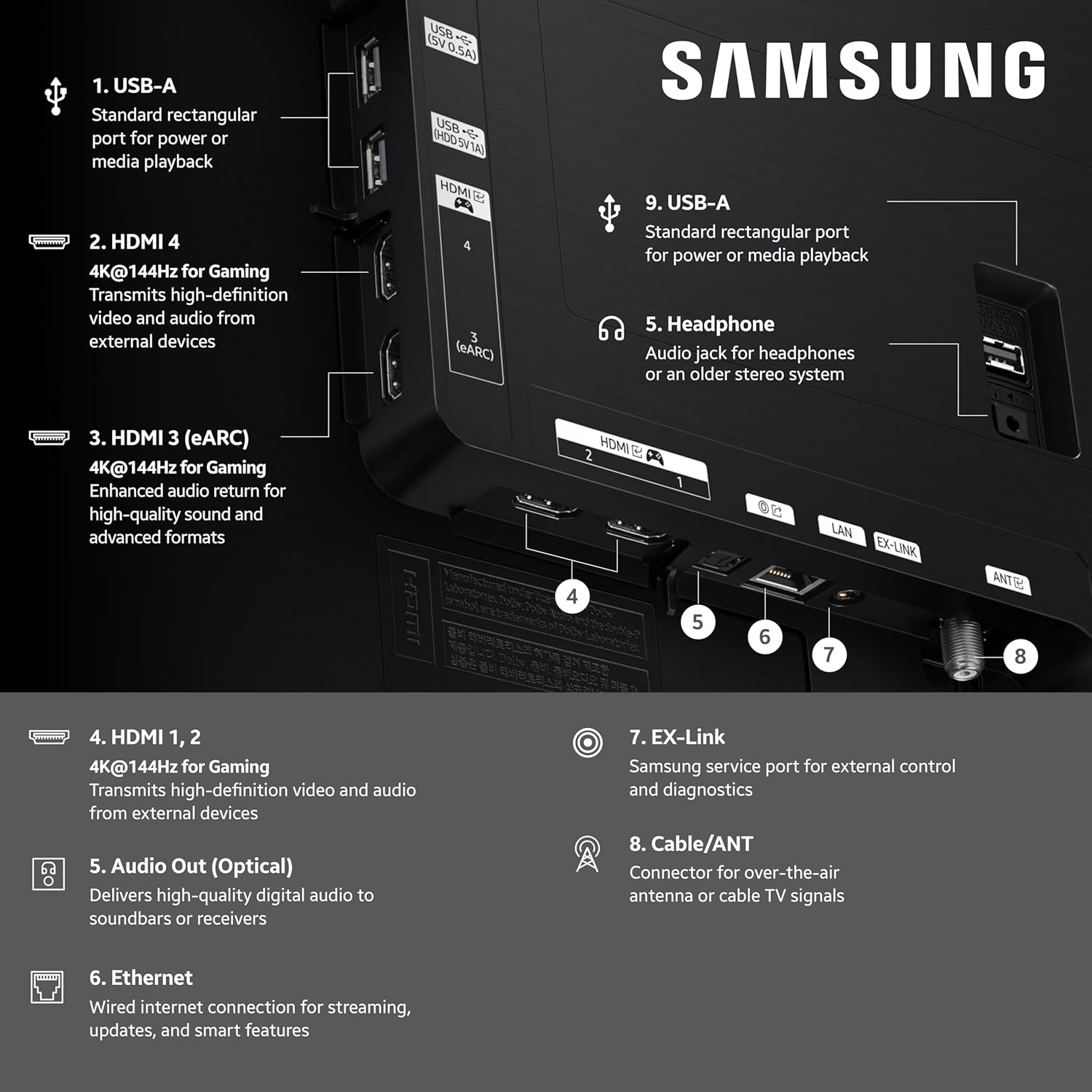
| Connectivity / Ports | 4× HDMI 2.1 (4K/120Hz on all ports), 3× USB, Wi-Fi 5/Bluetooth 5.2, Ethernet, optical audio out |
| Weight | Varies by size (55-inch ~38 lbs, 65-inch ~52 lbs, 77-inch ~80 lbs without stand) |
| Price | $1,247.99 |
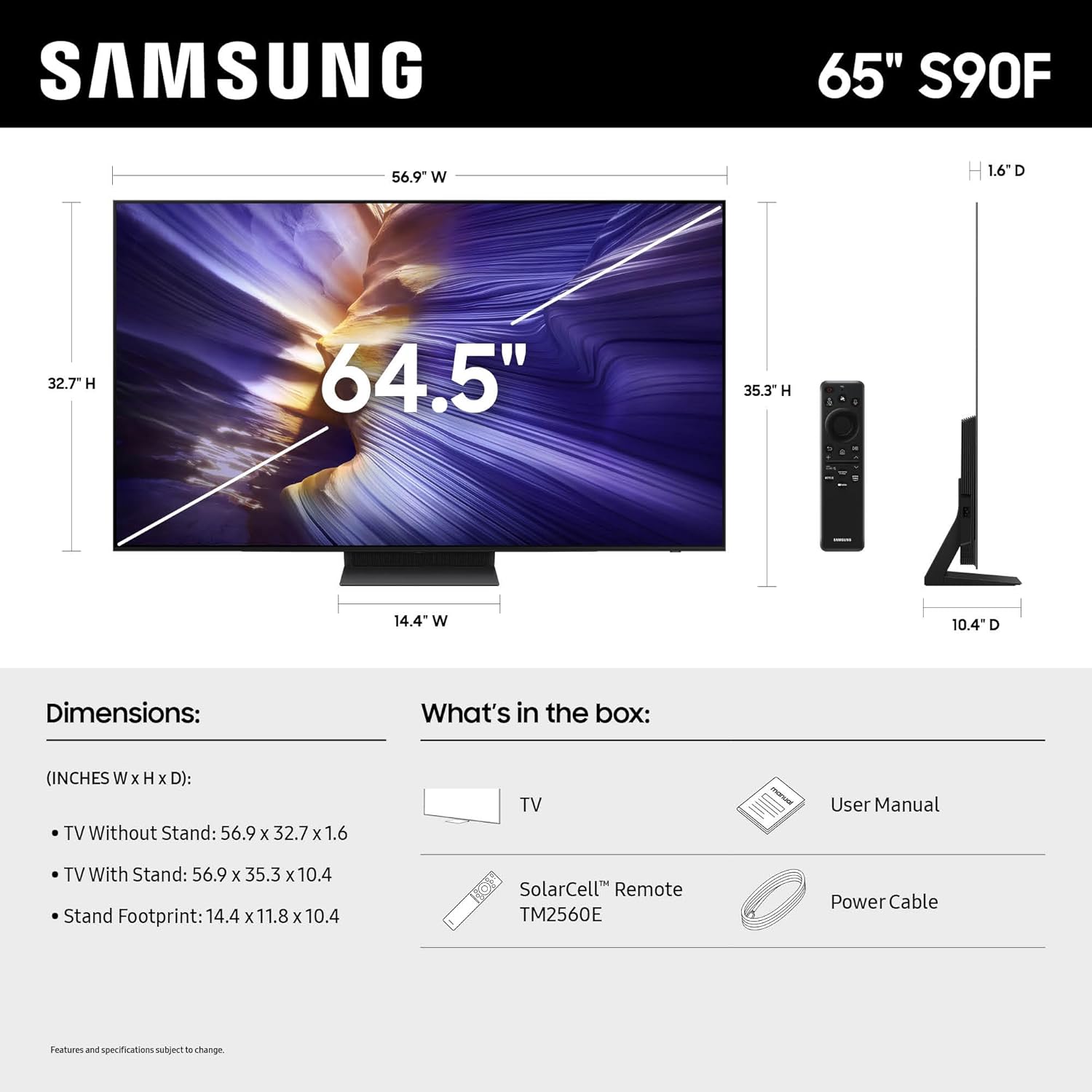
Image and Video Quality
The S90F's picture quality is the reason to buy it, and the numbers from our testing back that up. Working in Filmmaker Mode with HDR Tone Mapping set to Active, we recorded peak brightness of 1,271 cd/m2 on the Hallway Lights test scene, 947 cd/m2 on the Yellow Skyscraper highlight, and 450 cd/m2 on the Landscape Pool scene. These are strong figures for an OLED panel, and they translate directly to real viewing: bright specular highlights in HDR content pop with genuine intensity while surrounding shadow detail remains completely resolved.
Switching Contrast Enhancer to High in Filmmaker Mode shifts the balance. The Hallway Lights measurement drops to 1,068 cd/m2, but the Yellow Skyscraper climbs to 1,000 cd/m2 and the Landscape Pool settles at 440 cd/m2. Contrast Enhancer High boosts mid-range highlights at the cost of absolute peak output. For most narrative film content, HDR Tone Mapping Active with Contrast Enhancer off gives the more accurate, tonally consistent result. Contrast Enhancer High works well for sports and high-action sequences where punchy midtones matter more than tonal accuracy.
What the numbers cannot fully capture is the quality of the blacks. OLED panels have a structural advantage here that no LCD or mini-LED display can fully replicate: pixels that are off are completely off. The S90F has no blooming around bright objects on dark backgrounds, no haloing around subtitles, and no loss of shadow detail in near-black scenes. Watching anything shot in low ambient light, the S90F creates an impression of depth that flatpanel televisions rarely achieve.
SDR brightness is decent and handles well-lit rooms without obvious strain. Buyers in rooms with direct sunlight or very strong overhead lighting should note it does not match the peak SDR output of bright LCD panels. This characteristic is shared across essentially all OLED televisions and is not specific to the S90F.
One detail worth understanding before purchase: the 55-inch, 65-inch, and 77-inch models use a QD-OLED panel, while the 42-inch, 48-inch, and 83-inch sizes use WOLED. QD-OLED uses quantum dot color conversion to produce wider color gamut and generally more saturated primaries. WOLED uses white subpixels with color filters, a mature and capable technology, but one that produces slightly different color characteristics. If maximizing color volume is a priority and you have flexibility on size, the 65-inch is the variant to consider.
| Mode | Hallway Lights (cd/m2) | Yellow Skyscraper (cd/m2) | Landscape Pool (cd/m2) |
|---|---|---|---|
| Filmmaker Mode, HDR Tone Mapping Active | 1,271 | 947 | 450 |
| Filmmaker Mode, Contrast Enhancer High | 1,068 | 1,000 | 440 |
| Game Mode, HDR Tone Mapping Active | 1,000 | 739 | 308 |
| Game Mode, Game HDR Advanced | 867 | 1,651 | 678 |
Design and Build
The S90F is a genuinely slim television. The 65-inch model sits just 1.6 inches from the wall when mounted, thin enough that the panel effectively disappears into the wall surface in the way only the best OLED sets can manage. The screen itself is a wafer, and from the front the bezels are minimal enough that the image appears to float.
The rear tells a slightly different story. Unlike a completely uniform back panel, the S90F has a chunkier section toward the bottom where the inputs and processing hardware live. It is not unattractive, but buyers expecting an absolutely flat back for open-shelf mounting should account for it. Importantly, Samsung has not carried over the separate One Connect external connection box that the S95F flagship uses. All inputs are built into the set, which simplifies installation significantly and removes the cable management challenge the external box creates.
The stand is slender and straightforward to install. It holds the panel securely and positions it at a sensible viewing height. Wall mounting is the more popular choice for a panel this slim, and the 1.6-inch depth makes flush mounting genuinely achievable with a low-profile bracket.
The remote is the Wafer solar-powered model. It charges from ambient light and is slim and unobtrusive. One omission worth noting before purchase: there is no dedicated input button. Switching sources requires navigating the menu, which adds a step compared to older Samsung remotes. It is minor friction, but worth knowing in advance.
The 2025 menu update brought two visible changes. The volume bar UI has been redesigned and sits more unobtrusively on screen during playback. The menu also now highlights the last-used setting when you return to a submenu, reducing the button presses needed to make adjustments mid-session. Neither change is dramatic, but both reflect genuine attention to daily usability.
The S90F is available in six sizes: 42, 48, 55, 65, 77, and 83 inches. That range is wider than many competitors offer, making the S90F a credible option whether you are fitting a bedroom or a dedicated home theater room.
Smart TV and Gaming
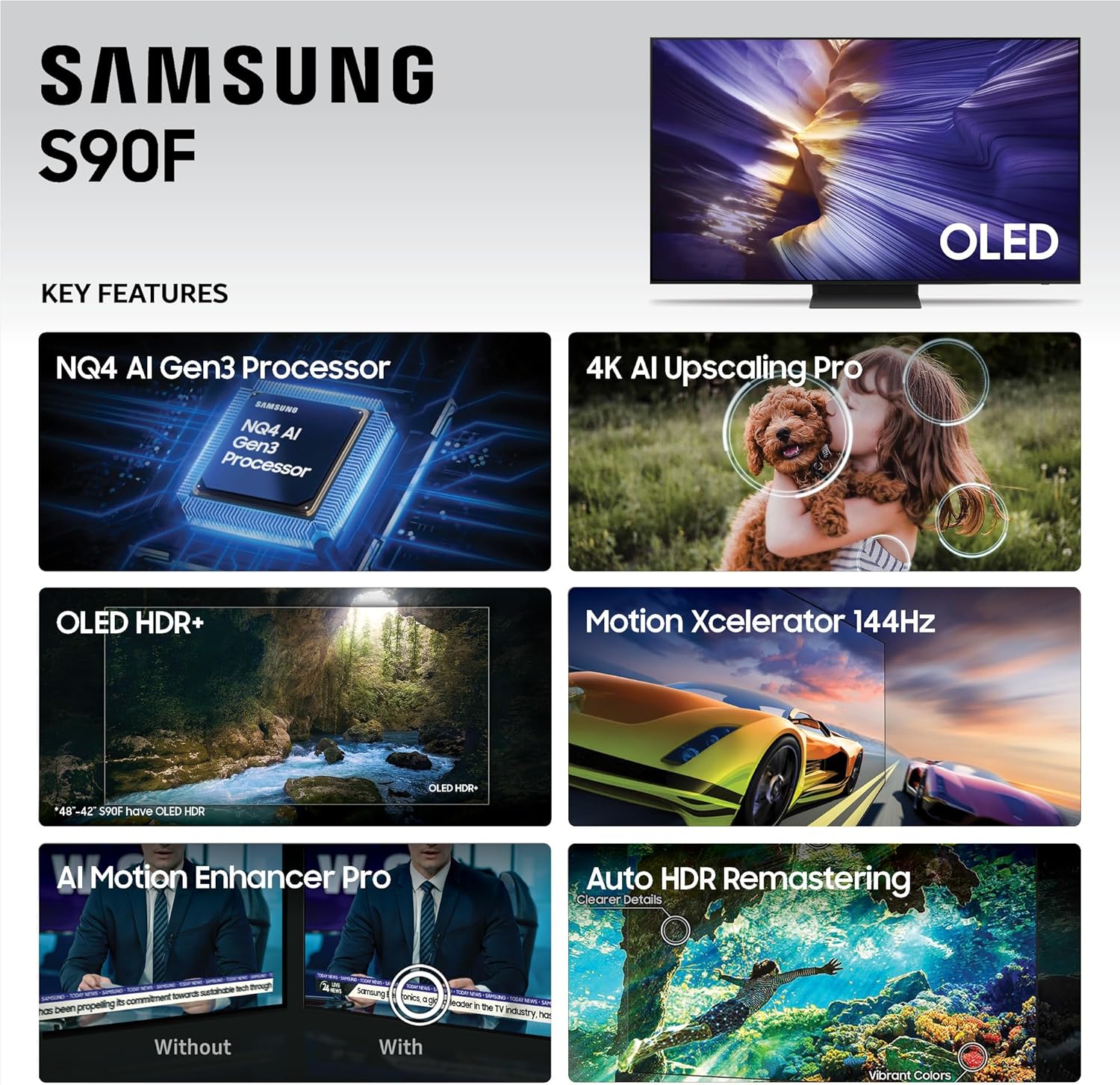
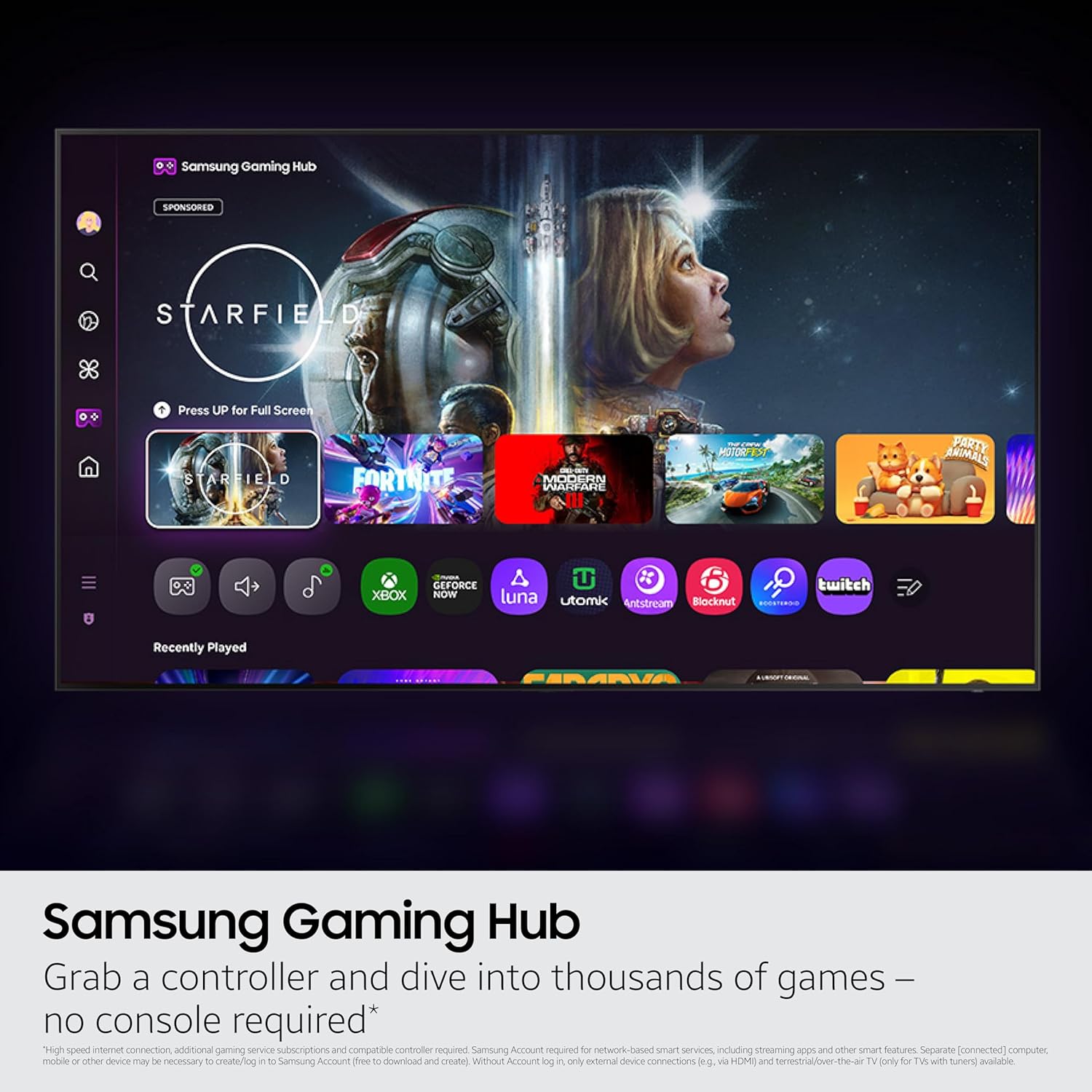
Samsung's 2025 smart platform on the S90F is a polished, fast-loading environment. The menu updates carry through to day-to-day navigation: the new volume bar is less intrusive during playback, and the last-used setting memory meaningfully reduces the inputs needed to fine-tune picture modes mid-session. App loading is quick, and the overall interface does not feel like an afterthought layered over the display hardware.
For gaming, the picture changes depending on which HDR mode you engage. Game Mode with HDR Tone Mapping Active delivers 1,000 cd/m2 on the Hallway Lights scene and 739 cd/m2 on the Yellow Skyscraper, with 308 cd/m2 on the Landscape Pool. Those are serviceable numbers. The more interesting configuration is Game Mode with Game HDR set to Advanced. In that mode, the Yellow Skyscraper measurement jumps to 1,651 cd/m2, the highest figure we recorded across all test configurations. The Landscape Pool rises to 678 cd/m2 and the Hallway Lights drops slightly to 867 cd/m2. Game HDR Advanced is clearly optimized to make HDR highlights in game environments land with maximum impact, and in practice it shows: bright explosions, neon environments, and sunlit outdoor scenes in HDR games look genuinely striking.
Input lag measurements confirmed the S90F as a top-tier gaming display: 9.2ms at 4K/60Hz and 4.8ms at 1080p/120Hz in Game Mode. Combined with VRR support up to 4K/144Hz across all four HDMI 2.1 ports, the S90F handles every current-generation console and high-refresh PC gaming source without compromise. The lag figures are competitive with dedicated gaming monitors, not just other televisions.
The trade-off between Game Mode and Filmmaker Mode is real. Game Mode reduces input lag to playable levels, but the image does not match the tonal accuracy of Filmmaker Mode with HDR Tone Mapping Active. Buyers who split their time between serious film viewing and HDR gaming will need to get comfortable switching modes, as no single configuration serves both uses equally well.
HGIG support deserves specific mention. HGIG (HDR Gaming Interest Group) tone mapping allows games to control their own HDR output rather than delegating to the television, producing more accurate results in supported titles. Samsung removed HGIG support in firmware 1125.9, a significant regression. It was restored in firmware 1133. Buyers receiving a unit with firmware below 1133 should update before gaming.
Value for Money
At $1,247.99, the S90F sits in a position that is difficult to argue against. Testing confirms its picture quality matches the S95F flagship across the majority of real-world viewing scenarios, and the S90F achieves this without the external connection box that adds both cost and installation complexity to the S95F. The practical verdict for most buyers: whichever of the two is cheaper at the time of purchase is the one to buy.
The comparison to competing OLED lineups at a similar tier is equally close. The S90F's Game HDR Advanced brightness numbers and Samsung's 2025 smart platform give it specific advantages, while competing sets offer their own. In most viewing scenarios differences are marginal, and current pricing should drive the final decision.
Six available sizes from 42 to 83 inches mean the S90F is not a one-room solution. The 42 and 48-inch options create a genuine entry point into OLED quality at more accessible price points, while the 77 and 83-inch sizes serve dedicated viewing rooms without requiring a step up to a different model entirely.
Who Should (and Should Not) Buy This
Buy it if you want S95F-level picture quality without paying the flagship premium or dealing with an external connection box. The S90F's HDR performance, perfect blacks, and six-size range make it the right choice for most buyers looking for a serious OLED television. Film enthusiasts, home theater builders, and HDR gaming enthusiasts all have a genuine reason to consider it.
Skip it if you need confirmed Dolby Vision support, as the S90F does not offer it. Also reconsider if your room receives significant direct sunlight and SDR brightness is a primary concern, since the S90F's SDR output is adequate but not class-leading in very bright environments. And if you specifically want a QD-OLED panel for its wider color gamut, you have three choices in the S90F lineup: the 55-inch, 65-inch, or 77-inch. The 42-inch, 48-inch, and 83-inch sizes use WOLED instead, which produces slightly different color characteristics.
Bottom Line
The Samsung OLED 4K S90F Smart TV at $1,247.99 is the right OLED purchase for the vast majority of buyers. The brightness numbers are among the best we have measured on an OLED panel: 1,271 cd/m2 in Filmmaker Mode and 1,651 cd/m2 on highlights in Game HDR Advanced, combined with perfect blacks and zero blooming, produce an image that is genuinely difficult to fault in a controlled-light room. The HGIG firmware regression and the absence of Dolby Vision are the only meaningful complaints, and neither will affect most buyers. If you are comparing it against the S95F, run the current prices and buy whichever is lower. This is the one I would put in my own living room.
-- Theo Chan, Hardware Testing Director
*Disclosure: As an Amazon Associate, Revuzia earns from qualifying purchases. Prices and availability are accurate as of publication and may change.*
More on Revuzia
Sony BRAVIA 8 4K OLED Review: Perfect Blacks, One Glaring Gaming Compromise
Samsung Galaxy Buds3 Pro Review: Dual-Driver Sound and Exceptional Call Quality
ASUS Vivobook S 14 OLED Review: $549.99 OLED with Battery Life That Outlasts the M3 MacBook Air