Solar Physicist Spots Three-Hour Warning Before X-Class Flare EruptsSolar Physicist Spots Three-Hour Warning Before X-Class Flare EruptsSolar Physicist Spots Three-Hour Warning Before X-Class Flare EruptsSolar Physicist Spots Three-Hour Warning Before X-Class Flare Erupts
June 1, 2026
Three hours before an X-class solar flare erupted on October 3, 2024, NASA's Interface Region Imaging Spectrograph (IRIS) was already watching the signs accumulate: plasma temperature climbing, turbulence rising, charged gas accelerating outward from the sun's surface in a slow,
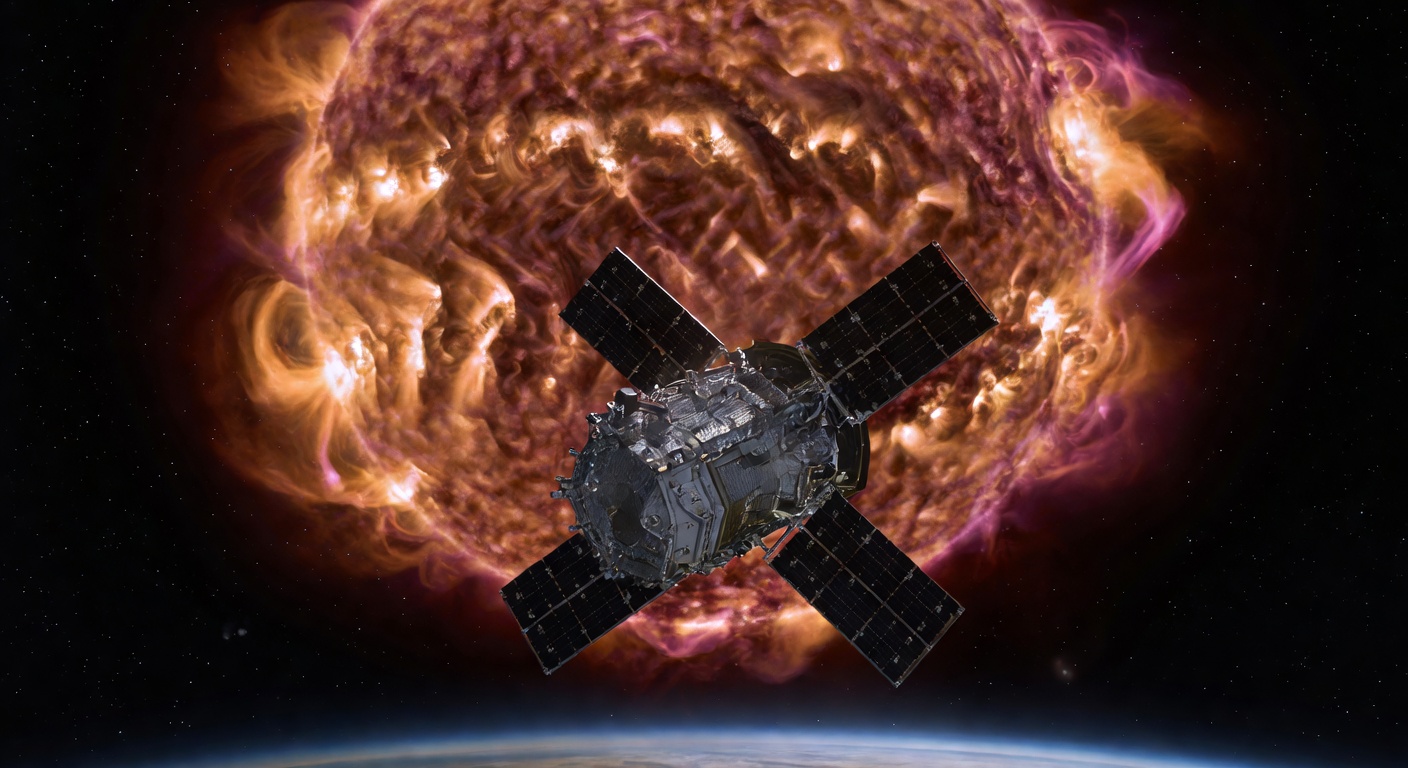
Three hours before an X-class solar flare erupted on October 3, 2024, NASA's Interface Region Imaging Spectrograph (IRIS) was already watching the signs accumulate: plasma temperature climbing, turbulence rising, charged gas accelerating outward from the sun's surface in a slow, synchronized crescendo. A new paper by solar physicist Louis Seyfritz of the New Jersey Institute of Technology, submitted to arXiv on May 8, 2026, documents what may be the most detailed pre-flare warning sequence ever recorded. The genuinely consequential piece, however, is not the three-hour lead time itself but the fact that the only barrier between this physics and an operational early-warning system is funding, not science.
The stakes are concrete. X-class flares, the most energetic category on the solar flare scale, release electromagnetic radiation across the full spectrum and can accelerate electrons, protons, and heavier ions to near the speed of light. For astronauts outside Earth's protective magnetosphere, a major flare without warning is a radiation emergency with no safe exit. For satellite operators and power-grid managers, the first sign of an X-class event currently arrives with almost no actionable lead time. A reliable three-hour precursor window would change that calculus entirely.
What the Researchers Found
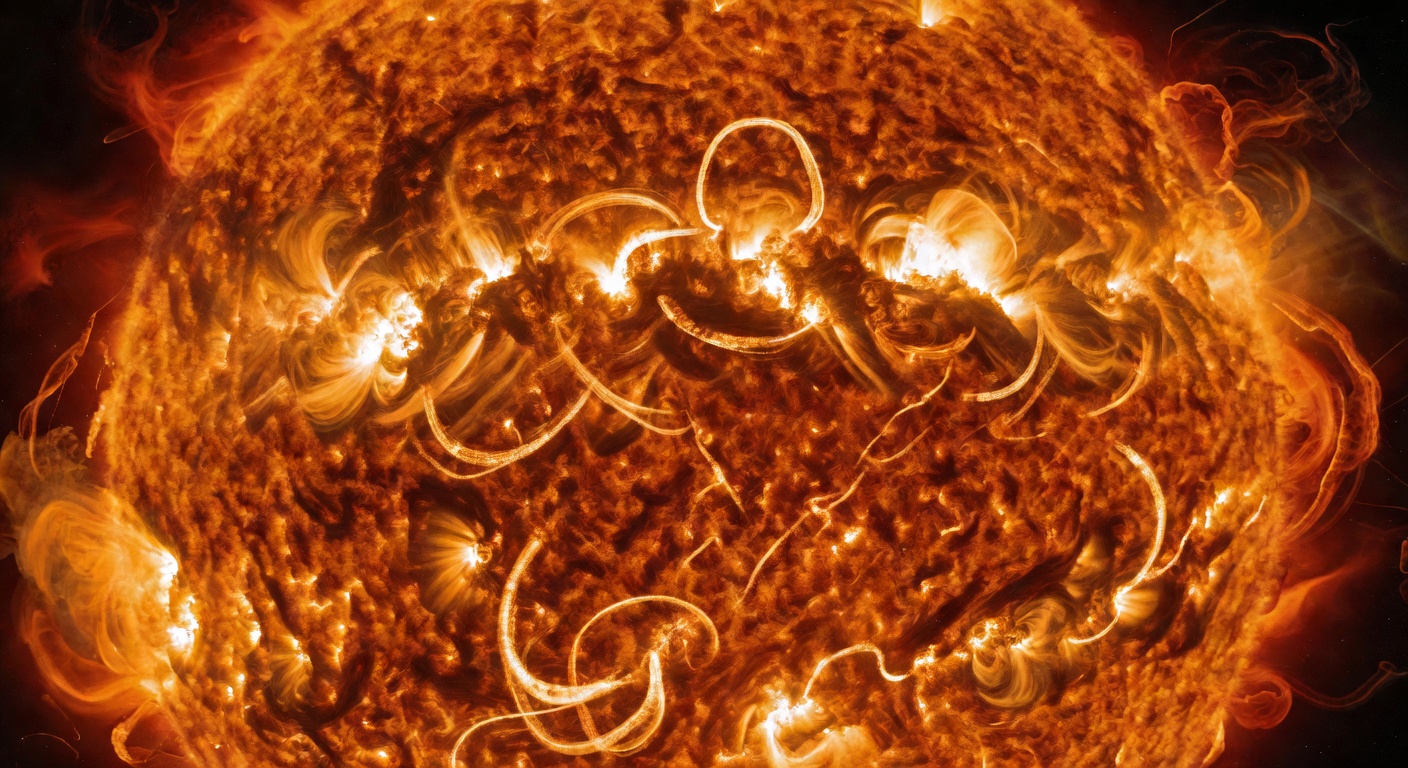
In the three hours before the October 3, 2024 X-class flare, Seyfritz and collaborators tracked three physical parameters in real time: plasma temperature, turbulence (the chaotic motion of ions within the plasma), and plasma velocity directed away from the solar surface. All three increased gradually and continuously across the full three-hour window, a sustained pre-eruption drift rather than a sudden spike.
Within the final hour before the flare, the temperature and turbulence tracers began moving in synchrony, a coordinated signal the researchers interpret as the active region approaching some threshold of instability. Then, roughly 15 to 20 minutes before the flare, all three parameters jumped sharply: temperature spiked, turbulence intensified, and the outward plasma velocity surged. The flare followed.
Overlaid on this gradual ramp-up were two distinct periodic oscillations. Over the entire three-hour observation window, the researchers detected consistent rhythmic fluctuations cycling on two timescales — roughly every 8 to 10 minutes and again every 18 to 21 minutes. These were not random noise. Emily Mason, a solar physicist at Predictive Science Inc. in San Diego who reviewed the work independently, notes the two periodicities could hint at more than one physical mechanism operating in the plasma before the eruption — suggesting the pre-flare state may be a multi-layered instability rather than a single building process. That layered picture, if it holds across multiple events, would give forecasters multiple independent signals to monitor rather than one.
The Methodology
The observations were made possible by IRIS, a NASA small explorer mission that, according to NASA, operates in a sun-synchronous low Earth orbit and carries a multi-channel imaging spectrograph with ultraviolet capability fine enough to resolve structures only a few hundred miles apart in the sun's atmosphere.
The instrument was pointed at an active solar region that had already produced a strong flare a few days before October 3, making it a known high-activity zone. The key spectroscopic tracer in the analysis was silicon IV ion emission, which traces plasma in the transition region, the boundary layer between the sun's visible surface (the photosphere) and the far hotter outer corona. The transition region is a physically peculiar zone: below it, gravity dominates the shapes of plasma structures; above it, dynamic electromagnetic forces dominate. Temperature in this layer jumps rapidly toward nearly one million kelvin as helium becomes fully ionized, making it a sensitive diagnostic layer for energy building in the atmosphere beneath a forming flare.
By tracking the Doppler shifts and line widths in silicon IV emission, the team extracted all three physical parameters (temperature, turbulence, velocity) from a single pointed observation. The paper was submitted to arXiv.org on May 8, 2026, and has not yet undergone formal peer review.
Why It Matters
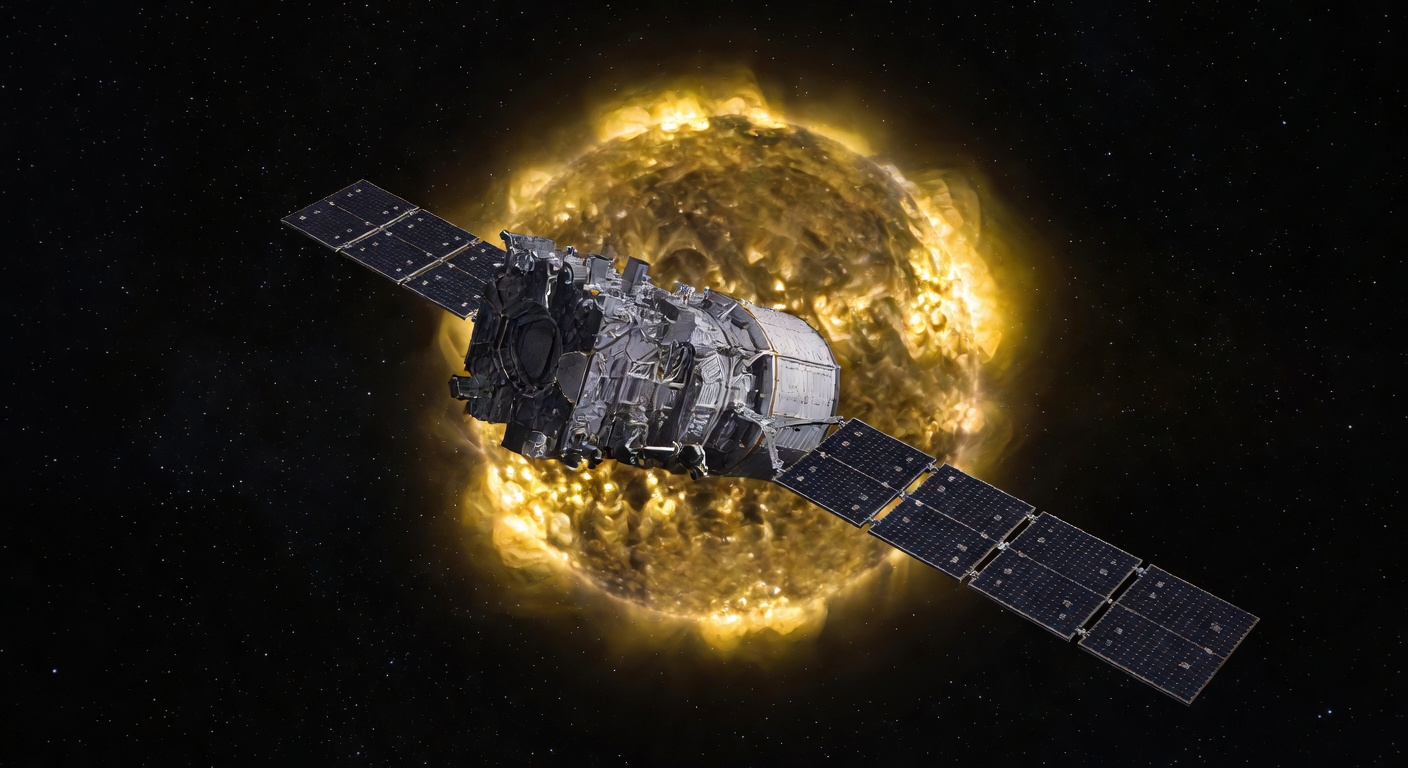
Seyfritz is direct about the application he has in mind. "That's always kind of the goal when we talk about pre-flaring. If we can predict when a huge solar flare is going to happen, that means we can protect [astronauts] from any harmful radiation." A three-hour lead time is operationally meaningful: it is long enough to shelter crew aboard a spacecraft or space station, to reorient sensitive satellite components, and to pre-position power-grid operators for potential geomagnetic storm conditions downstream.
The historical record of what happens without warning is instructive. The 1859 Carrington Event, the largest recorded geomagnetic perturbation, disabled parts of the US telegraph network and electrically shocked operators. Major geomagnetic storms in the early 2000s caused documented satellite anomalies and prompted regulators to revisit space weather preparedness standards for aviation and power infrastructure.
The specific value of the NJIT findings is not just the lead time but the specificity of the precursor signature. Previous approaches have largely relied on statistical correlations between magnetic field configurations and eruption probability. What Seyfritz's team documented is a mechanistic sequence: rising plasma parameters, periodic oscillations with distinct physical signatures, and a sharp jump roughly 20 minutes before eruption. A sequenced, multi-parameter signature is potentially far more reliable as an alarm trigger than a single threshold crossing, because it is harder for the sun's ordinary variability to mimic accidentally.
What the research community does have is an honest accounting of where the science has been stuck. Seyfritz puts it plainly: "Pre-flaring is not very well documented because people like to see the stuff blow up." The observational bias is real: the most dramatic data in flare research has historically come from the eruption itself, not from the quieter hours before it.
Mason frames the deeper scientific gap clearly. "One of the biggest questions about flares is what triggers them. In nature, most systems like to remain stable, so what makes the magnetic field on the sun destabilize to the point that runaway energy release is the next step?" Current solar physics can characterize when a region looks dangerous in a broad statistical sense, but the specific trigger mechanism remains unresolved. The NJIT work chips at that problem from a new angle: if the pre-flare plasma state has a reproducible signature, that signature is a clue about the physics of the trigger, not just a forecasting tool.
Mason adds: "Observations like this one, that show what happens before that huge release of energy, are critical to tease out that trigger."
Limitations and Caveats
The paper has significant constraints. The most fundamental is sample size: this is a single-event case study centered on one X-class flare from one active region on one day. A pattern observed once is a hypothesis, not a predictive model.
The second major gap is the absence of a false-positive control. Mason explicitly flags this: the study has not yet checked whether similar oscillations appear in active regions that build tension and then do not erupt. If the 8-minute and 20-minute periodic signatures are common in high-activity regions regardless of whether a flare follows, their predictive value collapses. That validation step is standard in forecasting science and has not yet been completed.
The preprint status itself is a caveat: the paper was submitted to arXiv on May 8, 2026, and has not completed formal peer review. ArXiv preprints are standard in physics and solar science for rapid dissemination, but independent expert scrutiny of the methodology, data reduction, and statistical claims has not yet occurred.
What Comes Next
The immediate scientific requirement is replication across a larger sample of X-class events, and ideally across a range of flare magnitudes, to determine whether the three-hour precursor pattern holds as a general phenomenon or was specific to the October 3, 2024 event.
Mason is candid about what operational forecasting would require beyond the science: "I am confident that the oscillations reported here have the ability to predict major flares, but we would need a mission that could observe the whole sun at once (and probably be able to conduct the analysis onboard) in order to be useful in a predictive capacity. The technology exists. It's a matter of funding." The current IRIS instrument observes a single point in an active region, pointed by a team that already knew where to look. A forecasting system cannot be built on targeted observations of pre-identified danger zones; it requires continuous, full-disk spectroscopic monitoring with onboard analysis fast enough to issue warnings in real time. That is an engineering and budgetary problem, not a physics problem.
For space mission planners and satellite operators: if the Seyfritz findings replicate, the operational case for a full-disk solar spectrograph with onboard analysis becomes quantifiable. A three-hour warning window translates to roughly 180 minutes of actionable lead time to shelter astronauts, reorient vulnerable spacecraft components, or pre-position grid operators ahead of geomagnetic disturbances. The science community needs the replication data to make that budget case stick.
The most striking element of this story is not the three-hour lead time or the synchronized oscillations. It is Mason's observation that the technology to build an operational warning system already exists and that the only thing preventing its construction is a funding decision. Solar flare prediction has long been framed as a hard physics problem. Seyfritz's paper, if it replicates, reframes it as a hard budget problem - which is a much more tractable kind of hard.
-- Zara Velez, Emerging Technology Editor
Sources: Science News: Solar flare warning signs - Louis Seyfritz et al., New Jersey Institute of Technology, arXiv preprint submitted May 8, 2026