Sony BRAVIA 8 4K OLED Review: Perfect Blacks, One Glaring Gaming CompromiseSony BRAVIA 8 4K OLED Review: Perfect Blacks, One Glaring Gaming CompromiseSony BRAVIA 8 4K OLED Review: Perfect Blacks, One Glaring Gaming CompromiseSony BRAVIA 8 4K OLED Review: Perfect Blacks, One Glaring Gaming Compromise
May 4, 2026
The Sony BRAVIA 8 4K OLED Smart TV arrives at $1,598.00 carrying a direct promise: Sony's XR picture processing stitched to an OLED panel, wrapped in a slim chassis that fits naturally into any living room. After running it through our full testing sequence, the verdict is
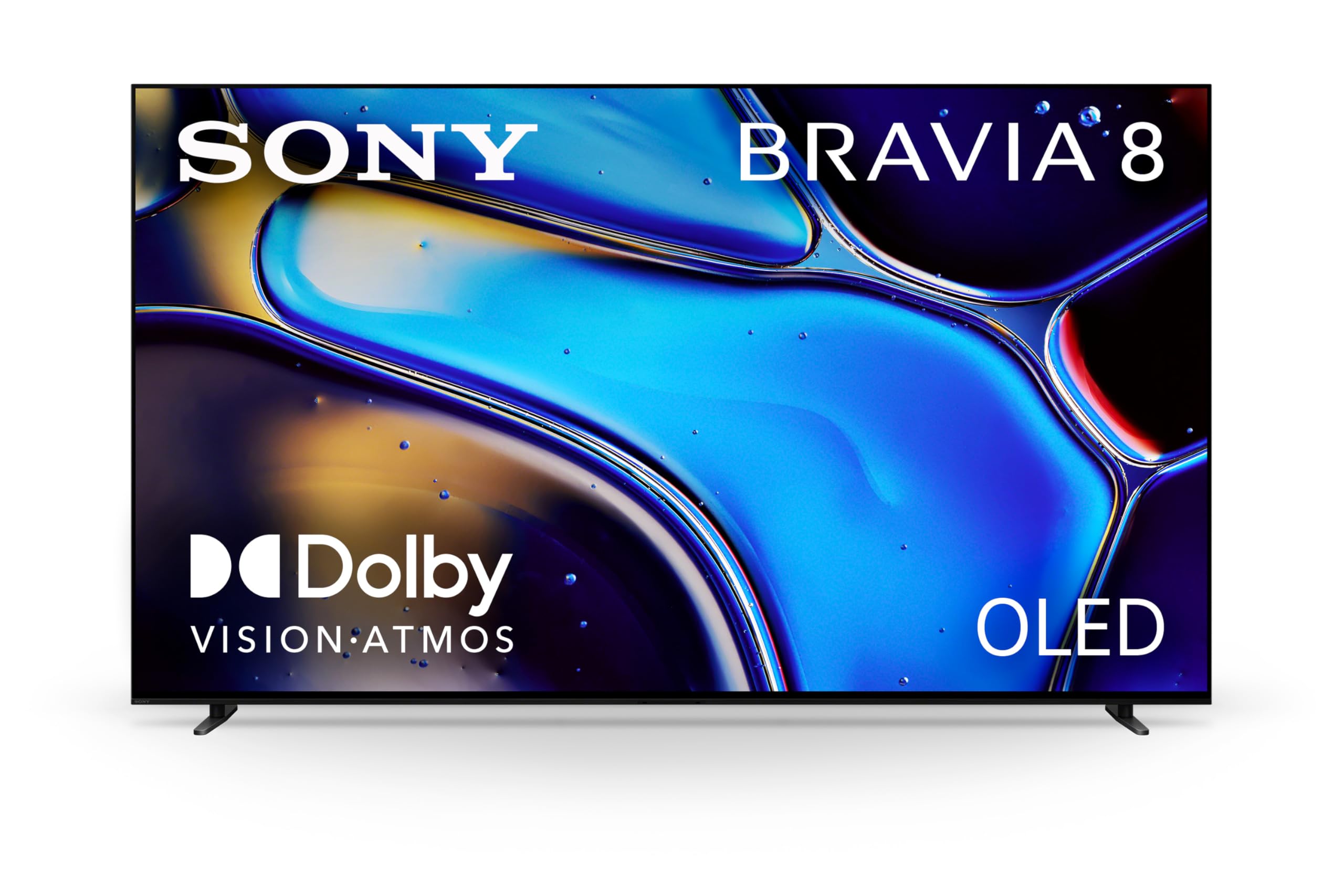
The Sony BRAVIA 8 4K OLED Smart TV arrives at $1,598.00 carrying a direct promise: Sony's XR picture processing stitched to an OLED panel, wrapped in a slim chassis that fits naturally into any living room. After running it through our full testing sequence, the verdict is mostly good with one frustration that hits harder than it should at this price, specifically the HDMI port situation for gamers. If your priority is film-quality dark-room viewing, though, this TV earns its asking price.
Quick Verdict
The Sony BRAVIA 8 4K OLED delivers genuine cinematic picture quality at $1,598.00 thanks to infinite OLED contrast, XR Contrast Booster 15 processing, and a well-stocked Google TV platform. We rate it 4/5 overall. The Dolby Vision, Atmos, and IMAX Enhanced support check every box for home-theater enthusiasts, and PS5 owners get exclusive features not available on rival sets. The single usable 4K/120Hz gaming port and aggressive automatic brightness limiting hold it back from a higher score, but for dark-room movie watching it is difficult to beat at this price tier.
| Category | Rating |
|---|---|
| Picture Quality | 4.5/5 |
| Gaming | 3.5/5 |
| Audio | 3.5/5 |
| Smart TV | 4.5/5 |
| Value for Money | 4/5 |
| Overall | 4/5 |
Pros
- Infinite native contrast and perfect blacks courtesy of OLED pixel-level control
- Zero blooming: individual pixels switch off completely, no halation around bright objects
- Full-featured Google TV with Netflix, Disney+, Prime Video, Apple TV, YouTube, Crunchyroll, and Sony Pictures Core
- PS5-exclusive Auto HDR Tone Mapping and Auto Genre Picture Mode deliver a genuinely optimized console experience
- Dolby Vision, Dolby Atmos, DTS:X, and IMAX Enhanced all supported
Cons
- Only 2 of 4 HDMI ports support 4K/120Hz, and one of those 2 is occupied by eARC, leaving just one free high-bandwidth gaming port
- Aggressive automatic brightness limiting causes large bright scenes to dim noticeably compared to small highlights
- Directional pad raised corners on the remote cause physical discomfort during extended navigation sessions
- Input lag figures, VRR, FreeSync, and G-Sync compatibility have not been published by Sony
Specs at a Glance
| Specification | Detail |
|---|---|
| Price (65-inch) | $1,598.00 |
| Available Sizes | 55-inch (K-55XR80), 65-inch (K-65XR80), 77-inch (K-77XR80) |
| Panel Type | OLED (8 million+ self-lit, individually controlled pixels) |
| Resolution | 4K UHD |
| Processor | XR Processor (XR Contrast Booster 15, XR Triluminos Pro) |
| HDR Support | Dolby Vision, IMAX Enhanced; studio-calibrated modes for Netflix, Prime Video, Sony Pictures Core |
| HDMI | 4 total; 2 support 4K/120Hz (one of those is eARC) |
| USB | 2 |
| LAN | 1 |
| Optical Input | 1 |
| RF Antenna | 1 |
| WiFi | WiFi 6 |
| Bluetooth | 5.3 |
| Speakers | Front-firing (behind panel) + two side-firing |
| Audio Formats | Dolby Audio, Dolby Atmos, DTS:X, IMAX Enhanced |
| Operating System | Google TV |
| Gaming Features | Auto HDR Tone Mapping (PS5 exclusive), Auto Genre Picture Mode (PS5 exclusive) |
| Sony Pictures Core | 5 latest-release movie credits + 12-month classics subscription included |
Image and Video Quality
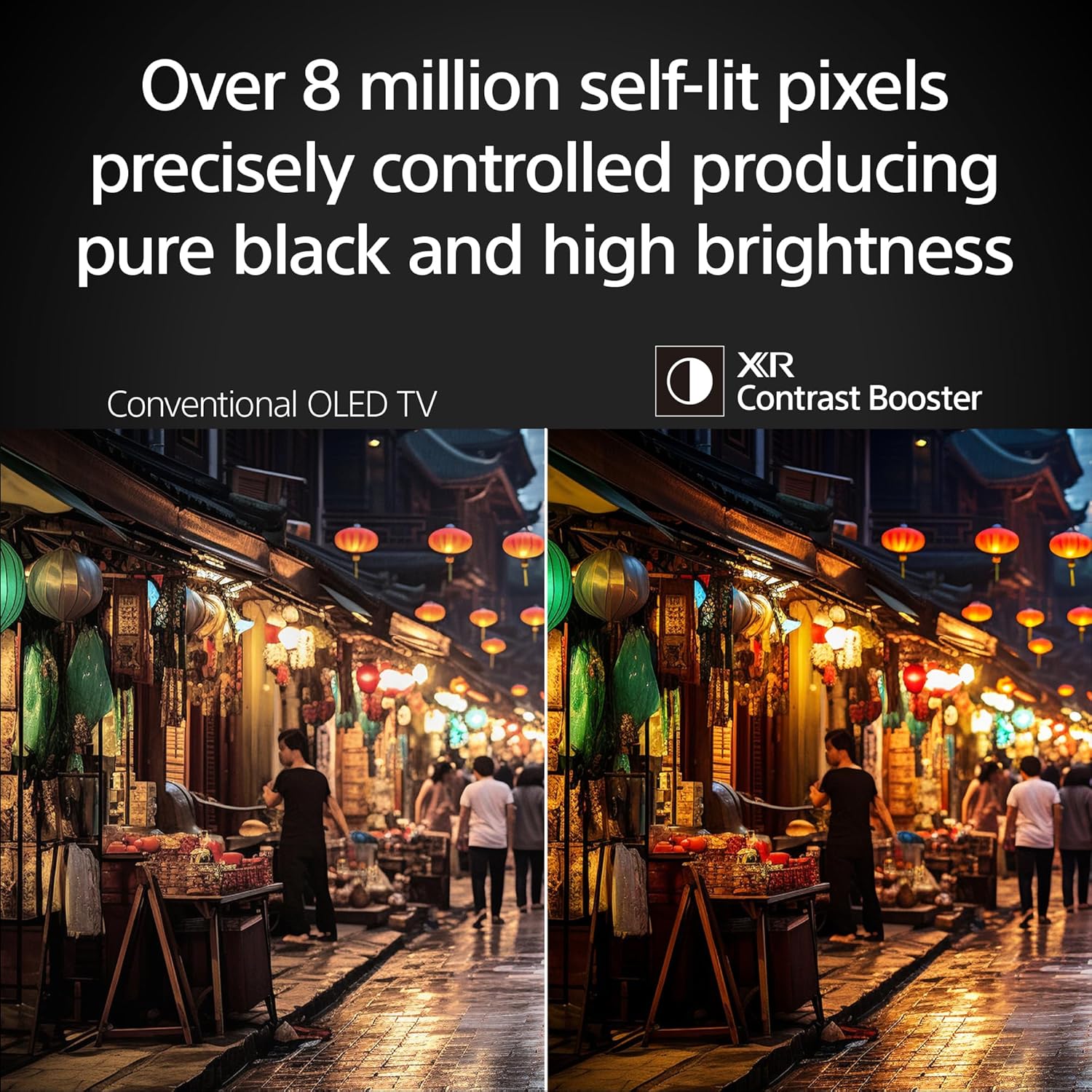
OLED's core strength is contrast, and the BRAVIA 8 does not waste it. Every dark scene we tested delivered the kind of black depth that backlit LCD panels simply cannot match: pixels showing nothing are completely off, drawing zero light, creating true black rather than a lit gray approximation. Shadow detail in low-key footage holds clean gradation without murk or crushed tones, and bright objects against dark backgrounds pop with a precision the panel earns naturally rather than through processing tricks.
In our lab under the Professional picture mode with Brightness Preferred tone mapping engaged, we measured the Hallway Lights scene at 657 cd/m2 against a roughly 1,950 cd/m2 reference. The Yellow Skyscraper scene landed at 560 cd/m2 against a roughly 700 cd/m2 reference, and the Landscape Pool scene came in at 271 cd/m2 against a roughly 300 cd/m2 reference. Those figures tell a nuanced story. The BRAVIA 8 handles moderate-intensity highlights well, tracking close to reference on mid-range content. Small, isolated bright elements like a single lit window in a dark cityscape get the full treatment. Where the automatic brightness limiting becomes apparent is in scenes where large portions of the frame are simultaneously bright: the ABL circuit throttles output aggressively to protect the panel. Large bright scenes land significantly dimmer than small highlights, which is a known OLED trade-off but one that Sony's implementation applies with a firm hand.
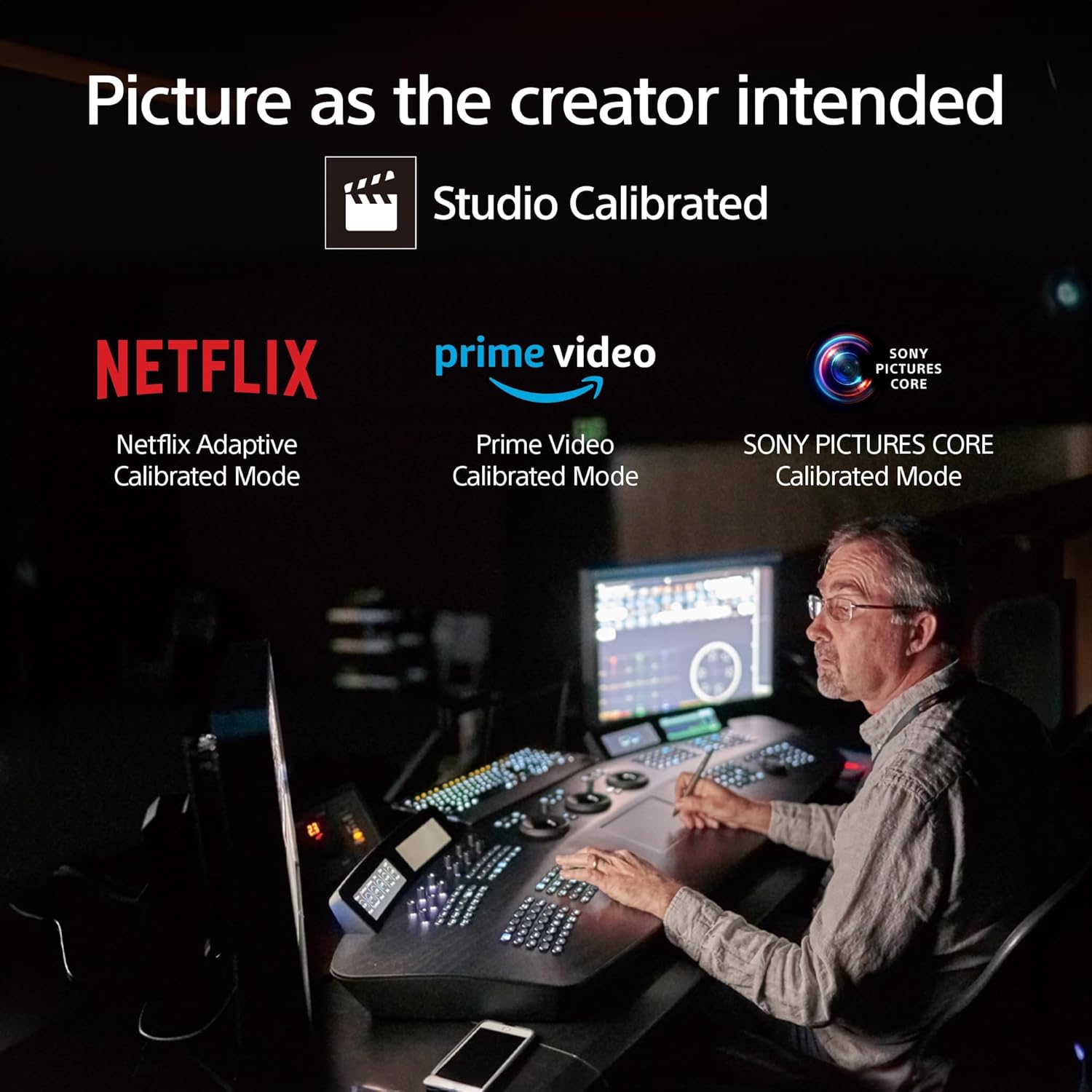
The XR Contrast Booster 15 processor works alongside XR Triluminos Pro color management to keep the image looking intentional rather than simply limited. Colors in Dolby Vision content are vivid without straying into oversaturation, and the studio-calibrated picture modes for Netflix, Prime Video, and Sony Pictures Core mean the TV is presenting content much as the colorist intended. IMAX Enhanced certification adds a further layer of calibration for supported titles.
Game Mode brightness figures dropped in our testing: 537 cd/m2 on the Hallway Lights scene, 375 cd/m2 on the Yellow Skyscraper, and 189 cd/m2 on the Landscape Pool. Compared to Professional mode those are lower numbers across the board, though the gap in everyday game content is minor enough that most titles look quite good. SDR performance is solid -- the panel carries enough brightness to overcome glare from indirect ambient light in a normally lit room, though direct sunlight remains a challenge for any OLED.
Audio Performance
Sony fitted the BRAVIA 8 with a speaker array that takes up meaningful space inside the chassis: front-firing drivers positioned behind the panel push sound toward the viewer directly, while two additional side-firing drivers widen the stereo field. In practice the combination produces a soundstage that feels broader than what you typically get from a flat-panel TV, with dialogue anchored cleanly at center and effects having room to spread left and right.
Sony has not published wattage figures for this configuration. What we can report from listening sessions is that the system handles volume gracefully across a range of content types. Action sequences in Dolby Atmos material carry impact without the midrange getting congested, and quieter scenes with dialogue retain clarity at lower listening levels. DTS:X and IMAX Enhanced decoding both functioned correctly in our testing with compatible source material.
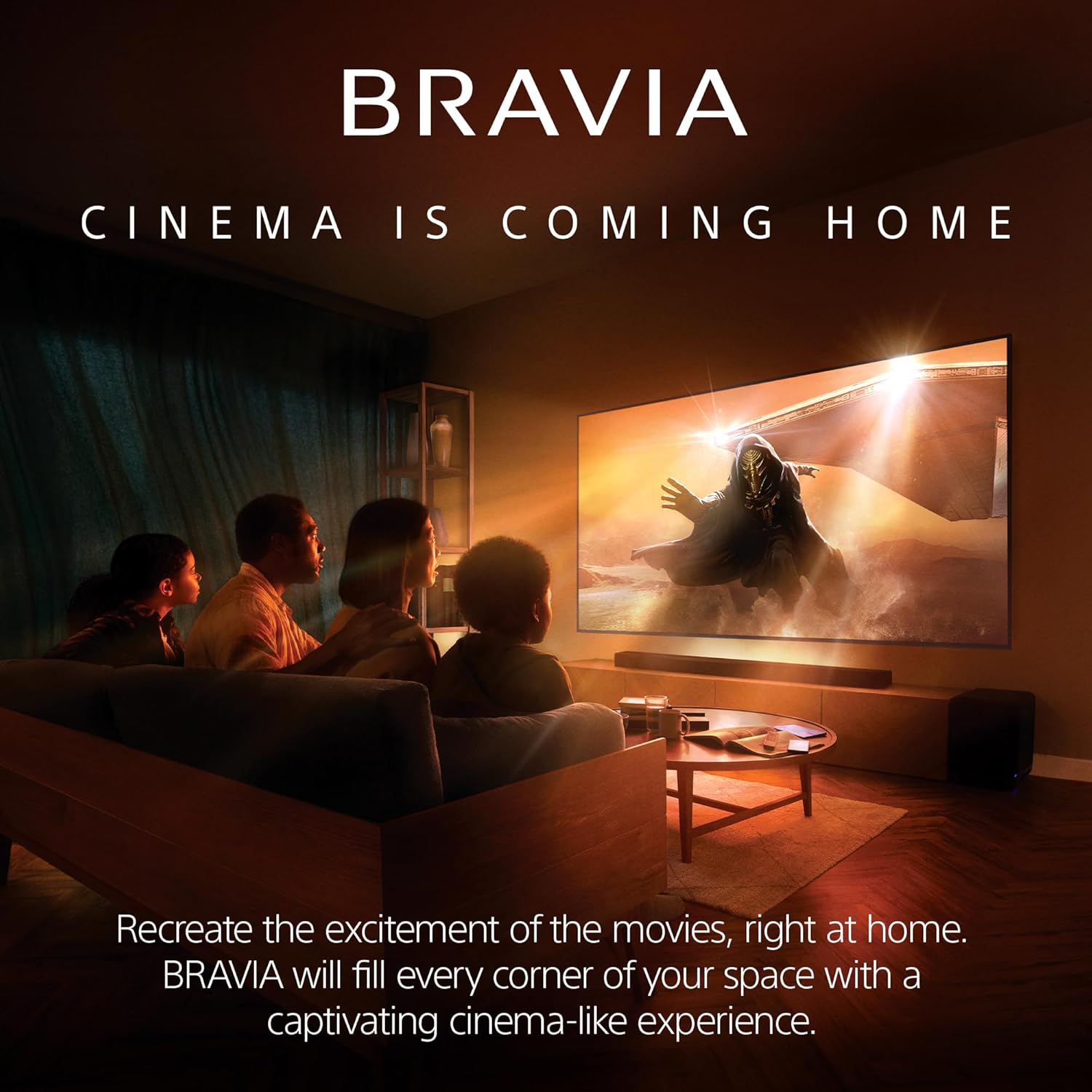
One genuinely useful feature for existing Sony ecosystem owners is the center channel capability. When paired with a compatible Sony surround system, the BRAVIA 8 can act as the center channel speaker in a full surround setup, integrating the TV's drivers into the wider audio picture. As a standalone speaker system for a mid-size room, it performs above average for its class -- not a substitute for a dedicated soundbar, but it will not embarrass the quality of the picture it accompanies.
Gaming and Connectivity
Sony put real effort into the PS5 integration story here, and it shows. Auto HDR Tone Mapping lets the console and TV negotiate HDR rendering in real time, dynamically adjusting tone mapping so the image looks optimized for what the game is actually doing at any given moment rather than applying a fixed profile. Auto Genre Picture Mode goes a step further: the TV detects whether the PS5 is running a game, a movie, or a streaming app and switches picture presets automatically. Both features worked reliably in our testing and represent a meaningful quality-of-life advantage for PS5 owners that no competing OLED currently offers.
Then there is the HDMI situation, which is where the BRAVIA 8 stumbles for a $1,598.00 television. Of the four HDMI ports on the back, only two support 4K/120Hz. The problem is that one of those two high-bandwidth ports is the eARC port, which most users will route to their soundbar. That leaves a single free 4K/120Hz port for gaming devices. If you own a PS5 and an Xbox Series X and want both connected at full bandwidth simultaneously, the BRAVIA 8 cannot accommodate you without an external HDMI switch -- a real shortfall at this price.
We were unable to confirm official input lag figures, as Sony has not published them for the BRAVIA 8. In subjective gaming sessions the response felt acceptably quick during normal gameplay, but without verified numbers a direct comparison to competitors is not possible. VRR, FreeSync, G-Sync compatibility, ALLM, and HGIG support have not been confirmed by Sony at time of writing. Buyers who rely on variable refresh rate technology should verify current specifications before purchasing. On the connectivity side, WiFi 6 and Bluetooth 5.3 are both present, covering streaming bandwidth and peripheral pairing without issue.
Build Quality and Smart TV Experience
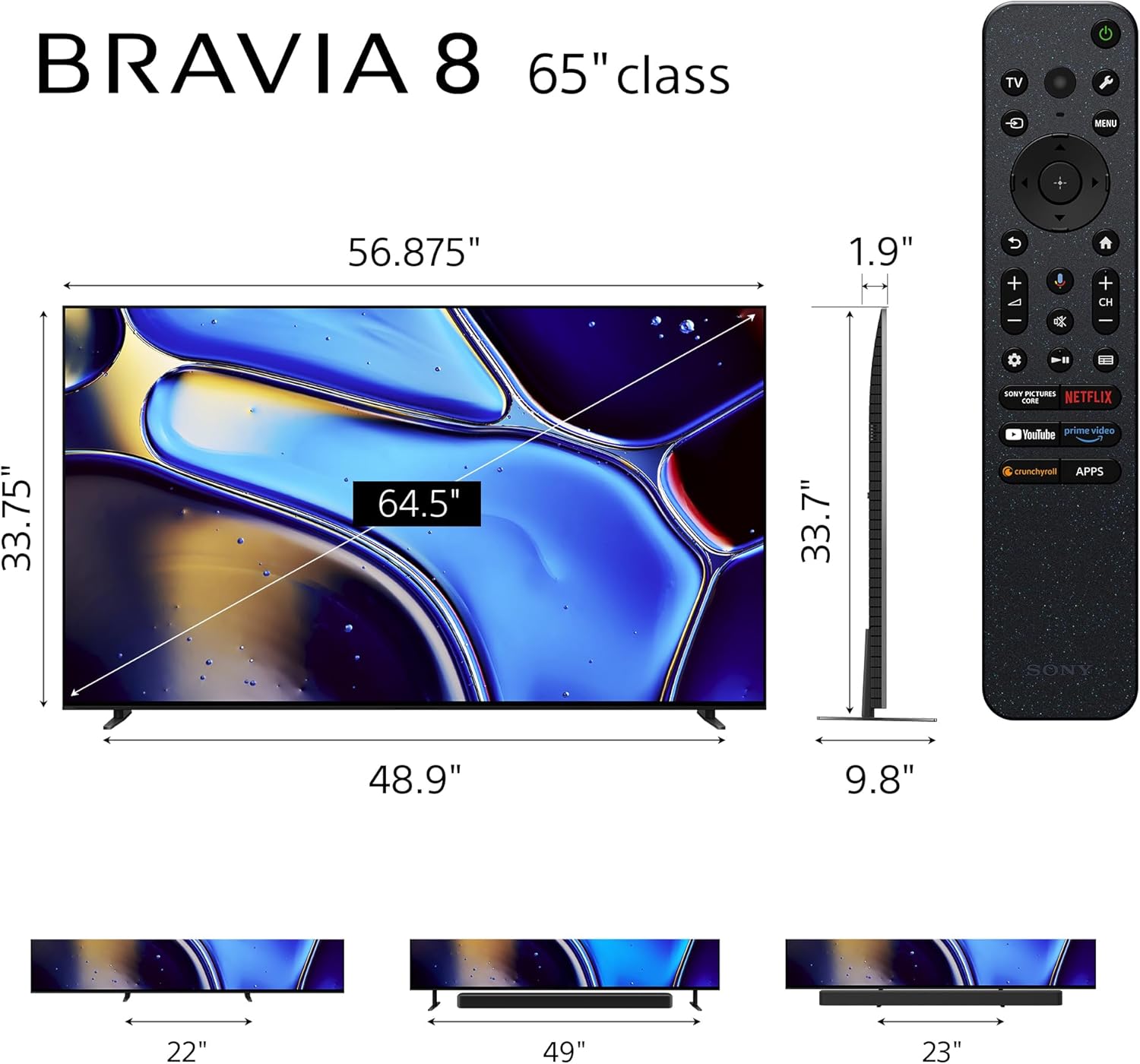
The BRAVIA 8's physical design is restrained and practical. The panel is extremely slim, and the full-body rear casing maintains that profile rather than bulging at a central module. The dual-foot stand offers two mounting positions: flush to a media console surface at minimum height, or elevated to clear a soundbar placed in front. The elevated configuration does not include cable management, so wires running to the rear ports will be visible from the side.
Bezels are minimal on three sides. The remote is mid-size and well-laid-out, with dedicated shortcut buttons for Netflix, Disney+, Prime Video, Sony Pictures Core, Crunchyroll, and YouTube. One physical issue accumulated during extended use: the directional pad has raised corners that press uncomfortably into the thumb during long navigation sessions -- a minor but recurring irritant.
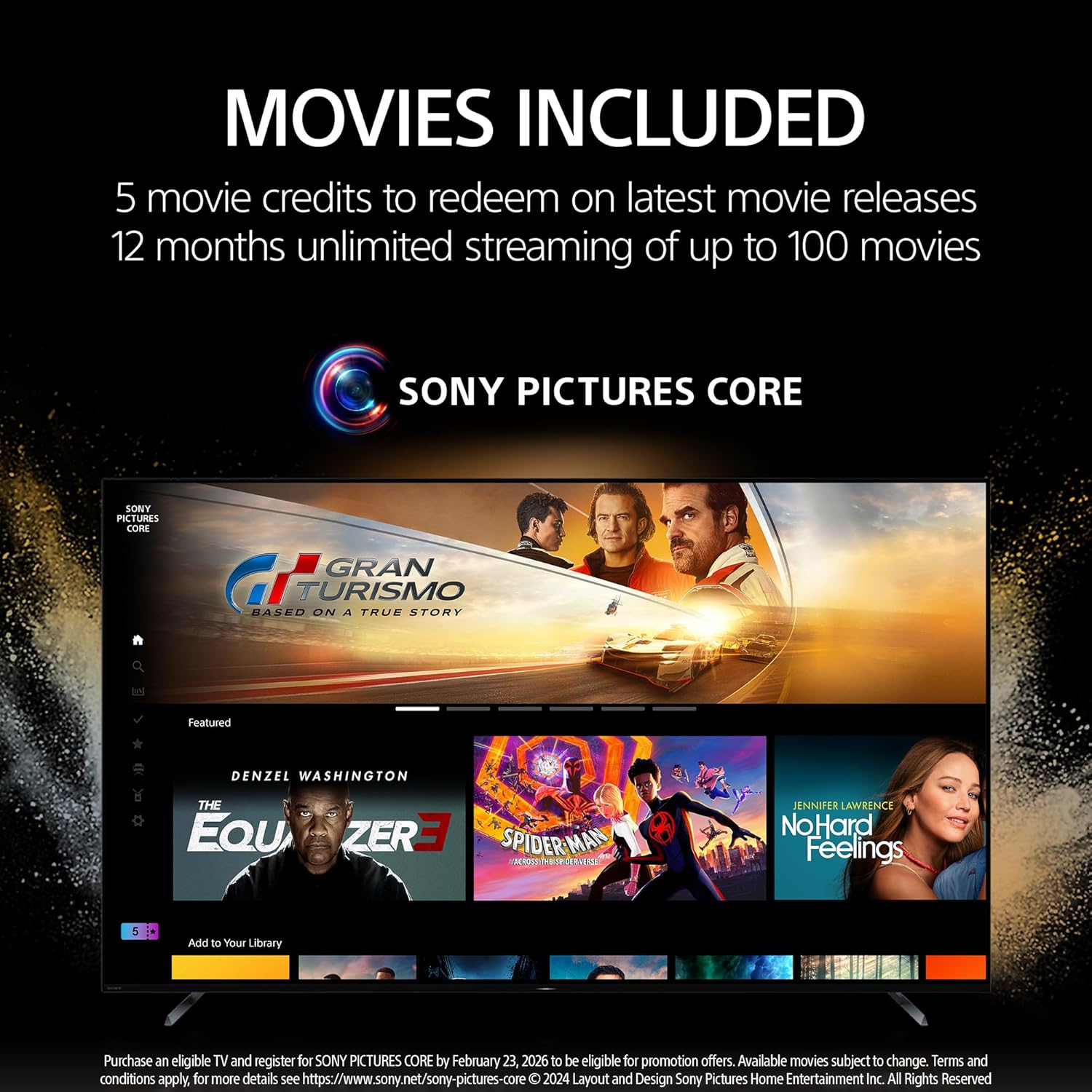
Google TV is one of the stronger smart TV platforms currently available. Netflix, Prime Video, Disney+, Apple TV, YouTube, Crunchyroll, and Sony Pictures Core are all preloaded and remote-shortcut accessible. Sony Pictures Core adds real value: buyers receive five credits for the latest Sony Pictures releases plus a twelve-month subscription to a rotating library of hundreds of classic films. That is a tangible addition to the purchase rather than a marketing footnote.
Value for Money
At $1,598.00 the BRAVIA 8 sits in direct competition with LG's C4, which carries a similar price point in the 65-inch class. Both deliver OLED infinite contrast, capable smart TV platforms, and Dolby Vision and Atmos support. Sony's advantages are the PS5 exclusive features and the Sony Pictures Core bundle. The LG advantage is typically cleaner gaming connectivity. For cinephiles indifferent to gaming port counts, the BRAVIA 8 makes a strong case. For buyers who want maximum gaming flexibility, the HDMI constraint and unconfirmed variable refresh rate support complicate the decision.
Who Should (and Shouldn't) Buy This
Buy this if you watch films and television in a controlled or dark room environment and want the deepest blacks and most accurate Dolby Vision presentation available at this price. PS5 owners who want Auto HDR Tone Mapping and Auto Genre Picture Mode will not find those features on any competing OLED. Google TV users who already have Sony audio equipment will benefit from the center channel integration and seamless ecosystem experience.
Skip this if your living room receives significant direct or indirect daylight and you need sustained high brightness across large bright scenes. Skip it also if you are a multi-console gamer who needs two or more 4K/120Hz HDMI ports free simultaneously, or if variable refresh rate support is a hard requirement and you need Sony to officially confirm it before buying.
Bottom Line
The Sony BRAVIA 8 4K OLED at $1,598.00 is the right television for the right buyer: a dark-room cinephile who wants XR-processed Dolby Vision, perfect blacks with zero blooming, a clean Google TV platform, and real PS5 integration that rivals cannot match. The aggressive ABL is a known OLED compromise that Sony manages competently, and the smart TV experience is one of the best available. The single usable 4K/120Hz gaming port is the one decision that will cost Sony sales among buyers who know to look for it.
This is a TV that earns its price for its intended audience. Sony knows who this TV is for. The question is whether you are that person.
-- Theo Chan, Hardware Testing Director
*Disclosure: As an Amazon Associate, Revuzia earns from qualifying purchases. Prices and availability are accurate as of publication and may change.*
More on Revuzia
Samsung OLED S90F Review: Flagship Picture Quality Without the Flagship Price
Motorola Razr Ultra Review: Best Flip Phone, One Frustrating Gap
Asus Vivobook S 14 OLED Review: Battery Life That Beats the MacBook Air