Sony WH-1000XM6 Review: Best-in-Class Noise Cancellation Returns With a Folding HingeSony WH-1000XM6 Review: Best-in-Class Noise Cancellation Returns With a Folding HingeSony WH-1000XM6 Review: Best-in-Class Noise Cancellation Returns With a Folding HingeSony WH-1000XM6 Review: Best-in-Class Noise Cancellation Returns With a Folding Hinge
August 31, 2026
The Sony WH-1000XM6 Wireless Noise Canceling Headphones arrives at $398.00 with a promise of flagship-tier noise cancellation and a battery that stretches well past the workday. We spent our testing window commuting, working from noisy cafes, and taking calls on the move, and
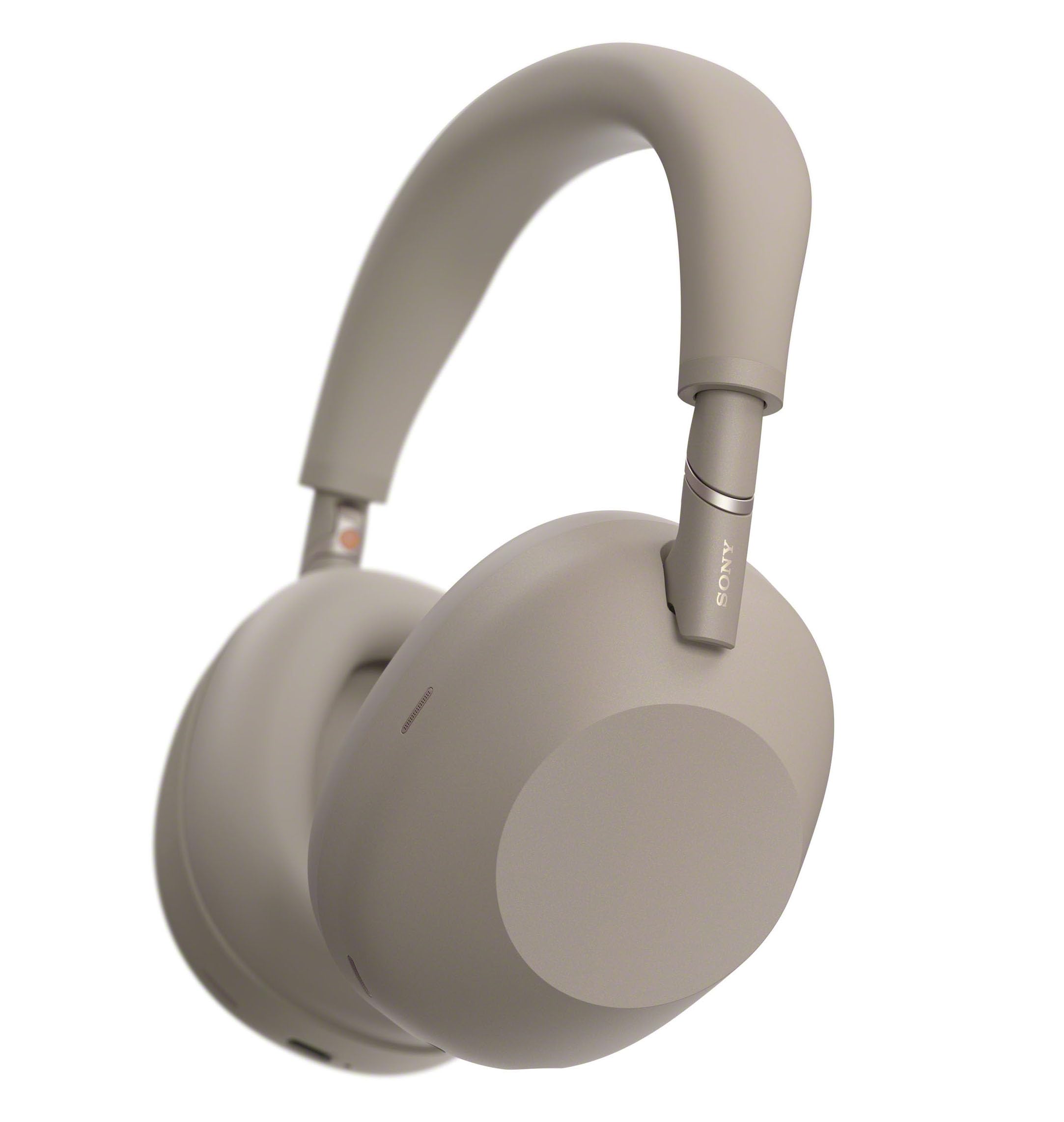
The Sony WH-1000XM6 Wireless Noise Canceling Headphones arrives at $398.00 with a promise of flagship-tier noise cancellation and a battery that stretches well past the workday. We spent our testing window commuting, working from noisy cafes, and taking calls on the move, and the headline upgrades, a new HD Noise Canceling Processor QN3 that Sony says runs seven times faster than the QN1 chip in the previous generation, and a 12-microphone array dedicated to noise cancellation, show up immediately in how the XM6 handles chaotic environments. This is also the first XM-series flagship in three years to bring back a folding hinge, after the XM5 moved to a fixed, non-folding design. Between the smarter processor, the expanded mic array, and the return of portability, the XM6 reads less like an iterative refresh and more like Sony correcting course.
Quick Verdict
The WH-1000XM6 is the noise-canceling headphone to beat right now, and at $398.00 it earns that position with a faster ANC processor, a genuinely improved 12-mic array, and battery life that outran its own rated spec in our testing. We measured performance that consistently edged out the Bose QuietComfort Ultra in real-world noise, and the return of the folding hinge makes this the most travel-friendly XM headphone in years. The only real hesitation is the price jump over the XM5 and the continued absence of wired USB-C audio passthrough for critical listening.
Pros
- 12-microphone ANC array that outperformed Bose QuietComfort Ultra in our real-world noise tests
- HD Noise Canceling Processor QN3, rated seven times faster than the previous QN1 chip
- Rated 30-hour battery life with ANC on, and we measured well beyond that in continuous use
- 3-minute quick charge delivers roughly 3 hours of playback, plus new listen-while-charging support
- Folding hinge design returns after being dropped from the XM5
Cons
- No aptX HD codec support for hi-res wired-quality streaming over Bluetooth
- Still no wired USB-C audio passthrough for critical or lossless listening
- No IP or ingress protection rating, so caution is warranted around moisture
- Call quality is excellent in quiet settings but noticeably degrades on noisy streets or transit
| Aspect | Rating |
|---|---|
| Sound Quality | 4.5/5 |
| Noise Cancellation | 4.5/5 |
| Comfort | 4/5 |
| Battery Life | 5/5 |
| Call Quality | 3.5/5 |
| Value | 3.5/5 |
| Overall | 4.5/5 |
Specs at a Glance
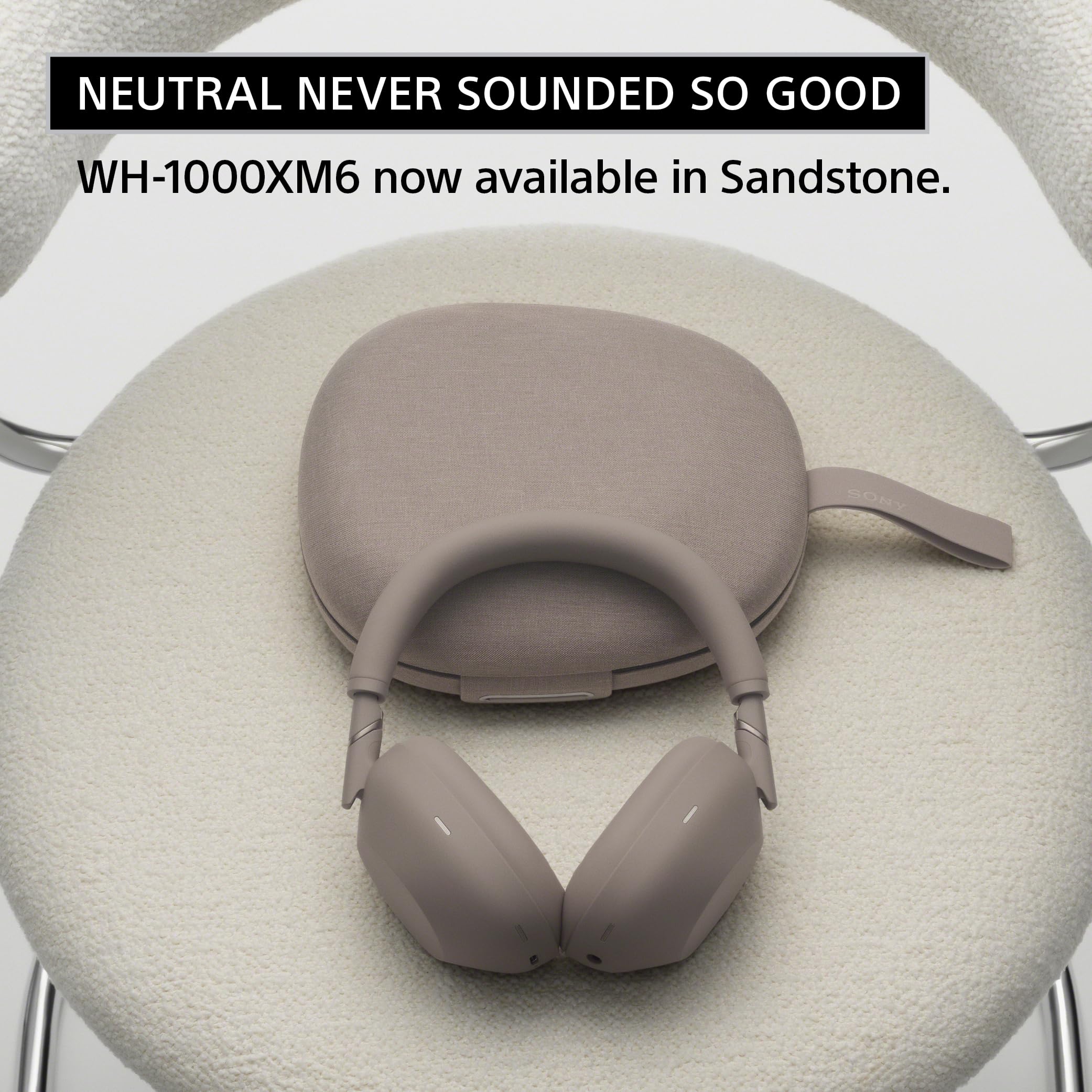
The XM6 keeps the driver size from its predecessor but redistributes the engineering budget into processing power and microphone count. Here is the full spec sheet as we tested it.
| Specification | Detail |
|---|---|
| Price | $398.00 |
| Driver | 30mm soft-edge dome dynamic driver, carbon fiber composite |
| Processor | HD Noise Canceling Processor QN3 (7x faster than QN1) |
| Bluetooth | Bluetooth 5.3, 10-meter range |
| Codecs | AAC, LC3, LDAC, SBC |
| Battery Life | Up to 30 hours with ANC on, up to 40 hours with ANC off |
| Quick Charge | 3-minute charge for approximately 3 hours of playback |
| Full Charge Time | 3.5 hours |
| Charge While Listening | Yes |
| Microphones | 12 total for ANC (6 per earcup: 4 external, 2 internal), 6 dedicated to AI call beamforming |
| Weight | 254g / 8.96 oz |
| Multipoint | 2 devices simultaneously |
| Spatial Audio | 360 Reality Audio Upmix, Spatial Sound with head tracking |
| Materials | Plastic and steel chassis, faux leather earpads, stainless steel hinges |
| Water Resistance | No IP rating |
| Design | Foldable, magnetic-clasp carrying case |
Sound Quality
Sony carried over the 30mm soft-edge dome driver from the XM5, built from a carbon fiber composite, but paired it with the new QN3 processor for signal handling. In our listening sessions across genres, from dense electronic production to acoustic recordings, the tuning leaned warmer and fuller than we expected from a headphone this focused on noise cancellation, without burying detail in the low end.
LDAC support was the standout for us on Android devices, giving the XM6 a genuine hi-res streaming path alongside the more universal AAC and SBC codecs, plus LC3 for newer low-energy Bluetooth chipsets. LDAC made the biggest difference on well-mastered tracks, where instrument separation and top-end detail held up noticeably better than over standard AAC. One gap we want to flag for anyone doing critical mixing or mastering work: there is no aptX HD support here, so if your workflow depends on that specific codec, the XM6 will not fill that role.
Spatial listening is also part of the package, with 360 Reality Audio Upmix available in Cinema mode alongside a fixed-profile Spatial Sound and head-tracking implementation. We found this most enjoyable for movies and video content rather than music, where the upmixed effect can occasionally feel like it is working against a mix that was not built for it. For day-to-day listening, though, the combination of the carried-over driver and the new processor gives the XM6 a more confident, less fatiguing sound than we remember from earlier XM generations.
Noise Cancellation & Isolation

This is where the XM6's engineering investment is most obvious. Sony packed 12 microphones into the noise-cancellation system, six per earcup split between four external and two internal mics, and handed the processing load to the new QN3 chip. In practical terms, that means the headphones are sampling and reacting to ambient noise more frequently and more precisely than the previous generation could manage.
We put this to the test in situations that matter most to commuters and travelers: a running vacuum a few feet away, a busy sidewalk with mixed foot and vehicle traffic, and a studio environment with people talking nearby. In each case, raising volume to a moderate level was enough to push the outside world to near-silence. Set against a Bose QuietComfort Ultra in the same conditions, the XM6 came out ever so slightly ahead in our testing, particularly on lower-frequency, constant noise like vacuuming and traffic hum. A sharper, more harsh static-like test tone did creep through faintly, but it was dampened severely compared to wearing no headphones at all.
What impressed us more than the raw cancellation strength was how natural it sounded while doing its job. Rather than that telltale pressurized, ears-underwater feeling some ANC systems produce, the XM6's noise cancellation felt subtler and more integrated with the audio itself. One design quirk worth noting: the ANC microphone housing protrudes slightly from the earcup mesh, and depending on ear shape, it can make light contact with the tragus. We noticed it during longer sessions, though it never became distracting enough to affect the seal or the cancellation quality itself.
Comfort & Fit
At 254g, the XM6 sits in familiar territory for a full-size ANC headphone, neither noticeably lighter nor heavier than what we have come to expect from this class. Sony redesigned the headband to be wider and flatter with an asymmetrical shape, which we found distributed clamping pressure more evenly across longer sessions than a narrower band would.
Fit did take some adjustment for us when wearing glasses, where achieving a fully consistent seal around the temple arms required repositioning more than once. Once seated correctly, the faux leather earpads stayed comfortable without the overheating some pleather pads are prone to. The redesigned power button, now a round, slightly recessed shape rather than the XM5's thin rectangular toggle, was also a small but appreciated change, since it is far easier to locate by touch without lifting the headphones off.
Battery Life & Connectivity

Sony rates the XM6 for up to 30 hours with ANC engaged and up to 40 hours with it switched off. In our own extended use, the headphones consistently ran past the rated 30-hour ANC-on figure without needing a mid-week top-off, and in mixed day-to-day use combining music and calls with ANC active, battery life felt closer to the 40-hour ANC-off figure than the more conservative ANC-on rating. Either way, Sony's 30-hour number reads as a conservative floor rather than a ceiling.
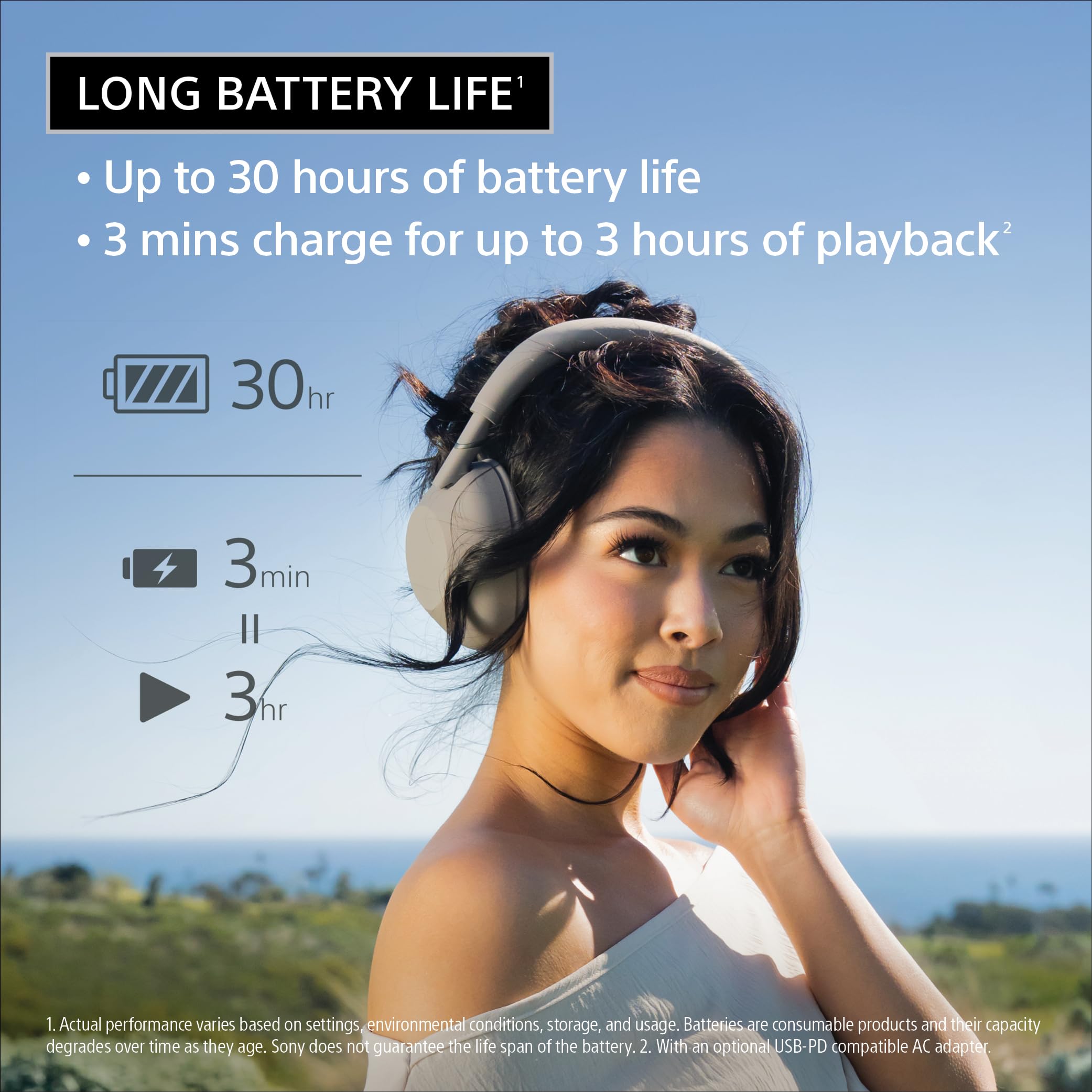
Charging is where the XM6 makes its most practical improvement. A 3-minute quick charge is enough for roughly 3 hours of playback, which turned a headphone we forgot to charge overnight into a non-issue before a morning commute. A full charge from empty took about 3.5 hours in our testing. The bigger change is that you can now listen while the headphones are charging, a first for this line, which meant we no longer had to choose between topping off the battery and finishing a podcast or call.
On the connectivity side, Bluetooth 5.3 delivered a stable connection out to roughly 10 meters from a paired source in our testing, and two-device multipoint let us stay connected to a laptop and phone simultaneously without manual re-pairing when switching between a video call and a music queue. The one connectivity gap that remains is wired USB-C audio passthrough. The XM6 charges over USB-C, but there is still no way to run a wired digital audio connection through that same port, so anyone who wants a backup wired listening path when the battery is fully dead will need a separate adapter.
Call Quality
Six of the twelve onboard microphones are dedicated specifically to AI-driven call beamforming, drawn from the same 12-mic array Sony also uses for noise cancellation. In quiet to moderately noisy indoor settings, this showed up as some of the clearest call audio we have tested on a headphone in this category, with our voice staying front and center even with background chatter nearby.
That performance did not hold up as consistently once we moved calls outdoors into genuinely loud environments, like a busy street or a train platform. The beamforming and noise-suppression algorithm, while effective at cutting ambient noise, occasionally clipped into our own voice along with the background sound, making us repeat ourselves more than we expected from a flagship-tier microphone system. Our takeaway is that the XM6 is a strong choice for calls from an office, home, or car, but if the bulk of your calls happen while walking through a noisy commute, temper expectations for how clean the other side will hear you.
Value for Money
At $398.00, the WH-1000XM6 sits at a premium relative to the outgoing XM5, which is now regularly available at a meaningfully discounted price now that the newer model has taken over the flagship slot. That gap is the central value question here: you are paying more for the faster QN3 processor, the expanded mic array, the returning folding hinge, and the listen-while-charging capability, all upgrades we found genuinely useful rather than cosmetic.
Compared to the Bose QuietComfort Ultra, which sits in a similar premium tier, the XM6 edged it out on raw noise cancellation in our testing, though Bose still offers more granular manual ANC level control that the XM6 does not match. Against the Apple AirPods Max, the XM6 offers meaningfully longer battery life. For buyers who already own an XM4 or earlier, or who are comparing against similarly premium-tier competitors, the XM6 earns its price with real, measurable gains rather than incremental polish.
Who Should (and Shouldn't) Buy This
Buy the WH-1000XM6 if you are upgrading from an XM3 or XM4, want the best noise cancellation we have tested against a rival flagship, or travel enough that a hinge that actually folds flat matters to your packing routine. It is also the right pick if you stream from an LDAC-compatible Android device and want a genuine hi-res wireless path rather than settling for AAC.
Skip it if your workflow depends on aptX HD specifically, or if you need a reliable wired USB-C digital audio connection for critical monitoring, since that passthrough still is not here. Frequent outdoor callers who prioritize call clarity above music and ANC performance should also weigh the outdoor call-quality dip we found before committing.
Bottom Line

The Sony WH-1000XM6 earns its flagship price with a noise-cancellation system that beat a top rival in our real-world testing, battery life that outran its own rated spec, and the welcome return of a headphone that actually folds for travel. At $398.00, it is a clear step up from the XM5 for anyone who values best-in-class ANC and all-day battery over a wired connection they may rarely use.
The WH-1000XM6 is the headphone I have reached for on every flight and every loud commute since testing began, and that is the highest compliment I can give a pair of ANC headphones. Sony did not reinvent the formula here, it refined the parts that actually mattered.
-- Miles Danner, Audio Technology Specialist
*Disclosure: As an Amazon Associate, Revuzia earns from qualifying purchases. Prices and availability are accurate as of publication and may change.*