SpaceX AI Revenue Could Hit $500 Billion Annually, Musk Tells EmployeesSpaceX AI Revenue Could Hit $500 Billion Annually, Musk Tells EmployeesSpaceX AI Revenue Could Hit $500 Billion Annually, Musk Tells EmployeesSpaceX AI Revenue Could Hit $500 Billion Annually, Musk Tells Employees
August 12, 2026
Elon Musk told SpaceX employees on Aug. 11 that 10 gigawatts of AI compute by end of 2027 would generate $300 to $500 billion annually. Musk added that AI revenue would exceed every other SpaceX line by September 2026 -- weeks from the date he spoke.
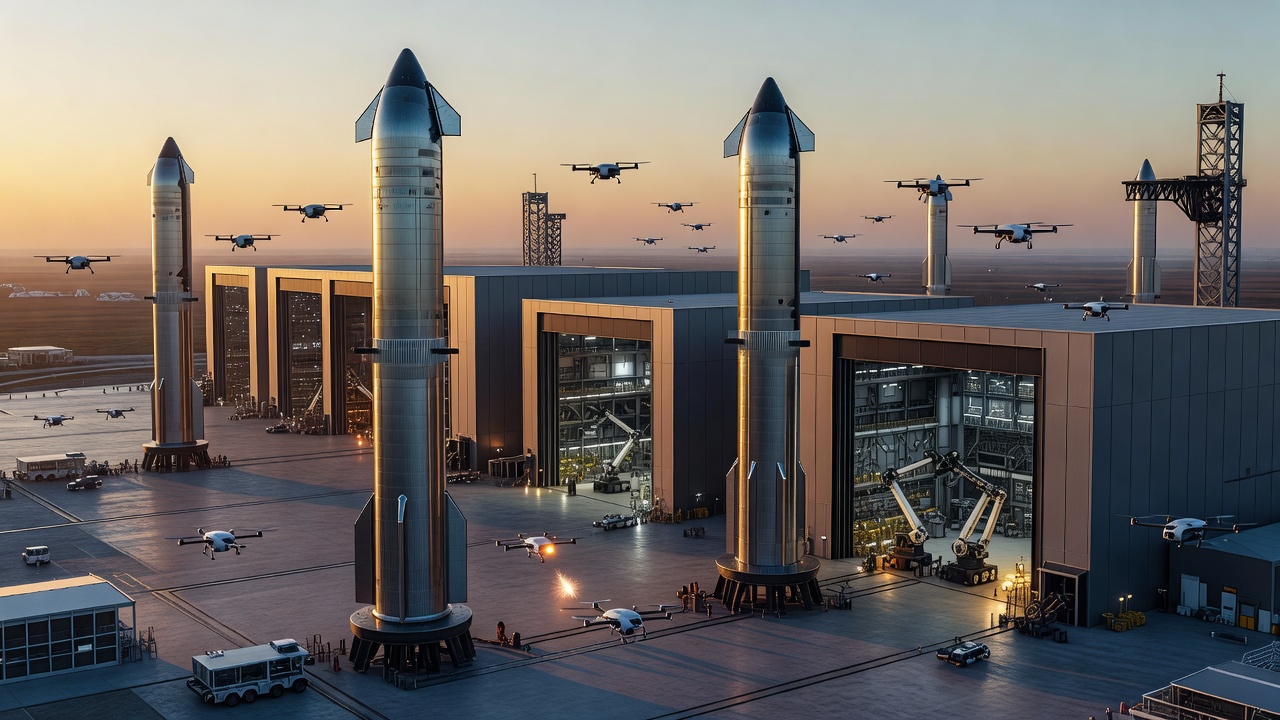
Elon Musk told SpaceX employees on Aug. 11 that 10 gigawatts of AI compute by end of 2027 would generate $300 to $500 billion annually. Musk added that AI revenue would exceed every other SpaceX line by September 2026 -- weeks from the date he spoke. SpaceX's own IPO filing documents link that AI opportunity to a target worth roughly 86 percent of US annual GDP, and the company had held its first-ever quarterly earnings call just one week earlier. For investors and aerospace professionals, this single 29-minute address reframes SpaceX's business identity more completely than any rocket launch or regulatory filing has in years.
What Happened
The address was posted on X by SpaceX on August 11, 2026, one week after the company held its first-ever quarterly earnings call as a public company -- the most concentrated period of public financial disclosure in SpaceX's history.
Musk's core projection rests on a per-watt revenue model. "The value per watt is probably going to be 30 to $50, which means if we bring 10 gigawatts of AI online by the end of next year, it will be 300 to $500 billion a year in revenue. Big numbers," he said. SpaceX currently operates 1.4 gigawatts of AI compute capacity -- gigawatts here measure the total electrical power consumed by computing hardware -- which it sells to tech companies and AI labs as a commercial service. Hitting the 10-gigawatt target by the end of 2027 would require expanding that base roughly seven times over 18 months.
The broader repositioning came with concrete near-term checkpoints. "Our AI revenue will exceed all other SpaceX revenue probably in September, like, next month, and will significantly exceed all other SpaceX revenue in the fourth quarter," Musk told employees. A miss on either benchmark will appear in the company's next public earnings disclosure.
The address also placed SpaceX's acquisition of xAI, the AI startup Musk founded in 2023, in a compute-infrastructure context rather than a software one. The deal, which closed earlier in 2026, brought Grok, xAI's chatbot, into the SpaceX portfolio alongside the physical hardware underlying it. "So, AI has become an extremely important part of SpaceX's future," Musk said.
The Science Behind It
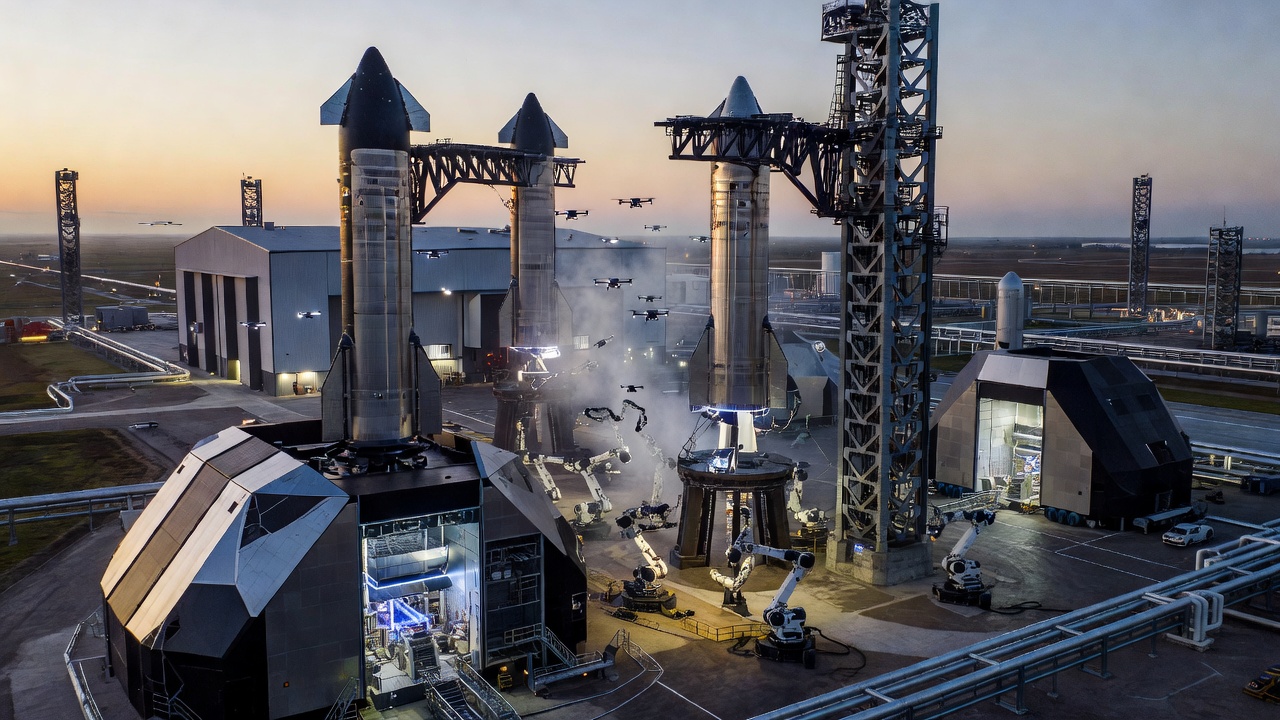
The per-watt revenue model translates infrastructure capacity into contracted revenue in a single multiplication. At $30 per watt, 10 gigawatts produces $300 billion annually. At $50 per watt, the same capacity produces $500 billion. SpaceX's current 1.4-gigawatt base, sold to commercial customers, represents the starting point from which that scale has to be built.
The hardware expansion plan runs through two physical projects. The first is Colossus, xAI's supercomputer cluster in Tennessee, which came to SpaceX through the acquisition and is already operational. The second is Terafab, a joint SpaceX and Tesla semiconductor manufacturing facility planned for Texas. Terafab is intended to produce advanced chips for a wide range of applications, giving SpaceX vertical control over its compute supply chain that cloud providers purchasing chips on the open market do not hold.
Musk framed the long-run value concentration in explicit terms. "Probably in four or five years, AI will be 99% of the value of SpaceX; I'd say five years for sure," he told employees. Against that forecast, Starlink -- which according to SpaceX's IPO filing generated $11.4 billion in revenue and $4.4 billion in operating income in 2025, making it SpaceX's largest business segment -- would represent less than 1% of the company's total value by roughly 2030 under Musk's model.
Why This Mission Matters
The scale Musk invoked in the employee address requires an external reference to interpret. SpaceX's IPO paperwork identified a total addressable market of $28.5 trillion, with $26.5 trillion of that attributed to AI -- $22.7 trillion of it in enterprise AI applications alone. The gross domestic product of the entire United States last year was approximately $30.8 trillion. SpaceX's stated AI opportunity, as listed in official filing documents, amounts to roughly 86 percent of the entire US economy's annual output.
Musk extended the framing into longer time horizons during the address. "Assuming civilization continues to progress, I think that AI will probably, the amount of digital intelligence will probably be more than a trillion times the amount of biological intelligence," he said. He connected that projection directly to the company's interplanetary goals: "It's important that we have an AI that cares about humanity, that fosters humanity and helps take us to other planets and other star systems."
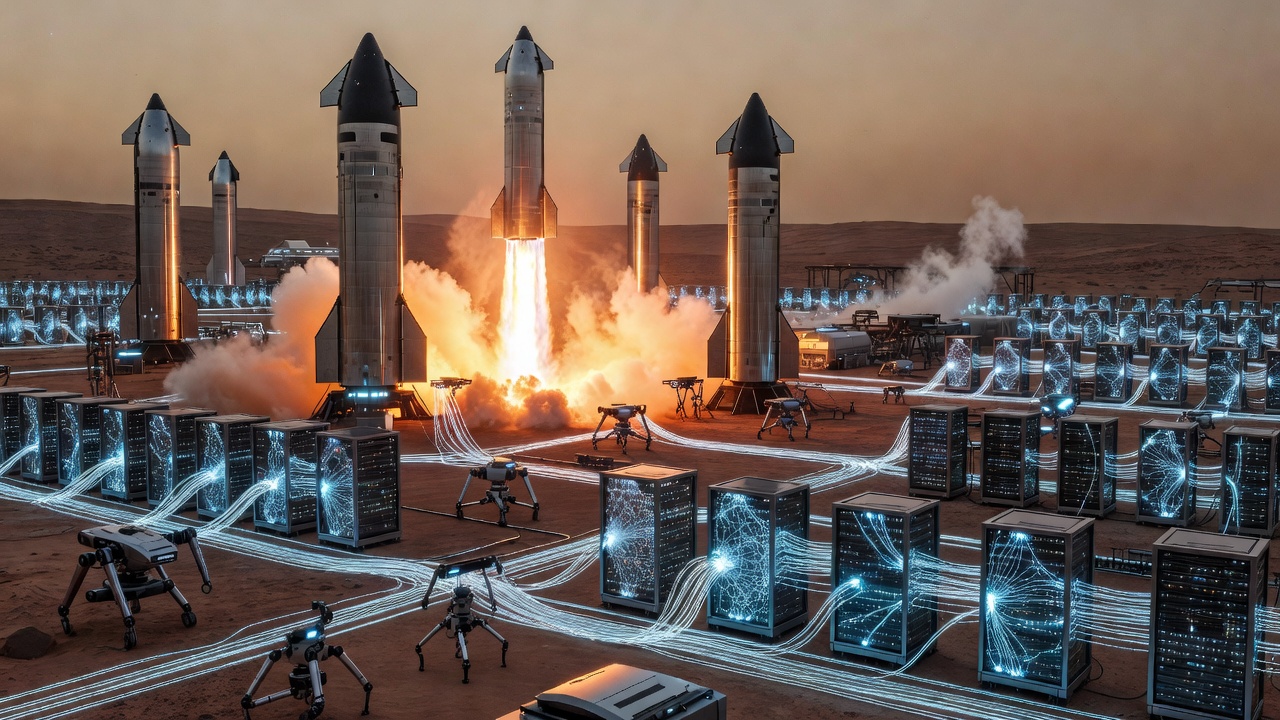
That alignment between AI capability and planetary expansion shapes how SpaceX frames the software side of the build. "This is why I think it's essential that SpaceX succeed not just with AI hardware but also with AI software," Musk told employees.
The 2025 financial baseline sets the floor against which all of this is measured. According to the full-year 2025 figures in SpaceX's IPO filing, the AI segment generated $3.2 billion in revenue while posting a $6.4 billion operating loss -- a 200 percent loss ratio on the segment Musk now projects will exceed all other SpaceX revenue lines within the current quarter.
Competitive Landscape
SpaceX's AI compute buildout places it in competition with companies that have spent years building the category it is now entering, and whose existing customer relationships, chip supply agreements, and regulatory approvals give them structural advantages the 10-gigawatt build must overcome.
- Alphabet (hyperscale AI cloud, proprietary chip development via its Tensor Processing Unit program -- chips designed specifically to train and run AI models): Identified in post-IPO market analysis as having direct competitive overlap with SpaceX's AI compute offering. Alphabet's cloud AI infrastructure operates at price points and customer scales that SpaceX would need to match or undercut to capture share at the per-watt revenue rates Musk projects.
- Nvidia (dominant AI hardware supplier): The company whose chips underlie most AI compute capacity currently operating in the commercial market. Terafab, if operational on schedule, would move SpaceX from customer to competitor in the chip supply chain Nvidia currently anchors.
SpaceX's claimed differentiation is vertical integration across three layers no hyperscaler currently combines: chip production through Terafab, orbital compute infrastructure through the planned Starmind satellite constellation, and launch capacity through Starship. The question the 10-gigawatt target poses is whether 18 months is enough time to build the first of those layers to a scale where it changes the competitive position of the other two.

Independent analyst commentary specifically on this announcement was not publicly available at publication time.
What Comes Next
The 10-gigawatt target carries a hard internal deadline at the end of 2027. The roughly seven-times expansion required from the current 1.4-gigawatt base, inside 18 months, would represent one of the fastest AI infrastructure builds in the industry if achieved. The September 2026 checkpoint -- when AI revenue is projected to exceed all other SpaceX lines for the first time -- is the first externally visible signal on whether the trajectory is tracking.
The Starmind constellation adds an orbital dimension to the compute buildout that terrestrial providers cannot replicate. SpaceX plans to launch one million AI satellites to low Earth orbit. Musk also described a longer arc: factories built on the lunar surface to manufacture off-Earth data centers, with satellites launched from the Moon using electromagnetic mass drivers -- which he characterized as high-powered rail guns -- placing SpaceX's launch capabilities at the center of an AI infrastructure opportunity no cloud provider could purchase on the current market.
For retail investors who bought SpaceX shares after the IPO, the AI segment is now the central variable in any near-term valuation model. According to analyst reports, Goldman Sachs and Morgan Stanley each projected approximately $160 billion in total SpaceX revenue for 2028; Musk's low-end AI-only target of $300 billion for the same year is roughly double those full-company figures. If the September benchmark materializes and the 10-gigawatt build holds schedule, the stock thesis shifts from satellite internet provider to AI hyperscaler. If the September checkpoint misses, SpaceX's 2025 AI operating loss of $6.4 billion on $3.2 billion in revenue becomes the more instructive baseline for the company's next filing.
"The future is fundamentally AI and robots," Musk told employees. The September 2026 checkpoint arrives in weeks.
-- Zara Velez, Emerging Technology Editor
Sources: Space.com, "SpaceX could make $500 billion in 2028, Elon Musk says" (Aug. 11, 2026) · SpaceX employee address posted on X by SpaceX, Aug. 11, 2026 (original source)